
The Lost World Behind the Book of Mormon feat. Noel B. Reynolds
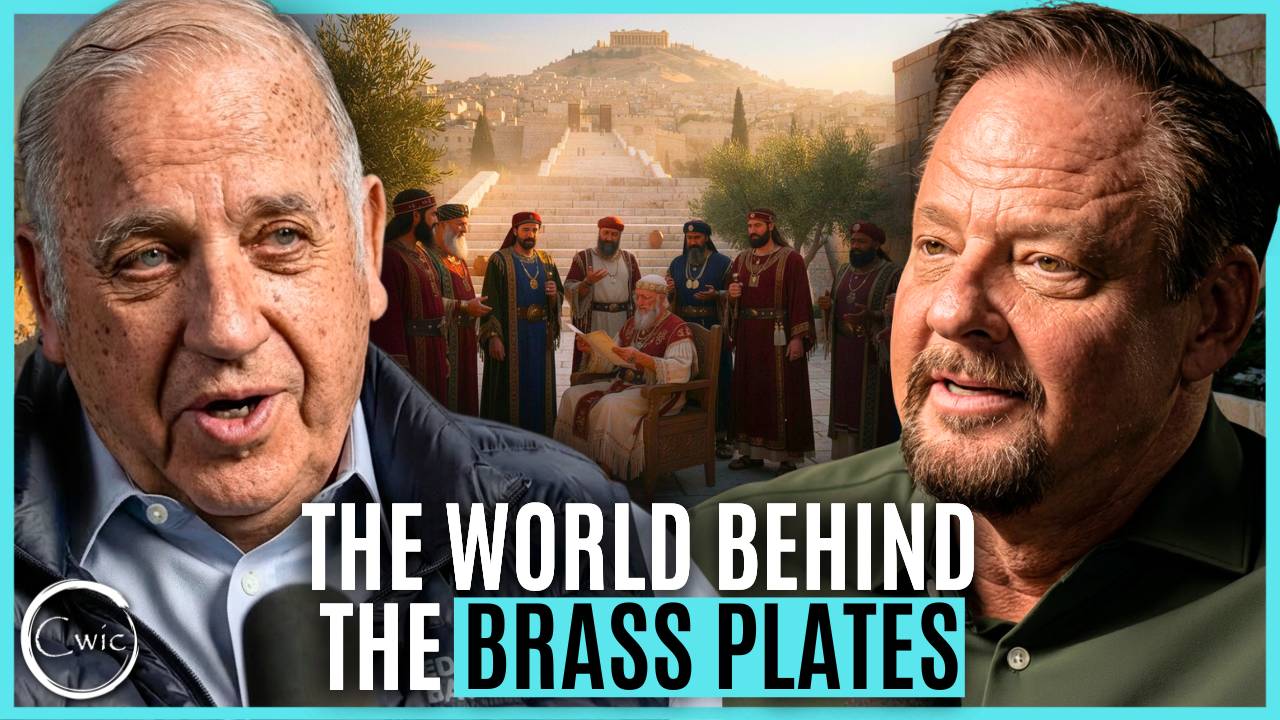
Noel B. Reynolds was a founding figure and President of FARMS and was the Dean of Religious Education at BYU. Noel and Greg discuss Egyptian records, Joseph of Egypt, and the hidden origins of Nephite scripture. Why Laban Had the Plates' Could a single sacred writing tradition stretch from Egypt all the way to the Book of Mormon?
Raw Transcript:
m very happy to bring back Dr. Null Reynolds, one of the biggest Book of Mormon experts of our time to talk about one of my very favorite subjects, the scribal schools under the Josephites, the Manassites versus the Judahites and the brass plates versus the Old Testament. It's just fascinating, fascinating stuff. Where do the brass plates come from? Are there traditions, scribal condition? Are there traditions, scribal traditions and training that went on all the way back perhaps to Abraham and Joseph of Egypt all the way down through Nephi and then down to Mormon and Moroni. If you really want to learn something about the Book of Mormon and about scripture, period, you don't want to miss this. Now, this episode is brought to you by Gospel on the Nile coming October 27th through November 6th where we will cruise down the Nile. You'll see the bull rushes, the reeds, the temples that are three, four, almost 5,000 years old, some of them. And you will see for yourself on the walls of these tombs and temples, your own temple experience. And I believe you're going to learn more about the temple in Egypt than you will anywhere else, perhaps outside of the temple itself. Go to quickmedia.com, scroll up to the top to trips and events, and then down to Gospel on the Nile. Here we go with No Reynolds.
Welcome to Quick Show. My name is Greg Matson and I am your host. In this episode, we bring back Null Reynolds to talk about the Book of Mormon and Scribal Schools. Null, welcome back to the show. Thank you. It's good to be here.
I'm excited about this. This is one of the fa my favorite subjects that I've covered in the entire time I've been doing this. Uh, and so I I I anything anything you're able to reveal is going to be like candy to me. Uh, but I want to start off with the environment in Jerusalem at the time of Lehi. What is going on? What might have led to the apostasy and the chaos that might be happening that Jeremiah is going through and and explained so well? Uh, and then, you know, maybe who might Lehi really be and and who is Laban? But let's start with the environment in Jerusalem. What's going on?
Well, uh, Jerusalem in just before 600, uh, BC is, uh, a time when the elites from the northern kingdom have now been in Jerusalem for over a hundred years because of the Assyrian invasion that took over in the north and uh, so the ones that made it away. So the northern kingdom of Israel including the Ephraimmites and the the Manassites. Yeah. Especially them. Mhm.
Uh because they were in Samaria that Samaria was headquarters area more for Manassites and but the Ephraites are just south of that few miles. Okay.
And but the elites are the ones that have fled to Jerusalem. Uh some archaeologists uh believe that the size of Jerusalem which had been tiny before that had uh blew just exploded uh maybe 15 times in size. Mhm.
And of course that's when the the new wall uh was extended around the new residential areas that uh popped up in that period.
Okay. Um so uh so there are a lot of northerners there now. Maybe a majority.
Well, it could be with that expansion, but you those numbers sound like it.
But the uh Judahite king is still very much in control. And the uh and it's during that period that the Judahite scribal schools have emerged. Uh there's not much evidence of them before that.
Uh but the but they're there and they're influential and they're the ones that are compiling the Old Testament that we have. It comes out of that Judahite scribal tradition in 7th century Jerusalem.
Uh now there's another reason for that that should be mentioned and that is the Hebrew script the alphabet that the Bible was the Old Testament was written in was not around much before this.
It's a derivative of the Westmetic alphabet which has existed for a thousand years. uh goes clear back to the time of Abraham uh in Egypt and we don't know who invented it but uh uh but it's never used by scribal schools to do major texts until uh the Judahite uh um scribes began assembling the Old Testament presumably scholars believe they're uh transposing the oral or al tradition of the Jews that the things that come from the past that have been passed down orally that it's in the seventh century that these are being written down. We don't know for sure on any of that. Uh but but that's the most probable picture that is the way it's been painted. Now they would have had some writings, right? Because of the the books of Moses or would would they would those have been writings? See see this is the problem.
Yeah. And it's a serious problem for Bible scholars and it's why there is so much skepticism about the reliability of the Old Testament. And that is there's no evidence that anybody was writing in Hebrew before 800.
Interesting. And that's that's a serious problem. Sure.
Because Moses is is 500 years before right 800 and Abraham is a thousand years.
So uh the uh so that's the dimension of this whole problem that uh doesn't it's one reason why I sometimes say the brass plates to the rescue
because when the when Lehi's family which I conclude is a scribal family comes down from the north kingdom the northern kingdom in uh threatened by the Assyrian invasion in 720 or whatever. Uh the um they bring a tradition of writing in Egyptian.
Now the brass plates we are told in the Book of Mormon were written in Egyptian. Yeah. Messiah 1.
Nephi writes the small plates in Egyptian. Mhm. So, Egyptian is the language of scripture for the Manassite scribes in the northern kingdom.
And they did have Moses, the five books of Moses in Moses's language, Egyptian.
Interesting. So, so it could be then looking at this, it could be that there were records, but they weren't kept by the Judahites. They were kept by the Manassites. Exactly.
During this entire time, right? And so if we if we if we make that assumption that uh then we see that uh the Judahites may very well have been getting the Old Testament stuff orally and transpose translated into Hebrew from the northern Manassite scribes,
which gives them a much more reliable source than a thousand years of oral tradition.
That's the point. Okay?
And you can be a lot less skeptical about the Old Testament if it's only one generation removed from an Egyptian a live Egyptian tradition 40 miles up the street. Okay. So, what about again that that that environment in Jerusalem now?
What what is happening? What you know, it's interesting to me because I always look at the Book of Mormon in a sense as an Exodus text in the sense that it is it is a separation and what they're writing about is why they're separating, right? What is the difference? And so the things that are important to them are important to them because of what they're living through in Jerusalem.
Whether it's doctrinally, whether it's physical uh problems, whether it's economic or anything else, they're coming out of that situation that's going on in Jerusalem, right? I try to read the Jerusalem situation through the eyes of Nephi and Lehi and through and layman and sure because we have exchanges and uh Lehi and Nephi are very critical of what's going on in Jerusalem. Layman and are very defensive of it. Mhm.
Uh and what are they defending? What are lay Nephi and Lehi seeing wrong with the Jerusalem uh culture perspective?
And what I've come to realize is that Lehi and Nephi have had this great vision just at the very time they left Jerusalem.
Lehi, I think, had it before. It was what was guiding him and driving him to does do such a radical thing as taking his whole troop into the wilderness.
Nephi sees receives the vision after Lehi shares it with the family in the wilderness.
He's already got him in the wilderness.
He tells them about this vision. Nephi prays. He receives the same vision. But the point of that vision that the the thing that strikes them in all that uh two things probably the most important is the vision of Christ and his mission and uh and uh that brings uh the atonement and the uh uh of Jesus Christ into a prominent perspective for Lehi and Nephi that it didn't have in uh Jerusalem. at the time. But the second thing that is just really comes back again and again for Lehi and Nephi is that what they learn in that vision is that this life is a probationary state.
It's not uh it's not this life here has a practical importance. It's a instrumental importance but it's just a tiny piece of the big picture.
They've seen the big picture now and they try and share that with layman lem and layman and and of course the big picture tells you look trying to pursue luxuries and wealth and easy living is not going to work in the big picture.
and uh and they say, "No, the people in Jerusalem are great. They keep the law of Moses. They uh they're righteous. They uh they're good people." So that I think is a difference that Lehi and Nephi are seeing. Jeremiah is saying the same thing. Mhm.
And it's uh there are uh so I've painted that picture a little bit in doctrinal terms, how they understand God's relationship to man, but also um the the language that they use throughout the Book of Mormon recognizing that uh even though the Jews may have made an a performative accomod idation to the requirements of the law of Moses in their lifestyle. The I'm talking about the elites. Uh they were adulterers. They were squeezing the poor. Uh they were doing they were doing bad things.
And they were apostates in the eyes of God.
And uh layman Lemu don't want to buy that. Lehi and Nephi keep repeating it.
and their heirs down through the centuries keep understand and maintain that same view. That's a long answer to a short.
That's good. That's good. In this environment in Jerusalem, who is Lehi?
What what do we know about obviously from the limited amount that we have about him? Yeah.
And the loss of 116 pages. We don't much know much from that, although we might have some clues. Yeah.
Uh who's Lehi? Lehi is probably the grandson or even greatgrandson of uh a Manassite scribe that came down with the Manassite scribal school at the time of the Assyrian invasion.
uh as we know a um over the last few decades we've uh come we've learned a lot about ancient scribal schools that was not really understood before and this was all pulled together what helped me and where I discovered Brad Gardner saw it in the same place as uh Carol Vanderturn
uh a scholar at the University of Amsterdam who became the president of that university later u assembled pulled together all these thousands of studies that touched on this topic and he pulled all the relevant evidence out of that and he said scribal school culture is the way writing and languages are preserved in pre-iterate societies.
So that's before Gutenberg which is 15th century. Uh and uh and these uh these scribal schools were family-based.
Uh they just passed it from one generation to another. It was a trade for them just like other kinds of trades and they became better and better at it.
They were very sophisticated some of them and that's why we get such sophisticated literature in Egypt and Mesopotamia and and Vanderorn said once you realize that that's the only way writing can be conveyed from one generation to another is in these families uh you realize that's how the Old Testament had to have been written and so we must there must be scribble schools in ancient Judah. Well, for Egypt and Mesopotamia, archaeologists have found scribal schools and caches of records and their equipment and and even writings that describe scribing, you know, the scribal process. Yes.
Nothing in Israel on this. Not one thing. they they haven't turned up a a single place that would be called a scribal school. Uh even even those these were small things often appendages to homes. Um,
so, uh, Benner undertook to assemble what evidence he could in Jerusalem that would back up this hypothesis that uh, the Old Testament was written by Hebrew scribes by a family basically and would have been family- based. And uh, the other thing about scribe scribal families were usually quite wealthy.
Mhm. uh the kind of business they could get and the kind of payments they could get and the people they worked for always had the money. So, and then uh scribal families also not everybody in the family was a scribe. Mhm.
The ones that had the interest and the ability were trained as scribes and the others were running other businesses uh that uh profited also from the scribal connections.
Sure. And uh but uh that was often where the biggest money came from. So the uh there's there's a little diddy that uh the scribal students had to memorize in uh Assyria. Um, and it's talking about how uh work hard and you know uh as a as a student and uh it's hard to be a a student but you but someday you'll be older and you'll be rich.
So it's uh and so Venderorn uh took all of this, put it together, put forth a very uh persuasive uh argument that the the Jews had scrabble schools.
And of course later they do have them historically. I mean, you know, that's that's the way it continues to go.
So let's look at this. So, if Lehi is the gr grandson or great-grandson of a of a scribe that moved from the territory of Manasseh, uh why does Laban have the plates?
That's an excellent question. The uh but as Vanderorn and others have pointed out, um the scribal schools, one one of the main elements of a scribal school was the scribal school library or treasury. It's the same word in Hebrew.
Uh and the uh and so
in that um putting putting uh Lehi and Lean in that context and as as a Manassite Scrabble school in Jerusalem, the assumption would be that Laban's father had probably been in charge of that library. his grandfather so back uh and uh uh going back uh and that uh they were connected in that way and that's that's Laben's role in the scribal school is to maintain that library protect it it has more than scrolls in it has treasures it has uh fancy objects like the sword that he wears and that Nephi winds up with is clearly something very impressive. Uh and
there's but there's other things and uh and Laban is there's probably things of of great worth also in that treasury and he has guards Laban and his 50. Yes.
uh that uh so that uh but that's his role and that is an the the other kind of element of a scribal school that we wouldn't normally just think of. They also had a workshop and that's where uh because the there was no market where you could go buy paper and pencils and and so forth or engraving tools or or uh or even papyrus.
There was no demand.
Yeah. Only scribes needed. So they did their own they they had so they were they had to make their own writing equipment and materials. So going back to the Egyptian this is yeah something that is fascinating to me because I've studied this as well and and and look back at the the scribal schools and traditions uh going back into Egypt. So, if we're trying to put these puzzle pieces together, well, we go back and you and again, a lot of people don't realize just the connection that Latter-day Saints have with Egypt.
Mhm.
You know, whether you're looking at just the scriptures themselves and you say, "Okay, well, Abraham was there for a while. Uh, his great great-grandson Joseph ruled there essentially." So you have you have two individuals that were both in basically good graces or not, they are dealing in the pharaoh's court, right? And then you have uh Moses who's also there. These are three probably that would have been in Memphis at this time. And and then you've got Jeremiah that goes and when he leaves he he runs to Egypt. You've got Joseph bringing Mary and baby Jesus to Egypt.
But going back to the records, what was the Book of Abraham written in? It had to be Egyptian.
It had to be Egyptian. What are the brass plates written in? What is the Book of Mormon written in? you know, there there's such there's this such this strong tie to Egypt that I don't think we even or know about typically as Latter- Day Saints that that we would have through that Josephite connection that really runs right through this scribal school that would have originated in Egypt in Egypt at some point.
That's right. Uh well uh Joseph is at the highest level of uh Egyptian uh society.
Mhm. And what who does he marry?
The daughter of an Egyptian priest, a prominent priest.
Uh now what language was spoken in the home where Manasseh and Ephraim were raised?
They had to be Egyptian. Mhm.
Uh, and did were they allowed to go to school? There was schooling. All the wealthy Egyptians, if they were not inscribable schools, at least we're taught to read and write in the in the way that we do.
Mhm. Um the uh so at what point
going down now generations for Manasseh and Ephraim say it's 300 years before Moses.
At what point do the Manassites stop being Egyptian society?
Well, they certainly are not part of it when they leave with Moses, but they may not have been uh uh but they may have been part of it until then.
Mhm. Or at least almost till then.
Uh and so when and they are always treated with great difference by the rest of Israel. Yeah, I think there's also I want to say I don't know if it's in second Kings or I think that there's also a reference to several actually of Josephite descendants that don't leave Egypt.
They come later.
I'm pretty sure that's biblical. I think that's in there. They actually they hang out. Maybe they don't want to leave.
Maybe they're like layman and lame. They they're they're hanging they don't why are we leaving?
Maybe they've got a status of of some sort there. Well, they they're treated differentially when they get to the promised land. So, which they may have been their own group. And Moses could probably talk to them more easily than he could talk to everybody else cuz he spoke Egyptian. He he was not proud of his language among the Israelites.
And uh but any when they get when they get to the promised land
uh looking at the way you know as an entirety all the land he was dividing up.
Sheckchham is right in the middle.
Sheckchum is the historical place holy site where Abraham had great visions.
Jacob.
These visions are traced to the Sheckchham territory. Uh Sheckchham is the natural capital of all of Palestine.
It's right in the middle and it's where the main roads cross, east, west, north, south.
And that's where uh Joshua put Manasseh.
And uh that's where they buried Joseph's bones that they brought back from Egypt.
Um it was the prime land.
Um and it was the largest alotment that was given.
They actually had a second territory, didn't they? As well. Yeah. Across the river. Yeah.
To the east. And then um uh Ephraim was given the next nice piece of land just south of that.
So it's so they the the Manassites were being treated differentially by Joshua and uh your point about them being a separate group to some extent would fit with that.
Yeah, that makes sense. Now, going back even further then if we go back to Abraham, if he's writing an Egyptian, where does he learn that?
And and I want to bring it back to Joseph in a minute, but but where is Abraham learning Egyptian? Does he already know this? Is he in some type of remote Egyptian scribal school that may have been satellites of this around Egyptian territories? Uh where would he learn this? We don't have hard evidence to answer those questions, but we do have very uh helpful Jewish tradition.
Um LDS scholars uh
uh John Gee and Steven Smoot for example have uh now taught us why
uh the land of Ur where Abraham was born is probably uh up in northwest Syria bordering where right at the border with Turkey.
And that area in Abraham's day was a colony basically of Egypt. Mhm.
And there was uh Egyptian administration there. Uh and priests the religion the priest that was ready to sacrifice Abraham.
uh the uh and the Jewish traditions that have come through uh basically portray Abraham as
uh son of an an administrator that works in that Capitol office
and needing Egyptian would have been the office language
And if Abraham would have as his son would have had the opportunity uh of being in the school for the children of these highle administrators.
Uh so that is in my mind the most likely way that Abraham learned Egyptian.
uh but age and any uh writing would have had to be uh either Egyptian or Assyrian and uh so that's that's my theory and and to some degree right I know that
later on it is uh you also have culturally I know that uh um there are other languages that were kind of a lingua franca but but but Egyptian seems to be an elitist type of language for the territories that that Egypt has has controlled at least for for for any period of time.
Well, this is uh echoed uh a thousand years after Abraham in Israel
where the uh Egyptians uh for a time uh had owned
the uh that coast of the Mediterranean up against Palestine. And so that country whether it was uh Philistines or whatever you know they they and they had a big uh
they had a big establishment there and they had a uh team of
of scribes who left records marks the the and this has been studied uh and
when Egypt was run out of that area the scribes stayed They were already they were embedded in the local society. They probably married into the local society and they left tracks that have even been detected as far away as Jerusalem and she these areas the there's some evidence that these scribes were uh embedded and serving the writing needs
of people throughout this area and they didn't go home to Egypt.
Uh, so it's, you know, back in Egypt in these scribal schools, it it it I've seen that they often times they would take these boys.
Mhm.
Maybe there were specific families and place them in the scribal school at that age at about 5 years old and begin to teach them. Um,
you have brought up before some really interesting things about Joseph that okay, he's young, very young. Um,
the others all kind of are envious of him. And maybe it's why is he why is he why are they envious of him? Well, he's
got the code of many colors or he's the heir or whatever. Well, okay, but are is there something else? Is there something else going on here? is he the chosen
scribe of of Jacob, you know, to take on this learned
uh position that the older boys don't get. Well, that's been my uh speculation.
Uh we we don't have hard evidence for that. But uh Abraham is writing in Egyptian
and he writes his history and he says he's doing this for his posterity.
Now which one of his posterity threw all that away? Isaac, Jacob,
I don't think any of them did. No, none of them. This was the family treasure.
And somebody at each level, each generation had to be taught Egyptian.
They had to keep passing this along so they could read this stuff. And so, so Isaac would have been taught,
Jacob would have been taught. It's not Esau, you know. And uh uh and
who did Jacob choose out of his children? Well, the son of his favorite wife
who was not part of the sheeperder uh assignment Mhm.
is Joseph. And when Joseph gets to Egypt, he doesn't have any problem rising to the top.
Yeah. He he gets there with with with Piper and before you know it, how's this possible? He's running the estate.
How do you do that without fluency in the language? Exactly.
And without an education and a sophistication that comes beyond being a shepherd. And so there's a real
difference in the family. And this and this could create a big difference between Joseph and his brothers. Mhm.
You know, they they see the world quite differently.
And uh uh but Joseph fits in when he gets to Egypt.
Yes. I mean, he gets into the prison and before you know it, he's running the prison and then he's running Egypt as well. So, there is an understanding
there. There's and we kind of look at those things sometimes like, well, he's blessed from God or he's well,
what does he know? What has he already been taught? What what position is puts him in in what puts him in the position of being envied by his brothers? and
what puts him in the position to be able to be with Potterer and to run with Potterer the way he does um make him very perhaps attractive to Potterer's
wife uh and beyond. I mean, he seems to already be in a position of status,
right? Every position that everywhere he goes to to be able to take on these roles immediately. And you've pointed
out also that's also I find this very interesting. it is he's you look at Nephi and you say okay is Nephi a scribe
and he well he's obviously very young to be able to write the way that he does in Egyptian how is he able to do that first
of all it's not like well let's see what what language am I going to choose to write in you know it's no he has a
reason to write in this language and you take you can take it all the way through the Book of Mormon because when you go to when you look at Mosiah 1 and where
we learned the brass plates are written an Egyptian.
He's teaching his sons also the language of his fathers. Well, what is the language of his fathers?
He had them taught or he had them taught. Sure.
Yeah. So, he's the he's in charge of the scribal school and somebody else is the teacher, right, that's teaching his sons.
Yeah. And poss and probably others. I mean,
there's Right. And so there's this this tradition that has continued throughout the Nephite existence of a thousand years because then you get to Mormon.
When you get down to Mormon and Moroni, they are scribes. Yeah. There's no way around it.
There's no way around that. They can they can write a lot and they can read a lot and they can read in m in multiple languages. They claim that they could
have written in Egyptian or Hebrew. But they are writing in Nephi,
right?
And the Lord has prepared a way. Nobody knows our language, but the Lord has prepared a way that it can be it can be read sometime.
Yeah. And I'm just going to read Mosiah 1:4 here. It says, uh, for if it were not possible that our father Lehi could have remembered all these things to have
taught them to his children, they're talking about having to keep the records except it were for the help of these plates. For he having been taught in the
language of the Egyptians, therefore he could read these engravings and teach them to his children and
thereby they could teach them to their children and so on and so on. So we're talking about a legacy, a family
legacy that that that goes back before the time of Lehi that's completely carried down. And then I think is it who
is who is Mormon's mentor? Is it Amaron or Amaron? Amaron. Okay.
There are two Amarons in the Book of Mormon. One's good and one's bad. No.
Are they They're both Oh, they're both good. I'm trying to remember what the other one was.
Uh Oh, that's right. Amron helped lead the good battle. Is that right? Is that who he was?
Yes. Uh well, my my memory is that Amron was one of the descendants of Jacob.
Okay. Okay. Maybe that's right. Uh so in But I is he 10 years old? I think he's 10
years old when Amaran says something to the effect of he has a sober mind and
and so he's choosing this kid at 10 years old who is probably highly
educated. He knows things of war and battle and strategy and may have already been in a scribal
school since the time he was 5 years old. And so he knows him well and knows his mind.
And he probably gets a few more years of that teaching before uh his father takes him away.
His father's a general and takes him away to the south.
So he's apparently when the Nephites come and conscript him to be the leader
of their armies, it's probably because of his father's reputation and he's been taught.
Uh it's there's a big difference between these educated generals and the guys
they've got fighting under them and and and the and the the warriors understand that.
Mhm. They see that. I mean they know he can read, he can write letters, he can uh he can tell history,
he can teach us. uh so they could see that difference and uh Mormon
he's he's processed quickly because he's not that old when he himself is called to be a general.
Mhm.
But he has been in that school and I I'm I'm the most obvious thing is that he was in Amron school. Yeah.
And Amron's been watching him and see Amron has already closing things down. He has already buried all of the
records, the Nephite records in that hill up north.
He He's closing down. And the thing he doesn't have is a successor or or or a a a metal engraving editing
all of those records that he's buried and surmising all of those records he's buried.
Yeah. And and and so there he's got however many kids he has, I don't know, but he picks that one.
Mhm. to be the one that cycles back and completes the record later in his life.
Yeah.
And uh then that's exactly what Mormon does. But then Mormon receives another commandment not from Amaran but from the
Lord to uh to summarize all those records to a
bridge them and make another shorter record. The same thing that happened to Nephi.
Nephi had been commanded. First he was making this large comprehensive Nephite record, the large plates which continued
down through the kings. But then the Lord said to me, make other records
and uh for a wise purpose. Uh and that gets us back to the last 116 pages.
Have you dealt with Don Bradley on that issue? Yes.
Yeah. because he thinks it's not 116 pages.
He does. Yeah. He thinks it's a lot more.
The uh the the lost pages on on Bradley's theory, just to clarify it for
our audience, uh is u he points out that it's the first half of the history of the Nephites,
speaking chronologically. Yeah.
And what's 116 pages is the replacement ne uh Joseph Smith's translation of the small place. That's what's 116 pages.
It's not very likely that they were both exactly the same number of pages.
No, that and Don Don speculates that uh it may have been a they may have been 300 pages or more.
Well, you look at it and you say, "Well,
wait a minute here. I mean the the large plates would have been since the time of Lehi at least unless there was something that would have been there in before
Lehi and that he's just taking on and adding on to it. But you've got you've got Lehi
at roughly 600 BC going all the way down to what we have is chapter one of Mosiah
which is actually chapter 2. Uh because chapter 1 was part of that lost that lost manuscript. And it is so
interesting with that Mosaiah, it just jumps right in as if it's as if you know all of these things. And when you really understand this is not chapter one, it's
like, oh yeah, why this is why this is so abrupt. But this is all the way down to roughly 130 to 124 BC. So, are there
only 116 pages that are covering 470 to 480 years
uh of the Nephite history in here? You know, I mean, I suppose it's possible,
but it lends credence to to what Don is saying is that that it was a lot more.
Well, it makes perfect sense. And and we do know that the replacement pages were 116.
Yeah.
Yeah, that's that's awfully coincidental,
but taken from a completely different source record. Yeah. Yeah. Exactly.
Yeah. And now backing up again to the to the Egyptian and I think we've talked about this before, but uh
what is your theory on the brass plates and their language? Do we have a Nephite Egyptian language already? Or are we
looking at probably hieratic even though demotic is already in place? But the the
language that that Abraham and that uh Joseph would have been exposed to would
have be more along the lines of a hieratic and that would have been the holy language.
Yeah, I'd agree with you about that. Uh hieratic was in full use by Abraham's time.
and is being used all the way down to the time of Lehi. Uh although like you say, it's a time when they're starting to make a change.
Mhm.
Um the uh I can just give you my theory on this and I'm not and and I I should stress uh
I'm not an Egyptologist and I'm not a linguist. Uh but I just read the books these guys write and try
and put two and two together. So the uh the the brass plates clearly are written in Egyptian and that's how they save the
Old Testament, but that's also how they save the Nephites. Uh and the uh and the brass plates are the Nephites holy scriptures.
Mhm.
They call them or their sacred scriptures. Uh, and that partially would
seem to explain why Nephi chose Egyptian to write his second book because he saw it as scripture. Mhm.
And so scripture, scripture, scripture. It's Egyptian. That's the language.
Uh the Nephites uh were in the beginning Hebrew speakers
and but any uh no historical linguist will believe that a speaking population
that's speaking one language now will be speaking that same language in a recognizable way a thousand years later.
Well, look at English,
especially if they've had uh any kind of contact with other groups, which the
Nevites clearly do. Uh so, um by the time it gets down to Mormon Moroni,
because they're scribes, they have to learn Hebrew and Egyptian. But these are both dead languages. Mhm.
Classical languages for them. And you can only learn them in a scribal school. They are speaking Nephite.
Nephite and ne then they say no other people knows our language. Uh it's evolved so
much and they have to have a script to write it in though
and that script is what they call reformed Egyptian.
That's what I believe. I think that's we align on that for sure. And I I'll even give you my theory on reformed Egyptian.
There are a lot of theories on reformed Egyptian.
uh but uh when you look at the history of this Hebrew alphabet coming from the
Westsmitic alphabet uh the way the first inventor of the
Westsmitic alphabet chose symbols.
He took simple Egyptian words, common words that had the sound
of that had the initial sound of the letter of the uh sound he wanted represented in Hebrew. Mhm.
And so he would use that Egyptian symbol for that sound that uh that Westsmitic sound.
And goes through with about 23 of these. He's got an alphabet. Mhm.
It's the first alphabet in the history of the world. And so it was a simple idea, but this is how he did it. So he
knows Westmetic and he's got so many sounds he's got to accommodate. He got and he picks Egyptian symbols that have words that start with that sound.
Mhm.
Okay. That much has been shown. uh uh Hamilton is the author that examined all
of the earliest uh West Seemetic inscriptions and they
go back to about 1920 BC and he went to all the museums. I mean it's fantastic. He spent his life doing
this and then he showed how they how this is how they put it together. Well,
now that we call that uh when the he when the Hebrews then take that alphabet and adapt it to
the Hebrew language and make adjustments,
uh would it not have made sense for them to call their script reformed Egyptian?
Sure. I think it's an obvious name.
Mhm. because that's exactly they were taking it right from the the Egyptian consonants.
So when you get to the end of Nephite history and they have devised a script for Nephite
probably starting way back when with Hebrew Mhm. proto what we call uh PaleoHebrew.
Uh but as the Hebrew as the Nephi language changed, the most obvious thing
for them to do to fit the changes would be to go back to Egyptian, which they know,
and find sounds, symbols, and bring that in and just keep on calling it reformed Egyptian.
Mhm. So you got another theory now. Yeah, that's interesting. Very cool.
Uh, last thing I want to cover. I want to go back and contrast this with with your thoughts on the Judahite school.
You've brought this up a little bit mostly in oral tradition. You think maybe they were relying on the Manassites the whole time as as a group
of the children of Israel and uh and so they didn't have a need, you know, even even for this. It was like, okay, the Manassites have got this portion covered
just like the Levites have the priesthood covered or or what, however they're going to divide all these things up. Uh so if they're running through an
oral tradition, when do they when do they move to something that is
more of a written tradition, an actual formal scribal school? And what forces the need for this?
Well, anything I say is speculation. Yes, this is gospel by null Reynolds.
when they moved into the promised land and Sheckchham was given to the uh Manassites
and there there was an old temple there uh the presumably the scribal school
would have f would have settled there because that's a commercial center for that whole part of the country makes sense
that's 41 miles from Jerusalem not a huge distance even in pre
uh uh vehicle times, automobile times. So the um
uh my speculation is that the uh the scribal schools that
emerged in Jerusalem uh in the 7th century
uh were and now they have Manassite Scribal School in town. Mhm.
Thanks to the Assyrians,
they come down from the north. the northern kingdom which has been taken away and abolished by the Assyrians. And so they head north in an exodus or
excuse me, they head south in an exodus to their cousins and in Judah and they could have even learned about scribal schools from the Manassites.
Uh but the but they do have in town
Egyptian versions of five books of Moses.
The uh uh other prophets of Zenus Mhm.
etc. and others that are named in the Book of Mormon and others that are not named, no doubt, were included in that.
Um,
why wouldn't they be getting that material from the Manassites?
It makes to me that makes a lot more sense. But you have to believe in the brass plates.
If you believe in the brass plates and the and the Manassite scribal school that that requires
Mhm. then you've got a much better answer for where we get the Old Testament
uh than they're pulling it out of uh a lot of competing oral traditions that that may have done a lot of that.
I'm not denying that. But those traditions as we mentioned earlier here they are much closer to re uh their own
time than the idea that they got them from thousand years ago.
When when do you think it was written in Hebrew by the Judahites?
Well the that's pretty well settled and that would be in the seventh century just because that's when
pre-exil Yeah. It's well and that's and scholars fight about that. Yeah. Cuz uh they think some of those books or maybe all of them are written after the exile.
But the but there's good evidence there was pre-exelic uh the the scholars who
have dealt uh believing scholars especially who have dealt with that have
found a lot of good arguments I think for saying that that most of it or major portions of it were pre-exilic.
What you won't have in the Manassite record is uh the distinctively Judahite records such as Kings.
Mhm. Uh Samuel,
uh Chronicles, you know, these things these things are being done in Hebrew in later time.
So, and this is, you know, I I make a statement sometimes on the podcast. It might be too bold, but I I I want it to be provocative
because of of a lot of what you're saying here and that that is that the the brass plates are not the Old Testament. Now obviously the Old
Testament wasn't compiled back then but still it's a different tradition. It's a completely different tradition. It could
it's not just a matter of well the brass plates are the original great Old Testament that we have. It's like know the these are two different lines
that we have. I mean yeah they're referring to the same people. We've got obviously Isaiah in the in in the Old Testament and Isaiah in the brass
plates, but the there is a a different group of individuals that are
hanging that it makes a lot more sense that there is an oral tradition for a longer period of time with the Jews with the Judahites
where things are actually removed or changed.
maybe before they even started to write these things down, things that would be specific about the Messiah being born,
for example, or you know, these other things that we don't find anywhere in the Old Testament, but we find them obviously in the brass plates because
the Nephites are teaching it. the Nephites are grabbing on to the to the to the brass plates. And all of a sudden in the Book of Mormon, we have uh well,
obviously in English, Jesus Christ and this idea of an atonement um being taught throughout the Book of
Mormon, but it exists nowhere other than illusions to a brass serpent or whatever it might
be in in the Old Testament. Uh you had Jeff here on your uh podcast some months ago
uh talking about the book of Moses. Uh Jeff Lindsay. Yes. Yes. And the and Genesis.
Yes. And that uh and you know I worked with Jeff uh on some of that. And what
uh what is really clear I mean you talk about things being taken out.
Mhm. If you compare the book of Moses with Genesis, very easy to do. Mhm.
Uh the what are the big things that have been taken out
in Genesis? Well, there's Moses's vision at the very beginning where the Lord showed him all things.
And uh that makes a big difference for Moses. It was Moses had the big picture from the beginning.
What's the other thing that's taken up? The book of Enoch.
The book of our book of Moses has what's 80ome verses in a book of Enoch.
Genesis has one verse.
Others are different. something's been taken out, right? And uh so the so the
Hebrew version of what was sitting I think the book of Moses was in the
brass plates. I think we the evidence on that is just overwhelming and uh
that's right there in town when the Jewish scribes come up with Genesis. What's right there in town?
The the book of Moses.
Oh, the book of Moses. Yeah. You mean on the brass plates?
Yeah, it's on the brass plates. And again, saying it's on the brass plates,
you also have the reasoning that you guys I know you guys have looked at like uh the phrases and words and different things. I can't remember what number you'd gotten up to, but it was 150 or more.
Jeff has picked this up. I came up with 33. He now has it up to 146. Yeah. Yeah. Where where it's like, okay,
these match directly Book of Mormon to Book of Moses, right? What What is going on? And and they're not in the Bible.
And they're not in the Bible. And so you're saying, okay, again, what is the DNA of the Book of Mormon? It's the brass plates, right? That's that's the
that that father, so to speak, the parent of of the Book of Mormon that they're pulling from. And that's through throughout Nephite history. They have
the brass plates and they have these transcribes that know Egyptian that are convert that are delivering it to them
in their language. Uh they're being taught in Nephite.
Yeah. And and and the other thing that's really fascinating with all of this is that you have at least in one place in the New Testament talking I think Jesus
himself is saying that you've you've stoned or killed all the prophets over this one thing and that's me being the Messiah. Yeah. Right. It's like well wait a minute.
Okay, there are a couple of prophets that are killed in the Old Testament,
but where is it that they're prophesying about Jesus Christ? Well, they're not not in the Old Testament, right? And yet in the Book of Mormon,
you have it written four or five times that every prophet has always testified of Jesus Christ.
And you're like, "Okay, again, different books." Distinction between the Josephite
descendants, the Josephite tribes, and the rest of Israel that is clearly
important at the time they enter the promised land.
uh is a distinction between those tribes that may have continued right down to
the 600 BC that uh Lehi and his associates that it may not have been an
easy uh union even though they had fled to Jerusalem that was the only walled city within
range. Well, of course, you also it's basically and then you have the rivalry that ends up happening after Solomon because you immediately have Ephraimite
kings. That's right. That are ruling the north that break off. So, it's it's there's something there already that's already in place. No, this has been
fantastic. Appreciate your time, your knowledge, your background, your theories, everything. My speculations,
your speculations. I really appreciate it. It's like candy to me. So, really appreciate that. Thanks for coming back and and maybe we'll talk about this again. Glad to be with you. Thanks,

"I Take This Every Day!"
Learn more about why I accepted Cardio Miracle as a sponsor and why I take it every day!
- Greg Matsen

Stay Connected With New Articles & All Things Cwic!

Cwic Audio Player
All of the Cwic Media podcast episodes on one page!
Recent Posts

