
The Macro-Chiasmus Theory: Is History Designed? The Structural Blueprint For The Last Days
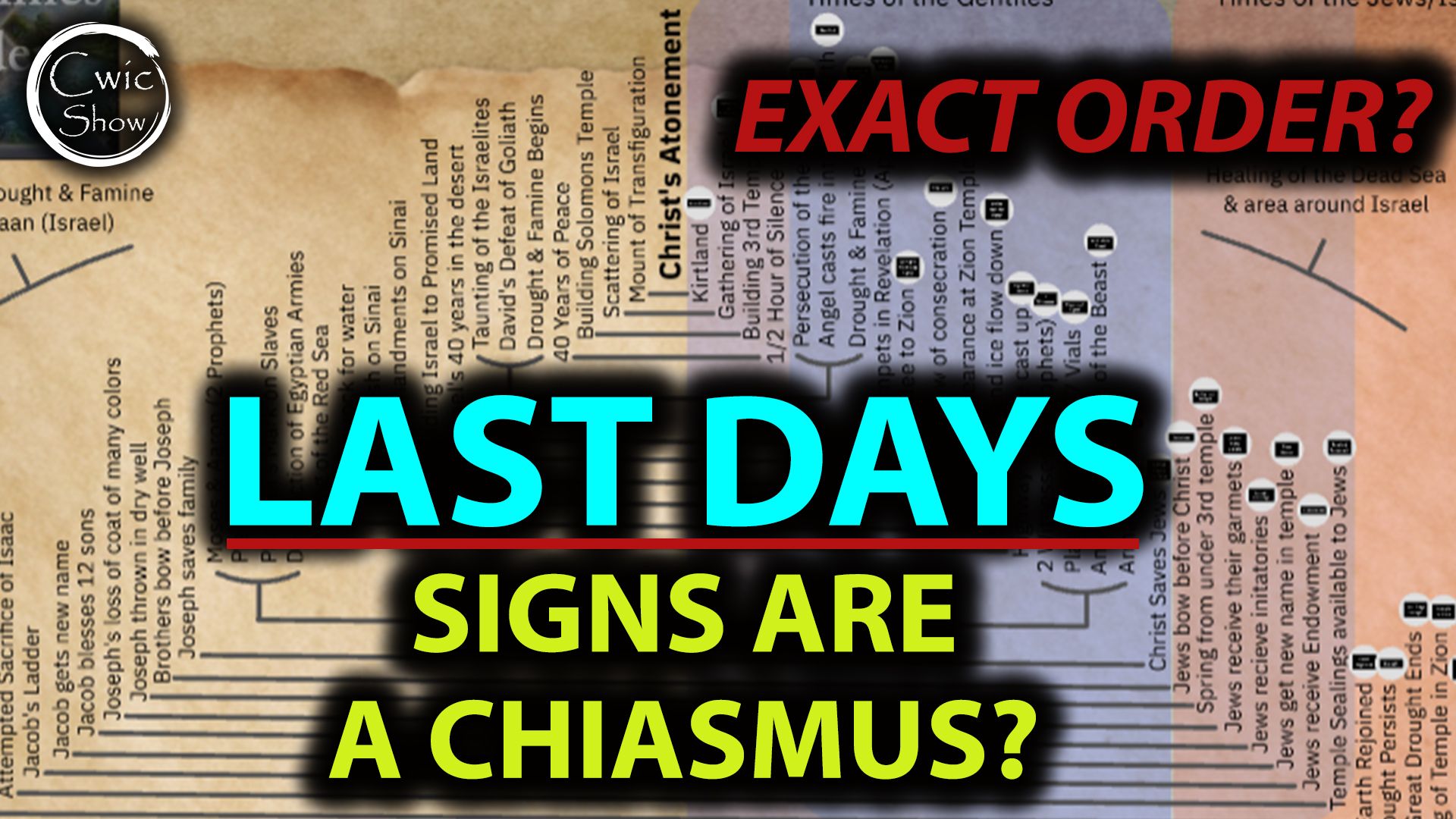
Is this God's Chiasmus? Kevin Prince talks about his intriguing Macro-Chiasmus Theory mapped over a gospel timeline. What if not only scriptures are at times written with chiasmus, but time itself is a chiasmus? Identify "A-B-...C" prior to the Meridian of Time, then notice "...C-B-A" in the Last Days. The Beginning and the End Are the Same Story We keep asking “how soon?”—but the scriptures may be answering a completely different question. In other words, history isn't linear, it's a mirror.
Raw Transcript:
All right, this is going to be fun. I don't usually talk about last days types of things, but this struck me as very
unique and very different and based in really a a thought process from Kevin Prince, who I interview in this episode.
uh that makes a lot of sense. And basically what it is is a kaymic structure for prophecy and then the
fulfillment instead of looking at different events and trying to interpret them and looking somewhere back in prophecy that you know this was said by
Isaiah or this is said by Nephi or the angel that spoke to Nephi or whatever it might be and how close are we going to be to that? Instead, if you could
actually create a kayazmic structure that had all of the events that happened all the way back to the time of Adam and
the war in heaven and and had a process leading to the meridian of time, not in the middle of time, but as far as events
go, A B CDE E F, etc., etc., etc., till you get to the meridian of the kayasmus,
which is the atonement of Jesus Christ.
And then you could mirror that going all the way back up until you get to DC CBA
in the last days and and and going into the fulfillment of all time. It's a very interesting idea. It is something that
Kevin has put a lot of thought into. I think you're going to really enjoy that.
We're going to have an image where you're going to be able to see this kayazmic structure and maybe our entire time is based on a kayasmus.
It's it's very interesting to look at.
No, it's it's I think you're going to really like this. Anyway, this episode is brought to you by Go and Do Travel and the Wave Makers podcaster cruise.
Kevin, my guest here today is on that cruise. He is from the podcast Gospel
Lessons, which is a great channel. And we're joined by Jacob Hansen of Thoughtful Faith and Cardinal Ellis of
Word Radio, Jackson and Hayden Paul of the Stick of Joseph, Andrea Woodmancy,
Arana Condi, Hannah Stoddard, Jonah Barnes, and more. This is November 14th through 21st. We're going to be heading
up the coast of California. We're going to have a fantastic time bringing the online community together. Really a lot of fun. It's very edifying, enriching.
You're going to learn an awful lot from these presentations and you're going to have a wonderful time doing it. Go to quickdia.com cwicdia.com
to the top to trips and events and scroll down to wavemakers. Here we go with Kevin.
All right. So Kevin, usually we look at kayasmus as something of a literary device. We see it throughout the scriptures. It's looks like it's a
something that is almost a tool that is used by prophets and authors in the scriptures. You are applying this to the
timeline of well from Adam all the way until the second coming. What is it that made you think of this as an application
not just to be derived from scripture but actually applied to the timeline of humanity?
Well, I I've been, you know, studying the last days for many many years like so many do. Fascinated with the idea of the last days, signs of the times, the
second coming. And um over that period of time, I I just learned like these little bits here and there. And it was a
couple of years ago, I actually did a a video on my Gospel Lessons YouTube channel where I had what I thought was I
discovered a a mapping between the plagues of Egypt with Moses and Aaron and the plagues of the book of
Revelation that are uh brought about by the the two witnesses in the last days.
And I I mapped all of that those up plague for plague um between those two stories. And um since then I found out
many scholars have have done that. A lot of people have done that uh especially outside of our religion. And and so that was nothing fundamentally new but it
made me start putting in the back of my mind are there other things? And then when we were on the go and do travel cruise back in January together that was
a great time. I really enjoyed that. And um you know I I was putting together my presentation for that which was all
about last days, signs of the times and and doing some things there. But I decided to add some slides of the last minute about pairings of uh of events
throughout time that map Old Testament events to last days prophecies. And as I did that, I think I did six of them and I just kind of threw them in at the end.
And after I did that presentation, it just couldn't leave my mind like I think there's more to this than just that. So
I got back from the cruise and really dug in deep on that uh and started matching these pegs or events or stories
from the Old Testament to prophecies in the last days. And and I wanted to be clear about something. You know, I am of
a of the belief, you know, that when you're studying the last days, you kind of have to have stakes in the ground to orient yourself to how to do last days
study. And one of mine is that I believe all prophecy in scriptures will be fulfilled. It actually says that in lots
and lots of verses throughout all of the canon that all prophecy will be fulfilled. So I said, if this thing is
real, if if this if there really is a grand kayazmas across all of the the
world history, it would have to include all of the prophecies of the last days that are written in scripture. And so I
used that mapping of ev every one of those in the order that they would happen in the last days as best I could figure out. And then I started mapping
6 minutesthem. And it went from having six very obvious things to over 40 of them that are exact matches in precise order.
Meaning we now through this kayasmus can see the exact order of operations of every single event that has to happen,
every prophecy that has to be fulfilled from um the atonement of Christ all the way through and past and beyond the
second coming. All because God left it there for us to to see. Well, that's an interesting point also because you're looking at Kyasmus as you have you have
the prophecy you could have look at that as ABCD EFG just the prophecies, right?
And then just the fulfillment of those prophecies mirroring it on on the back end whether they're they may not be at least given to us in a sequence,
right? a chronological sequence, but but as you often are saying in this paper that you wrote and in this video that you did, you're saying that it's more of
a covenantal fulfillment that's happening. Now, real quick for the audience, most everybody in this audience is going to know what a kayasmus is, but it's something that uh
for Latter-day Saints at least was was discovered by John Welch on his mission.
Uh you're looking at Alma 36, which is a great example. It's the entire chapter.
It's basically taking point one and let's call it A and then point 2 B point 3 C and then you end up at a center
point. Let's say it's D and then you go backwards and it's a mirroring I I think actually Kasmus is
X is what it's what it actually is. But it's it's a mirroring of the first half of what you've laid out. And and you're
you're saying that kind of the center point is a a point of covenant at the center of a covenant. Is that right?
Yeah, exactly. In fact, what I'm kind of saying is the the whole chasm history of the world is not calendar dependent. We
often look at the second coming as a calendar day or a calendar event. And rather than maybe looking at it from a calendar perspective, let's look at it
8 minutesfrom a covenant perspective. And what Jack really um determined and saw in Elma 36, and it it's great. I actually
had him one time I was at Moroni day and had him actually sign on the center point in my scriptures in Elma 36 because that's what he discovered is
this kayasmus which has been known for many many years outside of our church.
What he discovered is that it's also in the Book of Mormon meaning that true Hebraic prophets um wrote this book. Um
it's something that Joseph Smith just never could have done. But from a kaism standpoint, you know, there's very simple ones. For example, Mark 2:27
says, "The Sabbath was made for man, not man for the Sabbath." So, you can see it says it one way and then it inverts it.
The A would be the Sabbath. B is for man. And then again, B is not man, A for the Sabbath. So, you can see that center
point there is man, God's covenant with man. He created the Sabbath for man.
9 minutesThere are others. There's actually lots of kayasmus in scriptures. There's ones that are even beyond literary. That one's kind of a literary one. There's lots of literary ones. But if you look
at the Moses account, oh, I'm sorry, the Noah account for example, that one's a very complex one that is more
eventbased, much like mine is. And so there is other examples of event-based things. But I just found you have to zoom out and zoom out and zoom out, and
I was like, "Oh my gosh, not only is this all there, it's all there in perfect order." So, uh,
maybe we ought to just dig into this and go right into it. Do you want to do you want to go into the, uh, let's take a look at this because I want people to see what you've done here. It'll
probably help. Yeah. Them wrap their head around it. Is kind of difficult and I I know it's a little bit hard to see.
We'll zoom in on a little bit, but from a um, kayasmus perspective, this is what I'm talking about. We're talking about
looking at everything from in fact it goes all the way back to our living with God in a celestial world. And in fact,
in fact, let's make this easy to pair.
Okay, these are all things that we teach doctrinally in the church. This is much of this is nothing new, but we've never seen it like this before. We know we
came from God in a celestial world uh in the premortal existence. And what is the where do we end at the other end of
this? We the earth is celestialized and becomes a world where we get to live with God. See so the book ends of this
thing both sides of this are pegs that match a celestial world and a celestial world with living with God. Now you go
one further in the B. If that first one is A, then B would be on this side a war in heaven. We know that's what happened next. Well, what happens right before
the world is celestialized in the last days? There's the final battle with Satan after he's loosed. We know this.
We teach this. But you can see that those two things are paired kayastically. Then you go back. What happened after the war in heaven? We had
11 minutesthe garden of Eden, a terrestrial paradise. What does that map to? We teach this all the time. The millennium,
a terrestrial world for a thousand years of peace where Christ reigns. Okay,
there's the sea in the kayasmos. You can do it again. The next one is the fall of man. The fall of man. And I'll just zoom
in on the these. the fall of man. What does that map to? Well, if you go over here, you can see that maps to the second coming, the redemption of man.
Okay, so all of these things start mapping and we can go through each individual each individual one if you want. I can show you that. But we
already teach all of these. This isn't something that is um you know really radically new. Uh Adam's offering in the
right after he's expelled from the garden altar. We teach that in the in the temple that matches to the um
offering by the Levites. The um the last offering by the Levites, the offering in righteousness, Adam's uh gathering with
his posterity at Adam. This happened three years before his death. What happens in the last days? We are
gathered at Adam where we uh return the keys. We have the city of Enoch established in the Old Testament and we
have uh in the last days we have the uh city of Zion established. We have the city of Enoch that is taken up in the last days and we have the city of Enoch
that returns. So you the these are all things we teach individually.
Uh but when you see them in order sequential order in chronological order in the last in the last or in the old
testament now what you can do is look at all the prophecies of the last days and find exact matches for every single one.
But the most important thing here um before we go into detail is it all points to the atonement of Christ. We
know that all things will have to point to the atonement of Christ. Everything is about the atonement of Christ. And think about this for a second, Greg.
Everything in the Old Testament, what did they do to show sacrifice? They did animal sacrifice. Every animal sacrifice in the Old Testament was to point
forward to the atonement. We teach this all the time. And then the night before the atonement takes place, he does the
last supper. Christ institutes the sacrament at the last supper. and everything from that point forward. We now look backwards to the atonement
using the sacrifice in our sacrament prayers. How many times do we are told to remember? Four times across two prayers. Remember, remember we're to look back at the atonement. So,
it's a kayastic structure in its very nature. Symbolically, we're supposed to look forward to the atonement uh from an
Old Testament standpoint. Look forward to it and then in our day look back to the atonement. Does that all make sense?
Yeah. We even we even call it the meridian of time.
Yeah. No, we do. In fact, in scriptures it's called the meridian of time. But this really gets us confused because when we think calendar, right, we want
it to be in the middle of time. So, we think, okay, there's 7,000 years, and so the middle of time would have to be 3,500 years. But then we go, well, wait,
that doesn't work because we know there was at least 4,000 years from the fall until Christ came. So, does that mean
there's 4,000 years after? Well, that's not 7,000 years. So, we start when we start thinking calendars, we really get kind of twisted around the axle. But
when you think of uh the meridian of time being the middle point, so not not the on a 200page book, it's not page 100, but rather the middle of the story.
Not it doesn't matter which page that's on. Right?
Okay. We see Christ's atonement as the middle of the story, the meridian of time. All things pointing to that great
and grand covenant that he has provided for all of his children. That's what this illustrates.
Uh yeah, I'm wondering here. I'm just think just a real quick tangent here. Just something comes to mind here is the idea of one eternal round.
Uh applying to what you're saying like like I'm just going to read First Nephi.
Uh this is in uh chapter 10 here. It says, "For he that diligently seeketh shall find and the mysteries of God shall be unfolded unto them." Right?
Right? We can look at that the time or whatever. By the power of the Holy Ghost as well and in these times as in times of old
as well in the times of old as in the times to come.
Wherefore the course of the Lord is one eternal round.
It kind of kind of interesting that that kind of maps right onto that.
It really does. I'll give you a couple of others. Matthew 2:16 says, "So the last shall be first and the first shall be last." Mhm.
Many called but few are chosen. Well,
think about this from the um from the chasm. If you put that back up on the screen. Okay. The last shall be first.
So, the last thing returning to God in uh a celestial world shall be first.
We're living with God in a celestial world. And the f uh and the first shall be last. So the first the res
restoration of the keys at Kirtland is the last which the keys restored in the mount of transfiguration. The first shall be last and the last shall be
first. The same thing in fact we can even go into it a little bit more.
Doctrine of covenants 29:30 says and listen to this wording. And as the words have gone forth out of my mouth, he's
talking about prophecy, last days prophecy. As the words have gone forth out of my mouth, even so shall they be
fulfilled. that the first shall be last and that the last shall be first. Yeah.
See, he's he's literally outlining this for us that it needs to be this this way.
Which makes it which makes it then this is not just a literary device, right? This is the way it has to be.
This is almost it's almost like this is a fundamental process of time and fulfillment.
It's the way to Yeah. the prophets may be taking that existing principle that they know of and
and and mirroring it, right? They're they're they're they're they're uh mimicking it, if you will, of uh pariting it in in the way that they write scripture.
No, it's true. There's a lot of people that will say, "Look, you can't do this with Kaism. Casmus is only a literary event." And I would argue, like you that
no, this is the way God intended us to look at it. and the literary devices are a mirroring or a use of the the
methodology of it. You know, you look at what Christ said in Matthew 24 where he talks about the parable of the fig tree.
He says, "When a branch is yet tender and putth forth leaves, ye know summer is nigh. So likewise, ye when you shall see these things, you'll know that it is
near, even at the door." So he's talking about, you know, when how to look for the sun coming. How are you going to do it? He says, "Look for an order of
operations." Just like you see the trees budding. There's an order that you can see things happening when the branches get tender, when the leaves spring
forth, when it brings forth fruit. He's saying there's an order of operations to it. You can use that in following this all the way to the second coming.
Well, you can even look at that process as a kayimist completely. Right? So,
you've got a full tree, the seed falls to the ground. That's the fall, right?
So you've got the fall and then you've got to have the full everything happens like you said in an order that that comes from from that point. So you're
saying because this is what I always worry about with last days focuses and I see this online all the time, right?
There's it's always a not always but I mean it's there there's always this hype almost. It's almost like a hype about,
wow, this could be this. So and so said this and and it's uh it it's it's almost
a an emotional trigger rather than a something that you're looking at as being fulfilled. Does that make sense? You know,
totally does. And look, I deal with this all the time because, you know, it's funny cuz my channel's called Gospel Lessons, but it started out with um a
couple of last days things because it was during COVID and people were going out of their minds about the last days.
They're like, "Oh, it's going to be Thursday." I mean, it was like they were thinking was so impending doom. And I was like, "Look, guys, you know, there's a lot of things that says it can't be
yet. I don't have any idea when it's going to be, but I know it can't be until these things are fulfilled." And so, I did a video on that. I sent it out
to like 10 people and that's what kicked off my whole channel. But if I do a video on last days events, signs of the
time, anything prophetic like that, tons and tons of views, right? But if I do something on just a piece of doctrine,
I'll get 5 10% of the views I'd get otherwise. So there is an emotional component to the things of the last days. And people are very biased when it
comes to the last days because they want however they're feeling about the last days right now. They think, "Oh, it's soon. It's far away." whatever they believe. Everybody's looking for
confirmation bias, right? Everybody's looking for things that the brethren say, things online that are going to confirm to them that they're right about
what they believe the timing is. So, for example, I had a lot of people on on my uh channel when uh President Nelson came
out and he had that quote that said, "We have um uh front row seats to see what
Nephi o only saw in vision." Right? And everybody's like, "Oh, there it is.
We're going to be here to see the second coming. Look how close it is. This is what he's saying." Right? Well, if you dig into that a little bit, um, what he
what Nephi actually saw in vision based on those scriptures that the prophet was citing was about the gathering of Israel. It wasn't about the second
coming. It was about a prophecy of and events prior to that time. But people hear what they want to hear. Now at the
same time there are many prophets and apostles who have used language about the impending you know nature of the
second coming. A lot of it soon it's going to happen soon. There's always an urgency to it and that's fine. I think that there should be an urgency to it.
We are going to see Christ whether in this life or when we die and we see him.
Either way we're going to see him. The interesting thing is is, you know, if you go back, every prophet has used that same strategy. Every modern day prophet,
you go back, Paul used the exact same thing in the New Testament. They they truly believe the second coming was going to be during their lifetime. It
sure sounds like Christ even used language that was about urgency. It's going to be soon. Pe, you know, one of you will be here. You know, those are of
you that are here will be here during the second coming. Of course, we believe that was about John who who never died.
But the point is is that there's always urgency and this gives away to these feelings and oh my gosh, Greg, you see the world around us. You kind of think,
how much worse can it get? It's got to be the sun coming soon. A lot worse.
But that's what I say. I'm like, people who think that it can't get any worse either have no understanding of history or no imagination because it can get a lot worse.
Are we worse than World War II right now? I you know, I I I don't know. Yeah,
I I I agree with that. I don't, you know, and I and I I sympathize that though for some people that feel that way. Some people get very
concerned, you know, uh maybe even a little obsessed with uh um the the
problems that the world is facing. But that also then becomes a burden that may not be necessary, right? It just may not
be necessary if you have some context as you're showing here, some context to
uh to the events and the prophecies that that are that are out there. I I you know, the the the apostles at the time
of Christ were asking about one of you coming back and they're thinking at that time it's you know it's very shortly it's coming right back and and it's not that urgency I think always
has to be there. It does have to be there. I well I think it's important to be there because I think we know with human nature for most people what
happens if it's not there then it's the eat drink and be merry for tomorrow we die kind of thing. Uh if you want to go
back to the the shared screen you know what a lot of people take from this is oh well you're saying that the second coming is a long way away and I don't
agree with that and it's like well I'm not saying anything about a date at all. In fact I have no idea what the date is.
I just know that there are events, there are prophecies and these have to be fulfilled. And now I think with this we know the order that they have to be
fulfilled. So that tells us a couple of things. But first of all, if you see this shadowing here, um this is now look
I I believe around scripture, you should take everything symbolic and something's literal, right? That that's how I look at the scriptures. Everything is symbolic and some things are literal.
Especially if you're looking at something like the book of Revelation.
Now, if you want to take some of that literally, um, the book of Revelation and the events that have to happen are in and around the tribulation, most
people believe that that is a seven-year period. Now, that seven years, which I'm showing you here, as you can see, that seven-year period takes the vast
majority of all of these events. Whether it's seven years or not, I don't know.
It could be less or more. But this doesn't have to be a long period of time. Just because it was 4,000 years in the Old Testament is not saying, and nor
do I believe that that's the amount of time it's going to be in the last days. It's just a pairing of events. Again,
this is why it has to be covenantally looked at, not calendarly looked at. Make sense?
Yeah, that that does make a lot of sense. I I like the way you're mapping this. Um,
here's a question. You know, one one one of the books of scripture that really focuses on the last days is the book of Revelation.
Do you think that looking at things this way can help you understand that book a lot easier? Joseph Smith said it was the easiest or one of the easiest books to understand.
Uh I think so. Oh my goodness. Um in fact, I remember as a kid hearing that quote and be like, "You got to be kidding me." I would read that and have I'd be like, "This is making no sense.
Beasts and eyes and crowns and horns and trumpets and all of that. But I'll give you an example of how this for me this very structure helped in that and there
have been several examples. So if you're reading the book of revelation there is the section of there's the trumps that get blown seven trumps and then after
that the seven vials that are poured out. Now if you look at this most people especially outside of our religion but
even within too look at the trumpets as warnings. It's kind of like, hey, this is about to happen. And then the vials are the full judgments poured out upon
the earth. Okay? And the first ones happen in the first half of the tribulation, the first three and a half years, and then the vials are poured out in the second three and a half years and
and all of that. If you look at this kayastically, one of the things I did is I was like mapping the events and I would find a prophecy. I would see where it would need to go and then I'd say,
"Well, what event did that map to in the Old Testament?" So when I got to the trumpets, the thing that it mapped to,
the only thing it could map to was the 40 years uh in the desert, the 40 years of the Israelites wandering through the
desert. So after their pass through the Red Sea and before they enter the Holy Land, that the 40 years, right? And I'm
like, well, what does the trumpets have to do with 40 years in the the wilderness? And so then I'm I'm reading
Revelation again and it's and it's constantly each one of the trumpets it says, you know, um a third part, you know, wormwood strikes and a third part
of the waters is and then this happens and a third part of the air is struck and it's a third part and a third part.
It's always a third part of the of the destruction. And so I'm like, what is a third part of has to do with the Old Testament? And then it hits me. I'm like, oh my gosh, what is a third part?
Where do we know a third part from? It's from the premortal battle in heaven where a third part was cast out. Who are
the third part? It's the rebellious are cast out. What happened during the 40 years in the wilderness. The rebellious were purged from the righteous.
That that's exactly what happened. you you know they went out and then there were the flesh pots of Egypt and they wanted to go back and they were
rebellious and finally God said nope you're going to stay out in the wilderness for 40 years until this whole generation has died off and it's a new
generation that can go into Israel the rebellious were purged from Israel and that's if you now read the book of revelation you look at the trumpets and
you say oh this is the process where among the saints among the believers they will be purged from the righteous
the the rebellious will be purged from the righteous. Now it's not just warnings. Now it's a separation of the wheat and the tears literally as it
shows in scripture. And now that leads to what happens where the wicked, the rebellious join the wicked, the
righteous flee to Zion, and then the bulls come out and destroy all of the wicked. So it made me understand it a
ton better when I could map it to what was happening in the Old Testament. Does that make sense?
Yeah. Yeah, that makes that makes a lot of sense. It's did you when you're going through this process, I mean, you're talking about
mapping back to the Old Testament and let's say you've got something you're looking at I'm trying to figure out what your
process was, right? In other words, are you looking at the Old Testament and and maybe Book of Mormon and looking forward
from the prophecies to find what you're supposed to find or maybe getting to the Book of Revelation? Or are you reading the New Testament and the Book of Mormon
and saying, "Oh, how do I map this back to the Old Testament and find it here?"
What What was the process going on there?
Well, it's honestly a little bit of both because I started with what we know are doctrinal pegs today. I listed some of those at the beginning where nobody, you
know, nobody doubts that us starting living with God in a celestial world ends with us living in a celestial world. The war in heaven with the war
after the millennium, the Garden of Eden to the millennial reign of Christ in a terrestrial state, the fall of man, the redemption of man. I took all of the
ones that are doctrinally known now and I I mapped those out and there was probably oh 15 to 20 of those well
doumented well believed wellestablished um pegs and and matching nobody had matched them in that way but everybody
had paired them previously and then I took the pairings and I did it chronologically with the old testament and then I mapped them in the uh you know for the future uh how it comes out.
30 minutesSo then I looked then and I said, "Are these in the right order? If I read the book of Revelation, if I read Daniel, if I read Ezekiel, if I read Isaiah, does
it happen in this order that I just matched it?" And it did. And I that that's when I'm like, "Oh, there's something here." So then I started going the opposite way. I started saying,
"Okay, if this is true, then I think all prophecy has to be in here. I don't." Because people would naturally say, "Well, Kevin, you're cherrypicking.
you're picking the exact um you know prophecies of the last days you want to do and then you're just matching it to whatever arbitrary thing in the Old
Testament kind of sounds like it and and you're doing that. So I knew the only way it would stand up to criticism is if we could map all of the last days
prophecies. So then I went out and I made a list of all of the prophecies of the last days. And just so you know I kept out things that um I don't think
are prophecies like the red heer. We can talk about why that's not, you know, a prophecy for Christians. That's a a Jewish thing, which we know that isn't even a thing. Or, uh, Ezra's Eagle,
which is in one book of apocryphal scripture, and it's nowhere else. So, I had a a system where I'm like, okay, a prophecy has to exist in a few places,
and prophets have talked about it and that. So, I I took a list of what I thought were the most I don't want to
say important, but wellestablished prophecies for last days, signs of the times. I then did my best to put them in the order I thought that they went in
and then I went looking in the Old Testament for the matching event that I thought it would be. And it was a bit like playing Sudoku if you've ever
played that. You're looking for the matching thing and then you know the numbers over here lead to it has to be this and then by having that number you
can match to the other one. And I got to say my belief around the order of the last days events changed by going
through this process. For example, I thought and believed up up until I did this that the half hour of silence was
something that happened after Christ saved the Jews. And I learned through this, I don't think it is anymore. I was
able to better map and better see uh scriptures in a different light where I'm like, "Oh, that's what it means."
And now the uh you know you can see the half hour of silence is up much closer to the the beginning where the third
temple in Jerusalem would be built. So um it it really mapped it out really really nicely for me uh as I did all of
this. But I I wish that I could show you right here on the screen how many of these existed without even trying things
that everybody believes and and already are doctrine. um it's about half of what you're seeing on the screen and then adding the other prophecies, matching it
to events, it just gets to be very beautiful. Did that answer your question, Greg?
Yeah. Yeah, it does. Now, now you've got here and there there's a lot of what do we call there's there's a lot of speculation on things such as okay,
Christ is going to come. He's going to stand on the Mount of Olives. Um when does that happen? Does that happen when
everything falls apart? Is the world in absolute chaos at this point? Is he is are we
preparing for Christ to come at the worst possible time or do we have to create a Zion for him to even come down,
right? Different things like this uh that are they're helping to kind of put an umbrella or a format in place of some of these sequences. And then another
thing you've got in here, you've got a number of prophecies about the Jews that are in here and and they the way you've
got this mapped, they are prior to the coming of Jesus. Let's talk about that. Yeah, let's talk.
This is an important um very common criticism that I knew what would happen.
And it's something I see on my channel all the time. And this is probably one of the biggest moments where I feel like
the light bulb went on to understand last days prophecies. At least for me. I mean, look, people don't have to agree with what I think. Um, but what I read a
an article by President Benson and it was in the May 1982 uh new era and um it's about the second
coming of Christ. And he outlines something that I had never heard before and that was that he separated the
coming of Christ in his glory i.e. the second coming of Christ different a different event from when Christ saves
the Jews on the Mount of Olive where he comes down touches the mount of olive with his foot. The mount of olive splits east and west and all of that happens.
And you know as we know he then stands in front of the Jews. This is at Armageddon. this is where he destroys the invading army and the Jews look upon
him at his the markings in his hands and feet and say you know what these markings and he says this is where I was wounded in the house of my friends a
very a very um uh prophetic thing but President Benson said that that's not the second coming that's not when all of
the wicked are destroyed that happens later and he he breaks this out um when you see that and if you when I started
reading the scriptures and the book of revelation and other things with that understanding or with that belief. It completely changed my perspective about
the order of operations of of the last day. So as it pertains to the Jews, we know that's when the Jews become
converted that we know from lots of modern day scriptures where the times of the Gentiles is fulfilled and now the times of the Jews it's it's done again.
So again, the last shall be first, the first shall be last. And then the Jews actually receive their temple ordinances. This is where the temple in
Jerusalem, which has already been built before then by the Jews, now gets converted to a Latter-day Saint temple
where ordinances happen. And the Jews receive all of their ordinances. They get baptized. They get their endowments.
They get their new names. They they go through the whole temple experience like we have been doing because we know they get converted to the gospel of Jesus
Christ. All of that happens as well as several other things before Christ's coming in glory.
You know, I guess I I suppose that when you look at Christ's and this wouldn't be everywhere, but at least what we have record of, right?
He's he's born he's brought to the temple by his parents when he comes down to earth,
so to speak, right? He's brought to the temple. Uh he is um
at Bountiful, right? There's a temple there. He comes to his temple. Mhm.
Um he comes to Kirtland where there's a temple already built. Mhm.
I don't know. I mean, I guess that that fits a pattern that a temple would already be built in Jerusalem for him to come to. Well, and we know he's going to
appear at the temple in Zion as well as the temple in Jerusalem where he will have that that's where he'll reign. So,
I totally agree with that.
Yeah. So, let's go back and tell me about Isaiah. Where where does Isaiah fit in this? Because Isaiah is not just,
you know, is the prophet or the messianic prophet of the Old Testament,
but he is he is full of prophecy about the gathering of Israel, right? H how does he fit into the structure here?
Yeah. Go ahead. Yeah. Um, this is what I I promise nobody likes this about this and I wish it was different too, but in
reality, you know, Isaiah, you know, he was essentially a contemporary to Lehi,
or I think we could say that Lehi's grandfather or father may have lived at the same time as as Isaiah. So, that's
the the time frame. So, he was living right as the Assyrian uh invasion of of of Jerusalem and and all of that. So it again it is the scattering of Israel,
specifically the 10 tribes of Israel. Okay. That that the scattering happens.
Well, he he was around when they did scatter, when the Assyrians did did take the uh the northern kingdom.
Exactly. With all the 10 tribes and and leaving Judah and Benjamin in the in the south. So the scattering of Israel
happens right here in the Old Testament timeline. Okay? And then you can see that maps to the gathering of Israel on
this side. This is probably where we are right now in that. And I know a lot of people don't like that because they see all of these things that have to happen.
But but again, that's not about a time frame with it. It's about events that have to happen. Many of which can happen very very quickly or relatively quickly.
Not all. Um if this is right and and maybe there's some things wrong on it and you know, people can have their own feelings about it. But after the
gathering of Israel, the next thing would be the building of the third temple. the building of the temple in Jerusalem would be the next major event that we need to see before it continues
on. Now, with all of the things happening in the Middle East, we can who knows if that's soon or later. We could all speculate on that. I'm sure you and I could both have our opinions on it,
but from a scattering and gathering standpoint, those are a paired event right there. So we have the mount of transfiguration which we teach right in
our doctrine maps to Kirtland and what happened with the keys being restored.
Right after that the next two pegs are the scattering of Israel and the gathering of Israel. And then later in this actually is the return of the 10
tribes which is actually mapped in here as well. So um does that answer your question about Isaiah? Yeah, I just
think it's, you know, he he's so pivotal in the Old Testament and he's he's such a central part of the Book of Mormon,
which is the tool for the gathering of Israel. You know, again, how do you you connect the old to the new here and and
the the Jews to the Gentiles? That Book of Mormon is like the pivotal piece between those two sides.
And and so he's so important with it.
And he is around during the scattering of Israel. And the Book of Mormon, in my mind, is built completely around the
Book of Isaiah and and the prophecies that he's speaking of. And even even Nephi's prophecies
are are seem to go right along in the same current as what what Isaiah is saying about the time of the Gentiles
and and and then of course Nephi speaking of his people and the Lammonites and the Gentiles also and and
and so it's I just find that really interesting that Isaiah I that that is when I looked at this that's one of that's I kind of zeroed in on that.
Well,
seeing him in like this this pivotal figure in this kayazmic structure here.
I think you nailed it. The Book of Mormon, the key to that and the reason for it is for the gathering of Israel.
Isaiah who witnessed that, lived through that uh helped influence in a very large way the Book of Mormon and both directly
with Nephi and Lehi as well as everything else all the other uh prophetic statements in the Book of Mormon. That's what that is. And I think that ties perfectly to this kayasmos.
Yeah, that's that I think is is my favorite piece here of what what you've uh you've put in place. I want to go back and talk just about covenant for a
minute because you're talking about you're talking a lot about covenant in in kayasmus and and you know uh covenant means coven is comes from covener right
the Latin covenia which means to come together and that's kind of what a kayasmus is it's it's a bringing together of the of the front side and the back side
the mirroring right of those two things and you go all the way back to Adam and Eve well well go back to Adam and Eve being separated first of all from God
and then having the whole ideas come I I I you talked about the uh and and I always get this backwards, but uh
uh man was not made for the Sabbath, but the Sabbath was made for men. I don't know if I think it's the other way around, actually, but yeah, but uh um I I always look at
second Nephi 2:25 as this tight little kayasmus, right?
Man, man, Adam fell, right? So, he fell from somewhere. Adam fell. So where he fell fell from his A, he fell that men
might be and that's be and men are which is the same verb that they might have joy. Right? Coming back up. And so I
always look at that like okay you've got the fall as as the first half of the kayasmus, the garden of Eden account.
And and then Lehi's dream is the second half of of this kayasmus, right? It's it's moving back to joy, which is the
fruit, right? It's actually described that way. And and and you're moving back to the tree of life. And so there's this covenantal idea again of, you know, the
the the the Jews don't say make a covenant, they say cut a covenant,
right? Cut out. And so you have to split something apart. This is what Abraham does with the animals when he's making the covenant. He has to separate
everything. And uh of course, that's what's done with the sacrifices. Um,
that's part of what the penalties used to be in the temple. It's it's it's a separation. Adam and Eve are separated.
It has to come metaphorically from the rib because they're separated and then they're going to be married and have an eternal marriage and and be one flesh
again. And so that that makes all the sense in the world to me if this is what you're saying is is true. I certainly
think it has a lot of basis in this idea of covenant which which is again a major theme throughout Nephi and throughout the entire Book of Mormon.
Totally. It's so funny. I was taking notes about I need to say this, I need to say and then you just kept hitting all the same things. You know, it is to cut a covenant which means to divide in
half and that is exactly what this is is two halves of it. The reason we have altars and they would do it on an altar.
Altars were oriented to the uh the the cardinal directions and they would cut the covenant. uh the cross is a cross of
the cardinal directions which is Christ at the center where it's a covenant is cut with Christ at the center of it. Um,
I mean, yes, all of this is symbolic and all of this is that division with what happened before, what happened after,
and I already talked about the sacrament, everything pointing to the atonement and then uh well, the sacrifice pointing to the atonement prior and then the um or I'm sorry,
sacrifice pointing it prior and then the sacrament pointing to it after. So, all of that is exactly what you're saying.
This is what we're supposed to be doing.
In reality, everything is supposed to point us to Christ. Everything's supposed to make us think about Christ.
Everything is supposed to make us realize that he is our savior.
Everything's supposed to make us realize that we want to mirror our lives after him. Do what he says, make it back. In these same scriptures that talk about um
the the cutting of the covenant and the returning to him, it always says,
"Straight is the gate and narrow is the way." Doesn't this look like a gate that's getting more and more narrow as you get towards Christ? All of this is very symbolic of this.
Yeah. Yeah, I think about other things such as you talking about the restoration of the priesthood. Um,
you think about Sinai and maybe you think a little bit about what was going on before there, but but it's you've got the patriarchs who have the MKISEDC
priesthood. They are certainly practicing the temple ordinances. Uh, and then at Sinai, Israel rejects it,
right? They reject it. They take the lower law and uh we they they accept the second set of tablets so to speak and not the first and and then so you have
that all the way down with the law of Moses coming to the center part of humanity's kayasmus being the atoning sacrifice and resurrection of Jesus
Christ and then you still have shortly after that again the fall away from the ordinances of the temple
and you have a fall away from in in essence for us we would say the gathering of Israel until you get to the restoration.
And and I like how you map together that uh the Mount of Transfiguration, which is arguably a a temple setting.
And and then and then the restoration of the priesthood, which is going to allow for the keys to be given, you know, specifically Elijah and maybe Elias,
too. It's it's to the keys to be given to gather Israel on both sides of the veil and to then begin the temple practice again at that point. But you
47 minuteshave that whole time before Christ without that we know of anyway the temple
covenants being being and the ordinances being taken done at least on a mazdc level and then you have the whole time after up until Joseph Smith and so you
me you know even though they're not even necessarily right if you go 1800 years before you're talking like Joseph to Abrahamish time but you you've got that
whole period before that mirrors each other on both sides of of Christ.
That's exactly right. Again, it's not calendar dependent. It's covenant dependent. I I think and and we get too caught up in the the calendar aspect of it.
Um focus on again, will you go drill in just a little bit more on the temple in
Jerusalem and why it's located where it is in your your kayasmos here?
Sure. So, um, if I were to zoom in here,
the building of the temple, and this is again where I was looking at the chronological order of last days or
chronological order of Old Testament events, and I was trying to figure out what goes where, where would the
building of the third temple be? Where would the half hour of silence be? and the period of time that seemed to make the most sense. In fact, I couldn't find
any other time. And it's really based on if you read the book of Revelation, it shows very clearly the order of things that happen uh in the last days. And the
half hour of silence is way earlier than all the trumpets. It's way earlier than the BS. Uh so if you put it back to
where it goes, this is where it would be. It would be right after the gathering of Israel is is happening.
Then there's the building of the third temple which can be mapped to the building of King Solomon's temple in the Old Testament. There's the mapping of
it. And when does it happen? King Solomon's reign was a 40-year period of
of uh of peace. There was no wars in Israel. Uh there was uh bounty. There was all of that. And if and that sounds
as much as I can tell like a half hour of silence in the last days where it would be possible to build the third
temple. You think about geopolitically what it would take for the Jews to build a temple, the third temple on the
it would be impossible right now. I mean it'd be absolutely impos it would cause World War II right now. The last thing from a half hour of silence. So, I don't
know what has to change, and we could guess and speculate all day long, and I'm sure everybody has their opinion,
but something is going to have to change massively in order to allow the Jews to build the temple on the Temple Mount,
which has to happen. And it will only happen during a time of peace where that's is possible to to do because if it if they systematically removed the
the Dome of the Rock, they would, you know, they' cause allout war. If they dis dismantled that building, it would
cause issues. Um, so whatever has to happen has to probably according to this kayasmus happen at a time of peace,
which maps to the half hour of silence.
And then we get into the uh persecution of the saints. And I I thought it was I thought this one was interesting. If you
read the book of Revelation, it has it it announces that the seven trumps are handed out to the seven angels. Uh but
before they blow those trumps, something happens. There's an angel, a different angel than the seven goes to an altar with a a sensor and and fills it. Now,
that's you know, a sensor is one of those things that you see like Catholic priests hold and and wave. It's like the metal at the bottom and it holds coals
and has smoke coming out of it. It's a sensor that is held by chain and he puts coals in that and then he hurls it and
cast it at the earth which kind of launches into all of the the seven uh trumpets being sound. And when I mapped
that to the Old Testament, guess what it mapped to? It mapped to David and Goliath, which what did he do? He had a
sling and he put stone in it and cast it at the uh at Goliath but at let's call it Babylon, the the wicked ones, the
ones that were against Israel. This is exactly what happens in the context of the persecution of the saints. Um so and
then that starts the drought and the famine. So again, another pairing probably a little bit more symbolic or allegorical if you will, but it seemed
to match exactly. Now, if you don't like that pairing, if somebody doesn't like it, take it out. You can't lose all the
other 20, 30, 40 pairings that are in here that are so wellestablished. If you don't like one, but it was interesting because I had to stick with the idea that every prophecy has to be fulfilled.
And there was a prophecy about an angel casting using a sensor and it happened to map exactly chronologically to when
David slays Goliath. Does that make some sense? Yeah, that that makes a lot of sense. Um, and I'm also thinking about, you know,
if we're looking at the last days and kay kayasmus, uh, you've got, if I the
to me, the book of revelation is a large kayasmus.
It is. It's well known to be a large kasmus. It's well known to be a large kayasmus.
And the whole book and if you go to the center of it, it's chapter 12.
And right there, that is the birth of Christ. He's coming down to the earth.
It also has the war in heaven and the and the fight fight with uh with Michael in in the war in heaven and the battle that happens there. But you know there
you have a book about the last days about a time frame um about things that have to happen as
you're bringing up the censor etc. And and that book is written in a kayasmus.
John is taking the time to go through this and saying this is how I want to write this. This is how it needs to be done. and and he puts it into a kayasmus
and drops Christ right in the center of it.
I I think he was giving us a hint on how we could know in the last days how to map this very thing out. The revelation
kasmus I think has 31 pegs or mirrors or matches if you will. And here we have something that's 40some. I think John
understood this and said let's build it in the same way symbolically and that they can use it as a guide.
So right now I mean you're used to doing come follow me. Um, what we're going through the through the Old Testament.
What is should we be reading the Old Testament differently based on this?
Well, I know I've been reading the Old Testament different based on on this,
you know. Uh, I was I was teaching this Sunday and we were talking about um mana um from from heaven and what that is and
54 minuteshow that maps to it. And I realized how that ties into this chaos. I think that um you know the waters at Mara, you know
how it goes from bitter to sweet and you map that to what it is in the book of Revelation and it it opens your mind up
to all types of new things. when you see uh Moses smite the um the Red Sea and it
divides and it creates a pathway to allow the Israelites through to be saved from the Babylonian invader or from the
Egyptian uh killing them. Uh you can map that so easily to the 10 tribes and the wording is identical in the scriptures
where it says he will smite uh it and it will open up a a a way and then they walk through it. So this kind of yeah
the highway it actually says it will smite the the rocks and it will chew forth it says ice but in the Old Testament it's the water with Noah
smiting the rock and bringing forth water. You know if if somebody has any inclination that this is true or right
or that there's anything about this that is meaningful or profound in their life. It starts making you go, "Oh my gosh,
God has this under control. God God like he knows what he's doing. He's knows what he's doing kayastically. He knows
what he's doing f from a a a worldwide history standpoint and he knows what's happening in my life as long as I do
what I'm supposed to to focus on Jesus Christ.
So, let's finish off just looking at the last several uh uh areas here of of the last days and
and and will you just kind of line through some of these and let's say that we were starting because you've got us back up here all the way back up into
the gathering of Israel, but let's say we go beyond the time of building the temple and we start looking at the steps that are happening with the Jews
specifically before we get down to the time of the second coming.
56 minutesWell, sure. And I know this is so much information to cover, especially like this. Um, you know, all of this, I have a paper and also a video on it on my Gospel Lessons YouTube channel. So,
you're welcome to look at that where I go into detail and I take you through it step by step. So, that might make a little bit more sense for some people.
But, you know, after the um gathering of Israel and the half hour of silence and um and we already talked about um the
you know, the sensor being cast and then the seven trumpets, the saints fleeing to Zion, um the living the law of
consecration in Zion, Christ's appearance at Zion, smiting the rock, we just talked about that, and the highway shall be cast up. That's mapping to Moses and some of the events there. Um,
some of the interesting things, you know, we talk about two witnesses in the last days. There's two witnesses in the Old Testament, Moses and Aaron. And what
did they do? Brought about plagues. We talk about that. What else did they they do? Um, there was, you know, if you look at the antichrist figure in the book of
Revelation and the false prophet, which a lot of people get wrapped around the axle on those two concepts. mapping those back, it becomes Egypt and the
magicians doing all of the the the um miracles that you saw in the Old Testament that they did in front of
Pharaoh that maps to the Old Testament which with what happens with the two uh witnesses. And then you have the mark of
the beast in the in the last days which maps as it turns out I don't know if a lot of people know this but they've done archaeological research and the
Egyptians would mark the slaves in Egypt and they've got you know a lot of examples of the branding irons that they
would use. So there was a mark for slavery just like in the last days a mark for slavery versus those who choose to be sealed by God in their forehead.
So that's in there. Again, I go into a lot of other detail uh on on this other video if you want to see it. We talked about Christ saving the Jews. And then
there's a whole series of temple things where the Jews receive their uh temple endowments, the ceilings, all of the blessings of the temple that they get.
But all of those individual ordinances that they uh get to experience at that time are mapped to stories in the Old
Testament specifically around um Abraham, Isaac, Jacob, and Joseph and everything that happens there. probably don't have time to go into here, but
it's actually beautiful in my opinion how that all maps, especially the stuff around Joseph being cast into the well
and um you know being sold into Egypt and how that all mirrors the things that happened to Christ and and what's enabled for the Jews in the last days.
You know, we talk about in Doctrine of Covenants, there's one verse that talks about how the um the lands will return
like they were in the in the days of old. And so I think it's Genesis 10:25 talks about that the lands were divided
in the days of Pelleg. And then we now have in Doctrine of Covenants says they will come back together. I don't know if that means it has to fully come back together or just start but again
scripture totally maps it. And Doctrine in Covenants talks about both of those pegs or both of those uh matching events. So the earth is rejoined.
There's a you know one of the biggest things and we never talk about it that happens in the last days is famine and drought. This is something that persists
for a long period of time and it happened in the Old Testament and it mirrors in the last days. And in fact,
when Christ touches down um on the Mount of Olives and splits it, we know that a uh a spring comes forth from out from
under the temple and then half of it goes to the uh the Dead Sea and the other half goes to the Mediterranean and the Dead Sea gets healed. This is one of
the things that Joseph Smith talked about quite frequently that happens after the after Christ saves the Jews and after they are accepting their
temple covenants that happens during that period. So uh and then that same thing is kind of what kind of kicks off
the um I don't want to say the millennium but it kind of does in that it's the terraforming the earth and healing of the Dead Sea and all the lands around Israel and probably other
places in the world and certainly around Zion as well if you read the scriptures.
So the great drought ends. There's the building of the temple in Zion. The city of Enoch returning. Uh the city of Zion
gets fully established. Uh the gathering at Adam Diaman.
The sons of Levi make their offering in righteousness. And then is the coming of the son of man. Now as you look at all of those, you can see how quickly all of
those could happen. So if you believe that all of this needs to happen soon,
you know, most of this can. There's only a few things that probably take some time.
um you know, the building of the third temple in Jerusalem, the healing of the Dead Sea, and a couple of others that you got to say, well, that's going to take some time, but even some of those
could overlap. So, again, I'm not dictating how soon or far away this is.
I'm dictating an order of operations for the last days.
Then you get the second coming. And again, each of these you can map back to something in the Old Testament, but the second coming, the redemption of man,
maps to to the fall of man. And then the millennium period, the millennial reign maps to the Garden of Eden, a
terrestrial straight for the earth. And then the final battle with Satan after the millennium after he's been loosed for a little time. That maps to the war
in heaven. And then of course the earth gets celestialized and we get to um live with God if if we are worthy, which maps
to our state before we ever came to uh this earth. So, a an exact mapping. I
mean, I don't I I don't have to It doesn't take a rocket scientist to map most of this stuff together. Uh, in my opinion, I I think it's almost like
extraordinarily obvious how this came together.
Yeah, it's fascinating. It it's it's it's really fascinating. For those uh that want to look into this more, I we will attach the video on here that
you've already done, Kevin. And then there's also this prey presentation that you're drawing from that has a link to it. So, we'll put that on there also.
So, there's an awful lot of work you've done on it. You can drill down into each of these points and take a look more at what Kevin's put in there. And, uh, it's
fascinating. I I I I again, I usually try and stay away from a number of these things about last days. This to me is
something that is very, uh, 30,000 foot level where it's encompassing so many different things instead of hyping up a
specific event or or where we might be today. and and you know the second coming is coming in 2041 or something.
So, uh I think it's fantastic. I'm grateful you came on to the show, Kevin.
Really appreciate it. We're going to see you again in November also and on the Wavemakers cruise. And uh this is something I think everybody ought to
take a look at. Just check it out. Go after you've watched the video, click on those links and see what he's put together and and uh really appreciate the time and effort you put into this.
Kevin,
thank you so much, Gary. I look forward to hanging out with you in November as well on the cruise. I hope you guys all join us too. Yep. Thank you.

"I Take This Every Day!"
Learn more about why I accepted Cardio Miracle as a sponsor and why I take it every day!
- Greg Matsen

Stay Connected With New Articles & All Things Cwic!

Cwic Audio Player
All of the Cwic Media podcast episodes on one page!
Recent Posts

