
Irreligion Is Now the State Religion | Kai Schwemmer, Lance, with Professor Ralph Hancock
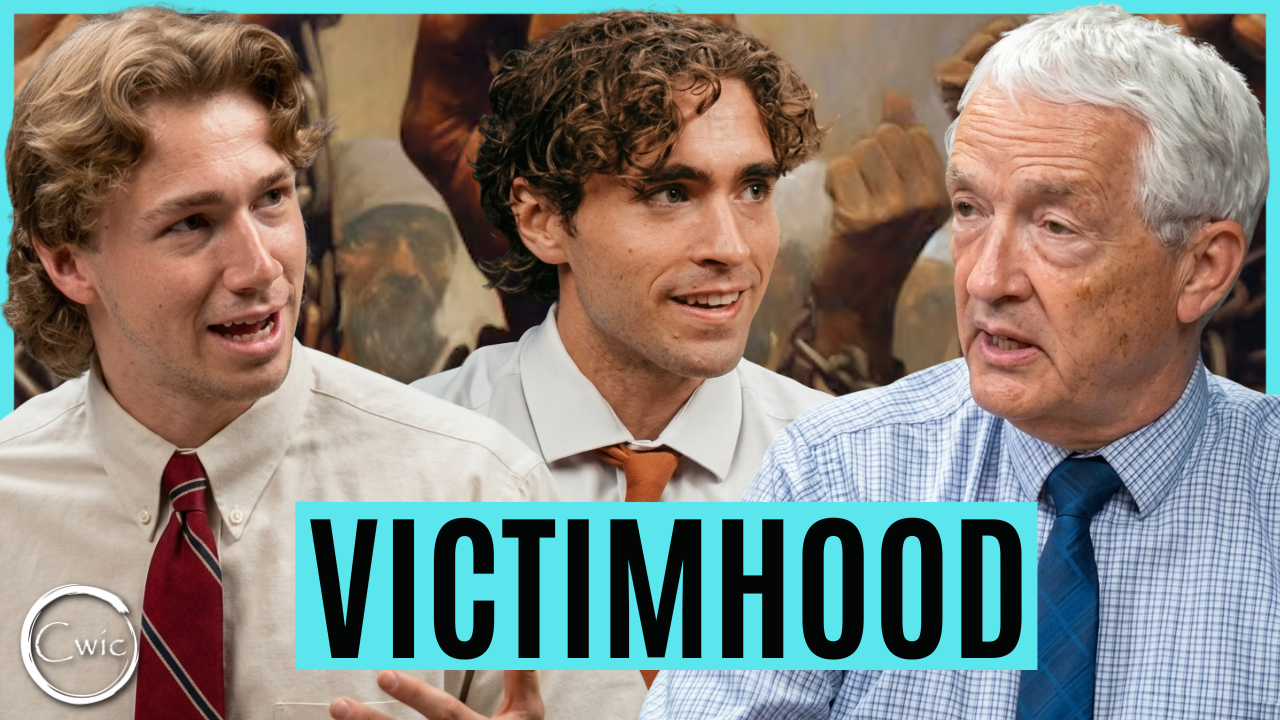
Lance and Kai Schwemmer join BYU professor Ralph Hancock to discuss: Christianity Needs Its Pride Back | Ralph Hancock on Virtue in a Secular Age "If Humility Rules, It Is No Longer Humble" | Ralph Hancock's Case for Virtue's Pride Your Humility Might Be Pride in Disguise | Ralph Hancock on Love and Virtue Tocqueville Was Right: We Need More Pride, Not Less | Ralph Hancock on the Culture of Repudiation The Trap of Equal Human Dignity | Ralph Hancock Responds to Yuval Levin Why the Constitution Cannot Save Us | Ralph Hancock on Adams, Washington, and Moral Foundations Grace Without Nature Destroys Everything | Aquinas, Agency, and the Ethics of Standing for Something
Raw Transcript:
This discussion goes into some high-profile topics such as Christian nationalism and humility as a Christian
expression. Is it weaponized sometimes if it's extracted out from all of the other Christian principles? What about
moral agency? Really interesting discussion on moral agency. In this discussion, we have Professor Hancock,
Ralph Hancock, along with a couple of his students, Kai Schwmer, who you may know along with Lance Anderson. Great discussion. You're going to enjoy this
quite a bit. So, put your thinking caps on. This episode is brought to you by Go and Do Travel and the Wave Makers
podcaster cruise coming November 14th through 21st. There's still some seats left on this. Uh, fantastic lineup that
we have. We've got myself, Hayden, and Jackson Paul, Andrea Woodmancy, uh, Cardinal Ellis, Jonah Barnes, Hannah
Stoddard, Aroni, Jacob Hansen, and Kevin Prince. uh fantastic time on these
1 minutecruises. You get the online community and and get to meet everybody and very likeminded people on this cruise on the
Wavemakers cruise. So to find out more more go to quickmedia.com up at the top to trips and events and scroll down to wavemakers podcaster cruise and we'll see you there.
The city and the soul.
Welcome back everybody to the city and the soul. My name is Kai Schwmer. I'm a student of political science and today we are going over the conclusion of love
and virtue in a secular age here with of course fellow BYU student Lance. Remind me your last name.
Andrew.
Andrew. I Yeah. The these these European names, they throw me for a loop. Oh, good.
And of course, we're also accompanied by the author of the book, Professor of Political Philosophy, Ralph Hancock.
Thank you, Guy. Good to be with you and with Lance. I appreciate you being here.
It's it's fun to come to the the conclusion now of this important book where you I would say very succinctly
make your case for for why this uh idea that we'll be discussing today of of virtu's pride is is so important and
also the way that it distinguishes itself a little bit from some of the contemporaries that you have mentioned and their work on the issue. Um but
Lance beginning what would you say to summarize the kind of a daunting task of summarization but but where would you say we've been so far?
Oh that is a very daunting task. So I think so far what watch the the last the three episodes of this those three episodes were phenomenal.
You should go watch them for sure. But where we've been so far is we've talked about essentially kind of the modern secularization of uh of Christian love
and how it's become kind of a pseudo humility. And then he goes into the philosophical and theological implications behind this pseudo humility
and why pride could actually bring Christianity back to the state it's supposed to be in a more traditional
classical understanding of Christ's love and how that affects you know our our lives and as political actors. I think the conclusion offered some really
meaningful insights. Um I think that your um both kind of admiration for and critique of uh living um talking about
the constitution and kind of how we live in that constitutional society. But the constitution depends on our culture that we have already going into it. It
doesn't create the culture. It lives and thrives off of one that stems from people that have pride in virtue that have pride in their Christianity. They
have pride in virtuous action. And so I thought it was really interesting. I think it really just neatly and succinctly demonstrated why virtue is so
important and why having pride in our own virtue rather than being so wrapped up in this um wrapped up in the other
rather than the the self there that basically the loss of balance between the two how that kind of harmed Christianity as a whole.
Now what did he get wrong?
Yeah. No, that was [laughter] that was well said. That's probably better than I could have uh boiled down a main takeaway of the book. Uh I guess I would
add uh this if you uh if if we go back to the beginning you remember I I set things up in the preface by talking
about the same and the other. These are very grand abstractions. They really go back to uh really to to Hegel and the
German philosophy uh continental philosophy since that time. But uh the point for us is that uh
modern leftish ideology which tends to be very dominant and really uh has uh
sort of colonize the brains of many people who aren't at all leftists.
That's why I think my my my book can be useful. Mhm.
But um the the point of the same and the other interplay is to see that we do uh
kind of uh oscillate between these two poles. Um otherness meaning u elevating
5 minutesthe victim or framing all morality in terms of the victim to the point of suppressing, denying, being ashamed of our own virtue.
by which I mean to convey our own tradition, what is good about uh our country, what is good about our our
civilization. A leading to uh what the great uh English conservative recently deceased Roger Scrutin called the
culture of repudiation. So that aligns with the the reference to the other. We cannot affirm anything good or
satisfying or happiness producing flourishing tending to flourishing for ourselves.
Ethics is all about the other and therefore about the victim.
But at the same time the other pole of this which accompanies it is an assertion of the identity of the same.
you know, the um the unhappy student at Yale that I cited early on
who just wants to be ratified, wants to be uh wants to be at home, not to be uh not to be judged, not to have to compete
uh according to the standards of a traditional intellectual uh enterprise.
So we have oscillated or we tend the very logic uh of our
post-Christian ethics oscillates between these extremes and excludes the middle. We oscillate between
the other and victimology and the same um identity politics or you could say extreme individualism, extreme selfishness.
And what's excluded is the middle. And so my provocative name for this middle and it uh it was the working title of
the book that the uh University of Notre Dame press people uh didn't uh quite go
along with was Virtu's Pride. A strange title for a book uh that really embraces
uh a Christian theological framework. And that's the that's the kind of provocation that I
bring to a head uh in this conclusion that there's a surprising sense in which
uh uh uh Tulkville was right. I guess since I've mentioned him at Yes. Yes, it's kind of it sets the tone
or it's it's sort of the the uh the tonal
note, the keynote u that I I quote in the second to last paragraph the book
and it's it's worth quoting because it's it's the kind of thing I I've probably mentioned it before because uh when I read this from talkell
I'm inclined to say uh you know echoing Renee Zelwagger in the in Jerry Maguire. Is that too old a movie for anybody to know about anymore?
Tom Cruz one. Yeah. Yeah. I know.
When she says to Tom [snorts] Cruz, he's trying to woo her or or you know say things that will win her. And she says,
"You had me from hello." Oh yeah.
It's a sweet moment. But Tokville, he didn't need to write from he didn't need to [laughter] write any after he wrote this. He didn't need to [clears throat] write anything more. Well, here's what it is.
Far from believing that one must recommend humility to our contemporaries, I should want one to strive to give them a vaster idea of themselves and of their species.
Humility is not healthy for them. What they lack most, in my opinion, is pride.
Then then look look at the way he nails it down with this sort of ironic formulation. I would willingly trade several of our small virtues for this vice.
I I'm sorry. That's just that's just too good. I just resonate this because uh with this because look, there's much
authentic talk about humility and humility is a fundamental Christian virtue, but it's so misused. It's it's weaponized.
Mhm.
politically uh and ideologically and it is um sort of torn out torn away from the
overall framework the web of uh concepts and teachings of the gospel to to become a a hammer to beat down any confidence in virtue.
Yes. And I I I think in this chapter you you dive into that and the reader will be will likely have their mind turned towards some moment that they've likely
seen where individuals who often um kind of from this this uh more progressive
perspective who are very uh allergic to senses of national pride or personal
pride in virtue. um somehow transform what they believe to be their humility into moments of prideful kind of self-
flagagillation in public where they make this attempt to bring the eyes of everybody to them in exposing just how
how sorry they are how pitiful they feel. Maybe that you you have here in this in this first uh kind of in the header of your conclusion, the first
kind of body paragraph there, maybe you sneak in a little bit of this uh what what you were saying maybe controversial framing, but something very important.
The perfect antithesis maybe to that um actually prideful but humble appearing self flagagillation becomes um toward a
prideful Christianity which to seems to many an oxymoron. you explain how maybe this is a more honest version of of how we need to be.
Well, I I thought I needed to sort of confront the uh I thought the provocation was necessary in order to clarify
what's at stake. Of course, the whole truth is not captured in the term prideful Christianity, but for our
times, that's a key part of the truth to capture. Mhm.
Uh prideful means uh standing for something. Isn't that a title by President Hinckley? I think it means uh
means that there there must be some content that we hold to to fill the
space between these two extremes of the same uh and the other there must be something to stand for. And since you've
mentioned it, it really does uh I don't uh take up in any full way here the question of Christian
nationalism. I I I suppose I never say that that term, but that's the kind of question that is at stake here. And I'm
uh am I a Christian nationalist? Well, let's talk about it [laughter] because if if u if being being patriotic
makes you a a Christian national if I'm a Christian and patriotic and actually I don't think these things are absolutely
disconnected. I don't think they're the same and they're not absolutely disconnected. And then if you want to accuse me of a Christian nationalist on
that basis, make my day. I mean, yeah. Um, did did uh either of you happen to see that uh
uh we were flipping channels on Sunday night and Julie said, "Stop there at PBS. There's a there's a national memorial
service." Uh, have you seen this? It It's been done yearly for many years.
Gary Cise, who does a lot of Do you know the actor Gary Cise?
Maybe everyone my age knows who he is, but he's he does great service to veterans.
Anyway, he was he was the master of ceremonies along with an actress Mary McCormack. It's a patriotic program
with the military bands, a fair dose of country music, which I thought was going to put my wife off a little, but she
actually uh got into it. It's the guy who sings uh you should have seen that in color. I can't remember. Have you ever heard that song? Like uh anyway,
why? Because it was so just it was patriotic. and it was Christian and it was on public
television [laughter] and I thought that was good. Yeah.
Uh I think there's also a time I mean in in our education especially in college
and also in high school to talk about you know there was this uh deep blemish on the republic having to do with slavery. There are many problems to be
overcome, but essentially if we can't love our country, what are we talking about here?
Yeah.
Yeah. And I think it's totally okay, like you said, to love that it was founded on Christian principles. I mean, although they came from a lot of different uh sects of Christianity, the
founding fathers were predominantly Christian, like overwhelmingly Christian. And those morals, they all came from that Christian perspective.
And those are the morals that again like you said there are some blemishes but it created the the framework that allows us to live in a country that is the freest and honestly the best place on earth.
And so I don't think there's anything wrong with being pride in like having that Christian nationalism at all.
Yeah. uh I don't love the term but again if if if [laughter] we're frequently excluded unfortunately if those who there's that side of
[clears throat] the problem too but those who uh regard and this is not hypothetical I think there's a broad
swath of the of the left uh side of the spectrum including those who call themselves
liberals now who are just allergic to anything uh patriotic and they fall into this guilt
complex or this culture of repudiation where anything uh the the the essence of virtue is to repudiate anything
associated with us with our traditions with our way of life
and u so that's that's one one way of u articulating the the target of this whole book
yeah it's it's interesting I overheard and and reacted to recently a conversation that was held between um
one prominent leftwing pundant and uh an individual running for Congress um under a Democratic ticket here in Utah. And
the individual remarked that it was the first time in his life that he had heard from left-wing individuals and had himself been compelled to use
terminology of America first, which is interesting. It is this psychological divide that even terms that express national pride um is
something that that entire swaths of um of the population have become allergic to. Um and I think in large part because
they misunderstand it. Um, but also because there has been a very uh, and you point this out, there's been a very
heavy-handed effort made to warp the sense of pride and the sense of, you know, morality that individuals have in a way that is ultimately destructive.
And I like kind of diving into that.
There's there's a great line that you have on the next page where it says the arctic initiating commanding and thus in a certain sense necessarily prideful
character of moral agency is essential to our humanity. Would you dive in a little deeper on that? Why why do you think this is such an important thing to get right?
Yeah. Where are you on the page there? Uh 246.
Oh, one more page over. Yeah, you got it. I have it marked too. I must be on to something. Well, the the uh yeah, this this term uh or this
concatenation of terms will be a little mystifying to those who haven't read the book or heard the earlier episodes
because a lot of this is taken from uh Pierre Man that's m- an a great uh French political philosopher.
uh and it's a manant I make a lot of use of manant to sort of reconstruct what there is to be proud about or what
like the essence of uh active virtue or of virtuous action is what the essence of uh I'll use the latter day saint
favorite term moral agency so I use manant earlier in the book to get a handle on the structure of action and
what he shows uh shockingly to those who are allergic to anything that stands up for itself
is that action is arctic, initiating, commanding. Three words that go much in
the same direction, but arctic comes from the Greek for uh ruling or initiating.
So I guess it kind of combines initiating and commanding. Uh and that just refers to the fact that all all
moral agency is um it can't be reduced to equality or
actually there's an unequal dimension in any moral agency because there's initi an initiating commanding commanding
sounds uh harsh. Uh there's a um all action is a proposition of some good.
Yeah. And when when we act for the good, we have to have confidence in some good.
And that good must be concrete and sufficiently embedded in a concrete community that it's that it's not an abstraction.
Uh it partakes of what um uh Alexi detoville called uh moral analogy. It
links together our ideas with the concrete practices uh of our communities
and therefore real action doesn't wait for equality. It doesn't wait to see what others think.
Doesn't wait infinitely to see what others think. It doesn't defer in advance to uh uh the opinion that
somebody else might have or to some uh abstract uh human universality.
it's particular initiating commanding that doesn't mean that we've you know suppressed uh the the the
ethical dimension of uh equality in the sense in which we are all uh sons and daughters of heavenly father with uh in
a certain sense an equal human dignity as discussed earlier in the book but it means that if we're going to act we need
to step forward with some confidence that is arctic initiating ing uh and
commanding and therefore uh necessarily prideful. There's a prideful dimension of uh moral agency. Uh you
know I've assoc I associate it with um the 13th article of faith which is uh
which goes back to uh to Paul in the New Testament and I I also think it goes back to Aristotle in a significant way.
Whatever is virtuous, lovely, of good report or praiseworthy, we seek after these things. It means we
we our action is based upon some um public agreement about something that is concretely good.
And and the action is there in the very sentence. You know, we seek after these things.
We don't just analyze them. We don't sit back and acknowledge. We seek after them. I also find it interesting you mentioned that that formulation that uh
Manat gives is both liberal and Christian because it posits a real liberty at the heart of creation. I thought that was really interesting that like it to think about that even though
there is a defined good that the action is like the grammar of action is posited towards like that's why it's heading for it's still at its sense a a liberal
ideology lowercase L liberal ideology like centered on like you said moral agency freedom is part of virtue.
Mhm. So there is a dimension of individual initiative and this you know this points to the sort of deepest
theological stratum of of my argument which I think was uh covered in the in the third of the book and in the
therefore in our last uh episode that is and this will resonate with Latter-day Saints but I would hope not
only with Latter-day Saints that uh freedom is part of the constitution of the
cosmos. It's what makes the world go around uh in a in a deep sense and and
that means that uh it's not um accidental to the meaning of all things.
It's not just that there is like some uh static eternal truth and then uh the
human condition is such as to try to conform itself to that as much as possible. That's part of the truth that
that action conforming to eternal order or eternal law to God's
will or to the eternal logos. That's part of the truth. But within that logos, there must be a
22 minutesthere must be um space for the arctic initiating commanding character of
action or moral agency itself. And that means that um I don't know if I can turn to the page where I say it here, but I
say it somewhere uh in this final chapter that um
I well here it is I think at the bottom of page 257 if you will allow me to quote myself. [laughter]
My theological commitments in this argument are quite simple in general but immense in their implications. I propose
that morally and politically responsible human action in this natural world, this uh second estate, this temporal
existence as we say among Latter Day Saints is in some way eternally meaningful.
The human story including our individual stories is part of eternity.
the um the great French poet and essaist who died uh in the first battle of the
first world war. Uh Charl pige a great source for Pier Manan too. He he was so
he was endlessly brilliant and [snorts] um eloquent on this topic. The the eternal and temporal are not two
separate zones. They are mutually uh mutually implicated. um
our what we do in this life is part of eternity. It makes a difference. Mhm.
It doesn't it's not just like a uh an accidental period of mortality maybe conditioned by
the fall and by original sin that finally is absorbed into some eternal impassive divine reality.
No.
uh what we our our actions uh are productive of eternal meaning.
Doesn't mean arbitrarily productive. It means within uh a divine order that surrounds us and limits us
and supports us. But within that order, agency makes a difference. And uh I I
risk losing a thread here a bit. But coming back uh to what Lance was saying, that's that's Hancock's liberal side. I
think that's the and that's the liberal side of the truth of Christianity.
That's why Christianity is deeply the source of liberalism. And just between you and me and Islam is not for example.
It's the connection between Islam and liberalism is problematic at the most deeply theological level. It's also why
I would say that uh that strict um
strict Calvinism is hard to reconcile with the the deepest and best uh spirit of
liberalism or or of uh or of moral agency. So right that's the uh my my book doesn't develop
a systematic theology but it does propose that if we want to get clear about um
about the ethics of virtue and at the same time about uh a true and
good liberalism so as to avoid extreme post-lberalism either of the left or of the right. Then ultimately we have to be
ready to uh ground moral agency in in the meaning of all things.
And that I think is a is a good segue into how this applies in particular in the in the American context. Now we've referenced this a little bit, but
obviously in a very unique way the United States um and certainly within the Church of Jesus Christ of Latter-day Saints, we have a vision of divine
providence concerning how we began to exist. And so questions of morality, questions of um Christianity, what role
historically and in the present day the Christian faith and religion ought to play in the way that we conceive of you know the nation and its ideals is is one
that's incredibly important. and you go diving in a little bit into of course um some some of the contemporaries and individuals who have who have thought
about this idea and you um cite specifically you um and here you get
into maybe of of course very importantly quoting some some aspects in which he elaborates maybe the the conflict here
that we've been discussing but you also get in to identifying maybe the differences and it's it's not to um you
know make make perfect uh the enemy of the good but or or to you know strain over a net. But these are important questions and for you where do you
believe that those distinctions are most necessary to make and maybe first um what do you think um Yuval Lavine gets
right where do you think he is he's good well uh yes you've all a friend a friendly acquaintance over the years and
a great author I highly recommend uh here I'm commenting especially uh a great book on American constitutionalism
American covenant but he has a great book on um an early book on Burke and Payne and u a book on the fragmented
republic. I've I've assigned him in class uh often and will continue to do so. So he's u a friend and a great
author and he makes a great attempt to kind of uh uh hit the sweet spot I guess
thread the needle is the term in terms of um finding the right formula for a
conservative liberalism a sound uh wellfounded uh constitutional uh liberalism. So I sympathize with his
his project, his intention and with much of what he has to say about how uh our constitutional
structure and his processes uh facilitate their own uh specific virtues of uh deliberation and
compromise and religious toleration. All that is true, but I just think he goes a
step too far in trying to detach um a sound constitutionalism from any
extra constitutional um moral and religious commitments or substance.
Mhm. Now in other contexts he would you'd of he I think you've all would often be eager to say yes uh the constitution is our constitutional
practices are nourished by uh moral and religious beliefs um that do
not necessarily flow from the bare structure of the constitution.
But here he tries to be I think he goes a little too far in trying to be neutral
and neither liberal nor conservative. Um and uh he tries to be neutral as between
or nonpartisan let's say even though he confesses to being conservative within these pages he still is trying to be as
nonpartisan as he can. And that leads him to say oh what are what are the grounding principles that we can all agree on? Mhm.
And do you remember what grounding principle he he comes up with? He's he so he agrees with me with us. I trust
that uh the constitution does presuppose some uh fund fundamental ethical premise
or premises that it cannot be produced from the bear text itself. But so where
does he go in search of uh of an ethical source or foundation? I'm being the
professor here in cuisine you was it the unity uh or the idea of unity or yeah but what is yeah what but the basis
of this unity the inspiration of this unity is the idea of [snorts] is it disagreeing better or am I
no that's part of the process yeah but that's that's the neutrality no he he he reaches for u a
Judeo-Christian term and and you've all I believe is a is a serious Jew
uh but he reaches for the principle of the Judeo-Christian basis of equal human dignity.
Remember that and we all resonate with that. That's a big part of the truth. But my shocking claim is that it's not enough. Mhm.
And in fact, it tends it it can tend to uh feed into
the leftish or progressive appetite for criticism, deconstruction, uh
repudiation of sort of commonly held like concrete
uh moral, cultural, traditional substance, moral substance. There there
have been few radical progressive changes and efforts made in the United States that have not been framed under that aspect of basic human dignity.
That's the thing. So I it's it's hard to come out uh in public looking right at the camera and say
uh basic basic human basic human dignity or equal. Yeah.
We could put this part of our in part of our overrated series or we can just say it right now. human dignity is overrated. Wow, that's shocking. It is
overrated if when it becomes detached from any from all um like concrete and definite uh moral substance. And I think
that's the trap that uh that Levvin falls into. Let's uh can't we all just
agree in equal human dignity? And I'm saying I can't agree because it depends on what you mean and it depends upon how
you tie or do not tie your sense of equal human dignity to something definite and concrete. Something you can
shake a stick at like uh I don't know the difference between male and female or the real meaning of marriage or uh the need for character education. Mhm.
Well, from an LDS perspective, every time I hear the phrase equal human dignity, it just calls to mind the words of Alma.
Um, when he says, "How great is the inequality of man because of sin?" And he goes into a little more detail, but essentially he hits the nail right on
the head that like sin creates inequality. That there is immorality and engaging in immorality and advocating for immorality leads to a collapse in
the moral order and also the collapse of the soul. and that the souls can reach a state of inequality because there is righteousness and there is sin and
there's a progression and a path to becoming like God and everyone's on different stages of that path. And so I don't I think very few people would argue that a serial killer or a
terrorist deserves the same dignity as a 9-to-f5 construction worker living in New York. I think that there is a that
just a is a happy guy lives his life that there is a vast gap in the dignity that both of them are afforded. Well,
you you make the point very effectively by choosing extreme and undeniable examples, but yeah, maybe let's let's uh
venture into more hazardous territory by saying that even in more uh homely and common examples. It's not the question of the serial killer that actually comes
up in uh Sunday school class or in your college classroom or uh when you're uh I was going to say at the bowling alley
with friends or wherever where wherever you are with friends. Uh it's more things like um all all lifestyle choices are equal.
Therefore, uh if somebody wants to be I'm in a controversial mood, I guess if
if somebody wants to be uh uh put uh career and self self-fululfillment over
uh family life, uh that's just uh their choice and that's as good as any other.
Yeah. and because of equal human dignity. But I say no. Uh we need to be we can appreciate different people's choices and not everyone is maybe well
suited to family life or has that opportunity. And yet it's called Mother's Day for a reason. Excuse me.
Right. Yeah.
Yeah. you see the tendency and it's it's some it's uh I don't absolutely you know
disagree that uh in our church meetings on Mother's Day we should also cut some slack to women who aren't mothers and
give them credit but it can happen at the expense of like honoring mothers which is kind of the point well I think they're called birthing
persons now I think is the correct term thanks [laughter] for reminding us of that correction so what I'm saying is
yeah, we're not just talking about serial killers or not. We're talking about concrete like cultural framing
that actually encourage people along certain lines and and discourage others. Um, we without being
harsh or crude in drawing lines and distinguishing what we think is a good path from other paths, we still have to
be um unashamed about uh praising motherhood and fatherhood. Yeah.
Praising womanhood and manhood, for example. I I think I think this human tendency maybe to to deal in the
extremes, although it it can help to um allow us an obvious example of the application of some moral law. I
[snorts] think it also is detrimental in many cases because we begin to be forced into a binary of conversation where
morality can only ever be spoken of when it it's in in such a clearly objectionable case as in that of a
serial killer or that action of the state or by the broader society to apply some you know religious or moral
standard uh could only ever be Christian fascism. And when we deal in those extremes, when we allow that framing to
be taken by people who, you know, may hear what you're saying and react um in in an incredibly shocked manner, we we
lose a lot of ground. But I also think that we very significantly lose a sense of what what the nation originally was.
and reading over the the sections you've included by Yubalin, one of the things that came to my mind was the words of
37 minutesJohn Adams as he described um the utility of the constitution and he described it being only for a moral and
religious people and more importantly that it was wholly inadequate to the government of any other. when we rely on the Constitution to um encourage
positive action and and to bind us and protect us while simultaneously departing very radical radically from the way it was interpreted by the
individuals who wrote it, I think we open ourselves up to a a lot of um danger of decline both morally and and
in our institutions. Well, I think that point is totally true and it also reminds me of uh um President Holland
when he gave an address at BYU a long time ago where he talked about how why can't we just have a George Washington as president today? Like why don't we
have that? It's because we don't have the people that would elect a George Washington. And so you said to that moral decline, it's not the same not built on the same principles. People
don't have that same shared that unity rallying cry around moral virtue anymore.
Yeah. It's I'm glad that George Washington has come come up alongside John Adams because I was thinking also I mean the counterpoint is not a by no
means a contradiction to what John Adams says about a moral moral and religious people is uh George Washington uh in the
farewell address I think and elsewhere just just uh praising uh the the the providential blessings of this country
and the fact that uh that it this country arose and emerged uh in an age of uh enlightened Christianity.
So that that's the liberal note then.
It's not just it's a Christianity that has learned to be um tolerant and uh uh capacious and not afraid of rational inquiry.
So and yet will hesitate from you know killing itself over issues of transubstantiation.
So and and and um in in the farewell address, Washington is also very clear
that everything depends upon private morality. Our our foundations are laid in a private morality that is
uh [clears throat] defined and supported by uh Christianity. So there's in the
found the founding is um a conservative Christian liberalism or it's based upon a
for that period a liberalizing Christianity but from our perspective now today would
seem outrageously uh Christian nationalist let me let me put it that way. So, but I think uh we can find a
kind of moderate uh conservative liberal touchstone uh in the founding. It doesn't answer all contemporary
questions. We still have to sort things out uh in our present day uh while keeping in touch u with that touchstone.
Mhm.
But theologically I um I also wanted to mention since we were we have touched on
my sort of my deepest theological assertion about the eternal significance of moral agency. What I try to show is
that and this is this seems to be I'm talking a Latter-day Saint lingo to a considerable degree here, but I try to show that within the Christian tradition
and especially in no less a an authoritative medieval Catholic thinker than Thomas
Aquinas, we can find some some very uh great resonance, some beautiful
resonance uh with this idea of the eternal significance of uh human action.
Um Thomas Aquinus for Thomas Aquinus natural law is not like some mysterious code written in the sky that tells us
41 minutesjust what we should do. Natural law is human participation in divine
providence. We are do God delegates to human beings the capacity for meaningful action. So
that's that's the the the the tie I try to make uh between u
a conception of of moral agency which has all kinds of latter-day saint resonance and the Christian tradition uh
of Thomas Aquinas as reexpressed in a certain way by Pier Manant that's so there is this broadly
Catholic Latter-day Saint uh ethical axis at work in the whole development of the argument.
Absolutely. And now as we kind of dive to the conclusion of of the conclusion, talk to us a little bit about and and we've touched on it a little bit
already. Um this idea of of grace and nature, exception and rule, which is our our heading there. Um and and
particularly, and maybe this is just me asking because because it's what I've been particularly interested in, what do you see the role is then of the state in
these kind of matters? I think this is maybe the most difficult line that we have to walk because we know that compulsion often breeds the opposite of
what we want but that some kind of moral standard must be affirmed.
Uh that is a that is a tough one. Uh essentially I'm I'm going to go to um
uh an argument that uh president or elder Dan Oaks has made more than once and that is that um
no law certainly no body of laws is morally neutral. Um uh let's see the way
that he says it is not exactly like that. Oh, he says some people say you can't legislate morality and he says
like you're never legislating anything else. So in that sense, I mean another overrated distinction, this could be an
episode is the absolute dichotomy between freedom and coercion. That's a,
you know, a um a a libertarian framing that uh is uh inspiring and has a lot of
truth to it in the sense that we should be resistant to a an overly coercive and ever expansive national state. But all
my sentiments like to talks are completely uh libertarian in the sense of resisting that expansion of state
power. At the same time there's no way to resist it except on an alternative moral ground. Uh so
uh if we think that um let's say moral agency cultivated in a
family and religion friendly environment is the truest meaning of freedom.
This has to matter for our politics at every level, state and national. Now
just uh how does it matter? Uh for example, it would mean that uh that
religious freedom can is not religious is not absolute neutrality or indifference as between uh
religion and atheism.
It mean it it means that um to quote I think it was Scalia he said freedom of religion is not freedom from religion.
That's right. Well, that's that's the whole question because it tends to if to frame it in a completely secular neutral
language actually uh is a step towards establishing atheism or secularism as
the only official as an official religion in a way because the only publicly authorized uh religious uh
framework. Not to interrupt again, but but I love the I loved seeing all over my my ex or Twitter timeline, there's a
video of Neil A. Maxwell discussing that very idea, how irreligion is being made the state religion being reposted by
Senator Mike Lee among others. Many members were saw I wonder how it came about that our algorithms were sufficient
that we both saw that. Yeah. No, that that statement by Max, Elder Maxwell, I wish uh incredible. I would if he could
come back and address the general conference again. [laughter] Uh I would welcome it. And uh I will just say this much if everything uh done
in the name of Elder Maxwell were actually faithful to the broad contours of his thought
[snorts]
um moral, spiritual, and even political. That could be a good thing. Yes. Mhm. I tend to agree.
So, what would you say to Latter Day Saints that would push back against that theology, that that idea, because a lot of them do. I think that again on
Twitter, you see a lot of opinions from both sides. And um underneath the Maxwell quote, there were a lot of Latter-day Saints pushing back on the
idea that there is a secular religion or that uh religious principles should be taught in schools, that there should be a religious like foundation morality.
kind of just that uh really kind of postmodern liberal ideology that secularism isn't necessarily a religion, but that they they acknowledge there is
morality, but they don't see the disconnect between a Christian morality and then a secular morality and how those don't really overlap much anymore.
Well, right. They think that excluding religious morality from the schools, they think it just leaves a an obvious
like what is it a factual default? We're just going to teach the facts. Well, but
[laughter]
those facts are embedded [clears throat] in a worldview there. There will be a
worldview one way or another. I mean uh as long as we have
uh public education for example uh we're it's infor this education will be
informed by some understanding of the the citizens and the human beings we're trying to make. What is that understanding? You know, and now this
this comes to a head in the most like flagrant uh controversial issues such as uh uh transgender stuff, but that's
really just the tip of an iceberg is is making a human being about some the absolute rule of idiosyncratic
individual choice or identity. the assertion of the same that we spoke about earlier
or must we agree upon something uh concerning what makes a good human being
and if that's so then the the law and education will always be based upon u
some rough and you can ever evolving or self-modifying agreement.
48 minutesIt's again like the categories of freedom and coercion. People tend to try to divide the world or the possibilities
into these uh these uh crude uh polarities as if oh then you're a
theocrat, right? Because you believe that u our public life and education must be ethically informed. No, it it
will be ethically informed. We're talking about what ethic? And I think a uh I'll use the term again, it's subject
to misunderstanding, but a a liberal conservative ethic, an ethic
grounded in a moral and religious tradition, but with an opening and and as George Washington said, an an
enlightened uh uh spirit that is also uh uh tolerant and capacious, but
everything within limits. So, I haven't made policy recommendations here, I think, but I've just making the case
that our laws and policies will not be ethically neutral.
That's for the enlightened legislator to read and then discover and then write up in in a brief.
But I don't know, driving in then, I suppose, to the last pages, is there any one section you think perhaps that you're most proud of or or what would
you what would you have the leader or the reader kind of lead away thinking?
Well, let me um let me just say something about how because you singled out this theme which is
fundamental and really does sum up what the book has been saying all along. But I'm trying to show how the problem of uh the the Christian theological problem of
uh grace and nature or nature and grace is can be seen in the let's call it the
political moral problem of the of the rule and the exception. Mhm.
Um the rule or nature is you human beings need character. Uh some things
are good, some things are are bad. Uh justice must uh prevail. The exception
is uh mercy and grace and the mysterious
eternal equal dignity of every individual.
uh but if we embrace the exception and make it the rule then everything is perverted uh
and corrupted. I did come across uh a sentence here which page 256 right in
the middle that short paragraph in the middle of 256 and okay I admit it I was kind of proud I had written this
sentence uh when I when I read it. If humility rules, it is no longer humble.
If victimhood pays, then we are plainly plainly being played by the victim.
You know, uh real human motives and political stakes uh don't go away uh
just because we adopt this sometimes extravagant Christian or post-Christian language of of humility and grace. uh
there still are real questions to be decided and real winners and and real losers. So let's not ignore uh the
motivations the the material motivations that can drive the whole uh uh ideological project and political
project of of victimhood. If pe some people are clearly making it pay. Mhm.
Yeah. And uh that's the sense when the exception becomes the rule. Pretending pretending that the exception can be the
rule is a luxury no civilization can long afford. I love that. Yeah.
Yeah. Mhm. And so I bring it back to the great the beautiful tomistic formula that the more I thought about this the
52 minutesmore I saw that everything is was really captured by Thomas Aquinas when he said that grace does not destroy
it perfects nature. Uh that means that equal human dignity and the mis mysterious
uh precious individ individuality of every human person does not destroy nature, the necessity of character, the
necessity of rules, the superiority of some ways of life to to another. Does not destroy that. It uh perfects it,
redeems it, lifts it up, opens it up to a divine and eternal perspective. Mhm.
And I think you make a good case for that. I love the the sentence. This humility of the practical uh moral agent
under God is a truer and more sustainable humility than the false and incoherent self-repudiation of the extreme Protestant and the democratic
humanitarian. The mysterious preciousness of the individual person as loved by a personal creator must be held together with the integrity of his
creation. that is in particular with respect for the inherently prideful character of action.
Thank you. That's not bad either. No, that's very good.
And we didn't really close the Yuvall Levin discussion, but that's the closure. The fact is he he adverts to he
appeals to as a moral ground the idea of equal human dignity. But what I point out is that that's too plastic. That's too that's like the exception without
the rule. That's grace taken by itself. That's grace without nature. And I illustrate this by uh
quoting from Justice Anthony Kennedy who notoriously, at least for those of our point of view, Justice Kennedy notoriously, was it in the early 90s?
Was it in it was in an abortion case? Um Justice Kennedy, you know,
probably evoking some Catholic point of view in his own Catholic mind, some Christian point of view. uh he said that
the you know the the heart of freedom is the freedom he kind of gave an ex a Christian existentialist definition the
equal dignity of every individual to invent the meaning of life for himself or herself radically individualistic
radically asserting um the sameness or the the dignity of me
just as I am or as I see myself Um that's the slippery that's the end of
the slippery slope towards which I think uh uh professor Levvin's language is
already tending. Uh and and that's why uh yes equal dignity can be overrated if it's not coordinated with other goods.
Well, I think to close this off, I think it would be great for the listener to be able to listen to kind of your your call to action. That final sentence you write
in the book, I think is just I think it sums up everything beautifully and I think it leaves the reader or the listener of this podcast to to think
about something about how they want to change or what they want to be. Okay.
Do you want to share it with us?
I think it'd be better in your voice personally. Let's let's hopefully hopefully I don't stumble over my own words. It is time to sacrifice our
universalizing and transformative humanitarian virtue, the virtue of humility oriented towards
a kind of leveling equal dignity. It is time to sacrifice that in order to recover this vice that is inherent in
our very humanity and a precondition of true holiness. pride.
All right, Professor Hancock, thank you so much for your time. And listeners, we we hope you've enjoyed this this part of the city in the soul, a series on love
and virtue in a secular age, of course, which you can pick up. And where can they find it? Uh well, it's at uh
Amazon, but it's uh at uh Notre Dame University Press, and there uh I can uh share with you the uh friends of the
author code to get uh a good uh 20% off, I think it is. So, yeah. Mhm. Okay.
Even better. Yeah. Professor, thank you so much. Thank you. The city and the soul.

"I Take This Every Day!"
Learn more about why I accepted Cardio Miracle as a sponsor and why I take it every day!
- Greg Matsen

Stay Connected With New Articles & All Things Cwic!

Cwic Audio Player
All of the Cwic Media podcast episodes on one page!

