
Is It Joseph Smith?
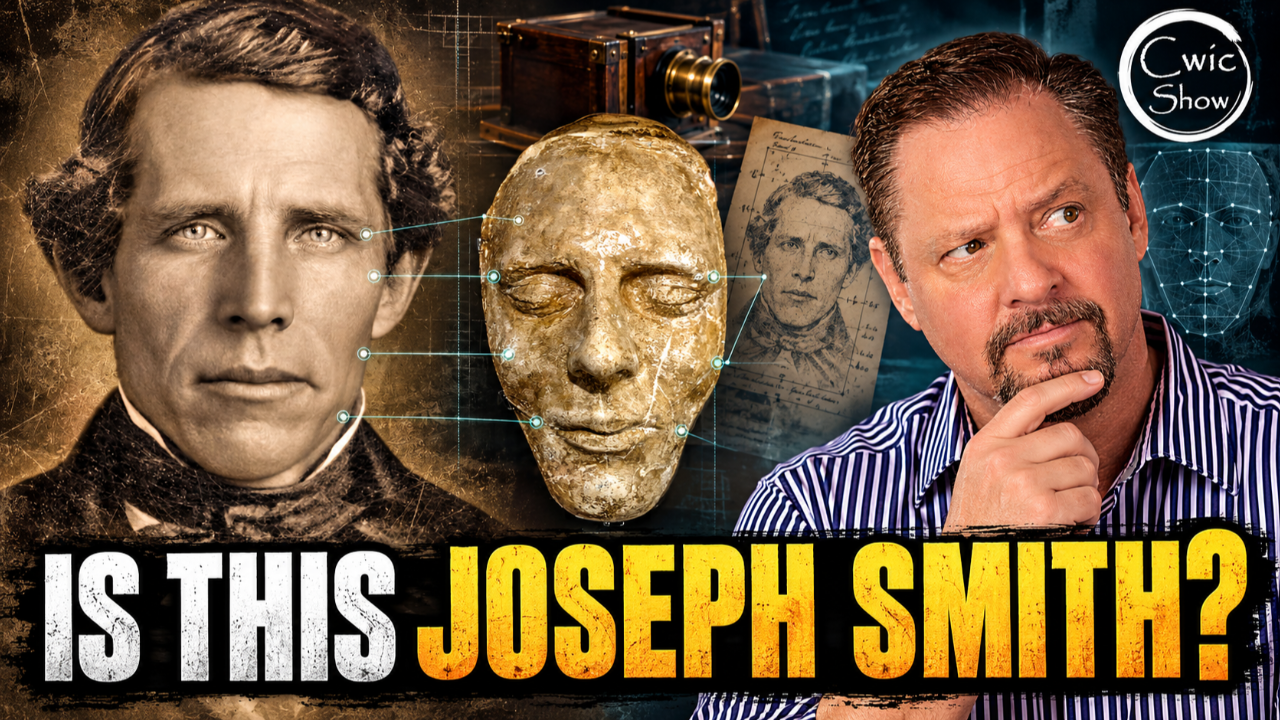
Is it him, Joseph Smith? Intriguing film on the process of discovery with a recently found photograph (daguerreotype) from a locket discoverd by a direct descendant of Joseph Smith. Go see the film! It's great!
Raw Transcript:
A few years ago, a photograph was found in the personal belongings of a direct descendant of Joseph Smith. Among those
belongings was a locket. And inside of the locket, what was expected to be
found was just a watch. But inside was actually this photograph. Many people have said that this photograph is
actually of Joseph Smith. Many say it is not. Maybe Hyram even or or somebody else. But why would it take so long to
find this and why has it finally emerged here? Uh you know almost 200 years later. Patrick Bishop initiating this
project and research into this photograph coming to at it from so many different angles. He and filmmaker Dalon
Pard have put together a documentary that is very compelling. I have seen this. I've reviewed it. I highly recommend that you go check this out.
This is an interview with both of them, Patrick Bishop and Dalon Pard, about this photograph and the process that they have gone through in order to find
out if this is really Joseph Smith. I'm going to put the link in the website that'll show you which theaters this is coming out at. It's coming out today,
October 9th, and will be playing at several theaters. And if it's playing anywhere near you, I strongly recommend that you go take a look at this film.
It's very compelling. It's very entertaining in the sense that it is it grabs your interest. Is this Am I
looking at Joseph Smith? Here we go with Patrick Bishop and Dalon Pard.
So 100 years ago, the improvement era said Joseph's image had been abused as much as his doctrine. You both started out skeptical of the photograph, the dgeray. Am I saying that right?
Darotype. Dgeray.
2 minutesDgerayotype. Right. Um, one of you in in this whole process in this project was convinced that there wasn't even any
photograph or degarayotype taken of Joseph Smith at the time. At what moment did your team start thinking, okay, I
think we're going to change our mind on what this is?
Yeah. I wish Joseph Bricky could be here. As you watched the film, you saw that he was the intricral part in the whole forensic reconstruction. And for
me, that was the tipping point when I saw what Joseph had done and kind of married it to the research that I had.
It seemed to create the big picture that I then just couldn't deny that this was a possibility that was him.
Did how skeptical were you starting off?
Well, um skeptical enough to anybody that I talked with, I would say I I don't think it's him. I I was I was
vocal about it. Um and the main reason was the quality of the image. I think I I want to say that upfront. when it was
first published to the world in 2022, um the images that they had captured of the the metal plate with the glass over
it um had some distortion in it. Um people weren't able to discern scratches or polish marks on the plate from what
were wrinkles, which are actually none almost on the on the man's face. And so they they saw this older guy, you know,
that had wrinkles on his forehead. And when you actually get a clear image of the degara type, all of that stuff
starts to fade away and you start to see this man clearer, the bridge of the nose and that I had a problem with. Um had a
slightly different shape and tone quality to it. And the furrows on the brows were not furrows. They they were just scratches like I mentioned. Um, so
that was I guess part of of helping me truly interpret the image correctly was
4 minutesthen getting it photographed at high resolution without distortion.
So when you give me the story just starting off the original story of you finding out about this, I'm guessing it's what everybody else did when it was
published and then taking it from there and saying, "Okay, I want to really know why why were you driven to even do this?
Why not be like the rest of us?" It kind of looked like, well, I wonder I wonder doesn't really look like him, but I wonder if it is.
So, I had been studying it for 25 years before um it was even created or it was released to the public. And so, I had
this foundation of research. And so, when it was announced, my phone started buzzing constantly and, you know,
calling and and people asking me, "Hey, what do you think? You've done 25 years of research." Well, at that point, it was 20 years of research on this. And um
so I told him I said, "Well, here here's my initial reaction." But the one thing that kept me coming back and that gave me pause was I had photographs of all of his sons.
And the sons looked a lot like this image. I just had a little bit of a problem lining it up with with the death
mask and like I said, the bridge of the nose. And so I I always just I kept going with it, kept researching. And the day finally
came when um Dan Larson, who's the great great grandson, um that opened it, we met and he showed
me the artifact and then I saw Joseph Bricky's forensic research and things just completely started to change for
me. Um and we found more things kept opening up and I started to dig in with research and we found more and more
things and some of it was going on live while Dalon was recording us. Um, some of that you saw was original footage. We weren't recreating that.
So, Dalen, what what made you decide to make a movie out of this?
Yeah, that's a great um question. And Patrick actually is is the source of why
all this came together. Um, I loved your question of, you know, you were skeptical. I there's very very few people who weren't skeptical in this.
You look at the top dozens of experts that were involved in the film, uh, almost all of them didn't think this was Joseph. And they all had different
reasons as to why it wasn't Joseph. And they all came to conclusions at different times for different things
where the final tipping block or maybe a summation of multiple reasons. But so what's interesting to me um, in this experience is you heard Patrick's story.
You know, it's the distortion in the image. It's seeing the connection to the children. But you look at even Lachlan Mai who was a very early advocate of
this stereotype in the film. He's explaining that he didn't think it was Joseph when he first saw it. And everyone has to overcome because there's
such a precedent of what we expect to see for Joseph that all that's all we've seen.
Yeah. Exactly. So this man doesn't look anything like what what anyone quite expected. Even Dan who had his spiritual
experience that made him feel that it was Joseph. his first person he told it to was his wife and she tells him that's not Joseph that's maybe David or
somebody else in your family but that's not Joseph so immediately the very first person who heard about outside of Dan Larson didn't think this was Joseph and
I had just released a documentary last year called uh Woman in Christ and that was really kind of my first film my first film that was going to go into
some theaters um and it was about Latterday Saint women and their desire and the miracles they do following Jesus Christ and It's low budget. My wife and
I sacrificed a bunch to put it together ourselves and uh with some people that we knew that had great stories and and
there was a book that coincided with the film and we were just starting to get going when Patrick heard about this up
and cominging documentary maker that was making this movie and he had just done a presentation with Joseph Bricky and they
were sharing some of their early findings of research some groundbreaking new historical evidences found by Patrick the forensic breakthroughs that
took years for Joseph Bricky to do on that side and somebody had told them that hey what do you guys think about making like a YouTube video just a small
here's a budget for like a 20-minute YouTube documentary and just get your research out there show people what you guys have found and he came home and had
heard of my other documentary from his wife who heard about it um through someone that lived in the valley is my
mom who knew her and she was like, "Hey, I know this this film that's coming out.
I'm going to go to the movie theater and see it. It's like a faith-based film." And he says, "Oh, there's a documentary faith-based upand cominging guy. That's
the type of guy I need to talk to." Actually, I just had a meeting about this. So, Patrick called me and the next day the everything went over my head and
what he was talking about. I was like a spring chicken. This is not my area of expertise. I don't know anything about what Joseph Smith looks like more than
an ex member. I knew there was death masks. I know there's paintings, right?
which paintings were from life. Which paintings are credible? I had no idea, right? Um I and he started blowing my mind the very first phone call when he's
like, "We have Joseph's skull. We have photographs of it from 1928 when the bodies were exumed." I'm like, "That
what are you even talking about? Where where is this going?" And so there began to be new artifacts of evidence that already blew my mind. And he's like,
"And I got a rough draft of our research um that we're going to eventually make into a book. Let me send it to So, he sent me the several pages he had drafted
and I was like, I'm in. I'm super interested. But I was hired to do a YouTube video, like help us just film
some things. And Patrick wanted to open an artifact that was, what is it, 180 years old around that. Uh, it was a
degarotype, an early degareotype of the front view oil portrait of Joseph Smith.
10 minutesSo David Rogers is the attributed artist that drew Joseph in his lifetime and there's a degary type of that. How old
is that degarity type? Is that oil portrait done from life? Is that a real portrait that you know did Joseph really sit for the one that we have? And when
was this degree type made? Was it made in 1850s? Was it made in the 40s? Was Joseph alive when that was the Gary type was made? Is that another evidence that
perhaps Joseph could have had a degree type taken of himself if his portrait is has a degree type of? And that was there were questions Patrick had and he was
like, I'm going to hire you to come film this investigation. We're going to go open up that degree type. We're going to see if we can get it dated. We're going to see what we learn. And while we're out there, uh, why don't you meet Dan?
Why don't you film Dan and have him tell you your story? And why don't I introduce you to a few other people and then if it goes well, maybe we'll hire
you to do more with us. But if not, we don't. And on that first trip, it just blew my mind how incredible this
story was of this research of Dan's story of what Patrick and Joseph were achieving and the investigative
um side. Patrick and Joseph, I can't think of any point where they just came to me and they were just like, "Well, we know this is Joseph Smith. We want to
make a movie about it." It was always, "We're wondering, we have these questions. there's more research that needs to be done and we're we want to
see we we have um things that maybe don't match up to it being Joseph. We want to investigate those and it was so exciting. I was like you can't get this
into a 20-minute YouTube video that you know they're they're continuing to do research. And so I was like we got to get this into a movie. And that launched
us into almost I don't know nine months of filming.
The research is insane. I mean, you have this little thing, you know, and it just all the research that is put into it, the different angles that are brought
in, you know, to uh to try and verify if this is Joseph Smith is fascinating. It really is. I remember when this was published, I uh you had him on the on
the movie. It was uh Shannon Tracy, who I knew and and he lives out here in Arizona with me, you know, out here in
the in the state of Arizona, not far away. And so I was talking with him and I had read his book back in the 2000s
that had when they about exuming the bodies of Joseph and Hyram and him saying that the graves were mismarked or
that they the death masks were switched or whatever it was. I can't remember.
And so I went over to his place and he I don't know if you've been in his his cave in there, but but he's got everything he's got that he works on.
But and we were talking about this and as I recall, I think he was skeptical about the whole the whole uh the whole thing the the picture at the time. And
uh and then I had also been over to other descendants of Joseph Smith. Uh gosh, what are their names? I can't remember right now. I should know this.
They live in St. George. It's Grace is one of them. She's Oh, yeah.
She's a little older, but Gracia Gracia. Yeah. And her and her son.
Uh I think it's Dave. And And so we were I was over there and I was talking to them. They had a copy of Joseph Smith's death mask that that that I took a look
at and held and um and I think they were a little skeptical, too. But I, as you said, I think everybody was in in looking at this image. It's like, uh
it's not that doesn't look like what I've seen all over the pictures in in the in the chapel, you know? It's it's like this is very different. Tell me a
little about this art history. Why would it be that Joseph Smith looks I mean a
as was as Joseph himself said once, I look like a silly boy in this. Why why
would they paint it so differently? And would it if they did and it was a style in the early 19th century of painting
that would I'm not going to say disfigure but but give you a different impression of what someone looks like.
How prevalent was that? How you know if I went and I saw other famous people from the early 20th cent early 19th
century are you going to see the same type of emphasis on the nose and and and other features? Yeah, there was some
variation in the artist, but in the 19th century, the the common practice was to idealize your sitter and try and get the
error or meaning air like their their their essence.
Um, rather and their spirit rather than an exact likeness. Now, there's two
uh portraits that Joseph Smith records that he sat for, ironically, the in the exact same year. One was June of 1842
and one was September of 1842. The June one was Sutcliffe Modsley and that's the profile one that a lot of people have
seen. And uh as you saw what we our research has determined is although it's not lifelike it's kind of more a
cartoon. Actually these are these are Modsley's right here. Um they're they're they're more of a cartoon
but they're true to life. He actually traced those. And then you have this other image that you were just talking about which is really the most wellknown
now. It wasn't in the beginning but um it's the front view with the large pompador
and um so that image um let me ask you Patrick what do you mean he traced it?
So the Modsley image what what they would do a lot of profilists would do in those days is they would cast a shadow of the person. And they they'd have you
actually turn sideways to the light source and it would cast a shadow on the wall or on a you know paper and they would literally trace your profile
outline and then they would reduce that down with what's called a panagramraph. Um it's a mechanical device that as they
trace it there's a pencil or or something on the other end and it it literally does a perfect reduction of it
in scale. And so that's what Modsley did was um trace people's profiles. And they're when you put the death mask in
profile sideways to the Modsley portraits, they're very very very close and similar, which shows us that the Modsley portraits are accurate. Although
they're not lifelike, like I said, but the proportions on the profile, they don't match the man's face on the front
view. So from the very beginning, the first two portraits that were done of Joseph Smith from life, they don't agree with one another and there's always been
this dissonance. The other interesting fact that that my research brought out was I think sometimes we think that everybody had exposure to that front
view that's so famous now and they didn't. Emma Smith kept that in their personal home, even in her bedroom for a
lot of the time for 40 full years after Joseph was martyed. 44 years. Um, and so you had to have a private invitation to
come in and see that portrait even. And the most famous and the most well-known portraits of Joseph Smith were just the profiles. That's really all that existed.
And so after Emma dies in 79, um, she allows her she it's one of the requests that Joseph Smith makes is can I copy
this and and spread it and give it to the world? And she she allowed him to at that time. Um, and so two interesting
things happened. He starts to try and sell them amongst people of the RLDS faith in the Midwest. And he says in his
journal, "Not selling well, our people don't like them." Um, and it's because they they were alive when Joseph was living and
remembered what he looked like and um they didn't think that it looked a whole lot like him. And then Junius F. Wells
um who's from our our faith. He went to Nauvoo and met with Emma and he got to
see it for the first time 40 years after Joseph had died. And he asked Emma, he said, "Is this a good likeness?" And she
18 minutesreplied, "No." And she said, "He couldn't even have a good likeness because his countenance was changing all the time." And then he followed up that and he said, "Well, you don't think it's
a good likeness of him? What did Joseph say about it?" And that's where, you know, you just quoted that he said, "Well, it looks more like a silly boy
than a prophet of the Lord." Um, so one of the things I think that is so striking that that makes you wonder
about those those portraits is that's why you think immediately, well, this can't this can't cannot be Joseph Smith because
this doesn't look anything like these these portraits that I've grown up with and seen my entire life.
And part of that is looking at it and saying, "No, this is a real man. This is real. I could, you know, it just so
different that the realism does not exist in that portrait at all to me." You know, the the the idea of a
realistic image. It's it's not just it it's not just the difference between that profile portrait and and the dgeray
type. It's it it's it's cartoon versus reality.
Mhm.
Also, even if this even if it's because I've looked at several other uh dgeray types and and it's like this is reality.
This looks more like reality than than anything I'm looking at of Joseph Smith previously. And that just makes me think right away, okay, this the way that he
was painted is not that real, right? I mean, those those big eyes and the and the the big
nose, you know, it's just there's it doesn't look real.
Yeah, if that makes sense.
Yep. And the thinning of the lips. And you probably saw in the documentary, we have the Emma portrait and the Emma Dger
type next to each other. Those are only, you know, just a few years apart. Um, and when we, you know, see our church
manuals today or or books that have Emma in it, what are they putting in those books to illustrate her and to, you
know, to to give uh give people an essence of who she was? They don't choose the dger type, right?
Because it it it um as human Yeah. It's not flattering. They we still today prefer those idealized paintings.
Yeah. Yeah. Absolutely. Dalon, when you were looking at putting this movie together, what was your approach? What were you thinking, "Okay, well, this is how I'm
going to do this." When we first began, Patrick was just running me like a workhorse. And I had the hardest time knowing where this was even going.
He's all like, "We got to go to Missouri. We got to take apart this stereotype." I had no idea how that fit into the bigger picture. And he's like, "We got to do these interviews." And and
it got to a point we would filmed hundreds and hundreds of hours. Patrick just was exposing me to all the possible
research that existed. So, how are you going to get it to ? You know, what what's the layout? What does this need to look like? What's the story?
What stories matter? What stories don't?
What evidences are strong? What evidences are guesses? Right? And so, it's it was it was very difficult. Um,
luckily Patrick wrote a book, but the book, if you would have translated that in the film, it still would have been like six hours long. And so it was hard
to know exactly how this flowed together. And I'm not trying to wax spiritual here, but it was a spiritual
process. It was like a struggle to figure out what needed to be said, what needed to happen. And and then there
would be a moment of inspiration that I'd be like, "That's it. That's the line. Out of these hundred pages, I need this one sentence right here." And that
went in. And there was dozens and dozens of iterations of the film that were on the cutting floor at different times.
But the goal ultimately for me was what is the case? What are the hard objective
evidences and along with the story that goes along with that with the top researchers doing the investigation and
22 minutesthat's what made the final cut. But there are pieces of evidence that didn't make it into the film that are supporting evidences. I was like, "Oh,
that's another point or that's another good point or that's another correlation." Some of them wax more spiritual and so I didn't want to make
it biased in any way. If somebody came out too strong with an opinion, I would temper that back in the edit and be all like, "We don't know for sure." So, I'm
either cutting it or it needs to be met with a contrary claim from another expert.
Now, you talked about them going through the process of this and and not being sure, right? Like like so that see that's what you capture in the film.
Yeah.
Right. And I don't know by that point as you're putting everything together if everybody already has a a a an opinion on this pretty strong opinion it sounds
like but it you you do capture in the film like pretty well this is this is an ongoing process to seek the truth on this.
Yeah. Yeah. And and a lot of that I think the majority of that is 100% authentic. Um to to this day I still
don't get Patrick saying to me that he knows for sure this is Joseph Smith Iron Quiet like he he is such a researcher at heart. Um and so is Joseph Bricky. You
sense from these these guys their desire to be objective in their roles in bringing forth what Joseph Smith looks
like. But there's a point of evidence that they can't deny it either, right?
because they they they know too much at this point to say that it's not Joseph or that they're uncertain or that more research anything that they could think
of that could be tested they went after including you know when we first started we had no intention to end up in Canada
or to end up back in Missouri to redo things that we thought we had already investigated but we needed to look at them in a different way um that you see
in the film those all that was just real that was as we were filming as we were going as I was editing the things it would drive further investigation that needed to be done to test it.
Yeah.
Can you give me a an outline of of Dan Larson's lineage
and and the actual custody of the Dgeray type? How do is it lost for a while or do we always know who has
it all the way up till Dan having possession of it?
Yeah, that's actually the big mystery and the question on the historical side of this. So Dan's lineage is Joseph
Smith Jr. to Joseph Smith III to Frederick Madison Smith.
He's a president of the RLDS church.
Frederick did not have any sons. So Lois Smith, she married a Larsson. So her name is Lois Smith Larson. And then she
had Dan. So Daniel Larson. So that that's the lineage. It's it's five generations. Joseph Jr., Joseph III,
Fred M. Lois and Dan. Um, what we can show
without question is that Emma Smith owned a locket.
We can show without question that Emma Smith owned a dgeray type of Joseph Smith. We don't know that those are one and the same. The the historical sources
don't ever say a locket dger type. Um, and Joseph Smith III inherits a dgeray
type that Emma owned. Then this this locket and dear type, it's gone from the history. We cannot find it anywhere. And
so we know absolutely that there there's this locket that exists in the Smith family that hasn't been found.
And so then in 1992, Lois Smith Larson um gives her son a
whole box of Smith family artifacts. And we show that in the film. And there's, you know, there's a bunch of coins and
knives and and rings and um three lockets, two of which are watch lockets, and then this other locket. And he
couldn't get it open when he first inherited it. And it sits then in um his
home safe for 28 years. And during CO he's like I guess we should get this out and just kind of look at our old family
heirlooms. And he grabs a letter opener and prize the thing open. And to his surprise it's not a watch.
It's the image of a man from the 1840s.
Um, so there's there's a locket dear type that
we have now that satisfies what we know existed, but that middle gap with Fred M is missing. We we don't have a
historical source that shows that Fred M. Smith has that. And so we've had to do all these other um lines of discipline to try and figure this out.
And um so we've not only done the historical side, we've done a material cultural study and then the forensic side. And so you know I don't know what
else we can believe when all of those disciplines start pointing the exact same direction and saying yeah this is authentic. This is him.
Now is there an actual painting with Emma and a locket?
It's right there. That's a that's a faximile copy of it. But yeah, that's how we know it exists.
Um, is because in the film you see, we go back to Missouri the second time, like Dalon was saying, and we actually dig really deep into Modsley's drawings.
And that's where we find out he's not just a documentary artist. Modsley is like a forensic artist. He is drawing
things with exactness. And we know that if he drew it, the artifact exists.
Actually, we have found every single artifact in all of his paintings except the locket.
As you saw, we found Joseph Smith's sword. We found the epilats. We found Lucy Maxmith's Book of Mormon. We found Emma Smith's rings. Um, you know, we
look for top hats. All those different things. And we've located them. The thing we haven't located is that locket.
Yeah. And it was And not only can we find every artifact, but all the artifacts match the right dimensions.
So if you blow up people to scale of what their height was and then you look at Joseph's sword compared to his height and we find the original sword, it's the
right length. It's the right width. It's got the right designs. Even though Mosley's drawn a sword that is like this like super thin and this big because
it's on a like small thing because of the way he would trace artifacts and perhaps with his panagramraph and reducing size he or he's using some type
of fancy mechanism to make things super small. The the locket we see Emma wear is so tiny that the most pictures you
find online you can't see anything. You see a circle. You don't you can't see anything. So, we had to find the original and we had to photograph it
with macro lenses, blow it up, and see if Modsley added additional details to the locket. And then we had to measure that locket to see does it match the
right dimensions to the one that Dan owns. And I'll leave that for the movie to find out if any of those corresponded.
Yeah. Okay. Uh, Lucian Foster is mentioned by Joseph Smith III as the
photographer in this. Is there any corroborative evidence uh that helps put
Joseph Smith in that in in his studio at that time or wherever he has the photo taken?
So Lucian Foster is a branch president in New York City um prior to 1843
and he learns the art of um the gear type while they're in New York from from the best that there are. He actually in
1842 goes to Nauvoo and he purchases land. We don't know how many times he went back and forth, but he moves to
Nauvoo permanently uh in April of 44 and that is recorded in Joseph's journal that I met with Lucian Foster. He called
upon me, gave me a pen. You know, there there's a little interaction between the two. Um then Joseph dies in June of 44.
And in August of 44, the first advertisement that we know of from Lucian Foster goes uh in print. And
what's interesting is a lot of people have said, "Oh, well, the first advertisements in August. He's not in business. He couldn't have taken one of
Joseph Smith regardless of what Joseph Smith III said." But there's clues in that advertisement itself because he
says, um, I can train you in the art. I can sell you all of the apparatus to get
you going. And specimens of my work can be seen at my studio and at the mansion house, which means he's been trained in it.
He's been taking photographs and he has samples of his work for people to come and see. So just because there was an advertisement in August doesn't mean,
oh, that's the first time he can take a photograph. He says right in the advertisement, I've been taking photographs prior to this. And I think this is pretty new technology, right? I
think it comes out in like 1838 39 when they're first they're first come up with this and the ability to do this. So
there probably wouldn't be that many people at all that that know what they're doing.
It doesn't have to be Lucian Foster either. Patrick and along with some of his colleagues like Josh Christen have
found how many other degarist? Yeah, there there's about a dozen that we have located that were in the realm of of Nauvoo.
There's other opportunities. Um and and Josh Christensen has documented, you know, there's other diggary typists in 43 44 doing dairy types in Nauvoo.
So, well, in the area in the area, right? Not in Nauvoo, but in the area that could have had the opportunity to do Joseph and and so
there's it doesn't have to always be Lucian. The reason that Lucian gets so much um viewage of why it could be Lucian is Joseph Smith the third
statement saying that he remembers his father sitting for Lucian. And so that's that's why Lucian kind of gets so much
clout. And then when we met with Mike Robinson who is the the president of the Dgarian Society, knows more about the types than anyone in the world.
The Dgarian Society.
Yeah. Yeah. Yeah. So he he who he looked at Dan Larson's degree type all taken
apart all its photos how how it's all put together. He's studied the plates and he actually makes the gary types today with the same exact cameras with
cameras from 1840s period 1843 and he said after reviewing the research
that already existed for Dan's locket that the materials of it and everything is consistent that it could have been
33 minutesdone by a skilled maker in 43 and he would agree and he said and very likely and absolutely possible at 44. the
technology of the degary types was changing rapidly and but the Danzary type um others have said it's dated to
the 1840s. Mike gives us a possibility that it's still within reason that it could be 43 or 44 during Joseph's life
was uh uh was it I think it was Joseph F. Smith had said that there was a locket that was lost in a fire.
Yeah.
Do we know what locket that was? Is there any possibility that this would have been the locket that they were talking about? Yeah, it actually wasn't a locket.
It wasn't a locket. Okay.
No. And that's another proof of um Joseph Smith being darotyped. Uh because what Joseph Smith, Joseph F. Smith said
was, "I had a Dgarian image of my father Hyram, Joseph and Brigham Young. And he
34 minutessaid it was a a a treasure which was priceless to him that burned in that fire." So, um, all he says is a dger
type. We don't know if it's in a leather case or a locket or whatever. I would assume with three people in it, it's it's likely not in a locket.
Um, it's it's more the the what they call a six plate in a leather leather case. But that's very interesting. One
one we have another reference to he was photographed and two that it was with Hyram and Brigham Young alto together.
Um, that that would be an amazing find. Yes. Yeah. Yeah. That would be amazing.
You use the phrase in the movie uh as you're going through the process uh from Joseph Smith of by proving contraries the truth is made manifest.
What do you mean by that in terms of applying it to your process with this image?
Yeah, I again I wish Joseph Bricky was here. That's his mantra quote.
35 minutesUm but I'll I'll try and explain it. We we actually batted this around as we were as we were traveling all through New York um several months ago. We were wondering should we use that quote?
Should we not? Because we wanted just your normal person to be able to understand it. And we decided to put it in. But really proving contraries means
testing opposition or or testing opposing views on things.
And as you test opposing views over and over again, the truth then starts to become manifest. And Joseph's the the
study of Joseph Smith's image is littered with contraries. We've talked about one of them. You have the two portraits from life that don't look anything alike.
The skulls themselves were misidentified and then a study said, "No, they're correctly identified." And then another study said, "No, they're incorrectly
identified." So you have this dissonance even with whose skull belongs to whose.
You have two sets of death masks um that the church owns that don't exactly align one another. They're very very close,
but there's there's some there's some differences. You have physical descriptions of Joseph Smith from people. We've collected 58 59 um
descriptions of people that knew Joseph Smith from life. And in some of those they say Joseph had small eyes and in others they say Joseph had large eyes.
One of them says Joseph had dark eyes.
Another one says light blue eyes. One says he had light flaxin hair. Another said he had um auburn chestnut hair. And
so what do you do with with all of those contraries?
Um and that's really what we we started to do was test all of these. We had to start testing everything to start to to clarify it and find the truth.
Yeah. Yeah. That's interesting.
uh when you had one thing I've always been fascinated with is the uh the
forensic sketch artists and this is one of the things that you guys did. Now, what were you two thinking with all of this at the time? I mean, you're
I would I'd be so like what is she going to come up with? What is this going to look like? Yeah.
And and it's it's pretty interesting what she's able to do and that you show in the in the film. I mean, it's like, wow. I mean, I don't know how that
works. I don't know how you can gain a skill like that and and produce something that's anything even close to what someone is describing.
Yeah. Yeah. It's, you know, I wasn't afraid of what it would end up being.
I'm like, even if it looks nothing like the degree type or it looks nothing like Joseph, because and Patrick was okay with it. We were all okay with if this isn't Joseph, then we'll still publish.
Like, we have no we have no incentive for it to be Joseph. We just wanted to do the research. And Patrick, when
38 minutesPatrick told me that he had collected the world's largest correction of physical descriptions of Joseph, going through everyone's accounts, anyone who ever mentioned Joseph in their journals
and letters or anything and describing what he looked like and he had compiled all of these and I wanted that to be part of the film and I wanted a visual
representation of that is where it started. I was like, how do we see these? How do we let people see all these different contrasting accounts?
I'm like, it'd be cool if we had like somebody sketch this. And so I just looked up who the world's greatest forensic sketch artist is. No joke. Just
like Google it, right? And there's one person that shines above anybody else, and that's Lois Gibson, who um holds the
world record for drawing the most and and apprehending the most criminals from forensic sketches, from witness descriptions. People describe what they
look like. She sketches them, and she's solved thousands of cases. That is just a gift. It's amazing gift.
Yeah, she's got such an intuition about it um that she's able to do. And I didn't know who she was, but when I told
the idea to Patrick and Joseph, Joseph says, "I do know who she is." She was one of the forensic people who's already started reviewing my work. And so we
were able to get in touch with her and and and we said, "What do you think about doing a forensic sketch? You don't have any notes other than the written
descriptions. You don't look at any photos of Joseph. let like try not to let anything biased you. We asked her, "Had you seen the degree type of Joseph Art?" She says, "I've seen it, but I
haven't looked at it closely or looked at it recently." So, we tried to keep it as unobjective as we unbiased as we could and we flew her to our studio and
we just set all the descriptions in front of her and we were like, "Draw this." And it took her less than I think it was .
for her to do a sketch of Joseph. And wow, she says, "I think I might have been a little too clinical on it." But she she
incorporates all the description. She says, "I don't know who to believe more than who, so I'll just kind of test all the contraries and just go for it the
way I would with witnesses when I do a forensic case." And we don't say that authenticates anything. We, you know,
even if it looks just like the man and the dear type, there's similarities, but it gives us a sense of a likeness of an heir. Um, it gives us, we know that
Joseph has blue eyes, we know roughly some shapes of the chin that we should be expecting from these witness descriptions. So, if we see a proposed
degree type, that's not anywhere near how people described them, the consensus how people described him, we can rule it out. So, there's nothing in her sketch
that rules out the degary type, but it also doesn't authenticate it. It just became a data point for us to be like, okay, we visually can see how people
described him. We need to do deeper research.
And it was just and it doesn't eliminate anything. It doesn't eliminate the possibility. Yeah.
Another another what's that fun way? It was just a really fun way to show these these descriptions um in and
capturing engaging. It's actually one of I think it's our highest viewed uh little short video that we've put on social media. There's like 600,000 views
on one of the platforms for that that one little clip of her drawing it quickly. Yeah.
Yeah. It's it's fascinating. It really is. It's really quite a quite a a gift that uh that she has. What has been the
the strongest objection since you've been doing this work and people that you've spoken to? You've
spoken to a number of experts. What is the strongest objection that this is not Joseph Smith?
Yeah, that comes from the historical community and those who are trained historians, provenence is king. In other words, it
has to have an unbroken chain of custody from creation to now
for anything to be authentic. Um, that's kind of the, you know, the end all with it. And where this has, as we talked
about earlier, that that broken chain of custody, you know, we know that a locket atype and gear type existed. We now have
a lock at gear type. That that break is the big question. And then um I guess dogpiling on to that that question is
why wasn't this thing ever mentioned then for a hundred years span? You know where where was it? Um surely surely
somebody would have said I' I've got a actual photograph. Um and that's reasonable.
I I think it's a it's a great argument, great question against it, but I think it's also very reasonable to say, "Hey,
we know this artifact existed. This particular artifact dates to the time and it's an exact forensic match um to the man."
So, I'm trying to remember. Did you guys go You guys went to Carthage, right? Yeah.
Yeah. What What was that like as you're trying to do the forensic work at Carthage? And I mean, how does that feel? What is that putting you in that
position where you're actually trying to meet out the the the particulars of of of of that event?
Yeah. So, um you they'll see I actually that's a point in the film where I get a little emotional at the very beginning
when I walk in. Um I've been there I think three or four times, four times now to Carthage. Um and there is just a
spirit to the place. Some of that I think we take with us as members of the church because that's where our prophet died.
And so you have that experience at first, this very reverential uh moment realizing what happened there
and then you start going into kind of forensic CSI mode um because you have the bullet hole through the door. You you realize how high the window is that
Joseph leapt from. Um, and as members of the church, we focus a lot on uh Willard Richards and John Taylor's accounts of
the martyrdom, which is eyewitnesses from inside the jail.
We don't focus a lot on eyewitnesses from the outside of the jail. And a lot of people don't know what happened
there, where Joseph fell out, he's propped up against the well, they hit him in the face with a puter F. Um, they
shoot him execution style. Um, you know, even the Doctrine Covenants, people kind of read right through that. It says, "Both Joseph and Hyram were shot after
they were dead in a brutal manner." People don't realize that, yeah, Joseph is actually shot outside of the jail um
after they prop him up. And so there that's part of the investigation of of what trauma happened to Joseph Smith
after he falls out the window to his face because prior to falling out the window there's no trauma to his face yet that would have some slight distortions in the in the death mask.
Um no well I think that originally didn't didn't they think that's one of the reasons that they didn't think that these uh that the skulls were swapped
right because you had the what is it the the maxul what is this called here? is yeah this front part of the face the maxillary this front part yeah and and it's it's
like oh no that must be from maybe the bullet that Hyram took right I think was originally the thought on that and then it's later it's like no he was
he was bludgeoned after he was dead right when he was leaned up against the wall yeah so one skull has no facial bones at
all and the other one has the fracture you know here on on the maxilla and when when Frederick Msmith president of the
RLDS church told them to go and and find the bodies and dig them up. He said, "You'll know who it is. There will be a
hole." And he pointed to the the right side of the nose right here. And he said, "That's where you know." Well, what's interesting is the RLDS church
didn't have the death mask. We had the death mask.
And the death mask shows that he was actually shot on the left side. So, when he gets there and he sees a skull with
some damage right there, he assumes that's the bullet hole. identification made, case closed. Um,
and uh, no one questioned it for a long time. 1995 is actually when they started to question the identification of the
skulls. And um, it's very obvious now whose skull is whose once we've done the research in 3D. You know
what do you guys think looking at this assuming it's Joseph
Smith and and looking at that image?
Do you get any sense more of who he was from looking at that? Is there anything that speaks to you differently about Joseph Smith?
Yeah, I think both of us have some things we could share with that. This is where it gets personal, right? When you can kind of get out of research mode.
Yeah. With it. Go ahead. And I did not anticipate such drastic change
in how I feel about Joseph in this process.
I I knew he was a remarkable man. I knew he was a good man. I knew he was a prophet of God through my testimony and
through reading the Book of Mormon and experiences like that. But as we've been studying his face and I
look at that face and coming to the realization that I am looking at Joseph and as we rebuild that face in 3D and
and try to even get him photorealistic in the film with the proper hair color with the proper eye color with all the
attributes and sense of Joseph uh you the end of the film is to depict Joseph as forensically and historically as
accurate as possible. And that was the end goal of the film to get there. And when you get there in those final scenes,
as we were making that, I lost my breath and realized I was looking at not just my prophet Joseph, but my brother
Joseph. I felt like, oh, I know this guy. I know him. I I know who he is. I I
I know his heart. And you see Joseph more manly than you've ever seen him.
You see him more courageous than you've ever seen him. You see a leader that's like, I would follow this guy. This is a rough and tumble uh imperfect being but
called of God that I would follow. I would follow him anywhere. And and to have a face that shows all aspects of
that that you connect with. It's so hard to explain why it matters until you experience that personal relationship.
The only thing that anyone could understand until they experience this with Joseph is to think of a loved one that maybe you haven't seen for a long
time. You don't it's been years you haven't seen them and then you see them and the moment you look at their face you feel this love for them of this
reconnection. It was like that. It was like wow I know who you are and I love you and I care about you. That's that's
what it's done for me and that's my hope people walk away from the film feeling is that we brought them a little bit closer to knowing brother Joseph again
Patrick me yeah for me um I have been researching Joseph Smith my whole life in depth before the Joseph Smith papers
was even conceived I had um got faximile copies of all of the transcripts of the
Joseph Smith papers and I had read them all um before they went into print and I had
to kind of come up with I guess this person in my mind that I didn't really know who he was because of all the paintings we have up to today none of
them look alike and so it's kind of like this mysterious person I'm reading about and after I
saw Joseph Bricky's sculpture and we started to go down this road as I started reading the stories again and
and doing my research you know I'd find stories about people talking about him.
I had a completely new experience because as many of us do when we read something in print, we then imagine it
in our minds and I could see him in my mind in Nauvoo. And it's almost like as
I was reading, I was then with the saints in Nauvoo and I knew brother Joseph again.
That that's been my experience with it.
Yeah, Gayen, you kind of maybe answered this. Well, go ahead. Go ahead. What were you saying?
I I want to turn the tables on you a little bit. Okay.
Did you have any skepticism about this film, about the credibility, the research, about, you know, would this documentary would be boring? Did you
already think that a Gary Tus Joseph going into it? And then what has this done for you? Like what what did the movie mean? And if you tell me it's just a piece of junk, that's fine. Like, I
just want to hear your uh So, I was very skeptical about this.
Like I said, I' I'd spoken to some of the descendants of Joseph Smith. I talked to Shannon Tracy and and and then just personally I I just like I don't
think this is it. In fact, I thought it's probably if it was somebody it was Hyram and and and and not Joseph, right?
And uh going into the film, I didn't know what to expect because I I well, let me put
it this way. When I first heard about the film, I was surprised that someone was going to take
that on. number one and and secondly after I had spoken to people about it I
was like okay well maybe this is going to be interesting maybe I'll take a look at this and so I was uh having seen the
film which I thought was fantastic um yeah I'm I'm completely different I know
it's him I don't know but I sure learned a lot about him I learned a lot about church history and
from all of the evidence I have to say it's likely him based on any other alternatives. That's how I would put it.
I'm a skeptical guy so I I go into that naturally that way. But having seen what you guys did and all of the testing and the different angles and approaches that
you had in trying to verify this historically uh forensically etc. Um,
yeah. It's I I I would h I don't know how you don't at least lean toward that at this point.
That's so great. You're you're exactly on the same page as me because like like he said, he can't get me to say it's absolutely Joseph Smith right now. But I
imagine myself like I'm on a jury and all of this evidence is presented and I have to make a verdict. You know, I have to and if it's a if it's a civil
case, you just have to say, "Okay, there's a prepoundonderance of evidence with this." And yeah, and that's where I'm at with it is I don't I don't know
how anyone could walk away saying it's not him.
What what I will say is I want it to be him.
I want it to be him and and so I re I realize that there is a bias there now at this point having having seen your
film I do have a bias because I like him better.
I I I feel, you know, just seeing something like that and thinking, okay, that was him. It it's
to me it would be so much more of a reflection of him than what the portraits are. And and so I would want to I would want it to be him. Does that make sense?
Yeah. Yeah.
Yeah. Yeah. So, let me finish with this and maybe we've already answered this at this point, but having gone through this process putting
the film together, Dalen, what what is it that each of you want the audience to get out of this? Above all things, what is the the thing that you would want the audience to get out of the film?
Just a slightly closer personal relationship to see Joseph as he is.
Like you said, there's so many depictions of Joseph.
This depiction is the most historically accurate. You you can't you can say you can make a case that, you know, I think the degree type is likely Joseph Smith.
But you have to say that what Joseph Ricky has done is Joseph Smith, right?
His forensic model is the most accurate Joseph we've ever had. It's the most accurate sculptor we've ever had. It's the most accurate painting we have.
So you could say that the Gary type I don't know 100%. is most likely. But we still at the end of the film, we still
come to a prepoundonderance of all the evidence of everything they've ever able to find, a reconstructed Joseph. And by seeing him, you feel a little bit closer
to him, maybe a little bit more compassionate towards his weaknesses, maybe a little bit more admirable towards his strengths, maybe a little bit stronger testimony in his role. So
even those who hate Joseph, at least know the man. At least see the face of the man that you hate. and those who love him at least love him a little bit
more because now you know what he looks like. Yeah. How about you, Patrick?
Greg, this uh journey has been a fulfillment of maybe something that happened to me years ago. So, I've been to the Sacred Grove a few times. The
first time I went, um I already had a testimony of Joseph, but I knelt down personally in the grove. It was early March. And um I just asked for a witness
in the place and said, "Was Joseph a prophet?" And I got that beautiful witness that um Joseph Smith was the
prophet of the restoration that the Lord called to do his work. And I went back eight years later with um all of my children again. And we were there same
week in March and we all had the grove all to ourselves and I told them to go kneel down and have their own experience. And I knelt down again and I
said something to the effect of, you know, I've already had my experience here, but I'd like another one. I'm here again.
And I had the most gentle rebuke that came to me that said, 'You already know. Pray for everybody that doesn't know.
And so there I was in the sacred grove praying for people I didn't even know of that didn't know that Joseph was a prophet, praying that they would know
and come to know he was a prophet of God. And so I think one of one of the small pieces of fulfillment maybe of the
of that prayer is this film that I want people walking out knowing Joseph was a
prophet. Um you know I've I've talked to them about what it takes to really have a relationship with someone. And you
have to know uh several things to have a a deep relationship with somebody. You have to know their voice. You have to know their heart and their mind. And you
have to know their face. And so I think we know a lot about Joseph Smith. We know how he acted in certain situations.
We know what he taught. But but his face has been elusive. And people that knew him knew that. And they said that, you know, you started out with his face has been abused as much as his doctrine.
They they recognize that we did not have a correct likeness of him. And so my hope is when people walk out of the theaters, they they feel like they have
that at this point. And if the question goes away, we'll know we've done our job.
Right. All right. So, when does the film come out? Where can people go to find out more about it and get t get tickets even?
Great. Yeah. Opening weekend is October 9th is when it comes out and it's going to be released strongly in theaters uh
in these western states in Arizona, Utah, and Idaho. But we'll be adding more theaters where we see demand. You just go to brotherjsphagen.com
and you can see theaters near you. And if you don't have a theater near you, you can actually still pre-order at a theater and if they get enough vouchers, they add that theater. And so that's
that's the process, but it opens October 9th and as it does well, we hope it does well. Uh more theaters get added and hopefully we can spread nationwide and
into other places. Um it will stream eventually later after the theatrical run. So there'll be you just go brother
josephden.com to see where it ends up streaming and how you can continue to watch it. And if you were one that purchased that ticket voucher and it
doesn't come to your city then we'll send you a streaming link and you can watch it at home. Yeah. Okay.
Fantastic. Well, wonderful job that the the research, the process, the film itself was very compelling. Uh thank you
for all the work you guys have done on this and and and being able to get this type of information out to everybody.
Everybody should go see this film. If you've got a theater around you that that is playing this film, you need to go see it October 9th right away.
Appreciate it, guys. So much. Thank you. Great. Thank you.

"I Take This Every Day!"
Learn more about why I accepted Cardio Miracle as a sponsor and why I take it every day!
- Greg Matsen

Stay Connected With New Articles & All Things Cwic!

Cwic Audio Player
All of the Cwic Media podcast episodes on one page!
Recent Posts

