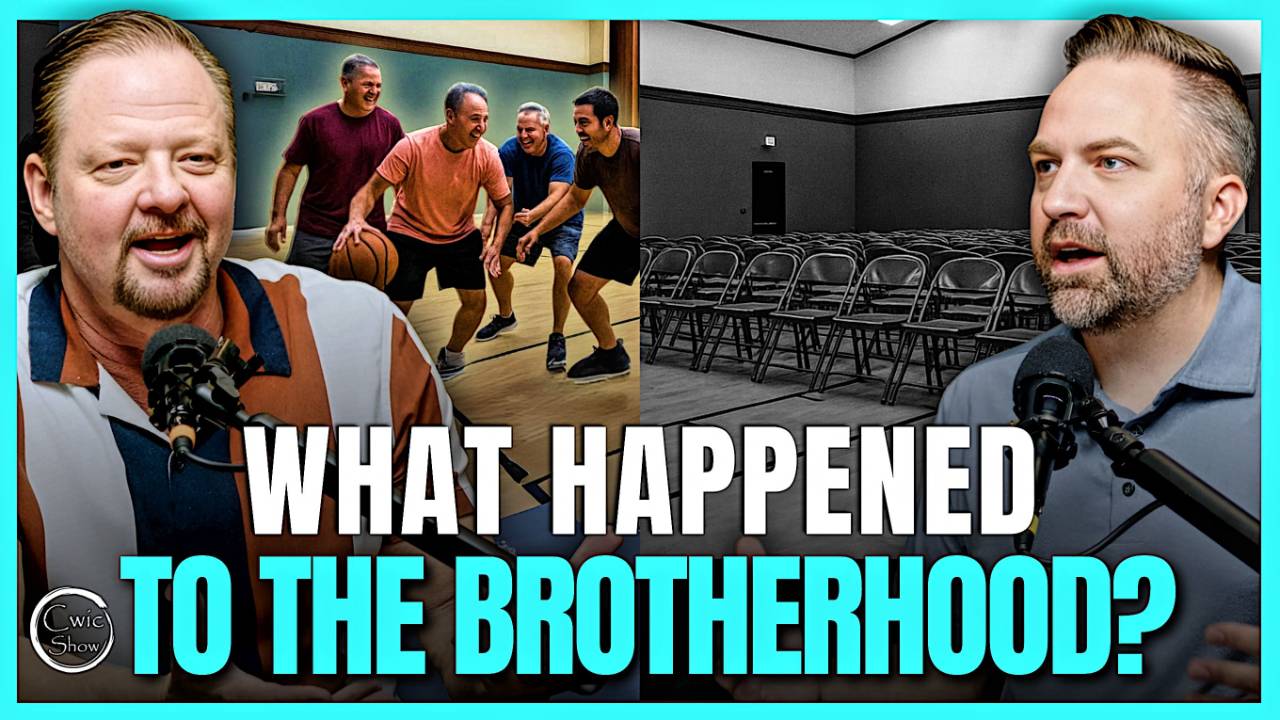
What is a man to do? We are living in a culture that is becoming more and more feminized. Also within the church, our
culture is becoming more and more feminized. This is something that's been prophesied.
We have a a church right now where at least for the time being, we have lost
general priesthood. We don't have scouts. There are sports are pretty much gone. Uh a lot of the activities are
gone from where we used to be, what we used to do. These are things that I grew up with that were very important to me
and they're ways that we brought members of the church, new members of the church into the fold, so to speak. They are
ways that I was able to bond with other men, other other young men at the time. And uh those things are all gone. So,
what do we do? How do we work through these new dynamics in the church? We've got a good
friend of mine, Kurt Frankham, from Leading Saints, who is someone who has a
platform where he gets a lot of information about these things through those that are leaders within the
church. And we're going to talk about men's issues in the church. I think you're going to really enjoy this. This
episode is brought to you by Wave Makers 2026. This is the Wavemakers podcaster
cruise. We had a great time, wonderful event last November with several
podcasters that you would recognize. In 2026, we'll be having myself, Hayden, and Jackson Paul from the Stick of
Joseph, Andrea Woodmancy, uh Cardinellis from Word Radio, Jonah Barnes, Hannah
Stoddard, Aroni, Jacob Hansen, Kevin Prince from Gospel Lessons, and many
more. I can't tell you the connection that is built here and what a neat online culture thing it is to bring
people face tof face from this community online. Go to quickdia.com, scroll to
the top to trips and events and then scroll down to wavemakers 2026. I would
love to see you there. Here we go.
All right. So Kurt, truth is a knowledge of things as they are. Right. So I want to talk about things as they
are. Just looking at it from an observant standpoint in the church right now. you know, men's
bonding, uh, uh, cultural, uh, ability to to
foster friendship, um, positive relationships with men. Um,
there's no scouts in church now, and they really I thought they were going to replace it with something that would be as vibrant as
that, and we haven't done that. There's sports are almost gone.
Uh, we have no general priesthood. I don't know what you used to do before, but you know, you'd have things with my
son where we it's an event. I mean, we'd go to ice cream afterward or sometimes dinner before or after and and we'd be
with other guys and their kids and, you know, that was a big deal, right? It was President Hinckley was a little bit more
pointed with his, you know, direction, which I kind of like. Yeah. Beat us up a little bit here this
time. But, but, uh, you know, it was and of course, and I think that most women
were very supportive of that. Oh, okay. My my my husband's taking my boys to go learn good things, right?
Um and there's there's no more dedicated young men's presidency in a ward.
I think that matters. I mean, I'm not I'm not criticizing it. I'm saying things as they are, right? That's so
we've got these things where you kind of have this pull away from a focus on social and spiritual activities
for young men, boys and men that are no longer there. Um,
is that a good thing? Is or or is it do we need to replace that? Uh, and if so,
what would we need to do? Yeah. No, I definitely say not a good thing. I think and and I don't think
there's any it's not like that someone behind the scenes thought let's do less for men in in the church experience just
over time and as things adjust and shift uh that's sort of where where we got and
you know there's a deep tradition of the mechdic priesthood right the the bishop
is over the ironic priesthood in the warts or they're obviously more youth focused and that on paper that made
sense of saying like why don't we make the bishop rig more like the young men's presidency and I think on paper that
made sense but just through the Leading Saints platform. I've heard from a lot of bishops who are like we're not figuring this out. Like I as much as I
want this to work, as much as it makes sense on paper, like I'm drowning over here, you know, with just connecting
with the youth and leaving the the rest of the word kind of wondering like what's our relationship with the bishop
right now? Doctrinally, according to the handbook, the Melzdic priesthood or the stake presency is sort of focused on the
adult male experience, right? And you can even say that in the more general sense. Uh the corn of the 12 or first
presidency that's the the mazes priesthood you know leadership there. Um
but they're busy with all sorts of things right the bishop is busy with all sorts of things. The state presidency is is there and often these things get
forgotten. It's interesting. You walk around a traditional church building and you know you could even blindfold us and
I could probably find the primary room you know near the back of the building the young men's young women's rooms the
um relief society room. I can probably find the bishop's office, right? Um, but what about the elders room? Is there Oh,
well, we'll just put them in the gym, right? Like, and and actually I uh I'm an elders corn president right now and I
kind of like being in the gym. There's a lot you can do with that space, but for a lot it's just sort of the or on
the stage, right? And even in the structure of our buildings is this problem very bold, right, of like we're
kind of being forgotten now. I don't think, you know, what do we replace it with? I think a lot just as
the church in general, you know, or words in general, they don't know what to do with men, you know, just other
than approach them with duty like, hey, why don't you do more ministering or or the frustration of just how much of, you
know, pornography is impacting men like they just would just figure it out and do all the behaviors and get it right.
But I think a lot of men, they don't know how to process uh their mental health, right? when when life gets tough
at work, they don't know what to do with that because often, you know, I'm speaking generalities, women will come
and talk about it. You know, they even that that therapist experience like I need someone ideally with some
professional background, I can go into a room and talk to them about it where men process things in a more experiential
way, right? And so, I don't know about your marriage, but my marriage is like after a long day and my wife wants to
talk about my day, I'm like, nah, I'm good. like let me process first and maybe I'll let you in on some of the
things going there. Not that I've I'm that's the right approach. But I think naturally that's that what we do as as
men. And so yeah, there there is a lot that's disappearing. And the the frustrating part of that dynamic is so
much in the the media or the general population or those that are critical of the church tag us as a patriarchal
church, right? The patriarchy, they run the church and there's not equality there, right? But in reality, it's this
silent matriarchy in my in my opinion where it's the the female voices. I
mean, if if you want something influence on on a ward, have the Relief Society
president bring it up or or speak it. Like that influence was almost more powerful than the the the bishop even
saying something, right? And everything where from you see who gets the first hug off of a of a mission
uh when a missionary comes home, right? Mother's Day versus Father's Day. You've you've mentioned some of these things. Mother's Day is much more of a of a
thing than Father's Day is sort of an afterthought, right? Um even back in the day when missionaries could only call
home twice a year, it was Christmas and Mother's Day, right? And um the even the church experience is
a very feminine experience. You know, gathering together, being quiet, singing hymns. And again, these have their own
beauty, but it leaves men thinking, why can't I connect with God as well as when
I'm out on the the river fly fishing? You know, I've even had men tell me that like it when I'm out outdoors like I
feel closer to God than sitting in a in a gymnasium at church. But anyways, what comes to mind? I'm kind of going on. But
no. Yeah, that's true. But so so the question is why though? I mean, because if if first of all, let's go back to the
the the gender differences, right? So men do process things in a
different way. They're not, you know, oftenimes you'll hear the term that women are the glue, right? Right? And so
it's not just of the family, but it would be of the ward, right? I mean, they're the ones that are socializing more. They're more naturally doing that.
Uh men have a tougher time doing that. I mean, you'll sit in a in an elers quorum and some guys, they'll barely
talk. Mh. You know, they don't or or
and and often times they have no friends. They have no friends in that elers quorum, right? But they come because they think
it's they're supposed to. So these other things, I mean, starting with scouts and
sports and general priesthood, it facilitates
that ability to talk. It facilitates the the ability to build relationships that
can be crucially important for for your activity going forward in the church
that aren't there. I mean, I remember when I was I hated Scouts. Yeah. Me, too. Okay. I hated Scouts. I was almost like,
"Yeah, Scouts is gone. That's great." But again, I thought that something was going to be replacing it.
Um, sports though were really important for me. Really important for me. And and so I I
had I had good friends that I played sports with on the Ward team. I had good
friends in the stake that we played against. Um, I had friends that were non-members that played with us. You
know, one of them was baptized through that process. uh as a young man, even
being a young married man, sports was a big deal. That's how I learned how to
when I moved into a ward, that's how I met people. That's how I met guys
is, you know, oh, you we've got a basketball game, you know, this Saturday, whatever. So, those were really important things
to be feel included, to be belonging. Yes. Right. Yeah. Yeah. So the and that's the to me
that's the experiences the activities that are more or experiences in general
and this goes for all all humans both male and female but especially for for men is they need an experience to
connect. There's something about even a pickup game, meeting at the church, going five on five. You learn and
connect with the men on your team in a very different way than sitting in an elder and saying, "Well, I would like to
make a comment." Right now, I'm not there's a place for that. But to me, what's happening is a lot of elders are
just doing the every other week elders experience. Let's read a conference talk, you know, share even a dynamic
teacher who, wow, that was a good lesson. You brought some insight. they still can't tap into the connection and
relationship of in in that setting. So, what's going on outside of that? Right? And so, again, going back to the
patriarchy, if there's really a patriarchy, have you looked at the budget of the relief society compared to the elders quorm? Right? Now, that might
be on elders elers that okay, we didn't know what to do with it and they the clerk would get to the end of the year, it's like you spent 20 bucks on a cheap
pizza party, we'll give you 50 next year. Right? as a relief society is having these dinners and society
birthday parties and sometimes they have their own Christmas dinner, right? And so one thing I did as an elers president
is I had a conversation with my bishop to say how can we go about making these budgets a little bit more equitable so
that uh we can do some more dynamic um connecting activities, right? And so to
me, a big problem is if all your ward is doing is every other week we're having
an elders quorum meeting. Uh that's that's a big problem. We have to get really um creative of saying how can we
get more budget or how can we do things and it doesn't even take a lot of money, right? And it does isn't on necessarily
elders presidency. Even before I was elderorn president, I was inviting men over my house on Thursday nights. We
were watching going to Tuesday $5 movies, right? like we're I'm engaging
the the quorum on a level that is is building connection and and the worst thing you can do for for men and and
trying to engage them in an activity is saying, "Well, why don't we bring our wives? Wouldn't it be nice if couples
came? We could get to know each other." But men show up way differently sitting next to their wife than just a group of
men, right? You take a group of men shooting or you take a group of men camping or even to a guy's flick and
it's something deeper is happening there that when they do need to open up, they do need help. They're more likely to get
that, right? Because it's not you think of maybe the typical man who's struggling with pornography. I don't
know what to do with this. Now, the the wife's like, "Well, here's some books. Here's the five-step plan of maybe, you
know, how to avoid pornography." But men don't even need to engage with the science or the therapy of it, which
again there's a place for that. But when they go out on a consistent basis and connect with other men, what they find
is naturally they stop looking at pornography because something in their their heart that God has placed there is
being nourished and fed that it that on the the other side they're going to
pornography as a as a false sense of that nourishment. So, so is this, you know, I I I kind of
think about, you know, there's been a lot of change, especially under President Nelson. Yeah. But even before then, a number of
changes that were taking place uh uh with these programs.
Um is this a result of
just being in a culture that has diminished men more? or is it a
reaction to becoming more of a global church? What are the resources that are available? How do we find enough men
that are active in a new African ward that we can fill both the Bishop Rick
and a young men's presidency, right? Yeah. Yeah. And that's the thing because maybe you go to a ward in Africa and
it's like we're going to have a ward camp out. They'd be like, what? like yeah we don't I don't again I don't know what I'm not familiar with that culture
but it again that international dynamic definitely I would say that that's something as far as from the
institutional churches addressing this I think that plays a big role in it is where they they can't necessarily insert
a lot of these things in the handbook because they say well that's maybe interpreted well in Magna Utah but we go
to Mosamb beek and that's a whole different thing right so let's keep it more general right and this is important
point of that uh it we all have are, you know, our ideas that the institutional
church should do, right? Like if the church would just do A, B, and C, like, you know, whether it's related to
singles or the youth or the church services or our our experience in the community and we default to these places
where we put the onus on the church saying like, well, come on church, if you just do it right now. Sure, in the
past, like you mentioned, the priesthood meetings, the campouts, and these things where they were more institutionalized,
formalized that they would just naturally happen. But to me, I think the power in building Zion is going to
happen on the local level. And we have so many experiences and that's maybe a different tangent, but the you think
about the primary program, the Sunday school uh organization, the seminary program, all came from the grassroots of
members saying, you know, in our area, we're going to try this thing. We're going to do a little bit different. And the church's like, hey, what are you
doing over there? And then they absorb those things, right? Again, that's not the point of being like do something
that the church will later absorb, but just this is the power of a local quorum coming together as we're encouraged to
during the first 10 or 15 minutes of core meeting. Let's council together. Right? You can say anything you want in
this in this meeting. How can we improve it? How can we make it better? Right? and to start trying some of these
things. Even if you're outside of the presidency just like I I've tried, like I'm going to gather some guys at my
house or, you know, we're going to um we're going to actually facilitate a shooting activity or or go on a camp or
I'm going to, you know, one thing uh we do in in my area is you go to f3nation.com. These are free workouts,
men only um peer-led and there there's like 4,000 across the world, right? So I
go to one in Lehi and three times a week I invite and others that I tend with
invite our quorum. Hey, why don't you come work out with us? And getting men to go and do something
relate to strength and getting them connected with other men and we end in a circle of trust and and have a prayer together. It's like beautiful experience
that is so nourishing to the male soul, right? The church didn't tell me to do that. My elders corn president, I guess
I am my elders corn president, but you know these things are done. You can easily put out the invitation and get
things going, right? And so we we have to feed these core desires of a man's heart or they do turn to pornography.
Pornography is not the problem. It's the the hunger and thirst in their in their soul that's the problem.
Avoid avoid. Yeah. Zero. So, and this is what I I kind of
uh the conflict that I see on on this is yeah, I I I firmly believe in what I
think President Nelson's direction is on all this, which is, as you said,
you need to take care of this yourself. I I think that's what he's doing, right, in so many different ways. The come
follow me program. um um re re
the activities that have been removed, uh some of the organizations that have been removed, the the consolidation of
elders and high priests. Um it's kind of look, we're minimal minimizing a lot of
this uh bureaucracy, right? Because you as individuals and as
homes and families need to take these things over. I will say I don't think it works as well,
but that doesn't mean we're not supposed to go through growing pains to be able to do that. I mean, I I I do think there
is a a I don't know if pernicious is a pretty
strong word, but a a a negative sense of
following the church as the church is everything. Mhm. And and it's it's it's the way I usually
put this is uh as Jesus said, the
Sabbath was made for man. Man was not made for the Sabbath. Right? It's the same thing with the church. The church
is made for man. Man was not made for the church, right? It's there to support individuals and
families and etc. Right? So if that's the case, do we have to minimalize those
things? There's the bureaucracy in the church. the direction from the church and somehow put the onus on individuals
and families uh uh marriages and have them take charge.
Is that the way we're going to be moving going forward? And if so, do we have to take more initiative as individuals in
our callings and just as members in actually producing all of this? Yeah, man. There's so many of these like
counter forces that they weren't created to be counter, but they often come that way. For example, we turn when when we
sit in the temple and hear about making covenants to dedicate our time, talents, and everything that God has given us, right? We think, "Yeah, so if they ever
ask me to be bishop, I'll definitely, you know, work a 20, 30, 40hour calling
to do that." Or, "Yep, that's why I go to church on Sunday, you know, or or that's why I go to the church on
Wednesdays to help with the youth, right? We we we take this institutional idea and these divine covenants and
direction and we kind of put them together. It's like well we they have to fit together, right? Like these are two
separate dynamics that are happening where yes, we have a restored church with authority and ordinance and things
and that there's also an institutional church that's putting out handbooks and you know they've got uh you know
liabilities and we we need policy and and that all makes sense but and I often joke that we're we're the Walmart of
churches, right? where I've been to Walmart in where was it in in Mexico somewhere and you walk in and I might as
well be in Taylorville, Utah. It's like I know where the theiesy's at. I know where the groceries are at, right? And
uh and sometimes we we tout that like isn't it great you can go to Germany and sing the same hymns. And yeah, there's a
beautiful tradition in that. But what happens is if it gets too bureaucratic, too institutionalized, it limits the the
keys that are functioning in that area. And those keys should enable each member
of the church to have a place and have an idea and move something forward. But like you said, when it's outside the
institutional direction, it gets really messy. Or I tried that for four weeks and it didn't work. Like I guess I that
wasn't meant to be like whoa whoa whoa. No, there's keep pushing for that because these are the you're you're
feeding the flock in your area rather than expecting the general church to give general direction. That's that's
everything the local church needs, which isn't the case. Yeah. And and it changes it it it
creates a responsibility that we often times want to push off. Yeah.
And it creates even worse it creates a cynicism. And this is like the poison of a culture is if you become that person
in the back of the room arms folded thinking this bishop doesn't get it. And then you start saying the church just
doesn't get it. This first presidency just doesn't get it. Right? that if you get if you get cynical in this that is a
very unhealthy place and and running leading saints and I'll have these small gatherings where I'm just saying like
what's your experience like and what are you seeing out there with you know cuz we talk deeply about cultural dynamics
happening in in the church and it's so interesting so see how quickly it goes to the cynical place of being like ah
like my my son or daughter they're you know they need more of an experience or you know and you can go down these paths
of like I was expecting the church to have give me something more dynamic like like scouting and they give me nothing,
right? And then and then it really uh tampers down this this experience of faith and then you start questioning
things that hopefully nobody should begin you know your relationship with God or the the ordinances or or those
beautiful things that have been been restored when in reality our theology is so much on God doesn't make one king. He
invites us all into his temple and says you're all kings, right? Like I'm endowing you from on high with power.
Like step into Zion, build it. Go. Right? And then we go to church being like, well, if the bishop would just get
on board or if the bishop would see what I see, right? Like what the bishop is there to make sure the lights are on to
to, you know, confirm revelation in the word council. And I mean, there's there's definitely a purpose for that.
But when we are when we feel is a limiting thing of our own personal experience as a Latter-day Saint, I
mean, that that's that's where it becomes a problem. Yeah. So again, I mean it's if if you're
relying on the church, then it's easy to criticize,
right? Because you're saying, "Well, I'm expecting this from the church. I expect all of this from the church, and if it's
not meeting my needs, then the church has got a problem."
And instead of it, it's kind of like uh JFK's phrase, right? uh ask not what the
church can do for you but what the what you can do for the church. Yeah. Right. In that sense
and that's that's building Zion. And you know Christ said the kingdom of God is in you. Right. And we often think the
kingdom of God is like this institutional thing we're restoring. Of course that's important. That's part of it. But the kingdom of God's on in us.
Like how how do we sanctify become sanctified and become more like God? It's being part of the work, right? But
we shouldn't feel limited in that that institutional structure that's there. So what do men do to create this
themselves? You talked about some of the things that you're you're doing as elders president. What can men do to
create an environment that is more uh uh enriching to a male? Mhm. Uh a big thing
the question is and there's a variety you know just like all things it's there's not like a general direction to go but so I see so many men strive to um
give more of themselves until they're empty and they don't know how to refuel their battery and often that refueling
uh requires that you separate yourself from your family. And what I mean by that is there's a there's a hole in
every man's heart that can only be filled by other men. Mhm. I don't know why God designed us this
way. Obviously, he has a incredibly important relational institution of
marriage and families and that's that's crucial. However, in order for us to provide and protect, we have to go
someplace for our strength. And that that could look in a variety of ways where so I would ask men to sit and
ponder and pray over this question. Where do you go to find strength? Where do you go to take your problems?
Oftentimes I see men, they have a tough day at work, they sort of they or they dump it on their wife,
fix me, love me, right? How come we're not having enough sex? Like I I don't you see I have needs, right? Like we we
dump it on our spouse or we seclude. Seclusion is a huge issue for men,
right? And what do you do in seclusion? You typically scroll and that scrolling leads to very evil corners of the
internet, right? And in that moment, it's a drug. It feels like ah finally I can I can just uh you know be left alone
get what I need from these these places. But uh it's the where where do you go to get strength? Often times it's the
whether they call him weekend warriors or you know like the the man I mentioned where I never feel closer to God than
when I'm fly fishing on the river. Like sounds like you need to do a lot more fly fishing on the river. But then
he thinks I can't go tell my wife I needed to go fishing more. I you know I I can't my wife hates that I go golfing
once a month with my boys but in reality a lot of women can realize actually he
needs that he needs that experience and disconnection and there's a balance like all things right
but he can't offer strength to the family he can't offer strength to the ward he
can't offer strength to the community if he doesn't have a place to go get that strength right so where is that place and and what I'm
saying is is as members of the church If a lot of these programs are gone, how do
you foster that so that there is there there is a place where men can
gather that strength and and this is the we have the the engine of the Ferrari, the Elder Scorm
experience. We don't know how to turn it on, right? So, we're just like, ah, line up some chairs. Joe here is going to
teach us a lesson, right? there is uh and again I don't want to be too
prescriptive but let me just share of my experiences will hopefully stimulate some ideas of in in my elers's corn
class we don't sit in a big group and talk about conference talks the handbook says we need to study conference talks
so usually there's about 30 to 40 men we split up into five or five or six uh
groups we circle up in that gym there's plenty of room in the gym right and we get more engagement more men sharing
because they're in smaller group. It's when you were in the echoey gym, a bunch of men and it's only about four guys
that want to raise their hand and say like well on my mission, right? Like but if you have these smaller groups that
facilitates it, right? Uh one activity I did is uh use the gym and say we're
splitting the gym into four quadrants. All the sports guys come stand in this corner. Right? If your number one
passion is sports, come to that corner. If you're an outdoors guy, the hunters, the the hikers, the the campers, go to
that corner. the uh the gamers both tabletop and video gamers go to this corner and the movie and uh book guys
come to this corner and now there was a majority were in the sports corner and sometimes we we broke I've even broken
them up saying all right get the pickle ballers over here get the NFL guys over here right and what's happening is
you're connecting men on on on um things that they they relate to right suddenly
I'm hearing wait a minute like so and so has the Thursday night NFL like gatherings Like a guy in my corn just
randomly invited men over to his house to watch the Thursday night NFL game, right? Like perfect. Like that is
ministering, right? The the hunters and campers suddenly I hear that they're going mountain biking. There's a group
that are going mountain biking together, right? Um there's a group that does pickle ball. We got our F3 workout guys
that do that, right? So suddenly something's happening here where like-minded individuals are getting
together and they're they're strengthening one another. And when they return home, they're in a different place mentally uh because they haven't
emptied out their their canteen with nothing else to give. And then that's when conflict happens, frustration, why
are we even married? I don't know how to show up for the kids because you haven't got anywhere to return with strength.
So, how would a wife support a man in that desire to fill that hole that they
have? Because it's it's it's away from her. Mhm. Right. Yeah. The first thing I would say is
it's not her job to do this, but that it can't you can make it a whole lot easier, right? And so when you pick up
on when he when he goes golfing or he went on that hike with his his bros,
right? Like what what sort of state of mind is he coming back in? And now how can you facilitate that? Like why don't
you go on do that more often? How can I help you feel like you can go do that more often? Right? Um and the same goes
for for women, right? that there's time when men need to show up and and lead out and do those things. That's a whole
another conversation. But um I I think there's a lot there that um that that
the the wife can encourage is saying you actually need to fish more. Like you
haven't you love fishing, you haven't been fishing in 6 months. Like why don't you plan a trip and go call so and so
and do that, right? And not only you're blessing your family, but you're blessing the other families by by
stimulating that. And and it's tricky. I get I'm messy. there's so much demands in in this this day and age of for
families and especially with youth involved and I mean that's a whole another caveat we can go down to is not
only as is the maybe um it well is the the
youth dynamic of we are so concerned about our youth rightly so I mean we
remember when they're sweet 5-year-olds and you know whispering their testimony in the microphone it was so beautiful
and now they're a 16 17 year old and they're making all the wrong decision. So, it's like all hands on deck. Like,
here we go. Red alert. We got to invest everything into them. Create uh you know, FSY, create mission experiences,
do that. And men are are left to to wander, right? And I always go back to
it is my deep belief is if you want to fix the youth, walk down the hall and fix Elders Corm because it doesn't
matter how many how awesome the Wednesday night activities are, how awesome the young men's camp or youth
conferences are, if they go home to a to a if they go home to a a family that is
broken, that the parents divorce, that the father's strung out on a secret addiction, like that will they will not
be compensated. that experience will not be compensated for for that dynamic, right? So, if we can figure out how to
strengthen the men so the men return home and they can show up for the youth and create not only a fantastic
Wednesday night activity but an every night activity or engagement or relationship, right? Um that that that
is I believe the secret of that will solve a lot of problems is walking down the hall and fixing elers corum.
All right. So, fixing elers quorum. So in a way you're trying to say I I fix men to some degree or or maybe it's uh
support men right often times you know going back to the institution and and the individuals
uh you know we're used to in we were used to in general conference in general priesthood we're getting like a pretty
stern talk right well men go in there we're going to tell them the generals
are going to tell you what need what needs to be done right Um
that might work sometimes. Yeah. Right. Uh it might not other times but
what how how then would the communication between the institution
the church and the men work in that fashion? Because if we're saying okay there's something
you want to give to men in terms of we need to give them strength,
right? We need to fill the hole. Isn't part of that though? Okay. Men
need to be able to be in a position where they're taking on responsibility as a husband and a father
because that's usually the message that starts coming out. You need to take on responsibility as a as a husband and a
father. Is there a middle ground between that or Yeah. So I would say that's extremely
important and I so much appreciate like I mentioned earlier the President Hinckley talks of the 90s where it's just like ah man he's given it to us
straight and I I kind of like this and yeah I do need to do better. We all leave like you know as this united
brotherhood of we're going to do better right however there are two important steps in that is you can never
effectively stimulate duty and stepping up and and making a difference without first addressing their their pure
identity that they are loved by an eternal God who made them and loves them and encourages them. Right? It gets back
to our conversations about godly disappointment which your audience loved. And uh and then we have to
address the poser in our lives. John Eldridge uh the Christian author talks about this. Wild at heart is his book.
But um if we don't address the poser, men will continue to pose. And why do
they pose? Because it works. It they don't have to be that broken uh porn
addicted, can't hold a job person. Well, they can show up, put on a white shirt and tie and make really fantastic
comments in Elders Corm, right? And so if again not that it's all on the church or uh uh the um the institution to do
that but that is a place the the quorum needs to ask of like why why do people show up in their inauthentic selves
right and there's there there's there's a way to warm that up and that's what I'm talking about that when you start
having different groups right and this is one of many ideas I'm not saying this is the end all recipe but I see men
start to open up I've seen men get a little teareyed in that small group as they talk about a miscarriage that
happened that week or a lost job or um and then another thing we do at the end of quorum when there's about 8 minutes
left I gather the whole quorm around we stand in a circle and we just say how can we pray for you and I say this
nothing leaves this room we've closed the doors who who can share of how we can pray for each other right and just
beautiful moments of men opening up now there's still some there's a lot of walls built I'm not I'm not sharing that
right but to give them a chance to pray for for one another we have the closing prayer and and keep those in mind that
that have asked for those those prayers, right? And so what what men are experiencing is they begin to warm up to
these things of saying like, "Okay, maybe I'm open to this. Maybe maybe I do need to let people know that I feel a
little broken inside and that I I had a really tough upbringing with my father, right? Or maybe I do need to talk to
somebody, a therapist, right?" But we default we jump to this duty of like, "Hey, man, like you need to do more."
And they're like, "No, duh." Like every moment of my life, somebody's telling me, "I need to do more." But nobody's
taking the time to say, "Do you know that you're loved?" Right? Do you know that you don't have to pose? You don't have to be the guy that works at the
dealership and and crushes the sales records. You can just be you here. Right. Again, very difficult to do, but
you have to warm up to that rather than just jump to the duty and feel like, well, the man just did some things. Life
would be better. Yeah. Yeah. Well, that's and that's a very common message. Yeah.
You know that it's important. I'm not saying there's not. It's an important message from we get it from men. Yeah.