
Roe Fell, Abortion Went Up - LDS Involvement
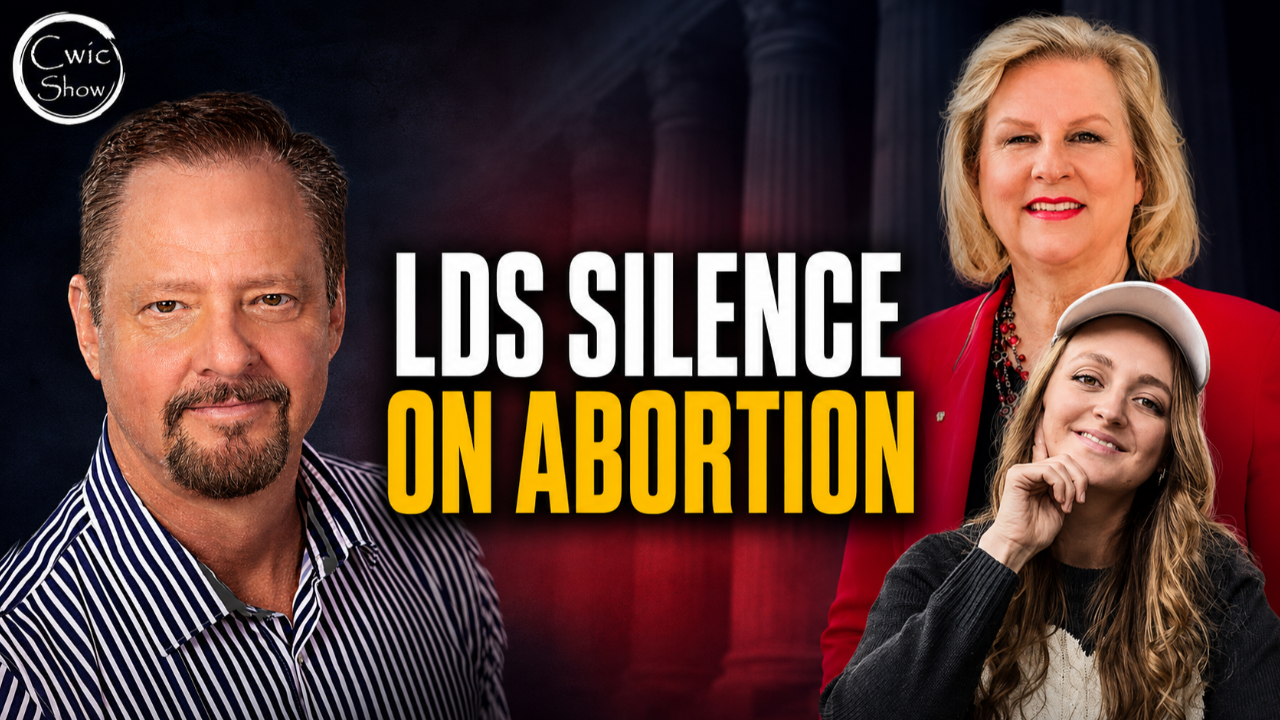
Merrilee Boyack and Jessica Spackman from Latter-day Saints For Life talk about the current landscape of the abortion industry and how Latter-day Saints both support and push against pro-life measures.
Raw Transcript:
There are three camps now. There's of Latter Day Saint influencers. Number one, there's a Latter Day Saint the pro-choice Latter-day Saint influencer
who's actively out there making the case for we should be pro-choice, as in allow abortion to be happening in our circles and maybe encourage people to go get an abortion because we believe in agency.
And they are convincing people actively to believe this.
Jessica, let me add in a little data point here that I think is is fascinating. President Nelson said, "We need women who are courageous defenders
of morality in families." So I decided to research all the women leaders in the church who had spoken on life, the sanctity of life or abortion.
This is a really interesting conversation. It's brought to you by Go and Do Travel and the Three Continents Tour. We've got three different trips coming up. We've got this October 20th
to 31st with Bruce Porter. Next March 16th through 27th, I'll be bringing Jacob Hansen with me. And then in on
1 minuteMarch 30th through April 10th, I'll be bringing Jonah Barnes. This is the trip where we go to Turkey. We go to Greece, the Greek isles, and then we end up in
Egypt. You're just mind blown by the time you go through this whole trip, but so many different sites that you see, and we travel back in time as we go
through the trip. It's one of my very, very favorites. To find out more, go to quickdia.com cwicdia.com
to the top to trips and events. Scroll down to three continents tour. I would love to take you on this trip. Here we go.
Right. Welcome to Quick Show. My name is Greg Matson and I am your host. In this episode, we bring on Merrily Boyak and Jessica Spackman from Latterday Saints
for Life. We're going to discuss what is the status of abortion state-tostate now that we have Roie Wade overturned. Welcome to the show.
Happy to be here.
Well, let's talk a little bit about where we're at right now. We've now you've got Roie Wade that was overturned. Now, it comes down to the
states. I What is the trend happening there in the States? Is this going to be a positive thing? Is it a negative thing? Where is the legislation going on a state-by-state basis?
Not well. Not well. Okay.
Well, at all. Uhhuh. Abortion numbers are way up since the overturn of Roby Wade. It put this issue back into the
states for each of the states to address. Uh many of the liberal states have laws now that literally permit
abortion all the way till birth, which is just shocking. Um in even uh you know
in the conservative states um you know like Utah we're still in the midst of the battle uh passed a ban it is not
being enforced because it's hung up in the courts. Uh Missouri where Jessica is is hung up in the courts as well. Um the
last goround what did we have? Seven out of 10 constitutional amendments went proabortion.
um including states you know like Arizona where you would think uh with the eldest population it would have gone
differently. Um so yeah it is uh it is a growing terrible problem.
What is the what is the percentage of Americans or voters at least that would be against abortion?
It depends on how the question's asked.
I mean all the polling there they'll twist the question however they want it to sound. You have pro-life institutions that are saying that 60 70% of Americans
are against abortion in up to the point of birth. And then others will say women should have or 50 to 60 70% of Americans
believe there should be access to abortion, but they're mostly they phrase it in a way that makes it sound like maybe it's just for rare cases or early
stages of pregnancy. It's hard to say, but it's pretty clear that the country is really split. Um, and we can be swayed by those with money in power,
which is often those who are proabortion.
So, if there is no more federal law on abortion, what is why is there a trend
moving toward proabortion with the states? I mean, if it's fair if it's fairly split, because I've always seen it fairly split, you know, I don't know
if it's 50/50, but why why even on the conservative side? Wyoming seems to have just gone through and supported uh um abortion.
You know, it's conservative, fairly conservative state. Utah is struggling with their trigger law not being passed when Roie Wade went was overturned. Why
are these conservative states having issues being able to pass a ban against abortion? It's a very nuanced issue and
the forces that are pro-abortion have a lot of money and so anytime these things
are are on a ballot you know the proifers are being outspent 10 to one 20 to one I mean enormous amounts of money
are coming in because this is a billions of dollars industry providing abortion generates a ton of revenue and they
don't want to lose their uh hashka for them it's very much a business deal. Um, and so they come in with the nuances that are very, very confusing. And we
see that where they come in and say, well, a woman should have agency, right?
She should have the choice. And, you know, but what about in this circumstance, in this circumstance? And it it makes for a very confused
electorate. So that even conservative voters that say, "I'm pro-life are very confused and end up voting uh not
pro-life in the end." Well, and I'll say one of the biggest problems, too, is that when Roby Wade was overturned, so many pro-life people were like, "We did it, guys. We're done.
We we solved the problem. There's no more abortion now." And even some places like in Texas, like, "Wow, we there's no more abortion here in Texas." They
couldn't be more wrong. It's happening even where it's illegal, especially with the these mail order abortions that come often from overseas. Women can order
them without ever seeing a doctor, never getting followup. It's very unsafe for them. It's very hard to document. These numbers are I mean there they're not
totally accurate, but it sounds like a huge number of our abortions are happening in through that way, including in places where it's supposedly illegal,
but it's happening in increasing numbers, not Okay. So, will you explain that process?
What is happening with a mail order abortion?
So, let's back up. There's a medical abortion and a surgical abortion. There are a couple different ways to have a surgical abortion. That's what people
usually think of. You go to a clinic and a doctor will do a procedure to kill the baby and remove the body. A pill
abortion, a medical abortion comes through a set of pills and a it is supposed to be taken up to about 10
weeks gestation. After that, it becomes less successful and less safe. But a woman will take the first set of pills
and it stops progesterone from going to the baby and the baby starves in the uterus. And then the second set of pills
triggers the uterus to empty out. So she has an abortion at home, usually on the toilet. And a lot of the time without
anyone being there to check up on her, she sometimes will see her baby and nobody nobody's there to support her.
And it's really wreaking spiritual havoc on our country, on our women, and obviously it's a tragedy and a crime against these children.
And the complication rate is way higher.
Um, in fact, we know the Trump administration is now investigating this because the complication rate is so high. Women are, you know, hemorrhaging
and ending up in the ER and and all kinds of of serious side effects. You're taking something very very serious, uh,
with often no medical intervention or awareness whatsoever, which can which can be super super dangerous. And we have a lot of young women accessing this
and they think, "Oh, it's not going to be any big deal." And oh, nothing could be further from the truth. It's it's very very very serious.
So explain a little further on this.
What are are these is it illegal in the United States to produce that those pills and send them off in mail order?
Are they mostly being sent from the United States?
It's hard to say what most is. Some are coming from across state lines as far as we know, but there's a vast number that are undocumented coming from countries
like India or Mexico, places that are completely unregulated. And you should know most of the laws, all of the laws in the United States, they don't
prosecute the woman for having an abortion. They only prosecute the doctor. And if the doctor's not in the state, they can't be touched.
Right. But but if you are in a state that does not allow abortion, then you just have to get the mail order pills and and you're set. Yep.
9 minutesAnd one of the things we need to mention is um this process can be reversed. So
there is the abortion pill reversal. Um you know there's a whole website that is offered for this that if after the first
pill that a woman takes the first pill if she has regret and changes her mind says oh my gosh what am I doing she then
can take uh you know a reversal you know progesterone and I think the last number I saw was up to 60% of those babies can
be saved even if she's started down that road. So, we need to make sure 24 to or so. It has to be quick. It has to be quick, but
they but like I said, they they do have a fairly decent uh success rate. I think one of the things, you know, you're
talking about how people um vote about this. And I think one of the problems is people have no idea the vastness of this
issue. um Gutmcker, which is the uh the arm of the Planned Parenthood's you know
um analyst, shall we say, they report 73 million abortions a year worldwide. That
is 200,000 babies a day. That is a staggering
number. And you know, for these young pups, the uh the Gen Z, onethird of that generation is gone with their lives
taken through abortion. I I mean, I think people have no idea how huge this is. Um and and it is certainly the
greatest evil in our opinion that has ever occurred in the entire history of mankind. But people have become so I
won't say immune to it but they are used to it and they don't have the same outrage and they just kind of are tired
and they get apathetic. I hit people all the time I live in the state of Utah that say, "Oh, we don't have abortion here." I go, "Yeah, we do. We have, you
11 minutesknow, 4,000. We have 10 babies a day uh that are losing their lives to this." So, I I think that is a significant
issue that people just do not understand how big this is.
Uh going back to, you know, I'm looking at the Wyoming decision here and and the Wyoming decision was based off of a 2012
state constitutional amendment that was put into place. So 14 years ago that says the following. It says each
competent adult shall have the right to make his or her own healthc care decisions. So I mean again, you've got the the the two sides of the coin here.
One is the woman's rights and her choice and her health care. Health care. I put air quotes here. And and then you have
the baby's rights, right, to life. And and it seems like more often than not, typically it's always going toward the
woman's agency to choose for this and what she wants. Isn't that going to just happen in each state eventually where I
mean, this seems like a precedent that just keeps going down the side. That's what Roie Wade was basically is well the woman has the right to choose and make
decisions for her own body. We're still at that same argument that's been there for decades.
It it will continue unless we take back the language. We take back the dialogue because there have been powerful people for decades that have hammered in
hammered it into us. Sometimes like in my case from the time I was in school from a very young age my parents I love them. They didn't do anything wrong, but
they didn't know. They didn't teach me anything about abortion. My seminary teachers didn't teach me anything about it. I didn't learn about it from anywhere except the world, except
YouTube. And you know, just anything the world presented to me. We as parents and we as teachers, we as faithful members
of the church, we as Christians, conservatives, whatever we be that leads us to be pro-life, we need to speak out and reclaim the language and say
abortion is not healthcare. Healthcare doesn't kill people. Health care doesn't leave one person dead. Health care is supposed to make you feel better. It's
supposed to get you better. It doesn't help the mom or the baby. And if we let them continue to take over that dialogue, then yeah, that's how it's all
going to continue to go. But we have a responsibility to speak truth into darkness.
You have a more and more of an uphill battle. I'm just playing the devil's advocate here a little bit for a bit. um you have more and more of an uphill battle with a nation and a west a
western society that continues to become more and more promiscuous, right? So, the more promiscuous and
we've got fewer marriages, we're getting married later, we've got more and more uh sexual partners, uh that's an uphill
battle just right there. From from that that uh behavior, you're going to get more issues with
abortion. Isn't that right? Yeah. I mean, you look back on the early feminists, many of them were very against abortion because they knew that
this was a crime against women, that this would only increase promiscuity, increase men's ability to act freely
sexually however they want to. And, you know, just continue to let women be treated like an object. But somehow it
got taken over that now people say, well, abortion is feminism. Abortion is female empowerment. But it's not. It's just allowing women to be trampled by
men's sexual based desires and not harnessed by the power of chastity and by the limits within marriage.
And it's very interesting to see what happens when good people step forward and support women. So for example, I'm
affiliated also with Prolife Utah and we offer uh a life grant to women to help with expenses. We give them uh two
volunteers to support them, baby supplies for a year. The list is long of everything that's provided in in supporting the women. And in the past
years, our statistics have been roughly 92% of abortion seeking women, women walking in to get their abortions when
they're offered that level of support, change their minds, and choose life. So, you know, um we can say this is hard. We
can say this is an uphill battle, but we know what to do to turn this around. We know what to do to save lives and that is to step forward and offer the women
that they the the support that they need. You know, right now they trod into Planned Parenthood, they are offered one choice. Here, let us kill your baby. And then they're shuffled out the door.
They're not given any emotional support.
The suicide rates, see, they never talk about that. They never talk about the impact on the women long term. The
mental health is terrible. Um, even the physical toll that it takes on a woman.
um you know repeated abortions can lead to sterility. I mean on and on and on.
They never talk about that part. They just frame it in, oh it's a woman's right and everybody should be able to do this without talking about the costs or
the consequences. And so I, you know, even if this is hard, we have got to as a moral nation and as a moral people and
as a spiritual people step forward and and talk about it and stand up and help the women um and do what it takes to to save a third of these generations.
What about Latter-day Saints? How much support is there among members of the church to fight against abortion?
We smile.
You both You both have a big smile on your face.
I will tell you, I've been involved in pro-life, pro- family work for decades.
Um, and I have found it much harder to operate in the LDS arena. Um, because,
uh, let's just be flatout honest, Satan has been extremely effective in silencing the saints. um he first
attached the word political and that muted uh most of the saints of oh we can't even talk about this so we can't
17 minutestalk about it in young men's young women's really excited you know we can't talk about this because it's political and boy how effective was Satan on that
one um and then the second argument that that he's been very effective is saying well it's agency everybody should have their agency you don't have agency to
kill a person you just don't um and so we're finding within the church. Uh it's
a difficult thing. There there are high numbers of people who claim, well, I'm pro-choice, which I refer to as proabortion because it's the same thing.
Um and and that has been frustrating and hard, I got to be honest. Really, really hard.
It's interesting because even going through the last 10 or 15 years, I mean, I've been online since the '9s.
And just looking online from members accounts, say on Facebook where you've got the older group of Latter-day
Saints, the to tide has totally changed from where where you have numerous
people very confident in LDS circles that are saying, you know, I am pro-choice and and we need to be
pro-choice. And I I've seen that several times on several accounts and they usually lean one way politically and
that political group is getting larger and larger within the church I would say. But but that has been a shift and
and so you've got this issue where you say, "Okay, well, and I know you you you'd mentioned to me before Elder Anderson's given a couple
talks on on abortion, right? I know that Terrell Gibbons came out with something a few years ago on on writing a paper on on abortion, uh, a schol LDS scholar.
But if you don't bring it up and you don't say anything about it, and you say, "Well, we don't touch this because it's political, then what happens is it
goes unchecked." And then it grows and then once it gets bigger it's like well we really don't want to say anything now because now it's this much bigger and
much more of a a conflict or a controversial issue that we're going to cover.
Yeah. I'll tell you what happened. Uh there was probably around like the what is it merily around the 7070s mid70s our
church leaders didn't really talk about it anymore starting from about there to the 80s around the time that Roie Wade was decided there was quite a bit of
from church leaders discussion about abortion president Nelson one of his first talks as an apostle gave a whole talk about it but then in the last you
know 30 40 years we've heard almost nothing up until Elder Anderson speaking uh back in 2022 2 was his first talk on
abortion. And if I feel like from what I see is that we've got a generation from
who are now what probably 30 to 50 who are pretty well convinced of what the world has said about abortion. And
it kind of leaks even down to me. my older 20s. But now I'm starting to see ever since Elder Anderson has started speaking and we've maybe had a little
bit more conservative dialogue online as well and a little bit more of that marketing improving probably, but we're seeing probably a lot more engagement
from the youngest of the younger folks, the high school to early like college age kids. So I feel like the tide is starting to shift, but it's a long it's
a it's an uphill battle because we have seated the ground to the world. when our leaders have stopped talking about it, we stopped talking about it in our
families and at church. And so our our members are just not informed about what we actually should believe. But that's why Latterday Saints for Life was
created to amplify what our prophets have already taught us, what our core doctrines teach us about how we should understand the issue of abortion as evil and against God's plan.
A little bit. What What is Latter Day Saints for Life? Why is it formed? What does it do? Where are you at? What do you say?
Well, we were started. Three good women who had all had experience with other pro-life organizations got together.
Jessica's our president. Um I'm the director of development and then Suzanne Man is our director of education. And we
saw this gap. We saw um other faiths having you know particularly the Catholics um and evangelicals having
very strong pro-life presence uh within their church and and is a representative u throughout the world and the LDS faith
had none um and so we decided to create this organization uh to do a number of things to gather like-minded saints together so because there is strength in
that gathering where we're all you know on the same page feeling that way um education has been a big because we do have Satan deceiving members of the
church out there. Um, and so we really feel that education, particularly within the church and particularly among our youth and young adults, is critically
important. So, that's been another very big thing. And we support other pro-life organizations uh throughout the world.
We're in 50 states and 15 countries. And we encourage our members, you know, go to your local pregnancy resource center, volunteer, get, you know, get involved,
get going. um so that that uh that the LDS uh people are are seen. I remember moving here to Utah about 13 years ago.
I went to uh 40 days for life where you pray outside of an abortion facility and I'm out there. I show up and there are a
couple of the women there and they said, "Oh, you know, where are you from?" And I said, "I'm from the Church of Jesus Christ of Latter-day Saints." And they were both stunned. Now, this is in Salt
Lake City, Utah. and they both said, "We have never seen an LDS person participate in this." So, we have work
to do. Uh, so that's why we were creating what we're doing. Yeah.
Yeah. That's that's an interesting point because I I think that if you surveyed Latter-day Saints, you'd get a pretty strong opinion overall on abortion.
But if you asked them to speak about it or to say something or to get involved with something, Yeah. then it's a very different type of thing.
Um, I would actually push back. I feel like there are not enough Latter- Day Saints who have strong feelings about abortion.
I I hear so many that say, "Well, I'm personally pro-life. I wouldn't have an abortion, but I it's not my choice what someone else does with their body, so I
can't really say anything about it. I can't do anything about it." So, they're going to sit on their hands and they're going to allow other people to go kill their babies because honestly, I don't
think they acknowledge or understand what it is. I don't think they've thought through it and I don't think they've heard what the prophets have said about it. But a great place to
start, for example, would be weightier matters from Don H. Oak's BYU speech. He goes through and talks through all of the a ton of the major abortion talking
points, including about choice. He calls it an almost magical effect that agency and choice has had over Latter-day
Saints to kind of stupify them into not saying or doing anything about it. Just thinking, oh, it's an agency thing. It's not a serious issue, something I need to care about. But that's a lie.
Badnar has tried to clarify that a lot.
I don't know if he's talked about it directly with abortion, but he talks about moral agency, not free agency. You know, we we we're
24 minutesgiven the ability to choose righteousness, right? That's what we should that's what the agency is actually supposed to be used for. Yes.
Is to actually be able to choose the righteousness. Yes.
Where where where is there a lack of education then? is you're if you're saying this, Jessica, is there a lack of education for Latter Day Saints on the matter?
100%. 100%.
So, so what so what do you do or what can you do to try and change that?
Well, you know, it's Jessica, let me add in a little data point here that I think is is fascinating. President Nelson said, "We need women who are courageous
defenders of morality and families." So, I decided to research all the women leaders in the church who had spoken on life, the sanctity of life or abortion.
That does not surprise me. I I Well, I I was going to say something.
I'm going to bite my tongue, but uh Well, I can answer your question, though. Well, so what we offer, we offer home evening guides, for example, on our
website to make it really easy. It's totally free for anyone to go on there and have an openandgo plan. We're going to have a home evening lesson about the
sanctity of life in an age appropriate way for however old your kids are or if you don't have kids at home, bringing in your adult children or friends to have a
discussion to get into what the church what God has actually said about abortion. That's a really big deal.
We've also gathered over 300 sources from church materials, from scriptures, from general conference, etc. that teach
us about what we should believe about abortion either explicitly or very uh very clearly teach true doctrine in the
face of it. For example, the family proclamation that makes so clear that we believe in the sanctity of life. And when we we tap into these things, we
offer we come and we speak, we come and we talk together with the people that we have stewardship over, then we can begin
to shine light and lead people to understanding the truth. And because this is a nuanced and difficult issue, we've got frequently asked questions on
there that I think particularly for our youth and and young adults. Oh, let's be honest, any adult. Um, you know, you like, how do I deal with, you know,
discussing the agency issue, how do I deal with should the government be involved or the church be involved? And those are on there. Those are super
super helpful for people to kind of, you know, drill down. Um, but I think one of the things that's really critical, I remember talk to uh talking to one of
our 70s at the church, he'll remain nameless, and he said, 'You know, I've always voted pro-life and I consider myself pro-life, but I realize I haven't
done anything else and I need to do more. And I, you know, after I said yes, amen, um, I I think that that's that's
the message that we would really like to get out to the members is you need to do more than just say I'm pro-life. We need to talk about it and teaching our families. We need to talk about it in
our church meetings. We need to talk about it from the pulpit. Um and we need to get out serving and doing and helping these these women, you know, and these
these families that are impacted by this. Um I always say when people say, "Oo, how could you be involved in this work?" I say, you know, I want to be
able to say to my children and my grandkids, I knew that the worst evil that has ever happened in the entire
history of mankind was going on and I actually did something about it. And I think that's the message that we want to
get to everybody is we all need to do something about it. Not just give it lip service and ring our hands, but to step forward and teach and gather and serve.
Mhm.
What is the what would you know we're moving into a social media world very quickly. What
what would a role of say an LDS influencer be in in this? That's Jessica's girl.
To be brave, to be willing to put your neck out there. There are a lot of influencers. Well, there there are three
camps now. There's of latter- day influencers. Number one, there's a Latter Day Saint the pro-choice Latter-day Saint influencer who's
actively out there making the case for we should be pro-choice, as in allow abortion to be happening in our circles and maybe encourage people to go get an abortion because we believe in agency.
And they are convincing people actively to believe this. This is many of my peers. Um, when I started doing pro-life
work, I lost a ton of friends, a ton of return missionary friends, friends I went to seminary with, the people who I thought we were totally on the same
page, but we're not. I think these voices are coming in and they're saying the wrong thing. There is another camp of influencers online right now of
they're doing great. They're preaching good things, but they will not touch anything that is too controversial or considered quote unquote political. But
when we don't talk about it, then it it begins to touch your life. It begins to touch your world. It's affecting our brothers and sisters who are dying from
abortion. And we will be held responsible for not using our voice. I'm not saying everybody in every single platform has to talk about it, but when it comes up or when you feel called to
talk about it, we don't we don't squish that down. And then there's another camp and I feel like it is growing. There are a few influencers out there who started
saying, I I'm willing to be brave. I'm willing to really declare what we believe. I'm willing to cry repentance to this generation and say this is the
blood and sins of our generation and I will make myself clean by preaching truth of Jesus Christ that we believe in the sanctity of life.
Well, I've noticed at the uh the the Utah March for Life there was Sarah Clark was there who I've had on the show a couple times and Kai Schwmer was there
also. So, there's a couple of younger influencers that that are are, you know, at least they sense a responsibility to
speak up and and use a platform here and there at least to be able to say something about it.
And maybe I think that Gen Z, especially going to that Gen Z, I think that there are there is more of a, you know, everybody
talks into a camera like we're all doing right now. So, they're more used to doing this and so they it's easier for them to put themselves out there.
They've been doing it on their phone for years. So, I think that there are some more voices that could percolate here
throughout the the social, you know, social media LDS social media world out there. And hopefully they do and come
around. You know, we're talking about things that are political. It's this is really it's kind of the watershed. I think abortion is the
watershed issue on this. But everything is going to be political that becomes to a Latter-day Saint.
It will all become political. It is family, marriage, relationship with your kids, education, gender, all of these
things are going to be political and affect you politically. And so if you just say, "Well, I'm going to stick my
head in the sand on all of these issues because they are political." Look, I mean, if you want to learn about the last days, read the Book of Mormon.
The Book of Mormon to me is the most political book I've ever read.
It is all politics and and it's you don't need to say, "Well, I'm on this side or on that side." But just look at
the issue and what the go restored gospel and the prophets say about it and and are you pro- family or anti-family and make a decision.
Yeah. As you've been talking I thought to check on our website what we have under FAQs of why should the government be involved in restricting abortion.
We've got Russ Nelson who says the wrath of God is provoked by governments that legalize abortion. And the family
proclamation teaches that we call upon responsible citizens and officers of government everywhere to promote those measures designed to maintain and
strengthen the family as a fundamental unit of of society. We do have a responsibility to use our political influence to save lives.
And we don't have to be shrill or upset.
We can just I mean, you know, I was just talking to somebody the other day and I said, "I love babies. I love babies. I love saving babies. I just love
everything about babies. I mean, you can just be that basic and just speak the doctrine. I believe in the sanctity of life. I believe that life is sacred. I
think that it's precious because the other side does not talk about the baby.
Oh, they do not talk about the baby. And and so I like to and I also talk about, you know, the power of motherhood. And
so we can talk about our doctrine in a way that's that's firm, that's centered, but it doesn't have to be this horrible
contention uh that everyone's afraid of that, oh, if I bring it up. Stay there.
Just stay with I love babies, you know, I just love them. I love families. I want to support them. Okay, stay there. That's doctrine.
Yeah. Some of the most powerful pro-life teachings is just fetal development, too. Just seeing an ultrasound image showing your kids, this is what you looked like when you were in my belly.
You were this small. That that's really powerful.
Yeah. You know, there was a uh there was a post and it's a young woman who has a baby put in her hands and she starts to cry.
Have you seen that? Yes, I have.
Yeah. And and she starts to cry and she's just like overwhelmed like I want a baby. I can't believe this. you know, she probably hasn't been around that
before or or it's been years since she's been around anything like that. And it was just so interesting because my first thought was, why is this rare?
Why is this rare to begin with? Why would this be something that would go for this? Should be such a natural, normal thing that happens all the time.
Well, and and and it wasn't, right? It's not.
I'll tell you what, we live in a in a world where it's really popular to say, "I'm child free.
I'm choosing I'm child free." Have you heard of this trend? Yeah.
There's even Latter-day Saints who say, "I'm proudly childare." We choose to be child free. And in that kind of world, if a woman finds herself pregnant, if
they don't have a model of what a happy life looks like with kids, that's terrifying. Yes.
It really does feel like your life is over. And we need to start building a a culture where it's
and President Oaks talked about this in his last, you know, in this general conference talk where he is once again reaffirming
uh, you know, we've got the plan of salvation and it's all about family and it's all about welcoming these lovely, beautiful spirits to come to Earth um,
and loving them and supporting them and nurturing them and and nurturing the moms and and dads that are here. Um I I
think that that our message as a faith is is clear. We just need our members to
courageously um to teach and preach that.
So if people want to find out more about the issue and about Latterday Saints for life, where do they go?
Check out our website, latter-day saintsforlife.org.
We think that every Latter-day Saint should sign up as a Latter-day Saint for life because it's just such a no-brainer. And people are like, "Why do you even Why do you even exist?" They're like kind of mad at us for existing.
Like, I I'm already a member of the church. Why should I sign something else? Because this is a message for the world. The world doesn't know that we're pro-life. Our legislators don't know
that we're pro-life. They don't know that this is something we care about.
And also, our fellow Latter-day Saints sometimes can be afraid to step forward and testify of life or act to protect
life. But when we act together, when we all sign our names and say, "Hey, yes, I'm a Latter- Day Saint and I'm pro-life." Then there's there's strength
in numbers. We can do more together. And of course, you'll start getting emails.
You can unsubscribe if you don't want them. It's fine. But emails to learn about service opportunities to be uh informed about how can you engage in
conversations. Uh you'll be invited to exclusive Zoom meetings and you get to ask your questions and connect with the community and start to get involved
together. It's a really awesome thing that I wish I had found when I started pro-life work.
Great. All right. Well, Maril Lee and Jessica, appreciate your time. Hopefully this is seen by thousands of people and hopefully we get some more people
involved and and I again I think that the the message I would want to get across on my end would be everything is political and everything will be
political and everything is going to come down to the rubber hitting the road and you're deciding am I going to just allow society to change or am I going to
do something about it. So thanks for your courage Greg. Yeah, appreciate you both.
Yeah, thank you.

"I Take This Every Day!"
Learn more about why I accepted Cardio Miracle as a sponsor and why I take it every day!
- Greg Matsen

Stay Connected With New Articles & All Things Cwic!

Cwic Audio Player
All of the Cwic Media podcast episodes on one page!
Recent Posts

