
Instagram Is The New Frontier For LDS Apologetics
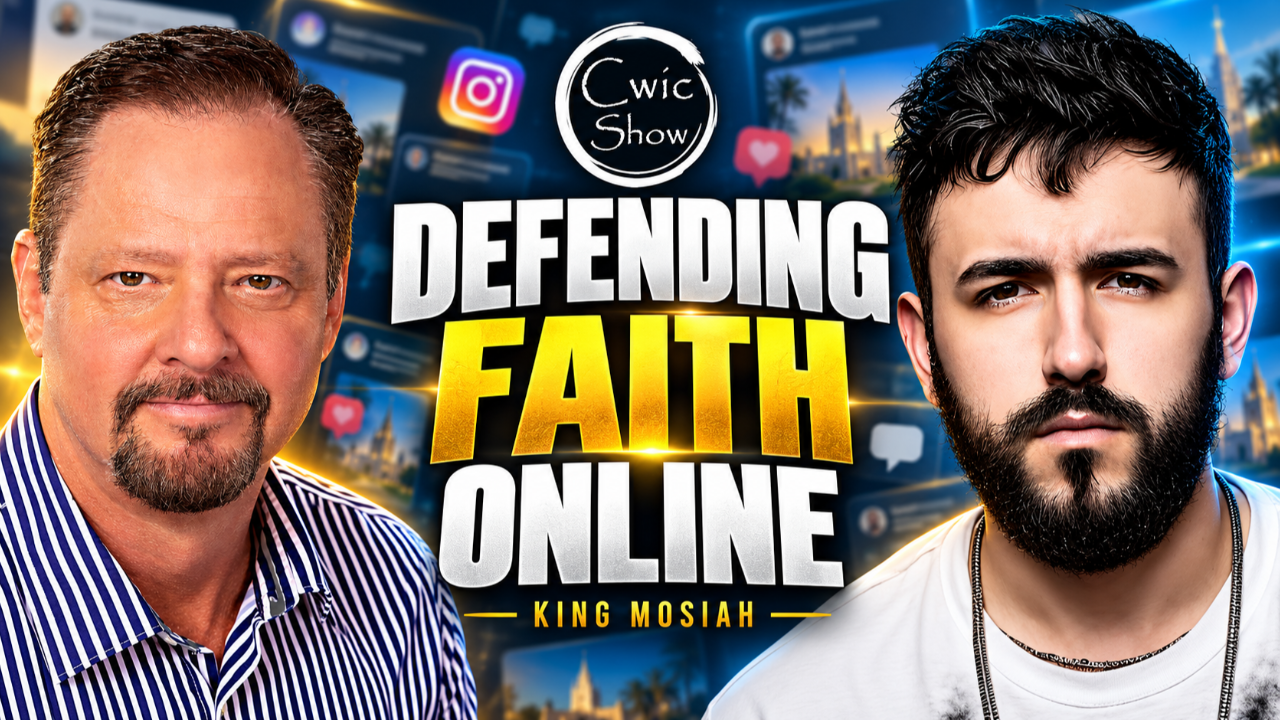
Mosiah Martinez on Faith, AI, and Social Media We're Living in the Age of Misinformation AI art, deepfakes, and President Nelson's warning that we won't survive spiritually without the Holy Ghost Hating his name, then defending the Book of Mormon it came from Why a sales guy from Mexico became one of the fastest-growing faith voices on Instagram The miracle of Mosiah's son, Lazarus
Raw Transcript:
Instagram has become the new front line of LDS apologetics and a guy that goes by King Mosiah is one of the fastest
growing voices online. This episode is brought to you by Go and Do Travel and the three continents tour. Love this trip. We start off in Turkey. We're in
one of my favorite cities, Istanbul. We see the history of Christianity there.
We move to Ephesus, a Roman city where Paul taught and John lived. Then we go on the Greek isles. We go to Potmos
where John received his vision uh for the book of revelation. You'll go into the cave that is believed to be where he
received that revelation. We then go to Santorini. We go to Cree. We go to roads and then we finally end up at Athens and
Corinth. From there we go down to Cairo and see the pyramids and ride a camel and see other sites. And then if you add on the Luxor extension, which you really
should do for two more days, we go down to the temples of Egypt where you'll see the Luxor temple, the temple of Carneak,
the Valley of the Kings, and the Queen Hot Shepsu temple. It's an incredible, incredible trip. We're going next year
on March 16th to the 27th and from March 30th to April 10th. Go to quickdia.com up to the top at trips and events and
scroll down to three continents. would love you to join me there. Here we go with Mosiah.
[music]
So, Messiah, why Instagram? I mean, traditionally, we've seen, you know, you've got like Fair and and the online content there. You've got Mormoner now
and and traditionally you've had longer form apologetics, but Instagram has exploded. You're a big part of that. Why
did you choose Instagram to get your message out?
Yeah, in simple answers, I would say it's just convenience. Uh, you can grab a piece of content, record it easily on your camera, edit, put it out there for
everybody to see. So I think the ent the barrier to entry into the social media space, it's much easier when you do
short form content. And at least for me, when I decided to jump into the LDS content creation, I mean, we don't
represent the church, but uh or apologetic content creation, um I had already been doing Instagram. I already had my account, my personal account had
already been grown because of my business. And so I was already used to the short form content. So I just decided to implement it in in short form
content but towards apologetics. So it kind of worked out for me. So I mean I don't think there's right or wrong way to do it. I definitely should get into
long form but I chose short form so far and it's working pretty well for me.
Yeah, you're really good at it. I mean you've got Where did you get your production skills from and your editing skills because they're they're fantastic. [laughter]
Uh thank you. Thank you. I think uh I have a I really enjoy editing. Like I find it really like I just love it. If I
could have a perfect job, I would be like, "Hey, let me be an editor." But I don't know. Uh the way that I learned it
was through just downloading Caput. I paid for the subscription. I actually took took the free courses that Cap Cut
has. Nobody actually pays attention to those, but Cap Cut actually teaches you how to become an editor. I personally did it because I I needed to do it for
my business because I was like, hey, I want to do marketing for my business and paying for somebody to do it. It was really expensive back then and I was
like, I I would rather do it. So, I started doing it, developing the skill set. I would just put in the reps and then eventually I started enjoying it and loving it and started having
results. So, I was like, okay, I can kind of use apologetics and kind of give it a twist with editing and kind of create hooks and and visuals. I I'm a
visual learner and I think a lot of people, you know, they help online to kind of get entertained in a way. So, I
use a lot of hooks, a lot of techniques on editing to grab someone's attention and stay and watching the video till the
end. But I would say just repetition and I edit all my videos myself. Yeah. Yeah.
Which which it takes a long time. I don't recommend it as much. You you probably hire somebody else.
I I need to hire somebody else. This is too too much.
Yeah. But you're again, you're good at it. So I don't know what what what moved you from
believer to defender. Was there a specific thing that happened where you're like, I need to say something?
What inspired you to say, I I need to get out there and add my voice uh to what's going on online?
Yeah, that's a good question. First and foremost, uh I think there's a lot of we live in
an age of information, but really really we live in the age of misinformation. I think most people don't really realize
that. And I'm in the sales industry. You know, I've been in sales. I'm very passionate about sales. And
I started realizing how there is a marketing campaign on social media.
Especially me after doing sales integrated with marketing on social media for since 2018. You know, a lot of people are just barely getting into it.
But since 2018, I've been on the social media space. I started to realize how it started affecting the way we learn about
faith, the way the way we learn about anything. And I saw even family members, friends, unfortunately falling for the marketing
campaigns carefully curated by ex Mormons, anti- Mormons, or pretty much the def the factors of faith, people
that oppose faith or non-believers and and using these tools, free mediums to deliver a message that ultimately in my
opinion was affecting people's faith and causing them to leave their faith. And so to me that was actually one of the main reasons. The main reason was to
pretty much provide answers that give context to such claims. So I think
there's not enough context from from members of the church. And so me seeing that firsthand, family members, friends
and family, and co-workers and people like people that were close to me leaving the church, leaving faith, not
just the church, but leaving faith and rejecting God, changing their lifestyle.
And that really motivated me to be like, hey, what's going on? I'm going to ask questions. And a lot of the times where
and this is not for everybody. I'm not trying to generalize that this is the case on why everybody leaves the church at all whatsoever. There's so many reasons, many complex reasons, but one
of the reasons that struck with that made it struck with me like or stuck with me was that people were giving me
reasons that were inaccurate and were out of context. And I was like, well, you didn't do your research like deep
enough to really understand that there is actually context to it. So, I became really passionate about that and I was like kind of like I would scroll down on
social media. I would watch an anti-mal piece of content that totally would misrepresent my faith and my position
and I would feel like I wish I could say something because that's not true. I know for a fact that's not true. So, I wish I could say something. And so
eventually, this is a cool story, but eventually, so you know, my my and this is we can get into this story later, but uh back
in 2025 when I open up this page, King Mosiah page, that was just in 2025.
My son was obviously, you know, there's a story, but my son was born with congenital heart disease and we were hospitalized for we pretty much lived in
the hospital taking care of my son for five months and I was going crazy like mentally, spiritually, everything was dark and I decided I felt prompted.
Everybody says that, but I really felt prompted. Hey, you need to share your faith. You need to share your faith. and and and that's one of the main things while I
was in the hospital, I was using it as a way to document my faith and my feelings and my tribulations, my trials and try
to try to gain perspective of all of the things that I was living. And I use social media pretty much as a journal,
so to speak, to kind of vent in a way, process my thoughts, and also, you know, as a way to share.
And not only to share because I didn't I didn't do it so much to share, but I did it as in a way as a as a desperate call
for help. I was really vulnerable. And I I was blown away by how many people reached out to me during that very dark
time. parents that had the same situation with their kids hospitalized in the NICU or people that were just struggling with a real hard tribulation
in their lives and they would actually give me comfort or worse. I you know I felt pretty lonely. So I was like hey in
a way asking for help and I was blown away by the community that I was able to build on during that time. My account
9 minuteswent from like nothing to over 30,000 followers in like less than six six months.
And not just it's not about the followers or anything like that, but it really was a community that personally helped me so much to go through that process.
It was unbelievable. A lot of people pray for my son, pray for us, and I felt the prayers. And hey, I've been I was alone in Texas with my wife. we don't
have family here and and and we were just in the hospital. So that kind of was like the community that I needed. So to
answer that question, that was the reason why I jumped into into the space, those two reasons.
Okay. Uh where where do you see the space right now? Do you see that as something that's going to continue to grow? Is it going to get uh saturated?
Uh how many different accounts can someone follow? I Where do you see that going? Yeah, there's there's an abundance for everything. I I always
have the abundant mentality. There's always a space for everybody. Everybody thinks like, oh no, like don't do it because there's uh King Mia already with
60,000 followers or like uh you know um Colton Miller who does apologetics or
Jasmine or Travis like all these content creators and you feel like there's not get there's not going to be a spot for
you. That's a lie. There's an abundance of space. Anybody can add your voice.
And the thing is that everybody's so different. You bring something to the table that's completely different.
Different lived experience, different testimony, different different uh way of perceiving things. And I think we need
more voices. We need more, not less, more people jumping into social media to provide context and to provide
testimony. And not just apologetics, but testimony. I think testimonies are more important than apologetics itself. A lot of people just think that they have to
get into apologetics. I chose to do that a little bit because I really like it. I actually, you know, I'm in sales, so I like a little bit of having I don't mind
disagreements. You know, confrontation doesn't affect me. And it's not about confrontation. We're not seeking confrontation. A lot of people confuse
standing for truth with confrontation, right? But, uh, I really enjoy having these conversations and I don't mind my pos I don't mind my position being
refuted at all at all. So, so I chose that space. But you can choose other spaces. You can might as well just
choose about, you know, sharing about your faith in a different way, reading scriptures, you know, documenting your journey in the church or documenting
your your own experience like work or life itself. It doesn't have to be specific, you know, just the church.
Mhm.
And and so I think yeah, we just need more people that that want to get into the social media space to provide context. There's a lot of noise against
faith right now. A lot of noise that is creating influence and that's what people don't understand. Like social
12 minutesmedia has the power to influence a lot of people's thoughts and the way they behave through the information. What they see they take it as truth
sometimes. So sometimes when they misrepresent something an aspect of the church history or doctrine or theology.
I think it's important that if you have context that you can use these free mediums to provide that context.
Yeah. So your name is Mosiah. Your handle is is King Mosiah.
How much how much did having a Book of Mormon name add to your identity?
Yeah.
Yeah, that's a that's a that's an interesting question cuz you probably would think that it does it has
to affect my identity really like pretty big. But uh yeah, like when I growing up I hated my
name first and foremost like yes I hated my name. Everybody would tell me some of those things. It's like especially in Spanish mosia it would sound like different things. Mhm.
And I actually learned to like my name.
I think when I was by, you know, right after I acquired my testimony, I would say like when I was
15 years old, that's when I got gained a testimony of the Book of Mormon. I read the Book of Mormon for the first time.
But for the first for the first part of my life, I always disliked it. I was always the first the only member of the church in at school in my community. I
didn't grow up with a lot of members in Mexico and but ultimately I would I would say that it really pushed me to seek spiritual
things to be honest because a lot of people would say well where does that name come from and then I would have to answer
I would have to answer I was forced to say hey I'm a member of the church of Jesus Christ of Latter Day Saints and I didn't have a testimony or an
explanation to do it but over time I kind of developed that muscle of always answering in why my name is Mosiah. And
it would lead to conversations and it would lead me to kind of ponder about why I believe the way that I believe.
And then people would refute my position even when I was young. Like people would especially teachers in Mexico, they would be like, "Oh, you're Mormon.
Here's why it's false." Or here, like they would actually refute my position even when I was young. So I started asking a lot of questions. So yes, it
definitely affected the way that I perceived myself, but it also led to really good things. And I think even
till till today, uh, my name brings conversations at work all the time. Like
where does that come from? And I've been tempted to sometimes skip that part and say like, I don't know, my parents were crazy. I've said that in the past.
[laughter]
Yeah, I don't know. My parents were just crazy. You know, just to avoid the conversation. Yeah, I don't know. They name Mosiah. They combine Isaiah with
Josiah and they put it together. And then I realized like, dude, you should stop it. You should just always when somebody asks why your name is the way
15 minutesit is. Why were you named Mosiah? You just have to say it no matter why. Even if it's uncomfortable. So I always say, you know the Book of Mormon. Have you ever heard about the Book of Mormon?
Yes. Okay. It's a character. It's a prophet in the Book of Mormon. Oh, no.
Wait. So you're a Mormon. And the conversation would start naturally. I have couldn't count. All my life I've just had to have conversations about the church because of my name. So yeah,
pretty relevant. [laughter] Yeah. What uh you know recently the Desireette News
profiled a number of creators online saying that they were you know that they
felt like this was a calling for them in a sense they were they were called of God to go do this. Do you feel that way?
Yeah, in a way in a way I feel that I was personally prompted repeatedly repeatedly. I would say 2025,
a little bit prior to 2025, especially general conference, while I was in the NICU in October, uh, sorry, before my
born was going to be born in October. I remember a specific general conference moment where I just felt like, okay, confirmation, just got to post it. And I
don't know why, it seems like a lot of people at the same time were feeling prompted because we saw during that time 2025, a lot of people just jumped into the space.
Yes. And it was curious to see how many people were jumping into the space and I was like, "Huh, maybe this is there is
something over here." But I personally felt that and I continue to feel the same way that I don't gain anything, you know, I don't gain anything. I don't
make any money. The church doesn't pay me. Nobody pays me to do it. In fact, I pay to make content.
Like I pay my subscription to Caput is like $89 a year and then I pay for other editing apps and software and everything. So,
I'm negative. And it's funny how people say like, "Hey, you're you're making money off of the church." I Okay, you would be the first one to figure that
out. And nobody has let me know that I've been getting paid. Like, that's news to me, right? So, got some secret bank account somewhere.
Yeah. Somewhere over there. But no, like I I generally do it because I really feel that that desire to do it.
And when I do it, I learn when I share my testimony, I get uplifted. And when somebody is affected by that testimony is very rewarding as well.
So So let's talk about the comments. Go ahead.
No, I think I [clears throat] think it's very is worth it. So what what about comments like that?
So I'm sure you get a lot of positive comments. Um and that's always great and fulfilling and uh it's like wow, I'm
really glad I do this. I go through the same thing. What about some of the harder comments? What are what are the most negative comments that you get? Are there some that are consistent online?
Do they have to do with truth claims? Do they have to do with I don't know, whatever it might be. Yeah.
Yeah. You know, the classic comments that are pretty much a straman position. You guys believe in a different Jesus.
The classic you guys Mormons live uh believe in fairy tales, right? Planet Colo, there's a guy that is called the
Mormon Colombian [laughter] that never misses to comment on my post, right? So, u you guys leave magic underwear, golden
plates, Joseph Smith visitations, and there there's there's always an appeal to mockery when it comes to these claims,
uh, which I ultimately qualify them as intellectually and biblical double standards. Biblical and intellectual double standards at the
end of the day. Because if you have to make these claims that are negative about my faith and they're usually not personal and even I've received some personal attacks, right? Like, hey, you
and your family, whatever, right? But I don't even care. It's usually more towards my faith with an appeal to mockery.
And to me, I learned how to identify why people do such things. What is their psychology as to why they're making
comments with an appeal to mockery? And from a sales perspective, what they're trying to do or from a marketing
perspective, why individuals and even companies nowadays, even TV productions are creating TV shows about our faith
with an appeal to sensationalism or mockery. And now it's just beginning to understand, realizing and being aware about why people choose to do such
things. It really helps you put things into context. Because if you have to make claims about my faith that mock and misrepresent and sensationalize or
exaggerates certain positions, certain theology, certain doctrines or aspects of my church of or even the church
history and doctrines and policies, then you would have by definition to do the same to your own tradition and faith.
And usually backfires, right? And it usually puts them on a good spot.
being able to reply to those comments in that way, saying, you know, you can fa you can mock, you
know, the miraculous claims of the LDS church all you want, but then you would have to also put your claims of
Christianity in general under the same standard, and you're not going to like that. And then that's going to make you realize that, huh, there's probably more
to it. I probably need to research this in context. Maybe there is deeper meaning to faith claims, right? Maybe
maybe we're not proving faith through archaeology and scientific evidence and and you know, science only. But maybe
there's more to it when it comes to faith. Cuz can you prove, you know, can a lot of people say like, "Oh, prove that Joseph Smith saw Jesus Christ and God the Father." Okay, I can't prove it.
Or prove that Joseph Smith got the golden plates. like yeah I have never seen the golden plates but I still believe. But yet you believe in Jesus
Christ who rose from the dead resurrected with a perfect glorified body and nobody can prove such thing
and Moses part of the sea or the garden of Eden or any of these things. Yeah.
[snorts]
I can't really prove it but so I I typically tailor my comments towards helping people see that double standard.
So whenever somebody replies that and then when you see that double standard then give them something that tailor
towards testimony. So you cannot just give them like hey you know win an argument just because you're winning an argument. give them like the logic so
that way they can see, huh, like, oh, oh my goodness, like my faith system has some of the same problems that I'm accusing Mormonism. Okay, now I can read
things in context, but then leave them better than you found them, right? Give them a little bit of your testimony.
That's that's the cherry on top.
Now, you use some AI art in in your content. Um I'm getting paid I'm getting some hate for this [laughter] personally that well that's my question.
I think it's great. Uh I I just saw it this morning. Uh you know there's a big the big topic of Claude and and uh Amade
and the CEO there at at uh Anthropic and you know there's this AI safety and doom
that that's out there and and it's a big topic and so I've gone out and I've seen now several you know like five minute
videos that are incredible. I mean just this this uh bringing some of them are like a song in a musical and they're
going through things. Some of them are going through a timeline.
Um where do you see AI art and that can be graphics or or video going with
apologetics? are we going to I I was at an AI conference with Elder Gong last December and this was at the church
headquarters and you know he's he took it in a way that was like look AI can help it can be a big a big help for
us um he uses AI uh his staff uses AI I would guess that
most people at church headquarters are using AI to some extent the church itself uses AI on a Yeah. The church itself. Yeah. And and but of course it gives warnings and look out.
It's the same idea as the internet and looking at social media or anything else, right? But what where do you see that going on?
I mean, I'm sure it opens up a can of worms. I'm sure it opens up other issues. They've said, for example, the brethren have said they don't want AI of
of certain figures and church leaders and things like that. But what where do you see that going and how is that going to help LDS apologetics going forward?
[snorts]
Yeah, I think AI is is going to is going to be here to stay. It's not going anywhere. And and this is I think a common misrepresentation of what the
church leaders have actually said that all AI is evil. Like a lot of the times members tend to
not be able to differentiate like not able to separate certain things and put things into context.
Yeah. They put things out of context, right? Like for example, in Mexico back in the days, we would say like Coca-Cola was against the word of wisdom. In Mexico, everybody believed that. I grew
up not drinking Coca-Cola until I was in my mission. When I was in my mission, I realized that, oh, turns out it's not part of the word of wisdom.
And so, right. So, I think nowadays we're getting people saying like, hey, all AI usage is evil. It's like, no, it
really can enhance certain things. I think the the warning is how you receive revelation from God. Do you claim to
receive revelation from God through the process in which the church has taught us through the gospel of Jesus Christ which is you know prayer, faith,
repentance, you know the basic principles or do you do you base it off of what chat GPT is
telling you when you submit some of your questions there and whatever chat GPT says is revelation. I think this is why
25 minutesI would say especially with how the era of information is changing or the era of misinformation I would say is why
president Russell MNO really prophesied before he actually died many years before this social media era was taken
off. He actually said that in the coming days it would be possible it will not be possible to survive without the constant directing guidance of the Holy Ghost.
And I see it more whereas like now I just actually saw a video yesterday that I could not I could not I could not spot
that it was AI. I could not I was like wow AI just got so good that it actually deceived me into thinking that was actually real. Mhm.
And so in the in the coming days or now now is the time where people are just not able to spot like what is true, what is what is false, what is real, what is
made up. And so it's really important for you to go to the scriptures and go to the source, right? And and and that's a that's a very wild concept nowadays
even in Christianity itself where like revelation no councils vote social media races or whatever you post on social
media with headlines if as long as it has a catchy caption with a with it creates enough amount of outrage I'll take it as truth you know I'll consume
it all day long and so I think it's important as members of the church that we just bring context to it so when it comes to AI is nowhere to go it's not
going to go anywhere and I think we should our responsibilities to give it a twist, give it a good usage. So for me, I'm a visual person as I told you in the
beginning. So when I'm reading scriptures, I'm always thinking like imagining like I'm a very like I imagine a lot. In fact, uh
I'm not going to get into this, but I'm a I'm a person that dreams every single day. I actually have like seven uh dream journals. I'm I'm a very visual person,
and I I like how to draw. I'm a very artistic person in a way, but I and even I play instruments and stuff like that.
But when it comes to the scriptures, I always imagine certain certain scenes.
And so I've been able to use AI to bring these scenes and give it a twist. Give it a not a twist, but give it a my special touch
uh to bring this into imagery. And so that's what I've been using. Like, you know, I always imagine Jesus Christ with his robes shining within kind of like
see-through. And I was like, I've never seen that. Nobody actually put puts that into art. And I was like, ah, that that's really cool, right? Uh, so I I
just did that, right? I use AI, nothing like too deep, nothing too big. Like it's I'm just using AI to kind of bring that into into reality, so to speak,
into imagery. And then I just put it out there. And a lot of people resonated with that. Like, you know, I posted one image that went viral. It got like u
like over a million views and like over a thousand likes, over 80,000 shares.
And so a lot of people resonate with it.
I think it's just give it a good use that actually brings people closer to Christ. And I think this the reason why I create images and I continue to do it
is because a lot of people actually use them and feel like I feel like I could see the scriptures, right? I could I
could put myself there. I think that's important. But I don't I'm not trying to say like I'm an AI artist. I'm not trying to say like I'm I'm cool because of that. I think everybody can do it.
It's just learning the prompts and then so be so you can generate those things.
You've mentioned a little bit about uh Lazarus. Can you go into a little bit more depth on that if you're willing to share uh what the experience was that
you had there? And you said that that was a part maybe even of of getting online eventually. What what did you go through and how did that change you?
Yeah. Yeah. So my son Lazarus was born with a rare set of congenital diseases
including a large case of ventricular septum defect which is basically he was born with half of a heart and ve very
large so he didn't he didn't grow up with ventricles and also he had a lot of lung problems so and artery problems and
29 minutesmany complex things and also hetereroaxi which is like all his organs are flipped are mirror like every single organ in his body
mirror. So very rare, very risky and even the doctors uh when we received the news, it was
like 2 months before we were going to, you know, the delivery and they told us like, hey, you know,
the the chances of your son surviving are very low, just so you know. So prepare for the worst, so to speak, right? So obviously I mean it kind of
rocked our entire world because my wife and I you know we've been married for almost now almost 10 years and we've been trying to have kids for 7 years. So
obviously and I've always you know been I always wanted to be a parent like I wanted to be a dad like I'm like hey we've been married for so long. In fact
we started trying after two years and we're like I want to be a dad. And my m my wife also wanted the same but turns out that we couldn't that we have some
infertility issues. So then uh we also had an ectopic pregnancy which is um basically a pregnancy that
develops outside of the uterus which gets implanted into the fallopian tube and so obviously can't really grow at
all. So it has to be it's impossible. It has to be taken out right so it's a the it was implanted there. So we had to
rush my wife at emergency cuz she was bleeding and when when you have a rupture of a fallopian tube and an ectopic pregnancy you probably might
die. So we I I rushed my wife to the emergency room and we discovered that we
had lost uh one through anectopic pregnancy and and so during that time obviously it was like wow it's super
dark why is it that we can get pregnant and and we started researching fertility stuff and we decided to
um go through IVF because the doctor actually told us like it's it's just not possible that she will get pregnant because turns Turns out that you also
have endometriosis and so I was like it it was really hard really dark time over that for my wife especially lot lots of a lot of things
happening and we were like hey we're going to give it one more try we've done everything that we could we prayed about it and we felt
that IVF was right like after a long long prayers and consideration a long a long time and so yeah we were blessed
with Lazarus Um but then we were hit with those news and
and yeah, obviously that was a really hard time.
We they told us, hey, your son is going to be in the NICU for the next probably 8 months, right? And so it's going to be
a long road ahead and so here's the tour of the IC unit so you can get used to it. So we're just looking at everything and imagineing it was hard to process.
Once it happens though and Lazarus was born, I mean my son changed my entire life, my entire world view. Uh the way
that I see people, the way that I value human life and the way that I see myself as a father now, like my identity as a
human is completely changed radically because of my son. And I don't know if you would agree with that. Uh when you are when you have kids, right? Everybody
said said that to me. Once you have a kid, you just change. I'm like, "Yeah, sure. Whatever." Then when I saw my son coming out, right, in the C-section, I
was there and I saw him. I was like, that was the most powerful experience that I've ever had in my entire life.
Seeing my son crying, coming out of the the womb, right? And I was shocked with like a spiritual force. I was like, I
just couldn't contain the tears. I was crying. And then he was actually unfortunately, you know, couldn't hold them. Mom couldn't hold them. had to be
put in in the intubator and just rush into emergency surgeries and stuff like that.
But um we decided to name him Lazarus because it was a bittersweet.
You know, one day my wife and I were hit with the news, we're crying, you know, tearing up, just it was really hard hard to process it. And one night my wife and
I were reading the scriptures and we were reading separately and I was reading the Bible. The story of Lazarus
was there and really never saw the story of Lazarus with such context until there until that time. I read it many times
but that time was completely different and I was hit. This is your son's name.
This is Laz. I don't know whether my son will live or die. I don't know. I don't know have the answers. But if he dies, it's for the glory of God. And if he lives, it's also for the glory of God.
So what can you do, Mosiah? You have to just kind of let go and trust in God that he will take care of him. And it was really hard for me. I was tearing up
feeling like this is his name. Then I told my wife and so happens to be, you know, we were watching the chosen
and my the we didn't know, right? But the next episode was the episode of Lazarus
and we were like balling balling of confirmation and we felt like yeah this
is his name and he has live up to his name like he has been a miracle guy like a little
little guy. Um the doctors could not explain how he actually made it cuz many miracles in the NICU that I could
explain including one that I will mention is that he his one essential artery
appeared out of nowhere after a lot of fasting and prayer after a blessing which was actually documented
and my cardiologist actually came to a room crying saying like I just can't believe it like this is a miracle right
35 minutescuz without this artery these chances of survival were none. Pretty much they say 13 out of 10 his chances of dying,
right? But we saw these miracles and we saw God during the niku and we felt his presence and we I really realized that
my son was like this like I didn't know what's going to happen but I just I just kind of had to rely on on God and and
part of that journey was me getting more serious about my faith. I had to ask the difficult question, you know. I was
like, if my son doesn't make it, how will you react, Mosiah?
And and and I'm talking I'm expanding too much into this because this is pretty much like the most meaningful part of my life, I
would say, uh this subject that you're asking me. And I had to ask that question and it was hard. And I would often times think if my son doesn't make
it I will be really mad with you God like I just I don't know how will I take
this and then sometimes I would have to think about I had to ponder on that question till
till literally I receive revelation from God that what I believe
like a spiritual impression in my heart that would say that everything is going to be Okay, regardless and whether he
lives or dies, you will everything will be all right. And I just had to listen to that prompt and hold on to that
prompt all those months in the in the NICU through open heart surgeries to multiple surgeries and and yeah, that's
that's still a thought that I hold because the journey hasn't ended. He still has another surgery in December and then potentially well another open
heart surgery with when he's five and potentially a heart transplant when he's
uh anywhere from 15 to 18. So, so yeah, definitely that subject is constantly in
my mind. And now, hey, we've been blessed with another child naturally.
You know, my wife is pregnant and we're we're expecting in January. Congratulations. Thank you.
And so yeah, I'm this this part of my life has been essential right now and I'm
constantly even now learning a lot of things about God and the atonement and I'm starting I'm still processing a lot.
I don't have a lot of the answers and I have a lot of fears right now especially coming up at new surgery
um pregnancy and like delivery and you know and we are pretty much all alone in Texas. So, I'm I'm definitely nervous,
but I feel like all that experience kind of got me a little bit more like better perspective and faith about what's going
to happen in the future. I I really feel like it.
And then did that did that uh you had said I think that that was part of what
made you decide to get online and say things. Was that a part of that at all?
That that transformation you kind of had and Yeah. Yeah. It was a mix of both cuz even before during my during my wife's
pregnancy of Lazarus's pregnant like during my wife's pregnancy, you know, and Lazarus being there, I was feeling that. Share the gospel, share your
testimony. I was feeling that throughout the whole pregnancy even before a little bit before. But get online and and ask what I did on my other personal page
that had nothing to do with apologetics and the church or anything like that. I was doing it at my work, but people were like, well, you know, it kind of became Sunday school with you. you know, I was
sharing just spiritual thoughts and I decided, you know, I need to create a separate page for that cuz you're right, you know, like I'm bombarding people with spiritual thought spiritual stuff.
So, I decided to create another page and so it happens to be that it really strengthened my testimony like because
then I started asking questions as if I wasn't myself. I was somebody else asking that question. I had to put myself in somebody else's shoes like
about church history, policies, doctrines, theology and then put myself on the on the shoes of the detractor and
also in the shoes of the person that sincerely leaves the church because thinks that the church is not true. And I had to kind of like think about like
those things and and it also I'm not going to lie like you know sometimes researching these things and I've been researching these things for a for a
while you know have conversations for fun. I really enjoy that. I just never had the opportunity or the need or the
wants to go online and do it. But really really if there were moments in which I also would admit my testimony was like
okay I I I was faced with a hard difficult questions but I still was able to have these answers spiritually in
context. So I always felt the need to I need to let people know that there is answers to some of the claims that you're you're finding very
um problematic if you will. So yeah, at the same time, do you feel that
now with this really I mean there's an explosion on Instagram uh that you know I don't know I don't want to use the term winning. I don't
know if that sounds right but are we moving toward more a position where there is clarity for the public out there on our
doctrines on our culture on the fruits of how we live and our beliefs and family etc. Are we moving toward that
now? [snorts] Yeah, absolutely. But I don't think it's going to ever stop the misrepresenting the slander. I mean, this is part of our
church history. It happened even in 1830. This it's always been. So, it happens to be now that we have more exposure to it online. Now, we see it.
Now, we are confronted on a daily basis as we're scrolling. you know, we have to see claims and we have to think about those claims and make a decision in our
41 minutesminds about if they are true or not and come up with that. And I think even I think even you know I'm not trying to
debate from the question but even in the Bible Paul says that we need to be prepared to give a reason of our faith when we are asked the hope of that is in
us. I think it's important to have those answers. So I think now we are seeing more members of the church learning about those answers more than the
articles of faith, you know, more than the primary questions. I think we're seeing more members a little bit more
prepared, more interested in learning how to give answers to the difficult
claims made against our faith. That's very commend. That's that's very cool.
That's very important to to do. I think it's important, but it's not about winning the debates. I think it's about really solidifying the testimony. I go
back to the the the goat himself, Tad Callister. He actually would say often that he doesn't believe that having
answers and responses to claims to the opposition weakens testimonies. He actually would say that he does the opposite. It is strengthens faith. And
so, a lot of people confuse that that like don't get into apologetics. It's confrontational. It's like, no, no, no.
I'm just providing context to these difficult claims and I think it only strengthens faith. It only
does because when I'm getting hit with a question that it might be like I don't know how to answer what is the emotional response that people have sometimes when
they have a weak testimony if and I'm not saying like oh you know everybody can have a testimony that fluctuates but
if you're hit at a point where you're maybe your testimony is vulnerable in a way and you don't know the answers to this
and you take what you're whatever you're seeing online as the answer as factual without actually doing your own research in context
It is very easy to be manipulated from side to side. It's kind of like what Paul would say. We would be carried away by every wind of doctrine, by the like by people that want to deceive.
And you know, Ephesians 4 , I don't know, I'm just paraphrasing, but it's important. So, we are not carried away by every wind of doctrine. We need to
ultimately root ourselves in the gospel of Jesus Christ and the scriptures and the prophetic council, modern day prophets and apostles. That's got to be
our foundation. So to answer that question again, it's going to only get better as far as members providing
context. It's not going to get better as far as us receiving more opposition.
It's not. I think it's going to get worse in a way. But I think more people are going to, especially intellectually
honest people, seekers of truth, which is ultimately who we want, right? or ultimately who gets converted to the gospel or to any faith to Christianity
itself are the people that are going to hear our responses and decide okay I I
see the fruits of the church of Jesus Christ of Latterday Saints I can see them I can feel it and I can have the testimony touch me and this is why I'm
joining the church of Jesus Christ of Latter Day Saints right so our job is to put in the reps that's
yeah I I agree with that I hope that there are many many more people more voices that do come online. Uh I think you need an army out there of of
information to fight the misinformation and to have context. And secondarily, as we move more and more with the church
into a position of of what it it's we have less and less of
a focus on institutional teaching, right? We've got shorter meetings.
uh we have fewer activities and so I think more and more if you want more and you want to learn and you want context
you need to go out and find the right voices not all of the voices are good but you need to go out and find the right voices to get context and to learn
more about the gospel and the thing about apologetics is and I wouldn't call myself an apologist I don't do a whole lot of that but I think the thing about
apologetics that's nice is that you get the contrast and when you see the contrast even from like like reaction videos,
right? When you see the contrast, you you understand easier what our own doctrine is because a lot of people don't understand it.
Yeah.
And you can see the contrast between the doctrines. [music] It's like, oh yeah, now that's articulated for me. I've never heard that articulated.
And the opposition actually provides in a way that that vision and that truth uh as Joseph Smith says, right, with
opposition. So anyway, yeah, I appreciate it, Mosia. I really appreciate your time. I wish you the very best. Where do people find you?
Uh, my handle is King Mosiah. And so you can find me on Instagram, YouTube, and Tik Tok. But I don't do long form
content on YouTube, but I'm just doing short form content on Tik Tok and Instagram. [music] Well, thanks for all you do. Appreciate your voice.
Thank you so much. Thanks for having me.

"I Take This Every Day!"
Learn more about why I accepted Cardio Miracle as a sponsor and why I take it every day!
- Greg Matsen

Stay Connected With New Articles & All Things Cwic!

Cwic Audio Player
All of the Cwic Media podcast episodes on one page!
Recent Posts

