
Masculinity Has Two Stages—We’re Skipping the First
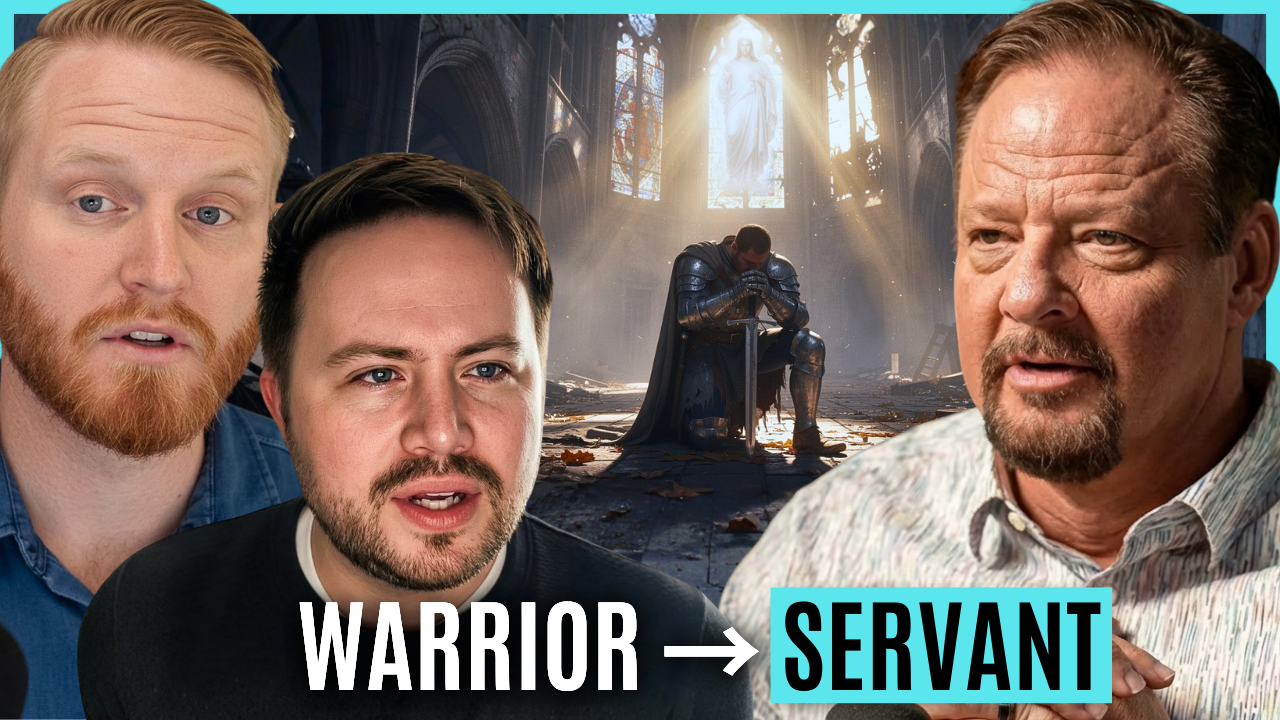
Jake Taylor, Barrett Burgin, and Greg talk about the culture in the West and in the church and how masculinity has been removed and redefined. Why “soft masculinity” is failing boys—and what real manhood requires We’re forcing boys into weakness before they’ve built strength What the Book of Mormon teaches about masculinity that culture rejects Strength must come before sacrifice From Warrior to Servant is the True Path of Masculinity
Raw Transcript:
Masculinity is broken. A lot of young men are drifting. They're ashamed.
They're losing purpose and identity. How do we fix this? Shame, confusion, and the culture are reshaping masculinity
into a kind of a a soft mas masculinity that is very much failing our young men and men overall.
We are forcing boys especially into weakness before they've ever even developed strength. What do we think
happens when we deny boys purpose, power, and responsibility? I bring back my good friends Jake Taylor
and Barrett Bergen to discuss these issues. I think you're going to enjoy these insights. How has the change in
masculinity affected you? How has it affected your family? All right, this episode is brought to you by the Warriors of Tienham Men's Retreat this
August 13th through 15th. It's a three-day experience. This is something I'm so pumped about. It's something I've been wanting to put together for decades
now. And finally, this is coming to fruition. Let's be honest, there is a quiet crisis right now among men. Right?
We all know it. Culture has shifted quite dramatically, right? It's leaving not just a crisis of strength with men,
but a crisis of purpose. This weekend with Warriors of Tiankum is not a
self-help weekend, right? This is a call to gospel- centered masculinity. Modern life has rewired us a little bit. It's telling us it's therapy over tailos,
therapy over direction, and vision.
We're going to turn that on its head during this experience. And of course, there's going to be driving UTVs,
shooting, fishing, and hiking. join myself, Greg Matson of Quick Media,
along with an internationally acclaimed speaker and best-selling author, Chad Heimus, whom Wall Street Journal called
one of the 10 most inspirational people of the world in a transformational experience of purpose and identity focused on the principles of the restored gospel. Click to find out more.
Spots are limited. I would love to see you there. Right.
Welcome to Quick Media. My name is Greg Matson and I am your host. In this episode, we bring back our friends Barrett Bergen and Jake Taylor. Welcome,
guys.
Thank you so much. Okay, we're going to talk about masculinity, the the change,
the warping of modern masculinity, the threat that that poses perhaps to society and to the church. Uh how do you
guys see this right now? Where are we at with masculinity? What has changed? What is the where are we lacking it? What are the forces that are that are warping where we are with masculinity right now?
Man, I think each one of those is a big question. Um, I think maybe a a good place to start is sort of how Barrett
and I have recently sort of come at this conversation again. I know it's something that all three of us think about a decent amount, but um, uh,
Barrett sent me a text. I don't know if you just if you want to read it, but I think it's the start of uh, at least an
essay, if not sort of manifesto of what it means to be a Latter-day Saint man.
Um, and the principles behind that identity.
Sure. Yeah. I'd love to read this and and it's not it's not super cohesive as much as it was just kind of a a train of thought, but I'll say it was it was
prompted by knowing that this is a subject that you have brought up, Greg.
And so we we you know, we we follow your your work and and kind of some some of our some of some of our best thoughts,
mine and Jake have just come from like corresponding and talking philosophy and and asking questions. And what what I
will say is is I think that um in order to address any kind of crisis, you know,
any kind of issue, you know, what is this this abstract nebulous is something really happening? Um you have to go back
to fundamentals on like what what does that word mean? What is masculinity?
What is um you know what are the principles? Joseph Smith talked about teaching correct principles and then that's how we learn to to govern
ourselves. And so I started kind of jotting down um some ideas and I and I found that there was this I I I feel like there is
this um there's this duality to the type of messaging I've received my whole life about what what masculinity is or should
be. Um, and so I was trying to kind of reconcile that um um because on the one hand you have the uh the examples um in
the scriptures, you know, and you have the examples of of of let's call it like softness and
gentleness and meekness and patience and this sort of this sort of bridling of the self. And on the other hand, you have um kind of the the conventional,
you know, rise up and be men and and and take up, you know, kind of take up your sword and defend defend the truth and
and go out and be an adventurer and and go out and build something and um and like the the question, you know, that's
that's the question where all this starts. What does all this mean? And like whi which of it is true and and where does it fit? And uh how does it
square with biology and and especially in a in a day when there's so many competing opinions about um about uh
gender and about you know what what what makes a man or woman a man or a woman you know and and and how different
societies interpret that. And so this is what I ended up uh writing down is is is where I had to start was the conclusion
I came to is the ultimate expression of masculinity is in a sense the destruction of the self. However, what is the self? We learn in the Garden of
6 minutesEden um that Adam is is is told basically that he will have dominion over the whole earth and that that men
in their in their power are able to subdue the earth to act and to not be acted upon. And I'm I'm talking about
men in particular in terms of like the kind of power that men wield on earth.
We all know this. we all agree, you know, kind of the it's a man's world and and and and there's been this there's been this power and this privilege um uh
whatever you believe about shoulds or coulds, men have have have subdued the earth. And we have to acknowledge that.
We have to start with that. Um we have to acknowledge that there is there is this kind of conquering power within
within men. Um and that they they kind of need that. It's the it's the power of godliness. It's the power of of of, you
know, let's say the warrior. If you take uh the Book of Mormon, if all men were like uh Chief Captain Moroni, the very
powers of hell, hell would shake. Um camaraderie and quorum. Men must lead and follow and learn the art of the of a
mind and might. um in some sense they they they ex um thrive when they do away
with kind of cultural shame and and uh and the chains of some of this. You know, we'll talk about this in a minute.
Um they need to they need to win things and to be competent. Um this is not even hard. Uh if men are willing to actually like take risks and take adventures,
they will have the confidence of an adventurer and and truly the treasures of the earth, the might of strength, of daring, of risk-taking. Men must do this
to become men in some sense. They must take up the sword. And I don't mean the sword in a you know in a in in in a sort
of violent way, but maybe a little bit in terms of like the sword of defense, the sword of might, the sword of honor.
But then I believe to mature into manhood um to to to grow past
uh being a man and to become the sons of God, they must then bury the sword and let go of control even to the laying down of their lives if necessary.
Consider Zion's camp. What is Zion's camp about? They all get together.
They're like, "We are going to defend Zion. We are willing to do this. Does the Lord have enough who are willing to do it?" And then they go and then they are still and then they let the Lord
solve the problem. And a lot of a lot of men some people wouldn't go on Zion's camp and then some people struggled with that second step where it's it's like
now that I'm ready I have to I have to sort of you know be this peacemaker. And so that's the other step in my in my
opinion. It's defending the weak. It's giving a voice to the voiceless. It's holding our peace. It's living the higher law. slow to anger, gentle, not
by disposition, not by disposition, but by choice. If somebody is dispositionally so gentle, I think that
boy or man needs to come out of his shell and learn to be, you know, to to have a voice because only then can you make the choice to not act in anger.
Only then can you make the choice to not act brutally. And finally, consecrating ourselves, giving all we have earned away without a reservation. if we have
to deal with this sort of like uh power um and and you know you have the the the example of the labors in the vineyard
and and you know Terrell Given talks about the um the false idol of inequitable justice that we think we
think that if we flatten the curve and make everything exactly the same that will solve everything and and any woman just knows that's not the case. This is
why there is even a a dynamic between men having power and and and privilege that women have not enjoyed or
experienced. And if if that is just a biological truth to some extent, um then uh then and if and if and if and if some
sense coming to term with terms with reality is to sort of give up giving up that that longing to flatten and and be exactly the same um from women, then for
men, ironically, we must learn to embrace that that tendency um by imparting unto all until all have
partaken, right? to be righteous judges considering the final lesson of the rich young ruler who who had gotten everything but then was not able to take
that final step. It is to let yourself be nailed to the cross rather than to summon 10 legions of angels. And um as I
wrote that down, I was like this kind of serves both both sort of impulses,
doesn't it? Like there is a there is the um there is sort of the masculinity that is the conqueror and the earner and the
provider and the and and the one with the voice and then there's the masculinity that's gentle and um and
puts others ahead of himself and looks for you know some of those those uh uh terms that I think we get a little bit
nervous about in a more conservative culture like consecration or or uh the poor and the needy and the stranger. And and I genuinely, Greg, I feel like you
do not get one without the other. You must leave the Garden of Eden and find yourself in order to have a self to
offer back to the Lord and to have have a self to offer back to others. Jake,
yeah, I mean, I can certainly tell you what I thought when I received this text from Barrett because, you know, we'll always send these sort of ponderings and
things to one another, and this one really got me thinking. Um it's it it the the sort of two stages that are
presented here I think are so true and they're so necessary that you cannot
just shove boys and even boys of an elderly age into stage two which is the
self-sacrifice the consecration the deference and all of these things that maybe the sermon on the mount
masculinity you can't just place uh boys there and expect it all to work because they don't have the strength from having
gone through phase one which is the going out into the world, the taming of the wilderness, the fighting off of the enemies, including the enemies and his
in his own self. Um, and I think that it is ultimately necessary to bring up the
topic of pornography because I think that this uh this specific struggle um may be the best case example
of how this is playing out in Latterday Saint and other men as well, but specifically Latter-day Saint men, where
pornography is everywhere and it's always going to be a temptation as long as there is mass media. media and digital media. But the solution is not
to dwell in shame. The solution is not to descend into a spiral of guilt and a rejection of the self and say, "I am so
unworthy because I cannot have what I want because how many men do I personally know who have wallowed for
years in purposelessness and self-pity because they themselves don't actually know what they want and they themselves feel so ashamed for having masculine
sexual impulses that they just can't seem to rise up and be men of God. And ironically enough, I think the best way
to overcome this specific temptation is not to berate oneself and try and, you know, lengthen your streak before you
relapse. I think it's to have a positive vision for what you want. I think it's to have a positive vision that's in line
with God and to be driven by uh spiritual and productive motives and to say, "I
need that energy back. I need that spiritual confidence back. And then all of a sudden, where there's a will,
there's a way. And there is finally a will beyond just I need to stop. I need to stop. I feel so bad because I can't
stop. And it's no, I'm I'm going to do this other thing with my life. And I'm not going to wait around until I'm
perfect before I can finally start my life. But I am going to have a life affirmative vision. And then from that
vision and drive, it actually becomes easy easier to let go of pornography because your needs are being met in
different ways and you're rising up as a man in the world. So, I don't know if that makes sense to you guys, but um I I mean I see things like the Jodie Hild
Debrandt situation and Ruby Frankie and it's like hm how interesting that pornography in particular is used to
sort of hamstring the masculine spirit and with all sorts of toxic effects.
Yeah. And I think it needs to be talked about.
Yeah. That's the perfect example. That's the perfect example of the of the kind of ideological end of phase one which is
which is that uh the exactly the control and the sort of shame culture um that uh
that causes a vicious cycle. Jodie Hilibbrand's the perfect example and one of the reasons I think she's the perfect example is is you can see this you can
see this as a part of LDS culture sometimes where there is there is this
this element of of uh this this bizarre like control and guilt and and you know
this and it's never ending. It's like the Maya Koopa the Maya Koopa like like
dragging out of of of men for being men and and ironically it doesn't serve
anybody. It's terrible. Right. And and you you can't force that. You cannot force somebody to uh if if if anybody if
if if you haven't seen um that documentary, the Ruby Frankie documentary, um I mean it's hard to watch, but it's it's on Netflix and I
think it's a I think it's an excellent excellent case study of of sort of what happens when when understanding about
masculinity and femininity gets all wonky and gets all gets all messed up.
And um and it is an extension of what you already find kind of in the the a
driftness um of young men and and and like don't get me wrong like these like men shouldn't just be allowed to do to
to to to to do whatever. But to Jake's point, there needs to be a positive um masculine vision for the future of like
I need to build something. I need to be somebody. I need I need to find myself before you can before you can it seems to me that you know you're talking about these two steps. Let's
let's quantify those a little more. So the first step is okay I've got to build a self. Yes.
I've got to build up who I am. I've got to have the resources capable of being a man. So if being a man is that sacrifice, that love, that protection,
uh it production, etc. It's okay. Well,
I have to have the resources to be able to do that. And I think that a lot in in society, one thing we've done is we've removed that that growth and that capacity.
That's right.
To build those resources for boys and and men, we've removed it. And in some ways, honestly, we've moved it over to the women.
Right. It's actually that has been moved to the women in some ways. and and and you know, you go to media and you see,
okay, well, the the the you know, kick a uh superheroes, you know, I mean, how often are they the women that are they're
taking care of all these things that are doing the protecting and etc. And it's kind of fun a little bit here and there,
but but that that becomes an icon to it to a certain degree of how masculinity is switched. And I think it's important to see that you know you have
masculinity and femininity but feminism has basically said we want to reduce the masculinity
certainly at least the honestly both phases the capacity and and the the manifestation
of masculinity in men and we want to appropriate it or it inverts them. It inverts them in
in the sense that it's like I mean going back to the Ruby Frankie documentary,
one of one of the fascinating things about Jodie Hildebrandt and her her her quasi her quasi spiritual therapy or
whatever was getting all of these women together to just basically be and and and bringing their husbands on and then just like flagagillating them for being
men at all, you know, for it's like it's like yeah, you know, I have at at one point like, you know, at a At at one point I I did think about another woman.
I'm I'm I'm so sorry. And then everybody like getting on instead of of course this and you watch this um you watch this documentary and like this man's
been loyal. This man's being and I don't think he's I don't think he's a victim.
If you watch the whole thing, they both they both have a lot to answer for. Um,
but I think I think that man has to answer for letting his wife completely dominate and control him and send him
away from his family and not protect his children and not not in some sense in the most righteous sense like preside a
little bit like what happened with Ruby and her husband.
I mean, you look at it, you're like this is exactly what was inserted into their marriage.
Yes. And and and that's that is what I mean by the inversion. Um um you know it it doesn't take very much research to
demonstrate that like women don't even want this. You know women in in terms of the in terms of the sort of the the the the fantasy ideal. It is not it is not
the like slithering apologetic little worm of a man that that you know is like
I'm so sorry I exist and you're right I and and and yet it becomes this this warped ugly thing. And I'm not saying
that all gender dynamics are are Ruby Frankie and and her husband, right? But what I'm suggesting, and to Jake's point, is that that is the ultimate expansion of what you're talking about,
Greg, that like if you if you put that first, if if the man is sort of compelled to to obliterate the self
before he even has one, there's nothing heroic or beautiful or self-sacrificial about that. It is the mighty Lord laying
down his life that makes the sacrifice worthwhile. And and I think that is why um you see a lot of these you know very
um like powerful men in the church who give up their businesses who give up their uh you know their their sort of
worldly pursuits to serve the church because they have first gone out and done something with their lives and kind of built something with their lives. And
so, yes, to your to your point, like are the resources gone? They're not just gone they're not just gone like on a LDS
cultural level. This is a this is an Americanwide problem. Um where there's there's absolutely a disenfranchisement and I
think we're I think we're addressing some of the wrong problems when we when we don't understand true principles and like the correct order of things.
And if I may, I just recently Oh, yeah.
Thanks. Um, I just recently finished uh listening to the Book of Mormon. I listen to a lot of books while I work and um and I listened to the Book of
Mormon over the space of a couple days and and I was struck by uh how masculine
the figures are in the Book of Mormon to the point where I I would put down some cold hard cash that most of the Book of
Mormon would be considered far right by most of society if they really read it and paid attention to it. And the the
the response to that is not, "Oh, well then we need to just, you know, redact all these parts and reject the Book of Mormon because it's far right." No, it's
we need to adjust what it is we're talking about. Is is a masculine figure like Captain Moroni so problematic that we have to say, "Oh, this is far right.
This is patriarchal." And reject the things that he is teaching us. Or do we say maybe we have gone too far as a
society to say that this man who, you know, like Barrett said, if all men were like unto Captain Moroni, the very gates of hell would shake. And he's defending
his people. He's a reluctant defender and he's not afraid of violence, but he does not delight in violence.
He does what he has to do for what? For liberty to do all of these things that are that are delineated in this in the
Statute of Liberty or or whatever it's called. I can't remember what the phrase they use, but the standard of liberty that he puts on on his on his spear. Um,
and it's like it's freedom to live lives with their families and worship their god in the manner that they see fit.
It's not just libertarian free will to do whatever they want. It's liberty unto the living out of their covenants with
their families. And like that's kind of far right in our culture to say my entire life is dedicated to amassing
strength and resources to give to my family and my church. Um but there it is and and he certainly was a defender of
his faith and his people and we could all learn some lessons from that. You know, it's it's and the thing is is that
I I don't know that, you know, we we may not have all of the uh the information on Captain Moroni and his life before
all the wars and etc. that that Mormon had and for the re, you know, he gives his son the namesake of Captain Moroni
for maybe various reasons beyond even just the wars, right? But the fact is is that the man had the capacity the entire time. Yeah.
Right. kept he had the capacity to be dangerous if necessary to take control
to to lead to have the courage necessary to do what he wanted the intellect the preparation everything he's got
24 minuteseverything there to do that you have to have a why and and so I'm looking back at that phase one you're talking about
I I think that the biggest issue on that building resources is purpose it's why
Right? Explaining to the next generation of boys, why do you need to be like this? Why do you need this? Why why
would I take a tract in life that says this is going to be difficult sometimes,
right? Why Why do I take a tract in life that says, "Oh, I'm going to be the provider or the protector or anything else. Why do I want that?" And I think
we've done a gotten worse and worse at relaying that type of a message to the next generation and of of boys in in
growing up and why you need to be this way and why you need this capacity. And then on the manifestation side
it's purely responsibility to me. I I look at that and I just say, are you willing to take on the responsibility
because of the why that that that and development that you've created in yourself? Can you take the
responsibility of of a family of providing of a protector of a man of God of a son of
God of a citizen of you know who you need to be to be able to lead and so if you take away the why and growing that
you can't have the responsibility take on a responsibility of something you've never had a purpose for and you've never built a capacity for. Well,
in in some sense I I feel like the the the two the two phases are not are not
entirely disconnected. Um and and it is it is to see a great example.
Let let me give you an example. I feel like um I I feel like uh the movie It's a Wonderful Life uh demonstrates this
perfectly that George Bailey wants to go and do something with his life that he wants to get out there and he he he he
even expresses he's like, I'm going to go here and I'm going to build this. I'm going to date all these all these women and these other countries. I'm gonna go,
you know, he's just he is he is he is the charming selfish man. and that little by little along the way he is
redirecting that energy into into a sort of phase 2 type of masculinity. It's by
serving they they are complimentary. Um and and and I I even want to add to what what Jake is saying about the Book of
Mormon. There are other parts of the Book of Mormon and particularly the New Testament too that that kind of read so
far left that it's aggravating to people because it is about you know it it's the it's the anti- Nephi Leis that that
don't fight back. They bury their their weapons of war or it is the you know allowing themselves to be killed because
27 minutesit's like it's fine. I'm not going to fight anymore. you know, this this this almost anti-war uh ethic that's like higher than the
defense, but you can't do it if you don't if you don't do the first one. And so, to your point, Greg, about um about
uh about like, you know, giving somebody incentive, part of it, I think, is to drown out the noise and and and let
young people find it within themselves because it's what's naturally there. I don't think that young boys need to be incentivized. I think they need to be
left alone to to find themselves and that there it's that in some sense with all of this noise in the world, it's being squished and it's being it's being
smothered. I'd like to read a quote by by Brigham Young and then also reference a text that that kind of makes makes my
point. Um, Brighgam said, "Did any of you ever see a master spirit arise in this church in a man that had been
educated and brought up in the old strict straight and narrow path and were never allowed to be free long enough to do anything to violate the law of God or
man, but from Monday morning to Saturday night and from one year end to another, we're bound to walk in such a path,
neither leaning to the right nor the left." I ask again, have you ever seen a master spirit in such a person? I say no. For a master spirit cannot be shut
up and trambled in such a way, but Samsonike. I would snap the cords aunderder and think and act freely. From
these wild boys you see riding through town here will arise some of the brightest men ever Israel produced. Some of them will be the most powerful men
that are on the face of the earth in their day or that ever were on the earth. I know this presents a picture that you do not fully understand. any of
you be kind to your children and diligently teach them the right and the good way. And this sort of builds on
what Joseph Smith talks about, which is to teach correct principles and let let the people govern themselves. And I I'm not I'm not suggesting that, you know,
that like gangs of boys going around and breaking things is a is a good thing,
but but in some sense, we in our social media age and in our in our extreme messaging age, we're we're not allowing
for that developmental stage. Um there's a great book that uh Jake introduced me to uh by Leonard Saxs called Why Gender Matters. And there's a specific one for
for boys called Boys a Drift. And one of the important things about this book is that it it lays out we we we first have
to confront the ways that boys and girls are different and and it lays out the ways that biologically boys and girls
develop uh very differently. Um and that that as we get older, men and women become more alike. But but boys and
girls uh interestingly at their in their early early uh stages are are developing very very differently. And um because of
the educational uh kind of the the the the feminization of the educational system
um not unintentionally. You will have a lot of female teachers that do not understand their male students and and
why would they? Because they're thinking this is you know what are they doing?
And so like if a boy is drawing a picture of a of a scene, you know, and a girl's drawing a picture of a flower and a boy's drawing a picture of like a
scene where some guy with a sword's chopping somebody else's head off. Um these teachers get very very concerned and upset and say, you know, this boy's
too violent and talk to the teachers and what's the problem? Well, what they don't understand and what they haven't,
you know, familiarize themselves with with the research is that that's very very developmentally normal. In fact,
the book gives an example of a boy whose whose whose well-meaning parents were so
strict and so nervous about him ever like playing fight, you know, or playing
with like Nerf guns or something that they they squished it in him and any chance they saw to like smother the masculine urge, they took it. Well,
guess what? Once he became a teenager and a young adult, he became a school shooter. And why why would this happen?
Because early on, developmentally, boys are are finding that within themselves.
It's like cubs. It's like two two lion cubs that are fighting and and messing around. They're just learning those things so that once they're older and
more developmentally sound, they know how to put that in check. And so power is a sheed sword. You have to have the
sword in the first place. Um but that's the type two is you have to put it away and you have to give it up but you have to find it within yourself to begin with.
Yeah. I think also I mean especially in education you know it's it's it's and I've given this example several
times but it's just the the girls are receiving the awards two three four times as much as the boys are in
academics or whatever it is right in the K to2 space you have a uh uh you know
the issue of well and this is what usually triggers this is that you know in school boys can't sit still so they must have ADHD. So, we need to get them
some prescriptions on something because they can't sit for eight hours during the day, right? And and it they're different than girls. And so we've got
an education system that has been set up that leans more feminine in in the way that we work through things instead of having competitions, instead of more
physical activity, instead of more uh visual uh uh types of uh um of of
education that boys are going to be more associated with and be more engaged with. And you can see this going all the way up into college. It's a problem with
college because you have undergrad is 6040 women. 6040 women. So 1.5 women to every boy,
every young man that goes to college.
And the numbers are pushing twothirds now in graduate programs for women versus men, which when you get into
hypergamy and other issues there, that causes an even massive pro bigger massive problem with dating and with
mating and etc. because now you're all you're you're completely thrown off on status and education levels and and
other things like that. But so so we've got this strange idea of okay well well somehow boys need to be managed in a
more feminine way but at the same time we still expect them to be the sacrificers. We still expect them to be
the ones that are are are you know it's it's the Titanic, right? I mean, you're you're going to put women and children
first and and we're squashing again, I just feel like we're squashing that why and that purpose and and the developmental process, as you said,
Barrett, to get there. Does that make sense, Jake?
Yeah, I think it makes total sense. I mean, you'd even just look at the the biological realities that that Leonard Sax puts forward in the book and and
like why would boys be having such a difficult time in education? Well, what does the education system favor?
Sitting still in a classroom for many hours at a time. Obesence to adult authority figures.
Not chattering with your friends during all the classroom time, which is again hours.
And there was one more thing that I was thinking about as I was as I was standing here. Let me see if I see if I can pull it out of the depths. Um, oh yeah. um preffrontal cortex development,
which for boys happens later, and that's executive function. That's self-control.
That's the kinds of things that make you excel in a classroom setting. And for most boys, that's not coming online at the same time as girls. It's staggered
by a few years. And immediately, the sort of social impulse that we have is to say, well, that's because the boys are defective. That's because the boys
are wrong. If it's a even if it's not said out loud in this way, the assumption is, oh, they're just not they're just not ready. They're just not
living up to it. There's just uh you know, they're subpar to all these girls.
So, let's put them on stimulants and uh and hope for the best. That that won't have any uh adverse side effects, right,
over the course of their life. So, we have this this really tricky situation where the system from day one favors a
more feminine mode of being. Not that boys can't do well in school, but the way that the school system is set up
favors the ways that girls temperamentally are from a younger age compared to boys. And that can leave academic scars where the boys feel like,
oh, from very young age, from kindergarten, you know, first week of kindergarten, Leonard Sax is talking about these examples. The boys very
quickly figure out, oh, school's just for girls. School isn't for me.
That can sink into a boy's subconscious and that can be their guiding paradigm in school for the rest of their life.
And like that's not what we want. That's not going to set them up for success.
But it comes from an inability to first understand and acknowledge and then recognize the implications of
differences between the genders especially like Barrett was saying in the early years of childhood and then
adolescence because as men and women mature they become more similar but while they're still developing they take
very different paths for all sorts of different reasons for you know hormonal reasons and different biological clock reasons and the way that their brain
develops and their bodies and sexual dimmorphism. You know, the boys are initially not growing as fast and then all of a sudden they really spread up
and they're stronger by a very large margin compared to their female counterparts. You know, testosterone is a hell of a drug and it and it has some
very potent effects. And the way that we live in a sort of postructuralist society is u there's a
lot of rejection of the biology. It's seen as far right. It's seen as something that we can't talk about. And it's also seen as well these things are these things are sort of irrelevant.
Even if they are real, even if all this data is correct, it it shouldn't come to bear upon like how we treat both of them
because of this sort of assumed blank slate mentality that if you just socially condition the boys in a certain way, then all those differences will go
away. Clearly, that is not true and it is not doing anybody any favors. Well,
I think Sax actually even argues for gender-based education. He does, doesn't he? Yeah.
He said he talks about the benefits.
Okay, if you just had a boy school and a girl school, they're completely different types of development and learning and and both are going to succeed much better this way.
38 minutesThat's right. and and and Sax also even um demonstrates that some of some of our
some of our like more maybe traditional um views around what is gendered or what
isn't is is highly cultural. It's all just made up. And and ironically, we we hyperfixate on those, you know, that a
that a boy should like football, you know, or whatever, or that like a a girl studies music or something instead of actually dealing with the real
biological the real biological ramifications of how males and females develop differently. And to Jake's point, if you can't even ask this
question, or if you're sort of smothering the the the masculine impulse in the crib, then then then what you're
doing is uh is you're making it impossible to get around to that second that second stage in the first place.
And the problem is that like you cannot lose the second stage. I realize that probably a lot of that is a response to the first stage going out of control
because it does, right? For so long, men have ruled the world and and and kind of phase one masculinity with an
iron fist is um is terrible. And it's and it's been such a major problem. And it is where uh a lot of the you know the
well-meaning um feminist impulses come from. And so then you get a gender war. You know,
then you get men and women uh at odds with each other, which is exactly what Satan wants, right? That's exactly what
that's that's the whole goal. Um men are not the victims here. Women are not the victims here. Um what what has happened
is the pendulum swings too hard in either way. And so that's why I think it's really important not to lose sight
of step two, but you cannot put step two before step one. There has to be a a sense of of belief in oneself. There has
to be finding oneself. There has to be adventure. There has to be conquering and earning. And yeah, like a conquest,
like a romantic conquest, you know, the incel generation,
like it's insanity. And what what's happened from the from the kind of trying to um trying to like squish this
impulse is you get a radical aggressive um I'm sure you've heard of young male syndrome. um where the young
men are so disenfranchised and so angry that they become dangerous that they become vicious that they hate women that
they hate people who are are different than they are. Um, and then and then sadly then the the the kind of
ideological movements that want to suggest that men are inherently problematic point to those examples and they're like, "Uh, what do you know?
That's men doing their thing." And and and like I said at the beginning, nobody actually wants that. No woman wants
wants men or a man to act that way or to be that. Both men and women want men to succeed, but both men and women play
into these into these games um that I feel like all come from switching the order of things. And um and and and
nothing is more admirable than a powerful man who gives up power. I think this is why the hero of this nation is is is George Washington. is, you know,
up there on the on the cap, you have this painting called the a the uh the apitheosis of of Washington and and it
is in it is in a man who has the potential to have all power in the world. He's just built this new nation.
He Yeah, that's right. He is he is a man's man. Uh Washington is a warrior. He's tall. He's well educated. He's charming.
The people love him. and he goes and he he gives the army back and he goes and and then and then once he's elected he
does two terms and he's done. And and as as we're looking at like the the modems and levers of power in this nation,
you can see the difference between a runaway phase one and electing phase two. And hence Washington has his glory
because he gives it up. He gives it up to the people. He shares it all in common. Right? The city of Enoch had no poor among them. They share it all in
common. So lest lest it sounds like I'm suggesting that that that there is no place for that second mode. You just
cannot have one without the other. And this is the dualism of the whole gospel. It's like, you know,
runaway empathy is the same as as runaway uh dominance. Neither of those are a good thing.
Sure. you know, how do you you look at throughout Christianity,
you've had a very,
you know, you know, you mo most of the depictions of Christ have been on the cross
43 minuteswhere he is beaten down. Um there it's often times what I've usually seen outside of LDS circles is a very
feminine type of Christ that's on that's on the cross. Right? And I don't know if it's like a thing that says well this is
both representing men and women or if there is a an attitude of well how are we going to depict this man? He's he is
more feminine. He has a number of feminine qualities. the the the Latter-day Saints, they took a very different view of this, I think, for a while anyway, where we had, you know,
the most popular image of Christ out there was the one where he's strong.
He's got broad shoulders. He's got a a red the red uh um red robe on him. And and honestly, he looks
like Thor, right? That's how I always always look at him. He looks like Thor to me, you know? And and now we've gone away from that a little bit more and now
you get a little bit more feminine. you get a or or at least something kind of in the middle that's okay this is definitely a man he's masculine but he's kind and and conscientious and and etc.
How do we look at Christ with all of this a as someone he is a man, right?
He's a man. And and and how do we see well what how might we see that in in why and in purpose and then and then
also in in manifestation? Does that map over his life?
Yeah, it's a great question. Does it map over his life? Is kind of interesting because we just don't have a whole lot
about the majority of his life. he became a rabbi, you know, so there's that sort of training that goes into
that and and then he goes out on his ministry once he turns 30. But yeah, I don't I'm not really sure. I mean, he
was probably trained up in a trade like his father. He's probably a carpenter, I would imagine. Uh, and carpentry with
hand tools is no joke. So, that's definitely a masculine endeavor. And let us not forget that Jesus was not afraid
to call people out. And not just the Sadducees and the Pharisees, oh ye den of vipers, but also his dearest friend
Peter, get behind me, Satan. So he is not uh dis so disconnected from this first phase masculinity as to say, "Oh,
look at all these money changers in the temple. I'm glad that it's just so convenient for everybody to get their sacrifices right here. I should just leave them alone because it's speeding the work.
Yeah, he's he's going in there with a whip and overturning the tables. And so we get these glimpses of who Christ is.
And I love the sermon on the sermon on the mount. But I do not think that it is appropriate to encapsulate all truth in the entire universe. We never need to
read anything else other than the sermon on the mount because the sermon on the mount gives a very um I would say
feminine vision of gospel truths that are true that are true and we need to incorporate them into ourselves but they
are not the entirety of truth. I think that the sermon on the mount is a great example of stage two where we're asked to be peacemakers. We're asked to to
give of our substance and and to turn the other cheek and all of these things,
but coming into it, who is coming into that law? Is it the boy or is it the man? Because it makes a difference in
terms of how it is lived and and how the society can structure itself.
Okay. I'm I'm going to push back on what Jake said just a little bit or at least build on it. Um because I I think I think that's fair. Um, I but I also I
don't think there's anything feminine about being nailed to a cross. I don't think there's anything feminine about
about uh about you know choosing to turn turn the other cheek per se. Um I don't
think it's as here's the thing what I've come to find. I feel like I feel like,
you know, men and women are so beautifully complimentary of each other and it is it they they are they do have this like this like yin-yang dynamic
because because for women I feel like it's the opposite. Women are phase two is not more feminine. It is the it is the completion of the masculine circle,
right? That's not a feminine phase.
That's that's true masculinity. True masculinity is a sheath sword. You have to have the sword in the first place.
true masculinity is is to lay down one's life in the way that Christ did. Um, and and to your point, Greg, I suppose like
maybe we have we have painted Christ in these feminine ways. I don't know that that's totally true uh universally because you've got the evangelicals with
the kind of Republican Jesus as the meaning, you know, these huge biceps. He's getting the tattoo with the guy.
And some of these are are funny, but um Christ so perfectly embodies both both
the masculine and feminine. And I think that he calls on us to do the same. So with women, I think it's inverted. I
think they more naturally start in that giving place in that in that more I mean we know this. We know that women um by
nature bear a lot of the brunt and a lot of the load of just just by virtue of like say childbearing you know like like
they naturally give of themselves in ways that are more challenging for men to do. Therefore, it is the more
meaningful sacrifice for men to to consciously choose it. In the same way that that I think women have a sort of
inverted phase one, phase two, and they they find themselves. They need to find themselves. And this is why I can't this is why I like I don't this is why I roll
my eyes at the the um uh you know the polygamy denial movement because it does not address how the early women of the
church literally believed that that they felt that they were overcoming the curse of Eve through the vote through through
being able to finally have a voice and that that they felt that like what what God was doing wasn't wasn't you know
49 minuteswasn't um de wasn't cursing Eve necessarily but descri describing things as they naturally were going to be and
that Adam and Eve in the restoration of all things would finally meet in the middle. And so there there is this beautiful like those women felt
empowered. They were suffragettes. They were finding themselves. They were they were owning property. They were owning businesses. They were doing things that women in the east had no that we take
for granted now. And so so so all the stuff you were talking about with education, all a big topsyturvy inversion of of things as they are
supposed to be. And it's interesting that it they felt that through plural marriage they were finding that ability because they were sharing and they were communal in a way that can be harder.
Maybe it comes more naturally to women but and and and so like if if plural marriage is the ultimate um you know
maybe sacrifice but then feeling like oh there are massive blessings in this that we didn't realize. I feel the same way about consecration for men. We talk
about consecration in its in its full form in the United Order sense where it's like we are going to have all things in common. We are going to give
it all and then receive. It is is almost communism as this this terror to the self-made man. And yet I believe that
neither of those things could ever exist without each other. And so that's that's where I don't see I don't see a a type
two, you know, or a step two masculinity as feminine. I see it as I want to build on Jake's point that like if you abuse
the sermon on the mount or if you don't understand it in its context, you know,
like it's easy to turn the other cheek if you're a withering little thing that doesn't want to fight back and you know,
but like if you would if you would, you know, like strike and it's like I'm going to choose not to. There's nothing
feminine about that to me. And um and uh that that's where I feel like in how we how we present Jesus,
we need to change we need to change the way that we view masculinity on like a superficial level, you know, like um
like all of these men in the Book of Mormon, like Jake mentioned, were were were probably very fit and like took care of their bodies and like we have
these incredible bodies. Men can build muscle in a way that's just amazing, you know, but um but that is not the
ultimate expression of masculinity is him with the whip, you know. It is it is him it is him letting it happen to him and then he and then he he comes back,
you know, and that's that's his ultimate glory. I think also we need to understand that Christ emulates and and kind of embodies masculinity and
femininity both in the garden of Gethsemane, right? and and I think it's President Holland that drew a comparison
between childbirth and and Gethsemane in terms of like in terms of like the pain
and the empathy and the the the the bringing new life, blood, their sweat, and gosh, I mean,
I'll ramble about it if I if I go on too long. It's just so beautiful. The masculine and the feminine complement each other and they empower each other when working together well. that the
feminine brings the brings the man down a little bit in a way that he needs. She brings him out of Eden so that he can
find himself and then and then the man pulls her back through to the presence of God and like men and women absolutely need one another.
So you're kind of giving credence to the statement that that women are girls are born women and boys have to become men.
Maybe I I think I I actually believe that. I do believe that anthropologically it's unavoidable to say that that is true. Yeah.
Like puberty will happen to all men but to become a man anthropologically speaking as cultures have acknowledged manhood throughout all time and space.
Um there is always a right there is always a right of passage. There is always things that you need to do in
order to be accepted as a man in in the tribe in the culture in the nation. by both men and women. Yeah, absolutely. And rightfully so.
It's good for the man. And and I I want to I want to state like kind of categorically here that I feel like I could comfortably have this conversation
about women too. You know, we this is a current new thing for us. We men have had the privilege as I mentioned and and
as is kind of described in Eden of of dominating the earth for so long and and women you know there was this video I
watched that you know it's done by this um this ex Mormon woman and and uh some of what she said at the end I I didn't
agree with but I did I did watch uh most of it and it it brought me to tears. It really did. It was about like growing up
as a woman in the church and and in ways that I hadn't thought of like, wow, it really is a man's world, you know, and like we don't have to lose that empathy.
54 minutesThat doesn't make us less masculine. Um it's just that like if you if you if you're lending that empathy while you are, you know, this scared little thing,
it it has no meaning. It has no value,
you know? And so like so like I that's the thing is that both men and women um uh
they and and I'm trying to remember the name of the video. I'll see if I can find it, but like both men and women thrive when both are thriving, if that
makes sense. We we need to we need to root for each other.
Yeah. I think uh I usually push back a little bit on the on the historical view of of men as simply the dominant. I
mean, yes, dominant, but I mean, you go through any, for example, any pagan society, you have female goddesses. You
have male priests that are worshiping and offering sacrifice to female goddesses. It's always there. The divine
feminine for all of these societies is always always there and sometimes dominates. I mean, you have, you know,
you go to Egypt, you've got temples dedicated to Hatheror or to Isis or to Seek, you know, it's all that that that
village, that city is that's their primary god. Well, and and don't get me wrong,
he's a woman. So there's always a place for women, you know, for the other thing I I I like to bring up that I think
people need to see with this is I I think that there is a balance that we're going out of whack right now,
right? And and and that I think that that has happened over and over. This is not a new thing for others that have been before us and it's a new thing for
us, but it has happened over and over again. You go from a position of of
piracy and and and frontiersmen in society to overly sophisticated.
Yeah. And and feminized and corrupt,
right, in a society. And so this is a I think a a cycle that we go through all the time. Women in in the uh you know you know Israelite women,
Jewish women, they always chose the heir and not just with the king but actually with their family. Yeah, that's right.
They they choose who the heir is going to be. They have complete power over choosing this, right? And and it's so there is our checks and balances I think
that have always existed. The problem is is when we fall to one side or the other so far and that's why we have marriage, right?
You have to learn how do we balance marriage? How do you keep that in check and and and make it so that the masculinity can be what it's supposed to
be and the the femininity should be what it's supposed to be and you can get this ying and yang down which seems to be maybe the primary issue of exaltation.
Yeah. Yeah. Well, and and if you wouldn't mind me me clarifying just real quick, you're you're absolutely right.
And I I don't necessarily mean women as this like you know the divine feminine for example. I don't mean like never acknowledge can never do anything. I
just mean in terms of power. We just have had more power and and and in terms of like if you want to go to a hunter gatherer, you know, kind of baseline,
we're we're just on the average bigger.
We're on we're we're like what not just on average, like almost overwhelmingly bigger and stronger. And this this gets into that whole, you know, the discussion about sports and whatnot.
It's like this doesn't serve anyone not to call a spade a spade, right? We have we have to acknowledge that that we
functionally without technology like men men dominate and can dominate and with with the greater um you know light or
with with the with the with the greater power comes the the greater responsibility you know to quote Uncle Ben from Spider-Man um and and that like
uh that's what I want to be clear about is just that like I don't think it has been that way for all time or for all things but but the Lord even described
that it's thy desire shall be to thy husband. And again, I don't I don't think that the Lord was and we get so uncomfortable with this stuff. What if
58 minuteshe's just describing the way things are naturally in the natural world and it is through the restoration of all things that we can finally kind of find a synthesis and a beauty of those things?
Um I I I told you this before, Greg,
that like when he says to Adam, "The ground shall be cursed for thy sake."
Um, and you know, ba basically by the sweat of thy brow, you know, thou shalt eat thy bread. I don't think he's saying that as a punishment. For thy sake, it's
a blessing. It's a blessing and it's a description of how things have to be now for your sake. For your sake, you're going to have to work to eat your bread
and the ground's going to be cursed to help you. And and you know that the pain of childbirth and in travail having your
children um ultimately is the is the sacrifice of bonding and and of of beauty. It's a it's a wonderful thing.
You know, blessings and cursings are are really all blessings in in some sense.
Um and uh it's only giving our power up to Satan or our ideology up to Satan,
which again, if you think about the the unpardonable sins, it's it's funny that it's funny that one of them is is in nature ideological. Um it's by giving up
your ideology to Satan that you you lose everything. Yeah, Jake, you know, it's it's interesting what what Barrett is saying there because I I think we are in
a fallen world, but I think that that was the plan, right? And so so you know,
for example, adversity being thrown in, suffering and pain and all these things are are is there no suffering and pain
in the life after or or is it that we're supposed to learn it in a very real sense here in mortality?
Um, I I guess I'm just trying to think for the first time what you're saying here about the fall with Adam and Eve and and basically what we used to call
the curses on each of them. They are are are those we've now moved down into okay well there's a there's a different
male type of responsibility and a different female type of responsibility in a mortal world or are we learning
things there that we have to learn for the afterlife and and as we would with adversity or or anything else? Jake, what are your thoughts on that?
I mean I think it's both. I think that it's through the living of the life process um as a man and as a woman that we
become refined and prepared for the life after because I don't think pain stops.
I think if you look at the book of Abraham and the God who's weeping for all that is was and will be um that is
not like just a random act of water coming out of his face. He is moved with
painful sorrow and compassion for his children and his creations.
And I think that if God himself weeps for all that is, I think that we can certainly expect to experience some
level of pain and suffering. Um, you know, perhaps not physical, maybe I won't need a knee replacement in the
life afterwards, but the spiritual cortisol levels aren't going to rise through the roof. Yeah. Yeah. That's right. That's right.
I'll still get my eight hours of sleep every night and and not have to deal with, you know, blue lights and and all the bodily effects of living in the world.
But um but um yeah, I don't think that there could be any sense that makes sense to me in which there's no pain
because to experience pain like pain is a fundamental experience of what it is to be us. Um and I don't that then that
doesn't exclude God. Um God clearly is having sorrow for his children. and and
the the story of Enoch having that vision in the book of Abraham is just one example of that. So
like pain and joy as necessary counterbalancing opposites. I mean this is like this is like even just returning
2 minutesto the masculine feminine thing. Um there's a there's a psychoanalyst by the name of Carl Jung who who talks about
these these different sort of uh aspects of the human soul that you have a shadow and maybe the shadow could be phase one
of masculinity as as sort of put forward in Barrett's um in Barrett's message that it's like you need to integrate all of these things that are in the shadow.
It's the aggression. It's the potential for violence. It's the desire for power and the accumulation of wealth. It's the
sexual impulse. It's all of these things that are just a part of us, but they're oh, we don't really talk about that very
much in society. So, they get put into the shadow. They're in the dark and they have to be integrated, brought out of the shadow into the light if you're
going to keep them from causing neurosis, from coming out in unhealthy ways. And so if you deliberately
integrate the shadow, the the hope is is that any sort of unhealthy compulsion or
uh maybe flare-ups of of anger or like crazy thoughts of like someone cuts me off in traffic and then you have this daydream play out in your head like I'm
going to chase them down. I'm going to I'm going to crash their car. Like okay,
maybe uh maybe that's the shadow that's saying you need to give me some attention. And then from that you integrate your shadow. Next comes the
contraexual archetype which is to say for the man uh thema the female spirit that is in all of us and this process is
called integration. What does integration mean? What does the word integral mean? It means wholeness. It
means circumscribing truth into one great whole within us. And and I think that for a man it has to start with the
shadow and then move to thema and then you have the capital S self which is
what you become in touch with uh when you integrate all these aspects of yourself which is essentially like the god that you may become and and for Jung
Jesus Christ was the symbol of the self the capital s self for the west and and you you know we could talk about yung for a long long time and I don't
necessarily want to that I know we've been going for a while, but but but I think that that is a really interesting
um sort of uh I don't even know what to what to call it. Like it's just it lays on really well to the screens really
really well. Glad you brought that up that it's a perfectly perfect way to put it and and that there's a danger there's a danger in not acknowledging the shadow
and not acknowledging something that God put there for a reason. You know that Joseph Smith didn't teach that we needed to deny Terrell Given talks about this
too in People of Paradox. He Joseph Smith didn't teach that we needed to to deny the the the
uh the natural self, but to but to exalt it, to bridal it. You know, we don't we don't hate sexuality, right? We're one
of the few Christian groups that like at least on paper and doctrinally, it's not this necessary evil that it that that that it's it's meant to happen, but it
needs to be bridled. And when it when it sits in the shadow and when men resent themselves and they're like, "Oh, I I I can't ever think these things and like
instead of learning to master and bridal and put it where it belongs, which is for family, which is to consecrate those uh that that biology to build something
bigger than you, then what happens is you either get the the kind of like we talked about Jod Hildebrandt craziness or I've mentioned this to you before,
Greg, I sadly feel like this is where some of the polygamy denial impulses come with men when when a man gets
really really fixated on that I have found that sometimes they are also like hyperfixated on the issue of pornography
and like why wouldn't they be because to to them if they're like if they're so like oh my gosh if I can just uh Elder Elder Bednar I think is talks about
white knuckling the iron rod you know so that you can't move up and down the iron rod but you're right knuckling it like I think I can I think I can just like
discipline myself out of this thing then the idea of Joseph Smith especially or Brigham Young or or whatever that that
like that like there might be actually room for God to integrate these impulses into family which he already is doing
through through marriage in the first place is just un like it's untenable.
It's unfathomable and it's upsetting and it becomes like the closeted gay priest who especially goes after, you know,
after after gay people because it's like they're fighting with themselves. And not to say that that's a good thing in
either case, but but the shadow must first be acknowledged and understood and integrated. And it's like some of these people who are so hyperfixated, it's
like you need to allow yourself to understand that you are a man, that you have been given these thoughts and feelings for a reason. And to Jake's
very first point that he made, it's like change change where you're looking. Look to the Lord. Look to trusting him and understanding that that that he he he made you this this way with a purpose,
you know, and and um and that ironically again that beautiful gospel paradox by by by giving it up, you actually receive
the the mastery of self that the Lord wants you to have and that it's wholesome and good.
Yeah, that seems to me like also it's it's you notice in people that are I don't know well-rounded, successful,
um there is that sense of they they they're not there's usually an acknowledgement
of those I would say primate or natural you know natural things for both women and for
men. Because if I can understand that that naturally my wife's going to be a certain way sometimes and I don't deny it, I don't push it
away, then then I know how to work with that more, right? I can I can both show more charity and love and and I can
compliment on the opposite end perhaps of that spectrum with with with more of a masculine uh trait, right? Whereas if I
completely deny it either in myself or in her, right? that then what am I working with?
I mean, how am I how am I making that that complimentary relationship work? I could even put this to God, you know, if
if I'm not if I don't see the nature of God, which is something that would be very unique for Latter- Day Saint
theology, a specific nature for God and a specific nature for myself and understand that I'm not set with where I am,
right? then then I can work a lot better with hey this is someone of my species. This
is this is something I can become. Um I can work more with that. I believe there's it creates a different relationship and on
the male and the female side without pushing those away the the the what might sometimes be negative for both men
9 minutesand women a toxic masculinity or a toxic femininity.
That's right. It it's like I can work with this and I can accept it even I can accept that I sometimes have male
toxicity and that that women sometimes will have female toxicity and and and work through that. Does that make sense?
Yes. But that all masculinity is not toxic masculinity. And that's where Right. Exactly. That's where it's like only only the man who who understands
his masculinity, understands that he is a man and is happy that he's a man can then pause. That's that's, you know, I hope that's what I was feeling when I
watched that video. That was like the woman's experience in the church. And and I felt so sad for her. You know, I felt so like but I didn't feel guilty
for being a man. I felt like, oh, you know what? I I feel that this is something I hadn't considered before. I felt I felt the urge to be more gentle.
I felt the urge to be more understanding. go. I take for granted the power that comes with being a man in this church or in this world. And and and I could see how it can get toxic,
you know, either intentionally or unintentionally. And and and that like it can only be toxic if there are only
aspects that are toxic toxic and most of it's just normal, you know.
Sure. Yeah. Yeah. Agreed. Well, and there's a there's a phrase that um one of my professors told me when I was at Rston, which is every gift is a burden.
And the converse of that is every burden is a gift or at least it can be a gift.
And the gift burden of being a man and the gift burden of being a woman and the
giftden of not fitting into that category naturally. you know, if you're if you're interex or you have some sort
of genetic difference that makes you uh not clearly fit into the mold and the pains that come with that. But the gift
that could be that what does that mean to bear the burdens of the bodies that we are given and treat them as gifts and
what is gained in empathy and wisdom and the things that we can do for others with that experience and the knowledge
the embodied knowledge that we gain from living as us as ourselves and fully acknowledging the truth of ourselves of
who we are. Um, and and I I think about that phrase often and and I thought that it was apppropo to put here that I think
where a lot of people say toxic masculinity,
those are the burdens of masculinity that have been allowed to be unbridled and that doesn't mean that there are not gifts in those attributes um like the potential for violence.
Let's say that one. who in a time of crisis does not want a good righteous man who bears the sword proverbally
in order to defend their family and their community. That is a gift. That is a gift. The random gang member causing
chaos in the street, that is a burden for everybody, but they're the same sort of impulse ultimately. So every gift can
be a burden and every burden can be a gift and it depends on how we address it and we we live it out.
Yeah. So a male privilege can be toxic if it's not equated with a male responsibility which is right. I mean I mean if there's a gift
of power or strength and without the gratitude and the responsibility then then it's untethered
which is step two masculinity. It is ultimately responsibility which its final form is the laying down of one's life. Greater love hath no man than this
than to lay down his life for his friends. I think that means both death and life. And so like yeah that responsibility is what what balances the
power you know they they complement each other. They must any last words guys on this.
Let me bring it home Jake. Come on. Bring it home man.
Well, here I'll say something. I'll say something. I see
so many great just like great I'm getting emotional. I mean, amazing Latter-day Saint men and they are
languishing. They're languishing with a sense of purposelessness and a sense that they're not enough and
that they never could be enough. and they are isolated and they're not taking care of themselves in the way that they
need to be and I think that they don't know how I don't think they know where to start and vice is so much easier than
building the life that you don't even know if you want so many men without desire there's a there's a talk by Neil
Awell from 1996 um on desire and it is phenomenal and I would ask any men who struggle with
knowing what they want in life to read that talk because it's a great place to start. And a man without desire is a
dead man because he doesn't understand what it means to be alive. So, so like
if you feel that all of your desires are just misguided or if you feel that all of the things that you want like oh it's just sinful it's oh it's just power
allow yourself to take up space in the room. Allow yourself to take up space in your own life and channel those desires
towards righteous ends. Um embrace yourself. Embrace God and the call that he is giving you for whatever it is that
you're interested in. and that you can go forward with a positive vision and in
that positive vision you will be able to conquer the sins that lead you to feel shame and do not let the shame um bind
you. You need to break those shackles and you can. So that's how I would end it.
I think that's very beautifully put. All I would say is that if you're a man listening who feels that
you do have a sense of purpose and and confidence in yourself and and are building something, I think boys and
even young men need mentors. I think men need mentors. One of the Jake and I have talked about this and we've gone back and forth. It's like is the YSA ward a
good thing? You know, like one of the problems is that what's so beautiful about a family ward is you have different ages that have to interact
with each other. And all of this, you know, the boomers versus the Gen X versus the millennials versus Gen Z's, like we're all one generation in God.
And um and so if you're young and you are relating to what we're talking about, find a mentor. Ask for mentorship
of someone you admire. Um I I I think the priesthood does this. I think ministering does this. I think the young men men's program kind of used to do
this. Um, and I I worry that there's so much disconnect and everyone's on their,
you know, their freaking devices all day that there's they're not they're not going out and uh this is one of the
reasons I'm excited about the new young men's board that they put together and the guy from Outdoor Boys there and and and Parker Walbeck who's built a YouTube
channel and a successful business and it's like find find some mentors in your community or be a mentor. find a young man and and be there for him. And then
the second one is I just want to give one last shout out like read this book.
Read why especially if you're a parent or especially if you want just some some like it is it is not a political book.
It is maybe by its very nature will like kind of becoming political. Um but it's a science book. It's a it's a it's a
it's a biology book and a social social science book. It's why gender matters or boys a drift more specifically by
Leonard Saxs, PhD. And um it gives a good understanding that we all need to kind of think about and recognize um
that that society this is happening more and more and we need to understand masculinity and and femininity um from
an early age in order to be able to survive this um what is what what we have what we have called an assault on
the family which is really an assault on our natures and and Satan trying to corrupt and pervert um what what is the beautiful nature of of of all existence.
Heavenly parents um continued continued family um worlds without end. This is this is the point of it. It's family.
It's it's connection. It's masculinity. It's femininity coming together in one,
you know, one God. So that's Jake and Barrett. Really appreciate your time. Always love our discussions. I hope they continue. Uh but until next time, we'll talk to you later.
Thank you. Stay pig.

"I Take This Every Day!"
Learn more about why I accepted Cardio Miracle as a sponsor and why I take it every day!
- Greg Matsen

Stay Connected With New Articles & All Things Cwic!

Cwic Audio Player
All of the Cwic Media podcast episodes on one page!
Recent Posts

