
How Did Joseph Know? Figure 8 Of Facsimile #2 Of The Book of Abraham
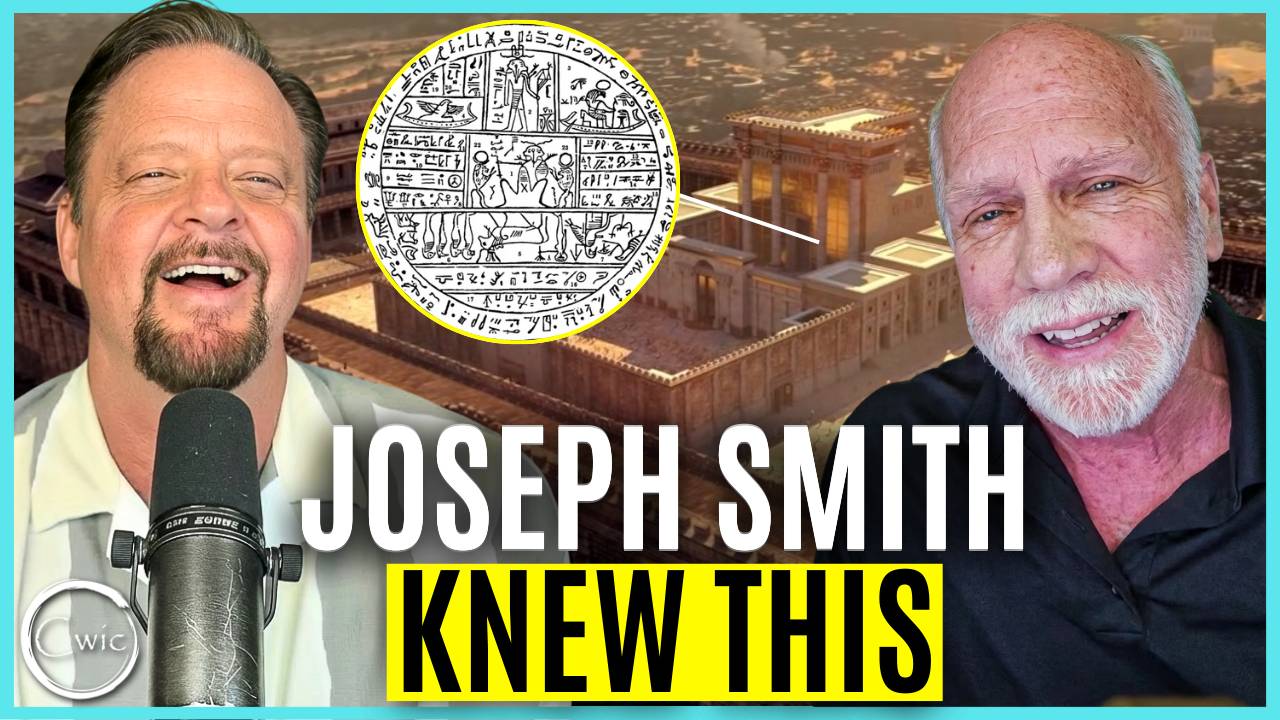
Tom McKnight covers the first two hieroglyphs in Figure 8. "I endow with eternal life." Tom shows that these hieroglyphs, in their cursive form, are centered in the temple experience.
Raw Transcript
If you are interested in the book of Abraham and the faximiles, this is going to be fascinating to you. Tom Knight has
done some research and looked specifically at figure number eight on faximile number two. That's the round
one, the hyposephilis and where it talks about Joseph Smith saying this is only to be had in the
temples of the Lord. Right? So a lot of people interpret that in a couple of different ways. One is well you can only
talk about once you learn about it you can only talk about this in the temple and other is well this is found in the
temple so when I go through my own temple experience I should be picking this up somewhere but there's a third
option and that is that it is something that is
well it is in our temple experience but it's something that is found even more anciently than since Joseph Smith and
Brigham Young right and I'm talking about ancient Egypt obviously and you can see these symbols. You can see what
they're talking about all over Egypt, but especially in the temples where these hieroglyphs are found in the
temples, especially near the Holy of Holies. So, we're going to focus in on figure number eight. That is the
cursive. So, we're going to focus in on figure number eight. If you want to look that up in the hyperphilus and faximile
number two in the book of Abraham and talk about a specifically two different figures in there or two different what
looks like letters almost or or they're hieroglyphs but they're put in a cursive form. Now, the reason I know something
about this, apart from a lot of study, is because I've been there, right? I've been to Egypt many times and gone
through the temples, and this is just one simple example of what you find when you go to Egypt and you go on the Gospel
on the Nile tour. Those that have been there can attest to this. You find out more about the temple there than you
will anywhere else, except for maybe in the temple itself. As you go through the actual temples of Egypt and you see
what's inscripted upon the walls and the pillars and on the Holy of Holies, it's it's like, wait a minute, this is our
temple experience. Why is this here in Egypt from thousands of years ago? It it's incredible. Going up the Nile on a
riverboat, seeing the great pyramids. So many incredible experiences. Would love to see you there. There are two trips in
March that still have seats open. March 2026. You can go to quickdia.com,
cwicdmedia.com, go to the top at trips and events and scroll down to Gospel on the Nile.
Let's go.
All right, welcome to Quick Show. My name is Greg Matson and I am your host. In this episode, we bring on Tom Mcnite
to talk about figure 8 of faximile number two in the book of Abraham. I'm
excited about this, Tom. Welcome to the show. Thank you. Good to be with you, Greg. Okay, so you've done some research on
this. You've gone back and looked at uh can you just briefly give us a summary. What is the explanation that Joseph
Smith gives? Because this is very different from I think what most people think this means. Uh but what is the the
explanation that Joseph Smith gives on figure eight? Well, the the important thing is that
this was in hieroglyphic writing. There weren't any pictures here. So when he gave his explanation, his explanation
was that uh these were writings not for the world but was to be found in the holy temple of God. And at that time,
you know, the church had not even uh introduced the endowment. Joseph Smith hadn't introduced the endowment.
Wouldn't for a couple more months. So it was kind of he was looking ahead but others had no idea what he was talking
about. And so it's uh uh it's really interesting that he said that uh and
more interesting that we can show that that is actually the case today. Well, what's interesting is that most of
us are going to think immediately, oh well, I wonder what this is in the temple when I go through it,
right? And how do I match this with the hieroglyphics that I see in figure 8 on faximile 2? So you're thinking, well,
where do I see this? I don't think it's in the presentation. Oh, right. Right. But but what the understanding
should be this is an Egyptian artifact. This is an Egyptian writing.
Right. And so as we know as Latter-day Saints, the endowment has always existed since
the time of Adam. Correct. And so this is going back through thousands of years. A
and just as a add to what you're saying there. Um so I went through the temple,
you know, when I went on my mission and uh I don't know if you had the same opportunity, most missionaries do to go
up uh while they're in the mission home and talk to the uh ask the prophet a few
questions. Did you get the prophet or did you get another member of the First Presidency? No, we didn't get I didn't get any of
that. I I I got a I got the temple president, Provo Temple. That's who I talked to.
Oh, what a disappointment. But but okay, so when I went through it was Herald B.
Lee. And so they took us through on uh Monday morning
uh August 6th, 1973. And the uh we went through a session.
And we hardly knew what we were doing at that point in time. I'd only been through the temple a couple times in my life with that additional session. And
then they take us upstairs and the prophet comes in and asks the questions. If I had been smart enough, I would have
known to ask the question, but I I didn't have a clue what to ask. And so
uh one of the elders and God bless him for doing this. He raised his hand and
he said uh President Lee he says it says in the in the pro great price that there
are writings contained in the um um hyperphilus that uh are
not to be revealed to the world but is to be had in the holy temple of God. He says we're true, right?
We're here in the holy temple of God with you the prophet. would you please tell us what that says.
Man, I was on the edge of my seat at that point because I wanted to know that. And he said, "We don't know." He
said, "That hasn't been revealed." Well, obviously it had been revealed. It was Joseph Smith's words. He knew what it
was, but it just hadn't been passed down and hadn't been re-revealed. And that really that really uh stirred me up. I
wanted to know at that point. And so later after my mission, I had a chance to take a course in Egyptian
hieroglyphics at BYU and I jumped on it and that's the main reason because I
wanted to know what that had to say and other things too.
Okay. So why don't we go to that? Let's go to the let's go to the uh you've got a a slide presentation here. We're going
to refer to these slides. Okay. We're going to go, you know, there's a lot more to it. We'll do that another time, but we're going to cover just
figure eight. Okay, great. and and go through what what that shows. So we begin here with an overall view of
the Egyptian hypophilis as it was published in the Nauvoo Times and Seasons on March 15, 1842 along with the
publication of an illustration of what the hypocus looked like. Joseph Smith outlined his explanations of 10
different vignettes of hieroglyphs and pictographs which included as many as 24 unique elements included within those
panels. Through the almost two centuries since then, Egyptologists have been quite bold in ridiculing the prophet's
explanations. Can you see that? Uh, Greg, would you mind reading that? Uh,
yeah. It says, "No secular epo Egyptologist has ever conce conceded that Joseph Smith got anything right in
relation to the hyperphilis. And again, for those that don't know, the hyposephilis is the round faximile that
we're referring to. Faximile number two. We just keep you want me to keep going? Yeah, read the whole thing. As one of
countless examples of this, Hugh Nibli cites Egyptologist Friedrich Wilhelm von Blissing's words from 1912 saying,
"Joseph Smith has misrepresented the signification of every single figure." I
just I'm going to interject here real quick because I always find this I find this so interesting.
I it it we have a better understanding as Latter-day Saints about ancient temple
rights than anybody else does. And and when you have gone through the
temple many times, you're going to pick up on things that a scholar who
specializes in Egyptology is not going to pick up on because they haven't gone through the experience. And so it's just
it's so interesting that they say these things and then we can go through
especially have some knowledge of Egypt at all. You we can go through we can say wait a minute here. This is uh this is
the temple ceremony. You know we we can show this and and and show the temple ceremony. I'm going to keep going here. It says other similar dismissive claims
include the University of Chicago's Egyptologist James H. Breaststead, who I've read all of his works that I know
of, who said Joseph Smith's interpretations very clearly demonstrate that he was totally unacquainted with
the significance of these documents and absolutely ignorant of the simplest facts of Egyptian writing and
civilization. And then lastly, William Matthew Flenders Petri, who I've
also read his works of London University went so far as to say, it may be safely
said that there is not one single word that is true in these explanations.
And you go on to say here, as we will soon see though, we are about to turn such statements as these completely on their heads. Correct?
Uh, and I agree with this. and and even today more with more contemporaneously
with for example a writtener it's uh I've read through written stuff and and
and he is putting his head in the sand on certain things about what's going on in these faximiles
he's not bringing them up he is steelmanning his own position and straw manning Joseph Smith it's kind of
frustrating but anyway go ahead okay so in today's presentation the first item we will examine is possibly
the most difficult of all the panel for Joseph Smith to have translated correctly if he did not know what he was
doing. In fact, it would have been impossible. Fing focusing our attentions on the hieroglyphic writings here. Uh I
see I don't know if you I don't have the well the yellow they're marked in yellow there. Yep. What's highlighted? This is on the
on the mid left side panel of the hypopilus as opposed to pictographs
uh which are the more the picture kind of uh of panels. We will zero in on the
hieroglyphic figures on the left side of the middle section of the hypophilis. Here we find four lines numbered 11, 10,
9, and 8 from top to bottom. Okay, enlarging them just a bit. This is
the exact same way they appeared in the 1842 Nauvoo Times and Seasons with Joseph Smith's explanations. And in like
manner, we also see them reproduced today in our own pearl of great price faximile too. The bottommost of these
four lines is figure eight that we're going to talk about. And this is the one which Joseph Smith stuck his neck out
most on with his profered explanation of what it signified.
Okay, here is line eight enlarged. It reads right to left and consists of five hieroglyphs, though it may appear to be
more at first glance. In 1842, no scholar on earth had any idea what this was really talking about. Who among us
even today would dare without training to undertake undertake the task of suggesting a translation of it?
And yet Joseph Smith daringly proclaimed that this figure 8 line contains writings to be had in the holy temple of
God. Where in the world could this have been coming from? It was totally inconsistent with anything he had put
forth as the narrative from the book of Abraham. In fact, the word temple does not appear anywhere else in the fact
simulates at all besides this figure 8 reference. We the church were helpless
to prove the accuracy of Joseph Smith's explanation here 150 years ago because
the understanding of Egyptian was still so young and unfamiliar to most people. However, today we will show that Joseph
Smith was absolutely correct in his explanation. In Egyptian, these hieroglyphics read
again from right to left duk ba oirrus shishank. The last three
characters to the left at the end of the expression ba oirrus shishank merely
specify the person about whose Egyptian temple endowment is being referenced
here. There are 158 known hypophyli
uh that have now been recovered in Egypt and each hypocphilis is styled to a different individual who had received
their Egyptian temple endowment before their later death and endunement. This one in figure 8 is for the Egyptian
named Shishon which is his first given name. The name Osiris Shishon is his
hyphenated new name taking upon himself the name of the Egyptian redeemer Osiris
when he received his endowment. Yeah, Tom, let me just say something to the audience on this because they need
to understand something. We can we can overlap a little bit going into faximile number one also where where we have an explanation from Joseph Smith that the
person lying on the lion couch for sacrifice there is Abraham and yet it's
very obvious to Egyptologists that this is Osiris that's laying on on the lion
couch, right? Or or someone being at least someone being mummified. But if you go through the myth, this is someone
that would be like Osiris or Osiris himself, right? And so it's it's important to understand that
this is what they did. Just like we take on the name of Jesus Christ. Exactly.
And that is the way for us to go and and and and we need to remember his name and
all knees shall bow right to to to Jesus Christ. They took on the name of Osiris.
Correct. And so when Abraham is being sacrificed there on the lion couch or what would represent him, he is Osiris in that
moment. Right. In allerary texts, if you if you could afford to have a book of breathing buried with you and have that
scribe write that up, it's and and your name is Tom, you would be Osiris Tom,
right? That's how you always do it. So Abraham would be Osiris Abraham. Got it?
And would be represented as the one being mummified or sacrificed on the lion couch
uh bed there. It's the same thing. And this is exactly what they're going through. This is how it is labeled. When
you when you die, you are going to be with Osiris and joined with him in the
underworld in what they call the dooat. So anyway, just kind of a little bit more context on what we have here.
Okay, so we were talking about the uh the last three hieroglyphs. Now the
first two uh the writings that would not change from person to person however but are part of the standard Egyptian temple
endowment ceremony for everybody are the first two characters on the right reading from right to left the
d means to endow in the sense of to grant or to bestow and is the heart of
what we are talking about ancient or modern when we speak of an endowment ceremony an means eternal life and here
We should say that when the Egyptians spoke of eternal life, they distinguished just like the Latter-day Saints do between just plain old
immortality or existing listlessly forever, sterile and without a divine
purpose and true eternal life which is productive and infinitely rewarding. To
the Egyptians, eternal life or Anuk means living eternally side by side with
God the redeemer as well as in communion with the other exalted gods in glorified
perfection of our resurrected bodies continuing the family unit and expanding
it throughout the universe while they believed in exaltation. Yeah. While reigning on thrones, ruling
in the heavens, living in paradise, and partaking of the tree of life. It's ironic, but the crux of the test of
whether or not Joseph Smith is a true prophet all comes down to these two little glyphs. They are the two most
important hieroglyphs in the entire hypoilus that here identify this entire line as an expression of writings
confined to the holy temple of God just like Joseph Smith proclaimed. We've already talked about what deionic means
here to endow with eternal life. But to test Joseph Smith's prophetic abilities, we need only need to answer one
question. Is this Egyptian expression really found in the holy temple of God? Like he said, in order to answer this
question, we need to first learn what these two glyphs look like in their temple block form as seen here and in
the Joseph Smith hypophilis. They are in a bookhand cursive form while their equivalent sculptured form in the
Egyptian temples are a more formal structured block looking appearance.
Without knowing both styles of the book and cursive hieroglyphs as well as their
counterpart block glyphs, we would never be able to recognize this expression when we encounter it in the Egyptian
temples. So let's learn its block glyph form right now. On the left side, these
are the same four lines of hieroglyphics exactly as they appear in our pearl of great price in cursive writing Egyptian.
On the right side, we find the same exact writings, though transposed by
Egyptologists for our convenience. So, we can see how they actually look in
block style hieroglyphs as used in the Egyptian temples. Please notice though that the only two glyphs from each group
which we really need to worry about are the ones highlighted here in yellow. Both highlighted expressions say the
same thing, the on though the ones on the right are the way we will find them in the temple ruins in Egypt today. It's
a miracle that Joseph Smith not only perceived the meanings of these indecipherable scratchings on the left,
but he also was able to locate for us where those writings would exist in the block glyphs in the Egyptian temples
themselves. We cannot emphasize strongly enough how important it is to know that these two expressions are exactly the
same. This is the key to confirming Joseph Smith's prophetic abilities when you go to Egypt and check this out for
yourself. Here's an example of deionic in its sculptured form on the walls of
the Egyptian temples. So remember that the tepee for as we go along here,
remember that the tepee looking glyph is D and the cross with the loop on top is.
This phrase is the core of the Egyptian temple endowment ceremony which occurs during the sacred embrace ritual in the
Egyptian temples. Since that is the case, we need to spend a minute talking about that ritual. It is here that we
present our smoking gun evidence showing that Joseph Smith hit the bullseye when he said the figure eight writings were
to be had in the holy temple of God. Okay, Greg, on your show here, you've
talked numerous times before about the ancient Egyptian sacred ritual temple
embrace and about how familiar it would look to those who attend modern eldas temples.
Today though, we will connect the dots and demonstrate that the Dionic expression found in the heart of that
sacred temple ceremony is also the very same Egyptian expression of figure 8.
Exactly as Joseph Smith said. We were missing some slides, but I'm just gonna
Can you Can you read that slide for us? Uh uh you don't have the sacred ritual embrace. That's what I was seeing there
first. Yeah, it it's not coming up here. Should be two too. Read that for me and I we'll if they if
the people see that then read it to me and we'll comment on it. Bruce Porter, who's led multiple tour groups to Egypt,
has told us right here on your show, that the the ritual embrace in Egypt, talked about by Dr. Rick's, and that's
the quote we're missing here, uh, is found at every single Egyptian temple.
He said the ritual embrace is everywhere. It is everywhere. And so um
the the purpose of the Egyptian temple
ritual embrace is to for the departed person to meet a god uh answer his
questions uh embrace him and uh be admitted into the presence of the gods.
Were you going to say something on that, Greg? Well, I was just going to say I can read this here. Dr. Rick's
Oh, yeah. I've got it here. Uh we've got several years ago, Steven D. Ricks,
uh professor of Hebrew at BYU, made a trip to Egypt with his wife. He said
that along the way, he hoped to find two or three dozen scenes of the ritual embrace from the chapels and pillars of
Egyptian temples. What he found instead were scores, if not hundreds of these
examples. I can second that as shown below that spanned the country from Cairo to felt which is very far south
down in Aswan. Uh Dr. Rich said that the that Egypt is quote an embarrassment of
riches and the number of examples were so great he couldn't take a photo of them all. He summarized and said scenes
of sacred embrace in ancient Egyptian religion occur in the most sacred uh
sacred precincts of the temple. Okay, thank you. You saved that. So that part of the Egyptian temple has been
previously explained by others. The dots we are uh connecting here today though is that the deionic glyphs which are the
core of those template braces are also the salient expression in figure 8 and were downified as such by Joseph Smith
as being in the holy temple vindicating his prophetic ability as will be shown momentarily. This is a bullseye hit for
the prophet. For the honest in heart it is proof beyond a shadow of a doubt. Any
reasonable person will agree before we are finished here that it is absolutely impossible for someone to have guessed
something like this. Joseph Smith did not beat around the bush though. He had said quite clearly that figure 8
contains writings that cannot be revealed unto the world but is to be had in the holy temple of God. Either he got
it right or he didn't. Either he is a true prophet of God or he's not. Now we
will see the proof with our own eyes that the figure 8 writings particularly deonic which Joseph Smith said would be
found in the holy temple of God are really there. Take one last look here at the block style hieroglyphs for deionic
as they are actually sculpted in the Egyptian temples. Memorize what this looks like because we are now going to
see them over and over again in the actual temples of Egypt. And I'm glad you can testify to this Greg.
Yes. Uh remember in most cases these are often found at the very threshold of the holy of holies which is the heart of the
temple itself. Okay so here we go. This is a typical pillar inscription found
within the temple corridors. These pictures speak for themselves. They represent the exact writing which Joseph
Smith identified as would exist in the holy temple of God and the most important part as well. Are these
pictures legitimate? Well, Greg, I've never been. Absolutely. I've stood right in front of
that. All right. Thank you. Uh, I've never been there, so I'm not always sure which
pillars belong to which temples, but I'm sure many others could identify these for us. And I'm glad we got you to be
able to do that. Since our our next picture is so similar to this one we're showing right now, uh, please note
before we move on that the present character on the left has a has a crown like unto a ski slope.
That's the desc. Okay. Okay. Yeah, that's the red crown. And the other one is the other crown. and
they're typically worn together. They're the crown of each of the lands of upper and lower Egypt.
So on this next next uh slide, no ski slope on the left, just a double plume.
Different temple pillar, but same usual depiction of deic. Mhm. This is a close-up view from another
sacred embrace depiction. They look similar, but they are not the same as the last one we looked at. As we said,
this is a common portrayal in the Egyptian temples. Notice as we go along how often the deonic phrase is spoken by
one party and mirrored back verbatim by the other. Who could deny that this is the very expression Joseph Smith said
would be in the temple. Here it is. Not one single word that is true in these explanations. Don't make me laugh. You
want proof that Joseph Smith is a true prophet of God? Well, here it is. Here
we have backto-back portrayals of the sacred embrace in both cases of which we see the expression from figure 8 being
fully displayed again in the holy temple of God in Egypt. Now the usual synthesis
translation of the glyph alone is eternal life as we would say it. But
when the Egyptians used the expression they were thinking of more sublime concepts than just two simple words as
we might convey them. Regardless, that isn't necessary to prove our point that the hieroglyph combined expression the
onic, which Joseph Smith said would be in the holy temple of God, really is there.
Here's another sacred embrace example, but in this case, you have to look down just below the farthest foot on the
right to see what is being said. Then we've enlarged it a bit on the
right. The other symbol, go ahead. Let me repeat here for the audience too, uh, Tom, that you know,
again, these are often times they're found usually in temples. You can see them in other places such as tombs, but
um, look at what they're doing, right? Look at what they're doing. This is this
is uh, typically at least Bruce Porter typically calls this the ritual embrace.
And and what you have here is you've got a hand to an ear, you've got a hand to a
shoulder, typically you've got a foot to a foot. Um this is being unified again
uh reconciled directly with God typically at the veil.
Intimate teach uh intimate touching and uh yeah it's spiritual thing.
Yes. So as we look at these symbols down by the feet on this one, the other symbols
after deionic endowed with eternal life are Jed health in the backbone. You can actually see the vertebrae in the
backbone and was powerful priesthood symbolized by a staff of authority and
power here. But again only the is necessary to prove that Joseph Smith got figure8 absolutely correct.
There's another I'm not going to go over that now. But if you actually ran went through that entire row there, you're going to
basically get the Abrahamic covenant. Okay. Pretty close to exactly what you're
saying when you're at the veil in the temple. Oh. Oh yes. And we got to be careful
about that. Here's another example. Can you see the deionic in the top right hand corner? Once you know what to look
for, they're everywhere inside the temple walls. Now for just a moment let us stray as you you mentioned a moment
ago Greg from the temple into the sephilers of the kings. This is in the tomb of the youthful king tut pharaoh
tout anakaman who died when he was 18 years old. On the wall is depicted the
disembodied soul of the young tut being received into the arms of the Egyptian redeemer Osiris. Much as we often
imagine our loved ones being received upon death into the arms of Jesus in the next world. If you look closely, I don't
have my laser pointer here, but you you can see that the arms of Osiris are reaching out to embrace Tut. And then
the arms of of uh Tut are infolding um
uh Osiris, his redeemer. When uh now whenever I look at this now in my head,
I hear the Osman song, let me in. Let me in your arms again from their album, The Plan. Anybody that's heard that will
know what I'm talking about. Notice Tut's hand by Osiris's ear. Uh,
again, I wish I had my pointer to show that, but you can see up by Osiris head,
there's a a hand that is King Tut's hand. And that indicates that this
sacred phrase is not to be revealed to the world and is to be uttered at low breath or whispered in the ear. Okay.
So, we'll talk more more about that in just a minute. But the reason we show thiserary scene is to demonstrate that
Tut's Egyptian temple endowment is still imprinted upon his eternal soul. His
eternal ba as the Egyptians called it. Look above Tut's head right here. And
let's enlarge it for you. You can see see it a little better there. When
meeting his redeemer, what was the first and most important thing young Tut, King Cain Tut wished to say to him? It was
the temple key words he had been taught in life. Notice the expression above his head that he must say in order to be
received by Osiris. Endow my soul with eternal life for time
and all eternity. Out of the tombs now and back to the temple at scriptures again, which like our own temples today
were to prepare each soul for the afterlife. You notice in a lot of these that the characters representing God and
man appear to be a statement by one that is reflected back by the other. This is
a formulaic expression that was not to be bandied about loudly but almost whispered between the parties so as to
only be heard between the two of them. Again, that is the significance of the hand up by the ear and reflects that
part of Joseph Smith's explanation that Deionic is a sacred tip of instruction that contains writings that cannot be
revealed unto the world. I I can read it just as it contains again the writings that cannot be
revealed unto the world, but it is to be had in the holy temple of God. Here's another example of that
principle. Please note again the hand up by the ear as the unic is spoken between
God and man indicating that this was to be done quietly between them and not to be revealed unto the world.
Yeah. Now Tom, did you yet say what deionic means? Did you go over that? Yeah. Yeah. But I'll say it again. The
is to bestow or to endow. To endow and anuk is with eternal life. So it's
always I endow you with eternal life or endow me with eternal life. it's the if it's the person requesting it. So, but
but yeah, it's and it's it's a form of as what you were uh alluding to that
people don't know what they're saying when they go into the to the temple a lot of times when they're going through
the veil, but that's really the essence of what we're talking about there. Okay. These are some other temple seeds from
Hugh Nibbli's 1975 book, The Message of the Joseph Smith Papy, an Egyptian
endowment. This is on page 251. We knew even back then that there was great significance in the Egyptian temple
embrace. We just did not quite yet make the connection between the deionic formula from that embrace as proclaimed
on the monuments and it's also being found in figure 8 where Joseph Smith told us point blank that it was a temple
expression. Here's another one from Hugh Nibbli's book. This one on page 248. He
wrote this is a sequence from a temple at Carac shows and it shows how the royal initiation culminated in ritual
embraces. Okay. So as you know Greg these are often uh presented almost like
modern comic strips you know in panels. And let's go through these panels one at a time. Close-up individual vignettes
show us the initiate going through the temple ceremonial process of washing an anointing and being assured while doing
so that he is being endowed with eternal life. Deionic at the top deionic. Here
in the next frame he's being ordained as a king I presume. And as part of the process he is promised eternal life with
the gods later on. Deionic you can see. Yeah. And and on here also this is where
he would be anointed as king. Okay. Okay. Very good. Very good. Anointing a a king, I guess, huh? And in
this final closeup of the initiation sequence from the temple at Carne, as he initiates being conducted into his
moment of reception by God, it is being announced that he has received his promise of future glory, the Anuk, the
endowment of eternal life. All a part of the Egyptian holy temple endowment ceremony.
Yeah. And I've seen this many, many times. It's interesting because if you go back to that, Will you go back to that last screen?
Yeah. So people can see uh that portion of it. Yeah. So if you look at this, this is this is like you say, these are
held in the in the most sacred places. You know, most people were not allowed at all in the temple and and the
Egyptians could not go to the temple except for maybe at festivals. They could come into the temple, but even then they couldn't come into the holier
places. And this here, this these scenes here that you're showing right now are
on the Holy of Holies at Carneak. Right? So, you've got a big square, you know,
cubed building basically at at at the toward the end of a very long walkway where
you're going through three different major sections, right? Just like you typically would do, just like with the temple of Solomon and you arrive at the
Holy of Holies and on the right hand side, on the outside, not on the inside, but on the outside, on the right hand of
the Holy of Holies, this is what you get. This is a uh uh you're going
through basically the washing and the anointing of uh of of it's the pharaoh but you
know again the pharaoh is the king and that is why we go through the washing and anointing as kings and queens and
priests and priestesses because we are going through the same process that here the king or the pharaoh would be going
through and and so it's it's uh you bring everything together, how the
temples are built, what they're doing in them. It is really phenomenal that
Joseph Smith is tying Egypt, which most people think, oh, paganism and and and
magic and mythology. And it's like, no, this is a corrupted version, a slightly
corrupted version of the truth that we learn of in the book of Abraham, where the Pharaoh was a good man trying to
imitate the priesthood and the temple that he learned from Ham and and Noah.
Exactly. All right. And finally, like an exclamation mark to the things we've been talking about, this one isn't on a
sacred embrace depiction, but it is clearly still in the holy Egyptian temple of God, right in the heart of the
holy temple where Joseph Smith said we would find it. I guess we should mention, Greg, and that you know, the
reason we see these today is because these are ruins. But, uh, back in back in the day of the Egyptians, I don't, as
far as I know, the common people would never see these things. They weren't allowed on the on the premises to That's
right. see these things. And so it's it's a very special privileged view. We get to see them at all today. Um
well, it's like you said also what Joseph Smith says there. They are to be had in the holy temples of God.
We go to great lengths to keep that sacred and they did too. But of course the civilization
that is also going through there the Abrahamic covenant or a variation of the going from the deionic on down
is essentially a shortened version of the Abrahamic covenant to the veil.
Um okay so this one it's is the on the largest and most preserved obelisk in
Egypt and the temple of ammonic carnac but again you see the salient phrase the
there and there's other things there as well but Joseph Smith was talking about the in figure 8 when he said that that
would be uh found in the temple of of god. Uh,
Joseph Smith threw down the challenge regarding his explanations. If we could, the world can find these out, so let it
be. Amen. So, some may indeed deny the deny the sun while it shines. But we
challenge anybody to refute what we've shown here today. We've shown undeniable
evidence that Joseph Smith was correct in his assertion that figure 8 contains writings not to be revealed unto the
world, but are to be had in the holy temple of God. deny it at the risk of your own eternal salvation. I want to
say here, if I may, that I believe in Jesus Christ with my all my heart. I know that Joseph Smith was called of God
to restore the fullness of Jesus gospel in these latter days and that the church of Jesus Christ of Latter-day Saints is
the true authorized vehicle to take that gospel into all the world. And uh thank
you, Craig, for letting me have a chance to share this. Yeah, Tom, that's excellent. It's great stuff. I mean, it's great stuff. It it
weaves right into everything that that I talk about. It weaves into, you know, Bruce Porter and Oh, yeah. and everybody. I mean, you can go to
John Gee or or uh Carrie Mulestein. I mean, they they've all talked about these types of things also. And and so
it's uh but that's very I love the focus that you have on that figure eight. And if we could take every one of the
figures, I think eventually the, you know, the wool is going to be pulled back and we're going to be able to see
very clearly that what Joseph Smith was saying is right. and and and unless you
have a spiritual understanding of the temple, which is what the book of Abraham is all about, it's about his
endowment. And and unless you understand the temple and the symbolism in the temple, you're
just going to look at what you you think you know secularly without having a clear understanding of what they were
doing thousands of years ago in the temple itself and and their understanding of exaltation. Without the
without the spirit, you wouldn't have any clue what they're talking about. Yeah, that's right. So, well, Tom, thanks so much. That was that
was excellent. I love this stuff. I love getting this out there. So, I really appreciate the work that you've done on this and putting this slideshow together
here uh focusing on figure 8. Uh for the audience in the if you're on YouTube and
watching this, then uh make the comments make comments on this and tell me what you think. And if you disagree, you
disagree. But uh I'll probably be able to respond with something that might clarify some things or Tom may do the
same thing. So Tom, appreciate it. Appreciate the work on this and uh let's let's do this again on more of the
hyposphilis. Okay. Thank you very much.

"I Take This Every Day!"
Learn more about why I accepted Cardio Miracle as a sponsor and why I take it every day!
- Greg Matsen

Stay Connected With New Articles & All Things Cwic!

Cwic Audio Player
All of the Cwic Media podcast episodes on one page!
Recent Posts

