
The Sexual Revolution Betrayed LDS Women - Marriage Protects Women
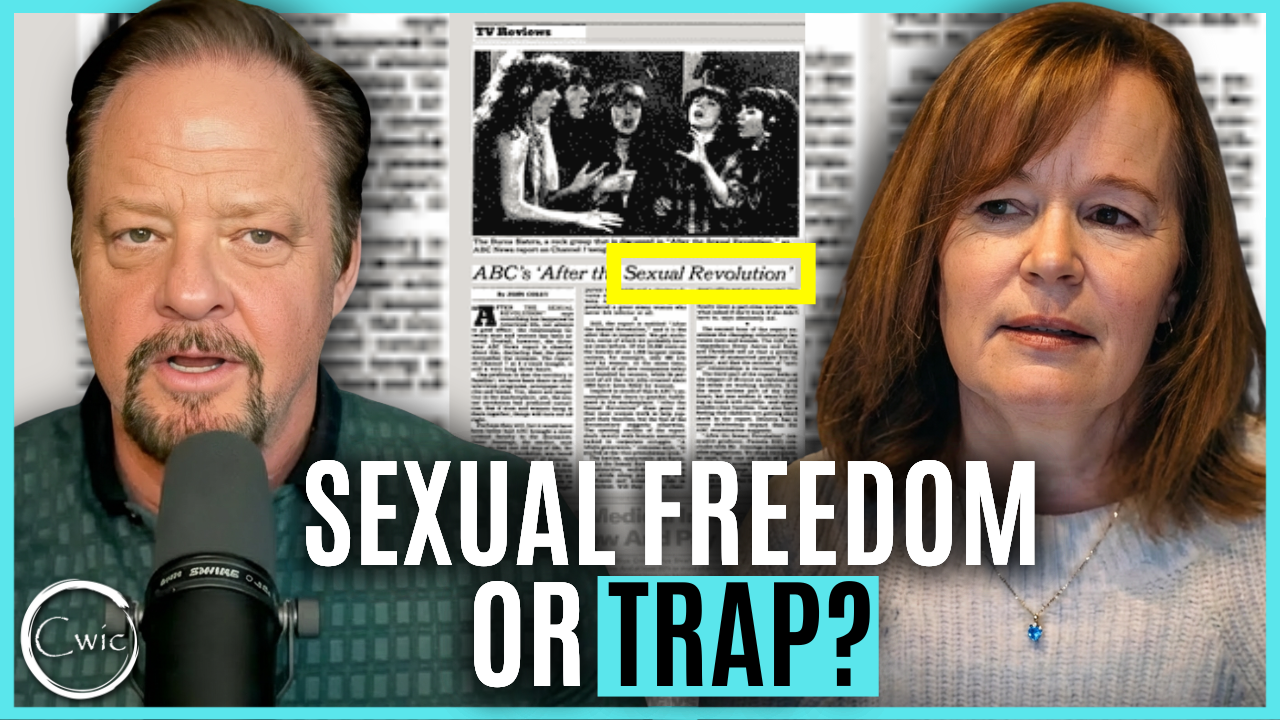
Feminism Ignored Biology—and Women Paid the Price We Removed the Social Contract Between Men and Women How the Sexual Revolution Quietly Entered the Church Why Motherhood Became a Taboo Topic Why the doctrine of Christ can’t be separated from marriage and children “I Don’t Need a Man” Is a Cultural Trap The Lie of “No Consequences”
Raw Transcript:
Unlike the narrative that is given to us socially throughout our culture, marriage has protected women overall.
It's the sexual revolution that has betrayed women. Researcher Christine Stringham joins me in this interview to
talk about the idea of consent, how feminism has ignored biology, and how
motherhood has become taboo throughout our culture, and even how some of these things have entered into the culture of
the church. Now, this episode is brought to you by Wavemakers 26. This is on
November 14th through the 21st. This was an incredible trip last year in November. So much fun bringing that
online community in contact with these influencers, with these podcasters, and spending an entire week together. It was
an absolute blast. Edifying, educational, and something I don't think anybody's ever going to forget. Join
myself and Hayden and Jackson Paul Carton Ellis of Ward Radio, Jacob Hansen from Thoughtful Faith, Andrea Woodmancy,
Hannah Star Stoddard, Jonah Barnes, Kevin Prince, Arana Condi, and Sarah
Clark and others. This is a fantastic experience. Go to quickdia.com,
cwicdia.com, go to the top to trips and events and scroll down to wavemakers 26. I would
love to see you there. Here we go.
All right, welcome to Quick Show. My name is Greg Matson and I am your host. In this episode, we bring on Christine
Stringham to talk about the sexual revolution. And Christine, I want to get right into this.
Okay. Sexual revolution of the 60s and 70s. What has that done for women?
Uh, I think it's overall hurt women. I think with any social change, especially
ones so significant as the sexual revolution, there are always costs and benefits. And
in our culture, we are very hesitant to talk about the costs of the sexual revolution. And I think those costs have
almost well, they've been more heavily borne by women. I think they hurt men as well. We can't hurt women without hurting men at the same time. But women
have really borne the cost of of much of the fallout of the sexual revolution.
What what what do you mean by that? What are the costs? Because I mean obviously the idea at least the messaging during
those periods and today still is that you know being sexually liberated, being
more like men. um that these are empowering to women
and that women I think the general narrative would be that women are much more empowered today overall than they
were you know 50 or 60 years ago right well to answer that I'll rely on
Louise Perry from the case sexual revolution and she she outlines it very well and I I just want to say too that I
have always been very fascinated to read or study people who come at things from a different viewpoint than
I was raised in the church. I've always embraced it. I lived quite a traditional
life. I have raised six children as a stay-at-home mom. So to read someone
like Louise Perry, who's still, I think, just in her mid30s and came from a more progressive liberal background, but is
the one arguing against what has happened in the fallout of the sexual revolution. I find that fascinating to
try and see it from a different viewpoint. And she just argues in a few ways. Um
once the safeguards were taken away with what she argues is that women in the
past held more of the safeguard on sex whereas men it was the economic you know
that you come together with those two. when the safeguards were taken away um
and and what really changed with the sexual revolution was the pill and reliable forms of birth control.
So she argues too that it was material technological change that really changed things more than for example an animus
from men or different things in culture. It was technology. Mhm. And so she said that the sexual
revolution introduced a new creature into the world and that was a young
fertile looking attractive woman. And if you look at surveys and studies, women
who are in those fertile ages are the ones who are deemed the most attractive. Right. It's just I hate to sort of make
us into these creatures who get down to just that. But when you're looking at population level,
it's biology. Yes. And so when that creature entered
the scene, as she said, then this new creature who was
visually and from what you could see was fertile, but her fertile fertility had
been put on hold. And so we can't even, I think, totally
totally recognize the change that that made. And so as some argue that it freed
women, what she argues is that instead it has rewarded the most highly socioexual
individuals in our culture. And by socioexual she means people who are more
motivated to in engage in risky sex, engage in casual sex. And again when you
look at population level, there can be variation among individuals. But when you look at population level, the most
highly socioexual are almost always men. There will be exceptions, but she really
argues that we need to bring biology into this. She feels that feminism that
came that the second wave of feminism really left behind a lot of biology
and acknowledging the differences with men and women and that it needs to be acknowledged. And so if you look at our
culture, she argues that you just look around and you think who is the hookup
culture, the more casual sex culture, who who really wants that? And it's
actually pretty hard to argue that it's women, that that's how women would be
because even when women have been more freed technically from pregnancy, even though even though there are arguments
that the number of accidental pregnancies went up because as women engaged in more risky sex themselves,
birth control isn't 100%. And so and so anyway with that you just sort of
even with that just by way of our how we
respond to sex. Women are not they they have more regret when in survey after
survey shows they have more regret when they involve themselves in casual sex.
And then there's also then there's also the whole thing of men being stronger. Uh I think how is it? It's I think
they're twice as upper body is twice as strong and then women are only twothirds as strong with lower body strength. I
mean we see movies, we see shows where women can do all sorts of things as
they're combating men in action movies, but in reality they seem to be most of the superheroes
today. Exactly. And in reality that's just not the case. And so women are putting
themselves in in dangerous situations if if they do not acknowledge biology. And
Luis Perry argues too that we are hesitant to talk about that because it can be construed as victim blaming. But
she says we can at the same time say that
uh sexual assault or um or rape are non-negotiable. They are
reprehensible. We can say that at the same time that we can say women should take measures to keep themselves safe in
the reality of our biological differences. So, so will you go back into the into the idea of of victim blaming and
biology? What what what break that down a little bit more? Well, she gives the example of being on a university campus
and when women and and she puts herself in this category that she the idea of
freedom and autonomy and what she describes as liberal fre liberal
feminism and she she says she's not trying to talk left right just freedom and autonomy with consent in there being
sort of the standard bearers of of liberal feminism. So when a young woman
approaches uh a situation, a context where those biological factors are real,
but then enters a situation where there are men she does not know,
gets drunk, is dressed in a way, possibly high heels and things where she's not as safe to to remove herself
from the situation. Just a perfect storm of of not of not being safe.
And that's not to say a woman deserves anything coming to her at all. No. Never. But just being realistic.
Yeah. Yeah. It's you're it's there's still the idea of caution. Yes. Right. There's always the idea of wisdom
in in in not being in those types of situations if possible. So yeah, that that makes sense. What what about men?
Let's go over to men just for a minute here. I want to get back to a few of these other things, but what has this done for men? uh th this change in
promiscuity and sexual liberation in feminism uh supporting more of a
careerism less on motherhood. What what is the result for for most
men? I think it's left a lot of confusion. I think it's left confusion between men
and women. And I think that we see some of the reaction that that isn't always
healthy. And it's also with with the culture of consent,
it's too thin to take in all the nuances of sexual behavior and that's what we're
left with. But when men approach a situation, I think it's become very hard
for them to read situations too when all it is is consent.
Also, we we can't talk about it without talking about porn and how much that has influenced
what some young people are coming into sexual activity come in with ideas about
and what women want. So, again, it alienates men and women. I think also
that I think it's just I I don't have stats. I don't have anything other than just a
gut thing that I'm saying here. There is a very strong attraction on the
part of most men to women that is unique and strong
and when it is when it is channeled in the right way it is very enabling and I
I honestly wonder how much of civilization has been affected by noble
men's desires out of their love for their women and children. So I think
that that is being I think that that is seriously harming men too because I mean
if we think of the natural man we know that every desire that comes to us isn't supposed to be acted upon but we don't
live in a culture that is teaching that. Mhm. And one thing that uh really affected
Louise Perry was when she was in her 20s, she worked at a rape crisis center. And the longer she worked there, the
less she was willing to just believe what she had believed before. And they
talked a great deal about the sociological effects of why rape happens, but they weren't bringing in
the biological. and she came across a book and I'm trying to think what it was
called. Oh, it was something. It was quite a controversial book, but it was about rape, the natural history of rape or
something. And in it, she said it was a very disturbing, depressing read, but it also
validated her gut instinct, too, that this was more than just sociology, even
though socialization is part of it, for sure. And that's I think what I'm
getting at with how has it affected men. But as we are socialized in different
ways with norms, we have to take into account biology. And anyway, in this book about the natural history of rape,
it it talked about some surveys. And there were a couple of different surveys
that asked a group of men. I don't know how big of a study. I don't know how well it was done, but but it was Louise
Perry is is a good author. So anyway, she used it, a good researcher. She the study showed
that if a group of men were asked if they could be guaranteed they wouldn't have any negative uh results of
forcefully engaging in sex with a woman like um criminal or disease or whatever.
If they none of those negative results, how many would one say 27%, another 35?
And that's disturbing for me. I've always been around good men and so I resist some of this. I res I want to
resist it. But then she also talked about another survey that asked men how many had
engaged in forceful sex. So what is that? There is
how she argues is that if we lived in a world where sex was always beautiful and
good for you know respecting both people then maybe we could have a different conversation. But we live in reality and
there is a darkness that enters in and for some reason it does seem like men
with a stronger sex drive. It can be, not that women are excluded, but if we're talking population level, it can
be turned to a dark thing. And that is tragic for men, too. Obviously, it's horrible for women, but it's tragic for
men as well if those are not are not acknowledged and worked against.
Yeah. And that's that biology is is important to understand. You know, a lot of times I hear
uh, you know, that rape typically happens because it's just a power dynamic,
right? It's purely a power dynamic. It's just men wanting to control women. And I
don't doubt that there's some type of element like that in there. But you're still removing the biology that that
that exists and the drive that exists. and and it and and I don't know why that is, but I I think most of it is
anchored in critical theory and it's this idea that there's got to be an oppressor and and a victim and that
that's all that matters, right? And and it's it when you ignore the biology, you
ignore wisdom, you you ignore do I get in certain circumstances, do I not get in certain circumstances? Um,
unfortunately that first number you gave on the survey of who would
I hope it's a lower number, but it doesn't shock me. Yeah. Right. The other number 10% that
actually have that that is concern that is really concerning to me. Yeah. Yeah, if if it's that high and validates if
that's the case women who are very concerned, right,
about being in certain situations and and and this is the thing is
when you take away social norms, right, there there has not always but you know, we used to have a pretty defined social
contract between men and women. Mhm. We understood the biology. We we
understood the the the strength and the weakness, the drive and and etc. And and
we created a certain social certain social norms to protect men and women in
certain circumstances to help them not get into those circumstances and to teach the wisdom of of of this
type of thing. And we seem to have removed all of that or a lot of that
where where we don't have those same social contracts. And and I think it's it's both that we
have let men's drive go too far and we have allowed feminism to go too far in
in in not keeping these social contracts in place. Does that make sense?
It does. It totally does. And and I think too
when we live so much this comes to embodiment too and both Mary Harrington
who also is a reactionary feminist as well as Louise Perry talk about this. Mary Harrington talks about a little bit
more the whole embodiment thing. And we can see how uh knowledge uh workers uh
higher elite people who who aren't necessarily working with their bodies
sometimes seem to be less in touch with some of this than people who who who
would have lived in agrarian societies or people currently who work more with their bodies. It's just more obvious.
Physical labor you're talking about women. Yes. And so being
being embodied and and I found that very interesting too when when both of these
feminist thinkers were talking about embodiment too because especially as Latter Day Saints when we believe we
came to earth to get a body or when I think about Elder Bedar teaching what he has about uh acting instead of being
acted upon and we are working in so many areas where it stays in the theoretical
and we're not bringing it down to real life. And I think that that has happened
in in much of feminist thinking. And at the same time that I'm arguing this way, one thing that I have gained a greater
appreciation for the older I have gotten because I have always I
my my belief in the importance of what women do in the church and in the home
has just always been has just always been there. I was raised by a very intelligent, capable mother who embraced
motherhood. And just no one could convince me that she wasn't important and that she didn't affect this world. I
just know she did. And after her death, I I there's just no question how much she she in how much influence she had.
So, it's that's always been rock solid. But one thing I've gained greater appreciation for is that many of the
things that feminist thinkers do bring up are valid.
But I argue for a different solution. And so when going back to the social
norms going away sometimes, for example, marriage being described as enslaving
women or I mean because there are some there's some really especially in critical feminist thought, there's some
really strong statements about marriage about men. Well, no, it didn't enslave women. In
fact, it really protected women and it safeguarded sex for women, especially
prior to more reliable forms of birth control. Yeah, I think that's true. And of
course, you can look at women and and and children as the biggest casualties, I think, of this whole movement much
more than than some men. I want to get back to that though because yes, you know what what what we see is
what you have is a the socio status, right? The status of a man
and in a world where there is more promiscuity, there is more sex earlier on in in dating. Uh there is less
commitment, fewer marriages, later marriages. um you have what what you've done what
feminism and not just feminism I'm not saying it's just feminism but what feminism has done is say well we want to
empower women but the sexual revolution the sexual liberation has actually
empowered the highest status men and and they are the ones you know and
again we're we're taking this outside of a a a a church world view here but It's
they're the ones that are benefiting and being harmed. I'll say in one way in a minute here, but they're the ones that
are benefiting because you have more women now that are more promiscuous than men and yet there are fewer men having
sex. Yep. Right. So you say, "Well, wait a minute. How is that possible?" Well, it's because the women are all dating the
same men. Yeah. and and and so you have this hypergamy going on which is the women
looking for the fewer men, the higher status men and they're the ones that are benefiting from this in the sense that
they are getting most of the sex. Yeah. However, of course, for any man, the
problem with that is it's it's it creates more of an opposition for them to
commit, right? It's like, well, wait a minute. I've got all of these women that I can be with and and and and why do I want to
get rid of that? And of course, the smarter move is to stop and to settle
down and to marry someone and have kids and be a father, etc. But it creates a
little bit of a a a spiral for those men and puts them in in in in
a position of there's more adverse there's more adversity for them to overcome to be able to make the right
decision. But even worse, it's all of the other men who were benefiting from
marriage, more marriage going on, that are not dating women, and they have
a harder time finding women to date. And and dating apps have made this even more difficult. They've magnified the problem
as people swipe left or swipe right. And if you don't have a certain height,
if you don't have a certain economic status, if you don't look a certain way, you know, it's it works both ways. But
for men, those men, they are in a lot of trouble. I hear from them all the time
and and they have a very difficult time. Uh I I think that the expectations for
women has risen in terms of what they're looking for. And you know, you can say
on one side like it's always been like my dad told me, well, buck up and make it happen. But there's there is a a a
strong adversity there, a a dating pool that becomes very difficult for the men
that are not in that position that don't maybe have that same level of capacity and earning income and and uh social
status. So those men are hurt hurt also throughout this whole thing, right?
Yeah. I think men and women are being hurt for sure. And then going along with that as I said those depressing
statistics about forceful sex um I think sometimes there's na women
are being naive to think that the default position is one that we've that we've had in the west for several
decades whereas a woman in most situations we could be quite safe and we
need the good men. It's hard to it's hard for women
especially in our day and age to to acknowledge the vulner vulnerable vulnerable situation we're in. And we
are we're weaker and we're also the ones who become pregnant. So we are more vulnerable.
But with the gospel we know how important mothering is and how how
significant it is in the whole plan. So putting those two things together
we are left more vulnerable. And so I feel as at the same time that like the
man explaining accusations, those things that go on, I feel like sometimes we are
making it harder to hear the good men and and the men, the high profile ones
that you're talking about almost have more influence because because we are
making it harder to listen to men. And yet we really do need as women, we need
the good men to keep the other men in check. There are men who are always
there will always be a certain percent of of the population. They're bad men. There are bad women. I I mean I don't
mean to be saying it too labeling people too strongly, but people who will always do bad things, but when it's men doing
bad things, they have more capacity to hurt women. Even though men get hurt as well in the when we shuffle this all up
but the importance of having good men
is is is at the basis of society. I think that we need the voice of good
men. And just yesterday as I was sitting in sacrament meeting and we had I think
two or three new deacons passing the sacrament and our my husband and I serve in a Portuguese-speaking branch and our
branch president just commented on these new deacons and I it made me because
I've been thinking about this topic preparing I thought there are women who bristle at the idea that these boys have
this role but what about the girls? Well, it depends on the viewpoint you're coming at. If you're thinking of
this is these are young boys being taught really good things by older good
men. I'm all for that. It's beautiful. It's wonderful. And so it's it's the it's the
lens we put on these things. And we are not the same as men and women. And we
need we need places where boys can be socialized into
being good men. and where women are socialized, too. But we we shouldn't be wanting to
level every every place and making it the same for men and women. Yeah. Yeah. I agree with that. What
about feminism right now? I mean, all of the social studies show
that women are less happy, they're more anxious, they're more depressed. Um the fertility rate scares the heck
out of me. Yeah. right now we were I think we're about 1.6 right now in the US and Canada
I think is pretty close it's the whole even even in po areas like India and
China is 1.0 right now right India is at 2.0 You know, it's it the
fertility rate is very concerning because people aren't getting married as much or they're getting married later
and they're they're not having kids as much. And so what how how does feminism come out of
this without a black eye? Or why have they why has there not been more of a
push back on the entire movement over the last 50 especially third-wave feminism? Why why hasn't there been more
of a push back on saying, "Hey, look at the results. This is not helping women. This is not
helping society. Why why do they still have such a strong voice and why does that still seem to be
so much the narrative?" I think because there's been such a focus on autonomy
and freedom and going to Mary Harrington who has written uh feminism against
progress uh just the idea that everything always was getting better and better. Anything
in the past was worse will always get better. She fights back against that idea. It's much more nuanced obviously.
And what she says oh I've lost my train of thought. Um what were you just asked about? Oh, why
haven't women pushed back? What she argues is that so much focus was on autonomy and
freedom that that just keeps getting pushed more and more. This will get solved with more improvement and with
more freedom and with just keeps putting more of the same remedy into the problem
and it's very hard to acknowledge. And she says that often we just look to the
60s to explain where the changes happened. But she goes back further to industrialization
and she talks about how when the household no no longer was an economic
unit but rather the individual that men and women became less interdependent.
And so she argues that it started happening back then. And so it's just continued on that trajectory of the
commodification which then became the commodification of sex as well. And I
found it really interesting. I just read Mary Harrington's book prior to general
conference and when President Oaks talked about the family in his
I just loved that talk when he talked about the family he referred to how our
households have become uh consumer consuming units rather than
producing units and we used to be more uh relied on each other more when we had
to uh work together to produce back you know pre-industrialization now obviously
there are so many wonderful things that came into the world through the industrial revolution
but uh the diff the roles of men and women really became challenged some
thinkers are saying back then and so I think it's a continuation and so it's a it's a very uh
for many I think it's a very big change in thinking to think that we're not just heading in the right direction. We're
going to keep on. So, it's a real wakeup call that has to happen. And both these women who I've been referring to, these
writers, Mary Harrington and Louise Perry, for Luis Perry, it took working in a rape crisis center. Mary Harrington, it
was when she became a mother in her late 30s. And she said holding her baby, she realized there's no such thing as
autonomy as a mother. And she always wanted to be with that baby, you know. So,
which is what feminism kind of pushes that. Absolutely it does. And so her argument is that they just they can't go
together. And then also I I'm relying on I've read both Perry and Harrington so
much that I'm relying on one of them uh that papers on gender theory only 3%
mention mothers. And so it's just it's not it's not
there. It's it's just off the radar because the freedom narrative has just
gotten very far. Autonomy and nar and when you put on the lens so there's the feminism that still uh involved care,
the interdependence and the femini versus the feminism that was for freedom
and autonomy. And if you just think of those two lenses and you read influencers online, you can see which
lens they're using for the most part quite quite quickly. Yeah, it's I mean
obviously it's for both men and women, but but for women again, I mean I remember this is I've brought this up
before on the show, but I was at one of my daughter's gra college graduations and and we were afterwards standing
around talking out on the campus and and there were this there was this group of young women who had just graduated and I
heard their discussion. They were not 10 ft from me and it was well I don't need a man for anything. I can have a baby
without a man. I'm going to have my own career, you know, because it was kind of like, well, where are you going from here? What is your future that they were
talking about? And it's like, no, I don't need a man for any of these things. And and I just thought, this is
nuts. I mean, what what have you been taught the last four years or, you know, four or five years that you've been
here? And and what have you what has been implanted in your mind? Uh, is very
concerning. You know, it's it's but for men also, you know, men here's my concern with men on the sexual
revolution is that it removes responsibility and and men have got to have
responsibility. If you do not have responsibility and keep taking on that responsibility, you are not going to
progress as a man. Yeah. You're going to have a lot of problems in your life. You're not going to be
fulfilled. You're not going to have joy. You're not going to have direction or purpose. You have got to have that
responsibility. This is one thing that Luis Perry said. She said
sexual restraint used to be a way that boys were taught to become men.
So that actual channeling that you were talking about of that desire, that drive
was a a part of how you became a man. It was the law of chastity.
You know, looking at that was a way that you became a man. And that man was I am going to be responsible. I'm going to
have a wife. I'm going to have kids, a husband and a father. And that is how
that is one of the ways in restraining myself and how I am going to become a man. But that is also again removed in
in our society today. And you can see it. I mean it's this certainly isn't the
only reason, the only cause of this, but men, a lot of men do not have purpose, have
not taken on responsibility. that that whole idea of failure to launch is bigger than it's ever been and and it it
it I think that this you can see how this sexual revolution right has has
destroyed that also well and going along with men losing purpose and what you had said with women
the statistics showing that women aren't happy that their levels of happiness are coming down. We're relational creatures
and so we're fighting against our nature to think that our individual desires are
what should trump our relationships. We're happiest in relationships. And you
know the the relationship between men and women, it will always have its complicating factors, but I think that
it's quite easy to just pick at
at Well, I'm just thinking of of influencers or different voices who are critical of the prophetic voice of the
things that we're hearing from apostles and prophets. It's easy to pick little things apart,
but I don't hear many solutions. I don't hear many solutions about how we can help women be happier. It seems like
it's we're just talking about autonomy and freedom and getting more of it. There can I just say something? They're afraid to.
I I that's my that's my feeling is it that there's there's a fear of actually bringing up those things that are going
to help them be happier because it's counterultural. Right. Well, and I mean I I finished my
bachelor's degree just before I had my first child and he's now 35 and so that was a long time ago, but and
it was an education and so everyone was sort of looking for their jobs and it became apparent that I well I was
obviously very pregnant but also that I wasn't really planning to be looking for a job. And I don't want to put myself in
a victim position here, but I got some very interesting comments. And that was 35 years ago.
Yeah. And so I was counterculture all those years ago.
Women, it it's a strong current they're fighting against. So I see what you're saying about the fear.
Yeah. And you know, now now let me bring this up also. So we've been talking about this more broadly in in the
culture of the West. How does this affect the church members?
Even those that would be uh you know striving to follow the law of chastity that want to date as single
individuals for example or even married I suppose. How how do you see these
things you know because we're all part we're all products to some degree of our culture.
Yeah. Oh our worldview our influence the influence around us. How does this affect church
members? It was interesting. I served in young women's about 10 years ago with a with a
woman who was quite a bit younger than me and she was a young mom and I remember her saying, "When do we get to
talk more about motherhood?" And she just said that to me after a
lesson one day and and so yes, even as women who who fully have embraced
motherhood, it's it's it's delicate to talk about. So I think that it has come
into our culture and there are things I think there's always pros and cons. I think we have become um
better at at at not making people feel bad for
things that because their situations are different. But we've also become very cautious about talking about some basic
things. And I know for myself because I financially didn't need to supplement
our income, I have felt apologetic sometimes about talking about my commitment to motherhood.
Interesting. It is economically more difficult today than it probably was for you and I.
Yeah. I mean just just getting a house just you know our economy is built on
two income h two incomes per household and and that's that's tough.
Yes. But there's nothing more important there. There's to me I look at it I say
okay that might be the case. I admit that I probably had that easier than than than the generations today. But
there is still regardless nothing more important than I I believe getting married and having kids and forming a
family. So you have to say okay well so how are we going to do this? What needs to be done? Do we have to live with our
parents for a little while longer? Do we need to uh you know live in a one-bedroom studio apartment? you know,
regardless. I think that's how you have to handle that because otherwise you're
you're you're you're putting things off that you're going to possibly regret down the road.
I think so. And I think that it's hard to always keep the grand narrative of our lives in mind. And it's easier now
at my stage of life. I'm 56 now. I'm a grandma, you know, but it's I think it's
very easy to just to start seeing smaller parts of the picture because I think most people in their heart of
hearts do think that their relationships that their family relationships are the most important thing. but in the
day-to-day life. And there's lots working against against kids. And I think one thing too that's really
working against women too and especially young moms and I think we're seeing this in the church is uh flaring up feelings
of resentment as they are adapting to the changes in their lives of taking on
the responsibilities of mothering. And I think it's uniquely targeting women with that.
Okay. So I didn't quite catch that. So, you're saying that that younger women that are getting married and having
kids, they're regretting it. I think I I I don't know if I think most
of us are seeing some examples of that and then they start talking about feeling trapped. And I just think I
remember being a young mom. It was always what I'd wanted to do, but there were still moments where like I remember
my husband going away on his first course for work that he had been away on. And I distinctly remember one day
scrubbing the toilets and have my little kids around me. And there was there were some feelings I had to work through.
Yeah. Even though I believed the grand narrative of what I was doing. I guess that's where my segue was. This idea of
the grand narrative of what I was doing. And I worked through that. I I worked through it. But now there are so many
voices online that would try to inflame those feelings in a different direction.
And and I am glad I didn't have those voices at me telling me that I should
feel bad rather than so it becomes harder and harder regardless of the family proclamation,
regardless of the law of chastity, regardless of the doctrine of exaltation. It's just becomes harder and
harder in our culture to to go along with that because I mean
imagine if you had those thoughts today when you scrubbing the toilet and you've
got your kids around. I mean there's so much more of a narrative of oppression and being tied down and what else could
you be you know and that that would be even tougher. That's what I've thought completely is I
really do have empathy for the younger generations and at the same time that I have focused on more of the pressures
and the negative the people who are going counterculture.
Wow. Wow. Look at their strength and there there are many there are many
because they've had to fight harder for it. And going back to these writers I've been talking about Louise Perry and Mary
Harrington their counterculture. They're both in their 30s and through hard life experiences. They
have zeroed in on truths that I feel like I was given answers for through
prophetic teachings before I even knew some of the questions to ask.
Yeah, I think that's right. They're both very good authors. Both of them. I've read both of them and and it's nice to
see the way they come at it because it really is you I I I'm getting you're not
getting it from a devotional side. And that's fine getting it from a devotional side, but but you're getting it from a
secular side just trying to simply find the truths of the matter and then going
through their own experience of it. and and both of them being they'll still say I don't believe this
totally works but I think both of them would still say they're coming at it from a feminist approach
right um I okay you know I think that maybe in a way I think what they really mean is
is they're trying to say look this is how it's affecting women adversely I
think that's more along the lines of what they're trying to say but uh no very very good authors very good authors
is there anything else you want to get in before we we end. Um
I I I don't know other than just that I do think this is a very very important topic because in a way that I don't
fully understand family formation is very linked to faith too going both ways
and when when societal norms were more for family formation I think I took for
granted the amount of faith it requires to marry and have children but it is an
act of faith another book that I I haven't mentioned but Hannah's children and it was a BYU scholar as well as a
Catholic uh academic who got together and interviewed women who had more children
than the norm. And what they were focusing in on was the desire. What what
motivated them to have more children. And it I think all but one that they
interviewed they felt it was God's work. Yeah. And so faith and family, it seems
like they are very intertwined in ways I think I understand, but even deeper than I totally understand. And so I think it
is vital that we're talking about these things. And also I want I know how much it helped me in my young mothering years
to hear the prophetic boys talking about the importance of mother mothers. Elder
Holland's talk on because she is a mother. I printed that off and carried it around with me and talked to friends
with about it. Uh, Elder Oaks at the time talked I think I had two babies,
maybe three by that time and he talked about having all the children we could and then talked about what that meant
about could. Mhm. Those things greatly influenced me. And so I was so appreciative of President
Oak's talk in conference because I know how much those talks helped me as a
young mom. And some may want to see those as putting women on a pedestal or
only thinking women are of worth because of motherhood. I don't see it that way. No, they are teaching truth. They are
teaching the importance of life and the way it comes into the world and the purpose of life and women's amazing role
in that. And my life has been so blessed by my relationships and
and my relationship with my husband is one of my greatest joys. And so I want
that for others, but I know that it's not always easy to achieve. So we have to be careful how we talk about it. But
we can't let go of the of that goal. Yeah. Well, our character and our
relationships are all we take with us. Yep. Beyond here, right? So I think that's true. Another another point because I
think I I think about this a lot also this order of the family and how it's so tied. I to me it is it is inextricably
tied to the doctrine of Christ and and I think about this in in in in
temple imagery to some degree right I mean we're going through the temple it is we get an endowment as an individual
we're building a relationship with Christ as an individual as we ascend so to speak but in the end it's all going
to be tied if you go through the ordinances to that celestial marriage and to ceiling and to family. And so, so
you're doing these two things. One, individually, okay, first we got to build this this this relationship and
make these covenants and and build a relationship with Christ. Um, it goes through the doctrine of Christ in in the
temple, but we're also preparing ourselves for family. They're they're both there in in the temple itself. And
I don't think you can pull those apart. No, I don't think that the doctrine of Christ works without moving toward
family. and even community actually beyond that. Well, President Nelson or Yeah, President Nelson says, "Salvation is an
individual matter. Exaltation is a family matter." Yeah. So, it it is it's just it's the the core
of what we do. Well, Christine, thanks so much. I really appreciate your words. Very
articulate. I I love what you've read and I what you love what you've brought to the table here in this conversation.
I hope we can do it again. I'd love to and thank you for reaching out. Thanks.
Hey,

"I Take This Every Day!"
Learn more about why I accepted Cardio Miracle as a sponsor and why I take it every day!
- Greg Matsen

Stay Connected With New Articles & All Things Cwic!

Cwic Audio Player
All of the Cwic Media podcast episodes on one page!
Recent Posts

