
We're Getting The Word of Wisdom Wrong
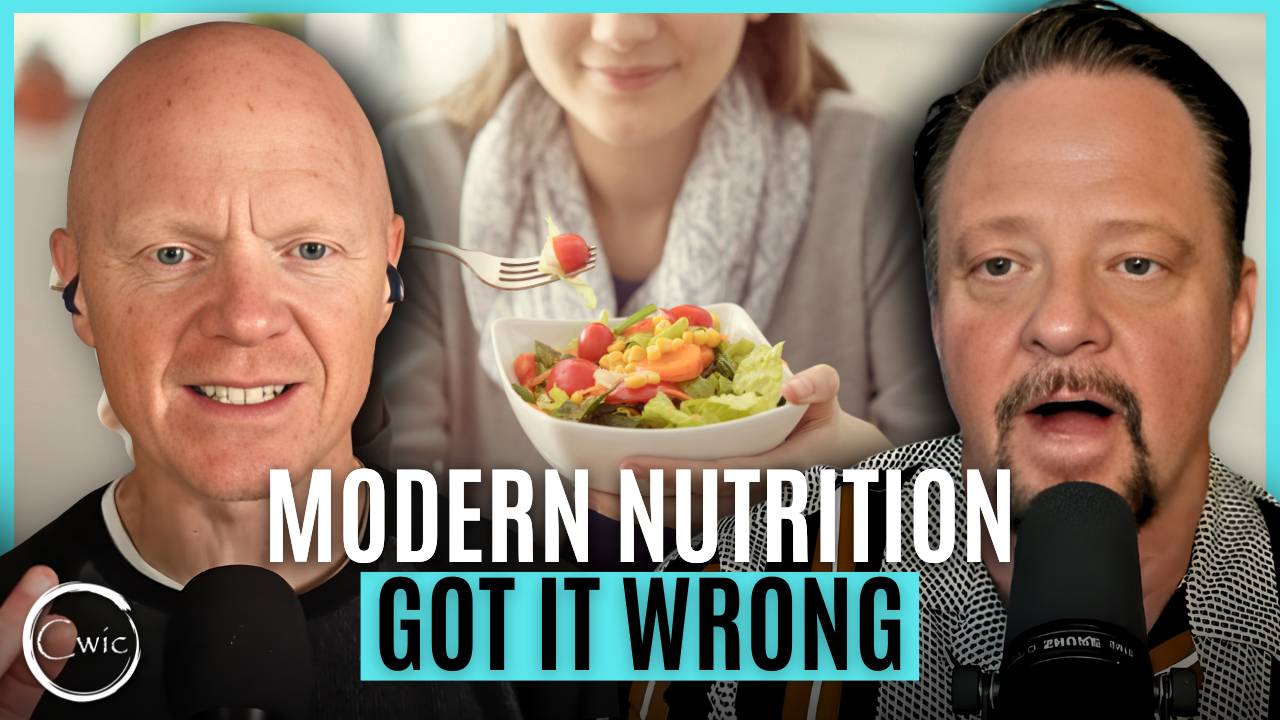
Acclaimed Scientist, Ben Bikman, Takes on the Word of Wisdom “Diet” Myth
No prophet defined a WoW diet—so what DOES D&C 89 actually mean for Latter-day Saints?
Obesity Explained!
Meat, D&C 89, and the Addiction Principle Obedience isn’t vegetarianism—it's freedom from addiction.
D&C 49 vs Modern Food Religion Ben Bikman connects scripture, health, and the ideology behind “abstain from meat.”
Faith, Health, and a Culture War Over Food
Ben Bikman on dietary dogma inside LDS culture—and what scripture actually says.
Raw Transcript:
So, Dr. Ben Bickman is a biologist, a scientist that focuses on nutrition, metabolic diseases. Uh, I've been
following him for years and finally was able to get him onto the show. What he talks about is revolutionary in
nutrition and diet and he has a lot to say, by the way, about the word of wisdom in section 49 of the Doctrine of
Covenants. This interview is timely because of the flip in the food pyramid
from the FDA. Should we be eating meat? No. Yes. How do we look at the word of
wisdom? How do we look at section 49? You're going to learn some very important things here, some truths, some
real studies that are not often disseminated through the medical field.
This episode is brought to you by the Wavemakers 26 podcaster cruise. This is
in November from the 14th to the 24th of this year. We came back just a couple of
months ago from the original first wave makers cruise. It was amazing a chance
to take that online community and bring them face to face to these influencers. Who's going to be there? Myself, Hayden
Jackson, Paul, Cardinal Ellis of Word Radio, Jacob Hansen of Thoughtful Faith, Andrea Woodansy, Hannah Stoddard, Jonah
Barnes, Kevin Prince, Aranai, and Sarah Clark, and perhaps a couple more. Go to
quickdia.com, cwicdia.com. Go to trips and events at the top and scroll down to wavemakers 26 to find out
more. It's a blast. Now, here we go with Dr. Ben Bickman.
All right, welcome to Quick Show. My name is Greg Matson and I am your host. In this episode, we bring on Ben Bickman
from Brigham Young University, health specialist and someone I've followed for several years. Ben, I'm very excited to
have you on the show. Oh, my pleasure. This is fun for me to do. Uh, I had followed you. I I I think I
think I was telling you before uh we started recording here that I I I saw a talk you gave. I think it was in
Australia uh about carbs and low intake on carbs.
We've had just in what a couple weeks ago, we had a complete reversal in in the food pyramid with the USDA, which is
also very interesting. What has the US and the West gotten wrong about our diet and why does it
matter? Yeah, I'm thrilled to start the conversation with this. In fact, Greg, you might not know this. I've not been
overly public about it. I was actually one of 10 scientific adviserss that was working with the Department of Health
and Human Services by special invitation to help create the scientific justification
in order to change the dietary guidelines based purely on the evidence that has been overlooked for decades. In
fact, in some instances quite deliberately when it comes to, for example, the restrictions on saturated
fat. Uh but that's a that's a long story. But to put it more briefly, um,
decades ago in the 1960sish was the real this big acceleration of
this idea called the diet heart hypothesis that that LDL cholesterol was
uniquely problematic or indeed causal to heart disease and saturated fat was the
primary driver of LDL cholesterol. So that was the connection. So A to B being
uh saturated fat increasing LDL then B to C being that higher LDL causes heart
disease. This was based on the work of scientists primarily from the University of Minnesota and it was it there was
this huge paper that had multiple ramifications including the origins of the dietary guidelines but it was called
the seven country study where there was this beautiful correlation. Now I'm using that word correlation quite
deliberately here uh because I'm a mechanistic scientist. I have very low regard for correlation. I want
causality. But they couldn't do that and indeed you can't really in this instance but they found a beautiful correlation
that higher saturated fat consumption increased risk of heart disease. The problem multiple problems I'll highlight
two. Um these scientists actually had data from 22 countries and deliberately left out 15 because it didn't support
the story. We know that now. At the same time, when they were conducting some of
the surveys in areas of the Mediterranean like Greece, um they they
conducted these dietary surveys during Lent. And as any good Catholic knows,
one of the things these people will avoid during Lent is meat. It's too good. It's too pleasurable. And they
need to deny themselves the pleasures of of meat. And so they conducted these surveys during Lent and they knew it.
one of the scientists after the fact his words were it was a troubling omission
that they that they conducted these surveys during Lent knowing that they were skewing the data but they went for
it anyway and that in fact gave rise to the entire idea of the Mediterranean diet which doesn't mean anything a the
Mediterranean diet as a scientist means whatever the scientist who's invoking it wants it to mean uh so it's uh you know
I I served my mission in Russia there was an expression in Russia there's many different types as borch as there are babushki to make it. And there was many
different types of the Mediterranean diet as there are scientists to invoke the term. But all of this bad science
was worked into the first official dietary guidelines for Americans. And it
worked in that Americans did indeed change their eating habits. our our
saturated fat consumption went from about 15% of calories down to about 10,
which is what they've wanted. An entirely arbitrary number, by the way. There's literally never been a single
paper published indicating that you need a 10% um that no more than 10% of all
calories should come from saturated fat. But we've responded. Our fat consumption as a percent of calories has gone down.
Protein consumption has gone modestly down. Carbohydrate consumption, which became the darling of all
macronutrients, has skyrocketed. And that was my primary role as an adviser
to the Department of Health and Human Services, was to really point a finger on the degree to which refined
carbohydrates contributes to the most common chronic disease worldwide, which is you mentioned in the intro here,
which is a condition called insulin resistance. And just to help people appreciate that. And Greg, I don't know
the international scope of the audience, but it's a uniquely American attribute to think we're the worst. Only Americans
think we're the worst. Maybe some Europeans, too. Um, but but it's a uniquely American attribute to think
we're the fattest, we're the dumbest, we're everything else. And we're, of course, none of those things. Um but
but just to put things in perspective, insulin resistance is likely affecting
about 88% of US adults to some degree. Um to some degree that it's manifested
with some kind of clinical manifestation or symptom. Now the uh a typical
American is going to think well of course because we're just so fat and sick and stupid. No. In fact, you noted
the talk I'd given at an Australian group to varying degrees. And in fact, before I got hired at BYU, I conducted
my post-doal fellowship in the beautiful island nation of Singapore. They were
recruiting metabolic scientists to try to understand why diabetes rates were higher in Singapore, type two diabetes,
which is a problem of insulin resistance, why they're higher in Singapore than in the United States. We're much fatter here in the US than
they are in Singapore. And there's various reasons why different ethnicities are affected differently,
but to put a fine point on it, poor metabolic health or insulin resistance
is the single most common health problem worldwide. And beyond its prevalence is
its relevance in that it is a key contributor to virtually every chronic disease. Every person who's worried
about Alzheimer's disease, you should be worried about insulin resistance affecting your brain. People who are
worried about infertility be actually more concerned about how the insulin resistance is affecting her ability to
ovulate or his ability to produce sufficient sperm. Uh and and so on. We
could go through heart disease, fatty liver disease, osteoporosis, sarcopenia. All of these conditions and more to
varying degrees are caused by one single common metabolic problem, insulin
resistance. But as sobering as that is, the nice thing is it's entirely a disease of lifestyle. Thus, the food we
eat is either the culprit or the cure. So, this is really I mean, it's fascinating and I've I've had to deal
with this my whole life because I have issues with sugars and refined carbs. I've always had a problem with it. They
make me sick. I they just so many issues that come up from from me even having just a little bit of it actually.
But I don't have diabetes, but I I just have a bad reaction to these things. So, I've known about this early on because I
had to study it. I had to try and figure things out for myself. Um, but what about medicine, right? I mean, we've got
you've got medicine that has actually been phenomenal. It's actually saved my life twice
uh in terms of surgery, but at the same time, preventative, they they don't deal
in these areas at all. There's no preventative medicine. And is this something that is
is the fact that medicine doesn't deal with preventative issues? The reason
that they don't deal with nutrition and so they don't come back and tell you know give you really focus in on these
preventative issues. I mean all of medicine pharmaceuticals they're built on taking care of the symptoms of
problems. Oh right. It's an after it's an after effect and great it's there. Great.
Wonderful. But yeah, I couldn't have said it better myself. If insulin resistance is, like you say,
this kind of common soil that all this chronic disease comes out of, why hasn't
medicine reorganized around this, right? I I'd like to think it's because of ignorance, but I do think there's
some um malicious intentions as well. But but let's start with the more generous one, which is ignorance. you.
We only know what we've been taught. And unfortunately, insulin resistance, let alone the
nutritional input that drives it, has simply not been a part of mainstream curriculum. Certainly not for
physicians, and most certainly not for dieticians. uh dietitians are maybe the
most rabid um opponents to some of the comments that I've just made. Namely,
that for example, refined carbs drive insulin resistance more than any other macronutrient.
Why? Let me interject. Why would that be? Yeah, dieticians are the most dogmatic.
In fact, I can give a talk to physicians, well-trained, storied MDs,
and when I show them study after study, they will start nodding their heads and indeed in many instances actually start
incorporating some of these ideas into their practice. Um, that that they they see the data and they can be convinced
by it. But and not to cast all dietitians in the same light here, but
if I give a version of my typical kind of metabolic origins of disease talk to a room of dietitians, um it is a
visceral, often very spirited and dare I say even mean reaction. They defend
their turf um like uh like nothing else in any field I've ever seen. They cannot
be swayed by data. Um, now it's interesting and this is delicate,
Greg, but this might be the right place to discuss it. It It's delicate because it's going to sound like I am condemning
a religious group and and I actually I don't mean for it to come off that way, but I do think it's in our best interest
to wonder at the origins of some of these ideas. the the dietary guidelines
was written um or were written by a member of the 7th day Adventist faith
and the same faith was the origins of the American dietetics association. In
fact, to this day, they continue to be um if not the main sponsor, one of
nowadays it would be food companies that are the main sponsors of the American dietetics. But there's a problem in that
both of these very substantial well in one case a document and in the other case an ideology that that certifies
professionals in the realm of dietetics because you because you have to take the licensing exam. You have to play by the
rules of their game. And when you have a religious view that believes meat is bad
because it elicits carnal desires, which I think is the view of Seventh Day
Adventists, and again, I I do I am trying to approach that topic delicately because I do not want a rel religion
bash, but but you can see how that might result in a in in an ideology that is
very resistant to data that they don't they don't care what the studies show.
uh that they care what they've been taught and what they have had to regurgitate for the sake of licensing.
But that is a group who is extraordinarily opposed to saturated fat. It is to it is they would say that
is what Isaiah or Nephi actually referred to when they described the of all the earth. It's saturated
fat to them. Um whereas I like to quote Isaiah and and Nephi when it says uh my
my soul delights in fatness. Um that is fat never should have been the villain.
There was never any good evidence. And indeed Christopher Dr. Christopher Ramden at the NIH has been among the
most outspoken advocates of us objectively looking at
the biggest most well-conducted studies ever performed that that remove that
that totally break down the idea that saturated fats are the problem. And let me just describe that those studies very
briefly. There have been two very well-done studies that you could not do nowadays. You could not get the
permission to do it. You couldn't afford to do it. One was done in Minnesota, one was done in Sydney, Australia. They both
took people who were long-term living in uh in I think it's insane asylums
actually. And they controlled for every possible variable and they had two different cafeterias. One group they
were exact same food but produced with two different types of fats. One group was getting the saturated fat version of
the meals. One group was getting the the seed oil or the polyunsaturated version of the meals. And the polyunsaturated
group died more in both studies. And the saturated fat group, even though they had higher LDL, did not die as quickly
or from as much chronic disease as the other group did. These are studies you could never get done again. They
followed them for years, actually looking at the hard outcome of death. Now, that is is not to be confused with
a lot of the studies that modern individuals like to invoke, which are those that just look at LDL. LDL is not
LDL cholesterol is a terrible marker of disease. But Greg, one last point. Um, born from your comments a moment ago,
modern medicine wants to prescribe a drug to treat a symptom. And they thus
they look at the markers that they can drug. So why is it that LDL, despite
being a terrible predictor of heart disease risk, is so obsessed over? It's
because we have drugs that can lower it. And so it's a great way to give someone a drug and make a lot of money. Why is
blood glucose obsessed over even though it's a late marker of insulin and we
should be looking at insulin? It's because you can prescribe several drugs that will lower glucose even though it
increases insulin. And so each has whether it's heart disease or diabetes
or several other problems. There are better clinical markers that are totally overlooked. Like for example, in heart
disease, don't look at LDL cholesterol. Look at triglycerides. Okay, but why don't we? Because there's no drug that
will lower triglycerides really well, even though it's a better predictor. Why don't we look at insulin? Because there's no drug that will really lower
insulin. And so we end up focusing on the markers that have an easy prescription.
And this is a cynical take, but I don't think that means I'm wrong. It's because it's a really good way to make a lot of
money. Yeah. And again, I you know, there's there's a malicious side to that and perhaps there is to some degree, but
there's also a well, this is a business. This is just what it's built around. It's a natural result of an economy
that, you know, that's that's how it builds. It's people that make a living and they build off of it. So, it's enough.
Yeah. And I'm enough of a capitalist to appreciate the market. It's just we need
I mean this is a deeper sort of commentary now on on form of government and form of market economics but the
reason the United States system has worked so well and this is maybe strange for a cell biologist to touch on it's
because we have a culture of common moral values and that keeps that has
tended it's supposed to keep some of the it's supposed to keep these things in
check that I believe firmly we have the best form of government. Unless we could have a righteous king, that would be
better. Um, and but we don't we don't have that and we don't want it because boy, if he goes bad, everything goes
bad. So, we have these checks and balances, but they're designed to operate in a value of a highly moral
people. And my worry, again, this is a deeper commentary that I we don't need to get down into, but my worry is that
as we're losing morals, we're we're we're allowing these systems of government or economics to be hijacked
in unfavorable ways, including medicine is kind of what you're saying. This is just a part of natural reaction to this. And of course,
we want it to be built on truth, and it has not been for decades. I mean, that study, was that actually done in the
60s? I thought it was done actually earlier than that. It was 50s. Yeah, it was the 50s. But what's interesting, the Minnesota
Coronary Experiment, that's what Christopher Ramston at the NIH helped rediscover. Those data were deliberately
buried. They were not shared at the time. They were not published because they were deemed to be too problematic
to the prevailing view that saturated fat is the of all the earth. And so just I it's important for people to
hear that because they need to know that science my PhD adviser at the at East Carolina
University, an incredible man. I thank God for the time I had with this
wonderful good Christian man. He one time said to me when I had come to him with my head hanging low because of some
bad data where the data were refuting the hypothesis. I was really discouraged
and he said, "Ben, chin up. We're seekers of truth. It doesn't matter where the data lead us. That's what we
go with. And that has really left an impression on me where the best scientists
are and I don't make a claim that I'm one of them. May may I show myself to be one someday at the end of my career. The
best scientists are those who simply follow the data wherever they lead. And so PhDs, those of us who are scientists
who get paid to ask questions, we should be among the most humble individuals because we need to be prepared at any
moment to say we were not only totally wrong but the last 10 years of my career or whatever it may be were wrong. Uh it
it's a it's the pursuit of truth in in the physical realm that is a scientist.
So let's back up a little bit again. You're talking about the difference between glucose and insulin. We're checked for glucose all the time. uh
sometimes it's fasting glucose that's that's that the labs are are going are seeking what is the difference and why
is it so important to know about the insulin before we know about the glucose I mean
based on what you're saying we might already be sick based on the insulin yeah so glucose
before we actually even look at the glucose that's right yeah glucose is a late marker where over the years if you are
just going in and measuring your glucose um glucose is normal It's normal. It's normal. Maybe it's slightly elevated but
still in the normal range. But at the same time, you have hypertension.
You have skin tags around your neck. You have infertility. All these other symptoms of insulin
resistance, but you don't know there's an underlying metabolic problem. Neither the patient nor the clinician knows
this. Because while glucose has been staying relatively stable in a normal
range, insulin has been fighting this cold war. this it's it's not it's not
being measured it's not being monitored and so behind the scenes insulin is getting higher and higher and higher
which is the best reflection of insulin resistance uh insulin resistance I
realized we were describing it and I haven't really defined it just to very briefly define it it's two problems wrapped into one the first problem is
where the name comes from which is that the hormone insulin isn't working the right way now just to help people
appreciate what that means Insulin affects every single cell of the body. Every single cell, brain cells,
bone cells, liver cells, lung cells, every cell of the body is in some way affected by insulin. It does a lot more
than just control glucose. So that's the first thing. Insulin isn't working the same way that it used to. It's not working as well. But then the second
point is that insulin levels are higher. And that's why I beat that drum so loudly. We need to be measuring insulin
levels. I'm not opposed to measuring glucose. by all means, let's continue to measure it. But if we're not measuring
insulin, then we're missing that dynamic where the glucose is staying stable for
10 or 20 years while the insulin has doubled or tripled or quadrupled where it should be. But because we don't
measure it, we're not detecting it. We're only looking at the glucose. And it's only once we're so insulin
resistant that insulin can no longer keep our blood sugar in check. And now the blood sugar levels start to
increase. But imagine the clinical efficacy if we could have intervened 10
or 20 years before the glucose changed. That's where I think we're really
missing a lot of opportunity. Let's talk a little bit about the insulin and
obesity issue, right? So I was taught when I was young and when I was first going getting into sports and different
things that you know calories in, calories out. That's basically what it was. It was how many calories are you taking in? How many calories are you
burning in your exercise? This has everything to do with, you know, your weight and etc. But it doesn't, right?
It Well, it certainly doesn't with your BMI because the insulin changes how doesn't
it change how you store fat? Uh, Greg. Amen. Amen. You've become a good disciple of the metabolic message
here. Yeah. So, calories matter, but not to the degree people think or and and I
could say they're not the only thing. And you mentioned the other variable, which is the hormone insulin. Just to really paint a stark picture, there is a
problem called diabelia. Now people can hear two different words in there. One, you hear the word diabetes and then you
hear the word diab uh you hear the word bulimia, the eating disorder. This is a
form of an eating disorder that can manifest in people with type 1 diabetes. Now in type 1 diabetes, that individual
has perfect control over their glucose levels because every speck of glucose is coming from the syringe or the pump. So
they're putting it into their bodies because they no longer make it. At the same time, because of this, they
have perfect control over their body fat levels. And a person with diabolia has
learned this much to their detriment. They are so driven to be thin that they
can eat, and I want everyone to just appreciate how tempting this would be. They can eat whatever they want. They
can eat it, swallow it, enjoy it, digest it, and have all of the satisfaction,
the the mental satisfaction, the satiation that comes from eating and enjoying a big chocolate cake. And then
they deliberately underdose their insulin and they stay as thin as they want. Now, there are disastrous
consequences that can end up killing them because of this. You need insulin as a hormone. The body needs to know
what to do with energy. And that's maybe the best way to bring these ideas together. Calories matter, but the body
needs to know what to do with those calories. And that's what insulin does. When insulin is elevated, it tells the
body to store calories. And we see this, my lab has published reports. We've collaborated with people at Harvard to
show this. But when you eat um meals and your insulin goes up, you will store
more fat from that and your metabolic rate will go lower. So the body is
changing all of its metabolic machinery in order to store fat. In contrast, you
can eat the same number of calories, but it differs in its m in its macronutrient
composition such that it keeps a lower insulin level. You're storing less fat
and your metabolic rate is higher. And and again, my lab has contributed to some of that work, much to my delight.
So as much as we have a calorie centric paradigm of obesity, no. And again, I'm
not saying calories don't matter, but they don't matter as much. And I would say they don't matter, especially at the
front end of someone's weight loss journey as insulin does. If a person listening to this is interested in
losing weight, focus on number one, control your carbs because it's dietary
carbohydrates that increase insulin. And the more insulin is going up, the more it will lower your metabolic rate, the
more it will activate the enzymes in your fat cells to tell them to store more fat. and the more it will make you
hungry because the higher you spike your insulin in response to a big blood sugar rush, the lower it will drive your blood
sugar after and that's when hunger comes in. That's why someone can eat a big meal and be full and then two hours
later they have a hankering for some snacks. There's no reason why you should be taking in more energy. You had you
just had 2,000 calories two two hours ago and yet you find yourself starting to nibble on something. it's because
your blood sugar levels spiked and then they've dropped and then the brain is sensing this big reduction in blood
glucose because of this insulin rush and it's saying, "Oh, hey, we better kind of correct this curve and bring it back up
to normal again in the event that someone can go low." And and so all of this is just to say that uh the the
caloric the calorie centric paradigm of obesity I don't think was ever
I don't think should have ever come to being that thermodynamics um which the the principles of
thermodynamics which I appreciate never should have been applied to biology. uh
we should have had the more nuanced view which which prevailed in Europe prior to
World War II that obesity is primarily an endocrine phenomenon or a hormone
phenomenon and again to be specific it's an insulin problem.
So, as an example, I mean, breakfast is a big deal, right? I mean, you go look at breakfast and someone says, "Okay, I'm going to have a steak and eggs, some
bacon, and someone else says,"Well, I'm going to have a bunch of pancakes and syrup and whipped cream on top of it."
And maybe it's the same amount of calories that you're looking at both of these. One person is going to gain more weight
than the other. The person that's got refined carbs is going to store the fat more than the person that is eating the steak
and eggs, and they'll be hungrier sooner. All of this has been published in human studies. I I want everyone to appreciate
that as much as I come off as a very bold, outspoken, brash person. I do in
part because I I have found over the years that my voice needs to be a little more shrill than the other voices
because I am part of a much smaller choir. There is such an army of voices
spouting the nonsense that it's just purely calories in, calories out, nothing else matters. And so I have to
speak a little more boldly, but I don't want anyone to mistake that with just some religious fervor here. No, I would
not make the claim if there were not significant and incredibly well done human studies to confirm everything we
just said. Yeah. Okay. So, looking at those studies, what why has it taken so long
for us to make this change, for example, with a food pyramid? Yeah. And to get this across, it's still the
same thing. I mean, most people it's changing. I've heard the changes. I've seen the changes. I have to go to the
doctors often because of other issues I have. But it's still most of the time you're not going to hear you're going to
hear lower the LDL. You're going to hear um lower you might you might hear, you know,
don't eat so much sugar, you know, but you're not hearing what what what really is important about
your your overall diet and your in with uh controlling and managing your macros.
Yeah. I I I really would like to think it's mostly an issue of ignorance. Again, I I say that because which I
think is a generous take, lest someone think I'm being ugly in saying that. No,
the average clinician has had at best a couple hours of nutrition education. And
then even then it was probably stupid. It was probably based on the views of
the American Dietetics Association, which is that saturated fat basically causes all problems and that carbs
should be the basis and and the beloved whole grains, which are just as much a problem. This was part of my narrative
review that I provided to the department of HHS. Um, whole grains, what an
absolute fiasco that is. What a myth that that whole grains are somehow going
to be healthy for your heart or for diabetes or whatever. But try telling that to someone who has been trained in
the realm of dietetics. Oh my gosh, you are ready for be ready for battle because the rapid um group is going to
come after you. Well, you've also got you've also got a a motivation both for profit and for
honestly for for uh starvation, right? because you can you can take grain and
and it's much cheaper and you can process it easier and you can distribute
it out to the world a lot easier for for issues of starvation and of course for companies that want to feed you and sell
you groceries. Yep. It's a lot cheaper for them to take grains and refined carbs, process them
and and and then get them to your dinner table. Oh yeah, for sure. Yeah. There's no doubt there's an enormous profit motive
and the but having said that I still am I'm I'm reluctant to blame the companies
and someone would say ah typical capitalist no the the companies will follow the opportunity
and if people change their buying habits that's exactly right if people I'd like to think this may be a rosy view but if
people start to learn more about like what we're talking about today and they begin to change their purchasing habits
the market will shift. The companies will shift and they'll say, "Oh, okay. These things aren't selling anymore.
Looks like people are wanting more real food, less processed food. Well, let's get into that market then." And the
company will follow where the market trend is going. It's we consumers that dictate the market.
So, two things in addition to this in looking at the insulin resistance. Um
my understanding is that when you your BMI, right, if if you add muscle mass to
your body, you are going to be much better off in dealing with insulin and resistance and and the calories and the
macros, everything that's coming into your body as compared to if you're getting if you're fatter, right, and you
have lower levels of muscle mass, then you're going to have even more of a problem. So what happens then? If that's
the case, what happens is you end up in a spiral where your BMI is, okay, I've got a large amounts of of fat. I've got
less muscle and and now I'm dealing with the food, the calories that I'm taking in in a worse way than if I were to have
a larger muscle mass in my body. I know for that for me, yeah, if I stay ahead of the game and I'm at
the gym regularly and I'm strength training, that helps. I mean, there's no
question it helps. I think you're looking a little more than you. In fact, you're looking a little leaner and better than you. Have
you been doing all this? Have you been living by the gospel you're preaching? Yeah, you're looking better. You're looking good at a boy. Yeah. So, to to
say this to to to put what you just said in in other words, I'll bring it um down to or I'll I'll
take it to apply more to my direct area, which is more muscle means you clear
glucose more easily from your blood. Muscle is the great consumer of blood sugar at any given moment. 80% of where
blood glucose will go after you eat something or drink something that is starchy or sugary, 80% of that will go
into our muscle. And so if you have more muscle, it just pulls in more of that glucose, then you go eat that bagel. Two
people of the same body mass, even if it's the same BMI, although again muscle because of its water weight is more
dense. Um, but even still, all those other things equal, except for body
composition, one guy having more muscle, one guy having more fat. The guy with more muscle, even if they're sitting doing the exact same nothing, he'll
clear that glucose much, much faster because he just has more muscle and muscle is hungry. It consumes more
glucose. So, more muscle means better glucose control, which means better insulin levels, which means better
insulin sensitivity. Thus, I am a massive advocate of whatever can increase muscle mass. So, uh I would
hope some people hearing this might think, okay, I need to be resistance training a little more. And you don't
have to go to the gym. Even modest activities like just doing chair squats or push-ups. And I'm not an exercise
scientist. I'm an obesity scientist. And I'm not a calorie guy, but I study fat
cells. You want your muscle to be big. muscle will consume more glucose, which
improves metabolic health, not to mention improving longevity. Your muscle mass and strength is probably the single
most relevant variable when it comes to predicting how long you're going to live. More muscle makes you harder to
kill. And I don't mean outrunning a cougar, um, but rather just outrunning death. You can handle life better when
you have more muscle mass. So, that's the key to living a long, healthy life. And the metabolic benefit is just part
of that story. So if that's the case then then your macros it sounds to me like you need to
be focused a lot more on proteins to be able to build that muscle mass. You've got to be focused a lot more probably on
the fats over your carb. You know that's what they did also. You know in in when when everyone was big on this study that
you're bringing up in the 60s and you started all of a sudden seeing all of these lowfat foods everywhere
because that's what the market said. It's oh this is a big deal. This is what medicine is saying. This is what the dietitians are saying. So, let's provide
the low-fat foods. And they provide they'd take the fat out and they'd throw
in, you know, high fructose corn syrup or something in place of it because it's it it tastes crappy.
Yep. You know, you take the fat out, it's it's not good. And so, you have to fix that fix that in some way. They're
adding more refined carbs, more sugars, and and then, you know, and people still
I still go out and see it all over, you know, low fat this, lowfat that, low fat, and and it's like my understanding
is that the carbs are going to hit your system faster than anything else. The fats next, and then protein last.
Yeah. Yeah. So, yeah, you touched on a lot of very good points there. Yes. The market certainly made its adjustments.
when the war on fat started, people wanted to change their eating habits and the mark and the and producers responded
and and again I'd like to think they'll respond if we decide, you know what, we actually don't want to eat like that and
we want more natural fats and proteins. And yes, you do need to prioritize protein like you said. In fact, I have
three rules to optimizing metabolic health based on the three macronutrients. One, control carbs,
which at its simplest can be just avoid carbs that come from bags and boxes with barcodes. Whole fruits and vegetables,
eat them, enjoy them liberally. Number two, prioritize protein and make sure that it's high quality protein. By that,
I mean animal-based. Don't mess around. Don't waste your money. Don't waste your health on fake proteins from plants. Um,
and if you decide you have to, for whatever reason, get it from a fermented source. You want fermented plant protein
if you're going to get any for reasons that is a maybe topic for another time. But then third,
all proteins in nature as you are prioritizing those animal source proteins which again are the best
especially as we get older. Then don't fear the fat that comes with those proteins. And that's my third and final
rule. Don't fear fat. We need fat. In fact, we literally need certain fats.
There are such things as essential fats. There's such things as essential amino acids. There's proteins we need to eat.
There is no such thing as an essential carbohydrate. None. Zero. And and now
I'm not saying we should never eat them, but why on earth have we made the one
macronutrient we don't need become the majority of what we eat? Why not focus
on the things we do need and then let the one macro we don't need be the garnish on the edge of the plate? Be the
one we eat the least amount of. To me, that is the optimal human diet. So, let's hone in a little bit more on
the market. Let's talk about Latter- Day Saints. Yeah. Right. So, you're talking about animal-based protein, uh, focusing in on
that. That's the best thing to do. It's a it's a it's a pri it's a priority of all the macros.
What about section 89? What about the word of wisdom? Because that's you're going to hear that so much in Latter Day
Saint circles. How do you how do you justify that? How do you how do you interpret that?
I am so grateful to be able to talk about this. I just want people to understand I don't approach this
flippantly or lightly. I have uh a very strong testimony of the prophet Joseph
Smith and his prophetic calling and the restoration of the gospel with him as an instrument in that. I I really want
people to understand that. Um and that means I have a profound appreciation for DNC 89. Not only because of the prophet
Joseph's role in giving us that revelation, but I also have an interest
in DNC89 professionally uh and to not get into too much of the sort of
details. I have had to defend my career at BYU because I've been accused of
teaching ideas that are antithetical to the gospel. That was a very direct accusation that I
am basically apostate. So I took that quite personally because I am I am
extremely committed to the gospel and really find great joy and take great
pride in my devotion. Maybe if I were a better member of the church, I wouldn't be so proud of it, but I am. I'm filled
with pride for my affection for the gospel. So I take DNC89 very seriously as both a faithful Latter-day Saint and
a scientist who studies the role of nutrition in chronic disease. It is interesting to me that these my
opponents, if you will, or those who oppose my view only read verse 12. They
only see the verse about the the the concluding statement uh um looking at
meat and or the flesh of the beasts and ordained to be used with thanksgiving, which is one of the reasons why I think
we actually offer a prayer at the beginning of our meal. We don't need to pray for health and strength
necessarily. we should be praying for gratitude. Um but so we we we consume this with thanksgiving. But then it
says, "Nevertheless, they are to be used sparingly." That is the only verse anyone ever seems to remember. And so
now we can go through this through multiple steps, but I will just keep it at a high level for the sake of time.
And and I hope and I think it's the most effective level. So those listening who
struggle with what Greg and I are discussing with regards to nutrition and my whole body of research and and the
research of thousands of other scientists over decades. How do we reconcile that with verse 12? Um, you
don't need to uh you don't need to war with your faith because no prophet or apostle, I'll make a couple points on
this, has ever from a pulpit declared that so and so or such and such is the
word of wisdom diet. There is no such thing as a word of wisdom diet. All we
are asked in any sort of ecclesiastical interview that discusses the word of wisdom at all is, do you understand and
obey the word of wisdom? You can essentially be eating a diet.
You can be eating any diet and answer that question as a faithful Latter-day Saint in the affirmative. I mean,
assuming and I'll elaborate more on what I think that means, but people who so at the lowest level of what we call the
word of wisdom, I would just say which is, you know, as outlined in the
handbook, it is these addictive substances, a very short list of addictive substances. coffee, tea,
drugs, tobacco. That is the lowest alcohol. That's the low level of the
word of wisdom. Someone who is avoiding those habit forming substances, I believe, can say that they they
understand the word of wisdom and and they're they're obeying it as they're avoiding those habit forming substances.
Now, some people, which is maybe our tendency, want they want to find a higher law. Please keep in mind that you
are now going beyond what has been stated in modern revelation. No prophet
or apostle has outlined a dietary code that is the word of wisdom diet. So you
are already going beyond canon now or or kind of accepted doctrine in this space.
But I I still I I appreciate the desire. You you want to try to find a higher
purpose. And that's where they look at verse 12 and they'll say, "Well, then you have to avoid meat." And that's
where they're they're done. They're they're ruined when they want to do that. So my first response to these um
often zealots is I'll say or just well-intended members of the church. I shouldn't be so dramatic. They'll say,
"Well, what about verse uh what about um eat meat sparingly." It doesn't say that exactly, but two things. One, President
Benson in his talk, A Principle with the Promise, described that that might indicate that the Lord wants us to avoid
the indiscriminate killing of animals. I liked that. I think that was in 1989 in
one of the conference sessions principle with a promise he me anyone can look this up uh he mentions that it is he
said something like I'd like to think this is the lord's um encouraging us to avoid the indiscriminate killing of
animals that's something I I agree with actually um but if a person is wants to
literally interpret verse 12 you can't stop at verse 12 and this is where their
their their their reasoning gets them in trouble because If you believe you should literally interpret verse 12, you
then have to logically literally interpret all of DC89 as as a literal
diet and then you're dead. And what to their great inconvenience, I always say,
well, what about verse 11, the one right prior to that? In verse 11, it talks about how you should be eating fruits
and herbs or vegetables in the season thereof. Again, to be used with thanksgiving. Well, as much as a member
of the church would point a finger at Ben Bickman and say, "Well, you're eating too much steak." I could point a finger at them and say you're eating an
orange and it's January in Utah. Where on earth are you getting that or it's not orange season.
So you're breaking verse 11. So I'm you're just as unrighteous and and f
fouled of a sinner as I am. And and we could go further, but I think I'm making my point here where you know
someone with celiac disease would say, "Well, I eat a lot of oats because it doesn't have gluten." And I would say,
"Well, you can't eat oats. Oats are for the horse." Well, then I'll eat um I'll eat uh rye. You can't eat rye. Rye is
for the pig. I'll eat corn. You can't eat corn. Corn is for the ox. You have to eat wheat. It says wheat for man. And
they'll But again, what I worry in in stating this like this is someone thinks I'm mocking DNC
89. I'm not. I believe so. Now, this is my personal belief. DNC89 was the
prophet Joseph's way of creating a a kind of a beautiful document to to match
what the revelation he was receiving from the Lord. I don't know whether he was receiving the direct words or
impressions. Then he was attempting to kind of write these impressions in a way that that that was a beautiful form of
writing and in a colorful illustrative form of writing. What we know is that
again that no prophet or apostle from the pulpit has ever stated this whatever
this may be is the word of wisdom diet. And so for me where I think where
members of the church may be trying to find a higher law within the word of wisdom I think it can boil down to one
principle which is what are you addicted to and what are you doing to control those addictions. That to me is the word
of wisdom in its purest sense. Um, President Hinckley in the late 90s
mentioned in a talk, he didn't say it in so many words, but he he mentioned that how pornography can be a violation of
the word of wisdom. That left a very strong impression on me. And and then
later, so too was I impressed when President Ukdorf at the time mentioned
an unnamed diet caffeinated soda. That's how he described it in a general conference talk. That was a revelation
for me because I had at the time been thinking, well, anything with caffeine violates the word of wisdom. And then
here we have a person that we sustain as a prophet and apostle who just made a direct reference to diet caffeinated
sodas. He didn't say diet coke. Maybe he was referring to diet Dr. Pepper. I'd like to think he was referring to diet Dr. Pepper, which of course is the
superior soda. Um but but he didn't but he nonetheless mentioned this and that
to me further touches on this idea of what are you addicted to and what are
you doing to control your addictions. I I think the but but we still it's so frustrating for me. I was invited to
give a talk to the youth in my ward. I am if I may say so a somewhat famous metabolic scientist. They wanted this
local resident ward member scientist to give a talk to the youth. Of course, I would have crafted the message to be
very delicate and and indeed I have in other venues um to talk about the
importance of the body in in health and as a as a vessel for our spirits and
some of the reasons why this the plan of salvation requires us to have a this mortal frame subject to all these
temptations. But there were other members of the ward
who believed the word of wisdom is a pseudovvearian diet. And they were such
agitators that the youth leaders had to apologetically come back to me and say,
"I'm sorry. We have to uninvite you from from speaking at this youth night." And I wasn't offended. I was sad. Especially
for these young kids, they will continue to adopt. In fact,
I'll end this rant. Greg, if thanks for tolerating it. I'll end it on a very bold commentary.
I invite anyone to read DNC 49 um and 1 Timothy chapter 4 and and and Paul
outlines this and the prophet Joseph I believe was heavily influenced because he's adopting some of the almost direct
verbiage. The Apostle Paul describes the latter days and he mentions how in the
latter days people will be led astray um by the by he uses some alliteration
which is an Elder Maxwell fan I appreciate. He describes seducing spirits and doctrines of devils. And
there are two things that will identify them. They will command to abstain from marriage. And boy are we seeing that.
That's the attack on the family. And right over my shoulder, you can't see it. Over this left shoulder is the
proclamation of the world on the family on my wall. Um, and in a broader view, I make sure every podcast I'm on, people
can subtly see it over my shoulder. So, command to abstain from marriage and command to abstain from eating meat.
Those were the two attributes that the Apostle Paul prophesied to Timothy on.
To me then, yeah, there we go. Yeah. So we have we have I think there a very
important warning that any ideology that commands you to avoid meat is is of the
devil um to put a fine point on it. Now I'm not saying that every individual who adheres to a vegetarian or a vegan diet
is devilish but I think they've been seduced by a satanic ideology. The more
a person avoids animal foods, the sicker they will become, the more infertile
they will become and and any babies they do have will die young. This is so clear
that certain countries now will take the children from the parents if the parents are attempting to raise the child on a
vegan diet. Uh, it is so antithetical to human survival and thriving, that is to
avoid meat, especially red meat, that I deem it actually a satanic ideology.
Satan wants our bodies to be weak and sick because they are too effective of tools to help us prepare for
bigger lessons that we will learn um in in in the afterlife, in the eternities.
the more he can destroy our health, the more enslaved we become and the weaker
we become. I think in every way, thus I believe that veganism is in fact a
satanic. I think it is an evil ideology. Now, I think it's people have been tricked by it. And boy, there are a lot
of devices used to make us think that's a better way of doing it. Often, unfortunately, it's simply a mask for an
eating disorder. Um, that's what I see as a college professor. But at the same time, I think a whole other group of
people have been seduced by that ideology. Maybe thinking, well, I'm doing the planet good. I'm living a life
to minimize the impact on the planet. That's naive and wrong even still. But even that view, the whole kind of
environmental view is that we should prize the planet's well-being. And again, I think it's still a mistaken
approach over our own well-being. That I also believe is an evil ideology. We
want to support ideologies that help the maximum number of humans live the best
lives and that means we need animal sourced foods. Not to mention we need abundant energy and many other policies.
Elder Maxwell would often talk about how government policies if they don't support the family and in fact they they
can't really you know we need the government to do less because it ends up trying to replace the family. And I say
that as a person who was in Russia in the mid '9s and seeing the after effects of severe Soviet communism. But we
cannot if if if an ideology makes it harder for couples to get together and reproduce, as Sister Julie Beck said, if
it's anti-f family, it's antichrist. And I think that applies to diet as well. Yeah, I agree with that. There's nothing
that makes me feel better honestly than eating a big steak. Nothing. I I I am affected by food so much, but a steak is
just like that makes me feel better than anything else when I when I eat a steak. I want to just real quick here just
quote this in in section 49 because this is Joseph Smith as well in the Doctrine of Covenants. He says, "And who so
forbidth to abstain from meats that man should not eat the same is not ordained
of God." Right? So that's you got to take that into consideration also when you're looking at.
Yes. Amen. In fact, I think that is so important to realize. one of the an individual here at BYU really came after
me after my my BYU devotional about health. Um, and this is a person who
espouses an idea that there's a specific word of wisdom diet and that it is a plant-based diet. And I I actually
accuse the person in Priestcraft because I think they're trying to make money off of church doctrine. But, uh, it's one
thing, I think, for a member of the church to individually choose to eat a different way. I can love and support
that member even if I were their ecclesiastical leader, even if I didn't agree with it. But if they were teaching it from a
pulpit or in a formal setting, then I think you have put yourself up
against DNC 49:18. You are not speaking with God's authority. You are not ordained of God to say these words. So,
it's one thing to just choose to follow a specific diet, even if I disagree with it scientifically and morally. But as a
member of the church with modern revelation in mind, it's entirely another if you start espousing and
teaching these ideas to others, especially within the church, you have you are guilty of sin.
Ben, you're awesome. I really appreciate you. I've been following you for years. I hope that people actually take this to heart and really contemplate their diet
and looking at what they're putting in their bodies and and how it's probably affecting them. You've got a book that's
called Why We Get Sick. I'll put the link into the description box on that. Where else can people follow you?
Yeah, Greg, thanks so much. Um, people can find me at just benbickman.com. No C in Bickman. But Greg, let me just thank
you again. Uh, this is fun for me. As much as I travel and I'm on a lot of podcasts, I never get to talk about my
faith and and as much as people listen to me because I'm a metabolic scientist, far far far before that, I'm a faithful
member of the LDS church, which I love. So, it's fun for me to be able to talk about these topics, which I actually
care a lot more about than metabolism. Great, Ben. Appreciate it. Maybe we'll get you back sometime. Thank you so much.

"I Take This Every Day!"
Learn more about why I accepted Cardio Miracle as a sponsor and why I take it every day!
- Greg Matsen

Stay Connected With New Articles & All Things Cwic!

Cwic Audio Player
All of the Cwic Media podcast episodes on one page!
Recent Posts

