
The Book of Mormon Has A Hidden Fingerprint
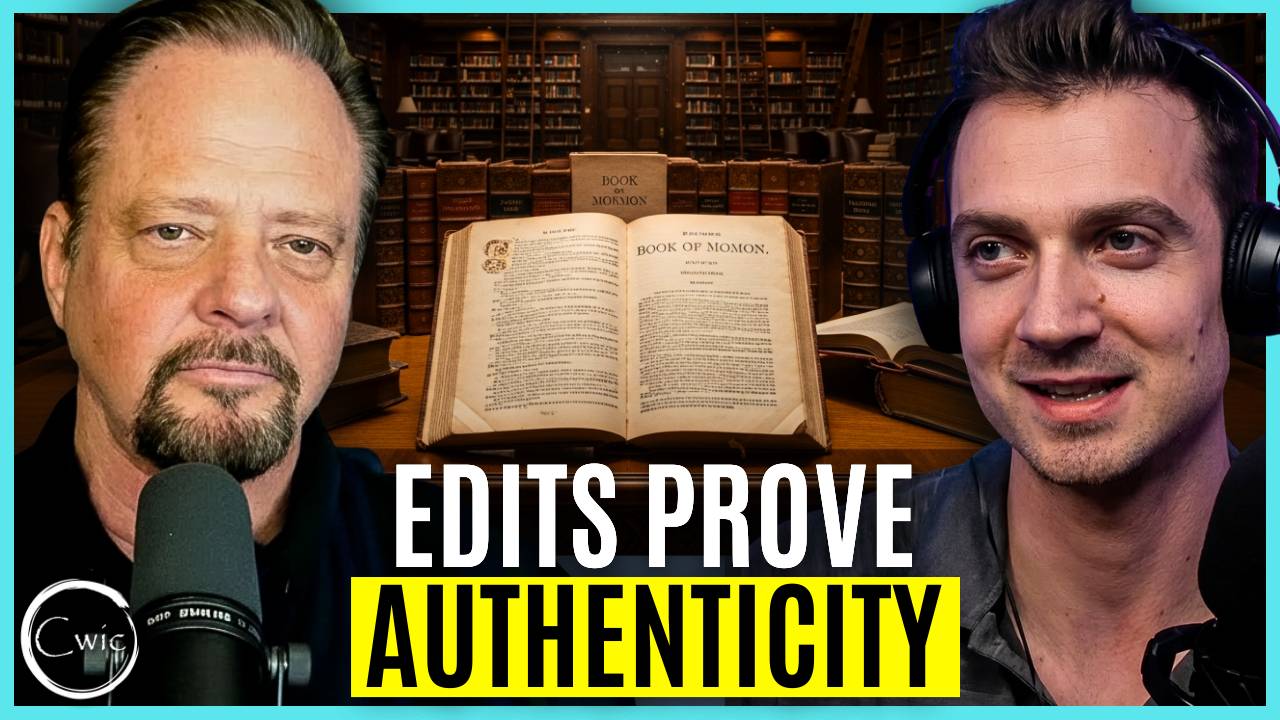
A data scientist maps every edit from 1830 to today and shows a distribution pattern that is hard to ignore. Delve into the data found deep within the text of the Book of Mormon to discover new truths of authorship.
Raw Transcript
All right. In this episode, we bring on Ryland Fowlers of the YouTube channel Ether's Elephant, and we're going to
geek out a little bit on the Book of Mormon. If you like geeking out on the Book of Mormon, you're going to love this episode. Have you ever thought
about the Book of Mormon as not only revealing something as we understand it, as we read the text, but within the
pages of the Book of Mormon is data. Data on words, data on phrases, data
from book to book within the Book of Mormon. And that's what we're going to cover today. We're going to look for
data looking at graphs and what supports an authentic translation of the Book of
Mormon from several different authors and what would support a translation or a writing specifically just from a farm
boy from New York. So, you like this kind of thing, you're going to love this episode because we're going to go into
very deep into the data of the words found within the Book of Mormon from the original manuscript and the changes that
have happened. the small changes that have happened uh over the years up to
date. Now, now this episode is brought to you by Go and Do Travel and the Three Continents Tour. This trip starts on
April 28th through May 9th, 2026. We cover three different continents. We go to Asia, so we'll be in in Turkey in
Istanbul and down in Ephesus. We'll go to the Greek isles in Europe. And we'll
follow through the footsteps of apostles like Paul and John. We'll go to Potmos, the aisle of Potmos, where John received
the book of Revelation. We'll go to Santorini and on to Athens, Greece. And then we'll fly down to Cairo and walk
where Abraham, Joseph of Egypt, and Moses walked in Memphis. So you'll hit
Asia, Europe, and Africa, all within one trip. Incredible ruins, incredible
sites. We're going to have a great time. To find out more, go to quickdia.com, cwicdia.com.
at the top, go to trips and events and then scroll down to three continents. Would love to see you there. Here we go.
All right, welcome to Quick Show. My name is Greg Matson and I am your host. In this episode, we bring on Ryland Fowers,
who's going to talk to us about the Book of Mormon, authorship, editing, take a look at why we would look at the editing
of the Book of Mormon since the 1830 version, and say, "Well, why does this
show that changes in the Book of Mormon actually help support the authenticity
of the Book of Mormon?" Ryland, welcome to the show. Well, thanks, Greg. Happy to be on here.
And you're absolutely right. the edits made to the Book of Mormon over time
actually provide evidence of its authenticity. So, you know, I'm a Latter-day Saint.
Should put that out there. You know, I have a bias when it comes to this. I'm also a YouTuber. Either elephant, but
I'm a data scientist and as a data scientist, I decided to do an analysis
of the entire Book of Mormon. And when I did so, I found some things I did not
expect at all. So, there's the teaser for you. We ready to get into this?
Yeah, let's get into it. Let's start. Are we starting with the 1830 version? Well, you'll see. You'll see it. Let's
go into it. So, real quick here, here's a little background. There's a few different theories about the Book of Mormon. I've actually tried to get into this a little
bit more about where it came from because skeptics have one idea. Obviously, Latter-day Saints believe
that it was a miracle, but I actually asked at one point over 10,000 people from ex Mormon subreddit who have left
the church where they think the Book of Mormon came from. And the number one response is that it came from Joseph
alone because this is this is good to set up initially so we can kind of get into what some of these analyses
represent. So, Joseph alone, in fact, the number one response was or upvoted was Joseph
Smith's Aar star, his butt. So he just like invented this out of thin air. So
that was like the number one response. But people who might have perhaps more sophisticated idea about where it came
from would say he didn't write it alone. There's no way he could have written alone. You know, styometric analyses among other things demonstrate there's
different styles. You know, maybe got Oliver Cry in there, Martin Harris, Hyram Smith. And so the other version is
Joseph with some friends or like some group of people wrote the Book of Mormon. And of course you have the
Latter Day Saint version which is it's just a miracle. Okay. So talking about
the 1830s edition and now so back when we were doing Come Follow Me
I was like I'm going to read the 1830s edition of the Book of Mormon. We were doing Come Follow Me for the Book of Mormon that year.
Mhm. Because I've always wanted to, you know, I mean who doesn't? It's uh they make replicas of the 1830s edition and it
looks super cool. In addition, you don't have like the same chapter breakups. You don't have verses. And so, it kind of
reads almost more like a novel. And so, it's something I always wanted to do.
Did you like it better than the way it's chapterized now? Uh, no. I don't like it better. Uh, but
I I definitely think everyone should do it at least once because it's quite fascinating.
And one of the reasons I wanted to is you hear critics say that like, oh, the Book of Mormon's been changed over time.
In fact, Joseph Smith tried to change it to make it align with his evolving views. So, one of the biggest criticisms
is like in the beginning, the Book of Mormon was more trinitarian and then they added a few things, switched a few
words to make it be less trinitarian. But I'm glad you asked that question because my first observation about
reading the entire 1830s edition of the Book of Mormon is that the critic the criticisms to me are nonsense because
Okay. Unless, so I read it specifically looking for changes and edits. If I
hadn't been looking, I'm not sure I really would have noticed any. So to me, it really reinforced the miraculous
nature of the book because you think about it, this book came out nearly 200 years ago. It's virtually unchanged from
when it came out and it's still so impactful today. So like it like if you were to read the Book of Mor like
there's almost nothing has changed. just like less than 1% has been slightly changed. And we'll get into what some of
those changes are here in a second. But for me, huge testimony builder cuz it's like, holy cow, like this book just came
out of nowhere and it's amazing even to this day. So those are my thoughts uh
initially when I read it. Okay. All right. So 1830s to now. So I was paying attention. In fact, near the end,
I was like listening to the modern version while reading the 1830s edition so I could like pick up the changes a
little bit faster. And what do those changes look like? Well, the majority are just tiny little changes of words.
For example, here in Moroni 10, in Moroni 10, I mean, the original doesn't have verses like this, but I put verse
26 so we can know where we're talking about. Uh, this is an example, one of the changes. So, this is what the original
book looks like. Says, "Woe unto them which shall do these things." The new version replaces the word which
for the word who. And woe unto them, who shall do these things away? It's a fake book.
Yeah, just from that just from that one change, it's all garbage now. Uh, and
that's how most of the edits are. They're just subtle. There's a few grammar changes. In fact,
that one comes up a lot where when it's referring to people, it says which instead of who. And so that's what a lot
of the changes look like. Okay, you with me so far? Got it.
Okay. Yeah, they're they're really not trying to change the meaning of the text. They're just trying to make it a little bit easier to read. That's all.
All right. So, as I was reading the 1830s edition of the Book of Mormon, my
scientific brain kicked in and I formed a hypothesis because to me, I thought I
was starting to notice a pattern of edits. A pattern of edits. And I
thought, okay, do the edits in the Book of Mormon to play display a pattern? Because
if they do, that might provide some new insight into authorship. All right, they may have left behind a
fingerprint of multiple authors. So, we've seen a lot of people do kind of styometric analyses. Will this be would
this be something similar to that, but looking at the mistakes, the unintentional fingerprint that was left
behind? So, think of it this way. Okay, because this is how I kind of set up to
test this and we'll get into a lot more of the data and stuff here which is going to be really exciting. I hope you're excited.
So, if a single author wrote the entire book, then we would expect this pattern here
on the left where the mistakes through the beginning to the end of the book are
more or less uniform. So, if Joseph was like terrible at spelling, then we would
expect him to commit consistent spelling errors throughout. It'd be a little weird if he was like terrible at
spelling at one section of the book and then another section he becomes a perfect speller and then another section
he's he's a terrible speller, you know, or same with grammar edits or same with additions or subtractions.
So, the question is is are there is there a pattern? Does it look more like the right here? Something unexpected for a single author where there is a
pattern. It's not uniform. And the question we want to ask is, do these patterns coincide with the subbooks
within the Book of Mormon? Okay. Now, you know, go over what edits are we talking about right here specifically?
Are these just during Joseph Smith's life? No. Any edits? This is all the way up to the latest version.
All the way up to the latest version. So, that's a good point because some of these edits would have been made by Joseph Smith, but a lot of
them happened after he died. Okay. And so, or at least a chunk of them happened after he died. So he wouldn't
like, you know, be able to have his say on what is being edited and what not, you know, and we
could even today every so often there's still small changes that are made every so often. Mhm. So let me get into some methods. And I
think this next point will kind of drive it home a little bit about what I was looking at here. So again, if the edits
of the Book of Mormon exhibit some kind of pattern, it becomes less likely that the book was written by a single author.
And this is how I like to think about it. So imagine a student submits a
500page essay and then a meticulous teacher like a a perfect teacher uses a
red pen to review and edit the entire document. Mhm. If the essay were written entirely by
the same student, we would expect a consistent number of red marks per Xwords throughout.
However, if some sections are heavily marked with edits while others are nearly untouched, this would suggest
maybe another author was involved. So, the same holds true for the Book of Mormon. So, if we assume that the book
is uniformly complex, which I think holds is pretty much the same language from Mount and that the author wasn't
like drunk during times that he was like, you know, if an author wasn't like drunk one time and not drunk another time, maybe there would be more
mistakes. But if we assume that he wasn't, he was like equally alert through the process, we would expect a
single author to commit consistent mistakes throughout. I mean, after all,
right, mistakes are done by accident. So, it'd be really hard to kind of fake that you're making mistakes in some
places and and not others, right? Mistakes meaning things that needed to be edited later on. You with me so far,
Greg? Got it? That makes sense. Okay. This is where we get into hardcore data stuff. So,
okay. Okay. Okay, here we go. So, in order to test this hypothesis, I gathered data
from a text file from the 1830s edition of the Book of Mormon and from the
modern version of the Book of Mormon. And I wrote programs to automatically
detect and compare the edits between the two books. So, it takes in these giant text files and runs algorithms to
compare versions verse byvere. So what I used I used like a there's a
built-in difference library to compare like differences in sentences. I built my own minimum edit distance algorithm.
I used a lot of what are called regular expressions which help with like text processing and a lot of other things to
process the text and classify changes into one of four categories. Okay?
Because to me so there were like basically four types of changes that occurred. There's grammar changes,
there's spelling changes. So there are a few spelling errors that had to be fixed. There's additions where new words
were being added and there's subtractions where some words were being taken away. And when I did all this, it
resulted in a giant data set. So here's kind of what this data set looks like. Do you see here? We have um you know the
book, the verse, the original text, the modern text, and the different types of changes that happened. Okay, so this is
first book of Nephi. Verses one and two are the exact same as in the current book. But in verse three, we see an
edit. So right here, it says, "And I know that the record which I make to be true."
In the modern version, this was been updated to say, "And I know that the record which I make is true." So the
original has the words to be, which were replaced by the word is. So that's a
conjugation. That's a grammar error. So we mark one for grammar. And there's a
difference in words here where this had two words replaced by one. And so we have a subtraction of one word and this
is what the data set looks like primed for statistical analysis.
Okay, we are getting into the weaves on this. We are getting into the weaves because you kind of have to and uh but that's
the exciting part. This is this is the this is the good stuff, you know. Okay, so there's a little snapshot of like all
the code. I just flashed it on the screen. But uh that was the that was the methods. Now let's get into the results.
So, this is where I want you to, you know, if you have any questions, let's get into it. First, we're going to look at some visualizations, but those can't
tell the whole story. They can be misleading. So, we're also going to look at some statistics to help us understand
what's going on with the edits through the Book of Mormon. Okay. So, first, this is a plot
of the entire book from the beginning to the end. So, on the very left down here, you see First Nephi. On the very right
over here, you see Moroni. Mhm. The y-axis is the edits and this is
like a smoothed version of the edits through time. Okay. Uh the vertical
black or the vertical lines represent like the different subbooks. So you you know you got like a few cluster of books
over here. You got Elma which is huge. Uh but let's take a look at this. So the
different colors represent blue for grammar, orange for spelling. Then we got our addition and subtraction.
And yeah, so you kind of see there's some kind of something going on here potentially there almost like a cyclical
pattern. It kind of goes up and down. Kind of starts going down until it hits the big plates and it starts going up
again and then it's kind of all over the place. So we kind of just look at Can can we go back to that real quick?
Yes, please. Okay. So just looking at this, if I'm getting this right, the higher up on the
graph it is, the more change there is. Yes. Yeah. Okay. So, so we're looking at the highest the two highest the two mo
largest changes are spelling and and addition.
Yeah. Mhm. Which is interesting. I I don't know that I would have thought of addition as being in there. Uh but yeah. Okay. So,
you're there there are some additions that are being placed in there. How do you get an add? I'm just wondering how you get an addition.
Oh, well the most famous example is the insertion of the words son of in the
first book of Nephi. So historically the original book says Jesus Christ the eternal father
and Joseph Smith added in Jesus Christ son of the eternal father. So that was that was Joseph Smith's
edit. I'm pretty sure that that one was Joseph Smith. Yeah. Uh because the argument is that he
was like oh after his first vision he decided they were you know which doesn't really hold water and there's if you
just read the entire book to me it's not trinitarian at all but anyway if you really wanted to you can
you could interpret it that way. Uh but here's a cleaner plot. Okay so this is a nonparametric lowest that lowest curve
that's like fitted in order for us to kind of see the the actual kind of trend that's going on here. Okay. And this is all the edits
together uh just kind of merged together. on the the bottom. The Book of Mormon has over 6,000 verses. So, this
is from verse 0 to the end. This gray area represents the confidence interval.
And this is adjusted for number of words. Um because, you know, some verses are longer than others and so they have
more opportunity for an edit. So, I'm adjusting for number of words within each verse so we can get a clear
picture. And you see, you know, it it's up here, crashes down, goes up a little bit at the end. Some kind of interesting
pattern. But again, these are just plots. The real question is is are the are the stats going to coincide with
some of the some of the things we're seeing because there seems to be nonuniformity going on. We we'd think
these would be more flat potentially. Uh but let's let's let's look at this further. So this is a an unsupervised
machine learning clustering algorithm. And so I ran a test and determined there's about 10 or so distinct editing
patterns within the book. And when you kind of aggregate these and plot them out in uh this kind of two-dimensional
space, which it'd probably look a little cooler if I did it in a threedimensional space, but you see there's kind of like these um you know distinct areas of
verses that kind of go together. You have like the purple Yeah. They're bunched up together.
Yeah. So the this is from a non-supervised uh clustering algorithm. So again another little nugget that
perhaps there's some kind of edits or a pattern to the edits. It's not just uniform.
Okay. Uh but we got to get into statistics to kind of understand this a little bit further. Like maybe there's a pattern but it's not statistically significant.
So this is where I did a Komograph Smeirnoff test for uniform distribution.
So basically the old Kogarov Smirnoff. Are you familiar with
No, no, I I have not heard of the Cole McGroarov Smeirnoff test, but it's kind of a weird test. What it's
looking for is it's testing if something is distributed uniformly.
Okay. And basically that original image that we showed earlier, it it's looking to see if it's more or less flat. It
doesn't have to be perfectly flat, but it's looking to see if it's like statistically different enough from that distribution.
So it's bas like if if it was written by one author, we'd expect this to not be significant. All right? So it's the same
as looking at the red marks in the document and seeing if the frequency is more or less the same. Okay? Now in
order to make this as robust as I could, uh I did it for different sets of words,
the different numbers of words. So you can imagine so this first row here is like okay every 25 words in the Book of
Mormon collect those together look at the frequency of edits and then see if that's uniform okay well it's not okay
not uniform p value low uh we reject the null which means it's not uniform uh if
you increase that to 50 we get the same thing you increase it to 100 so to be robust I check I picked bigger and
bigger chunks of words in order so we can like make sure that we're you I'm not missing something here. So, at the
very end, we're looking at literally 50,000 words versus the next 50,000 versus the next 50,000 versus the next
50,000, which by the way, there's only like 200 something thousand words in the Book of Mormon. And even then, we see
that these like the the 50,000s have different patterns of edits. They don't
they're not all like even. They're not uniform. Uh so basically the
interpretation of this first statistical analysis is it suggests the edits follow pattern aka
the edits are not uniform. Now a question you might be having great
how does this align with the subbooks within the book of morning? Well my book my my question starting off
is what is the pattern? Well, okay, that see that's good. And I this could be okay. A question you
come up, well, is the pattern the books? Is the pattern the books or something else like Well, that's
interesting. So, we're going to dive into this a little bit more. We're going to look at some uh some images. So,
first here's an interesting plot that shows you the uh frequency of edits.
Excuse me. This one's the opposite. So, the higher up the bar, the less edits there were in that particular book. So,
like Jacob there, the grammar edits, there's actually uh less edits for grammar for Jacob.
H uh interesting enough, like there's a ton of edits in the book of Venus, and I like double check that by hand many
times. Uh anyway, that's kind of fun, right? But, uh so check this out. Uh so, same
thing. We got grammar, spelling, addition, subtraction. Uh but take a look at this. We have,
you know, some interesting kind of curves here. If you were to draw, you know, the tops of these peaks here.
Mhm. Um, you know, you see, look, look at that. That's quite interesting. Grammar,
you know, kind of is less there and then it's there more present perhaps when
Mormon starts to take over. H interesting. Interesting. Yeah. Uh, anyway, that one back.
Yeah, the blue one. Yeah. So, this is grammar. Yep. Jacob did not do all of his
homework, it looks like. No, this is the opposite. So, the higher it is, the less edits there. Oh, got it. The less there is. Yeah,
that's what you said that earlier. Okay. So, so Jacob was a good student. Yes. Uh
oh, and I actually said that backwards. Uh oh, no, no, I didn't say that backwards. Enus is all the way to the bottom. So,
yeah, he had a ton. I was going to say I remember all the way to the bottom, right? And so coming up here again, then you've got Ether comes up and Moroni,
which is interesting because there's a pattern, right? Because you've got Ether and Moroni who are Moroni is writing
those. Exactly. Is this is this if I go from Mormon to
Ether in that stretch there between the two? Is that taking me by chapter or is that
just book by book? This is just book by book. Okay. Indivision. Okay. So yeah, but I'm
getting I'm getting Ether and Moroni with fewer edits,
correct? Yes. Okay. Few or fewer grammar pro changes, right?
Than what we get all the way through where Mormon would have been until we get to the small plates.
Interesting. Yes. Hint for what's coming up. Um so but let's look at the books
first. Um so what we can do is called an analysis of variance test. So this is a
statistical standard statistical test to test differences among the different subbooks. So this analysis as you can
see on the screen revealed significant differences in grammar and spelling between books and no significant
differences in additions or subtractions. Uh which additions and subtractions are kind of a weird category. Uh as we saw
at the beginning when you changed to be to is that counted as a subtraction even
though it was also a grammar thing. But anyway, the point is is uh we have statistical differences between the
books in grammar and spelling. What the analysis of variance test tells us, it only tells us that at least one book was
statistically different from the rest. So, we're going to have to do what's called a post hawk analysis to actually
determine like what the differences are, like which books are different. Uh but anyway, just off the top, this suggests
some significant differences between books, but let's look at uh how strong
this is. It's it's not, you know, we didn't get every category here. We only got two categories, so I'm saying it's not as strong between the books. Um so
the the Tuki post hawk test that we can do to look at specific books
uh shows us like which books are different from other books. So if we look at like the book of Elma, this one
comes out to be grammatically different in its edits from second Nephi and the
book of Jacob. Okay. And then nothing else was statistically different. Okay. So So when you say grammatically
different or you're saying that the edits are the different the frequency of the grammatical error edits, the edit density,
okay, is significantly different in Alma than it is in Second Nephi and in Jacob.
Uh likewise Jacob. So this one's statistically different in grammar
frequency for first Nephi, Mosiah, Elma, Heliliman,
and Third Nephi. Okay? So we're not seeing that like Jacob's different than every book. you know, it's not different
from everything, but there so we're seeing some
pattern within the books, but I would argue that it's not like a home run because you know there like Jacob is not
statistically different in grammar edits than second Nephi, for example. Yeah.
So, but one thing I decided to look at today, especially for you, Greg, in
preparation, marvelous for this is, well, what about the different plates?
Uh, cuz that's interesting, too. You know, cuz we have like different parts that are being abridged and different
parts that are not being abridged. So, we have the small plates that are from First Nephi up through, but not
including the words of Mormon. We have the large plates, words of Mormon up through Mormon. Uh, and that
also technically would kind of I put these in their own category, Moroni, because he added on ether and does his
own writing in Morona. Yeah. And he's got what, the last couple chapters of Mormon, but yeah, that's true. Good point. In fact, we'll
get into that in the discussion uh into that in a second. I can wait.
Yeah. Yeah. Yeah. Uh I'm glad you did this though today. This this this is good. Right. So this was interesting to me
because I'm like, okay, we know that Mormon was doing a lot of abridgement in the large plates. So I did the same
analysis of variance this time between the types of plates, not the types of books. So we only got three categories
here. And only one of them came out as statistically significant, which is
grammar. And if you look and do the post hawk test, we find that the large plates had
statistically more grammar edit density than the edits of
the other two plates. So more than the small plates, more than uh Moroni. So if
we go back and kind of look, I think you can kind of see this where and you look, you pointed out earlier, so good eye,
where um the blue dips down, meaning more edits, and then it goes up and then it goes up. Uh, so I found that to be quite
interesting to be honest because I think grammar is one of the the bigger the bigger categories that matter. Okay,
that was a lot of statistics. We saw some patterns. The patterns didn't perfectly coincide with subbooks of the
Book of Mormon. They had some relationship to the subbooks. They had some relationships to large plates.
What on earth does this mean? Okay, so this was a question I was wondering about because I did this analysis I
think over a year ago and I didn't know what to do with it when I got some of the results back. It's like, huh, like
there's a pattern there. But I was kind of expecting like almost like this home run where like Nephi is completely
different from Elma and that wasn't really the case. But then I was reading good friend Jonah
Barnes's book, The Key to the Keystone. Have you read that book by the way? On the spot. Okay,
great book. I haven't finished his second book, but I've read that one. I haven't read a second book yet. Um I I want to key to the Keystone. Great book.
And he talks a lot about how the brass plates are all over the Book of Mormon.
Yes. And so I kind of started thinking about this a little bit more about authorship in the Book of Mormon.
So here's an example of the Book of Elma. The Book of Elma likely has, especially
if you ask Jonah Barnes, paraphrases at the very least, if not full-on quotes
from the brass plates in the Book of Alma. That means you have writings from potentially Moses,
Zenus, Isaiah. Okay? And then you have Elma putting in
his own words into the book of Alma. I mean, it carries his name, right? and he's
paraphrasing quoting these people. Then you have Morona or Mormon on top of that doing the abridgement where he's kind of
paraphrasing Alma and sometimes it's him just quoting Alma, sometimes it's him writing his and thus we see and maybe
Mormons even quoting some of the brass plates to kind of give his thoughts about what's going on. And then last you
have Joseph Smith who, you know, is definitely involved in this process when translating the book by the gift and
power of God. You know, he had to, as it says in Doctrine of Covenants, study it out in his heart, and his mind. And, you
know, there could be certain word choices perhaps. Who knows? But Joseph Smith is definitely another level of
complexity to the fingerprint of authorship. Here's an even worse one, or worse, better
depends on how you see this. This is the book of Second Nephi. The book of second Nephi has second Nephi chapter 2 which
is written by Lehi which is words of Lehi and a few sections that are words of Lehi. You have obviously writings
from Nephi himself who writes within Second Nephi. It has his name. You have writings from Jacob in Second Nephi who
writes in second Nephi chapter 28 I believe in some chapters near the end. You have giant quotes from Isaiah in
second Nephi famously, nothing makes it past Isaiah. Uh, and you have potentially quotes or paraphrasing all
from the brass plates from different authors. If you ask again Jonah Barnes, he seems to think that based on what
he's found in the Apocrypha that Lehi himself in his uh chapters is quoting
heavily from the brass plates, but then he's putting his own words on it. And then we can't forget brother Joseph who
also has some of his fingerprint on this translation process. You know, he might not have known what a certain word was,
so he used the word elephant. I'm throwing that out there because my channel's ether's elephant. Uh, you
know, and what you brought up, Greg, was you have Moroni writing the last few
chapters in Mormon. Mhm. So, you can start to see how fuzzy authorship
can be in the Book of Mormon where it's not just like Elma was strictly written by Elma. It's not just that Nephi was
strictly written by Nephi. They're quoting each other. They're using the brass plates. There's multiple layers to this.
And so, that brings me into kind of what I think all of this means.
But I want to pause right there. Do you have any thoughts or questions, Greg, before we proceed?
I don't, you know, I have any I don't have any a question, but I I have a thought which would be it would be
really fun if if we were able to I know that Jonah's got his targets in the Book
of Mormon on where the brass plates are being quoted, but if there was a literary analysis, he's doing it by
view, right? If if there was a actual literary analysis of
writing from the brass plates that could be recognized within the Book of Mormon.
Does that make sense? Yeah. And No, I'm I'm glad you brought that up because I think one thing that I
hope that this research accomplishes is that it, you know, makes people's brains
start to think about other research opportunities where this stuff can be explored even further in different
depth. Uh, and that's a great idea to start looking at, especially, you know, everyone has access to uh, large
language models these days. We can uh, we can really do some powerful stuff. Yes. But here's what I'm seeing. Okay, these
findings provide evidence that the edits to the Book of Mormon do indeed follow some kind of pattern. However, while the
evidence of a pattern is strong, it doesn't seem to align perfectly within the subbooks. We see some
statistical differences between subbooks and the plates, but the pattern of edits seems to somewhat transcend the natural
divisions of the books. Okay, so here we have brother Joseph. Okay,
this analysis shows off at the very least the complexity of the Book of
Mormon. It it it's literally blowing Joseph's mind right now. His head's popping off. Popping off. But like the
point is is like only only some of the edits, we brought this up at the beginning, only some of these edits were made by Joseph in his lifetime. So he
did make some edits before he died. Uh but there's been edits made since. So he
couldn't have like been prepared for all the changes that were going to be made. So that brings us back to kind of this
initial slide that we were looking at. Okay, we have a few different options here and I want to discuss these options
in light of the stat statistical evidence that we've seen. So, first
option, Joseph Smith alone, right? Joseph out of his A star. Okay, if Joseph wrote the Book of Mormon by
himself, how could such complex errors and edits
emerge unintentionally? Because to me, the the pattern seem too intricate to be accidental.
While it's somewhat plausible for a single author to write in different voices, it is less likely that one
person could create such distinct patterns of errors and edits. I mean, after all, they're by mistake.
Okay, so I think this kind of helps us to rule that out a little bit more. It's just another nugget to make it less
likely. But let's look at the collaborated because I think this is even more interesting.
If collaboration or multiple authors were involved in inventing the Book of
Mormon. Okay, on top of like the other stuff that people have already talked about, the narrative coherence, consistency in
the vision, the rapid production, what we have here is an editing pattern that is complex and doesn't align perfectly
with natural divisions within the book. That would mean that these collaborators would had to have worked across sections
complicating the narrative cohesion. So you can imagine like if they were to do this, it's like, "Okay, Oliver, you take
verses 1, 11, and 25 of Second Eph. I'll take verses 2, 3, 5, and and the middle
parts and then, oh, and then I'll write part of this part and then you write part of this part." It's like, well, how can you even keep that together and make
a coh cohesive complicated narrative
with when when we see these kind of like edits kind of sprinkled in these weird patterns throughout that makes it a
little bit more difficult to sell that they're working together when there it's not on the natural divisions that it's a little bit more complicated than that.
Now, of course, I think all of this is just a
little bit of evidence to suggest that it came forth the way Joseph said it did. You know, we have a lot of
interesting, unique pieces of evidence. To me, this is, you know, like, is it going to convince anyone that the Book
of Mormon is true? No. I think it just deepens understanding of its complexity.
And I think it does present some new challenges to those who question its origins. Now, some limitations. So,
here's the thing. A good scientist, let me try to be a good scientist here, understands that there are no perfect
methodologies. Okay? There's nothing that we can perfectly do for a method to test something. Even randomized control
trials have some issues. A good scientist does the research and embraces the limitations hoping that someone else
will come along and contribute to the work. Exactly like what you were saying, Greg. Like, I hope this opens the door to some curiosity. So number one, I'm a
biased analyzer in the sense that I believe the Book of Mormon to be authentically brought forth the way Joseph said it
did. But if we look at some I tried to list out as many limitations as I can to be open and transparent.
Number one, I don't really discuss or explore other explanations. Okay? I don't know what those would be like and
that's just a limitation of myself, I suppose. Number two, I don't compare with known printing errors. So, one
thing that I found after is that in the printing process, some of those errors came from the printing mistakes.
And you'd still expect those to be more or less uniform, but like it'd be it'd be a good idea to like compare and add
those in so we can kind of control for things that were just printing errors. Uh, accuracy of online files. I'm
relying on that. I mean, I looked at it as best I could and like it seems really accurate, so I'm not like too worried
about that one, but I thought I'd bring that up. Uh, accuracy of the automation process. So I built out a whole automation process to detect these edits
automatically and I went through and like checked it many times by hand. I didn't check every single verse. That'd
be destroy the purpose of the automation process, right? But everything I checked passed all my tests, but still I'm relying on that accuracy. And lastly, I
limit this to just word edits, changes in words throughout the book. I don't pay attention to the punctuation. So
that could be another follow-up thing that people pay attention to. But all in all, so if you're interested
in more of like a shorter, sharable version, you can check. Although although I mean that'd be interesting, I suppose, as far as the
punctuation goes, but the Oh, yeah. The there would be no punctuation, I believe, on the original manuscript.
No, I don't. So, you're talking scribes that are putting this in and and that would be interesting, too. Like, is Oliver Cry
repeating what what was said by Joseph and then saying, "Is that a question or a statement?"
Right? When Joseph says something, right? It's like, how do you know it's a question here? How do you know it's a
statement necessarily that we don't really know exactly how that transpired,
right? Exact. Yeah. Uhhuh. I do find it deeply fascinating that in the original
transcript, you can see that it came forth in a dictation exactly how it was described by all the witnesses.
Yes. Very powerful. Like I I don't know if people understand like how insane that is that like hey it came out this way
and then you look at the transcript and like you can see it. You can see that it exactly came out the way they describe it. Anyway, I was going to say if you
want like kind of a shorter maybe more sharable version of this kind of compressed I do have a video on Ether's Elephant that people can check out. This
is the thumbnail for now. But that's the analysis.
Very cool. Gonna stop the sh. Very very cool. Yeah, it's it's amazing
really to look at these things and say, you know, you look at something like a book, any book, and you don't understand
that underneath all of this, there are probably thousands of different data sets that that could be looked at
that provide a story of the story, right, of the book that you may not
know. I mean, it probably tells you a lot about the author and who that person is, you know, and and maybe what their
from their education to their writing style to, etc., etc. So, there's just
what's fun about these types of things is there's so many layers that can be peeled back to see,
you know, to kind of get an X-ray of the Book of Mormon, its translation process,
and its authorship. And and this is a perfect example of that. Yeah, it is a miracle that it has stood
the test of time. I mean, we have the capability to do all sorts of analyses
and everything, not everything, but everything you would kind of expect to
find in something that was translated that has like this level of complexity to it
can be found. the the way that it was dictated as we talked about with in the uh the original manuscript styometric
analyses that show different distinct voices make it difficult to believe that Joseph wrote it by himself. This
research that I presented that makes it hard to believe that uh you know like people were just like inventing it together or that Joseph wrote it by
himself. Uh, and then like the theological complexity,
it it it's crazy the Hebrewisms that are in there that like uh there's just so
many like nuggets of like evidence that this came forth the way Joseph described
nothing that could, you know, replace a witness of the Holy Ghost. But none, nonetheless, the fact that it's been
able to stand this test of time and actually become better over time as anacronisms continue to be disproved or
be they all start falling by the wayside. It's it's very very interesting. What
going into this? Is there anything that you expected to find from this research?
And what was the most interesting thing you think you found? Well, I was expecting that it would be a
little bit more in line with what people have found in styometric analyses where I'd be able to be like, "Oh, see like
Alma, like everything that Mormon had his hands on was significantly different." Because when I was reading it, that's
what I thought I was picking up on. I was like, "Okay, wait a minute. First and Second Nephi, you know, you had the son of inserted, but there weren't like
a ton of grammar." Like, I noticed that there wasn't as much grammar until I got to Mormon section. I was like, "Oh my
gosh, there's like way more little grammar mistakes in here." Uh, and so I was I was kind of expecting that. What I
didn't expect is it to be some of the books to be more similar to others. Uh,
and that's why I kind of sat on this for a while because I was like, "Okay, I don't know what to make of this." Like, it's interesting. I don't want to just like not make this public. I just don't
know what to make of this information. uh which which are why I included Jonah on my video presentation of it because I
wanted to kind of show off some of his thoughts about the brass plates and whatnot. Um so
yeah, I mean I try to be agnostic when it comes to doing analyses to be a good researcher. I'm not like trying to get
it to be a certain way though. I understand like I fully admit that's not completely possible with uh you know
every human has some bias that they bring to the table and I'm not mean to that. Let me let me go through this. So, so if
someone is has heard, for example, that the Book of Mormon has changed, right?
You see this out there, they they've changed it over the last, you know, what are we now what 200 years practically?
Yeah. What what is the most important thing you think that someone should understand from that? You know, if someone is on
the outside looking in and they've heard this, the Book of Mormon's had changes, a lot of changes over the last 200
years. What would your response be? The changes are largely nothing. They're
just to make it a little bit more readable. Like the book has the same narrative. It's
not like characters are changed. It's not like the story lines are changing. That's this is how Revelation works. I
think this is how the uh you know, we can see this in the Doctrine of Covenants. It's the same type of thing. Like, hey, some of those sections were
edited, you know, later on. Well, it's like to me, I I think translation was a revelatory experience.
Revelation in my opinion doesn't give you the exact
words. It gives you the spirit of the message and it is up to you as a facilitator to put that into words. And
I think something similar was going on with Joseph Smith. He's trying to take this message and put it into the Book of
Mormon. Uh and and so that means like if if something doesn't capture the spirit
of what God intended for us to get from these verses that were written down from the original authors, then that's okay
to make changes. Uh but the changes, I mean, they're so minor. There's like
one name change, which is kind of interesting, but doesn't really change the narrative in the book of Ether. It changes Benjamin to Mosiah or vice versa
when it's referring back. uh it changes the son of at the beginning of First Nephi, which some people claim is a move
away from trinitarianism, though I think if you read the rest of the book, it isn't trinitarian. Uh but I mean, if you
really want to remember that way, I guess you could. Uh but besides that, it's all just like which to who or like
a lot of there's a lot of uh what are um plurality errors where it just like uses
a plural when it shouldn't or doesn't use a plural when it should. So, it's like just adding and making it's just
trying to make it a little bit more readable. But like you can like get the
exact same spiritual experience from the original version as the modern version. I have no doubt about that.
You've said that, you know, with the Book of Mormon, I don't know if this is through your analysis or just your reading and study of it, but you've said
that it feels ancient. What do you mean by that? Um, I've said that
in your video. It just feels ancient. Yeah, I remember Jonah saying that. No, it does. Uh, and I think some of I'll
echo some of the stuff Jonah says in that book where like, you know, this kind of smells like plates is how he describes it where you you have kind of
like a story being introduced before the characters and they go back and like, okay, we got to introduce the characters. You see kind of like
some repetition in there that seems to indicate they're not just like typing this on a typewriter or like writing it
with a pen and paper, you know? It's more like, uh, this is what we mean and this is what is meant by this and this is what
we mean kind of a thing. Like these these type of repetitions. Obviously, you have kaismus in there, which is like
the one type of poetic element that can transcend translation because it doesn't follow like a rhyming scheme, for
example, or like a a meter. It's more about like the concepts. And so, that transcends translation. So, you can see
that in the Book of Mormon. You have the Hebrewisms, like certain word choices that aren't really natural for English
that are in there. uh you have um you you know like my
favorite book obviously is the book of ether right that's why I call it ether's elephant
mhm uh to me that one in particular feels very like kind of old testament almost like I'm not saying it's a myth but it s
it almost has like this element of like mythological writing in it that I really like um
well it's more brutal it's more brutal like the old testament also yeah it's less like uh it's less New
Testamenty like messianic. It's more like uh you know dealing with Jehovah of the Old
Testament. It's like it's like you're reading Chronicles or the Second Kings or something. You know, it's it's it's much
more historical than it is, you know, it's not completely that way. Obviously, you get,
you know, chapter 3 and whatnot in there, but there's a lot less theology in there and a lot more
a lot more history. nuggets of theology though in there. I mean, the biggest of all would be that Jesus Christ had a
body prior to having a body. Yeah, that's pretty big deal. That's a pretty big deal. It's a huge
deal. You know, he saw his finger. The other places that you get that kind of thing are mostly where Moroni inserts his own words.
Oh, fair enough. Right. If you go throughout the rest of it, it's Moroni's like like Ether 12 and and and what it's Ether or it's Moroni
inserting his words into his version of his condensed version of the book of Ether really. And
right um but anyway, it it it's kind of cool. So, let me ask you, you asked me this, but something like this, but what as
you've gone through this, what do you think are other things that this could spur on other types of of research? Or
what would you like to see build on top of this? or is there anything that might refine your research a little more?
Yeah, I really think it would be good. I know um I think Dr. Scowzen does a lot of work with like the original
manuscript and kind of using that to kind of look at changes through the book over time. And I'd be interested to kind
of do some comparisons with what he had and kind of implement that. For example, I kind of mentioned this
earlier, there's some printer edits. Some of the changes were just, you know, the printer messed it up, you know, when
they when they like put it in there. And so I'd want to kind of take those out to make sure because like maybe maybe we
we're getting some noise with the printer edits and if we take that out maybe more dramatic patterns appear or
maybe they go away. It'd be interesting. Uh I think it'd be interesting to see people trying to reproduce this. Uh I
think um you know one of the limitations or like not a limitation but one of the
decisions I made was to categorize the errors by grammar, spelling, addition,
subtraction. And I wonder if there could be like more done there or like breaking it down
a little bit more. I kind of like started trying to look at what I classified as theological changes uh
which really just came down to son of god put in there uh as like the main example of that. And uh there just
wasn't enough there and it was like it didn't have like a natural category. But I'd love to kind of like try and eliminate some of like the art of
binning the different edits into different sections cuz like um you know
that that might have I I don't think that change the results but like it it
just kind of like maybe adds would add more clarity if we were maybe even break those down a little bit more perhaps.
Yeah. Uh and so things like that, you know, you know, you know what I find also is
really important to see, this isn't a part of the edits, but looking at scripture,
it it it smells like plates. I'll say also like Jonah says, but it it's it
smells like there's preparation. It's not just a matter of Joseph Smith going through and saying, "Well, could
you write a novel like J.R. Tolkien does in three months or whatever it is and have it, you know, come out at the end
with a final version like this. It's not just that. It's okay, I'm going to go
through Elma 36 and create the entire chapter into a kayasmus, right? I'm going to go through it. That
means that means you have to go back and say well well it's more likely
that there was an author that took the time maybe 3 months itself
to figure out the chapter what they wanted to say what was the central point
in that kayasmus that they wanted to build off of and then create the entire
chapter 36 in a kayasmus. How much time does that take? How much thought? How much theological
uh uh you know uh synthesis are you pulling in from all of
your sources from Book of Mormon writers to the brass plates to come in and put
that theological statement together? You know that that's not there. And there's so many things like that within the Book
of Mormon. It's not like a playbyplay, right? It's not like some guy's doing the color for an NFL game and he's just
Yeah. And so and so snapped the ball. probably ran a 10 yard out post and and
threw the ball just went. You know, it's not like that at all. There's so much preparation that has to go into all of
that that would take years likely to be able to even put that together before
Yeah. you started writing this onto plates before you started just writing the whole thing out,
you know. And then you take Mormon and you look at some of the narrative the the an umbrella approach to, you know,
what he starts with with the large plates and and look at his patterns overall. Kind of like you get with
Isaiah throughout the book of Isaiah and and it's like, well, wait a minute. So, he had to construct all of this together
and this idea after he's collected all this information. It's years and years of work that's
going into that book. And yet Joseph brought it forth so
quickly. Yeah. And the manuscript shows that. I don't I I just keep getting stuck on that
because I I it's just so amazing that like you would think like you said, Greg, like there would be like all these
notes or something that they had to clash these things together and yet you see just the original manuscript has
that fluid dictation and you can see like where they stopped, where they kept
writing and there's a few like scratch out, respell and that's it. There's no like major edits to that. And so, yeah,
maybe Joseph was sitting there preparing for years and years and years. But then again, a lot of the stuff that you
talked about, we didn't discover until after he died. Yeah. Exactly. So, it's like, how did he plan for things that he didn't even know were
possible? And edits are, I think, one of those things because like you can't purposely
force yourself to be making mistakes throughout. You know what I mean? Like,
they're mistakes. So you can't like throw that in there to like I'm going to confuse them even more by making it look like a different author author with was
writing this part by you know introducing a different writing style that suddenly I'm bad at you know
spelling or bad at grammar anyway. So yeah very interesting really good stuff.
Well, I hope this inspires some nerdiness in some individuals to go
in and really delve in and and work on this and do a little bit more because you could really do a lot on analysis, a
lot of on the data analysis and in in in the entire book that really we could find some really pearls I think that uh
that that data could show. So, anything else you want to say here before we close out? No, I'm going to be uh
continually doing fun things like this uh when I get the chance. So,
awesome. And people can find you at just on YouTube. That's the only really
the only place. Ether's Elephant. Yeah, Ether's Elephant on YouTube. Awesome. Ryland, really appreciate your time. This is very interesting.
Thank you, Greg. And uh when you're done with your next analysis, let us know. All righty. Sounds good. Appreciate it.
Awesome. Appreciate it. Hey, hey, hey.

"I Take This Every Day!"
Learn more about why I accepted Cardio Miracle as a sponsor and why I take it every day!
- Greg Matsen

Stay Connected With New Articles & All Things Cwic!

Cwic Audio Player
All of the Cwic Media podcast episodes on one page!
Recent Posts

