
Revealing Video- Inside Elder Gilbert’s Sit-down with Peggy Fletcher Stack
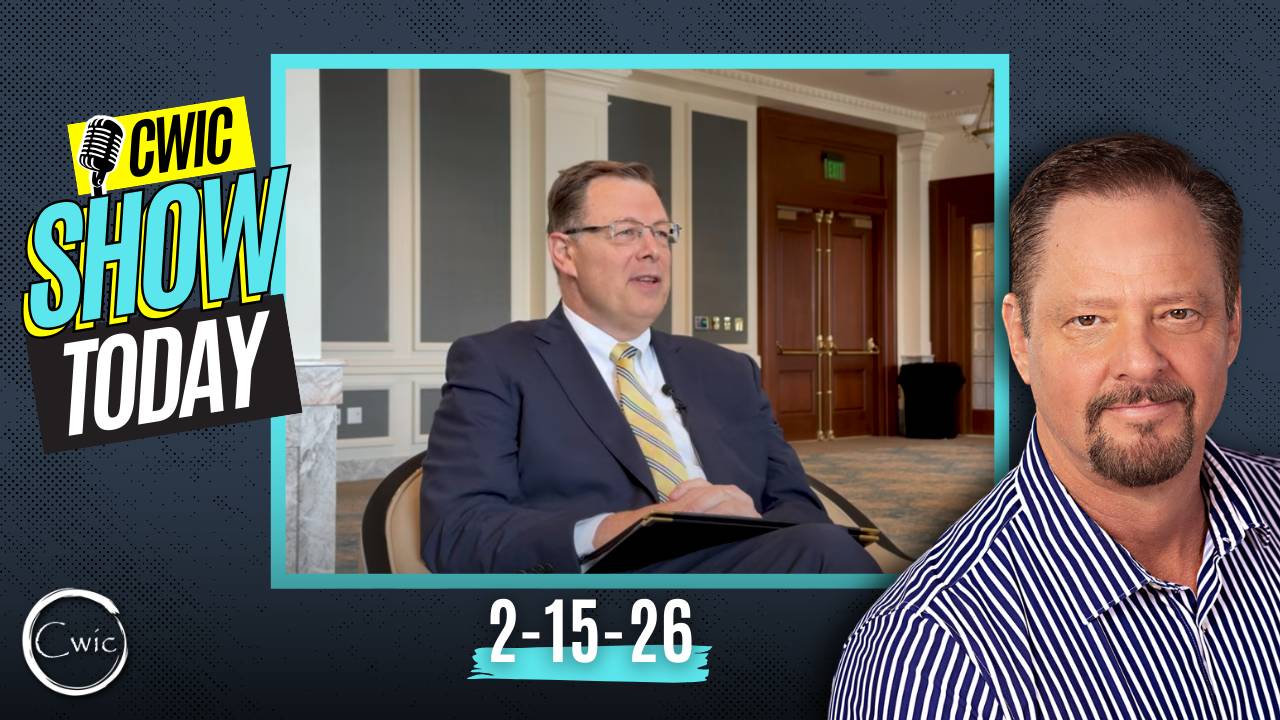
“I’m Not the Arbiter of Orthodoxy” Breaking down Elder Gilbert's interview with Peggy Fletcher Stack of the Salt Lake Tribune. Elder Gilbert answers the toughest questions on doctrine, polarization, and temple recommends. Is Orthodoxy Now “Controversial”? Doctrine, Culture War, and the New Apostle The media narrative around Elder Clarke Gilbert — and what he actually said. Same-Sex Marriage, Temple Recommends, and the Covenant Path Elder Gilbert’s clear answers — without backing away from doctrine. Polarization in the Church — What Elder Gilbert Got Right Why your political identity cannot outrank your covenant identity. The Media vs. Orthodoxy Why defending doctrine is now labeled “doubling down.” Is Following the Commandments “Conservative”? Elder Gilbert responds to critics calling him a doctrinal watchdog. Therapeutic Jesus vs. the Real Gospel Elder Gilbert on turning to Christ — not just affirmation, but transformation. Youngest Apostle Since Bednar — Why It Matters What Elder Gilbert’s calling signals for the future of the Church. Temple Recommends & Same-Sex Marriage — The Question Everyone’s Asking Is the Church “Doubling Down” on Orthodoxy? Or is it simply holding the line on eternal doctrine? Elder Gilbert, C.S. Lewis, and the danger of political primacy. Inside Elder Gilbert’s revealing sit-down with Peggy Fletcher Stack.
Raw Transcript:
All right, welcome to Quick Show today.
Today is February 15, 2026.
And we are talking again about Elder
Gilbert. Uh, a lot of revealing answers
he gave to Peggy Fletcher Stack for the
Salt Lake Tribune. We've got this on
video. And, uh, she has been rather
adversarial about his calling. And so,
this is an interesting sitdown between
the two of them. And there's some real
very revealing things I think we find
out from Elder Gilbert and his
positions. and and he just he just did a
great job in in the interview. So, we're
going to go to that. We're going to go
to the questions. We're going to go to
the answers. We're going to go a little
bit of the background on this. But
first, this episode is brought to you by
Go and Do Travel and the Gospel on the
Nile tour. Very excited about this one
coming up this fall on October 27th
through November 6. It's filling up
fast. We're going to have a great time.
You're going to see the temples. You're
going to see the pyramids. You're going
to have a camel ride, the tombs. Uh it's
just an amazing amazing trip. The grand
new the brand new Grand Egyptian Museum
is absolutely incredible. Learn more
about the temple there than you will
anywhere else except perhaps in the
temple itself. Go to quickdia.com
cwycia.com. Scroll to the top to trips
and events and scroll down to Gospel on
the Nile. Here we go.
All right. So just a couple days ago on
Quick Show today, we talked about the
article from the Salt Lake Tribune and
the reaction from the press and the
reaction from academia on the calling of
Elder Clark Gilbert, which is, you know,
a fabulous call. You can say, well, this
was just from the Lord. It doesn't
matter whether it's fabulous or not.
This is what the Lord wants. Okay, I
sustain that. Uh, but there are some
things swirling around this calling. one
is uh the Salt Lake Tribune and Peggy
Fletcher stack and her positions on and
her concerns, obvious concerns in the
way that she's interviewing him and in
uh the way that she writes about him.
So, uh if you recall going back uh just
a couple of days ago, we had this
article with a headline, LDS church
president Don Oaks makes a
controversial, of course, controversial
pick for new apostle Clark Gilbert. And
then a historian who we also covered who
was Benjamin Park had stated that Clark
Gilbert may be the most consequential
apostle appointment apostolic
appointment in the modern church. And
that might be true because his age if
you think about it it's kind of like the
the president appointing Supreme Court
justices. They're similarly there for
life. And so you have the youngest call
since 2004 with Elder Bednar uh to the
apostilhip with Elder Clark Gilbert who
is 55 years old. I think that Elder
Bedar in 2004 was 52. So 22 years uh
youngest youngest called apostle in that
period of time.
But there's been just such you'd think
it's odd but it's not odd anymore. But
just this swell of again push back from
from a lot of academia and and and I say
academia because that's where you're
going to find those that would be
worried about what they would perceive
as a conservative apostle or what
they'll use is uh often times words like
uh orthodoxy or wanting to follow the
commandments or um watchdog I guess uh
different things like this because of
his past with BYU and the corrections
that he made there. I'd see them as
corrections. Uh, and
apparently because of his time at
Desireette News, which I don't
understand what they're saying there at
all, unless they're upset that
Desireette News was not becoming more
like the Salt Lake Tribune anymore. So
Peggy Fletcher Stack sits down with
Elder Clark Gilbert in a video interview
and covers everything from immigration
to same-sex marriage to people falling
away from the church and struggling with
doctrine. All the things you would
expect her to want to ask. And he does a
marvelous job in answering these
questions. I want to cover that in just
a second. But I want to add another Salt
Lake Tribune article. And the reason I
use Salt Lake B on this because again
they are going to be the hub of the
adversarial approach to these types of
callings.
This one here, not surprisingly, is from
Jenna Rice. Uh Ree, I think it's Rice. I
I Janna, I hope I'm getting that right.
I don't want to mispronounce her name.
Uh I've read a lot of her work, and in
fact, I really liked actually one of her
works on uh uh running polls and surveys
on on Latterday Saints, especially young
Latter-day Saints. Uh I pulled a lot
from that book. She says, "New LDS
apostle apostle Clark Gilbert is
expected to be a strident culture
warrior and doctrinal watchdog." So,
it's like, well, okay, we do hope that
the apostles all are watchdogs of the
doctrine, right? I mean, that would be
important. It's just such an interesting
statement to say this, right? That that
they're they're afraid that he's going
to be a doctrinal watchdog because they
don't like the doctrine. They want the
doctrine to change. And then
secondarily, a cultural warrior. A
culture warrior. And and again, it's
interesting. They only call people that
are cultural warriors on the
conservative side, which is I I is just
those that push a different progressive
agenda. Are they not culture warriors?
Are they not trying to change the
culture? So, are you saying a culture
warrior is only someone who wants to
defend certain traditional principles?
And a culture warrior is not one that's
actually out there trying to rabble
rouse a change in the culture.
But she says this, she's got a section
here that she calls doubling down on
orthodoxy.
The 93-year-old Oak seems concerned that
his legacy, she says, will be expanding
the church's religious education
programs and doubling down on doctrinal
orthodoxy. Gilbert shares both of those
commitments with a zeal that he has that
he with a zeal that has alienated many.
Okay. So again, if there was not a
doctrinal watchdog in place, would he
would that those people also alienate
many,
right? I it's it's it's always one-sided
with with these things. During his years
as the church's education commissioner,
she says Gilbert became known as
something of an attack dog. He
standardized hiring practices across the
B the BYU's wi of the BYU's BYUI, BYU
Hawaii, BYU Provo, right, which included
changes to some hiring requirements. In
2022, he contract his BYU contracts
began requiring employees to affirm the
church's stance on marriage and gender
because that is the question. That is
the primary question and it is so cord
of a doctrine to Latter-day Saints. It
is right there with the doctrine of
Christ. And so to pull back from that
which you have certain professors doing
at those institutions, you
I don't understand why that is such a a
strange thing to actually have an
apostle that is she says doubling down.
How about just holding to doctrine on
family and gender?
It's not it's not that surprising, Jana.
It's really not that surprising because
that is the doctrine of the church.
And then here, this is where again, I
think this is a discussion that's got to
take place more. She says Gilbert's
intense focus on conservatism.
So, it is true that these things have
become more and more conservative. The
reason they're becoming more and more
conservative is because progressivism is
moving further and further away from
gender, right, a description of a binary
gender. They're moving further and
further away from marriage. They're
moving further and further away from
having kids. They're moving further and
further away from a traditional family.
They're moving further and further away
from the law of chastity.
So all of a sudden now if you actually
stick to those things and it is all of a
sudden over the last couple decades it's
just been boom. If you're now sticking
to these things which are the doctrine
of the church now they are conservative.
They're p purely conservative issues
because they are a not a reflection but
a context a a check on where everything
else is going in our culture.
So you can call them conservative if you
want but the reality is it's simply the
doctrine of the church and I'll repeat
this. This was given uh by again his
historian Benjamin Park which we covered
in Friday's episode who said I don't
know if we've had someone appointed to
the quorum of the 12 with such a clear
record of culture war rhetoric and an
argument for retrenchment
right since Jay Ruben Clark in the 1930s
and Ezra Taffbenson in the 1940s.
Well, in both of those cases, in the 30s
and in the in in uh uh in the 40s, you
had a pullback away from these things.
The 30s, by the way, is where, you know,
you've got the buildup of Nazism, and
then you've got the Frankfurt school
coming out of Frankfurt, Germany, and
landing at Colombia University,
and the you have the the Soviets
expanding as part of World War II. So,
it's you have all of these things
happening and percolating. So there is a
pullback.
It's like whoa whoa whoa. Where are we
going with all of these things? So we
are in the same environment that we were
then.
You could probably find examples of this
also in the 60s and the 70s.
So just an interesting point that that
you know are they conservative
principles?
What was is Adam and Eve a conservative
principle? I guess
is the law of chastity a conservative
principle?
Is is having kids a traditional
principle?
All of these things are going to become
more and more political.
Now, back to Peggy Fletcher stack. She
goes on in this article as a summary of
the interview, which we're about to get
to. And the headline of this one is,
"I'm not the arbiter of orthodoxy."
Okay, that's the talk, right? He's going
to be he's so orthodox and he's you know
I I I wouldn't expect certain I expect
there to be orthodoxy but I don't think
he's who you think he is necessarily.
This this was the same thing she did
Peggy Fletcher Stack did the exact same
thing when Elder or Elder Nelson became
President Nelson and the question she
had at his press conference when he was
when he was called to be prophet of the
church and it was the same type of worry
same type of concern. I I don't think he
was who she thought he was or he didn't
um uh preside in the same way that she
thought that he was going to preside.
So, we don't know yet, right? We don't
know yet.
And she says, "The new LDS Apostle Clark
Gilbert talks about BYU immigration and
same-sex marriage." Good. Let's get to
that. Okay. Okay, so Elder Gilbert's
going to be asked a few questions here
specifically on these topics by Peggy
Fletcher Stack and I just he just
handled this so well and and I love his
answers and some of you might not be
like as harraish as I am about what his
answers are, but I want to go over these
and tell you why I think that he handled
it so well and why it's so important as
if that really even matters. Let's
listen to this.
So recently, President Oaks has talked
about he did at BYU as concerned about
people leaving the bay.
What What how do you see your role in
helping to keep people in the
Yeah, it Okay, so again, she's asking
just to be clear on this because the
audio is a little bit off. She's asking
Elder or President Oaks was at BYU last
week giving a talk and uh a devotional
and and it was part of it was about the
struggle that some people have, the
doubts that people have and there are
people that are leaving the church,
right? Obviously that is an issue. At
the same time that we have a robust
missionary program that we have people
being baptized at at higher volume than
ever before that there are groups of
people especially in the west and
especially in the United States that are
leaving the church and and that has to
be addressed and that's a tough thing
for a global church. You've got brand
new members of the church and the
missionary program and and and budding
wards and stakes in certain parts of the
world and and then you've got very
mature stakes where there are different
problems and and there are issues of
doubt and struggle and and uh you know
issues where where you're losing right
now in fact a lot of women in in the
church. But here's how he answers it.
It was his talk at BYU wasn't really it
was amazing because it wasn't a talk for
BYU. it was tuck for the whole church
and he had framed it that way uh from
the start and as you're aware in some
ways this is one of the most
unprecedented times of
flourishing in the church seminary
attendance and institute attendance
missionary service are all at record
levels and
I just want to make sure I don't get
copyright stricken here so again here's
all the positive things that that that
are going on in the church and they are
and and it's pretty astounding actually
yet people struggle and they and they
have questions and they have anxieties
and mental health challenges and we live
in such a polarizing world and and I
think beyond anything I could do uh with
my own thoughts. It's always to point
people back to the savior.
Okay. So, here's why I love the answer
and and of course I'll put the the link
in the description box so you can go to
the entire interview here. But here's
what I think is so important and and
here's why I think he says this. It's
not just a matter of saying, "Hey,
here's a primary answer that you get.
You know, read your scriptures, you
know, pray and and and uh and and turn
to the to Christ, right? These are all
true things, but sometimes they don't
work for people. Sometimes they're going
to struggle anyway when they do these
things." I think that's an important
thing to realize, and there's not always
answers to that. And that's where I
think we run into trouble with the
primary answers. But when we get a
little more profound, a little more
in-depth understanding of what it means
to turn to Christ, we can look at some
of the problems that we have in the
world. For example, right now there is a
problem with a therapeutic idea of the
gospel where if I if I turn to Christ
and Christ is just going to love me and
comfort me, then all is well. And that
isn't true. Yes, he's going to meet us
where we are. That's an important thing.
He will meet us where we are. And that's
important thing to understand that he
loves me no matter what. Right? But if
we try to stay in our same position all
the time, then we're not going to be
happy. There's no amount of love that
God has that is going to allow us to to
be fulfilled and to be happy if we are
not moving forward in our lives. That is
not something that God can change. He
can't change that, right? because he
can't take agency away from us and he
can't break the plan of salvation and
the covenants that he's made and he
can't break truth.
So yes, there is turning to Christ. I
think one of the important things to
understand is is in a therapeutic
culture, and I'm not bashing all
therapy,
but it's getting out of hand to some
degree, but if if if we look at Jesus as
a therapy session, then we're going to
be in trouble. But if we look at the
savior as he died and suffered for me
and not only does he love me, but he
loves me enough to give me the
opportunity to grow and to learn and to
become somebody I'm not right now.
and and that that that
adversity going through that adversity
that testing that proving that that that
progress for an individual is all based
on the atoning sacrifice of Jesus
Christ. And so if I can tie myself to
Jesus Christ as I go through the
adversity,
knowing that he's already been through
it and conquered it, overcame it,
then then that ch that can change.
That's that's the medicine to me. It's
not you're loved and you're okay. That's
not going to be enough. That's a start,
but that's not going to be enough. It's
you need to rely on the atoning
sacrifice of Jesus Christ and understand
that he's been through everything that
you have already been through and that
he will help you and guide you through
your next problem and the one after that
and the one after that and that because
of him you can grow and learn. If we
take that second half of the equation
out we're in therapy. It's all
affirmation and and that's not what the
atoning sacrifice is about. So I think
his answer is perfect. People who are
doing well and progressing in the gospel
need to be focused on the savior and
people who've struggled um the answer
for them is to come back to the savior
and um you know one of and now with this
calling uh such a focal responsibility
is to be a witness to the name of Jesus
Christ in all the world and
okay so so there you have it right it's
for everyone you're struggling now
you're doing Well, it's it's stick with
the savior and understand what the
atoning sacrifice is for.
Um, so you just mentioned that uh the
polarization in the country, but it's
seeping into the church as well.
What how how would you be a bridge
builder and a peacemaker?
You know, there's Okay, she's she's
asking about polarization in the church.
Okay, this is a good question, right?
Because there is more and more
polarization in the church. which I see
in the comment section on all my videos.
And and this is tough. It's really
tough. And and I love his answer. And
some of you are not going to like his
answer,
but he is he's right. He's 100% right
about your political identity.
this wonderful exchange in the screw
tape letters that CS Lewis describes
where uh the two people who are tempting
the subject in their words are trying to
decide do we push him to the the U
patriot party which might be like some
right so we'd be talking about I don't
like the word patriot in here because I
think that it's it's something much more
severe than being a patriot but you get
the right idea of what he saying here
this is the most cons more conservative
party
modern versions of our politics today or
towards the peace party and I don't know
all the ramifications of 1950s English
politics but you can see a pretty close
parallel to the world we live in
okay so you've got these are two things
that are just they're only uh a single
attribute of each side of the political
spectrum right being being patriotic a
little nationalism maybe and and
hardcore nationalism would be going way
down the road and then peace and then
actually going further with peace and
saying well peace is worth everything
like tolerance and allowing everything
to happen. Um you know and that peace is
a huge thing that's coming out right now
especially in academia. It's it's it's
very we're very focused on this idea of
peace and kind of twisting it into
something that it's really not.
I've had other podcasts on that subject
but you see what he's saying here. the
two parties and this is coming from CS
Lewis
and Screw Tape says to the junior devil
did you not hear anything I've taught
you just make their political identity
their first identity
okay so this is the key right and this
is what we do I mean I you know sorry
but but those of you that watch CNN and
MSNBC every day and this is your big
thing it becomes your identity if you
are on the opposite end of the spectrum
and you're watching Fox News every day
and you're focused in on bashing the
other side. That that's your identity.
It is. And and maybe I'm going to lose
followers because of that. But you know
what? It's
stick to you know how I said that that
now things are becoming conservative
like typical doctrine and things like
that. Stick to the doctrine. Maybe they
are becoming more conservative. Fine.
But
it's I I I haven't been and this doesn't
mean that you need to be this way, but I
haven't been a member of a party since I
was in my mid20s. I I I I can't stand
the thought of putting a label on myself
like that. That's just me personally.
Not saying it's it's not it's the wrong
thing to be a member of a party. I I'm
just saying, you know, in in I I I hold
very closely the the what I call
President Nelson's identity hierarchy.
remember what he did with the young
adults conference a few years ago where
where there are three things. It is
child of God number one
and that means you're a child of God and
everybody around you is a child of God
and if you're a Republican the Democrats
are ch children of God and if you're a
Democrat that the republicans are
children of God and then number two a
disciple of Christ
and number three or excuse me a child of
the covenant and then number three a
disciple of Christ. Then you can put a
line underneath those three and
everything else. Political affiliation,
uh, sexual orientation, race, you know,
uh, class, all of these other things
come down below. And what the world and
the adversary wants us to do is take all
of those things and put them up above
it. That's what intersectionality is all
about. It's taking all of those things
and and mixing and matching them and
seeing where they intersect and putting
that up as the very highest thing in
your identity and your affiliation with
others. And it's so divisive.
That doesn't mean I wouldn't more likely
lean one way or the other as far as
political parties go. I would, but don't
take your eye off the poll. So, some
critics of yours have said that you have
a particular view of orthodoxy.
And first of all, do you think that's
fair? And second of all, would you like
to see everyone in the church uh follow
that view of orthodoxy?
Well, it's it it's not up to me. I I'm
not the arbiter of uh orthodoxy. It's
it's really the doctrine of the church
and and um there's safety in being
grounded in that those teachings and
again so it's it's he's not the arbiter
of orthodoxy
which is basically do you follow the
doctrine of the church and and again so
she's asking in a position of well are
you know how how are you going to stick
to these things or are they going to be
loosened up does everybody need to view
your uh position of orthodoxy and the
answer is actually No, not everybody
needs to view that. Not everyone needs
to agree with him. His point of view is
it's the doctrine of the church that I'm
concerned about. It's not a matter of
orthodoxy or how orthodox, how tightly
wound are you, how tight are the screws
or how loose are the screws. It's like
here is what the doctrine of the church
is and that's what I'm trying to teach
and follow. And and I think that's the
right thing. I mean, I the the response
I would go with to to Peggy is, should
we not follow the commandments, right?
Do we not follow the commandments? And
yes, I understand things can get too
conservative. They can they can get too
tightly wound. I believe that's true.
And I'm sure she has some concern over
that. But to ask if you are orthodox or
to ask if you think that the
commandments are should be followed
um what she implies in her articles and
her questions is I I don't understand. I
mean you're you're talking about someone
who's going to be an apostle one of the
15 governing positions top governing
positions in the church and you're
wondering whether or not they're going
to be Orthodox.
Um, so along that line, uh, is it, um,
do you think members who, uh, support
same-sex marriage or who disagree with
parts of the family proclamation should
get a recommend?
Well, okay. So, if you didn't hear that
right, I'll try and get the sound on
that right as we edit this. But he's
asking she's asking if uh those that
don't agree with the f family
proclamation
and those that are for same-sex
marriage, should they be able to get a
temple recommend? That's a pretty good
question. I mean, based on our
environment right now, that's a very
good question. Uh and you'll see how he
answers it. Like he sidesteps maybe a
little bit here, but again, it goes back
to the doctrine of the church, and
that's what we always need to go back
to. So this is what I really appreciate
from him is he's not just walking away
from the question uh but he's not
answering it on her terms. He's
answering on the terms of what I would
say the terms of the Lord which is these
are the commandments and and listen to
how he responds to this. Well, you know,
the recommend questions are are clear
and straightforward, but there's this is
a big tent church and um we we
want people to feel a sense of belonging
and inclusion, but but we also are true
to the teachings of the savior Jesus
Christ, president holy.
So, this goes along the lines of saying,
look, everybody is invited. We want
everybody there. You may not agree with
the doctrine. You may not agree with the
family proclamation. You may want
same-sex marriage. You might be gay. We
want you at church.
Right? It's an open invitation to follow
the savior. And and that's the way it
always is. It's not always been that way
in practice. I would say uh and and
you know, it needs to be and we need to
be better at that. But there is a wide
open invitation for everyone to follow
the covenant path. And we need to
remember that. and and there's always a
chance someone may be going off the
government governing bath for a while
and then you know what they might come
over onto it and so that invitation
needs to always be there but then he
says with a caveat
once said that Christ never once said
because I love you
you are free to choose which
commandments to keep
okay just oh that is so refreshing I'm
sorry but it's just
it's so refreshing
because we need the entire message. You
cannot have just one side of the coin. I
love you and that's all there is and
you're fine and you're okay.
That's not the gospel message.
It's so much more and so much greater,
so much more fulfilling and and rich.
And it's about your destiny. It's about
your purpose. It's about your identity.
And that identity has everything to do
with merit.
It has everything to do with who you are
becoming, your choices, your agency.
But he also had an in oh by the way all
given to you because of the atoning
sacrifice of Jesus Christ
infinite capacity for to forgive when we
made mistakes and no one's perfect in
the church. Everyone has to repent. Only
one person was perfect. Um, but that
same person is the one who taught God's
laws and and never once backed away from
them. And
I just I just am so appreciative of
that. And we try to change, you guys
have heard me talk about a teddy bear
Jesus. And we try to change the nature
of who he is and who God is. It's like
really
this is not he's not just someone who
loves and comforts. It's so much more
than that. And time there are times when
that is what is needed. There are people
that are in certain places in their life
and that that is got to be there first,
right? God loved us first.
But we need to be able to love him
and and and that can't just be an issue
of gratitude alone. It needs to be we
love him as a verb and so we are there
to follow him and to serve others as
well. Right? And that's that is the
gospel message. It is the entire plan of
salvation. It is the the vision of the
tree of life and hanging on to the iron
rod. It is exaltation.
And exaltation comes with requirements.
Not requirements that say you have to do
this,
but rather a manual that says here's how
to do this if you want it. So really,
really appreciate his words on this. You
should watch the entire thing. Uh, I'm
going to put the link into the
description box, but
I love love everything that I have heard
from Elder Gilbert so far. And I have
always loved what I have heard from
Elder Gilbert uh since I have been
following him when he was uh first at
Desireette News and then later at uh as
commissioner of education. So, hope you
enjoyed this. Talk to you soon.

"I Take This Every Day!"
Learn more about why I accepted Cardio Miracle as a sponsor and why I take it every day!
- Greg Matsen

Stay Connected With New Articles & All Things Cwic!

Cwic Audio Player
All of the Cwic Media podcast episodes on one page!
Recent Posts

