
Elder Gilbert Called And It's Already Political
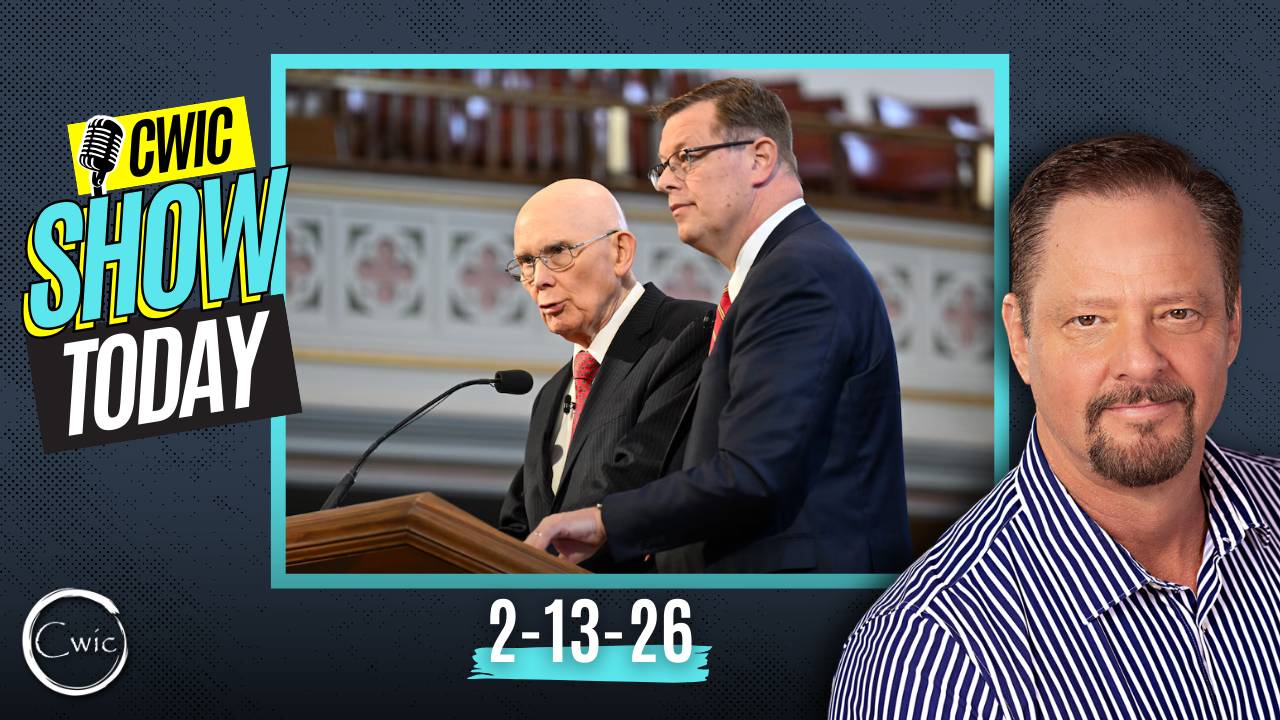
Media and academia are already criticizing the calling of Elder Gilbert to be an Apostle for the Church of Jesus Christ of Latter-day Saints. Shocker! Elder Gilbert comments from Ensign College address to stand fast against pressure.
Raw Transcript:
All right, welcome to Quick Show today. Today is February 13, 2026. And we have
a new apostle. Elder Clark Gilbert was called uh Wednesday and ordained
Thursday, yesterday, as an apostle of the Church of Jesus Christ of Latter-day
Saints. I was thrilled with this. Obviously, it doesn't matter what I think, but uh that's what I am offering
here is just my thoughts on all of this. And I have some thoughts because I've got a little bit of context on following
Elder Gilbert uh for the last several years. Um it's interesting because uh as
wonderful as this is, it there there is a response that's out there that is, you
know, it's it's like kicking the bees nest a little bit or the or the hornets nest um with some people that are
concerned about this. I remember seeing the same thing when Elder um Nelson was called as prophet and you
had journalists worried about who he was and what he was going to offer and what
his policies and the direction of the church was going to be with him and and then of course those worries quickly
went away I think with with President Nelson. But we're getting the same thing here with President Oaks and his
decision to bring on Elder Gilbert. Uh I think that this is a fabulous choice. Uh
again, it doesn't matter what I think, but I I have some things to offer here to talk about that uh I have done
previously in episodes with Quick Show on Elder Gilbert. And I think that there
are some wonderful wonderful attributes that he is going to bring to the table that I will cover. But I'm going to
cover these these responses also so that we can see this and then I'm going to put it into context a bit. Now, this
episode is brought to you by Go and Do Travel and the Wavemakers 2026 cruise.
Uh very excited about this. Uh for those of you that went on the Wavemakers 2025, you know what this is like. It's
amazing. It's an incredible experience. Uh you've got all the podcasters together. The online community comes
together face to face. It's a it's a really neat type of an experience. We've got some great guests coming in this
year. Uh Hayden Jackson Paul, Andrea Woodmancy, Cardinal Ellis from Ward
Radio, Jonah Barnes, Hannah Stoddard, Oransi, Jacob Hansen from Thoughtful Faith, and Kevin Prince uh from Gospel
Lessons and more uh likely that will be coming here for this cruise. It's it's
really something special. I know you're going to enjoy it. It is November 14th through November 21st.
Uh I hope that we will see you there. Here we go.
All right. So, Elder Gilbert, uh called as the new apostle, you see here in the
church news, uh newest apostle, the former BYU Idaho president, has been a
general authority 70 since April 2021 and currently is church commissioner of
education. This is an important role. It's an interesting pick for President Oaks for a couple of reasons, and you'll
see why there is a reaction from from certain Latter-day Saints, especially in the academic world. I I'm going to
disagree pretty strongly, obviously, with with what they feel. But let me start with this. Let's go directly to
the Salt Lake Tribune. And it's interesting when you cover this because,
you know, if you if you look at the press, whenever you see the word controversial, you know that there's probably it's
probably a good thing. It it's I don't know how this word has lasted for decades in the the mainstream media, but
it has. And whenever they put the term controversial on there, it means
typically that it is against their agenda. And usually it is those that the
point of view that the person or the issue takes when it said they say it's controversial is usually the majority
view. They never put it on the minority view um that they have. But but they
always put this term controversial on the majority view and on basically the
orthodoxy of the Church of Jesus Christ of Latter-day Saints in this case. But here's the headline. It says the LDS
church president Don Oaks makes a controversial pick for new apostle Clark
Gilbert. And here's the sub headline here. It says, "The choice may not sit
well with some BYU faculty." Okay, now this goes right to my point about the term controversial because it is a
minority of the BYU faculty, although a growing minority. I I I would suggest,
but uh it's just funny how how they put this out there. So, this is their response. This uh unsurprisingly is is
from Peggy Fletcher Stack, who is also the one that really was questioning President Nelson when he was first put
in as prophet and concerned about the direction that he was going to take things. Uh and Tamara Kemsley. Okay, so
this is a it's not surprising at all that they're going to come up with this. When I see this from the Salt Lake
Tribune and they're wording this as controversial, I usually think, "All right, this is probably going to be a
pretty good thing." Now, for a little context, we go back to another article that Peggy Fletcher Stack wrote a year
ago on in January of 2025 when there were new changes. There had already been
some changes from Elder Gilbert, but there were new changes put into place at BYU that had to do, especially with
hiring and annual interviews. uh that were tying the professors more to the
the world view and the policies and doctrines of the church of Jesus Christ of Latter-day Saints. God forbid that
they would do that. I mean, this is a church-owned university, but people had a real problem with it because there
have a foot in two different camps. One is the I am a Latter-day Saint and one is I am a member of the church of the
religion of academia and they are two separate things and one of them takes precedence sometimes
and so the title here is dark days new rules have BYU professors running scared
and look I I don't doubt that there are some issues here and and and there might be some fallout from things like this
where where it is not a good thing and and people get you professors get clamped down in their speech. Um, but I
think you have to have it regardless. You're going to if you're going to lean between these two sides of do we follow
orthodoxy and limit a little bit of speech or do we lift orthodoxy and let things go crazy. I I you have to lean
toward orthodoxy. Hopefully, they have they don't they they're they're able to be nuanced in how they allow the
professors to speak. I think that's important. but not allowing them to push doctrines and ideologies that are
contrary. I mean, the antithesis of what we should be teaching at
universities owned by the Church of Jesus Christ of Latter-day Saints. And and if anybody has any doubts about this
and where things have been in the past with BYU and how they have kind of gotten a little spiraling out of
control, go back to the musket speech fought by President Holland where Elder Gilbert was there and uh and and look at
the reaction that was made uh on that speech
and then you can check a couple of go to my BYU playlist and and and see what things had been going on there at BYU
several years ago. You can see here as she writes about a year ago about Elder Gilbert, now Elder
Gilbert, well he was Elder Gilbert I think then too, but it says, well, not yet. Midway through Jeffrey R. Holland's
hotly disputed musket speech, again, hotly disputed by the same faculty
members that she's bringing up in her new article in which he admonished Brigham Young University's faculty to
take up metaphorical arms in defense of the faith's opposition to same-sex marriage. And notice how she's framing
this, right? What he's asked was not, it wasn't him. He was supporting something
that had already been said previously by then Elder Oaks at a speech at Brigham
Young University and previous to that originally it was Elder Neil A. Maxwell.
They are the ones that had previously brought up the idea of the trrow right building up Zion and while you also have
a musket out toward those that are attacking Zion. And so this was not something original
from President Holland or or from from Elder Holland. Then he had two apostles
had already brought this exact example up previous to this and he is coming
back again and saying no we are holding to this because this is a core doctrine of the Church of Jesus Christ of
Latter-day Saints and there's some fallout at Brigham Y Young University about those that are teaching against
this. It's pretty simple, right? So he they go on here, the
Latter-day Saint apostle, Elder Holland, pointed to a less familiar face, Clark
Gilbert, the church's budding new commissioner of education and his traveling companion for the day. The the
apostles have spent a lot of time with with Elder Gilbert. He has showed up a lot of times with with them in the last
several years. So she follows up with later in 2022
came a new employment contract. This is something that I had covered a sort of loyalty oath whatever it's an agreement
it's saying hey we are members of the church of Jesus Christ we're going to stick to teaching the principles that
follow under you know our doctrine here at the church it's pretty simple right
in which faculty members incoming and current were expected to attest to their support of the church's position on
marriage family and gender right and so they had brought in uh it's basically saying okay do who agree with the
position of the church on a traditional family on mar on marriage on gender etc.
Now of course anyone can lie and and they can say something different and just go along with it and but that's
what she's concerned about. This is what has faculty members concerned is that they're actually going to have to support the position of the church in
these areas. And so it it's why it's it's why this is I I think I've said
previously, in fact, just recently again that it it's interesting to see how you
know BYU is kind of a laboratory. It really is. It's kind of a laboratory where we see the this is where we get
the most amount of secularism in the call it an industry in the segment of society that is academia
and and and and pushing it in in this area of academia on on a university campus as compared to okay well are we
sticking to our guns here our musketss on doctrine of the church of Jesus
Christ of Latter-day Saints and and so you have this play out over and over and
over again in this laboratory of secularism, secular incursion on on
church orthodoxy and and it's quite frankly pretty fascinating to watch and to see how this
works. Elder Gilbert has been one to say no, we lean into the orthodoxy and the
positions of the church and that to me is a breath of fresh air, but to her it
is a threat. All right. So, next I want to So, here's another reaction from
someone who would be very sympathetic to the Salt Lake Tribune, and that is uh
historian Benjamin Park. And he's out doing his walks. He does walks like I do, I guess. And
he has an opinion on what the church chose. And and it's
interesting again to see what his reaction is because, you know, there's there's this
idea of of of a dialectic, right? And we this is a true principle. It's it's it's it's something in philosophy where it's
it's there's there's an advancement. You can call it progressivism or or progression or you can call it
regression, but there's a push out to something different out of the norm, out of the status quo. That's called a a
thesis. And then you come back to or or an antithes antithesis, an anti-thesis.
And then you come back to a synthesis somewhere in the middle. And then it pushes out again. And then you end up somewhere in the middle. Right? And
that's a true principle. That is something that works and it can work in a very good way in a very positive way sometimes when it moves toward truth.
But this is at the core of progressivism, right? This is at the core of progressivism. And this idea of
this dialect, a dialectic is is is something that is uh um held on to very
firmly consciously or subconsciously for those who believe we have to keep driving for a certain progress.
And so whenever something doesn't, you know, ends up not at a a a synthesis in
the middle, which is an advancement still, but actually moves backward for them, all heck breaks loose. And that's
what's happening right now with this example. Because for them, it's a movement always toward this other in
untangible, intangible type of a utopia or where this progressivism is moving
toward. and and so anything that pulls back on that and is anything less than a
synthesis of ideas and movement in that direction is is really you know
difficult for them to handle.
So here is uh Benjamin Park Park. He's an academic and an author uh with his
reaction to the selection of Elder Gilbert. Here
of Clark Gilbert to an apostle is the clearest sign that the LDS church is embracing the stance of retrenchment.
Gilbert received his business degree from Harvard Business School. Okay, before I go into this a little bit, retrenchment. Okay. So again, now
he's framing this in a word that is for him a pjorative in this case uh for for
the church in instead of saying they're hanging on to orthodoxy it's retrenchment, right? It's like okay
there are some core principles and you know for example do do are you
going to move away from traditional family? are are what about moving all the way to the atonement and saying,
"Well, the atonement isn't really paying for your sins or um Jesus really didn't
suffer for your sins and pay for your sins." You know, how far down the road do we go? Because that is out there,
right? that that is out there and a place to go that has happened previously because we are already changing who
Christ is in in in and broadly in Christianity and into something that is
purely no judgment, no rules, no commandments, um no, you know, calling out the
Pharisees and the Sadducees and no, you know, none of that exists. It's just comfort and an arm around you. And and
so as we move further that down that road then we change the meaning of what the atonement actually means. So
entrenchment here or or retrenchment as he calls it is is do are there any are
there any untouchable doctrines because if there aren't then there is no
definition of the gospel. There's no definition of the gospel.
There's no definition of truth. There is no definition of love. There's no definition of sacrifice.
And and so, you know, retrenchment is I I I would suggest hanging on to
core doctrines. Let's listen a little more here.
Where he learned the disruptive techniques of the modern business world.
Okay. I I think that what he's referring to in the disruptive techniques is going back to Clayton Christensen at Harvard
who is uh I think it's called the theory of disruption which still is taught even
though Elder Christensen I think he became Elder Christensen I might be wrong on that um is no longer with us
but it's still taught at Harvard but the idea of disruption you know Intel was a big case study for this uh idea of of
coming in and creating disruption where they created a lower level chip to be able to put into cheaper cheaper
computers so that they didn't get the competition coming in and undercutting them, right? It's like Honda coming in
in the late '7s and coming into the American car market with something much cheaper and smaller and more gas
efficient. And so this theory of disruption is how are we going to change things and make things run more
efficiently? and and I I don't think actually he's even applying this properly. I I could be wrong, but it's
been a while since I've really looked at the theory of disruption uh and and what Clayton Christensen was teaching, but I
don't know that he's even applying this properly here in showing that Elder
Clark, who also went to uh to Harvard, is is taking this idea of disruption and
then he's disrupting the church. That's what he's implying. He's disrupting the
church with this theory of disruption here. Let's listen a little more. He taught at the school for a few years,
but after not being retained and being given a long-term job, he joined the LDS
church administration. After being put in charge of the church's media arm, he
got to try out his disruptive techniques by taking over the Desireet news.
Okay, so disruptive techniques. This is kind of like using the term retrenchment. the disruptive techniques
were actually guiding this closer. It's another arm of the church, so to speak, right? It's a subsidiary of the church.
It's owned by the church, the Desireette News, and and had gotten into a place where it was following things like KSL
and which is also owned by the church and and other media arms where it was not maybe exactly what the church was
hoping for. Now, I'm one for free press. I'm all for that. But this is something that's owned by the church. The question
is not whether or not well should the church be involved in its own subsidiary
and and making sure that the values that are taught there are are values of the Church of Jesus Christ of Latter-day
Saints. I think the question actually with the Desireette News and Elder Gilbert's position there uh at the time
is more along the lines of should the church even be involved with a media company that that's an interesting
challenge and question I think. But if they are, then then I don't see just like Brigham Young University, I don't
see anything wrong with saying we're going to teach the values of the Church of Jesus Christ of Latter-day Saints.
Now, the Desireette News I don't think bothers him as much as I'm guessing. I'm putting words in his mouth here, but I I
I think that BYU is the real issue here. And why would that be the real issue? Because BYU is in his world, right? In
his world of academia. And how dare you come into the world of academia and and
influence it with your orthodox, as he calls, conservative
uh principles in in in in a university in the United
States. That's what I see this as. And I I think that's right.
And firing nearly half the staff. But more than slimming down their operations, he also streamlined their
focus, telling them that they should focus on the foundations of the church, meaning conservative values that would
set them apart from the rest of the world, which is okay. That would set them apart from the
rest of the world. Yes, that's exactly right, man. That that's exactly right.
That's what the church's mission is. And and you have a problem with that. And here's what I don't understand about
these types of things where where where it's look, anybody can go to any university they want. There are
thousands of colleges and universities in the United States. And and so the church owns Brigham Young
University. There's nothing wrong with them imposing, if you want to use that word, their own values in their own
university. They believe that you know 18 to 20ome year olds ought to be taught
in a certain manner and under a certain framework. Nothing wrong with that. I mean you know
Berkeley believes in a different framework and you can go there. Harvard
believes in a different framework and you can go there but BYU is a place
where it's owned by the church. There is nothing wrong with saying this is how we believe education ought to be taught and
this is going to follow the principles of the Church of Jesus Christ of Latter-day Saints. And yes, Elder
Gilbert was a big part of I would suggest cleaning things up and making
sure but and when I say cleaning things up, I I mean helping to ensure that the
campus is improved in a way not with progressivism but in a way that
holds closer to the orthodox principles of the gospel. You can call that
conservative if you want. It is conservative in the sense that it is conserving its orthodoxy or conserving
its core principles, but people have choice. They can go where they want. And this is a
church-owned school. little more here is actually a through line across much
of his career in church leadership, denouncing the inroads of secularism in
modern society and the need for the nation, including its universities, to
return to their spiritual core. Okay. I I I don't know that he would have a full problem with that. I mean, I
don't know if he's trying to talk against this right here, but yeah, I believe that's true. They need to return
to a spiritual core. This is a a a church, a religious university. He first integrated this philosophy at
Brigham Young University Idaho when he became president, but then across the BYU systemwide when he became the
commissioner of education. And since taking over church education, Gilbert
has been consistent and behem in trying to reaffirm the university's mission,
trying to reject modern progressivism and return to the fundamentals. Okay.
So, uh, you know, so I I think it's important to understand here. Well, well, so, see, this is what I think
people don't understand when they talk about, you know, what, Greg, why are you even talking about this right now that you're bringing up politics? It's not
that you're bringing up politics. It's that there's no choice. This is all going to be political.
People need to I I think you need to see that it will all be political because as
culture moves further and further away from spiritual roots from family it's
all going to be political. Your marriage is going to become political. Your the idea of gender is already political now.
These little core or or I say little I mean these these so basic core
fundamental truths are all political now. and it's going to get worse. That's
not a doomsday approach. That is simply reality. Ben here has his freedom of choice and
his right for his opinions. But you can see where his opinions are. They these are political opinions.
And for those that follow him, there are, as I'm speaking this right now, there are about 1300
people that have liked this post here on Instagram. So, I'm guessing tens of thousands of of
views already on this. Then then it's, you know, these these are all political.
This is a political discussion, unfortunately. But it's going to all become political.
Let's go back to Ben. BYU faculty, staff, and students have all been quite vocal, albeit
anonymously, given the surveillance, about the reign of terror that Gilbert has introduced, especially at BYU Provo.
Some Okay. So his reign of terror um
and and you know faculty, administration, uh students, I I of course there are a segment of each of
those groups that do not like the changes that have happened at BYU. Again, go back and look at my playlist
and and you'll see what was going on just a few years ago at BYU. It's still there, but it's not as bad. And there
have been there has been a move that has become better, you know, in my opinion. All right. I think Benjamin here would
would well he would certainly disagree with me on this but it's it's not a
reign of terror. It's a retrenchment. It's a return to hey you are working as
an employee of the university owned by the church of Jesus Christ of Latter-day Saints and we are going to follow these
specific guidelines here. These core doctrines of the church need to be taught. You can't just go out and start
pushing and advocating for abortion. You can't segment society into classes
constantly and focus on on race and gender and and sexual orientation and
class and and take intersectionality and try it feed it to the students. These
things are all antithetic to the gospel of Jesus Christ. Something documented in the Salt Lake Tribune last
year. This includes introducing new pledges that the faculty have to sign
concerning orthodoxy as well as a new ecclesiastical clearance office to
oversee all hires and renewals for faculty. This black box that has
rejected a large number of potential hires at the school. Okay. So again, you know, I I I think
it's unfortunate that you have to go to that level. I do. I I I I don't like that kind of thing. When I was at BYU, I
didn't like the way that they handled the honor code. Honestly, I didn't like the way those things were handled. Um I
I I think that I I think it's a bummer that you have to go in and do this. But what do you do? I mean, what what do you
do when there are are large swaths of the uh of the faculty uh that are that
are completely pushing against traditional family and against the
doctrines and policies of the Church of Jesus Christ of Latter-day Saints. And many of the potential hires that he
has vetoed were women without any real reason or justification beyond their
gender. I don't know if we've had someone added to the quorum of the 12 with such a clear record of culture war
rhetoric and Okay, I want another on this of culture war rhetoric. Okay. No, that I don't
think that that is I I I first of all, we're we're we're getting more and more into a culture war there. There's no way
around it. And it's so so yes, I mean, and going into the future, we'll see the
same thing. And maybe you'll have apostles that are brought in that are on the opposite side of that culture war.
But but you know, it's interesting again how things are brought up for a culture war or a culture warrior. Are those that
want that stay with orthodoxy? What about those that are going out and advocating for things that are um you
know against the Church of Jesus Christ of Latter-day Saints? They're also they also have rhetoric in a culture war.
What about those faculty members that are pushing trans ideology with the gingerbread man and advocating for
abortion and pushing critical race theory?
That that is culture war rhetoric. It's just happens to be that you might
agree with those things. An argument for retrenchment since J.
Ruben Clark in the 1930s and Ezra Benbson in the 1940s. In other words, by
appointing Clark Gilbert to the corn of the 12, Don H. Oaks is signaling which direction he wants the church to go.
Okay. Well, look, I I that's that's true. I mean, look, there is a line here
uh I think between saying you there. Think about Joseph Smith and
Brigham Young and those that are faithful members of the church uh and believe in in revelation and the
direction of the church that is directed by the church of Jesus by directed by by God ultimately. Um you say okay well
Joseph Smith was the right man for the job and then there was a different job that had to be handled and Brigham Young was the right man for the job right
neither of those men are perfect. Neither of both of them have some some scandal behind them that has been
brought up by historians especially uh Benjamin is a historian
and so there's this you know this duality of of of okay well there's definitely revelation does he feel like this is the right thing did he did
President Oaks pray about it he might have already known going in that Gillery Gilbert was the one he was
going to be with he spent some time with him but you know did he already know that is this a direct revelation from
him. Or is this because of President Oak's personality and his worldview and his positions and some might even say his politics?
I I think that all of that feeds into it. But I would say there are a lot of Latter-day Saints that feel pretty good
about that direction. Ultimately, the church is guided by the
Lord. And I think that this is a great pick. I think that he's going to help many, many people with their
testimonies, with their spirituality, and with their faith. And and that's ultimately what the apostles job is, is
to help people with their faith. It's unfortunate that these things turn political, but that's the world we live
in. Now, I want to go to a clip here that many of you may not know about that uh
has Elder Gilbert at Enzyme College with President Oaks as a counselor in the
First Presidency. Maybe a little foreshadowing of things to come. He's at Enzyme College and
they're showing a clip from Candid Camera that has a test where a someone
who doesn't know what's going on goes into an elevator and then actors go in with that person and they all turn
around and then the person who isn't aware of what's going on ends up turning around because of
peer pressure and then he ends up talking about this and and and giving a little commentary on the video. Let's
take a look.
All right. So, the video goes and shows several examples of this and and then here Elder Gilbert is going to comment on it. Despite the humor of that video,
you are going to have to learn to turn and face the right way in the elevator.
Even when everyone else is telling you to turn around and face the back, in your heart, you'll know this can't be
the right thing they're doing. But you have to have the courage to stand fast
looking in the right direction. Okay? So, that's why I think he's called. Honestly, that is that is who he
is. He understands peer pressure. He understands that even though the culture moves in one direction, regardless and
regardless of the reaction of of individuals, where they turn, the
direction they turn that we are to stand fast and stick with orthodoxy, stick
with the doctrine of the gospel of Jesus Christ. And and that is a strong message
and it's a desperately needed message right now. There are so many that we know in the church now that have that
have turned that other direction and it's important for us to have a message of stand for something. It's so
refreshing to hear that. Thanks for listening.

"I Take This Every Day!"
Learn more about why I accepted Cardio Miracle as a sponsor and why I take it every day!
- Greg Matsen

Stay Connected With New Articles & All Things Cwic!

Cwic Audio Player
All of the Cwic Media podcast episodes on one page!
Recent Posts

