
“I Felt It Was Right”… But the Prophet Says Otherwise
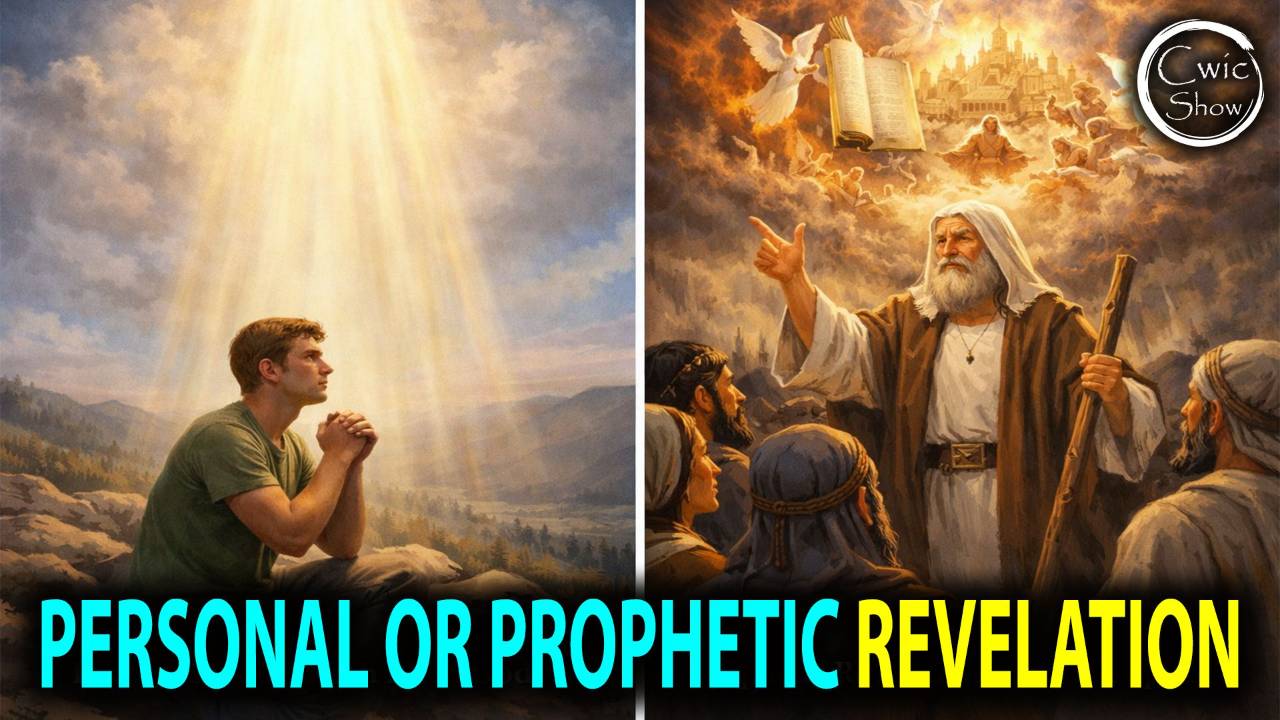
Kurt Francom from Leading Saints discusses Personal and Prophetic Revelation - What do you trust—your feelings or God’s authorized voice? The dangerous gap between emotion and revelation Stop Outsourcing Your Revelation - But don’t abandon the prophet either Why God Won’t Do Your Thinking For You
Raw Transcript:
There's the chicken and the egg and there's personal revelation or prophetic revelation which has a higher value. All of us are inspired and encouraged to receive personal revelation. It's a big part of the restored gospel. But what if that conflicts with prophetic revelation? This is a subject that comes up quite a bit. A lot of people say it's it's a little bit kind of like, well, it's my truth. It's what I have felt. How do how do you put that up against a prophetic revelation? How do you develop your own spiritual personal revelation that works in conjunction with prophetic revelation? Kurt Franklin and I are going to discuss this. It's pretty interesting discussion. I think you're going to enjoy it. This episode is brought to you by Go and Do Travel and Gospel on the Nile. I just got back from Egypt for what is it, six, seven weeks that I was there. Uh it's a fantastic trip. It is amazing the testimony being built, the the the parallelism with the temple. It is an incredible incredible experience to go through and see our temple experience, our own temple experience on the walls, etched into the walls of the temples of Egypt. It is incredible. You won't learn more about the temple anywhere else in the world outside of the temple itself than in Egypt. Fantastic trip. Go to quickdia.com, scroll to the top to trips of events, and go down to Gospel on the Nile. I'd love to see you there. Here we go.
All right, I want to go back to the institution and the individual and talk about authority and revelation, right? Because these are the two sides again. And so we've got we've got a an institution that helps direct us. uh we see our prophet and uh apostles as authoritative figures driven by inspiration given messages uh that that God himself would want us to have, right? Um and then we have very much so I mean you go back to Joseph Smith and and and what his desire was as the restoration was very quickly unfolding under him. It was, as you said before, I want all of you to be kings and queens and priests and priestesses. It was this incredible democratization of no, there's not just a preacher, there's not just a pope, there's not just a pastor, whatever it is. No, you have a direct line yourself to revelation and you have to develop that. In fact, it's so important that your salvation is dependent on this relationship that you build with God through the spirit, through prayer, etc. Right? So, we've got this heavy idea of becoming and building this relationship of faith on the atoning sacrifice of Jesus Christ on on the what we understand as Latter-Day Saints of becoming what we might become. which is a direct line, right? That's a direct line to God. And then we've got this institution that again I think is supposed to be supportive of what we've just said here. But there's a tension that happens where where instead of sometimes going direct, we we are looking to the institution for this revelation. Mhm. And if we bring up the fact that well you don't don't look to the institution, just look to God. Well, that has its own can of worms. Yeah. Yeah. Right. And and but if but if we fully just rely on the institution, we're not really becoming the way that we're supposed to. You know, you turn into almost a puppet figure to some degree, and some people are. Well, my kids are in Sunday school and primary and everything else, and so they're taken care of, right? I go to church every every week and I don't drink coffee. So, I'm I'm good, right? How do we manage that tension between those two? And how do we stay away from bad revelation, so to speak, or what we think is revelation, right? Bad revelation. And and where do we place the authority of advice with a church?
Yeah, man. There's so many so many directions to go with this. And it is such a real experience of we have such a deep tradition of I mean we are the church with a prophet with apostles that are they're speaking for God and receiving revelation and we have such a deep rich tradition of the young farm boy that went into the woods to receive his own personal revelation. Right? And that same invitation is given to us and again this is another contraries that seem to ram into each other at times where we want to default. We want to simplify it be like no it's all about you know a lot of therapists put it in the inward authority and out outward authority however they put it where some want to default to I just go to the the institutional church to the prophet for my direction and others say no it's about autonomy personal autonomy and a personal relationship I go there right but it but it's a balance I think often times just like most things we frame it in unhelpful ways so we see revelation as a one-way street where here I am as a mortal immortality and I'm just waiting for God to send down from heaven to earth his revelation and okay I'll go to general conference and let's see what they have to say and or I'll go to the handbook which they wrote or I'll go to policies or I'll go to the website and we sort of waiting for that revelation to come in a leadership context I see a lot where a bishops will new bishops will put on their shoulders this responsibility of of revelation which obviously they have and and and they've heard these beautiful stories about, you know, a word council coming together and there was this obscure name that came into the discussion and we knew that it was ordained of God, right? And I call this the chalkboard in heaven fallacy where in a word context, we think that God has written every calling of our ward on a chalkboard in heaven and put a specific name next to each one of those each one of those callings. And it is our job to figure out who is supposed to be the assistant, you know, priest advisor that God has chosen. And and if we don't, we have lost all authority and we're we're straying from the path. When in reality, God has created us to be very complex decision-making, reasoning beings for a reason that we can take in information as we've heard. You know, good information makes good inspiration. We can take in inspiration and make calls. And uh that is still revelation even though it wasn't this scroll from heaven that descended through the bishop's office ceiling like here it is the priest advisor's name. like we will now go forward with our revelation. Um and this it talk we learn about this in well two places in the doctrine of covenants I'll reference in section one famous scripture 38 right that uh whether by my own voice or the voice of my servants it is the same and I think we frame that in a way of saying well whatever the prophet said that's what God said like in to the word right when in reality I think he's speaking more about a dynamic of authority stewardship jurisdiction of like I've given the keys to President Nelson. I've given this keys to Bishop Johnson or whomever. And so if they come up with a concept, it's as good as my my voice. And this is reiterated in um Doctrine of Covenants 128:9. This is such a powerful scripture and concept that we often glaze over. It says, "It may seem to some it may seem to some to be very bold doctrine." Now, this is if a verse starts out that way, let's buckle up and listen closely. a power which records or binds on earth and binds in heaven. Nevertheless, in all ages of the world, whenever the Lord has given a dispensation of the priesthood to any man by actual revelation or any set of men, the power has always been given. Hence whatsoever those men did in authority in the name of the Lord and did it truly and faithfully and kept a proper and faithful record of the same, it became law on earth and in heaven. So the way I frame it, the way I see it is revelation is a two-way street, right? There are things, decisions that um that a bishop might make that not necessarily because he was um he was told from heaven to make that decision, but he was raised in a certain way or he may had experiences as as a youth that are influencing his decisions as a bishop. Not that that that's the way that God wants it, but that's just the way God created us as mortal beings. And so, he is using his keys and authority to make decisions. And this is on all levels of the church.
I and I want to be careful as I I say this, but I'm thinking of like the calling of a stake president is often feels weightier, right? They send the the big guns into town, the the 70s and and they pray things and and it's often framed of we are here to find the person that the Lord has called. Now, I think that's a great frame of mind to walk into that experience with. However, I don't think it necessarily works that way where because what typically happens and uh 30 40 men over the over the weeks leading up to state conference will have a premonition, a thought, an a prompting thinking, I I think I'm being called as the state president and they'll sit by the phone or wait or go to their meeting and then be like, well, the call will come any moment now. And then it doesn't it goes to somebody else and now that person is like wrestling inside how do I reconcile this? I I it was so clear of a prompting. Now they're questioning themselves. Right? Reality is is that those those 70s walk into that that stake that they're doing things in in authority in the name of the Lord and doing it truly and faithfully and making a record of the same. That's revelation. Now, they could have picked one of 30 men to be the stake president and the Lord have been like, "Man, that's good. Go for it." You know, the good man, do that, right? Or we've seen it where I even as a bishop myself, I remember I called this primary president. I think she lasted two weeks and I don't remember the circumstances or why. But here we are like calling another primary president and the ward's sort of like, "What are they doing back there? Doesn't Bishop Frank have this figured out?" Right? The reality is is I was making decisions of course prayerfully doing it all in these into this context but it was a little bit messier that way. Right? So going back to our personal experience institutional church we should take very seriously the revelation that comes down. we should ponder it and often times it's uncomfortable um to process. Um but understand that those men working behind the scenes, those leaders, they're making decisions that aren't necessarily because it came from a scroll from heaven, but that they're just doing their best, right? Sometimes it works out, sometimes it doesn't. Sometimes it's messier than it than it should be, but we're in good faith by by leaning into those those revelations.
All right. So, I'm going to ask I'm going to ask a a little bit of a a what's the word I'm looking for? A uh a fiery question. I wouldn't expect anything less here on the quick media show. So, what uh what about someone saying, "Well, so and so has picked a stake president. That's what the Lord wanted." Right? This is obviously what the Lord wanted because the general authorities chose this. They're general authorities and there so so the stake president this is who the Lord chose. I've heard that from the pulpit from even like state presidents talking about a bishop. Uhhuh. Right. Yeah. How how do how do you how do you uh uh process that?
So and I'm a witness of this. I've walked in as the bishop as the keyholder to many meetings saying I know exactly who I'm going to call for this position. It feels right. and I walk out with a different name because of that discussion and that that council that happens, right? Um, so does I I just I I just don't think the Lord is limited to individual people, right? We we've seen this. I mean, uh, with with both movements in the church and outside the church that people are called and put in these places, but we know if President Nelson died today, there's 14 other men who would do a phenomenal job in that chair and doing it right. And so I to me it's it's a very mortal experience. It's a very uh, you know, we talked about sta Fowler's stages of faith. It's a very stage three experience to say to make it black and white. The Lord wanted this done and he got it done. Therefore, we have revelation. We kind of flex like we speak with God and you know this guy was called and doesn't matter that half the stake is kind of not excited about him being called or whatever, right? Um yes, there is a process. There is revelation, but uh I I uh struggle with the idea that in every case, and I'm sure that we've heard these stories in general conference, and these are the ones that usually get platformed and talked about. every case there's a one specific name that comes to mind when in reality there's several men that several people do that right so I'm just okay of standing in this nuance of it being like hm that's who they chose huh okay I I can step up I can sustain this person and support them and and vote you know raise my hand in in a in a vote to say yeah good to go right it's a very nuanced space but I just I think we what my worry is is those men who think oh like no I thought I I thought I heard that inspiration. It was going to be me. And now they're questioning their own faith, their own relationship with God because of that. When in reality, it's like, yeah, God probably said that to you cuz you're you're prepared or he wants you to to be the same type of man that could sit in that chair, right, and do those things, right? So to me, when we take make it too rigid, it's more likely to break and cause uh more frustration.
Well, it goes back to the idea of again the institution to a certain degree and the individual. Mh. It's how much do the individuals uh and they may be part of the institution but how much do the individuals actually play a part in this revelation as compared to as you say like a scroll coming down. I mean you think how do things work with the quorum of the 12 and the first presidency. Well they get together you've got men of very different opinions often times and they're going to they're going to battle through it sometimes right? Uh we need a unanimous decision on this or we're not moving forward. Mhm. And yet so and so and so and so and so and so are have a different idea on on this. Yeah. So we have to work through it. Maybe we qualify what we want to work forward with. But you're getting a revelation from human beings that are working together on very very important topics for the church. Doctrinal, procedural, whatever it is. But that's how it works. They hash it out. Yeah. And and why wouldn't God want us to participate in that process? I I love the idea of of Heavenly Father tossing us the keys and saying, "Take it for a drive. See how it goes." You know, oh, you went a little too fast around that corner now. You know, right? He's sanctifying us and developing us in these roles and even in our personal life as he kind of lets us make and call it revelation action because it's in this order that that God talks about and to me this is faith stimulating framing because really heavy bigger things race in the priesthood revelations right like polygamy or these things where it's okay if that was from God better or they're saying you say if a prophet did say it and it is from God so God's a like it's too right and so when we allow mortality to be a part of this process it's a mess but it develops us in a different way than just all right just tell us what to do yeah I'll I'll go out in there and people you know yeah it's also interesting you look at scripture this is part of what our come to isently you attributed everything to God. That's just the way you thought, right? It was, "Oh, storm came. God wanted this." Some God wanted it. And so your verbiage is all, it's almost like they're looking at reality is God. Whatever the reality is, this was God. Yeah. That's the way the scriptures speak, you know, often times. And at the same time, you had you had and his brothers casting lots. Yeah. To see gonna go and get the Yeah. something of complete chance. But in their minds, they're God's going to help direct this, right? So, uh I I I a hard time with this. How involved is God in my life? In my when I'm for something, you have to say to yourself, okay, does he want me to learn on my own? And how much does he want to spoon feed? Right.
Yeah. Yeah. Another angle of this that leads into what we've talked about is that's really interesting to me. This probably deserves its own episode, but this concept of our biology of cognitive bias um where we are wired our brain to convince us to stay as safe as possible. So uh and that safety actually feels we experienced this is where I want to stay. That's where I want to be. I don't want to be at risk and I just want and so what happen maybe there's let's say a ward council setting where um an issue is discussed um we may say oh well I just you know that what he up is I don't know we may f like a bad bishop or whatever and I I'm not but you know this person over here telling we should just do what we should we've always done it works out great and we have this moment like telling me that this is the right way because it feels good, right? It's our braining or manipual interaction because it feels safe and it feels you the fruits of the spirit, right? So we ourology can skew our experience with God and we therefore stay and and don't with the risky plan when in reality huge sanctification there like you look at the stories in the Bible or that Nephi experience there's a lot of like that that wasn't that was a risky journey right okay now now you you go see if you can convince them all right you take your riches and all right that didn't work right the sanctification happening when in reality God could have just burned Laban's building down and left the pick him up and go like I don't but it's this process the the risk where Abraham wait a minute you want me to sacrifice my son this this doesn't can this really be that you know and but he steps in he's developed that way right I'm thinking Moses the same way right you want me to go talk to who the pharaoh you crazy like I I speak well you want me to go talk to the pharaoh so to me as we what is revelation is not often God will call us into a story a larger journey and there's a lot of that path and we may think and be like ah maybe this is a sign that I'm actually not down the path reality we feel this divine nudge that way rather than me like well as long uh can don't look like a failure that that'll make me look like I'm I'm inspired so let's stay safe and not do any Yeah. So, let me find let me finish on this. Uh the idea of personal revelation and you say institutional specific prophetic revelation. Mhm. Um that can come in conflict for some people. I think at least it does. So, you've got the co the co thing. You've got other things other doctrinal issues like okay this is my belief system I think other things and and and and so you've got a tension what is my responsibility for revelation and what is my responsibility for obedience looking toward prophetic guidance when conflict or we think they come into conflict because this is uh this is say very common but this happens I I've claimed on something completely against the church and doctrine. Yeah. Right. Yeah. You play with that tension navigate through that.
Yeah. We worship a very complex god who's time and we may get to the other side and be like wait a minute that really was revelation. Wow. Yeah. Because you know I was thinking 30 and if they did this and that and wow you did bring them unto you it's just ising that and it goes back to that cognitive bias of like well what do you being autonomous that feels better that feels like it's actually safer. I can make the best decisions with personal revelation. Well, I'm not necessarily going to lean into that. When in reality, maybe there's a deeper meaning in all this of of leaning into that direction that's coming from profit of God, right? And again, it's a balance like all things. I hate to like go there because it's give me the five-point plan, Kurt. Like, what are the five steps I take where in reality I I think if we stray too far one way or the other and to me that cognitive bias often can take us too far in those extremes of being like, well, I just want to be safe. don't I just don't want to think anything outside of what is said in general conference and you know and I've met people that they only read church produced books when it talks about scriptures or they don't listen to come follow me podcast or all these things because I don't want I just want to stay over here when in reality it's a it's a balance right like all things and so I would be very cautious uh going one way or the other and just asking yourself am I doing this just because it feels better that I want my own autonomy or am I doing this just because I mean just blind obedience just do what he says and we'll we'll be good right there's much more nuance there and so I wish people well in that journey but it is worth engaging in and I think the church hasn't necessarily given us a map as much as a model and as we stay in that model I think in the long run it will be better so yeah there's some moments I'm thinking do I really need to do the temple thing or do I really need to wear the garment or do I really need to do what this you know press release says or whatever like well how can I stay as much in this model as possible and stimulate faith because it's when I kind of be the lone ranger and head off one way or the other where it gets a little tricky and dangerous. Yeah, Kurt, appreciate your time. Yeah, this is fun.

"I Take This Every Day!"
Learn more about why I accepted Cardio Miracle as a sponsor and why I take it every day!
- Greg Matsen

Stay Connected With New Articles & All Things Cwic!

Cwic Audio Player
All of the Cwic Media podcast episodes on one page!
Recent Posts

