
Did Greek Philosophy Produce The "Abominable Creeds" And Corrupt Christianity?
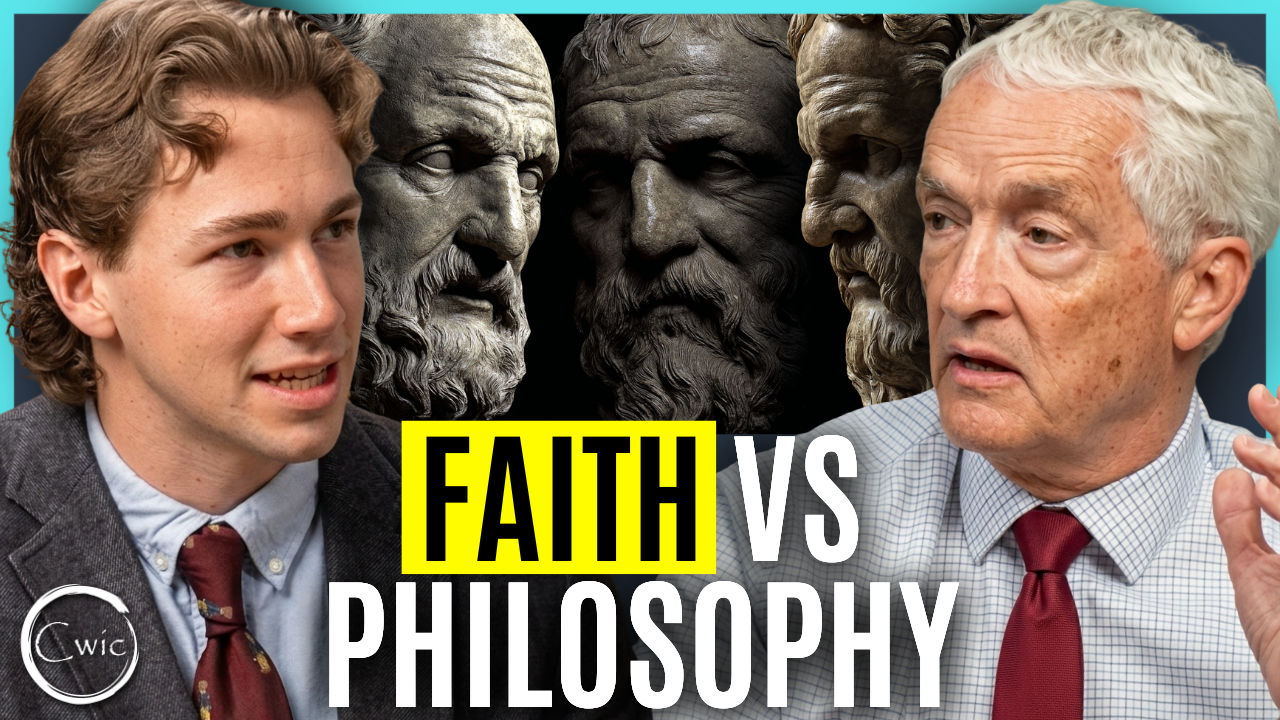
The “Abominable Creeds” Why Plato, Aristotle, and the Nicene Creed are more complicated than you think. Are Latter-day Saints Too Anti-Greek Philosophy? The Real Problem With the Nicene Creed Plato Didn’t Create Apostate Christianity Did Greek Philosophy Corrupt Christianity? The Problem Isn’t Plato — It’s What Came After
Raw Transcript
In this episode of the city in the soul, professor Ralph Hancock and Kai Schwmer switch positions and Kai interviews his
professor of political philosophy, Ralph Hancock. They discuss the Christian creeds and not just what's in them, but what are the political underpinnings
that created the creeds. This episode is brought to you by Fathom the Good.
Fathom the good is high school homeschooled curriculum helping teenagers to focus on the good
critical thinking a skill not taught very well in public schools is taught in these courses so that you can find the
good these courses are built off of the teachings of Ralph Hancock and are available at fathomthegood.com
you can go there and get a sample course I think you'll really like it here's Ralph and Kai The City and the Soul.
Welcome back everybody to The City and the Soul. My name is Kai Schwmer. I'm joined here by Professor Ralph Hancock,
professor of political philosophy at BYU.
Okay. Good. Thank you, Kai. Good to be with you.
Yeah. Today we'll be talking about um quite quite a contentious subject across uh the religious space and certainly in
the intersection with Latter-day Saints and that is the abominable creeds that that we hear so much about. Um but maybe
a closer look that we'll be taking as well at at some of the Latter-day Saint discourse regarding the creeds, regarding their origin, the philosophy
that may have inspired them. Uh certainly in some cases that seems very apparent but also the way that Latter-day Saints might not be doing the
philosophers that are often given that you know guilt had that guilt projected onto them uh you know truly that what
what they deserve. Um we we could be understanding them as as thinkers from from whom we could benefit or perhaps
see greater overlap. But it is maybe this rhetorical framing of the abomination of the creeds, the abomination of uh certain philosophies
of man that cause us to sherk from the very mention uh which in turn then reduces our ability to to gather what
light and truth might exist uh in the thinking of of those very prominent people such as Plato, Aristotle, uh Socrates and others. But to kind of, you
know, start this up, professor, this is obviously a subject that that is maybe touted as the biggest
difference. certainly nowadays between Latter-day Saints and the rest of our Christian brothers and sisters. Um to
the point where now I think rhetorically even the way that we approach these conversations is by drawing a distinction not between Latter-day Saints and Christians but Latter-day
Saints and what we call creedle Christians, those who adhere to the creeds. Um of course the one often cited
the creed of Nika, the Nyian creed. Um I recently actually in a class at BYU was um brought to read over the language of
the Nyine creed for the first time and the professor did a fantastic job showing that truly it is not that we
have a staunch disagreement with every single verse or every single line rather of the creeds but rather that there are
maybe key philosophical differences only found in certain parts. And with the nyine creed really the disagreement
boils down to one line which concerns the metaphysical you know existence of God the father and Christ the the cosubstantiality
but how do you see this where do you think that latter day saint discourse on the issue of of creeds and of kind of credle Christianity where do you think
that uh we've maybe gone ary or where do you think we we ought to be pinning our criticism right well the the LDS confrontation
with uh creedle Christianity is inevitable and on the whole I think it's
healthy. I mean, I have uh I'm sort of catching up to this late, no doubt, but the uh the eusion of discussion
uh between Latter-day Saints and uh other Christians online is is
extremely interesting and a lot of it is conducted uh civily and with uh serious
uh thinking. So it's inevitable that Latter-day Saints confront this the question of the creeds because
the idea of the restoration is inseparable from from the idea of an apostasy. Something must have gone
wrong. U this something certainly has to do with the uh with the founding creeds.
You mentioned the Nyan, the Aanasian.
What you say is true. the the creeds become um more uh hardened in their sort
of metaphysical insistence as they develop. I would say if you go back behind the Nyian creeds to the
apostolic creed and I'm not an expert on early Christianity or on the chronology, but the the apostolic creed is
beautifully generic. I would say there's hardly a word disagreeable.
Yeah. Hardly hardly a word in it Latter- Day Saints need to disagree with. Uh so we shouldn't uh exaggerate
uh our differences with credle Christians and we should uh at least do them the favor of trying to walk in
their shoes uh you know a few hundred yards if we can't make a mile of it uh and to understand why they believe
these things. So I might be accused of being a um a phoatholic. Lots of my cath lots of my
philosophical friends are Catholic and so uh I know a little bit I have some sympathy for their trinitarian
understanding of Christianity uh from the inside. I know to us it's uh it's easy to to dismiss as uh
incomprehensible nonsense and I'm by no means going to recommend uh a creedle version of Christianity.
Latter-day Saints need to explain themselves with reference to and over against uh uh credle Christianity. But
we ought to. I mean, I've been accustomed for all my adult life uh to being considered uh a non-Christian or at best a heretic by other Christians.
And uh you know other Christians will have to get used to the fact that we uh regard key elements of the creeds as as
apostate as u as a an oblivion a forgetting of the the plain and precious uh truths.
What does this have to do with with helenism which means Greek philosophy?
Well, clearly there's no question that uh the creeds are
um unthinkable without the conceptual apparatus of Greek philosophy or more particularly uh of neoplatanism.
And we don't have time here to sort of develop a history or doctrinal summary of neoplatanism and I'm not the expert
to do that for you in any case. But uh neoplatanism was a kind of combination
of Plato and Aristotle uh in a way that tried to be systematic and all-encompassing and eventually was as much a theology as a uh philosophy.
Mhm. And uh uh Plutinus is a key figure in this development after Plato and Aristotle and as a key
transmission point uh to uh the church fathers and the uh Christian creed. So
there's no doubt that early Christianity the articulation of credle Christianity
uh sort of in the you know the founding um era uh the the settlement of the
Christian creeds is unthinkable without uh Greek philosophy
but that doesn't mean that we can or should dismiss uh all of Greek philosophy indeed uh you know if it's
certainly true that uh a believer in the restoration
might complain of the u Greek elements that adulterated an an earlier
understanding of Christianity but I would also say on behalf of the ancient philosophers they might complain of the Christian
adulteration of of their philosophies platonic like Aristotilian, even Plutinuses, but but
these are not identical. You know, they have certain things uh in common. But the the great system of neoplatanism
that the church fathers built upon is uh impressive uh beautiful in some respects but it's certainly not the original
teaching of either Plato or Aristotle which was frankly more open-ended more
dialectical and less systematic uh and dogmatic and so I would say that u it's
good to free Christianity from neoplatanism. It's also good to free Plato and Aristotle from Neoplatanism and Christianity.
Yeah, certainly. I I think in this this effort people have made to to unite them um kind of intrinsically or or or by
necessity. I think you reduce the ability to find what is is good in these in these philosophies to look at, you know, the virtue ethics of of Aristotle
and see in them an opportunity uh to to track perhaps light and truth being given even to some very ancient
thinkers. And I like what you said. This is what what I was gravitating to as well. Perhaps the problem with the creeds, one of the largest ones is not so much the exact words written in each.
Although true the Aanian creed this is where you get into some of the more overt metaphysical um difference between you know the creedle Christians and the
church mention in the Protestant creeds in the Westminster confession this becomes still more hardened and alien to
common sense and the simplicity of the gospel yes God being without body parts or passions you know the development I think you're correct it expands over
time this very important metaphysical and and philosophical distinction um But I I think one of the larger points of
disagreement rather than, you know, throwing out the Nyen creed as just, you know, some creed that we know of that we can say is abominable despite truly not
disagreeing with the majority of its contents the same way we wouldn't with the majority of the the apostolic creed, right? Um what I think is more important
is to discuss the fact that a creed exists. It is maybe that idea that we are disagreeing with. The idea that there is a dogma adhered to in such a
way that limits or attempts to put this very clear boundary around um the identity of God in a way that at times I
think traps him and our understanding of God in a box. And I think that this is um something that maybe those creedle
Christians will run into. Although to their you know to steelman their argument when we look at the Catholic Church and um the understanding of
transubstantiation which is basically the way of understanding what occurs to create the
real presence in the Eucharist. What is the the metaphysical explanation for it?
And this gets into you know the accident of uh certain traits versus you know necessary ones. This is all very
convoluted but but diving into the important part I think what happens is um because they have been so intrinsically linked the
philosophy that the you know the helenic philosophy helenic right yes yes helenic which is different from helenism
well no helenic helenism helenistic still u refers more specifically to a
the later stage of Greek philosophy and stoicism epicuranism Yes.
And neoplatanism. So helenic is a more fundamental and and broader term I suppose. Mhm. But but I I think that the
the problem then is even shared by you know some of our our Catholic brothers in their attempt to tie these things so intrinsically because although they do
not include arisatilian metaphysics as part of um by necessity as part of you know their canon certainly there is a
significant reliance on them for certain explanations and this this for us as Latter-day Saints ties the two together
at the hip in a way that stops us from approaching Aristotle perhaps and for them it perhaps ties them at the hip with
Aristotle in a way that stops them from exploring explanations outside of that philosophical way of thinking and it really doesn't help them
understand Aristotle as he would have understood himself uh or or Plato for that matter. I mean
the case of transubstantiation is a is a very interesting one. I mean for latter latter- day saints are understandably
allergic to it. It seems like a weird mystery. I'm not incapable of sympathizing with what Catholics are trying to do
in uh the doctrine of the real presence and they're trying to say it's not merely symbolic and maybe I think
Latter- Day Saints can sympathize with a range of uh dispositions on this question because for us the sacrament is
real in some sense that goes far beyond mere symbolism if I may put it that way and yet we wouldn't reach out for a metaphysical vocabul vabulary to explain
it in terms of transubstantiation. So that's actually an excellent example of the problem of trying to uh systematize
and trying to find a final authoritative systematic philosophical theological framing for every truth.
Maybe uh it's dangerous to believe that there is ever a last word, a a final tying up with a bow of of a doctrine.
Mhm.
Um and uh maybe we should be suspicious of this instinct because this instinct for
philosophical or theological system, it really has a social and institutional dimension as well as a a philosophical
theological dimension. What it means is the rule of priestly theologians. I suppose
you could say that the problem of uh creedle theology is bound up uh with the
problem of priestcraft as uh as defined uh in the Book of Mormon. So institutionally a takeaway would be uh
it's it's a great blessing to Latter-day Saints u not to have an official cast of
theologians who decide the truth. It's not really a bad thing to have very like among our highest authorities to have
very intelligent lawyers and businessmen and phil and theological amateurs running the show and like responding to
scripture without the burden of uh theological system. So, so you're right the
the the philosophical question and the institutional question are closely linked. Do do we need a closed doctrine
and do we need an official cast of closers of doctrines?
Uh for example, I mean we uh we both we all have great appreciation for so much good work teaching and scholarship in the BYU faculty of religion.
But do we want them to rule? Do we want them to reside in Salt Lake and have final final say? Because that's what we're talking about really. have final
say over uh doctrine. That that's a completely different thing.
Yeah. And and one that I think that certainly Latter- Day Saints, we'd be very hesitant. Um and and you know that that does open up um a different
experience of of God to us which is one that I think obviously the goal is not
to create a God that is equally slippery or undefinable as the God of you know the some of these you know confessions
of faith that is immaterial without body parts or passions but a God that is um personally related to us in a way that
comes to us regardless of um what some scholar has said, you know, how how sad would it be and this is may maybe the
the benefit of of when we read scriptures personally, we can look at them and we can say, you know, this scripture to me, like I'm reading this
and I can pull this lesson from it. But to have a Bible scholar come up next to you and say, well, well, this this new profound lesson that you've learned about, you know, how you could be a
disciple of Jesus Christ, well, it's actually not correct if we analyze the text in this specific way. Um and so I think that uh if if we are able to
understand that maybe it is not man's place or if we approach it with the framework that it is not man's place to you know put a muzzle on God to put a a
specific limit on him. I I think it actually allows us to see more of his hand in our lives. I certainly agree with that and I I think you've put your
finger on the the nub of the problem or what's what's at stake uh in our discussions of the status of Helenism or
Greek philosophy uh in in the creeds uh and in Christianity. But I would I would only
18 minutescaution now and here's what makes me in a way a vulnerable to the accusation of being a
phohelenist phohh helh helenic if not phoatholic uh which I definitely am up to a certain
point in a certain way but I think you've made exactly the right move by deflecting from um sort of a final
institutionalized um theological ical power and doctrinal closing
to uh a personal uh relationship.
But even as I put it that way, you can see that one can go too far in the other direction. Certainly there's no and this is this is what I
worry about in this I think has become all too common in a latter-day saint response to a credle apostasy an
overreaction against the Greeks and against philosophy in favor of um
the person uh relationship relationship with Christ uh of course a relationship with Christ is at the heart of Christianity. Mhm.
But can we really completely sever a relationship with Christ from his his teachings, his doctrine
and uh you know a worldview Mhm.
in which our practical action is situated really in a way I'm asking what is a person?
Mhm. I'm asking the question without u in any way uh suggesting that we need a
final dogmatic uh you know theologically specified and enforced answer but we
need to be uh attentive to the question of uh the character of a person and the
character of God as a person and uh so elements of a of a worldview that are
necessarily associated with a personal relationship.
So this is this is precisely the move that I think is u sometimes made too hastily or unilaterally in a reaction
against Greek philosophy or philosophy in general. I really we by
reacting against Greek philosophy we we run the risk of uh falling into the lap of of other philosophies of men
which are finally less less friendly and less wholesome. Yes.
And some of them some of them might go under the titles of uh personalism or the philosophy of the other the ethic of
the abstract other. These these reactions against uh Helenism
can risk falling into the lap of uh a modern understandings of humanity as uh
well in which like freedom and equality become detached from virtue and any yeah reference to a higher good.
I I think this is where you know the Book of Mormon describes us becoming a law unto ourselves, right? It is it is this ultimate emancipation. You know, it
is a lot to tell an individual that they can be exalted. And in the way that the Church of Jesus Christ of Latter-day
Saints describes this opportunity or rather the potential of man to be an exalted man, I I think you're correct.
This is um not to to quote, you know, the Spider-Man quote, "With great power comes great responsibility." I didn't know that. Okay.
Well, I'm sure it my education is lacking. I'm sure it's pre-existed Spider-Man, but that's my my cultural reference point. I do think
though um yeah, that that is where that balance is struck. When you tell man that he has the potential to become so much greater than who he is, you know,
it is very easy for a Satan to arise in the premortal life. It is this this attempt to kind of usurp the power to begin privately interpreting scripture
in a way that is most convenient, in a way that fits some of those philosophies of man. And it is very dangerous. Um but but looking maybe then not so much at at
the things that we must be wary of which are absolutely true and important. I'd like to as well look at this positively.
you know, if if we can say and and attempt to divorce a little bit um or or
sever there at the hip the kind of Hellenism and and Greek philosophy um of ancient Greece of Plato and Aristotle
from some of the let's say the more objectionable parts of of modern creeds.
Where do you think Latter- Day Saints can look at those ancient philosophers and their ideas and find some uh find
some overlap? Well, look, the the key is to to be aware of the actual texts and
not not everyone is going to be lucky enough to spend their lives studying political philosophy, the ancient Greeks
in particular. I'm not I'm not an ancient Greek specialist, but I've been in I've been teaching the history of of political philosophy for decades, and so
I've spent much time with translations of the texts of Plato and Aristotle. But start with where they start and follow
their arguments and see where they begin. They don't begin with anything like the creeds.
They don't even begin with some u metaphysical system of God as a rational
impersonal necessity as this purely uh intellectualist and immaterial God. Now
it's true that those ideas emerge or are suggested hypothesized in Plato and
Aristotle but we don't know what they mean unless we follow the dialogue the dialectic
the dialectic and I would Plato is famous for his dialogues but I would say Aristotle also proceeds dialectic he
considers one idea against another he follows follows out the logic of ide of an idea to see where it leads needs but
he's always testing against our real experience especially our moral experience. So for example uh in the
case of uh Plato really the first Platonic theology emerges in a practical context
a moral political context in uh Plato's republic. Yes, many of our viewers will be familiar
with this dialogue in which uh an imaginary city, some call it a utopia, a city of speech is built. Uh that's all
true, but why is it built? We need to pay attention to in a way the the question is more important than the
eventual hypothetical answer of a city of speech ruled by a philosopher king.
The question is, is virtue intrinsically good? Mhm.
25 minutesWould it be is it rational to do the right thing? Mhm.
And u Glalcon who is one of Socrates interlocators in uh the Republic asks early in book
two. He basically begs Socrates to refute his very logical idea. It's in a
way a protomachavelian idea that there is no virtue. It's just u a shame, a
social construction that uh weaker minds have to follow because they are
socialized uh morally. But we strong intelligent people realize that uh it's
all a way of distracting us from the pursuit of our own good which is the only rational course. So by making an
argument along these lines with a a vivid example involving the ring of a Gajis powerful ring to make you
invisible so you you can do anything you want. By using that example uh Glalcon
is basically begging Socrates to refute him and to prove that uh there's some truth in our orientation to something
higher. our belief that that that uh doing the right thing is better than immoralism
and and that's the genesis of the whole of the republic which despite my temptation I will not try to uh retrace
the whole argument but my point is uh and I could show the same to be true in another way for Aristotle the the genesis of the argument and really the
whole point of the metaphysical superstructure that in a way prepares s the abstractions of the
creeds. The whole point is the defense of the intrinsic goodness of virtue.
Yeah. But I will what what I mean by this won't be clear un unless I least at least mention
27 minutesuh the idea of the good which Socrates introduces later in book five to explain
the the mindset the the bearing the orientation of the philosopher king and um the idea of the good is likened to
the sun and without going into a lot of deta detail the whole point of the idea of the good is that uh we can have
confidence in living in a an orderly universe, a cosmos that makes uh human existence meaningful.
Mhm.
The idea of the good is is posited as a a loadar uh for our moral orientation. Look, for
me at bottom the I what Plato calls the idea of the good and the whole um idea
of uh a divinity and an orderly cosmos that Aristotle will develop in his own way. At bottom these come down to
nothing more than um what Alma affirms in uh remind me what chapter it is. All things denote there is a God.
Yes. Yeah. Yeah. Yeah.
And his dialogue with Corahor. That's right. All things to note that there that's already a germ of natural theology of confidence in
even prior to revelation which we need. But even prior to it, we can have confidence that that
the world we live in is not a materialist cosmos, a materialist chaos, I should say, of matter in motion, which
implies that materialism and hedenism are the only rational choices. No. Uh order is real.
Uh morality is good. uh uh as Elma will go on to argue with his allegory of
faith you know that uh it's almost in the same context isn't it that these this is discernible the sweetness of the
fruit of the tree of life is u is something the gospel reveals but it's
already there the the germ of the goodness is already there in our natural apprehension
of order okay now much rather a long development. But what I'm saying is if you throw out Helenism, you risk
throwing out the baby with the bathwater. The bathwater are these elaborate dogmatic uh hyper metaphysical creeds. Mhm.
The baby that we don't want to throw out is the original inspiration of a belief in morality and a confidence in a
meaningful cosmos and a meaningful moral order that stems from that. And that that to me is
the the essence of the the classical move in in philosophy.
30 minutesYeah. Certainly. And and what's interesting is although they are made out to be so dogmatic, I think these these helenic philosophers are anything
but. You know, the dialectic this this attempt to um really truly discover kind of this this overarching or eternal
truth. It is something that they're investigating and and a first reader of Plato um will likely find himself frustrated at the fact that Plato
doesn't seem to be making a lot of prescriptions outright. Um in fact, Plato will even go and and dismantle his own arguments. He'll exercise, you know,
I'll do this intellectual exercise with with Glacon Socrates will and I think all of this is very productive and from Latter Day from a Latter-day Saint
perspective to me it is so easy to see that there are like you said these seeds it it's the baby right the baby of the
exploration of of good of this order in the cosmos and in the universe that I think prepares souls absolutely for the
acceptance of um of further light and truth found in the gospel of Jesus Christ. And we even see the Apostle Paul
doing basically the same thing with um the the pagans of the time looking at, you know, this this monument or statue to the unknown god and saying, "Look,
this thing that you are referring to, this is Christ. This is the Lord. You you have had this idea already as a part
of your belief system. Let me show you exactly what you have been worshiping or aspiring to without ever knowing it." Yeah. Well, that's a very fertile helenic moment.
Yes. in the gospels or in the in the letters of Paul. That's in Acts, isn't it? But uh but look, the New Testament
is in Greek and it contains decidedly Greek elements. I mean, this is the
Catholics would make much more of this than I make of it. But you know they claim that the beginning of uh the whole theological
tradition uh that their authority represents begins already in the New Testament. But there's a grain of truth
32 minutesin this that Latter-day Saints can't ignore. I mean the Gospel of John begins in a very
broadly platonic way. In the beginning was the word and the word was God. the the logos refers to
I mean we we hear it now as the personal word of God but it also has to refer to the uh the logical structure the order
you you referred to law earlier Latter-day Saints are big on law and we should be yes
we shouldn't uh we cannot let our uh personalism in reacting against Henanism we cannot
let our personalism uh sort of submerge our attachment to the idea of a lawful
and orderly creation and for that matter a a plan of salvation which makes sense and has cognitive content.
Mhm. Absolutely. I I think that there there is so much wealth to to be found in this idea of God going and preparing
people over time. I I think it it truly does uh make a lot of sense and it is you know a dialectic. It is an interfaith dialectic almost um of a of a
series of you know apostasy, reformation, questioning and even there in in the moments of reformation we don't find something that is um
explicitly and um universally good. You know of course there are plenty of errors that occur as a consequence of the reformation. you know the idea of
Calvinism which is you know quite distinct from the LDS perspective that maximizes moral agency um it is it is a
part of a progression but is not in and of itself the end point.
Exactly. Well look I I see that in our conversation a kind of triad has emerged
which is very rich and let me comment on it briefly. the triad we've been talk we started out talking about u helenism or
Greek philosophy in relation to Christianity and a personal view of love
and personhood personal relationship as the center of the meaning of life we've contrasted that with Helenism but
the other player in this game is um modern rational secularism and
progressivism. Uh that's a whole other topic. You know how easy it would be to get me started on that.
But if you think about this triangulation, what I would like to suggest is that uh uh what we risk in oversisting on
personalism as against uh law and orderly cosmos or like cognitive contents to a religious worldview that
that order us in a plan of salvation. If we if all of our energy all of our theological energy is invested in
35 minutesdenying the helenic uh contents then we're going to fall right into the lap of the modern secular rationalism. Uh
philosophy does not go away for the problem of uh constituting a cognitive worldview is not uh does not evaporate
when we evoke words like uh personalism, relationship and the other.
Mhm. We are still and Aristotle was absolutely right about this. We are still rational beings. Not in the sense
of being metaphysicians. Yeah. Addicted to some uh like systematic idea of divine substance. No, we are rational
beings in that we wake up in the morning and we decide what to do based upon some concept of purpose and priorities and
some foresight of the future. And the gospel must address us as practical, rational beings. and moral agents. And
that's not uh purely helenic, but it's not purely antihelenic either. So I I just uh I warn against u
our being too uh onedimensional and reactive against
Helenism in such a way that we fall into the lap. our our personalism is uh informed by
a an essentially progressive secular humanitarian content which as you know is a big is a big theme of uh of my book
that we discussed uh in another episode love and virtue in a secular age.
Certainly. And I I think that if if we you know react too negatively um we would very soon need to sacrifice that 13th article of faith that says that we
believe in uh we believe in what what is it? Honest, true, chase, benevolent, virtuous and in doing good to all men.
Anything anything that is virtuous, lovely, of good report or praiseworthy or praise like praised by good people.
That's that's an arisetilian formulation. the whole the whole uh virtue ethic the or more generally the emphasis
upon character which could not be further from uh the the Lutheran emphasis by the way the whole emphasis
upon character is uh it it resonates at a certain level with an an aristoilian uh appreciation of intrinsic virtue.
Yeah. So don't no one think that I'm identifying the gospel with Aristotle but I in a way Aristotle articulates the
natural starting point uh which the gospel fulfills and explains and uh the
gospel adds the necessary moment of uh sacrifice redemption and and and an eternal plan of salvation.
Absolutely. Well, hey, I think we've we've covered a lot of ground here in the the intersection between Hellenism and uh perhaps the Latter-day Saint
tradition and where we could stand to benefit and and where we can understand as well um having progressed from while also now having the opportunity to
engage in in more nuance uh in our discussions with with other Christian brothers. So, Professor Hancock, thank you very much. Thank you, Kai.
The city and the soul.

"I Take This Every Day!"
Learn more about why I accepted Cardio Miracle as a sponsor and why I take it every day!
- Greg Matsen

Stay Connected With New Articles & All Things Cwic!

Cwic Audio Player
All of the Cwic Media podcast episodes on one page!
Recent Posts

