
Can You Be a Latter-day Saint and a Feminist? feat. Maddie Mather
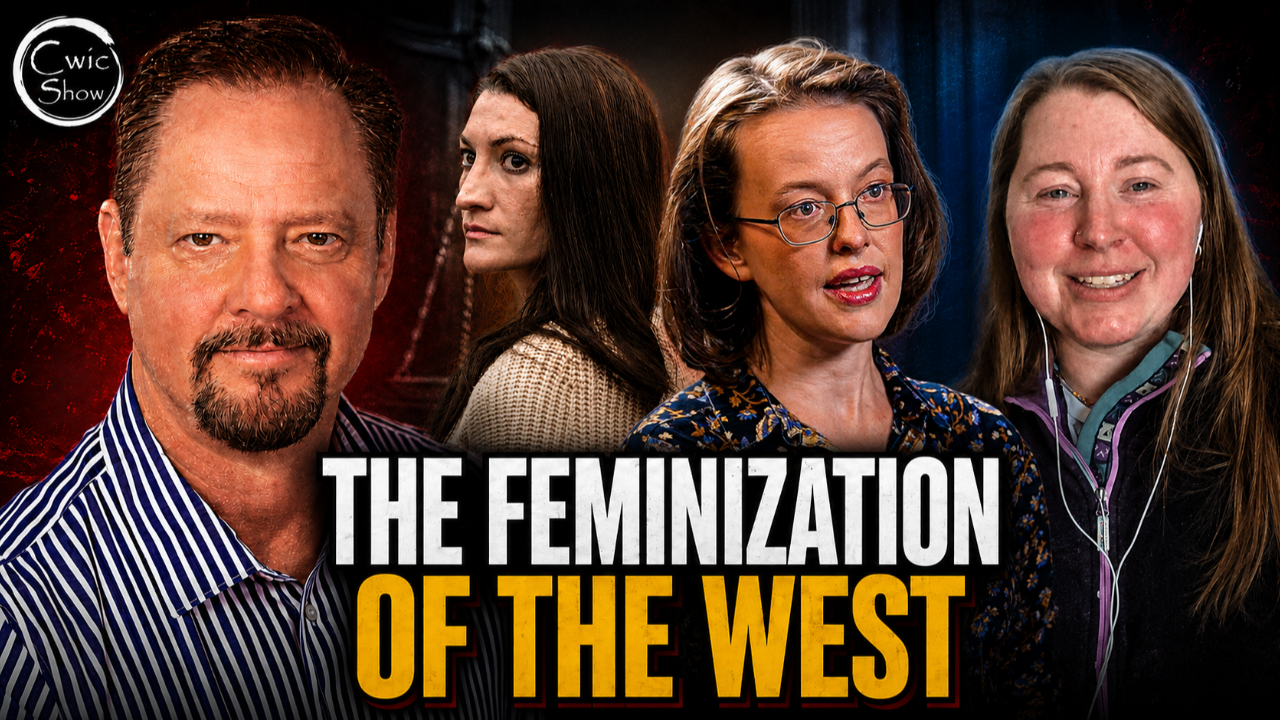
The Great Feminization reorganized every Western institution without a single debate Maddie Mathur on the Great Feminization, institutional capture, and what comes next There Are Two Feminisms and the Wrong One Won Relational feminism vs. freedom feminism, and why the difference explains everything The Feminism Mormon Women Forgot Relational feminism, the Mormon matriarchy, and Emma Smith as the model Can You Be a Latter-day Saint and a Feminist? A former "red pilled" BYU-I student answers the question most women are afraid to ask Why Men Can't Read the New Corporate Ladder Two hierarchies, two value systems, and why the rules quietly changed on men Lindsay Clancy Is Freedom Feminism Embodied When your own children become the obstacle to your freedom Rome Fell This Way Too Infants in the dump heaps, easy divorce, and the pattern we are repeating
Raw Transcript:
Every revolution has a name and a face. This one has neither. No vote was taken.
No debate was held. And yet, in the span of one lifetime, it rewrote the rules inside your workplace, your courtroom,
your children's school, and increasingly in your church. Helen Andrews calls it the great feminization. My guest today,
Maddie Mather, says, "Once you understand it, the last 10 years of your life will finally make sense." This episode is brought to you by Go and Do Travel and the Three Continents Tour.
This is one of my very favorites, just packed with different sites. We start in Istanbul, one of my very favorite cities. We go down to Ephesus down on
the coast where Paul taught and where John lived. We then go to the Greek isles in Potmos and Santorini, Cree
Roads. Go to Athens and Corinth. See the amazing sites there. And then we go down to Egypt where you see the great pyramid
and the Grand Egyptian museum and Sakara and Memphis. And if you choose, you go down to Luxor and you'll see the temple
of Luxor and the temple of Carne, the largest temple in all of Egypt, as well as the Valley of the Kings and the Temple of Queen Hutchepsuit. It's an
amazing trip where you're traveling through time. One of my very favorites.
There's one coming up this October 2026 on the 20th to the 31st with Bruce Porter. And then next year, March 16th
to 27th, I'll be bringing along Jacob Hansen. And then on March 30th to April 10th, I'll be bringing Jonah Barnes. Go to quickdia.com, cwycia.com.
Go to the top to trips and events and scroll down to three continents tour. Incredible trip. Here we go with Maddie.
So Tyler Cohen listed seven great revolutions in his lifetime. He had the moonlanding, the fall of communism, the internet. He also brought up another one
that is very interesting. Right. Right in the middle of his list is a revolution that reorganized every institution of American and probably the
Western Hemisphere without a single vote in the process, without a debate, and really without anyone that you could
probably that most of the West could probably even name some of the leaders that led this revolution. Why is the
great feminization the only revolution that we really don't talk about?
I think it has to do with just how subtle it can be. Um I think it has to do with how men and women also interact
diff differently with the world. Um and we can get into that kind of later, but
um feminism was a social movement. It was a way for women to um kind of
involve themselves in institutions rather than just on the social side. So
before the 1960s and the 1970s, um there were two forms of feminism. There was
relational or care-based feminism and then there was freedom feminism. And so care-based feminism, it recognized biological differences in men and women.
um it had a different value at the top of the hierarchy. The top of the hierarchy was human flourishing. And so
the relational feminist recognized that her life was a web of relationships. And
so if women were going to be active participants in society, then society
also had to support a woman in her role in establishing and nurturing those relationships.
and and then freedom feminism at the same time like the Mary Wilson crafts kind of that um school of thought came
in and it radicalized over time and that prioritized sameness with men. It
prioritized rights over responsibility and it was freedom at all costs. And so it's freedom based feminism. And so Mary Harrington and Luis Perry talk about
this a lot where there were these two conflicting feminisms that were kind of fighting for the intellectualism of
women and ultimately freedom based feminism um won out. And so this fight was kind of happening between women and
um ultimately the freedom based feminists won out. And with that um it changed from being kind of a social
movement through you know uh women's movements and organizations outside the government to institutionalized.
So you kind of see laws being passed um amendments voting rights and slowly over time freedom based feminism took over
5 minutesand then they advocated for institutional power. So I think that's why it kind of crept up on us and then we are starting to see the effects which
Helen Andrews talks about is that it took time for that to come into effect and to change institutions in the west.
So so when we say freedom Yeah. you talked about relational feminism.
All right. So you you said human flourishing and and relationships were were the drive for all of this and it allowed them to get outside from a domestic
environment alone, right? and and and broaden that relationship and experience more as society got smaller, so to speak, and closer. But what about freedom feminism?
What is the ultimate goal? Is what it it's what is driving that? Because I don't think that it's just freedom that
ends up driving that. It seems to me like it's actually power.
That's a great question because I think for freedom based feminists, they did see that men had all the institutional
power and that women were kept to kind of the domesticity and the social dynamics of humanity. Um because what
freedom feminism and relational feminists point out is that there's not just an institutional economy. Um there's also like a relationship kind of
social economy. So like um beforehand it would be like the factories, the workers
rights and and all of those things. Um but what um feminism pointed out was that women were in charge of like
filling those factories with people and how we treat people and how we care for people actually matters because that in
turn increases productivity and and it ties into how there's an importance in human relationships and human
flourishing and the success of your civilization. And women throughout history have always kind of been in charge of that. we've been in charge of,
you know, caring for the vulnerable, especially children. And so, um, yeah, I think, yeah, I kind of went off on a a little bit of a tangent there.
Well, that makes sense. But, so, but along with this, right, so you get this institutional power.
Yeah. that is I mean I don't know if you saw the news just a couple days ago Iceland has now every single major position in
the government including government-owned universities uh mayors uh of the major cities the
prime minister and the president every single senior position in Iceland is a woman at this point so so that's where this is
met to but they're called gender neutral they're called gender the be the best example of a genderneutral
uh um um country is Iceland is what they Yeah. Yeah.
Yeah. So, so what is again I I I don't here here's usually how I see these things that are kind of
you know feminism fits under kind of the social justice umbrella and it's it's very marxian in its approach
and it it's never the the the movement for liberty
or or freedom as you're calling it freedom freedom for feminization of freedom it's never really about freedom is what I see. It's and then it's not
even about equality or or as we might call it in equity. Yeah.
Because it it's I can look at schools and see that there are that how much better young women, girls are doing than
than men are. You can see, you know, you don't see anybody protesting and the K to2 areas about women doing so much
better than men because they want equity. They want equality. that doesn't happen or going into the universities or men that are, you know, having such a
higher rate of suicide or anything like that. It's not about equity. And so I I think there is a freedom in terms of
liberation, but but liberation from what because Go ahead.
Yeah. I think it's a liberation from men because historically men have been the institutions and so when feminism came
along and said hey look women are vulnerable which is true there's gender differences and women have a unique vulnerability especially when it comes
to the dynamics between men and women men are stronger they have that that physical presence above women and then
as well you're especially vulnerable as a woman as you're raising kids and you're pregnant and you're having children and So I feel like feminism
really decided that men embodied institutional power. And so that's why they seek to be the same as men. That's why they seek
to, you know, gain that power in institutions is because ultimately they believe that freedom comes from taking
over those institutions. And what Helen Andrews points out is that this isn't natural. This is induced. As in the
10 minutesgovernment puts their thumb on the scale. There's DEI stuff. There's certain, you know, quotas that corporations, for instance, have to
meet. Universities have to have a certain number of professors. Um, women in STEM, for instance. And so it's it's
artificial is her argument. And her solution actually is that we just kind of let people be and use their agency
and and stop trying to force this this feminine moral framework that sameness
and institutional power equals freedom and that freedom because I think it goes well beyond the policies and we're seeing a lot of reversal in these policies right now with DEI.
Yeah.
And and however it's it's immersed in the culture, right? It's immersed in the culture. For
example, if you're a manager or a CEO even, but you know, you're you're in a position of of management
and you have a choice between a man and a woman and all things being equal, you're probably honestly you're probably going to pick the woman because it's
going to look better on you. It's going to reflect better on you. That is part of our culture now. And and so you've got men and women now where we have
moved women into careerism and out of the home. And now you've got men and women competing. So men are now
competing with all of the women. It's it's interesting. You have I I see this happen now at my age where you have a
lot of younger women that are newly married or they've been married a while.
got small kids and they're they're very progressive
and their husbands are out trying to get these jobs and as they go out they're getting
beaten out oftentimes by women for that position and I started to think to myself, okay, well, do you still feel
the same way about pushing careerism because your husband is going to have a harder and harder time
getting a good job because he's not just competing against other men now. He's competing against all the women. That's a very different dynamic than what we had going back to the 60s and the 70s.
Right. So, it's I I I think that it's the entire liberation to me is I think
you're right is of men, but it's also from children. It's also from motherhood, I think. And so and and the the liberation destiny is institutional power and careerism.
And that's where you get your your merritocracy instead of nurturing kids or bringing up kids
and and it's and beyond that. What about liberation from other consequences?
Look look at the Have you been following the Lindseay Clansancy trial? Greg, what a freaking mess. Oh my gosh.
So women are broken.
Yeah. What what again? I mean, you've got women there that are lining up outside with their mercy. Fine. Um to
me, very misplaced, untethered empathy, but it's it's like there's no consequence. There's no justice. There's
no consequences. So you're being liberated from your freedom.
feminization is going well beyond even just capturing the institutions and being able to do whatever you want and
lead your own self-directed life without any ball and chain attached to you so to speak.
Yeah, absolutely. And I think Lindsay Clancy kind of has put like a magnifying glass on the logical conclusions of freedom based feminism because a
relational feminist Lindsey Clancy is not the logical conclusion of a of a relationalbased feminist. Um because a
relational-based feminist would say, "Okay, I have responsibilities and there is freedom in the relationships and nourishing the relationships in my
14 minuteslife." And so what responsibilities do I have to the people around me, to myself in order to ensure human flourishing?
And that's not Lindsy Clancy. Lindsy Clansancy is freedom based feminism embodied. It means that I can do
whatever I want. My freedom is at the top of the hierarchy. And that means any obstacle in front of me is oppression.
And children are perceived oppression because it stops the freedom feminists from making choices that validate her in
the moment. Her freedom is at the top of the hierarchy. And it doesn't matter the human cost above children, above anyone. Yeah.
Anyone, not just I think that's right. I I think that's exactly right. It's it's very concerning. So, so women move into
institutions, they move into the the the large corporations. There there's a there has always been in the past a type
of hierarchal structure, call it the patriarchy if you want, that's always existed among men. And they understand
the pecking order very quickly. Very, very quickly. I can I can go get 10 guys
and we've got a hike even or anything that we're going to put together, you know, very quickly who is leading, how
it works, who's the most competent, who's the most skilled in this position and boom, it sorts itself out really fast, right? So that's the way that
corporations have always run. That's the way the government has run usually in the past. Although, you know, maybe some issues with the politicians, but
what has changed now with women coming in and and I mean, there are now, this has happened a couple times before, but
economics have slided things. for example, the the the crash in 2008, uh COVID in 2020, but we are now back again
to a to what I think is a very natural progression of freedom based femininity or feminization. And that is there are
more women working for example in the US now than there are men.
Oh yeah. The the workforce is predominantly women. 55% predominantly women. So, what changes with all of this bringing
in women into the workplace, into a corporate environment, how does that pecking order change and why does it change?
Um, so for anyone who wants to do like further research, this is a huge topic.
I mean, I tried listening to so many podcasts to prepare for this interview and it's it's a field of study and it's called intraexual competition. And that
means that men compete differently when they're competing with other men as to women competing with other women and
they're competing for status. They're competing for resources and they're competing for reproductive success and
men and women. I think this is what freedom feminism did very well and it damaged kind of the discourse between
men and women is that men and women are intrinsically different. That's what makes us great. We are different
biologically. And something that's been so toxic, especially when I talk about it on my Instagram, is people can't get through their heads that men and women
are built differently and we have different dynamics both when men and women are together and when we're with
our genders. And so it's called um mas the masculine intraexual matrix and the
feminine intraexual matrix. And so when men and women are competing against their gender, they act very differently.
And so an institution that is predominantly male will act like males and stick to that male competition matrix.
And what is and what is that?
Of course. So it's competition and it's direct competition. Um it's hierarchy.
Men tend to separate themselves and say, "Hey dude, you're good at that. Okay, Rick is great at, you know, putting up
the tent. And okay, Marty, can you do the fire?" And men seem to be okay with being good at different things and then
working together as a team. They find their place in the hierarchy and then they compete with each other directly or they settle into their place in the
hierarchy. Um it's risk-taking. It's impersonal rules which I think is very important especially when it comes to
the LDS application. Men are really good at saying these are the rules. I get that you have a backstory, but we have
to stick to the rules because the rules matter. Okay? And then emphasis on achievement. So men are great at, you
know, competing and they want the recognition. They want to be seen as the best. I have a seven-year-old who plays soccer and it's ingrained in these boys.
I mean, when they get a goal, they're celebrating like LeBron James and Messi.
They know that they're the best. They want to be the best on their team. They ask each other, "Oh, how many goals do you have? How many goals do you have?"
Whereas, you know, women, they compete differently. Um, I see studies and I coach volleyball.
Um, for what New Zealand's equivalent is kind of as varsity and girls, they tend to drop out of sports the older they
get. And it's because there's a huge social aspect to why women participate in sports. They want to do it because of their friends. They don't want to do it
because necessarily they want to be the best. There might be some, you know, girls on the team that want to be the best, but for the most part, they want to have fun playing the sport. It's
social. The girls are doing it. They want to be with their friends. Whereas, you know, the boys, they want to be the best and they want to dominate. They want to win the tournaments, you know.
And then the last is um tolerance for disagreement.
Men can tolerate other men who disagree with them and still get a task done. I think about my husband's friend group.
He's I know you don't like the gaming community, Greg. You've talked about the I don't like him. I just I don't like the I don't like if it becomes an addiction.
Absolutely agreed as a wife of a gamer.
Um, but he's had the same friend group for 10 years and they have disagreements all the time. But that guy is really
good at that one thing and Marvel Rivals and they get together, you know, couple nights a week and they have the common
task of being the best team on that server and and he's kept the same friends for I don't know 10 15 years and
it's it's so impressive. I love men and the relationships that they build with each other and I think it's it's something that men bring to the table
that I think at times maybe as women we might lack.
So that's the male kind of competition um matrix which is really different to women.
So what happens when you have more women working than men in the institutions and they have a completely different pecking
order or a different approach to everything from promotion to recognition to you know where am I in the company?
Uh what happens when you get this conflict?
Yeah. So to understand that you you then have to look at you know feminine in-group behavior. So for women, the matrix is different. They value empathy.
They value consensus, you know, social harmony. If people feel safe, so that kind of directly contradicts like
impersonal rules, risk-taking, and tolerance for disagreement. Those are in direct compet uh sorry, they're in direct contradiction with social
harmony, safety, and like relational consideration. How does what I say make other people feel in the situation,
right? um avoidance of direct confrontation. There's been studies at uh kindies, what's the American word,
preks, like toddler age, ages three to six. And um it it was done somewhere in
Europe and they they watched these kids and they recorded every time children were confrontational
and they had all these tally marks for the boys. You know, the boys pushed, the boys shoved, you know, the boys were competing with each other and so there
was that obvious direct confrontation and they there was none for the girls.
And so these, you know, psychologists, they went and they started talking to these girls and they said, "Hey, did you guys have any confrontations and it was
because it was happening on the playground behind the scenes. Oh, so and so doesn't want to be her friend because she's friends with her and oh, you know,
that's so and so's boyfriend. You know, they're besties and so she stopped talking to her." It was very socially driven. So, the confrontation is
happening, but it's more subtle and and it's more kind of behind the scenes. Whereas with men, it it's very direct.
It's like, okay, am I better than you or not? Like, let's just sus this out, you know? And so, that's why Yeah. It's it's it's interestingly
you're saying, even though it may end up being the opposite eventually, but in in some ways, it's less expressive.
Yes. Yes. Abs. It's less obvious, but it's less obvious. It's not manifest until it's manifest though.
That's right. That's exactly right. Absolutely.
Okay. So, you've got this conflict going into uh um corporations, let's say, giving giving an example of men men how they work and and women how they work.
And it's different and it's changed everything, right? Because you're you're dealing on both ends. But we would have
to say I think we have to say that we've become very feminized in in those institutions in those corporations etc.
I mean look at the HR growth. There's always an HR lady isn't there?
Yeah. There's always an HR lady and that did not used to be the case. Absolutely.
You know if there was someone in a you might have had one person in a 2000 employee company right that that was
dealing with that. Now you've got full offices and staff and a number of people working on HR. Now
what what is the solution to this? Where do you go from this? Because you have behavior that is innate for men and
innate for women. What what is the solution to it?
Well, I think we need to get rid of the false premise that men and women are the same. We have to stop that. It it's just
biology. And as a society, especially especially in the West, I think we've always just thought of ourselves as
science-based, right? Born out of great thinkers, you know, the Greeks, the Romans, and then you get, you know, the
Enlightenment, and and it really valued kind of the the objective truth. And I think we've abandoned that. we've
abandoned. If we're gonna tout around that we're pro-science, but yet ignore science for the sake of ideology, for
the sake of things like feminism, I think that that ignores our roots. And so number one, I think we need to rid
ourselves of this this feminist mysticism kind of of like men and women are the same and there's no differences
and you know there's some masculine women and some, you know, feminine men.
No, it's evolutionary biology. It it happens on a bell curve, but there is typical and atypical behavior for both
men and women. And I think we do need to get rid of that idea that that men and women women are the same. and they're not. And I think that would solve a lot
of this that it's I mean when you're a girl especially growing up in America, you're like infant baptized into
feminism. It's almost like you don't have a choice to consent on whether you're a feminist or not. And that's going to be a hard one, especially if we
want to intellectually engage women, especially with the gospel. I do think we have to give feminism its its due.
use that moral framework and and help women realize that they're whole without feminism. And so that's that's tough.
That's a tough, you know, it's so interesting because I I it's probably 20 years ago. I remember that 25 years ago maybe that
that even the word feminism was so low and accepted in all of culture among men and women. It's the I think it was the
lowest it had ever been, you know, 20 25 years ago. And then all of a sudden we've had this surge in the last 20 25
years that completely changed. I mean I I don't know exactly what happened. I don't know if the internet changed that
coming in in the early 2000s and I uh you know I I don't know what what changed that but it was definitely on
the down. It was going down for probably a decade uh before before this had you had this
resurgence and then now everybody's a feminist. Men are feminists, you know.
It's completely changed.
The Buzzfeed male feminists. Uh, don't get me started on that. That was that was high school Maddiey's uh feed on on
Facebook. Yeah. I think um it comes in waves, doesn't it? Feminism. It kind of goes in um you have the elites that push
it. And I think what Helen Andrews points out is that like the great feminization happened over time. So, it wasn't just like a flick of a switch.
And you know, western society was feminized. It it hit a tipping point around 20 2018. Um, a lot of people kind
of described this woke era era of like American discourse from like 2014. And I graduated high school in 2015 or sorry,
excuse me, 2013. And my whole adult life has been in this woke atmosphere. And I
went to university in 2016 and that was like peak Donald Trump coming down the escalator, everyone's a Nazi, you know,
if um my red pill moment was when someone at BYU Idaho um called me a turf, a transexclusionary radical feminist. Yeah.
Because I said that they shouldn't be including biological men in tampon commercials because only biological men have periods. And he called me that and
I thought, "Wait a second. Now you're redefining feminism for me as a woman.
And then on my feed, Jordan Peterson came up and Thomas Soul and I was redpilled by then. But I did have my
most of my whole adult life has been this woke era. And what Helen Andrews described was really just this this
moral anarchy that was based on how people were feeling. And when she described feminine intraexual behavior,
my whole life made sense. number one cuz I'm a woman and as women we receive the brunt of that because it's women competing with other women
and then on top of that the last 10 years of my life especially on the internet just made so much sense and so
I think feminism has really I feel like it really upticked when I graduated high school and I think that's because um
institutions became majority majority female and feminism is the moral framework that women, you know,
intellectualize and engage with their reality. And for instance, like in 2018,
these are just stats, but like 80% of therapists, we talk about therapy culture all the time in the LDS
apologetic sphere, right? Therapy is a real problem. 80% of women are therapists.
Yes. 55% of law graduates, 55% of excuse me, 55% of all medical professionals,
46% of managers, 56% of university lecturers. I mean, drag queen story
hour, 77% of K12 teachers are feminine, sorry, female, which it women have
always been teachers, but I think with the ideology creeping in, I think women were the conduits to getting that to
children. Um, well, also the administration and kid of 12, all female.
Absolutely. Absolutely. Um, 78% of publishing employees are female, which is wild and makes the New York Times
make sense. Um, 78% of HR departments are women. 60% of publishing executives
are women. Um, 58% of all college degree jobs are women. And what I found interesting was like mid to to senior
management in entertainment is 45% women. So like your movies, all these woke movies and and these weird kind of,
you know, Netflix, everyone's gay, trans, whatever, and you're just like, man, I just want to watch a movie, dude.
And that's because I feel like it's because it's been feminized.
And so I think feminism grew in popularity because women were bringing it into institutions.
Yeah. And they were demanding certain things. I I my most my most popular video on YouTube is speaking with a guy, a member of the church
that worked I I want to say with DreamWorks and in animation and it wasn't Pixar.
No, I think it was DreamWorks. And and he he was he went and talked to the producer about what they were doing because they were actually bringing up things that were from the Family
Proclamation in major movies. And it was obvious it was the family proclamation and not just
the idea of something. It was the family proclamation and they were just hammering it. And and so he's like, "Why are you doing this? What is going on?"
And the producer who was a woman, the director, the director who was a woman said said, "Because it's coming from the top
and and and and we have to insert this and there, you know, we can't do anything about this." And he ended up leaving the industry. But um you know it
is there that that control is there and that insertion even to little kids especially to little kids
is is required. You can't have a traditional it's very rare to have a traditional family. It's very rare to uh
uh you know put a man more as the hero in unless it's an action film. You know, even then you've got 60-year-old women
that are like this badass, you know, superhero that's taking every taking out these linebacker guys. You know, it's it's it's crazy.
It's it's it's a feminist hellscape, isn't it? I mean, we're just kind of all tired of it. And I think I mean Helen
Andrews her solution is kind of just you know take the thumb off the scale because even in like countries like Europe where they're really egalitarian
33 minutesum people tend to sort themselves out based on gender typical behavior and Jordan Peterson brings this up a lot
because that's his like that's his expertise is he's he's the big five personality differences between men and women. That's his jam. And there's this
famous um interview that he did where these people are asking him like, "Well, what's the harm of like having more women in this thing?" This this certain It was in Sweden.
Yes, Sweden. That's right. And he was like, "I don't it's it's not about if it's good or bad. It's that it's forced and you need to let people make their
choices based on their biological realities." And and I think that's what's happening right now is that there's just this feminization because
we've forced women into places that I don't even think, you know, they would naturally be anyways. And now they're bringing in their hierarchies and their
interexual behavior. And no civilization has ever done this before. You know, most civilizations
have been patriarchal. And so Helen Andrews also points out that this is unprecedented. We are in uncharted territory because any matriarchal
society has either never existed or it didn't survive to tell the tale. So Rome Yeah. Yeah. Absolutely.
It's interesting when you go back and you look at Rome and and and the downfall there. It it lines up exactly with the traditional
family. They they passed new laws. It used to be that the woman would come in and she would be kind of adopted into the man's family. Uh and then they
changed it and she never really left her family, her own family and divorce
uh divorce was facilitated over the decades. It became easier and easier to divorce someone.
All these you just watch follow these policies and these laws that were that were brought down from Caesar and the Senate and and it just changed everything. It just changed everything.
and and in fact even work even work was was was a part of that.
o let me ask you this question because I think this would be something that a lot of men would be interested in finding out.
So you've got all of these women coming into the corporate world. Men understand their own hierarchy and and the pe pe pe
pe pe pe pe pe pe pe pe pe pe pe pe pe pe pe pe pe pecking order and how that works and it's clear what you typically need to do. But so many are frustrated because it there there's this whole
other map of progress and and and and success and promotion and everything else that they don't understand.
Yeah. Because because it's matriarchal. Yep.
Right. So women are bringing in their own you can see this in like with nurses you know in healthcare a lot of
healthcare areas where where it's just it's just completely different world and
how do women set up that hierarchy? What is it that they're doing to create the pecking order to to or or even even
applied to men? So interexual also what what is the what is their hierarchy structure? How how how do they come in
and start building that and throw all the men off?
Well that's that's interesting because um Helen Andrews also points out that when women become dominate like dominating in a certain institution for
instance psychology right psychology is female it's incredibly female. Yes. And
um men have evacuated like there is no like 20% is nothing whereas you know you
would have sorry you would have gone back like I don't know 60 70 years ago and it would have been completely inverted 70% of you know therapists you
know 70 years ago would have been male and so um I'm not sure I don't understand the prem like I don't
understand what you're wanting me to explain with your question I think is what well I'm just saying how does the hierarchy formed. How do you form that
hierarchy as as women where where you've got let's say 52 55% of the employees
and managers in an institution. How are the women forming that? Men, like I said, it's it's almost purely competence and experience based.
Oh, yeah. Okay. I get what you're saying.
Right. With women, they've got a different way to judge things. They've got different values.
Yeah. So, you're asking me what are those values?
Yeah. Yeah. What are those values? And yeah. Okay.
How is it that they see uh how is it that they see the patriarchy, the men's values hierarchy, as Jordan
Peterson would call it? How how do they see that as as not at all what they want to play, the sandbox they want to play in?
I think it's because the value hierarchy is different for men and women, right?
Um, at the top of male hierarchy is is usually truth, right? They they just want to get to the truth. They'll get
there any other way that they can. Um, they're looking for a solution, right?
Whereas women, they they value community. They value empathy, making sure everyone feels like they belong.
Um, social cohesion. So, don't say anything that would offend the other women. Um, because it might make her feel like she doesn't belong. um there's
this sensitivity to interpersonal offense and and there's like this relational consideration, right? Okay, she's my friend, so because she's my
friend, I need to act in accordance to that relationship. And so I think there's a disconnect between men and women because we just value different
things. And and neither one is bad. And I don't think we should assign, you know, a certain emotion to either
hierarchy. I think they're appropriate based on the purpose of the institution
and the hierarchies of men might better suit the purpose of an institution rather than a woman's hierarchy. So I'll
just give an example. Do you know what the most feminized career path is in America? It's healthcare, isn't it?
It's veterinarian medicine. Okay. Okay. So most veterinarians are female.
Now, is there a woke uproar with like veterinarian medicine? No. No one's heard about veterinarian medicine
because the feminine hierarchy suits the needs of that institution. You know, the these animals need that nurturing. They
need to feel safe. They need, you know, health care and and I do feel like women are suited to be nurses, you know, um
doctors even, right, to an extent. And so female hierarchy is suited to things like veterinarian medicine. But when you
start to get to other institutions that require truth to be the hierarchy and require like competition, meritocracy,
impersonal rules, it's better suited for the for the male bell bell curve for their hierarchy. So if you take for
instance the first thing that comes to my mind is law, right? The law is about finding truth. It's about sentencing.
It's about justice. It's about, you know, handing out punitive consequences for injustices that you inflict on other
people. And, you know, with the feminization of law, one thing that comes to mind is immigration.
You have to have impersonal rules for immigration. That's how you establish who comes into your country, whether they're safe, whether they committed
crimes where they come from, do they have a college education, you know, do they have all these requirements so they
can better incorporate themselves into your into your civilization, into your society, you know, or the Lindsy
Clansancy case is a great example, right? She's guilty. We all know she's guilty. She strangled her kids with an
exercise band. The defense knows she's guilty.
Yes, absolutely. The I mean the the the the facts are there, but it's women on the internet that are saying, "Well, what's her backstory? What's the
context? Is the husband cheating? Is it this? Is it that?" And so women are assigning their hierarchy to Lindsay
Clancy when it needs to be the male hierarchy of truth and consequences.
Yeah. Yeah. It's it's it's I I will be honest. I think that the women's hierarchy is going to win out.
You reckon? It's safer. It's safer.
It it's safer. I think men are going to buckle. I I think that uh
the mo once you move also from a position of uh what would it be stretching yourself to
the point, you know, you know, where where you being a mother is hard. It's really hard. You're not getting a great feedback. You've got little kids that aren't telling you how great of a mother
42 minutesyou are. You It's a very difficult position to be in, right? And and when when the collective
of women and to some degree men are telling you your value is in the workplace,
I don't know how you turn that around. I I I I I think I think it's become so ingrained
in our culture now for women to feel value in the workplace over motherhood
that it's going to be very very difficult to to ever reverse that. I I don't I don't I don't This is me being
pessimistic, but I don't think it will ever reverse.
I don't either. And there's a lot. So Chris Williams does a podcast um and he
has interviewed a lot of evolutionary psychologists and evolutionary biologists and I forget her name. I'll
have to send it. Um but she talks about how women in the workplace, feminism, all these different movements are actually female interexual competition.
that these movements, these jobs are status symbols that signal to other women that they're the successful
uh like they're the successful woman in the reproductive pool. And so I don't know if that working theory would make it more sense make more sense, but it
definitely adds context and it definitely um helps us realize what battles we can win and what battles we can't. You
brought up Rome, which is interesting because at the end of well during Rome and kind of early Christianity,
um, Christian fathers are recorded seeing infants in dump heaps like in Rome.
These women just chose to leave their babies. That's what exposure came from was the Roman women would leave their babies outside or if the, you know,
husbands didn't want them, they would just leave them outside in the cold in the rubbish. And it was Christians who came and adopted those kids and ran
orphanages for these children. And the working theory is that Rome was feminized. And at the end of the Roman
Empire, they were they were it was abortion essentially. And so we've come to the climax in our civilization to
where it's been so feminized that now we're following the same pattern as Rome. We're nearing the end, I think, and it's been so feminized we we we
might not return. And it probably it's like putting toothpaste back in the the the tooth. I think it is. And it's here's kind of how I I see these things. You
you've got usually in a brand new burgeoning society
is almost always extremely masculine. Yes.
Right. Because it has to be. They are the ones that have to build everything.
They are the ones that are taking on all the risk to make things happen. the protection because there's no solid defense there. You know, all of these
things where you have a very unsafe environment. You're out on the frontier, so to speak. And so, it's very masculine. It's the wild wild west.
And and uh because of that, men have even more power.
And so, toxic what we would call toxic masculinity is able to flourish, right? because they they're they're
they're given so much more power because they are they are so highly valuable at
the time, right? Whereas as a society becomes safe, as it becomes privileged,
uh it becomes more and more decadent and because a feminization starts to take place and we get actually what what
the real term for sophistication is which is from Sophia which is wisdom but it's really high levels of education.
The only way you get high levels of education broadly is in a safe environment is in a in a civilization that's already built and running really
well. And so you keep going and the decadence and the feminization ends up on the back end of the the civilization
where it begins to fall. Right? So, you've got a at the very beginning you've got, you know, the pirates or the
the Wild Wild West just highly masculineized and and then at the end you've got it highly feminized and we
can't seem to keep it somewhere in the middle.
Yeah. No. And I think well the solution would be definitely the restoration of the gospel because I think we have the doctrine of how can we
how can we um I'm looking for a word maximize the differences between the sexes to make a completed whole. Right?
The gospel says that gender is eternal and it matters in your sanctification
and how you become like Christ. And so of course the solution is you know the doctrine of the restoration. Um but yeah
it that's interesting because Mormonism has followed that pattern right you have this masculine figure of a farm boy you
know he's out there in the fields he prays. He wants to seek truth at his hierarchy, right? He just wants to know what church to join. Through that, he
created this hierarchy through priesthood. He brings Brigham Young.
Brigham Young, I was going to say, is the like he is the the epitome of like masculine Mormon men, right? Where he is
a frontiersman. He gets to Utah and he carves a civilization in the Rocky
Mountains that values truth and he wants, you know, everyone to succeed and all these people come to this
civilization and it is Mormon men that build up this Mormon society and it's beautiful and it's amazing and we've had
so many privileges off the backs of Mormon men and women. Um but as we've
48 minutesstart to see and in my post um there is a feminization of of Mormon culture for sure right now.
Absolutely.
Absolutely. It is it is uh um everything moves in that direction.
Nothing moves in the other direction right now. It it's the culture is is definitely moving at that point. And and
it's not that it didn't need to back a ways ago. It did need to.
But you know, again, it's it's where do you take this? Because at this point, we're now moving to, you know, the dissolution of the family, the
dissolution of marriage, um becoming much we're not we're not separating ourselves as much from Babylon, so to speak.
Yeah. and the traditional family is starting to fall apart even within the church because we're adopting the same
mentality that that we get more broadly in in the west. Um, so where does feminism go from here?
Oh, that's a big question. That is a huge question. Um, I don't know. I really
don't know. I think the path ahead of women is open and it's up to us to carve it.
I would like in in Maddie's perfect world, I would like to see a return to
relational Christian-based feminism because feminism really did ca it came out of Christian thought that everyone's
a child of God and that everyone is equal in the sight of God. So therefore, men and women logically have to be
equal. And how do we as a Christian society ensure that men and women are equal, right? It it it started in that thought and it bastardized over time.
And so I would like to see maybe women either revamp that what what word am I trying to look for?
take back that label and make it into something wholesome. Mary Harrington and Louise Perry talk about reactionary
feminism. And so if any woman who feels like feminism is competing with the gospel might want to look into their
stuff, I think that it's a mistake to write off feminism. I really do. I think you lose a lot of women when you write it off completely.
So here's a question on that. So why why can't we come up with a new terminology on something and and and re and give it a new definition. Here's the problem
that I see because because I've gone back and I've researched feminism and and where it comes from. You know, basically it's coming from the French
and the Germans and and the whole idea of continental philosophy going back all the way even before Marx, but coming through Marx. I
mean, you go to Markx and Angles, it's like they are the biggest feminists on earth. Certainly the way we see feminism today
because the whole idea is take women out of the family, destroy the family because we need them as workers for the state.
Yeah.
And we don't want the men being the leaders. We need the state to be the leader and and it's a totally different hierarchal structure.
Yeah.
Right. And so that's where I have a hard time with what you're saying because I've had several people say that and I know a number of LDS influencer women
that say the same thing. I'm a feminist, Greg. That might surprise you. And it's like, what do you mean by that? Because
even going back into the 19th and 18th centuries, this was the the DNA is not a good seed.
Yeah. Yeah. Well, yeah, that's that's the question. um that a lot of women are asking themselves because
how do I want to frame this? I don't think you can get rid of feminism. I think that's a tall ask. And the reason
why I say that is because for millennia since its inception basically men have been given the space to intellectualize
and to engage with the world around them through institutions, through moral frameworks. I'm sure women did the same thing. Um, but I feel like we need to
give women the time to sort out their moral framework. Men have had a lot of time. I feel like, you know, women
haven't had institutionalized power as as long as men have. I feel like um we need to give women that space to be an
intellectual. And I think feminism is one way that a lot of women intellectualize the world around them.
And so to take that away, you have to put in something that's just as equal.
And so I know that women are looking for a gendered moral framework. And I I don't have a conclusion because to me,
the feminism that I grew up with is very radical.
And And when it's that radical, it's almost radical past redemption.
And so do we do we That's my That's what I Yeah. Yeah. And I've come to I've come to that conclusion multiple times.
But I think that you will lose a lot of women because feminism is especially like in the West, feminism is part of the female DNA now. And and it's how
women conceptualize the world. And so if you're going to tell them that it's not good enough, you need to give them something that gives them a moral framework.
But what Okay, I that I agree that with that completely and I want to get back to this. remember saying that you have to give them something that gives them a
moral framework because I want to come back to that. Yeah.
But again, the feminization is so in it's so feminization and and the uh um feminism
54 minutesis so ingrained in critical theory and and and Marxism that how do you ever change that?
Because it's always victim and oppressor.
It's always vict that that is the liberation. How do you ever get rid of that and something that's tied to that?
It's like right now, well, we can always make a better socialism. We could we can make socialism better.
Now, we're back to well, we can make communism better. Yeah.
You know, we just haven't done it right yet.
So, when do you say, well, feminism just hasn't worked really well.
What what are we going to make? How do we make this better? or or do we come back with something that is completely different with a new foral moral
framework that doesn't have the critical theory in it and and that doesn't have this liberation idea of I need to be
liberated from all of my consequences and from men and from family and etc
55 minutesbecause that all becomes the oppressor and I don't know how you ever take that out of of of a DNA that's already there.
I think that women feel like there's only one feminism.
And as I started researching feminism more and and the different branches of it, of course, each branch has its own
issues. A lot of like feminism, for instance, had a lot of eugenics in it.
And and for me, it it was hard to find a feminism that matched my morality as a Latter-day Saint. And I made a post
about um um relational feminism on my page. And a lot of women who are would
identify as anti-feminist or aren't keen on the feminist label, they really identified with that post because it
provided an alternative because as women, we know we're vulnerable. We know that we need advocacy. Um, and and so
there's that kind of tugging in a woman's brain of like, yeah, I'm different. And so I feel like I need a
different moral framework that that advocates for my needs as a woman, right?
Something separate from the patriarchy, so to speak.
Yeah. I think that Yes. And and when you research relational feminism, um, it there is no oppressor. It's just
human flourishing and and it's it's a feminism based in a web of relationships and that there's freedom in
responsibility and and nourishing the people around you. And that might be a whole different podcast of comparing the
two because if I I feel like if you give women that alternative, they might forsake that more radical version of
feminism and you might get the women who are sitting on the fence. But I do think it's a mistake to to name all brands of
feminism as either worthless or not not worth your time or unsalvageable
when I think it's become so ingrained like you said in women that it's almost an identity. Feminism is part of the female identity in the West.
You're going to have a hard time convincing me. I'm open to it. I'm open to it. But you're going to have a hard time convincing me of this. I still go back to the socialism example on this.
Okay. So, so here's a couple another question. When you say this kind of feminism, Yeah.
or what do you mean then? What is feminism? That's great. Great.
Right. Because you're you're up here talking about these different feminisms that you know here's feminism and no this is my version, this is my version.
This is another version. What is this? What is feminism then?
Yeah. I don't think women have a consensus. I really don't. And that's one that's also why I can't quite call
myself a feminist. I have anti-feminists in my bio actually, Greg. But um it's there's no consensus. There's no moral
framework. It's just it's my freedom at all costs and it's whatever I'm feeling in the moment. And so if I feel like my
child is for instance a obstacle that I see in the way of me obtaining my
ultimate ideal at the top of my hierarchy, I'm going to eliminate it.
And so I I think women are in this limbo right now. I think that we have these
women who are shouting feminism in our ear, but yet we still know that there needs to be some sort of advocacy for women
and and we want a gender specific moral framework just like men need a gender specific moral framework. And I think
so so feminism is a gender specific framework. Yes.
And advocacy in which Yeah. women advocate for themselves and intellectualize the world around them. Okay, at least there's a definition there. That that that that's
the something. Okay, so let me ask you this now.
You need to replace feminism with a new moral framework or at least freedom based feminism with a new moral
framework. Does the church have a new a different moral framework? And what is it? Okay.
So, I think that when it comes to the two types of feminism that I'm talking about, I think the relational feminism
is the Mormon matriarchy. And I think it falls in line beautifully. Um, so for
instance, um, the center the central moral question of a relational feminist is given that my choices affect other
people, what responsibilities arise from my relationships? Because for a relational feminist, freedom is found in relationships.
So with freedom-based feminism, a relational feminist would say that's not
possible because human beings are never truly independent. In different stages of your life, whether you're a newborn,
a child, whether you're postpartum, whether you're elderly, whether you're disabled, you need other human beings to
help you flourish. So there's actually no reality in which women can truly become independent without human cost
without it intruding on other people's rights to flourish as a human being. And so the moral goods for a relational
feminist would be care, responsibility, reciprocity, attachment, solidarity, and
attentiveness to the vulnerable for instance. That's the moral framework.
And I feel like for instance with Emma Smith, she is a great example of what would be the theoretical relation
relational feminist in what way?
Um she so while Joseph provided the hierarchy provided the hierarchy, the structure, the laws, the priesthood,
Emma through being the Relief Society president established the culture. She
did the songs which historically women have always been in charge of language and songs. We sing to our babies when they're young and they're children.
That's how children, you know, retain information is you sing to them. We're in charge of language. Women historically have been in textiles. So,
we make the religious and cultural clothing. We cook the food. So this whole
domestic economy is what the relational feminist would prioritize. And then she would say on top of that, how can we
create a society in which women can have equal opportunity while still nurturing and sustaining those
relationships that ensure human flourishing.
So she could go to university because what if her husband passes away, right?
or you know there's an economic downturn and they both need to work. How can we help women to work and take care of
their kids while you know there's this economy? There's disabilities. Women have been in charge historically of
taking care of their elderly parents or you know the disabled in the community.
How can we as a society help women especially be the caretakers of civilization through caring for the vulnerable?
And I think Mormonism I think Mormonism provides those answers because we believe especially through temples that our eternal reality is built in a web of
relationships. That's why we go search out our ancestors. That's why we're sealed to each other for all time and eternity.
Can Mormonism withstand freedom based feminism?
I think that freedom based feminism is in direct contradiction with the revealed truths of the restoration. And I think if
you're a freedom based feminist, you have to come to the realization that it cannot be both.
You cannot have freedom at all costs when this gospel is built on the foundation.
Yeah. It's built on how you use your agency and and it matters how you use your agency and and how you use your
agency to then create relationships in your life. And if you have freedom based feminism, that is contradictory to
everything that we hold dear as core doctrines in the Latter-day. And so, yeah.
So, so Maddie, you've you've you've researched this. Let's finish with this. You you've gone through all of this.
You've studied feminism. you've grown up in feminism uh around you. What What would you
recommend to Gen Z and millennial women?
How would you recommend that they look at feminism and and how do they reconcile that with their membership in
the church? Because I think that this is a a big conflict for them right now.
Yeah. Give me a minute to think of that. That's a pretty big question.
And I want to be intentional with my answer because feminism is quite a touchy subject for women.
And I think that's why it is a mistake especially when men come in and they say, "Dah, this is trash. This is, you
know, demonic." the the evangelical trope of like feminism is demonic and it's from Satan and you know I don't
think that's helpful and I don't think that'll help women stay and I think that the functioning
definition of that feminism is women's search for a moral framework and how they intellectualize and conceptualize
the world around them is super important and I think that my advice would be that
if your form of feminism ism encourages you to forsake the the sacred
truths that you learn in the temple. If it encourages you to devalue a baby in
the womb and to see it as less than and if it encourages you to have resentment towards your husband and to view the
patriarchy which can be so good and it's not going anywhere. Men are not going anywhere and patriarchy is important for women and children and the vulnerable.
We need men to be virtuous and to stand up and to value their leadership, their patriarchy. We need that. And if your
feminism teaches you to value your freedom even at the cost of others, then you need to re-evaluate
what that moral structure is doing to your testimony and if it's worth having in your life. And maybe what we do need to do is we do need to reframe feminism.
Maybe we need to create our own Mormon feminism. I don't know. The answer is complicated because feminism been has
been around for 200 years more maybe, you know, and and it's had its time to to create its roots and and to become
part of the female identity internationally around the world. And I think that it would be a mistake to to take it away from women and say we'll
just, you know, make do without it. But I do think that the gospel of Jesus Christ has that framework. And I think
it's up to us as women to intellectually engage with the gospel so we can create our own gender gendered moral framework.
Yeah, I like that. I like the moral framework framework. I think that's great. Mattie, thank you so much for your time. I love these discussions.
7 minutesIt's good stuff. We're going to need to do it again. Absolutely. Love to come on. Love to chat to you about feminism. Thank you.
Thank you. See you.

"I Take This Every Day!"
Learn more about why I accepted Cardio Miracle as a sponsor and why I take it every day!
- Greg Matsen

Stay Connected With New Articles & All Things Cwic!

Cwic Audio Player
All of the Cwic Media podcast episodes on one page!
Recent Posts

