
Why Nothing Makes Sense Anymore - Mads Larsen
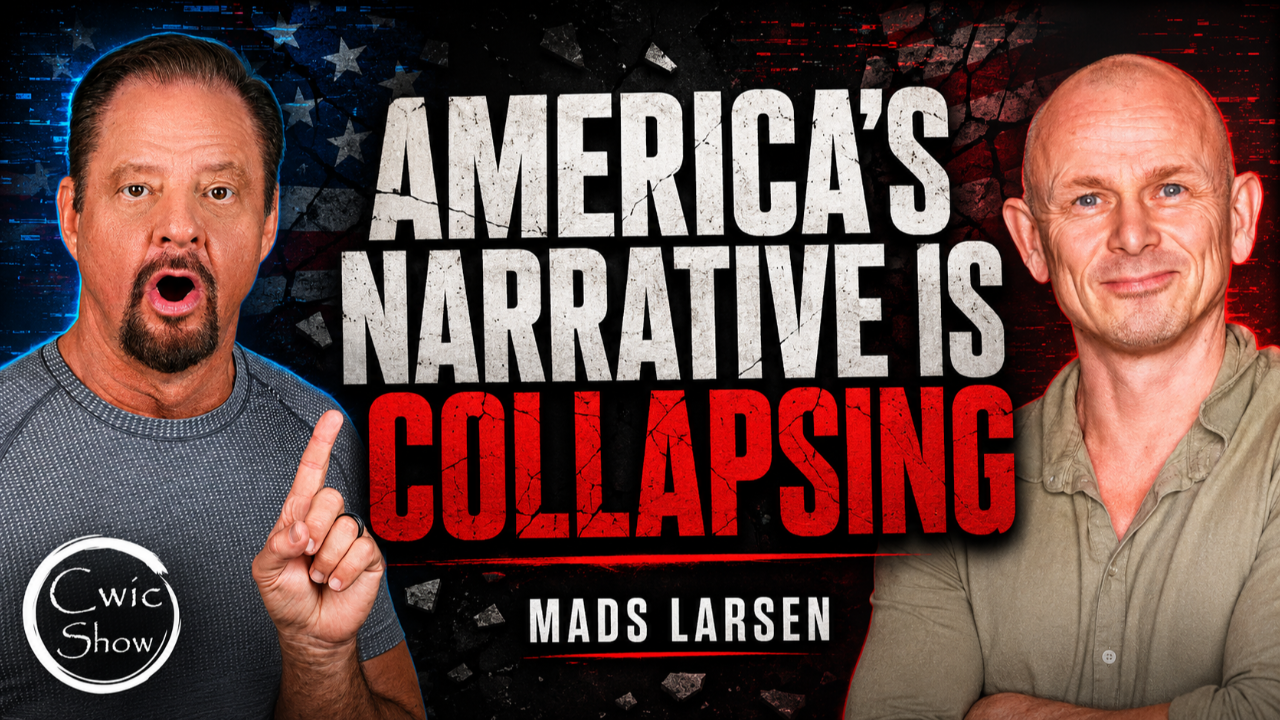
World-renowned expert Mads Larsen explains that we are entering the largest "Narrative Abyss" in history. The most dangerous cultural transition in history The nation-state may disappear Civilizations become violent, then their stories die The Algorithm will decide what is true Will AI become the new God?
Raw Transcript:
We we lose faith in it. So we don't know with whom we belong anymore. So we get polarized and fall and organized in
smaller groups that hate each other. And we don't know what future to strive for.
So we lose faith in that. What if we are living in a massive cultural change, a master narrative that is changing and we
are in a cultural abyss here in the United States and in the West. This is what world-renowned expert Mads Larson,
an evolutionary cultural change expert with his PhD and MFA from UCLA, talks
about here on this podcast. It's actually very striking as he tracks different changes that happen with men,
with w with women, with family, and with a narrative that we are used to following, a programming that from generation to generation we are
accustomed to. And now it's all changing. Is AI going to become the new god? How does our culture change with
the inevitable immersion of our culture in AI? What's going to happen with a family? What about the fertility rates that are dropping through the floor?
Mads has been on the show before. Really happy to have him back. You're going to enjoy this conversation. This episode is brought to you by Go and Do Travel and
the Gospel on the Nile cruise. Imagine sailing down the Nile, stopping at ruins that are 3,000, 4,000, 5,000 years old.
Temples that have inscripted in their walls things that you know about from your own temple experience. There is no
better place to learn about the temple outside of the temple itself than Egypt.
Come join me this October 2026 or February 2027 and see firsthand what few
have been able to experience. Go to quickdia.com up at the top of trips and events and scroll down to Gospel on the Nile. Would love to see you there. Here we go with Matt.
So what is a a master narrative?
Well, if you uh uh compare it to uh computers, you could say it's the operating system. It's that cultural program that gets imprinted on us when
we're young and which is what we used to navigate the world. So um when we were hunter gatherers, we had animistic
master narratives and then we had theistic master narratives uh with religion. And in the modern world, we've had humanist master narratives. So today
in America you would say you typically have a liberal humanist master narrative which explains uh to us who we are, who we belong with, what kind of future we
should strive for and uh it helps us make sense of things. It's kind of what also controls our emotions. So this master narrative that I believe in it
triggers different kinds of emotions. So if I tell you something that you might have a positive reaction or negative reaction dependent on your cultural
programming. So it's our deepest cultural programming. It's what keeps our nations and inroups together.
Okay. So, is this you're talking about something that comes at a very fundamental level, maybe the most fundamental level in your mind?
Yeah. Humans can't do without it. We So, so I mean it's it's it's it's a more fundamental
uh story uh identity uh than say religion or ideologies, your your national history, political platforms etc. Correct.
Yeah. So you could say with religion. So it's this is an abstraction. the the master narrative is like you say it is a bit deeper than religion but let's say
when we were Christian when we had a a theist or a humanist ma Christian master narrative that was strongly influenced by Christianity and and and it carries
forth it it's it always keeps evolving and then we have these deep cultural transitions when we have to transition from one master narrative to the next
and those situations are very perilous they have the highest possible stakes and we've just we're living through that now yeah we've just entered into what is
probably the deepest uh cultural change, the most uh dramatic master narrative transitions that humans will perhaps
ever experience as we transition from humanism into what many experts believe uh is best understood as forms of dataist master narratives.
Okay, we're going to talk about that.
Now on a master narrative then what can you have can you have two master narratives let's
say within Norway within within your your master narrative in Norway or the Nordic region there and your social
democracy what is there a can you have two master narratives running at the same time very difficult you could think with with
immigrants uh when I when I I I lived for a long time in the United States so I showed up with my social democratic humanism
and had to adapt to and they're not that different but they are different. So I had to adapt to the American way of thinking the American way of feeling and
of course if if you come from Afghanistan to Norway uh that is difficult for people. It's we're not we
don't like exchanging our master narrative because it feels so true to us. It feels like it's it's something that we're we're not eager to give up.
And when we do make those moves, let's say you do move from Afghanistan to Norway, if you succeed, it's still going to take a good while before you've uh
before you've internalized this new master narrative and you have a new emotional plet that makes you fit better into your new society. But people can
change. It just takes a while. So if if you go to a new place with a different fundamental story and you're eager to assimilate, it can be done over a period of years.
Well, yeah. And that's very different from you going to the United States as compared to someone from Afghanistan going to Norway, right? I mean, you're
talking about there talk you talk a lot about an abyss. I mean, there is a major abyss between Yeah.
those other two master narratives that uh Europe the Europe is really dealing with right now.
Yeah. And and that was that was Western arrogance. Our liberal humanist master narrative told us that all human beings
longed to be liberal humanists. And in Scandinavia, we believe all countries would eventually become social democrats. Also, America because the way
this works is that we convince ourselves that normally we convince ourselves that we have the truth. Uh so uh with mass
immigration over the past decades, we had convinced ourselves that if if we just bring people from all over the world, all of them will in in a
relatively short time understand that ours is better and they will assimilate to that. And we've seen that it's not that simple. And this peaked in the 90s
with that end of history narrative where we're were convinced that all nations would become liberal democracies. Some of them just had to be bombed enough first.
Yeah. So, so I mean I remember going back to the George Bush days and and the invasion into Iraq and you know there was the idea again
that democracy was going to be brought to the Middle East. you know, this was the uh the Arab Spring and and so they had, you know, in the US
they had their their their voting the blue on their fingers showing that they had voted uh and it was like everyone's
excited, you know, oh wow, democracy is finally going to come to the Middle East and of course that never happened.
Yeah. Well, you you've you've seen the Norwegian team rowing in in the World Cup. Uh from we were Vikings until we became social democratic humanists. That
took us a millennium. So it's uh yeah, but it's still there. I mean, still you're still doing it.
Yeah, that's our cultural legacy. And that's important because when you keep evolving, when when the world around you changes like it does now, uh you're
going to you're going to start with your own cultural legacy and you're going to try to bring see what kind of values you can preserve and which kind of values
you have to move on from. And then that cultural legacy, it's it's it's going to be quite impactful. Let's say in terms of dataism, what kind of dataism
Norwegians are likely to embrace, Americans are likely to embrace, Nigerians and Chinese are likely to embrace. So we always build on what came
before and that helps us through those transitions.
Now going through these master narratives, you're you've basically looked at 11 different works in in in Nordic works. Yeah.
That have brought you from Vikings to the current day, right?
Yeah. Um, talk about that a little bit because you're talking about a cultural evolution, uh, a a a narrative evolution.
Yeah.
That has occurred there to arrive at this point. Is that something that is self-deterministic or is that something that, you know,
where where does the individual stand with all of that? Because we're all products of our culture. We're products of our master narrative and yet it's
humans that actually change those narratives.
Yep. So what I look at in those those chapters in each chapter I use a case study a fictional case study because this is uh one of the important
functions of fiction literature film all kinds of fictional formats we've had. So when we go into these transitions uh
hopefully we have insightful storytellers who can tell a story about who we were and where we are now going
and kind of see through understanding the present really well. they can kind of see into the future how tomorrow will
be and then they will dramatize that and you see with a lot of literature that has survived uh generations and centuries millennia even a lot of that
literature takes place in one of those deep transitions where you uh so I would my definition of great literature is that you're able to understand two
things uh you understand the universality of human nature and then you understand the very specificity of your time and place and based on that
you're able to kind of uh see into the future and share that with your readers or viewers through very insightful and
captivating fiction. And so yeah, I I found all these case studies through Nordic literary history when uh very
capable storytellers engage that pivotal transition of their time and they show how communities kind of fall apart because it's really hard to let go of
our truths. So those those transitional periods can be exceptionally challenging and you kind of you have the polarization polarization you see today.
You lose faith in tomorrow. You experience despair. Uh it really reres havoc with our psychologies.
So fiction I have an interesting relationship with fiction. We I don't know we don't know each other very well.
Uh I I I don't you know from the time in my 20s I just I just didn't engage I haven't engaged much with fiction. I I'm
just kind of that I want information, right? And and and I want to organize my thoughts and and the world
and etc. based on truth or what what is perceived as truth some narrative right
of of history and and and thought but uh but I have enjoyed some fiction and and
the way you describe it you're saying then that this that fiction's role in culture in a master narrative is that is
it actually launching that forward is it the fiction and its exploration of those thoughts and imagining into the future
that does this or is fiction more of a mirror of of of the current master narrative?
Yeah. So most fiction and even even the most simple popular fiction has has a very important function which is to disseminate what we believe in to
disseminate the values and norms of this master narrative. So uh for instance Norwegians and Americans
uh in some cases desire different endings. What feels heroic to a Norwegian might feel weak and lame to an
American, while what feels heroic to an American, we might feel is too aggressive and elitist. So, uh if you
tell stories through fiction that doesn't resonate with your audience, you'll have no success. So, you really have to have internalized uh your master
narrative to be an effective storyteller. And then it's those great storytellers who are able to uh look into the future, criticize our current
values and show how they become dysfunctional and then point to the future and how we'll have to think different and live differently in order to adapt to how the world is changing.
So that's that's the subtitle of my book uh how communities use fiction to adapt to a changing world.
How what is the relationship between fiction and propaganda?
Well, uh, fiction can be a form of propaganda, but propaganda tends to be more simplistic,
have a stronger ideological agenda. But I mean, Hitler very actively used films
um, as a propaganda tool and he was pretty sophisticated about it, even a little bit subtle. So, he kind of
understood that. Um, he's trying to change a master narrative. Yeah. Yeah. Definitely. So any new fiction was important for that.
So in his films, the way he spread Jew hatred was often quite subtle and he would use symbols for Jews instead of
spelling it out. So you can definitely use fiction for propaganda purposes, but it that rarely creates really good fiction.
So you're talking about that mostly, you know, I it sounds to me like what you're saying is that fiction often most often is a reflection, but but there's others that make a difference.
Yeah.
It does seem to me that that that the changes in a master narrative, the
changes in a society usually come down to a single individual or a few that have a massive impact on a new way of
thinking. whether that's philosophers or authors uh maybe even artists you know where where uh uh or religion where where
things very few people seem to have this impact on the masses does that go along
with what you what you've been writing or is it more of a collective change it depends on the perspective normally for us modern individuals and and when
we look at history often we focus on the individuals me being an evolutionary scholar individuals kind of disappear
where you have these underlying changes uh that go in a certain direction and it can almost feel a bit
deterministic even though it isn't. But then of course to actually make this happen uh you need individuals who connect to this and are able to uh
develop this new way of thinking and living and then disseminated like I like I used in the first case study the Icelandic sagas uh that 13th century
literary movement was all about their master narrative transition because uh they had avoided the transition from the
polytheist Norse societies uh to the Christian feudal societies by escaping Scandinavia by going to Iceland. So they
did that um in the in the 8 900s and and the thousands and then they managed so they
became Christianized in in around year thousand but they didn't do the full trend. They kept living in in kinship societies and that was on borrowed time.
You can't postpone the future forever and uh they they were going into civil war. uh they had a lot of strife over a
period and it just started to become obvious that they had to uh join the European mainstream and in this period
fairly short period of time you could say approximately a century this amazing literature arose from this island world
literature where they would they then uh look at these questions so they they they they place the action back in the
Viking age but it's about what they're going through in the 13th century And they're arguing like I used that as an example in the previous book too when I
16 minuteslooked at mating ideology that was a change from the the from the uh polygamous uh kinship societies to then
submitting to feudal societies with lifelong monogamy. But it was also a different organization where instead of living in in kinship societies everyone were supposed to submit then in this
case to the Norwegian king who could impose order on everybody. And that's painful. I mean they had escaped to avoid that but eventually it was
inevitable and then they had to go through this a few generations of having amazing fiction uh that put this problem under scrutiny and eventually uh the
population was ready to go all right send the messenger to the king we submit it just makes sense because they've had those decades and decades uh to work
with these questions collectively and then you can of course point out certain individuals like uh student who wrote a lot who had a a particular contribution
And maybe this would have played out differently if you didn't have those brilliant individuals. But this was the direction they were headed collectively regardless. And but without those
17 minutesindividuals, maybe it would have been less successful.
But the fiction made a difference because it articulated thoughts that maybe people hadn't had or had the ability to articulate themselves. It gave words to things.
Yeah. Master ideas, words to emotions that were happening at the time.
Yeah. In stable times, master narratives are invisible. They're just truths that we take for granted. And when those
truths don't stop working as well, then fiction is a really good medium uh because it it it elicits your emotions,
pulls your strings, it it can fictionalize different ways of thinking and living. And if it's compelling and reaches out to a lot of people, you you
start a discussion in the population that over time can move how people think and feel. And in Nordic literary history, uh we have had periods where
we've been exceptionally uh successful at doing just that.
Yeah, going back to the individuals, I think, you know, for me, for example, I think about especially in the US and Canada, but to some degree in in all of
the West, uh, you know, I've heard many people say, well, we're living in Michelle Fuko's world. And and I think
that some degree that's true. You know, you've got you've got a very we're in a very post-modern time hanging on to maybe borrowed time, as you said.
Yeah.
Uh, still. and and a and a legacy of a certain master narrative that's in place. But the changes, the biggest
changes and direction that you see things seems to be much more into a post-modern world uh from you know
mostly Fuko and maybe Dered Dah that that uh from literary criticism. I mean that's where a lot of it comes from. Um and and
so again I just think that there's there's this seems to me like there are these master narratives and and large
cultural ideological changes come from a few differences and we could say fiction andor philosophical papers.
Yeah. Well, the great thing about fiction is that it reaches really widely. So what if what a particularly brilliant philosopher comes up with in
in detail and written over many books in a whole career is not what's important.
it was trickles down to the people and so there you can see like what Fuku and Derera said in detail isn't that
relevant how it was picked up and and and evolved with later generations of of scholars and then got disseminated through academia into the population
that is what matters so I I refer to uh if you look at that movement from the Frankfurt school to the postmodernist to woke I refer to that as a cultural
dissolvant so uh when you get at and now we've been humanists for 500 years and let's say secular humanist for a quarter
of a millennium. Um at the end of those periods you have counternarratives
that kind of starts dissolving what you believe in and opens up for something new. And you have to be a little bit careful because it seems so
deterministic. It's like kind of history is written. It's if you look at what's happening now that we got postmodernism to start dissolving the humanist
narrative and with where our nations are going now in terms of political polarization, debt, many other things, we weren't
heading to a very uh to a future that we could be very optimistic about. But at this time, we're now developing the most consequential uh technologies ever
through AI, robotics, etc. and and that means we're going to have to let go of humanism in all likelihood. Uh so uh so
in that regard we could view postmodernism as something positive that helps take away our old beliefs so that we can embrace new ones in the future.
But the and you see this it's it's it's kind of weird when you look at those deep transitions. Take the French Revolution. The the world wasn't ready
in 1789 for the world they wanted. But a little over half a century later they were. So these thoughts they they they
come early and things happen and then the the materialistic world isn't ready for that life that we're envisioning.
But then we've kind of been able to over time create that world and then those ideas can manifest and become the master narrative of everyone. So it's kind of
cool to see how things eb and flow and return uh throughout history.
So this is to apply more to the last couple hundred years. But still I to me
I see a lot of master narrative change because of technology not just fiction.
Yeah fiction is a big part of it. It definitely is. But technology, you know, I I think for example, uh let's just take the feminist movement, right? The
feminist movement to me is so technologically based from the point of men moving from their property and and
running their land to moving to the city and the women staying at home to now the domestic duties being
improved through everything from cooking to uh preserving food to washing machines to everything else right that
comes along where she's liberated from these things. the pill probably the biggest of all. Yeah.
Right. And so these these technologies that that changes our world also in a master narrative as far as what is the role of women and Yeah.
and uh uh therefore family and mating. Yeah. Yeah.
Yeah. No, absolutely. Those are the underlying drivers, the technological change. Uh and then we have to update
our culture and and with and that's what's so seems so perilous about this change that it's so fast. The transition
from kinship societies to feudal societies what the sagas cover that usually took about two three centuries.
uh you see later that they they do speed up a bit but these uh transitions take a long time because updating culture it's it's usually a multigenerational affair.
We don't have that time now. The world we live in 2026 is probably dramatically different from what we're going to have in just 10 years.
Yes.
And we're going to have to and if we don't catch up with culture that puts us in a really dangerous situation. So
ideally now we would be having this fierce much more fierce discussion about how we're going to live after AI and robotics free us from having to spend so
much of our lives to secure oursel materially through labor. Uh but we're discussing uh LLMs and and the
technology. But what we really should be having a discussion about is what we're going to do in a few years. And we're not. And that's unfortunate because
through that discussion that we previously had decades or centuries uh we now we we we don't have that much time now and and that's unfortunate.
This will be even more unprepared than anyone has ever been before.
Yeah. Because it's so fast and and and culture changes slowly normally. At least those are the more comfortable
productive cultural changes. I mean, after World War II, the way America went into Japan and said, "Uh, no more of this. You're doing what we do now, that
is an alternative, but that is painful." And unless, uh, unless you really did did something awful like the Germans and
and Japanese did, you're not going to be keen on on on changing overnight. So, yeah, ideally, we should have we should be the arguing a lot more about this. It
doesn't need to be recent or intellectual debate. we just need to call each other stupid and and and tell each other what we think the truth is and then have a fierce argument over
that just to start generating material for this new master narrative that we're going to have to embrace over the next decades.
So you talk about a transition from kinship and moving into Christianity.
uh what role and then you talk about basically secular humanism being a a a
well it's an evolution from Christianity to some degree right I mean it's because it's borrowing all of the moral core of
Christianity just translating the language yeah it's just different words so you went from said so and now you say
because nature says so so it's it's very it's it's it's the underlying ing beliefs are very similar. They built on the past.
And where do you see that going then? I mean, because because I'm going to get to it in a minute here. You're kind of showing already that humanism looks like it's just another utopia and that may be
gone anyway. So, what what what role does Christianity play in humanism?
And does it have a role moving into what's beyond that?
Yeah, absolutely. uh I've created I' I've even imagined a form of of Christian dataism that I I believe could
uh be quite compelling. I mean the reason we're in modernity now is because of Christianity how it and we don't even
need to go into the theology uh it was the focus on the individual throughout our agricultural period we lived in very
26 minutestight-knit uh kinship societies that was pretty uncomfortable for our evolved psychology. I don't know if you can
imagine, maybe you're a very Mormons are very happy in family, but you're not kinship society happy in families. You don't want to spend mostly your entire
life on a on a closed off uh kinship territory with 150 of your closest relative that you have to submit to keep.
No, we're very family centered, but not like that.
Yeah. So, Christianity dissolved the the the European kinship society and set in motion a process of ever greater
individualism. And uh you see that underlying movement that first you had the theism were where the new Christians
were comfortable. Uh sorry for sweating so much. It's really warm in Norway these days. It's not showing up. Not showing up.
So yeah, at first it was for the Norse people when they in transition to Christianity, submitting to whatever the the church father said felt quite
natural because they always submitted to the patriarch of the kinship group. And then with the reformation, it was like, no, we're getting so individualistic.
I'm going to have a private relationship with God. And then later with the enlightenment, they're like, yeah, they took it further and they they
secularized it in a way. First they changed from theism to dism God off the stage and then with the modern world we
just kept translating that to make ourselves even more individualistic. So you could imagine now with dataism that
you're going to have a customization uh for every single individual to their relationship to the AI that hopefully is aligned with their interest and is
helping them have much better lives than what most people are able to have today.
So you see what Christianity set in motion. This was led us to the modern world. The abstract thinking individualism laid the groundwork for
the scientific revolution. And you could say a Christian who is uh much uh more learned on the theology than I am could
probably make a pretty good argument for how uh Jesus set in motion the path
toward AI. And then when we have this AI and and if you listen to the way western experts imagine AI sounds a lot like God
all knowing our best interest in mind uh somebody who ties our communities together that we have to submit to for
the good life and now that this AI manifests and becomes 10 times smarter than us a billion times smarter than us
that that wasn't set in you could say that was set in motion when when when the Bible came and when Jesus came with
the word that word created this world that word created the path toward AI and if we didn't want to submit to this AI
as a manifestation of the Christian teology I think that would make a sense to a lot of Christians so you could e I at least could easily imagine a form of
Christian datism or Mormon dism that would make a sense to a lot of believers that's very interesting I'd never
thought about it that way uh so where we are today. I mean, you talked about uh basically for for the Nordic region
anyway, you're talking about right now it's it's secular humanism, which is really just an extension of Lutheranism
uh out there. It's basically you're running on uh uh a new software on the old hardware maybe a little bit
on Lutheran fumes. Yeah. No, social democracy is best understood as a secularized Lutheranism. That is the the main understanding of it. The reason we
have such great welfare states in Scandinavia while Americans don't is because we have a Lutheran heritage and you have a Calvinist heritage. So in the
30s uh when when society had to adapt to modernity and urbanism and we needed to uh make uh the support of people a
national not a local concern. Uh we had had 400 years of the pretty good experience with a state church that took
care of everyone. So uh the welfare state can kind of just step into that role that had been vacated by the Lutheran church and everybody were or
people were much more willing to share resources and uh submit to this maternal state who takes care of everyone. While in America you were Calvinist where you
prayed locally and you were very skeptical to this uh state far away that started to demand higher taxes. So you
see uh c countries with a Catholic, Lutheran or Calvinist heritage had very distinct responses to modernity when
they built out their welfare states from the 1930s on. Yeah, that's interesting.
And and that's and also that's we're probably going to have distinct responses to AI and robotics too based on our cultural legacy. So Scandinavia,
I would argue from our perspective, we have the best cultural legacy as a response to modernity by coincidence
because we were Lutheran. It just really fit with what was needed in the modern world. But we have no idea what kind of cultural legacy is going to be best
suited to take a most effective advantage of artificial intelligence.
That's that's we just have to wait and see.
o, your latest book is called Master Narrative Transitions from the Vikings to Artificial Intelligence. I want to bring us to where we're at today here.
You open the book with I'm going to quote the uh the first part of the book here. It says, "Humanity stands before a narrative b abyss."
The story the West has lived by, the ideological foundation for the modern world, no longer convinces people of a better future.
It is. In fact, I know in the US anyway, it's the first time, for example, that uh uh the generation that follows me is
not better off than my generation. That has never happened in the US before. Yeah.
Uh liberal humanism offered a tale of global convergence that the 21st century has revealed to be just another utopia.
Yeah.
Okay. So this is a this is it sounds to me like what you're saying here and going in further into the book it's basically humanism is going to be shattered here.
Yeah. So the the definition of so like if you're an animist the question the most central question for understanding this is what is the highest source of
authority? Yuvelari has has been pretty good on this. He's he's he's he's one of the popularizers of the term Dism. So animists believe that you find truth in nature. you're part of nature.
Find truth in that. Theists find truth in God. What God says is the ultimate truth. Humanist uh draws truth from human thought and emotion.
While a datist believes that the best source of truth are big data algorithms.
So as we experience that AI becomes smarter than us and can make better decisions than us, then we will likely
gradually submit to the logic of these big data algorithm and that will be our ultimate source of truth.
What? So yeah, and that so that undermines the humanist narrative that uh whatever you feel and whatever you think and of course people are going to
resist this because we always resist marin master narrative transitions. But if if uh you decide to make your own
decisions and your friends decide to follow what the AI says and they get much better lives over time, people are
going to change. But like I said, this sometimes took centuries. you go even further back, it could take a millennia.
Uh, and then this time it's going to go quicker, but still it's it's going to be uh it's not everyone's going to get on board with submitting to the to the AI.
But I I'm quite optimistic in in what kind of uh societies we at least have the potential
to make with AI that can be much better than the societies we have today. But it's of course also easy to imagine how this could go terribly wrong. And
especially with this culture, we have to update our culture. The kind of culture we create and how we decide to apply this technology is going to go be so
important. And hopefully there's going to be experimentation. Some countries are going to mess up. Some countries will do great and then the other ones can learn from the ones who figured it out. And we don't know which which like
I said which cultural legacies are going to be uh best suited for taking optimal advantage of artificial intelligence.
So moving into dataism. First of all, descri describe better for me dataism.
go over what that looks like. What is that going to mean? What is it replacing?
Um, and where do you see society, you know, you gave an example previously of going from feudalism into into into
or uh kins kins, what do you call it? Kins kinship societies, kinsship societies, moving into feudalism,
etc. You've got these massive transitions that seem to be going from smaller groups into larger and larger groups becoming more universal, right?
Where where does where does dataism take us?
Yeah, let me uh speculate. So, this is just how I envision the direction. So, uh the nation state it's it they're
going to lose uh it's going to lose its function. Uh we need nation states today because we need bodies for protection
and production. And when uh production is taken over by robots, that falls on the wayside. And when uh protection is taken over by the AI too, we're simply
not going to going to live in nation state. It's it's not going to be a meaningful size because it's like kinship societies didn't really fit our
psychology. And and nation states is a big ask too. And when uh the church dissolved the kingship societies, uh people were very eager to get away from
them. Took one to two generations. uh and we when we don't no longer need to live in nation states. I mean it's going to be a part of our cultural heritage.
We'll still feel Norwegian or American for a period. But I think we're going to live in self-chosen societies where different people will come together
organized by AI and create the society that they want with their rules, their way of living. And then with with those data principles uh that I believe will
be that you can't mess with others. So everything's going to be surveiled by the AI. So if one society decide let's go murder our neighbors that's not going
to be possible the AI is going to prevent that but then within the different societies that people live in they are free with the help of AI to
create uh as good to create the kind of lives they want. So instead of spending so much resources like we do today to
secure ourselves materially we're going to use our resources and our time to create great lives for ourselves and those around us whatever that means for that group.
So, so you're you're saying that a the most universal and powerful tool of all time will help move us back to tribalism.
Yeah. So, uh human organization is very different. The organization we have today, it's it's fairly poorly aligned with human nature. So, uh what we
evolved for so we had if we take the four different levels in in our ancestral environment, this was typically how it was. So you had a three generational family that you lived in
and then you had residential bands of 25 to 35 people that you interacted with in the everyday and took care of of
necessities with that supported each other and then you had a community of around 150 people which is our Dunar number if you heard of that. It's how
many people we can know that our brain evolved that we can know personally.
This is our community and then you had a federation of maybe a th00and 2,000 people that you interacted with that filled other functions and this is how
we get to know each other. this is how uh we draw meaning. This is this is this is what fits really well with human
nature. But as our communities grew and and we've handled it, we've had empires, we've had nations, we've had city
states, we can do that. Um but I do believe that we're going to go back to to smaller organization now that
nation states will cease making sense when their functions will disappear. So yeah, I do believe I mean we're probably going to have a lot more interaction
than we had in u at that time because we're just a bigger world, more people and and we now have new modern appetites. Uh but I do believe
organization will be be down at if you think of that residential ban of 25 to 35 people who's your closest group but then nested within a community of 150
individuals that you know personally I I think we'll go in that direction and then I'll think there will be enormous diversity where people try other things
as well. But this is just me speculating. This is just based on a revolution how psychology works.
It's kind of interesting you're saying that. It's uh you know, if anything, you know, people are you've got this social
media, for example, today, which is really not very social. In fact, it's antisocial in terms of personto person. And so, we're becoming
further and further apart. There seems to be anxiety, depression, mental illness seems to be increasing, especially among the youth and those that have always had social media. going
back to the iPhone in 2008 and big changes in 2012 if you read uh height on that but it's uh where where does that go
with with with AI is that going to further segregate us individually from others personally with higher
technology or is this sense of your from your speculation is it does it actually increase it or bring us back to a place
where because we're with people that we want to be with say for example in an organization we actually have persontoperson contact.
Yeah. Again I'll just have to speculate but there this is why we're we're this is how we're at the fork in the road. Uh
we can if we don't create the societies that we want. We can see how AI the loss of jobs will just further atomize us.
will all be stuck in our small box apartments uh hedonistically enjoying VR and perhaps social media.
Mhm.
But I I'd like to think that we will move beyond that through creating this new social architecture that I just
outlined where we'll organize ourselves differently and have personal connections and be uh more part of a
group that we spend our lives together with. That is the direction I hope we're going because that is much more aligned with human nature. Creates better lives,
more meaningful lives, more well-being, more reproduction. Uh I I I I'm very optimistic and of course I understand
how many ways this could go wrong but I think that's going to be a different way of living where we where uh AI will help us come back together especially because
uh we will be freed from having to secure our self maturity through labor and then we're free to use our our time significant amounts of our time very differently and people like communities
we become very atomized and it's not good for uh young people it's not good for other people. So I just think and AI will know us very well. uh so uh the AI
will uh know what is good for us hopefully and it will be aligned and it will help us uh create better connections uh because that is what's good for people.
So you talk about these transitions in the past we're going through one right now uh the abyss the narrative abyss and
and as consequences of these what you what you talk about in the book is that going from an old master narrative to a new master narrative is very messy.
Yeah.
Right. It can be very messy. So you've got the old story is incapable. You talk a lot about organizing, right? And
organizing life. The old story is incapable of organizing life in the new master narrative. Yeah. They're different.
That's a big change.
We we lose faith in it. So we don't know with whom we belong anymore. So we get polarized and fall and organized in
smaller groups that hate each other. And we don't know what future to strive for.
So we lose faith in that. It's it it really wres havoc with our psychologies and we can get pretty murderous. I mean
it's tends to be a lot of killings in some of these transitions too and people really don't don't have many people lose a lot of faith and then we get through
it and on the other side uh we've united around a new narrative and the old one starts to feel silly even though if it this happens within a lifetime we
42 minutesthought it was unquestioningly true before we went into that transition. So yeah, there there the the stakes could not be higher than they are with master
narrative transitions, especially with a quick one like we have now and with a tremendously powerful technology that we have to destroy each other should we choose to do that.
Yeah, you you describe very well exactly our our situation today and that where we we we lose confidence in each other, we lose confidence in the future, we lo
lose confidence in institutions. That's never been lower. The trust level with institutions has never been lower. uh we become much more tribal politically.
Yeah. Yeah. That's how it's supposed to be.
As you as you put it that everything becomes an existential threat. Yeah. From one side to the other. Yeah. Right.
This is this is just this is very predictable uh what we're going through now. This is we of course the context is different. We have different media to hit each other through.
Uh but yeah, it's uh humans just need that software. We it's we used to live much more stable lives.
the world you were born into was mostly the one you you died in. Now, especially the past few centuries, nobody died in
the world that they grew up in. So, it's it's it's a high demand on our psychologist having to go through these rapid adaptations.
Yeah, that's very interesting, right?
Because it's kind of a diagnosis that you give in the book of of of what the problems are and and what we're actually going through. It explains a lot if you
look at it that way. you know, the disagreements on sex, race, nationhood, religion, technology, and
it gets to a point where it it's it's not just opinions. It's and
I don't know if you're living in two different or three or four different master narratives, but you have different realities. People live in a
different completely different mindset. I don't know what to call a reality. They live in a different reality than than others.
Your master narrative defines your reality. That's that's how it's through your master narrative that you navigate the world.
So it's uh what we're seeing now. I mean old truths are just up for grabs. You can question anything almost. And you
definitely see that in America. And then the different sides are trying to create a new narrative what their vision for belonging in the future is. And then
they're they're fighting uh the groups that had different narratives. And it it can feel very brutal and inhumane even.
But that's just how these transitions work. We have to fight. We have to come up with new truth. We have to challenge old truth. And it gets very messy and uh
occasionally genocidal. But um we don't really have a choice. We can't just have send uh 10 experts into a room and come
out a week later and tell us what our new truths are. We have to work it out amongst our own community. So that's what you're doing in America now. And uh
as far as I've observed at least, you're you're you're doing the most important job here. You've really fallen apart and you're really trying to create the future and you're fighting over what
kind of values and norms and beliefs you shall have there. Norway is still more our old narrative works quite well here and we're a more harmonious population.
So, uh we're freewriting and we've actually this is a Norwegian thing and a Scandinavian thing to an extent too.
We've been freewriting for over a millennia. We always wait when like all right you're going to do feudalism you go ahead first and then uh then we see
how that works out and we get on board and and we do it with silly things like whether we should use glass fiber or wooden skis or so I mean we have a
tendency to just sit back and let you guys figure it out and and then adapt once it starts to be clear uh which direction we're going which is kind
which is kind of maybe effective and and and limits the damage but It's also kind of cowardly and and free riding on your
efforts. So, thank you America for being polarized and fighting this out for everyone. The vanguard. Yeah.
Yeah. That's definitely for this this transition, it's you and China. Yeah.
And uh Yeah. So, u and China like some have argued they might have some advantages. submitting to the
centralized authority of an AI might feel uh uh more appropriate for someone who's been under the Chinese Communist Party perhaps in Scandinavia too because
our social democracy and our Lutheran state church was so effective uh submitting to a central AI might me feel more natural than to
hyperindividualistic Americans who like uh things to be local.
So you said something there that is is a little scary to me. Yeah.
Right. because uh it's and because it's true. I think it is true. I think you said submitting to an AI to AI.
Yeah.
Right. And so you you talk about an algorithmic universality. Tell me more about that.
Yeah. So what we've with previous technology uh we've kind of need to keep our groups and nations and empires
together by forcing the hegemonic beliefs on everyone because that's what facilitates our cooperation. Uh a master
narrative is something that makes your group coordinate and cooperate efficiently.
uh and that was just necessary. That was the technology we had. But algorithmic universality, you can imagine a future where you can tailor uh that master
narrative to each group. Like I said, I imagine we're going to live in smaller self-chosen societies and they can have
they they don't need to believe the same as a larger community. uh which I I think it's it's more in line with with
our evolved psychology to have a more specialized uh uh belief system which we had when we were kingship societies.
That's what uh polytheism is about. That every group had had their own variation.
Like my kin group had uh one master narrative and the neighboring kin group had a slightly different one further away you got. So they didn't try to
impose their beliefs on the Vikings went around. They were like shopping for gods. Oh, they have a powerful god.
Maybe we should pray to him a little bit. But then when we're going to big build bigger units like with Christianity and monotheism, then you have to impose that uniformity on
everyone. And I don't think you need that anymore with dataism. I I think it's going to be more tailored to smaller groups and then the AI will help
us coordinate between the groups. Like I said, don't go murdering the neighbors that you don't share communal beliefs with. Uh there there are going to be
limits to what groups can do to other groups. Uh yeah, because we probably don't want to want this to facilitate
genocide. I'm pretty sure the AI is going to be against that, but who knows?
Yeah. Yeah. Well, so the master narrative coming if we look at dataism
is what who's in control of the master narrative?
Well, in previous times, no one. It's the community. I mean like you said you have some individuals who's got
suggestions and might uh lead the chorus but if what that person say doesn't resonate with the emotional plet of their community it's a no-go you're not
going to have influence so that's why I kind of look at those great individuals as not necessarily somebody who came up with something brilliant and unique and
spread it to everyone they were just really receptive to what was going on and saw what the opportunities were so they're more like the way I see it
they're more channeling what's going on than having a a particular power to come up with something unique and impose it
on others. But of course there are nuances there. Uh but we could imagine that um the next master nar if we have a
centralized AI who everybody is in touch with and it works for the best of everyone but then that AI of course is going to have great influence but that
AI also the master narrative will have to be aligned with what human psychology facilitates.
uh you can't impose dysfunctional nar well you can like communism didn't work because it was a master narrative that
was so poorly aligned with human psychology so there are limits to what you can push but in a sense yeah the the AI will will have great influence so
it's it's really important what kind of AI we develop yeah it's uh
you know it's you go back by the way I I you I wish you would say something to some of the individuals that are trying seem to be trying communism again here
in the United States recently uh with the the democratic socialism going on here but it's which is very different
from what you you do there but it's you go back and you look at some of this evolution beforehand you had kins I'm
missing it again kinship right so kinship societies where yeah there's an author there's there's an arbitrary and I say arbitrary
because it's whoever is in charge uh uh leader and then you move into Christianity where At a minimum, you have a claim
uh whether you're a believer or not, you've got a claim to a higher authority. Yeah.
Right. That that is aligned with truth and goodness. Yeah.
Right. And not that that's where everybody lived. But that's that's the ideal, right? And then you move into humanism and maybe you're looking at nature as you said where there are
existing laws that humans have nothing to do with the input on nothing. Right.
And so it's a matter of observation and the scientific method etc etc. But
if AI is the master narrative, if AI is the absolute truth,
that all comes from human input and and I know I've talked to several individuals that have talked about, you
know, people that read data. You can read data, for example, in many different ways. Uh it it's not like looking at gravity and and say, "Okay,
gravity exists. We know it. It we've observed it. We've tested it. It it works. Data is based off of assumptions
and data is based off of interpretations, right? And so how much of that is really,
you know, I talked about propaganda before, but I mean propaganda on the far end of the spectrum and and agenda or or
at least malinterpretation going into AI that is looked at eventually as absolute truth.
Seems like there's a big change there of what the authority is.
Yeah. And it's impossible to know how this is going to play out, but we can imagine different scenarios. So what I
believe is the way we're going to relate to this is our subjective experiences experience of it as individuals and communities.
So the AI, if we can get it aligned with our well-being, is going to give us what
53 minutesgives us the best lives, what fits to our community, what makes us feel good about us and those around us. So that
can be very different truths. That's what I talked that's that's we talked about algorithmic universality because those communities, they're going to come from different cultural legacies.
They're going to be different kinds of people and they're going to organize their lives differently. And the AI, if things turn out well, will do what it
can to facilitate that. So, it's not about necessarily finding objective truths on on how the re how the world
works. It's cultural truths. It's truths that make our lives and communities better so that we are more content with
our lives, that feel it's more meaningful, that we have a good time together, that um that we have the kind of life that aligns with what we believe
in. and uh and that is subjective. And if if we all walk around with a neural link in our head uh assessing our
thoughts and emotions all the time, then that AI will have the opportunity to fine-tune what we do and and feel and
think uh to an extent that I think humans can experience as meaningful and pleasurable and positive.
if we're going to break down into organiz smaller organizations based on this in the future uh
with the the removal of a nation state for example are are those smaller organizations going to choose different
LLMs are they going to choose different you know you've got Grock versus Anthropic during versus you know others
that that you know chat GPT what and people have their preferences already and what they're going to use. Uh, do we
end up with a mass diversity of of different options that seem to um
reflect more your values or your psychology or your background and what your master narrative has been previously?
Yeah. Again, this is pure speculation from my my own perspective. Uh well, if we imagine the future, it seems uh we're
probably going to have first the big satellites form around Earth and then later that's going to move closer to the sun perhaps. And I I don't think it I
mean that's going to be the AI that's going to be the the mind in the sky. So I don't think LLMs is going to be the
interface. I also imagine that we might be going to post literary age. I think those days are over. Uh I think maybe
our connection with the AI is just going to be voice audio. Uh I don't necessarily see a future uh with
screens. Maybe there will be now if you're thinking the longer term.
So then then so so then if you have a C so to make this as effective as possible it seems that in the long term having
one centralized AI whether and then hope maybe we'll have maybe a Chinese sphere and an American sphere in the beginning and then that's going to go become more
global. It it it just seems that that is the from my perspective most likely way that's going to play out and then that
is the one centralized AI that knows everything about everyone and are organizing all the individuals and communities to the best of everyone
ideally. So yeah, I don't we're not going to be have we're not going to be sitting on laptops and and and and speaking to chat GPT versus Grock.
That's at least not that's how it seems to me like the future's going to play out.
Yeah. Okay. What uh last thing I want to talk about is you know the same thing we talked about last time which was the fertility rate. Yeah.
And we you know we're we're to me it is the most existential threat out there period.
I I I am concerned about economies. I'm concerned about war, uh, starvation, all of these different things where where
we're going to move into something like a change in a master narrative. We're going to have a massive social change in
family in in in population. And I to me it's a massive disruptor that we are as
borrowing from a previous master narrative. I think we're borrowing on on a previous uh the capital of of
population growth from the past right now. And we're still we act as if we're still there.
And so now we're dropping. I think last I looked it's been a while but in the US I think it's 1.6 is where we're at right now.
Christianity I think was very family focused. I think you had uh you know it wasn't just Christianity but it was the environment. It was the master
narrative. It was uh the requirement of and and the lack of certain technology like the pill that
that allowed for this population boom to happen. technology helped with that as far as being able to support a family to
some degree and and and now we've moved into more the secular humanism where where I think that's had a big effect on
the drop. One of the things that's had a big effect on the drop in that focus on a traditional family and now we're moving through another abyss here.
Yeah.
That we move into into deadism from from humanism.
What do you see as the place of the fertility rate or where does that sit? Where does the
family the unit itself sit with the new master narrative that is coming? What how is that going to affect the fertility rate and does it even matter?
It matters more than anything. Uh the foundation of all societies of all living organisms is the mating and and ours doesn't work now. So what happened?
It's exactly what you said. It was a huge transition. So in the past century we had two mating shocks urbanism and free women. So uh if we take northern
example uh at the end of the uh 19th century our fertility rate was 4.5 and then over a brief period of time it
collapsed down to 1.9 because of urbanism primarily through other factors too. We moved into cities. So we respond to that across the west by as we talked
about earlier building out those welfare states, making it uh making it easier for urban couples to feel safe enough to
reproduce. And then after World War II, you also had economic growth uh particularly increase in male uh um wages and also a very pronist culture.
So we got in Norway our our fertility rate back up to 2.9 and then after 1968 with free women uh fertility just
collapsed in in the modern world in Norway down to 1.7. That's a decade after the pill.
Yeah, it's it's it's a part of that. So yeah, so what happened with we had three seismic changes that on their own, if
you want to be really uh bold, you can say that each one of those changes uh was perhaps the biggest change in human
mating in four million years and we got all three at the same time. So what happened right whatever so the the correlation today between low fertility
and and uh female equality is extraordinarily strong. We showed in our last paper toward in realistic reproduction that it's 0.81. So it's
that's what happened. So we've created for the first time in human history, we have free women, but we haven't yet adapted our societies to be able to
combine having free women with sufficient reproduction. So just half of the feminist job is done. We've created free women and now all the countries in
the world except Israel that has free women are staring towards self-eradication.
So what we did in Scandinavia that made us an anomaly for a while is that in the 80s, 90s and 2000, we built out what I call the welfare state 2.0 know we were
made it easier for women to combine having jobs with being mothers and then we got our fertility back up to 2.0.
But what has happened at the same time is an erosion of pair bonding. So in Norway the number of women aged 20 to 34
who doesn't have a partner doubled from 1977 to 2022 from 23 to 46% and you see this across the world with free women.
It's just that and this isn't women's fault. This is this is how our mating psychologies have evolved. So those
three elements that I talked about is that for the first time in our species history, we have largecale societies with individual mate choice. It was
always arranged marriage and now we get to choose ourselves. And for the first time we have economically independent women who do not need a man. So they
they have their own full-time jobs and in our country general welfare. And that also recalibrates women's uh partner criteria. And then the third element is
the pill which is also an enormous change where we've disconnected sex from reproduction. So uh that's why across
the world like I said where we have free women u reproduction has fallen really low only uh Israel has a pretty unique
culture that has been able to combine those two. So that's why our and like all Norwegians I'm a huge proponent of free women. I don't want to reverse
feminism. It's just that feminists have become the worst enemies of feminism by not wanting to talk about fertility crisis or deal with this and instead
2 minutesjust let our societies stare towards self eradication. So now that we are in this deep transition and we're going to create exceptionally different societies
than those we have today, we really have to think about the the reproduction first, the mating like you say the family. How are we going to have a
survival level of reproduction in this new world? And there are many paths to that or at least several. I mean it's it's it's we don't know. We don't know.
But that has to be that should be our number one priority because all our nations are now staring towards self- eradication and we don't want that.
Existence is better than non-existence and uh we have to start understanding that having a self-eradicatingly low fertility rate actually leads towards
self- eradication and a lot of people don't want to accept that. So um how mating will fit into this new world. I
working on an article now I just submitted today for a revision where I where I outline how we perhaps can create a different social architecture
to help people pair bond because the the environment we have now makes pair bonding really difficult. uh it's just uh we have extended search too many
options uh people don't meet we have thin information and we have this switch from uh long-term mating to short-term mating which under other previous
circumstances if women have more short-term mating which means uh having uncommitted sex with the best men with the best genes that is what that is in
the interest of the woman's genes to do that because when women can't take care of a child on their own they can go and harvest better genes from the top men
instead of pair bond ing with a man of similar mate value, but that path has been blocked because of contraceptives and our genes don't know that. So, um
it's it's just the situation we're in now that we outline in that article that we just published uh isn't sustainable and we need to think about what kind of
societies we're going to make in the future after a robotics changes everything uh that makes it easier for people to care bond and have a survival level of reproduction.
Yeah. Fantastic. Well, M it's always fascinating talking with you. I really appreciate it. It's the second time we've had you on. We'll have to do it again. Um, I'm going to look at things
very differently now based on this and your writings here and how we're going through this this abyss and this massive change. It does explain so many
different things. So, thanks for your time. Really do appreciate it and and let's make sure we do this again. Thank you so much. I really enjoyed it.

"I Take This Every Day!"
Learn more about why I accepted Cardio Miracle as a sponsor and why I take it every day!
- Greg Matsen

Stay Connected With New Articles & All Things Cwic!

Cwic Audio Player
All of the Cwic Media podcast episodes on one page!
Recent Posts

