
Genesis Was Written To Be Performed- The King Follett Discourse and "In The Beginning" BYU Professor
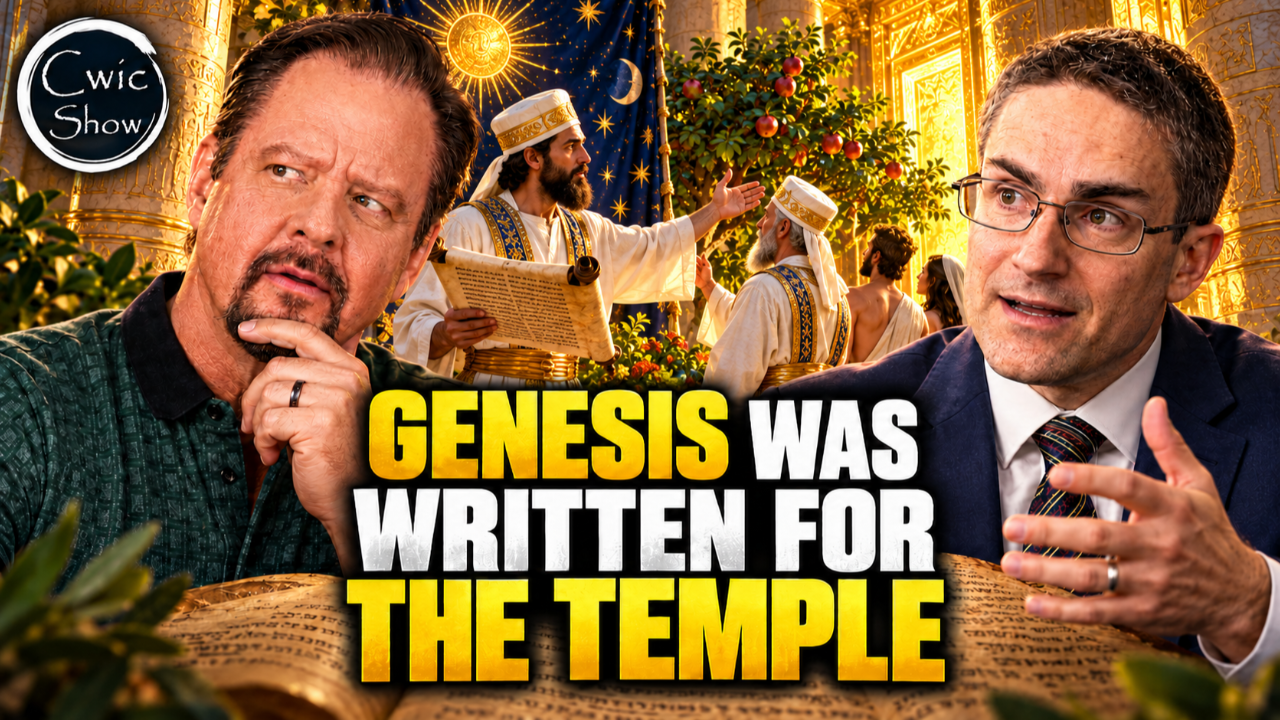
BYU Professor David Calabro on Genesis and the "Head God" and the "Council of Gods" Joseph Smith's radical reading of Genesis 1:1 YOU are Adam or Eve The most misunderstood verse in scripture
Raw Transcript:
Genesis was written to be performed.
Most of us read the opening chapters of Genesis like a history report from the far side of the world in a very ancient
time. Two people in a garden made a bad call, ate some fruit. The creation of the world seems to be put together in some unscientific form. But the creation
and Adam and Eve accounts are not built on history. That doesn't mean there wasn't a creation of the world. That doesn't mean there wasn't an Adam and
Eve or even a garden of Eden. But it is visionary language that came through Moses's visions on Sinai and Abraham,
for example, through the Euroman Thumbum. We should understand that sourcing. How do you read Lehi's dream?
How about the book of Revelation? What if these early chapters of Genesis were written to be performed? Would it make a
lot more sense to you that that's why they are in the temple ceremony?
Scholars like John Walton and Mark Smith read the early chapters of Genesis as temple liturgy. And if you've listened to this podcast for any amount of time,
you'll know that that has always been my viewpoint. These accounts are temple liturgy. My guest today, David Calibro,
argues that the creation and garden accounts worked as a script for priests to act out in sacred space. Once you
understand this and then read these early accounts or go through your temple experience in the endowment, you'll have a whole new view on what is happening.
It's a drama of ritual. This episode is brought to you by going to travel and the three continents tour. We go through
Turkey and Istanbul, down to the Roman city of Ephesus, through the Greek isles and Athens and Corinth, and then down to
Cairo for the pyramids of Giza, a camel ride, the grand Egyptian museum, and with the extension down to the temples
where you will see these rituals played out all over the walls of the temple. Go to quickdia.com up to the top to trips
and events and scroll down to three continents tour. have two of those tours going in March of 2027. Would love to
see you there. Here we go with David.
[music]
So, David, looking at the King Fallout address from Joseph Smith, he goes right into an interpretation of Genesis 1. [music] Take us through that.
So, Joseph Smith gives two sermons. One of them is the King Flet discourse, another one in the East Grove in Nauvoo.
Both in 1844. So this is really towards the end of Joseph Smith's life, right before he's martyed pretty much. And so
he's had his whole lifetime up to that point to to really engage with Genesis.
And um he approaches Genesis from first of all a linguistic standpoint. He
argues or he doesn't really argue he's speaking through revelation but he uh suggests that [clears throat]
the first word of Genesis beset and this is in Hebrew it means uh in the
beginning of it's not it's not a complete phrase it leads into what follows
but he suggests that that preposition at the beginning the the one that we translate as in wasn't there originally. Yes.
And this changes really the grammar of the whole verse.
So he reads that now as ro head and then you have the verb created bar
and uh Elohim which as we read it now Elohim would be
the subject that's God right? But now this becomes if Rosh is the subject then Elohim has to be the object of
so so the the the subject moves from is it beginning from what the beginning is to Elohim. Yes. Okay.
Yes. So right. So Elohim is no longer the subject. It's got to be the object. It's what the head brought forth. Mhm.
Uh and this would be brought forth not in the sense of to gather together but to uh to generate like like a birth
a birth idea. And so right away we have this notion of a cosmogy, a uh or a
theogy, a theogy/cossmogy, a a giving birth to the uh the universe
essentially starting with the gods themselves. [snorts] And this fits actually really well
within an ancient neareastern concept of the creation. um what Joseph Smith is presenting there is far beyond his time.
This is these are things that uh maybe people could have accessed more or less through the Bible. But but the the texts
in Aadian in Ugaritic uh in ancient Egyptian that that would really support this kind of notion from an ancient
neareastern standpoint had not even been discovered yet. They hadn't been translated.
uh those languages were were still being worked out.
You're getting from the Shabbaka stone or something. It's it's a council of gods basically that that you've got. So would this also
be perhaps something that he's getting from now a better understanding of what he's whether it's uh uh revelation or it is
an actual text with the book of Abraham where we do get more of that type of language
about the gods. Absolutely. So, Joseph Smith by that time had already revealed the book of Moses. He'd already revealed
the book of Abraham. And in my research on those books, which are in our Pearl of Great Price today,
I believe that those just based on my research, and this isn't a well, you know, I I can't speak about
this from a revelatory standpoint the same way that Joseph Smith could. Uh for my scholarly approach, I think that the book of Moses is an early Christian
text. It fits really well within an early Christian millu uh or environment.
And the the things that uh that are revealed in the book of Moses actually
they coincide to a large extent with what Joseph Smith says in the King Flet discourse and elsewhere in Nauvoo. But to a certain extent too, they present a
different picture. For example, uh in that same verse, the the the
equivalent to our Genesis 1:1 in the book of Moses, it has the preposition.
It says in the beginning, and it presents similarly there an idea that it wasn't just God the father involved in
the creation, but it includes the only begotten uh reference to Jesus Christ, which is very clearly laid out in the
book of Moses. And and that reference to the only begotten fits really well with language that we find in the book of John in uh in the book of Revelation.
This is New Testament sounding.
And other parts of the book of Moses too. For example, uh the Satan uh speaks to Eve through the serpent. Mhm.
The serpent and Satan are two separate beings, which sounds a lot like apocryphal literature from around that
same time, first century CE, 1st century AD. Um, the uh this idea, it sound it
sounds just like the Greek life of Adam and Eve, Satan is speaking to Eve through the serpent. And uh and so in
the the fascinating thing for me is that in each case, Joseph Smith is revealing something that he could not possibly
8 minuteshave known at that time fits perfectly with a certain historical uh millu and consistently throughout
that text throughout the book. And so, uh, so yeah, I I think it's it's a it's a miracle that Joseph Smith is revealing
something that that, uh, has all of the complexity and all of the all of the, um, cultural appropriateness of of a
time to which we can imagine which we can imagine it. I've always thought that the and I've stated this often is
Genesis 1:1 is the most misunderstood verse in all of scripture because it it
all of a sudden makes us myopic in our look at oh this is the very beginning of everything and then you get this history
that is played out which I don't think is all history I think it's liturgy but you have not only a a
9 minutestime. Uh well, how should we say it? A a you know, you're putting you're putting up curbs on time here, but you're also
putting up curbs on plurality, I think, in in the way we look at that.
So, you're explaining something where it would change everything in terms of plurality. And if you look at the
restored scriptures, it it's it changes there. There's what I call the
flattening of the hierarchy, right? So if you go back to the the reforms that happened under Josiah, etc., you have
this flattening of the hierarchy where you end up with just Yahweh, right? And there's this this this distancing
of Yahweh to us, right? Which is the exact opposite of what we get in the
temple drama even today and the exact opposite of what we have in restored scripture. So if you look at book of Abraham,
you have Abraham 3 where you have this uh this the planets, this separation,
this plurality and then you have the spirits. There's one greater than the other and there's there's is this this plurality that is that is created in
Moses. It's the plurality of all of the worlds that Moses sees. And with Joseph Smith in the first vision, all of a
sudden he sees two different beings. And so there's all this restoration scripture where this plurality is brought in everywhere.
And and Genesis 1:1 restricts that to me. It it kind of restricts it down. You
talk about the Hebrew et as father also in here. Talk about that a little bit more because I'm I'm very interested
in this idea of of the plurality, the only begotten in Moses, for example, and and and the plurality of of a council at
the very beginning of Genesis. Sure. So the thing is with with Joseph Smith's change as I mentioned this change is the
grammar of the whole verse. If you take out the preposition and the way Joseph explains it uh Ro is now the subject
Elohim is the direct object. But then what do you do with the rest of the verse? Because the way we read it now the heavens and the earth should be the
direct object. God creates God created the heavens and the earth. Mhm.
So, what do we do with that? Now, um I make a suggestion in my paper that that you read uh which
[clears throat] uh I'm not 100% sold on this, but I think it's a a possibility that we could consider here that the
word at which in Hebrew it's we read it as a direct object marker. It's uh we don't have an equivalent for that in
English. It just tells you that what follows is the direct object of the sentence.
The at in especially in earlier Hebrew is optional. You don't have to have it there. But when you have it, it would tell you that. Now at can also be other
things. It can be a preposition meaning with. So that's some scholars who have looked at that passage and what to do
with Joseph Smith's change read that as the head one brought forth the gods with the heavens and the earth. Now, that's a
possible way to read it, but the problem with that is that it conflates what's really two events. God is creating the
gods and then creating the heavens and the earth. It's not the same event. Um, but another way to look at it, and and
this is getting into territory that I think most Hebrewists wouldn't necessarily agree with me because this is a new suggestion. It's never it's not
on the table. But at could be a noun uh a rare noun in Hebrew. There are one or two other places in the Hebrew Bible
where you you could maybe see a noun there with at.
But what would it be if it's a noun? So there's uh there's evidence from Amorite personal names uh from the ancient near
13 minuteseast and also comparative evidence from Egyptian which is an Afroaziatic language. It's distantly related to Hebrew. Mhm.
Uh that could suggest that at could be a noun meaning father. And if that's the case, then we would read it the head one
brought forth the gods. Pause. And then you have a poetic parallel. The father of heaven and earth, the father of the
heavens and the earth. And uh if we read it that way the the object that that starting off in
the beginning the head god and then the parallel is the father.
Yes. So this would be yeah parallel to the head one. Right. And uh and there's a similar kind of construction in in
Psalm 134 where uh you have uh [clears throat] a a sentence in the first
parallel colon and then in the second colon uh it reads the father of uh the creator of heaven and earth. Mhm.
Right. Uh expanding on the subject of the first colon. So it would make it sound much like Psalm 134. uh and it
would then uh imply that that first part of Genesis we would read as poetry narrative poetry much like ugeritic
narrative poetry uh so so there there's a we can see that and granted this is uh
making a new philological claim uh on the reading of et being father but if we
take that step then then we can see it fitting very well within biblical literature within an ancient neareastern understanding of the creation.
Yeah. And so in Egypt it would be it and in in Amorite it's it's atum or I think it is. Yes.
What so and it also goes along like you said with the ancient Neareastern ideas of creation and you say well why would
we care about that? Why would that matter? That's all paganism etc.
However, if we believe the book of Abraham and and and Pharaoh trying to be a righteous man trying to emulate the priesthood
which we were talking about the temple and the ordinances and therefore the drama that go around that. Then you have
for example uh the inid that comes forth from the first god and and the innid and the other gods that come out from there
and then you have the development of of of heaven and earth after that point.
And so if that is a diffusionism, right, if that is coming out from an original
drama and an original truth, right, then then you have those ancient neareastern creation stories that would
actually follow more along the lines of what Joseph Smith is talking about in in in a corrupted version, but still
following along the idea of of what Joseph Smith is talking about with a with a plurality there of gods. Sure.
Now, to be clear, Joseph Smith throughout his prophetic ministry and and this is from the beginning right to
the end, he's very clear that we are a Christian faith. We we worship God the Father, Jesus Christ, the Holy Ghost,
this the Father, the Son, and the Holy Ghost. and and uh so I don't think Joseph Smith is really trying to get
outside of Christianity here, but I think it's it's at the same time he's
restoring an understanding of the relationship between God and humanity that fits very well with an ancient
understanding, namely that uh humans are we are the offspring of God. Uh Paul says this in in uh in the New Testament,
we're the offspring of God and as such we have a divine potential. We we can become like Jesus Christ. And when
Christ says follow me, right? Then he really means it. We can follow him. He's not giving
us an impossible commandment. We can follow him even to his exaltation.
And uh and I think this is uh to me that is so beautiful that gives me hope.
I think and that we're the same to some degree. There is sameness there and that plurality. You know, you look
at the temple for example. Now we do this less than we used to. But but you had in the creation account you you've
got an Elohim, Jehovah, and Michael, right? that there is a grouping of individuals and then you have later
Elohim, Jehovah, Peter, James and John as representatives of messengers and authoritative figures
and then Adam and Eve, right? And so you've got again this plurality
that is built and put into place that I don't know to me seems to have been removed somewhere in in in Christianity
and and and going back into ancient Israel Israelite religion uh as you flatten the hierarchy and and
remove everything in between there. So yeah, I I think that's important to see that if you're starting off with you you
you you very well could be starting off with Genesis 1:1 with plurality, right?
Beginning the whole thing in in in in Genesis. Now I also want to look at Genesis as the basis of of a ritual
production, right, to some degree on this. You've talked about this and how we could be looking at Genesis more as
ritual, I would say, liturgy uh and and how priests might be playing out these parts in Genesis in a temple.
Talk talk about that a little bit.
Sure. And and your instinct on that is precisely mine. I I uh and this is another way that Joseph Smith is way
ahead of his time. I I think in Joseph Smith's time few if any scholars would have read Genesis 1 as liturgy but now
with ancient neareastern texts uh including from Ugarit from uh Mesopotamia from Egypt uh you mentioned
the Shabako stone uh from Egypt uh there's the uh Enuma Elish in Mesopotamia
uh the Baal cycle in Ugarit similar kinds of texts that all deal with uh with um a Genesis like narrative in
which uh there's creation going on and uh sometimes a war of the gods and also
uh there's all of this takes place within a lurggical context context. Absolutely. A temple context.
And so these are not just texts that an individual would sit down and read uh for personal edification. They were
texts that were yes personal edification was part of it of course but uh but these were performed texts. They were uh
things that in in these societies in which [clears throat] few people were literate uh these were
texts that were experienced. So uh the the average person would see them being acted out and even participate in those
acting outs. Uh and uh so um Genesis 1 for example um and and this is only
recently that some scholars um Walton uh Mark Smith various scholars have started to look at these texts not started to
it's actually quite developed now very developed area of scholarship looking at these texts as uh as really um lurggical
in context
[clears throat]
and uh and so we can see Genesis 1 that way. Um, and uh, and likewise, I think the book of Moses and the book of
Abraham would have uh, would have been texts that are acted out in a liturggical context. So the the the
narrative is really uh, [clears throat] a almost like a script for a play that that people would uh, would dramatize.
And Hugh Nibbi talked a lot about this.
I'm I'm not by any means the first person to to think along these lines.
you've you've come across Nibbli's works and Nibli had many students who have carried on that that legacy of interpretation.
So let's can we try and reconstruct a little bit of this and and going through this and looking you know Donald Perry talked about this
a lot and made the correlations between Jerusalem temple and and between uh um you know something more of a
pre-exilic Jerusalem we'd be looking at uh with the temple. What h how would
this look right if there is a let's call it a 7-day period um um reading uh uh the grand Baker and
and and uh uh Stephen Rick's he they they actually go through and they talk about an 8-day period on some of this
but how would this look you know reconstruct this a little bit for us yeah so unfortunately there's a lot of
speculation that needs to go into this because we we don't have the the ancient ient playbook of of how these things
would have exactly been acted out. Um that this would have been and not necessarily that it would have been a written text, but they would have known
how to do it based on the tradition and the the priestly instruction. Um, however, we can make guesses and uh, one
of the most suggestive things to me is that in the garden narrative, Genesis 2
and 3, where uh, nakedness and clothing is a big theme.
Okay, you have Adam and Eve, they're naked and not ashamed at the at the very beginning. The serpent is described as more subtle than any beast of the field.
that Hebrew word for subtle can also if it's just slightly revocalized and this is uh changing the vocalization that was
added in the medieval period. So so it's fully possible to imagine that that uh this revocalization uh is is legitimate.
Um you can reread that as naked. He was more naked than any beast of the field. Interesting.
Right. He was and this fits, you know, with serpents that are scaly, right?
instead of having fur or or other covering, right? [clears throat] And uh so the serpent is naked,
right? And uh or at least that's a way to read it. Adam and Eve are naked. And then they transgress. And what's the first thing they do? They hide. They sew
fig leaves together. They try to make themselves the clothing to kind of cover their nakedness to to in a sense make up for their transgression.
And uh and it doesn't work very well.
You can imagine. I've never tried to sew fig leaves together. I don't think it would go that well. Uh, you know, so
they're, you know, they essentially they fail at their attempt. Yet God uh provides for them coats of skins.
Uh, now these uh cutoot uh these uh these coats coats is the King James translation. He's he's making garments
to cover their nakedness. Um so God is providing those right. This is the true covering not their own attempt but this
is the divine covering. Now that word cutoot is the same word used for the priestly clothing later in the in the
pentetuk. So this this theme of nakedness and clothing to me is suggestive
uh because in the in the um the installation of priests, the the ritual
which we have in uh both Exodus and Leviticus uh the the clothing of the priests is is
an important stage. This is where God is really claiming the these priests as his servants and part of his household. So
it's a very significant uh part of the of the installation liturgy for priests.
And to me that would be a a very appropriate way of viewing this text as
uh this could be like if we imagine what kind of ritual context would this creation narrative have uh have had a
good role in uh it could have been that right of the installation of priests and uh and so that's what I suggest in my
paper that when Adam and Eve are clothed this could correspond to the moment when the priests are clothed.
Yeah. And so you have a you also have a
a practical uh uh way of speaking about kapor
in a sense there as well right in of covering and so and it's tied okay if this is a an animal sacrifice and the skins of the
animal the coats of the animal are what are used well the the animal sacrifice is based on the only begotten son,
right? On on the sacrifice of Jesus Christ. And so now you've got a covering, a day of what later Tinddale
says is at onement, atonement is actually kipper, you know, which is the covering. Yes.
Which now says, okay, I've got a a covering here about that is the atonement. What we think of as the atonement,
right? and the sacrifice of Jesus Christ is now the the the what the priest would be wearing, what Adam and Eve wear.
Um I would also say, you know, the covering may also be something that is more of the embrace at the veil as well and a covering actually
27 minutesexisting with the embrace. But that nakedness and clothing uh theme then would is is is founded it
seems to me in in the idea of atonement that goes right along with the Hebrew capor and the day of atonement the yapor
and when you said that I had an epipanic moment of harmonic convergence there because today is actually start again
so [laughter] it was like I was having an epiphany it was a harmonic convergence because uh
today begins the the day of atonement in in Jewish uh in the Jewish religion. So we're uh there's no better day that we
could be talking about this and um so yeah absolutely this uh when God clothe Adam and Eve this is there are
reverberations that that get into the atone the idea of atonement. So what you were saying kipur comes from the root
the Hebrew root for cover and others have analyzed it differently that I think the most likely view is that that the the uh the root there means to cover
and kipur is not only it's not only to cover uh so in English we we don't
really have the nuance that uh that it gets in the Hebrew the verb form there
is a pl so the verb is pair to uh it's not uh it's not poor le or something
like that uh which would be the the basic stem this is the pl so the pl is intensive
right it's uh in other verbs for example it's not just to break but to shatter the pl would be to shatter into multiple
pieces so it's not just to cover but to cover up to completely cover to really cover right and and it's so it's not
just you know it's not just like a a skimpy covering.
It's a it's a complete covering, a covering up, right? An active covering.
And uh and this is the idea that we should imagine when we think of Christ's atonement that he doesn't just give us a
little tiny handkerchief to cover oursel. He he covers us completely. And he does the covering, right? He clothe
Adam and Eve in the coats. He doesn't uh he doesn't just give them the coats and say here put it on. Uh but he clothes
them and and I think there's such beauty in that. Um just and what you said with the embrace that's that's how we can imagine it as an embrace.
He is actively covering. Yes.
Uh covering them covering us because as we uh and we do this uh in our temples today we take the part of Adam and Eve.
Mh.
Um, Adam and Eve are in a certain sense all of us. Mhm.
And uh, and so that's what Christ does with us. He covers us up.
Which again, if you're looking at it that way, you know, it was for so long.
That was my biggest pet peeve about the temple. And the way the drama worked is that I mean, they would say it once.
They used to say it once. They say it once I think now again, but they said it once. It was act as if you are Adam or Eve, right? You know, think of yourself
as Adam or E and Eve. And so, but but when you're watching a movie, you're like, "No, that's Adam and Eve up there." It's like, "No, no, that's you.
That's you. You are playing that role.
This is a drama. It's about you playing the role." Then they went to for a while there because they made so many changes.
But for a while there, they went up to six times saying, "You're Adam and Eve.
You're Adam and Eve." You know, over and over again. That's you.
You're not w in other words, you're not watching a history. You're watching a drama about you. Right.
Right. And and now it's back down to one, I think. But but anyway, yeah. So that's but that brings it back into again looking at this as lurggical
[snorts] poetry and however else they're going to they're going to create this.
31 minutesUm and and you can imagine you've gone through on your paper also just so many places where you imagine how the priests
might act and what they might be doing as as they're going through this. for example, with the doors [snorts] and going through the doors and the expulsion.
That's right.
From the garden. Talk about that a little.
Sure. So, th this is if you want a lot more on this uh go check out um Donald Perry's article. Um I think it's called
uh something about Garden of Eden prototype sanctuary. And that's as I recall the the title of the article.
It's in a volume called Temples of the Ancient World uh published back in the late 1990s. And uh it's I think you can
find it online uh through the BYU Religious Studies Center.
Um and uh so um Donald Perry goes through in detail how elements of the Garden of Eden correspond to the temple
of Solomon. And uh and probably the smoking gun here, the the big indication
is you have uh cherubim uh both uh embroidered on the temple veil and later in the temp the
tabernacle veil, excuse me, and then later in the temple of Solomon uh cherubim are represented on the doors of
the temple carved into the doors. And um so the temple faces eastward. Uh we know
from the very end of the garden narrative, God places cherubim east of the gu on the east of the garden so that
Adam and Eve can't just accidentally wander back and partake [snorts] of the fruit of the tree of life. Uh and so um
the the typology matches uh the garden of Eden faces eastward, cherubim guarding the way to the garden of Eden,
the temple of Solomon faces eastward, cherubim guarding the way. And uh and so
um essentially we can imagine this as a drama played out on temple space at the point where Adam and Eve are are cast
out of the Garden of Eden. And in the book of Moses, I love this. It says they were shut out from his presence, right? Which really can help us imagine
doors being shut. And and so uh we can imagine at that point that uh some
ritual participants perhaps priests who are being initiated or something along those lines are literally brought out from the temple and the doors are shut.
And from this point it becomes a ritual of return. And so they would uh according to many apocryphal texts, and
we have this in the book of Moses, uh the first thing Adam and Eve do after they're cast out of the Garden of Eden
is they offer sacrifice. And uh and so it's no coincidence then that there's a an altar of sacrifice right there in the
temple court as you leave the the temple.
And so uh possibly at that point you would have which is where the animal sacrifices would be made, right? Exactly. Yes.
34 minutesuh and uh and so yeah um at that point it's a it's a ritual of return and this is another thing which Joseph Smith uh
does so beautifully in revealing the book of Moses uh we have there a reconceptualization of what happens
after the garden in Genesis and we now have the story of Adam and Eve's redemption and uh in the book of Genesis
we never learn how Adam and Eve or even if they're able to overcome the effects of the fall in Joseph Smith's Revelations. We have
that very clearly represented. We can see how Adam and Eve and again by extension all of us how we can return to God's presence.
Yeah. So you talk about how the actual construction then of the temple is part of the narrative, right? And how how it
works and which portions you're going to go into. Like if I you know when I take people to Egypt and walk through, it's the same type. It's a tripartate temple.
It's the same idea. You're going all the way to the Holy of Holies to them, the sanctuary, right? To as you pass through these three sections, get through get
through all three sections. And it also, I think, gives you a better idea of what Genesis is that that creation and and
the garden accounts are used for because, you know, here's Moses on Sinai. He's getting this
vision. He's not just getting the vision, I would say, of the creation account, right? He is he is getting this. He's getting the ide the creation
and the and the garden account, but then he's also told how to build the temple at the same time or the tabernacle at the same time,
right? And so those go together. They're fitting together. He's getting all of this. And of course, what does he do after? Well, they go down and they put the tabernacle together. They get the
whole tabernacle together. So the construction of the tabernacle and then the temple is kind of built right into
this same visionary language of if it's liturgy of of how to use the temple that you're building and be
practical with with Genesis and as you're acting it out.
Absolutely. Yes. And uh and we could add to that you know uh once you start seeing things through a temple typology
understanding everything becomes temple really and and uh and so even Moses on Sinai the mount the mount itself is is a
sort of temple space. It's a sacred space where you have uh a demarcation of holiness beyond which people can't go without
being endangering their lives. Uh so uh so there there's this very similar notion and God of of course meeting with
Moses on the mountain uh uh you know and there are all kinds of reverberations
and they're revealing how the children of Israel can have a similar experience with the tabernacle and and so on. So
yeah, there there are just layers upon layers. Yeah, Mount of Olives actually works out the same way with Jesus going up to Gethsemane and it's you know how
many are down here Peter uh Peter, James and John follow him to a certain level and then he keeps going further than that. Yes.
Um you know tell me what you think of this.
So in my mind I look at uh again looking at this as visionary language and and drama. Uh
I I see 2 Nephi 2:25 as a kayasmus, right? Adam fell from somewhere, right?
Adam fell from A down to B. Uh that man might be and men are, which is the same
verb. Men are that they might have joy, right? And coming back. And joy is the fruit of the tree of life in in Lehi's
vision, right? So when you talk about the the road of redemption coming back to me I look at the fall is the garden
of Eden account. Lehi's dream is the second half. It is the journey back to the tree of life. And so that that
brings those two sides together. The difference is is that in in Lehi's dream, you know it's a vision,
right? So you're walking through this and you really relate to it. Yeah. I've got to hang on to the iron rod. the mist of darkness, the darts, all of these
happen. You know, people leaving and going to the to the great and spacious building. I've got to get back to the tree of life. And you're thinking of yourself in those circumstances. In the
Garden of Eden, without realizing that this is visionary language, you don't put yourself in Adam and Eve's Eve's
shoes. You simply look at it as history, right? And when when if you looked at Lehi's vision, you're thinking, "No, I I
get this. I'm part of this. This is me that I need to go through. And and if we looked at the Garden of Eden account as lit liturgy,
then we can understand that the priests at a minimum and really all of us as we participate in the priesthood in the temple are the ones that are going
through this and going through the process. Does that make sense?
Absolutely. Yes. I think you're right on about that. And and I love how you just described 2 Nephi . That is so beautiful. Um this uh it's the the
kayasimus itself mirrors our fallen return and our it's the plan of salvation attaining of joy. Yes. It's so so nice. And
yeah uh yes I think you're right. And this is one reason why I think uh these insights from the ancient world are are
not just trivial. Right. we as we worship at the temple. Um if we if we uh
come to it with an ancient understanding of what we're doing there, we're not just uh and you mentioned the the uh how
how the way it's done today. It is uh you know, if we don't if we're not careful, we can view it just as we're we're going to watch something, right?
And uh but but really we need to approach this with a participatory understanding. Uh this is not Adam and
Eve only. This is us. We are uh we are the really the main participants and Adam and Eve are there to show us uh
you know how how it happened in the beginning but uh but for us the important thing is our beginning our new beginning and our our uh our return. So
going to another point here that you've talked about here is is going to Psalm 95 and Elma 12. I love I actually love
you talk a lot about 12 and 13, but I actually love 11 also with Amu.
He's talking in there. They're like tag teaming in Ammoniah and Ammoniah, right?
They're they're like and Amilec is talking about this temporal redemption, this temporal uh the resurrection essentially, right?
On the temporal side. And then he tag teams and he and then Alma comes in in in 12 chapter 12 and he goes more through a spiritual side and really hits
the the Garden of Eden and Adam and Eve and and brings so many more doctrinal points into things in the Book of Mormon
that we don't have in the Bible. Um talk about that a little bit and how that might be practically seen lurggically
priestly actions and and bringing 95 Psalm 95 and Elma 12 together.
Yeah. So Adam, so Alma there is uh is in conversation with this chief judge in the land of Ammonha and he's trying to
explain how Adam and Eve once being cast out uh can never have a chance to return and partake of the tree of life. Right?
They've they've messed up. They've been cast out. Uh it looks like their chances of having eternal life now are are
finished. Uh but how are they going to return? So, um, Alma then lays out this,
uh, story of Adam and Eve where God seeing their state, sends angels to converse with them, teaches them about
the plan of redemption and about how they can through repentance and belief
in the son of God, how they can return and uh and eventually have eternal life if they harden not their hearts. And of
course, all of this is meaningful for the people of Ammoniah who whose hearts are being hardened, right? And and Alma,
I think with all his soul, really wants to to show how, you know, show what he hopes for the people of Ammoniah that
they'll just repent and believe in Jesus Christ and and uh and accept his plan.
So, um, and this, uh, what Elma there lays out very interestingly, it sounds like he's referring to a Genesis text.
However, it's not our Genesis text. We don't have anything in the received book
of Genesis uh, about God sending angels, teaching Adam and Eve about a plan of redemption, commanding them to repent.
All of these things are are are seemingly extra, right? And um some have
suggested and uh No. Reynolds is I think the main person on this um and uh and
others have written uh in in his wake of kind of um explaining this as a reference to the book of Moses, right?
that perhaps something like the book of Moses was on the plates of brass and this could be where Elma is getting it.
Um it's also possible that we have maybe a text like the book of Moses but maybe not exactly like it.
Um some of the details seem a little bit different. Um in the book of Moses the the return really begins with Adam and
Eve praying to God. they they're uh they're going to God in prayer and that's when God gives them commandments.
In uh in Elma's version, it seems like God is starting this process uh by sending angels, right? So, um so maybe a
little detail, you know, it's not that significant perhaps, but we can understand that even as a different text. And and what I would suggest is
that uh Elma's Elma's source text, whatever was on the plates of brass uh and what Joseph Smith
is explaining in Nauvoo in his discourses with Genesis 1:1 and perhaps a text lying behind the book of
Moses, which uh the book of Moses has some elements that uh that don't really seem to fit with an early Christian
context, but could be fragments that are surviving from an earlier text. And uh and so all of those things could point
to a pre-exilic Israelite version of Genesis that uh that had the story of
Adam and Eve's return, right? And its details would have been somewhat different from the book of Moses, but very much along the same lines.
and uh and so um yeah so uh and and again this would have been a a lurggical text performed in a in an ancient
Israelite ritual context. So if there was a lurggical practice from priests
that were running through the narrative of Genesis as their basis for their rituals, their drama, what they're
doing, then wouldn't we say that that Joseph Smith is not necessarily just revealing something new. It's not an addition, but rather it's recovery.
It's a recovery. I think so. Absolutely.
And uh and yes, I one thing that I find so beautiful about that idea that that Joseph Smith is not just and and see
this would be I think for people who don't accept the uh the the divine origin of Joseph Smith's revelations. Um
this is essentially Joseph Smith's developing theology, right? He's he's making things up as he's going along. He his theological ideas are changing.
Therefore, his revelations are different, right? and and he's he's presenting different versions of Genesis. Now, I I think there's a
there's a fully faithful way to approach that same data, those same data. Um, and that [clears throat] is that Joseph
Smith is in fact revealing ancient texts verbatim. Mhm.
And and I think the the beauty in that approach is that you know there are fires, there are earthquakes, there are
floods, things get lost, right? We uh archaeologists uh very frustratingly
encounter this all the time where it would be so great if we had uh as an example that original form of Genesis,
right? What did Genesis look like in pre-exilic times? Um, you know, there are there are many things like that that
we would love to have, right? The the end of the uh of the story of the ancient Egyptian story of Wenamoon,
right? Now, it's it's uh missing an ending and uh we get Wamoon being chased by pirates and then the story ends. All
of a sudden, the text is broken. It's destroyed over time as things h as things do, right? So we it's a little
bit fun getting to imagine what happens there. But it would be great if we had it. Things get lost, right? But to God,
nothing is lost. He can he can restore it, right? As he does through Joseph Smith. And and I find that so comforting
because we look forward to a resurrection, right? are complex bodies that that are are so beautiful and so
divine in in uh in design in creation um crumble into dust, right? And and we
look forward to a day when God will reconstitute all of that, right? And and can he do so? Absolutely
he can. Uh to him, nothing is lost. he has the code right there with him in heaven and and is able to uh to bring it
back and and so I think what Joseph Smith is showing us is uh is no less than a testimony of Jesus Christ and his power uh to restore.
So so let's finish on this. What then? I I I look at the New Testament and the
times of Jesus and and and look at that, you know, not not a complete gap there, but but just going back to the times of Lehi and and and around the time of Zedekiah, etc.
And you know, Jeremiah in that time, a contemporary of Lehi, refers to something that he calls the old paths.
Now, at the time, if you read Jeremiah, it is mayhem. I mean everything is the the prophets, the priests, you know, the
the temple is corrupt. You know, all the it's it's there's a there's mass apostasy. And we understand what's going on with Lehi at this time then, and why
he's going to have to leave, right? And why Lemon and Lemule may very well have been part of what
the new religion was, let's say, at the time of Lehi without Christ. And but but Jeremiah refers to these old paths.
Could there have been, you know, you look at the the immediate followers of John the Baptist and then and then the followers
of Christ, were they hanging on to the old paths?
Were there were there texts that were circulating at the time that were not part of the Pentatuka that were that were uh maybe grabbing those old paths?
uh some of the things that we might even see in the Dead Sea Scrolls for example of the Essenes and etc. Were they would
there have been a tradition maybe even written that they were hanging on to where they were a little more prepared
perhaps for a mortal Messiah?
Oh yeah, this is a great question. So when when Jesus calls out the Pharisees, is he calling them out for some esoteric
interpretation that they're missing out on, or is he really condemning them for uh missing what was right in front of
their faces, spelled out, right? And and wouldn't we love to have that library that they had, right? Uh whatever text
they had. So undoubtedly, they had texts that that we don't know what they were.
We don't have them. Um until the recovery of the Dead Sea Scrolls, uh we didn't know about, you know, that they
that uh some of these texts relating to Enoch, the book of giants, right? That they that were around somewhere. People
had these texts. Um and uh and we wouldn't have known about them. And and they had at that time uh Enoch
literature, they had the book of Jubilees, they had uh they had many texts that are not part of our biblical cannon today.
So uh so did they have these such texts?
Absolutely they did. And uh we don't know the full extent of that. Uh they they maybe had texts that were uh that
were very clearly speaking of a messiah who would be crucified and who would uh would rise again the third day, right?
And without ambiguity, without the need to to read in a lot to to these uh rather obscure prophecies, right? Maybe
it was spelled out in some of their texts and and uh absolutely I think we can leave room for that possibility and that Genesis would have maybe been a
a part of that that would going back to the fall could have been described
much richer and with perhaps even direct references to an atonement.
Uh yes, absolutely. Uh and uh so on that there's uh there are copies among the
Dead Sea Scrolls of Genesis. Uh none of them seem to match what we have for example in the book of Moses, right?
There's no unfortunately no text matching at least that that has been recognized among the fragments of the
Dead Sea Scrolls. Uh nothing matching Moses. Um however um were there other texts and and uh I'm thinking here
particularly of the book of Jubilees which uh essentially tells a Genesis story. It presents a revelation to Moses
on the mountain which uh which tells the story of Genesis. Um it's not the book of Moses. It's not uh anything revealed
in restoration literature. It's a different kind of thing that uh pays a lot of attention to kendrical matters.
for example, uh times and observances, um festivals and so on. Hence the name the book of
53 minutesJubilees. Um so uh uh but I if we imagine things along those lines, there could have been
other texts circulating that uh that told the story that Joseph Smith is revealing in the uh something like the
book of Moses, maybe with an earlier kind of flavor. um something like what Elma is referring to in Elma 13, Elma 12
and 13. Um so so yes, I I think that is a definite possibility.
Okay. Well, David, appreciate your time and your expertise on this. I think it's a fascinating read. Uh your your paper's a fascinating read. You've got a couple
of videos on YouTube as well uh here. So I would I'll put that in the description box for people to click on and and and to read and to go through. But thanks
for your time. The idea of Genesis and the creation and and garden accounts as liturgy and practice, priesthood
practice in the temple, I think is is something fascinating. And I think if someone was last question, if someone was to go back and read, let's say,
Genesis 1-6 tomorrow, right? How would you have them maybe reframe that?
Yeah. Well, uh, ideally I would have them go to the temple and, uh, read it, uh, after participating in an endowment
session. Uh, if that's not a possibility, I I would I would suggest just, uh, reading Genesis 1-6 together
with some of these things that Joseph Smith reveals in the Book of Mormon and in the Pearl of Great Price. and to
imagine oneself participating in it and and just really not not just uh reading
it from a many thousand-year uh removed standpoint, but uh but to really imagine oneself um being part of that, being
Adam and Eve and and uh and feeling the separation from God, feeling how bitter that would feel and uh and then
imagining that God has provided a way to return and uh and to be once again in his presence and to partake of the fruit that he offers with the tree of life.
And I I so I think that I would just hope that people would read uh those scriptures uh with themselves involved.
Awesome, David. Thanks so much. Thank you. Appreciate it, Greg.

"I Take This Every Day!"
Learn more about why I accepted Cardio Miracle as a sponsor and why I take it every day!
- Greg Matsen

Stay Connected With New Articles & All Things Cwic!

Cwic Audio Player
All of the Cwic Media podcast episodes on one page!
Recent Posts

