
Why “Love” Is Destroying Western Civilization
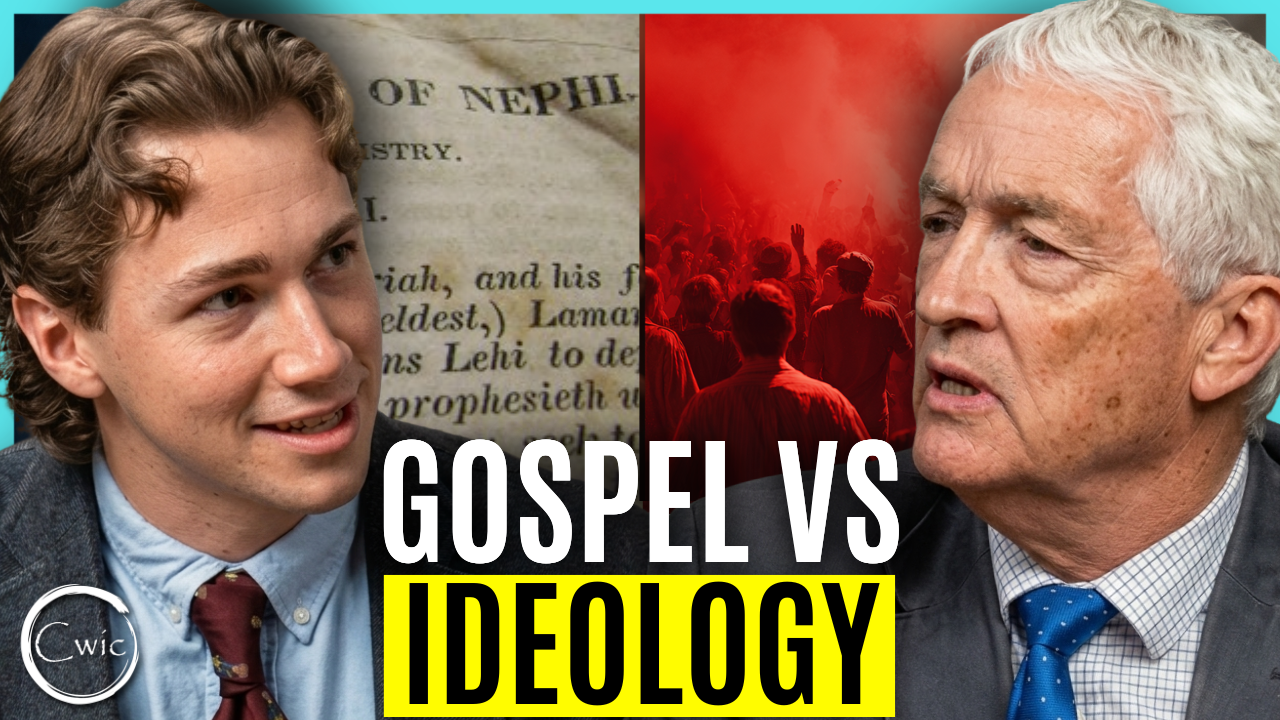
Ralph Hancock on victimhood, virtue, and the collapse of moral confidence. When Love Replaces Virtue, Civilizations Collapse The modern West has confused compassion with goodness The West Has Redefined Love — And It’s Dangerous Ralph Hancock explains how Christianity became detached from virtue “Love Is Love” — The Most Dangerous Slogan of Our Time? Why the West No Longer Believes in Excellence
Raw Transcript:
In this episode, Kai Schwmer and Professor Ralph Hancock are back to talk about politics and faith. How much do
these mix? Do they mix at all? Does everything ultimately come down to politics? I'll pose a question to you.
How political is the Book of Mormon?
This episode is brought to you by Fathom the Good. It's high school homeschooling curriculum that focuses in on the
question of the good. This is from the work of Professor Ralph Hancock. Go to Fathom the Good to find out more and to
get a free sample course. Here's Kai and Ralph, the city and the soul.
Hi, my name is Kai Schwemer. I'm a political commentator and a student at Brigham Young University. I'm here today
with Ralph Hancock, professor of political philosophy and the author of the new book Love and Virtue in a
Secular Age: Christianity, Modernity, and the Human Good. Professor Hancock, great to be with you. Thank you, Kai. Good to be with you.
Thank you so much for taking some time and for telling us about this new novel which uh or this new book that that you've come out with which explores uh a
very important um kind of convergence of of these things love and virtue in in today's age. just getting started, what
were the things I mean these are of course two things that we engage with hopefully frequently in uh in our lives, but what were the the things that you
were seeing in today's world that that compelled you to to examine both love and virtue uh with with a more, you know, critical eye?
I've got a a couple of stories come to mind that are actually used, I think, in the preface to my book that I hope illustrate very well the problem. But
you know, um, I'm inclined to pull a fast one on you, Kai, and turn turn this question back to you just to help us get started. When you see the title,
yes, just love and virtue, you can add in a secular age if you want. Did we notice the subtitle Christianity, modernity,
and the human good? That's very academic as a title with a subtitle. But but when when you just see love and virtue, what comes to mind? Is that a problem?
Uh does that suggest any uh contemporary issue or not?
Well, I I would say they should I I would think they should run together.
Yeah. Love and virtue. Um but I I I think at times, you know, maybe the love grows a little excessive. It's uh it's it's a little lacking in in measure and
uh and I think virtue is unfortunately tougher to come by these days.
Right. Thank you. Well, yeah. The whole point is that our language of love has become flattened and uh
secularized even when we religious people are using the language flattened and secularized in a way that separates
it from virtue. So really uh my book is about um recovering the union uh the the
proper communion between love and virtue and that we cannot have a true idea of love
uh without uh keeping it within the orbit of virtue. I guess I would say I think love and virtue each need to be uh
within each other's orbit. maybe spatially that u my my metaphor doesn't quite work but you see what I think both needs need to be understood as bound up
uh with the other certainly and and when when I read that you know of course there are things that people do out of love that are not good
you know we we think of adultery we think of um you know there are these crimes of passion these things are not good and and many would argue it is not
even love but that's not what you're talking about here no and you're speaking of well erotic or romantic love which is not irrelevant to
our our topic but but u love as uh fellow feeling Christian love or the
Greek word in the New Testament as many know is uh agape the other oriented love
of brotherhood sisterhood uh fellowship but my proposition is and I think uh
anyone who looks can see at least this danger my proposition is that uh this
Love has been separated from any from virtue, from any uh from any content,
from any substance, from any idea of the good and therefore becomes vulnerable to a very secular interpretation. And you
know the word compassion is a perfectly good word that describes a a a valid and valuable human emotion. But if we re if
we reduce love to uh compassion without purpose and without insight then uh it's
not really love and it uh plays into a kind of secular
humanism and humanitarianism which uh see the human person as beereft of any
well the Greek Greeks would say teological orientation, any any embedded uh higher purpose.
And of course, here at the uh the subtitle, we've got Christianity, modernity, and the human good. And and you've just kind of, you know, maybe
teed that up a little bit, the conversation of of Christianity and the way that we discuss love, certainly the the interpersonal love. How do you believe that that we have gone astray?
What has what do we see now as a result of maybe our departure from Christianity that has influenced the way that that we
love other people or how love exists in our Yeah. Well, let me comment just a moment on this triangulation, Christianity, modernity, uh, and the human good.
Because uh you could say the problem is precisely that Christianity has aligned itself too closely with modern uh
secular rationalism and humanism which is the same as saying it has um it
has cut itself off from the classical Christian question of the human good or
human purpose. And of course, virtue or the the right order of the soul, the
the right uh internal condition of the human person uh would be another way of talking about uh about the human good.
But let me go now to my stories that um yeah I almost forgot that that illustrate uh that I think
might help to illustrate uh the the place we are in uh morally and intellectually
ideologically uh in America in in contemporary America and the west uh more generally. Uh the
first story uh some of our viewers uh will remember this from uh I should
remember the year now. It uh may be more than 5 years ago now. Uh an incident at
Yale University that I I think so perfectly uh rep represents the problem
even though the word love may not uh enter into this particular example. But um you you may remember that a few years
ago uh there was a controversy surrounding Halloween costumes at Yale. And you can look this up. There's no need to go uh
for now into the details, but there were some let's call them uh politically correct or woke uh objections to I can't
remember what the costumes were on cultural appropriation or racially offensive things in the costumes. and um
one professor and housemaster, but of course now the word master has been banned, but professorial
servant of the house of the residents at Yale had uh presumed to try to sort of cool
down the uh debate and the conflict over Halloween costumes by just saying
something that should have been a getting innocuous. Can we just They're grown-ups. Let people decide on their
costumes. Let's take it easy. Let's let's chill and not and and not be eager to take offense. Well, this this led to
a confrontation on the campus. And you can look up the video um between uh this
professor who was trying to say, "Let's let's not worry so much about the costumes." and a an activist, a young
woman student at Yale who very much got into this professor's face because she thought this was an issue that cut to
her very soul and uh the professor for his part I shouldn't leave out this part of his
argument he was saying but no the Yale is not about social activism or this what we now have learned to call woke
activity Yale is about u intellectual discovery and exploration uh and
achievement. It's about uh creating a an intellectual space where we can uh make
real uh progress in discovering and understanding and this young woman student was having none of this. I mean she got right up in
his face and shouting and using profanities saying no you are wrong you first of all
you the professor are not telling me what Yale is about and I don't care about the tradition of Yale University
or the great academic tradition as a whole and what it's been about. I'm telling you based upon my individual
identity, I suppose, or my feelings what Yale University is about. And the way she expresses that is extremely
telling in its own way. It's it's it's pathetic. It's extreme, but it's also telling and insightful. She says, "Your
job is to make a home for me here, a home."
In class, I like to explore the rousoe implications of this appeal to an a kind
of innocent self uh pre-social in the state of nature without any competition or achievement or virtue. You can use
Rouso to explain what this young woman is saying.
But we hear her because she's saying, "I don't want to be challenged or made anxious. I don't want to compete. I I
don't want to in essence I don't want to be held to any standard above me. Mhm.
I am what I am and I want you to validate that.
And a a religious believer, a Christian uh will add and I want God to validate
that. And what we mean by God and his love is validating me just as I am. So I feel at home and
I'm not I don't have to feel anxiety about competition or rising to aund higher standard. I don't have to be
bothered with virtue in other words or excellence. Okay? Because virtue is
in Greek virtue means uh excellence. It implies a standard which is higher. It implies rising
higher. So that's my first story which I think I I I thank I pity this girl is so
who is so uh anxious and driven and her activist extremism uh by her absolute desire to be ratified
just as she is. But I I think her example is very uh telling and it it is almost the inversion into
victimhood. You know this is the creation of like a new virtue.
Well that's right. And this okay and and this the problem of victimhood which is a a big which is the
uh sort of introductory theme of my book.
Uh the problem the the the ethic of victimhood uh if you wish uh
always has two sides of it. There must be an oppressor or there must be a uh a a repentant or
redeemed uh oppressor who's now willing to take the side and uh identify the victim's
ideology and his or her self-proclaimed identity as the focal
point of of moral and even religious uh discourse. But this this is illustrated by my second example which is an example
uh from my own uh teaching and it uh involves a um smallish seminar style
class in which we were discussing uh ideas of the family and uh gender and
marriage etc in relation to uh philosophy and to Christianity
And after one class in which uh the the question of homosexuals and their rights and the redefinition of marriage had
come up. How could it not come up after all? a a very bright and u earnest
uh absolutely well-intentioned and I would say spiritually intense in a good sense student came
into my office to follow up on the conversation and uh what he proposed to me was that
really the the wholesome of Christian duty you might say or the wholesome of
Christian virtue well understood is simply to uh to validate uh the
viewpoint of the other. I think he was speaking of his uh of a homosexual friend with whom he had had these
discussions and he took it to be the ultimate challenge of Christianity to
empty his soul of any preconceptions about virtue or excellence or commandments in order to uh respond
transparently without barrier to uh the identity and the viewoint. point of this
other uh person, his friend. This was powerful and touching and there's something sublime and there's some truth in this
willingness to open our hearts and to listen to the other. Mhm.
What I don't agree with and uh what I waxed bold to respond to this student was that
your love for the other cannot be re reduced to this absolute sense of uh
self-mping. Now self-mping is a biblical uh concept. The Greek is uh canosis
and there's a whole theology of canosis which develops this idea that Christ came down and emptied himself. And that's what we should do. So the whole
ethic of Christianity is an emptying of oneself in favor of the other the other person.
Obviously I don't think that's an adequate I think kinosis is certainly a moment in Christologology and the meaning of Christ's mission and
therefore in any Christian ethic. But it it it can't be uh the whole thing. There
there there have to be uh moral contents. Mhm.
That that we do not empty. The the self-denial to the point of denying our
own confidence in virtue cannot be the meaning of Christianity.
Because if it is the meaning, then our only response to uh the
desperate but blind longing of the girl uh the young woman, excuse me, at Yale who
demanded that this institution of higher education be refashioned to make her feel at home everywhere in every way.
That can't be the whole truth. To love someone is to want some good for them.
And therefore we have to have some confidence in the good in virtue as part of the very meaning of love.
Absolutely. And I think uh that's a good segue maybe into one of the the epigraphs that you've included at at the
beginning of the novel. Um this is you know a fantastic quote by by Louis Dto
or Alexa Detox. Yeah. And uh you know speaking of maybe perhaps this inversion
or or uh a differing and perhaps reappropriation of of certain virtues or vices. This quote um which which I'll
I'll take some time to read because it is fantastic. I think speaks a little bit to that point and uh he says
moralists are constantly complaining that the favorite vice of our age is pride. There is a certain sense in which that is true. Everyone indeed thinks
himself better than his neighbor and declines to obey his superior. But the same man has so poor an opinion of himself that he thinks he is made for
nothing but the enjoyment of vulgar pleasures. He freely limits himself to poultry desires and dares not undertake anything lofty which he can hardly
18 minutesimagine. Thus far from thinking that we should counsel humility to our contemporaries, we should strive to give them a vaster idea of themselves and of
humanity. Humility is far from healthy for them. What they like most is pride.
I would gladly give up many of our little virtues for this vice.
Isn't that amazing that that uh I would gladly give up these petite or petty virtues for that vice
for this what you call vice. There has to be some uh pride which simply means
uh confidence in some experienced understanding of the good. It can't be
humility all the way down. And it it can't be even though love, charity is
the supreme Christian virtue, you can't conceive that love as being the only truth all the way down in a way
that excludes virtue or some concrete uh good of a soul. Mhm.
Well, let me uh the uh quotation you just read is uh is paired with another
happily for our schedule here. A much shorter one. Mhm.
Which I'm I could probably read it without glasses, but why show off? I'll just put I'll just put on my glasses. Read this. You need more pride.
That's right. This is also from uh Talkville Democracy in America. It's kind of the other side of the coin that I'm trying and I'm trying to be faithful
to both these sides in my book. Jesus Christ had to come to earth in order to make it understood that all members of
the human species were naturally similar and equal. So equality is true and it's
a question it's a Christian truth that the classics the and the let's say the
aristocratic virtueoriented part of the western tradition tends to is not to ignore than
20 minutesto then to understate but Christianity confronts us with uh uh the
condescension of God uh taking on human flesh to redeem all of humanity. Christianity
confronts us with a certain fundamental equality in that we are all equally sons and daughters of God with an eternal destiny of a vocation beyond this world.
And that that um Christian sense of equality took a long time to to filter up and
become dominant in a uh social ethic which it which it was in America by the 1830s
which is what Tokville is observing uh and discussing. But uh we mustn't lose
hold of uh this side of the truth either. So there is some um permanent
and essential dignity in every human individual in every human individual.
Equality is true, but somehow we have to couple that with a pride, a degree of
confidence in something to stand up for. Mhm.
In virtue, uh in excellence, in a uh a concrete practical uh idea of the good.
Mhm. If we really love our friends, just how to express that love will take
a myriad of forms according to the friend and the circumstances.
But our love of our friends cannot really be practiced without reference to a good in which we believe and that we
want to share. Mhm. And you make the case that, you know, there is now this increasing inversion that perhaps this
western liberalism has taken these virtues and has begun to confuse them the way that you described a second ago with this um shifting of perspectives
where we now, you know, this this thing that is considered a vice, pride, that is perhaps preferable to this idea that
victimhood has become a virtue that we ought to aspire to.
Yeah. Well, my my flirtation with u the the honoring of pride is what I think is
I agree with Toqueville. What I think what he said is even truer now than than it was when he wrote it. That we need to
push back. We need to um might take a few hundred pages to describe just what this pride should mean and how to
situate it within a Christian theological framework.
But the f our first impulse has to be to open ourselves to the practical importance of what to talk is saying.
Okay, we know that in some deep spiritual sense we are equal. But how practically do we act on that? How do we
respond to our friends and our fellow citizens? If we are not to collapse into a complete uh culture of uh an ideology
of victimhood um then we need some uh some moral content some ballast some some
confidence in uh standing up for something which was a title of a book by was it president Hinckley stand for
something well I will just say we believe in some essential equality of human persons At the same time, if we're
asked to stand for something, as soon as we stand, I don't mean just because some people are taller and some people are shorter, but some will stand and some
will not. Some will rise higher and some will not.
And we we can't uh deny those real ethical distinctions in the name of this universal category of love.
Right. Fantastic. And your your book is obviously very um very specifically addressing perhaps the way that this has
happened in Western nations. Um the the liberal democracies across the world which of course trace their tradition
back to um to Athens and to Jerusalem both in the Christian tradition and in the philosophical kind of underpinnings
and framework. Um, where do you see and and what do you explore in in in your book uh concerning the the the relevance
of of both of these two different ways of viewing the world? Where can we uh try and achieve once again a correction?
Well, one way of stating the problem and it's rich and complicated and takes
at least as many pages as as I've got here to try to uh spell it all out. But one way of explaining the problem would be precisely that uh
Athens and Jerusalem have been separated in the wrong way and then fused together
in the wrong way. Um let's see what to um and uh we've discussed this in
another context Kai but there is a temptation to separate of faithful people to separate uh Jerusalem from
Athens because we are distrustful of rationalism and we want to depend upon God and revelation. But too often by
separating from uh neoplatonic creeds and the like
calcified u formulas of neoplatanism in those creeds. Sometimes we throw out the
baby with a bathwater. And in a word uh since we have my title right here before
us, we throw out virtue uh along with uh the trinity. Let me put it that way. we we or we throw out the the classical
philosophical appreciation of excellence and pride rightly understood
uh along with the sort of deformed uh theological categories uh of the creed.
So in this sense uh I think it's important not to throw the baby out with the bathwater. It's
important to see and this is why Thomas Aquinus and his source Aristotle are are
useful to us and and a discussion of tomism is an important part of my book
because uh they help us see how virtue must be upheld within the
framework of of Christian love. uh there must be some moral substance, some content that that that grounds and gives
uh gives structure and content uh to what we mean by love.
Now when I say that we put them together in the wrong way, this would be a long discussion. I could start with Mchaveli
and really get fully into my history of professor of history of political philosophy mode, but let's let's just
skip right to the sort of modern-day version of the problem. Because the strange thing is that in one sense you could say we're too secular and
rationalist because we interpret love in purely in terms of in purely material or purely um in terms of pure
self-expression or affirmed identity let's say but in another sense our rationalism isn't
rational enough in another sense both uh we've been describing how uh Christianity in a way collapses into a
kind of uh secular I would say liberationist rationalism. But the other thing has happened too. Our supposed
rationalism has collapsed into a an embrace of a flattened out a hollow
understanding of Christian love. M and this is a kind of a
uh a uh an impressive and uh dreadful when you think of it u flattening of our conceptual universe.
Uh in my in the introduction to my book, I talk about um a kind of u
a mirrored ceiling in which no transcendence can happen because any of our our spiritual longings, a mirrored
dome, I think is the way I put it. A mirrored dome uh means that uh we're natural beings with longings for a higher good and with spiritual impulses.
But those tend to be reflected right back down to the world of identity of
material interests and identity uh ratification.
So even those the secularists now talk less about reason sometimes than about they themselves
talk about love. I mean think about love wins which was or love is love. Do you recognize these slogans? They were more prominent during the gay marriage campaign.
But think about what that means that we have secular progressive rationalist liberationists. I could pile up the
epithets uh using or deliberately evoking the Christian idea of love to say that's how we should see anything.
You can see why I call this collapse uh dreadful in a way horrifying in the proper sense because we we've created a
this mirror dome in which uh we can't even think we we can neither use reason nor revelation to think
beyond and the and the words that we've begun
to use, you know, we refer to them and we we refer to them because they still have this sense of meaning but the meaning has kind of been altogether stripped from them.
Right? I would say reason has stripped a rather modern secular rationalism
uh the rationalism that lops off that excludes the question of the good. Secular rationalism has
flattened Christian love and you can even bl and Christian love has sapped the strength of uh say a
modern rationalism that we we would find in John Lock that at least stood up for uh the individual as the one who
acquires and uh and legitimately holds to his property and so forth. So, however you understand modern liberal
rationalism, it's given way to this love as pure horizontal compassion without any possible higher perspective.
Mhm. And and that that vertical component, you know, the not the horizontal love, but this vertical love.
Um, how do you see that? How how do you see it existing today in society? and and in in your book, how do you go about
constructing a a return and uh a sense of responsibility as that relationship, that vertical relationship should exist?
Well, we're going to have to save some of the how I go about because this is I intend to be, you know, it'll take uh a
few uh episodes like this one to get at some uh some parts of my argument. But
uh le let's start with this uh very thorny problem that I that I name and begin to tackle uh from the beginning.
Uh where do you find the vertical?
That's the perfect question. Where do you how where do you find it and how do you defend it? In other words, we have this hollowedout
conception of love, bastardized rationalism and uh secularized Christianity.
uh how do we find how do we give content and balance and structure to this love in a way that uh is uh can be defended.
I almost said rationally defensible.
Let's say that reasonable people can appeal to reasonable people uh especially to Christians but I think
also to other people. Look you and I believe Christianity is true and the truth will be the the the core of moral
truth. the truth of a meaningful human agency will be attractive to people who don't know they are Christians. That's that's kind of a premise behind my book.
So there's no rupture between reason and revelation in this sense. uh the the contours of the good are going to be
attractive and lead uh people of virtue and reason to higher
possibilities that are available uh in the gospel. So that's those are the contours of the argument that I
pursue. But let's let's confront this immediate difficulty that uh presents itself uh when you're looking to the for
something vertical for some definite content.
Here's the problem. Any definite lived practical content, any content, any
moral substance that we experience
will already be framed by our particular culture. uh which is partly shaped by
our political being by our being part of a country,
part of a of a of a shared way of life despite all all of our differences, part
34 minutesof what it means to be uh Americans or denisens of liberal democracy and in
late modernity. Yeah. Whatever we point to as some uh moral substance worth
defending will be uh just to to put it um to put the point bluntly will be
contaminated in advance by uh our cultural inheritance and our cultural uh
situation. uh we've already broached the vexing question of the family and Latter-day Saints particularly put the
family at the center of the gospel. Now critics uh will sophisticated critics
will radically will will readily say well you're talking about the family you're conjuring up some uh you have in mind some uh I don't know some for
example I've heard them say some like leave it to Beaver ideal from the 1950s of the American middle class family that
existed for a short period and you project that upon eternity. Well, that's not fair. Uh that there's there many
glorious uh expressions and references in scripture that certainly cannot be uh
confined to that u historical place and time. Um
certainly the uh you know prophetic message that um you know we cannot be saved without our ancestors
neither they without us. We have a very transgenerational understanding of family beyond just the aesthetic.
Yeah. But still this is not a stupid objection and we shouldn't we have to learn to uh to confront it uh knowingly
uh by realizing that it's true that anything that we stand up for
36 minutesif we're going to stand for something will be culturally informed uh and
inflected. So I mean as a as a as a an old man now who am precisely or very
close to the same age as the uh the actor who played uh Beaver in Leave it to Beaver.
This so it is my generation. I don't mind saying you could do a lot worse you know than uh do you even know the series I'm talking about Leave it to Beaver?
I haven't seen it but I've heard of it.
Well just a generation ear older than you. Everybody still knew about this, but it's a it's a uh it's a friendly and
and humorous depiction of a of an American family in the late 50s. Classic white picket fence or suburban.
Yeah. Uh dad goes off to work at the office and mom uh wearing a pearl
necklace is uh and a nice dress is like setting out dinner ready for papa to come home. That kind of thing. So yeah,
so it's it's easy to see the stereotype and to make fun of it, but it's easy for me to say one could do
a lot worse. We have done worse. Well, my point is not particularly to defend that that's that simple model of the
family. And so we can recognize there are economic reasons why um
uh families can't now expect to be very often very much structured just like uh the Cleaver
family was in in circa 1958 or something.
Yeah. And and that's where you know this gets into the conversation of of an entire civilization of a culture that you know no man is an island. These
issues um are not just personal although they have implications with one's moral agency. Um certainly this is something
that we are tackling civilizationally right and this this is not this ties into the question of uh
nationalism that is a driving question in the tumult concerning the meaning of
conservatism today because is it uh must we be uh as whether we
uh whether we claim claim the legacy of Christianity or of the secular rational enlightenment.
We uh our minds naturally have a universalistic cast where we want to think of uh ethics
and human rights for example in terms of universality.
But is that really adequate? Do we even know what it means to be um a saint or a
citizen without drawing something from our common culture which will always be affected by um by national differences?
So you see how I'm I'm saying one the the content of um our love cannot be
hostile to patriotism. Mhm.
And uh I uh I honor the patriotism of my French brethren. I I bring up France
because I've lived there. I I did missionary work there, but I've been a a teacher, a professor there as well. And
so just to say I I have immense admiration for the patriotism, say
nationalism if you wish of Charl de Gaul to go back to the 60s, 40s and 60s.
But but I also honor George Washington and Abraham Lincoln and I love the the flag and the pledge of allegiance. Mhm.
Well, this may seem f rather far removed from the question of love and virtue, but it's not because uh the problem in
defending the virtuous content of love is that it will always be uh the word
that sociologists and social theorists use is mediated. Will always be uh mediated by
our particular cultural and political experience. Mhm.
And u we shouldn't be too defensive about that. Uh we we should embrace what is good.
I guess I I like to say that I'm an art I um and very much an article of faith 13 uh Latter-day Saint. I embrace all of
the articles of faith, but I like to emphasize whatever is virtuous, lovely, of good, report, or praiseworthy, we seek after
these things. That that goes along very much with what Toville is saying. We need a little pride. We need to be confident in standing up for what is
virtuous, lovely, of good report. What good people around us agree is good.
41 minutesWe're in favor of that.
Absolutely. Well, yeah, you've you've set yourself up with a a difficult task.
This is one of the more difficult changes that we've seen and and tackling the question of how we can arrive once again at a proper sense of love and
establish civilizationally society that vertical relationship. It's no small no small order, right? The vertical. So yeah, I will
just maybe I can conclude by saying my my aim in this book uh is uh certainly not to
uh exclude or even demote the universality of love and the sense of human equality that is present there.
But to coordinate uh that universal love with
virtue and a degree of pride that is necessarily uh particular, experienced and practical
and not cheap and not cheap. And not cheap. And it involves uh our uh concrete commitment
to our our friends and neighbors which we try to evade sometimes by u
by virtue signaling with reference to some uh universal humanity or the the rights of people we've never seen face
to face. We ought to be concerned about all human beings. But if we can't be first concerned about those who are
close to us and what we share together, the confidence we have in the good of
real practical virtues that we share, then we're getting off on the wrong foot.
Absolutely. Professor Hancock, thank you very much. Be sure if you'd like to find out a little bit more about this
important civilizational question and this chance to arrive at a more proper understanding of love. You can go now to
Amazon and find available love and virtue in a secular age, Christianity, modernity, and the human
good. And we also have a very special offer. You'll find a discount code available under this video uh for all those who are looking to get a discount.
You'll find it right down there uh in the description of the video. The city and the soul.

"I Take This Every Day!"
Learn more about why I accepted Cardio Miracle as a sponsor and why I take it every day!
- Greg Matsen

Stay Connected With New Articles & All Things Cwic!

Cwic Audio Player
All of the Cwic Media podcast episodes on one page!
Recent Posts

