
They’re Building a Data Center on the Graves of Book of Mormon Witnesses and Bones of Zelph
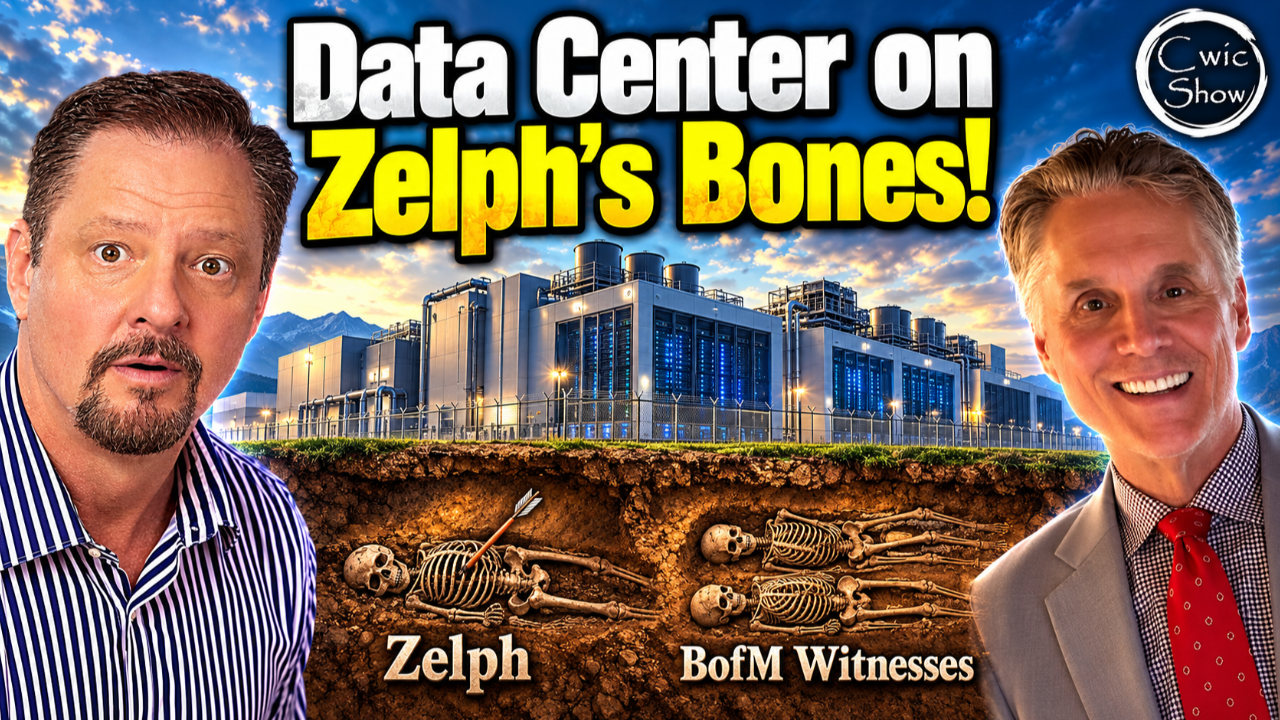
Two of the Eight Witnesses and the Zelph bone may lie beneath a 30-acre site in Liberty, Missouri Christian and Peter Whitmer Are Buried Here. A Data Center Is Coming. John Hajicek takes the fight to the Liberty city council Wilford Woodruff carried it from Illinois in 1834. Now the ground may be paved over Holy Ground or Server Farm? Liberty, Missouri’s Hidden History
Raw Transcript:
is a data center being built on the land where Zelf, who Joseph Smith called the white laymanite, is buried along with two of the eight Book of Mormon witness.
We bring on Mormon historian John Hijack to talk about the 1834 Zion's camp discovery on a mound in Illinois of the
bones of a famous white layman of which Wilfr Woodruff carries to Klay County, Missouri. And by the way, this whole
area of independence in Klay County, Liberty seems to be a hotbed for building data centers. And a developer
now is looking to put a fourth data center there, possibly covering these graves, including several black slaves
with a three-building 568,000 square foot development perhaps right on top of them. Now, John Hijek has been to
the Liberty City Council to make his arguments as to why this land needs to be preserved. This episode is brought to you by Warriors of Tiana. This is a
men's retreat focused on gospel- centered masculinity. Hall of Fame speakers. Lot of women are buying this for their husbands. It's just an
incredible experience. We sold out last time. It's this January 21st to 24th at Zans's National Park in southern Utah.
Great activities, fantastic instruction.
Learn to become a better husband, a better father, a better leader, and to lean into your masculinity. You'll be with a bunch of great men, and you'll
take home skills and tools that really matter. To find out more, go to warriorsoft.net or quickdia.com up to warriors and
register now. I would love to see you there. Here we go.
Chapter 2: The Arthur plantation
So John, it looks like they're going to be building a data center, a massive data center from the developer Metro Blocks right on the site of Zel's Bones.
Tell us about this.
Well, there's a 30 acre parcel in Klay County, Missouri in now in the city of Liberty. Uh it is the parcel where the
Latter-day Saints uh took refuge in 1833 and lived there until 1836. It was church headquarters from 33 to 36.
Remember the Latter-day Saints settled in Independence, Missouri from 1831 to 1833. And in November, in July, their their press was destroyed in November.
They were driven north. They fled across the Missouri River. Uh so you have Jackson County and then the Missouri River and then you have Clay County
above there and then far west and Adamand are up in in um Caldwell and Davies County. But here in Klay County
the it was our church headquarters uh from it was really our one of two stakes of the church. Kirtland and Klay
County Liberty were the two stakes of the church. So the Latter-day Saints settled there. They were like a gypsy encampment on the banks of the Missouri River. A plantation owner took them in.
He exploited them for labor. They built him a a palatial mansion um on his
plantation and they uh and when they were done building his home, they they drove them out of Klay County and drove them north up to what became far west and Adam.
So, uh, this man, Michael Arthur, was one of the wealthiest, maybe the wealthiest person in in Liberty and in
Klay County. And he had 1,400 acres on this plantation. Primarily, he had his slaves, of which there were several hundred, grew hemp.
Um, and then he had a 400 acre improved farm, 475 acres maybe. And then this 30
acre farmstead uh the the farmyard, the place where he had his slave cabins and
the Latterday Saint encampment where they were working for him at his own home, which was again you a long drive.
I mean, this is like he's trying to imitate a a plantation from Virginia or Mississippi or somewhere. Uh so it was
uh it was glorious to him uh to have to have
these servants that the these immigrants really the Latterday Saints were like immigrant servants coming up and uh and
building for him. Think of Lyman White uh who's a a temple builder is building the home. The Latter-day Saints built uh
built this home out of bricks. The Mormons made these bricks. Here's one of them. Actual brick that the Mormons made in 1834 for Michael Arthur. So, they
made a 100,000 bricks. They did the mill work, the beautiful wood, and the all the things he needed to make uh to make
this mansion. Michael Arthur describes his u his uh his banquetss. So, he's he's like Virginia, right? And he's
inviting all the other plantation owners over for dinner. And he's got a black servant behind every single chair
waiting. Each individual at his dinners had their own waiter. Um and he and he brags about it. hundreds of slaves. Um
he had his own uh his own slave pen on the on the plantation to punish slaves.
Um now this plantation, the Arthur plantation was kind of the de facto headquarters for the church. Correct.
It was absolutely uh beginning in 1834 and and right. So I know the institutional memory is a
little different. You think of uh Kirtland as being the seat of the first presidency because Joseph Smith and Sydney Riggden and his other counselors
which their various counselors are in Kirtland but um but independence is the real Zion and Kirtland is really meant
to be an outpost. Uh when Joseph Smith was coming to Independence to establish New Jerusalem uh they stopped and made a
made a converted an entire congregation in Kirtland. So suddenly Kirtland is the largest branch of the church and Joseph Smith needs to do administrative work
there. But his intention is that Independence Missouri is the center place of the church and so now he's got
problem but there are two founding families of the church the Whitmer and the Smiths. So he puts the Whitmer in charge of uh of Missouri and primarily
the Smiths are are taking care of things in Kirtland and they're almost running two churches of which Joseph is the
ultimate authority. Same thing with the bishops when we think of Edward Partridge being the bishop in Zion and New K. Whitney being the bishop in
Kirtland but new K. Whitney has to turn his records over to Edward Partridge.
And this is extremely important to me that people understand that Kirtland, even though it's the seat of the first presidency, the real headquarters is in
7 minutesMissouri, the intended headquarters. The Washington DC of Mormonism is in is in uh independence. So, it's a it's a big
deal. The Latter-day Saints are driven out of independence, driven north into Clay County, and now we've got a problem because they're exiled from from Zion.
And so Joseph Smith brings an expedition of couple of hundred people. They walk 800 or thousand miles from Kirtland in Michigan in two camps to merge together.
Frost through Pike County where they pick up Zelf and uh and uh let's talk about that. So So Zelf,
Chapter 3: The discovery of Zelph
right? Zelf Zelf is discovered in a mound on the banks basically of the Illinois River. Correct. This is this is while
they're on Zion's camp. He's with his group there. And this this was discovered about a foot deep is all in
the mound, the bones. There is an arrow in the back or at least through the ribs of of this skeleton. And apparent that's the arrowhead.
No, but it's similar. Wow.
Okay. That and he is uh and apparently because I think all we have are secondhand accounts of this. Not directly from Joseph, but the firsthand
accounts of those that were there say that Joseph said that this was a white layman, that he was a great leader. And
uh there are some accounts that Zeph was under uh I don't know the exact pronunciation but Onandagus which was known from the the east to the west and
you know really well known as a leader or or a general or something prophet maybe and and so they discover this but
how do the bones or at least a bone I think there's a broken thigh bone if I don't I believe that that end up coming
down to Missouri uh and and end up in Klay County,
apparently on the Arthur Plantation, right? So, as they're passing through,
they take a break, they rest, and they find a mound. Uh, it I don't know if they understood it was a mound. It was
an undiscovered mound. They walked up to the top of this bluff on the Illinois River. And you have to imagine um Pike County is sandwiched between u the
Illinois River on the east and the Mississippi River on the west and they're on this bluff uh just before crossing into Missouri. They cross Pike
County which is a day's walk and then Kinderhook is on the other side where there's more bluffs overlooking the
Mississippi River. And so they are just taking a break. Uh they're not grave robbers. I really want to emphasize
they're not grave robbers. They don't consider themselves grave robbers. They consider themselves um sort of proto uh archaeologists.
They climb up to the top of this point and then they walk down and as they're coming down they see an eroded spot and
they dig in as of archaeological interest and find the bone of Zelf.
Well, it's it's interesting that Joseph Smith himself had a healed leg bone. Justice
Smith had been uh had had surgery about the time of the War of 1812.
Um he's born in 1805, so he's about seven years old. They're in Lebanon uh uh New Hampshire. They've crossed over themselves for refuge at that time.
Crossed over the Connecticut River into New Hampshire. Uh but anyway, Joseph Smith has surgery. A lot of people know about that. And but lot of people don't
know that Joseph Smith's grandfathers were both crippled. Joseph Smith's paternal grandfather had had an injury
uh in his youth and they and uh and the cords in his neck made people call him crooked neck smith and his his maternal
grandfather was Solomon Mack. Lucy's father had had multiple war injuries and other incidents.
Both of those grandparents fought in the Revolutionary War, I believe. Yes, sir. Yes.
Yes. And so they called Solomon side saddle Mac because he couldn't even ride a horse. They called him side saddleaddle Mac because he had to ride
like a lady on sideways on his horse because he couldn't mount the horse. So Joseph was I think particularly sensitive to disabled and then he
himself walked with crutches for a couple of years in his childhood. And then we know we know some of his other sympathetic things that he did. Sliff
Modsley who sort of famously um this is an original drew Joseph and uh Hyram and all the other Smith family members.
Sliff Modsley, this original artist that that did this uh was crippled and Joseph gave him a place to live on the Smith
homestead in in Nauvoo. He had a cabin right on the Smith lot.
Um so uh so Joseph Smith was particularly sensitive to disabled people. I think his interest in Zelf uh
12 minuteswas archaeological, anthropological, and he was interested in this ancient warrior being healed as they're taking
their own military expedition to rescue the saints in Missouri. So, um you think about the the papyrie of the book of
Abraham and the Egyptian mummies that the church acquires in Kirtland just a year later also with the intention of of
having a museum. So, you know, we we don't want to look at it necessarily through the lens of 2026 that they were considering themselves to be
archaeologists and that they discovered the mound and took one thing to show that the that there was evidence that there was a mound there.
Um, they didn't rob the mound and take all kinds of trinkets and treasures.
They took one artifact that was of interest to the church.
And that that is that when you say one artifact, do you mean the bones or is it just the thigh bone? I think it was Wilford Woodruff that had grabbed it.
Only the thigh bone and perhaps an arrow head.
And the thigh bone was broken apparently from a sling stone. Is that right?
Sling stones like like this. They you can see where you would have put a a rawhide uh through there and Uhhuh.
they flung it and he and he broke his leg, but it was healed. That was the interesting point that this man had been in multiple battles. He had an arrow
head in his ribs. Uh his teeth were smashed out by a stone or something like this. But he had been healed from these
different injuries and buried as a presumably royal. And by the way, he was described as large, like seven feet
tall. Um so it was a it was it was archaeologically as important as any as
any academic person today that you've been to Egypt, you you know.
Yes. Do the do so Wolf Woodruff grabs the the thigh bone of Zelf and
apparently buries it somewhere on the Arthur plantation. We don't know exactly where. Is that right?
Well, but we can surmise. So you can go and I have all week, you know, studying and for years studying the layout of this plantation is important.
You you have to you have to look at the the topography, the hills, the terrain, and you can see where the drive that's
now called Campbell Drive was actually originally the plantation drive. It comes it comes right up to the house.
And the house is sitting up on a little null, the high spot, and you can look down and you can see where Arthur buried his children. And you can see where the
slave cabins were. And you can know where the Mormons settled in. The Mormons lived right in the slave encampment. They were treated like slaves. They lived in the slave cabins.
And so the And so and slaves always buried their people also, by the way, in their own yards. They didn't these people weren't when people died, they
didn't take them by wagon into into liberty into the village cemetery. They just buried them. The black slaves buried their own in their own little
community, their own tiny village here on the plantation.
Chapter 4: Burial site controversy
So So the So let's get back now to the data center. The data center is going to be built on the Arthur plantation. Is that right? Where some of these black
slaves would have been buried, where the Zelf bone uh is somewhere in there. And then did is there also
some of the witnesses that are in that area that are that are buried?
Yes. So, the plantation is divided. It's sold over the years. As the Civil War is approaching, he starts selling land and
selling his slaves. and he gets down to just 400 acres. Uh 475 plus this probably about 500 uh including this 30.
The 30 acres was sold probably about 1864.
Um but anyway, you have to you have to see the layout to see to see where Zelf would have been buried. It's obvious and apparent uh where the where the
different places are. There there are marble tombstone pieces all scattered everywhere on this 30 acres.
Um but and by the way I knew the Page family. Um uh Norman Page was the great grandson of Hyram Page who was a Whitmer
and they sold me the Page Library. like this is the the the evening in the morning star the original independence
newspaper is uh they sold me his you know it's doctrine of covenants and his uh his his
other books book of Mormon and things took me this is important Norman Page took me to
show me where the Book of Mormon witnesses were actually buried I I you know they're not identified I can't say they're I can't tell you within six feet
of where they're buried, but I can tell you within 100 feet of, you know, where they're buried and they're buried on the
on the parcel that the data center is going to. And there's some misunderstanding. There's a monument.
And this is why the layout is so important. If you understand where the front road comes into plantation and then in the front of the of the mansion,
Arthur has buried his his own children on this 30 acres. They're not buried on the 1,400 acres or the 475 acres.
They're they're buried on the 30 acres, his own children. And that's in the front yard. But they put a we put in
2011 a monument there to commemorate just it's a commemorative memorial of the witnesses, but it's not a tombstone.
It's giant large marker, but it's not a tombstone. It's not where the witnesses are buried. The witnesses are buried farther away
only. Or Arthur's children were buried in his front yard. And Zelf, we think, is buried somewhere in the front yard,
probably close to where children are buried.
I mean, Wilfrid Woodruff's not going to bury this thigh bone, you know, next to the porch or something. He's burying it
probably in that same general area. and then along that road. So then the drive turns and there's a long drive that
heads west and that's where the slave cabins are and that's where the slaves are burying their dead and that's likely
where the Book of Mormon witnesses are are are because that they're living there and so there are other Keep going. Keep going.
So, so and so, and so Norman showed me the exact spot and that was about 1995
showed me where the where his so a page you have to understand Hyram Page is a is a Whitmer. His descendants are also
Whitmer's because Hyram Page married Katherine Whitmer and Oliver Cowry married Elizabeth Anne Whitmer. So
there's the the five Whitmer sons, Jacob, John, Christian, Peter Whitmer Jr. and um what did I forget?
Anyway, five Whitmer sons and then the two son-in-laws are all together there in Missouri.
Okay. Uh were there other bones? I think that there were other bones possible, but we may not have a specific account
of Zelf's bones that were that were maybe brought down as well.
I don't have an account of that. I don't remember that.
Okay. I thought that maybe there were others that had maybe grabbed some of those bones as well. But okay, so here we have this data center for metro
blocks that is going to be placed on the Arthur plantation plot. Correct. Correct.
Okay. You have gone to is it the city council or where have you gone to to talk about this and say wait a minute here there is historical
uh dead bodies here and historical things that are very important to the church to several churches I guess and
and how has that gone so far it went great I was there within two days of finding out about the data
Chapter 5: Data center impact
center and they were very receptive they treated me very well I don't think there's any malice I they absolutely did
not know. They were not aware of the size of the data center. They were not aware of the Book of Mormon witnesses being next to the data center, much less
uh I mean the monument, much less the the um witnesses being buried there.
It's important to understand that on this 30 acres, the prop there was Campbell Drive
went around the perimeter of the of the acreage and they've absorbed that road also. So,
um, the the data center plans go right up to the edge of the property. So, there's no there's no room to leave any
graves. They're not it's not like there's a data center on one part of this property that might affect the graves. It will affect the graves
because the data center is one of these huge buildings that goes it's a a a cluster of three giant buildings that go
right up to near the edge of the property except for the low spots on the property where there's water.
Okay. Uh I want to show this here real quick and let me just find
what I'm looking for here. Okay.
All right. So, here's I've got this here. Here's the Arthur Cemetery.
There's the Campbell Drive that you're talking about. There's Liberty Parkway up above it, if you can see that.
Uh, where where is the data center be being built? And where are the witnesses buried and bo the the at least the bone of Zulf?
Right. So, you see there's two roads named Camel Drive. one comes south.
That's the entrance to the plantation where you see a a side arm come off that road to the
toward Yes, that one right there, the the southwest, the southeast. That's uh right where that road breaks off was where the Arthur House was, the mansion.
And then as you travel uh west on Campbell Drive, that's where the row of slave cabins was.
Okay. the data center is taking the entire bottom. So you see the the distance between Amble Drive on the
south there that you're pointing at and then Liberty Parkway up at the top.
The data center is the bottom half of that section that's surrounded by that road. Okay. Exactly. Correct. Okay. Yes, sir.
Okay. And and would this be the exact area where the witnesses are buried?
Yes. where you see that road uh that comes down. It's a it's a drive really.
In fact, it's not even there anymore, but on your map, the road that comes down the center of the section right there. Yes, that section there. And at
the bottom of that is where the Book of Mormon witnesses were buried generally. Okay. Very generally. Very generally.
How many of the witnesses?
Two. Christian Whitmer and Peter Whitmer Jr. Okay. two of the witnesses would be there.
Okay. And then being that the mansion is back here somewhere uh in the southeast corner here from there where
right at right at the point that road where would the cell bones be?
Right there above above the road that says Campbell Drive right there. Right about there.
Right about here. Okay. Very interesting. You know what else is fascinating? Maybe a little bit more to just my just my guess by studying the train and and reading the descriptions.
Okay. So, if I go back here and I take a look at uh just the area to give some people some context here. This is Liberty up here.
Area of Liberty here. You've got the plantation right down here. Uh I believe independence was south of here. Am I right?
Stop freeze it right there. So, zoom in to just to the point where you can see the town of Liberty Village. Okay,
that's not that's just the old Liberty. That's Liberty. That's the center of downtown Liberty. Liberty now now encompasses and is in has uh absorbed that whole area.
So the Arthur Cemetery is in the where it says Arthur Cemetery, that's in Liberty, too. liberties grown.
And also in looking at this map, you have to understand that they rerouted um the Missouri River where you see uh
Highway 210, the river was north of that.
Oh wow. So when the Latterday Saints jumped off of the jumped off at the Liberty Landing, you know, they crossed
25 minutesthe river at Liberty Landing, um they were right on the they were right on the Arthur plantation as they got as they got off the off the river.
So the so the plantation was almost right on the river on on the That's what I'm saying. Yes. And he was growing hemp. Hemp is used for ropes.
And this was the steamboat era very early. The steamboats are coming up from New Orleans to St. Louis and then they're taking the Missouri River up to
what is now um Omaha uh you know where Council Bluffs and Florence and Winter Quarters were. The steamboats are going
all the way up there and they're selling rope to the steamboats. Rope is absolutely essential to running the steamboat trade. They're selling a lot
of ropes and so he's grow his slaves are growing hemp for the steamboat industry right there on the river.
Okay. Okay. And then down south here, we can see here's Independence right down here.
Yes. South of the river is Jackson County. Yes, sir.
Okay. And and so if I were to go in, I don't know if this will work or not, but if I just said Klay County, Missouri,
uh we're looking at here, it gives me a an area here. Looks like Independence is south of this, but that whole Liberty
Liberty area is in Klay County, correct? And if you uh did the same thing to Jackson County, you see a
similar thing. Independence also, by the way, you can see just from the gray areas on the map that Independence is also not just downtown or the square.
It's Independence goes virtually to right up to the Missouri River also. Okay. Yeah. Okay. Very interesting.
Chapter 6: Regional data center boom
Okay. on these data centers. Something else that I think is is kind of interesting, I mean, take it with a grain of salt if you want, but there are
already two massive data centers in this area that have already been built. Uh
they're now look, you know, obviously this with this one in Metro Blocks, they're looking at a third massive data center right here on this eastern area
of outside of Kansas City. What is this resources? Is this Missouri River? Is this one of the reasons that they're
doing this? Because they need the water from the Missouri River. It's a flatter area, I suppose. What? Why? Why are they going here? Do you know?
Well, we never want to ascribe uh malice to something that can more easily be explained by stupidity. But we have a
problem out here where the where the city councils are very gullible.
Okay. Yeah, I think the I think the city councils in both Independence and Liberty that we have right now are very very nice people, but they're very
naive. They don't negotiate. They take the first offer. Uh they'll give them anything they want. Um it just So here
in Independence, about two and a half miles from my house, in the last the most pristine piece of Jackson County,
uh they they're putting right in the city of Independence a the largest data center in the entire world. It's in fact it's the largest uh business investment
ever in the entire world. They're putting a $150 billion dollar data center right on the little blue river on
the east edge of independence on our Zion. They're they're they're ruining Zion.
And uh so to put into perspective, the one in Liberty on that 30 acres is uh it's only 1/8 of the investment and you
know it's 30 acres. The one here is a 400 acre building. a 400 acre building for $150 billion dollars. I don't think
there's four or 10 billionaires in the state of Utah to put it into perspective of what $150 billion is.
Yeah, it's a lot of money and a lot of a lot of um computing.
Yeah. Now, my understanding is there are two that are already built. This this metro blocks would be a third one. The one you're speaking of would be a fourth
one. This is becoming a mecca of data centers. Now, I'm actually pro data center as long as the locals want it.
They they need the vote on that, I believe. But but regardless, it's just that's an interesting area. Why there
why are all of these data centers being built in this area? That's really that's kind of interesting. I mean,
I'm pro computer myself. I'm I I first used a computer in 1968, and I've had my own computer at home. Uh well that was
at home but my own laptop I've had since whenever uh you know 1988 or something.
I'm a big computer user. I have no problem with data. Problem with these data centers is the city councils are
giving them tax abatements that are unequal, unfair, not equal protection.
you know, to give these data centers uh when you give a data center 90% off of their taxes while raising our property taxes, raising our sales taxes, and you give them 100% off of their sales taxes.
30 minutesUm, you know, it changes things to being a to moving away from from free enterprise, from private property, and
now it's subsidized. Now there are stakeholders. So, we're financial stakeholders in these data centers, and
it's not fair. So, we should have a vote. Yes, if you're going to Yeah. And and you should have a vote and you should be able to get the benefit out of this to some degree. If you're
losing some of your land, you know, there there should be definitely, okay, we're going to take care of the citizens here, which I think is one of the problems in
Utah, by the way. But I think uh what about the LDS church? Does the LDS church have much influence on the on the
local policy and law and and decisions like this at all?
Chapter 7: Church land investments
Interestingly, yes. the the the church uh in Utah has here in Missouri a lot of investment in commercial land. Uh it's
not for building Zion. They buy strategic properties here that they end up developing. They have right now and it changes. They're always spying and
they're always selling. But right now they have over 10,000 acres in Jackson County. They have over 10,000 acres in
Davies County. They have about 5,000 over 5,000 acres in Klay County. even after all the development. So they owned
all the land. They owned the Arthur farm. Believe it or not, the Arthur plantation, they've developed the Arthur plantation. Across the street to the
south, you're you're looking there at the north where they're putting the new data center, but to the south um is an
Amazon distribution center or sorting center. Right there across the in the backyard of Arthur's mansion, there's a
uh an Amazon, you know, and you know what they look like. Giant, giant, giant. Yes.
You know, there's Walgreens has a distribution center there. So, the church developed all that. FedEx, UPS, whatever else is out there. Uh it looks
sort of like your area between Salt Lake City and your airport. Uh where you've got the west uh the west side
warehouses. That's what Klay County looks like thanks to the church uh building Zion here. Where where am I what am I missing here?
I'm trying to find the area here again of uh Campbell Road.
Uh just go to the monument to the eight witnesses if you want to search. I can't see your screen right now. I'm hitting Jackson County Monument.
Eight witnesses. Type in eight witnesses. Okay.
Yeah.
Yeah. So, okay. So, look, you can see it right there. You can see the Amazon sort center. Yes. Right down here. Yes.
Okay. And the show inside of the Campbell Drive. Yes.
That's being that's being obviously had to be purchased by either Metrolocks or whoever did the land development before
Metroblocks got involved. Well, these companies have multiple entities.
Typically, the church does it the same way. You know, Walmart does it the same way. One entity owns the land, one entity owns the building, another entity
owns the computing equipment, another entity owns the company that manages it.
But a church subsidy had to have sold this to Metrop.
That's the interesting thing. The church never bought that. By the way, I didn't mean to make it sound like I was The church shouldn't be in in the
commercial real estate business. I think they should. I think it's wisdom. I think they've done very very good and and and invested money wisely for a
rainy day. Uh but you know it's it's not houses. It's not you know Zion is a little bit a ways away yet. Uh maybe
we'll all live in that data center someday. Maybe we'll all live in that Amazon sort center. Looks like barracks.
So, so the land here because you're saying that the land here in this area is is is the land of the new data center that's being built.
Yes.
But you're saying the church did not own that or one of its church didn't own it. And that's as interesting as anything that the church bought all of this land from the Arthur
plantation but didn't buy that parcel. I think they understood and knew that that parcel shouldn't be developed and so they didn't buy it.
Um, you know, you have to understand it's an investment armor of the church. It's not like the historians are making the
decisions to buy the plantation. It's just the investment armor of the church.
The church in its wisdom knows that it's probably wiser to buy land in Jackson County and in Klay County than to buy it
in in Arkansas where they they did have some farms but sold them.
Um they they're they're investing in the in the area here very very uh aggressively.
Yes. And so but somehow that investment arm uh you know and their their investment arms are are farmland reserve
incorporated uh suburban land uh uh and uh property reserve incorporated. Um
they invest in these properties and they develop these properties ultimately and they build temples on them. They build communities too. They did that uh up by
Shaw Creek uh in in our area too where they built the Kansas City Temple. So they do a combination
um of of good investing and you know and maybe the Amazon center was the right thing to do in those things that developed out there because these are on
the river bottoms. There's railroad tracks. There's river boats. There's it's it's an industrial area on the
south end of Jack of Klay County. Um but yeah, I'm looking at this data center.
It looks like they're going to put three buildings in there. Total of the three buildings is 568,800
square feet, right?
Just that those are that is I I Wow, that is huge.
That is huge. And I guess the total area here is about 30 acres.
Yes, if anybody's doing research, they'll see it variously described between just a little under 29 acres and sometimes up to 35 acres. And that
difference is whether or not you incorporate Campbell Drive. So they using whatever uh legal method they
used, they grabbed the road. Originally the road the property was smaller, then they built the road and so the I mean
larger and then they built the road and the property becomes smaller, right? And now they've re regained that road as part of the data center. So Campbell Drive is part of the data center
property. The city just gave it to them, I suppose, or they used uh whatever eminent domain or something to get the to get the road.
Chapter 8: Advocating for preservation
So in your uh presenting before the city council here,
are you are you trying to get them to move this? Are you trying to get them to not build this data center? Are you trying to get them to make sure the
buildings and development are beyond the possibilities of where these historical sites might be?
They can't build there. They absolutely can't. Not with the sl number of slaves.
There were hundreds of slaves living there for 40 years um and burying their their their dead
behind their their cabins. They can't really build there. The Book of Mormon witnesses are there in a kind of a vague spot. We we know it's on that 30 acres,
but they can't build there not knowing where those are. This is a holy site.
You would never, you know, Zel is for whether he's mythical or legendary for Latter-day Saints or he's a prophet. Um
he's still like Pocahontas to us or, you know, he's he's a he's a respected figure in history. Um you can't really
nobody would do that you know bury where any Catholic saint was where any Catholic saint was buried you don't put a data center
you know or where any right where Buddha is buried you don't put a data center where Muhammad is buried you don't put a data center this is a holy
site uh for so you don't think it'll happen at all well if we get enough people interested
it won't happen if if it's too quiet it you know we need some national attention Now, you put out a documentary on this.
Where do people find that?
Um, my my YouTube is is Mormon Television. I don't have a big YouTube following. I just started on YouTube,
but I I beg her on Facebook. Um, the the video uh of the city council meeting had had over 100,000 views just yesterday.
Um, and then the documentary is maybe 75,000 views, I think. Um, so there's a three minutes where I'm in front of the
city council. Plus, they asked me questions, which was super nice. They don't normally ask questions. They asked me a couple of minutes of questions and
then uh and then I made the 22minute mini documentary, kind of a homemade documentary, but it's my first one. I did my best, but um
but people are are getting a lot from that and and I appreciate that they're sharing it.
What uh is there anything else that you think should be brought up about this?
any any anything else pertinent to the land or Well, I think the African-American interest is huge. I I think that I think
that if we can get this across multiple cultures and get the African-American and indigenous uh descendants as well as
as uh you know, millions of Mormons that that that somebody will care.
Yeah, we have to everybody needs to be writing to the mayor. Everybody needs to be calling the mayor and the city council in Liberty, Missouri.
Okay, great. I want to finish up on one other subject. You were featured, I believe, in the recent documentary on
Chapter 9: Closing discussion
40 minutesthe photo of what some people discuss as being the possible uh degara of Joseph
Smith. What are your thoughts about that degara?
And um how what what do you what did you think of the results of you know the the overall process and
results of what was done in the research uh to to put that movie together?
Well, the producer is a fantastic person and a good producer. The researchers and the art the artists are just incredible
people. Um, uh, the the I loved the movie. The the locket is not Joseph
Smith. It's not a Mormon locket. It's not an 1840s locket. It's not a Mormon photograph. It's not the work of Lucian
Foster. It's not from Nauvoo. It's not anything. Um, but but the but the research they did is phenomenal because
they're calling attention to the artist Modsley. Uh, remember Modsley is the person who did all the profiles. They're
calling attention to um uh David Rogers who's a portrait painter in Brooklyn, New York and a Mormon and he painted
portraits in New York for 30 years. Very skilled portrait painter who did Joseph and Emma. Uh so they're calling attention to those artists. Um here's
the original of Emma Smith they featured in the movie.
Okay.
Love that little uh um Alexander Hill Smith looks like a little Joseph about the time he would have had his leg surgery.
Huh.
And they have uh they were interested in this because Emma has a a gold locket there on her. Yes.
I think it's a watch. Um, but there could be a Darro type like this, but probably not because Portrait is made in
in uh 1842 and uh they weren't they weren't wearing darotype lockets like that. They were wearing watches.
But um but the movie is great. They call attention again to Sliff Modsley, to David Rogers, to the skulls. The fact
that the skulls were photographed is a is an important story and the death masks which I've done a podcast on in
the past. The plaster masks where they where they made an impression of Joseph and Hyram at the time of the martyrdom is um super
important so that we can kind of know what Joseph and Hyram looked like. Yeah, very interesting stuff. All right.
Well, John, thanks so much for your time. Really appreciate it. This is a fascinating subject. I mean, it really is. that brings together there's there's such a you know it's such a lightning
bolt right now the whole discussion of data centers to begin with but to have this centered down on some Mormon history and and land is is really
interesting and and again just the thought of why are there so many data centers being built in this area that's that's really interesting to me
yes sir so appreciate your time and we'd love to have you back you're the past thank you anytime Thank

"I Take This Every Day!"
Learn more about why I accepted Cardio Miracle as a sponsor and why I take it every day!
- Greg Matsen

Stay Connected With New Articles & All Things Cwic!

Cwic Audio Player
All of the Cwic Media podcast episodes on one page!
Recent Posts

