
Ilhan Omar, Zohran Mamdani, Adbul El-Sayed - The Muslim Brotherhood Is Growing
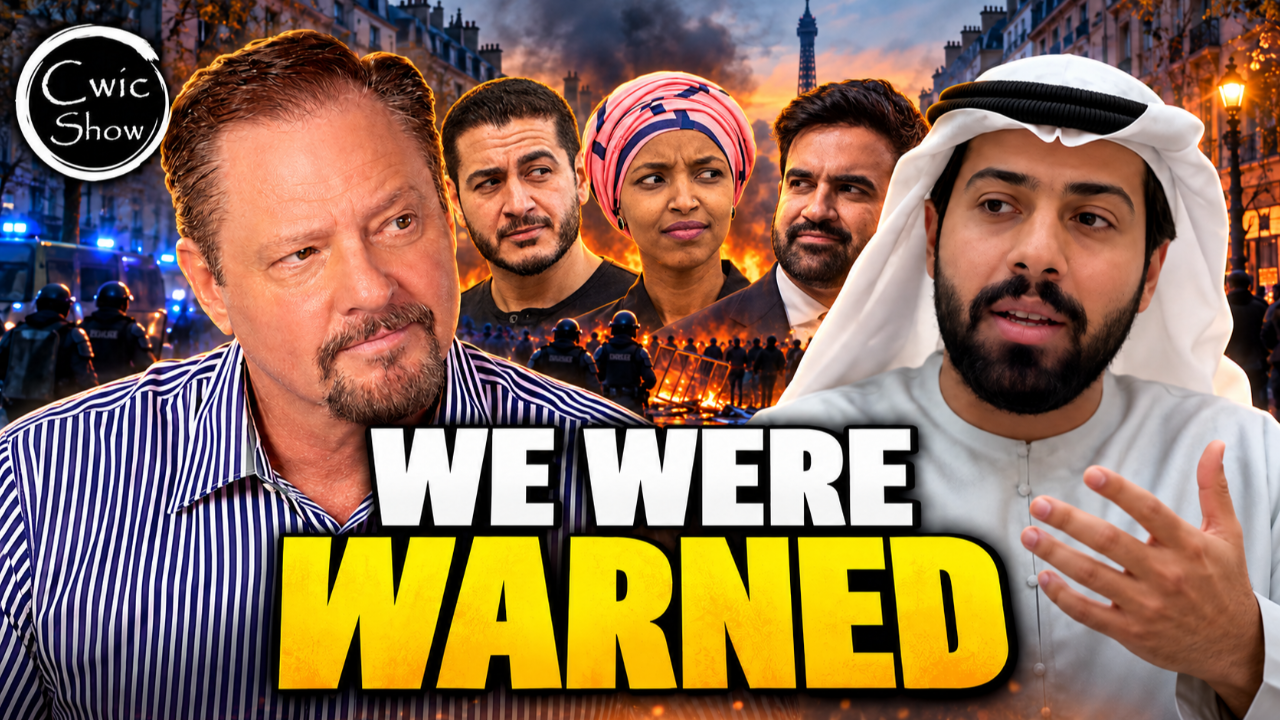
Inside the Muslim Brotherhood’s quiet strategy in the West Campuses, charities, and politics: connecting the dots A Muslim Explains the Muslim Brotherhood The Islamist Network With No Country Free Palestine or Free Hamas?
Raw Transcript:
Mam Dani, Abdul El Say, Ilhan Omar. What do these individuals have in common? What infiltration has the West allowed?
In 2014, a Muslim country looked hard at the Muslim Brotherhood and declared it a terrorist organization. That country was
the United Arab Emirates. 12 years later, much of the West still treats the same movement like a community group
with really good PR. Today I'm joined by my friend Ahmed Sharif, a political analyst from the UAE, who has watched
the Brotherhood operate up close. He explains how a movement with no country of its own still functions like a state,
why it recruits on university campuses and soccer fields, and how Hamas fits into the whole picture. He also has a
pointed question for those in Washington and the leaders of the West. Why are you allowing this? Ahmed is a devout Muslim
and he's tired of watching these groups wear his faith as a disguise. This episode is brought to you by Go and Do Travel and the Three Continents Tour.
Chapter 2: Sponsored tour advertisement
Coming this March 16th to 27th, 2027 and March 30th to April 10th, 2027. This is
one of my very favorite tours. It's where we go to Turkey into Istanbul down to Ephesus where John the Apostle kind
of retired probably with Mary the mother of Jesus where of course Paul walked and taught in this beautiful incredible
Roman city. And then we move to the Greek isles to Potmos and even the very possible cave where John received the vision of the book of revelation. We go
to Santorini the aisle of cit and of roads. And then of course we end up at Athens and Corinth. From there, we fly down to Cairo. You'll see the pyramids.
Get on a camel and walk where Abraham, Joseph of Egypt, and Moses walked. And if you get the add-on and you really need to do it, you'll go down to Luxor.
We'll cap it all off with tours through the Egyptian temples where you will see your temple engraved all over the walls
of those temples. To find out more, go to quickmedia.com, go to trips and events, and click on
three continents tour. I would really love to see you there. Here we go with Ahmed.
[music]
Chapter 3: Understanding the Brotherhood
So [music] you you gave a distinction between you didn't bring up Iran, you brought up the Muslim Brotherhood. So what is the
difference then between okay Iran is is got their proxies and the Muslim Brotherhood as a movement overall has got their proxies. You're making the
claim that these are proxies of the Muslim Brotherhood but you're not bringing up Iran. Will you talk about that distinction?
Of course Iran is Iran is a state. I can't call a whole state a terrorist organization or a terrorist state. That that would be just just uh ignorance for
me. Uh the Muslim Brotherhood are a are a state. They're an institution but don't have a sovereign land. They don't have land. So they're trying to test
their luck with Europe. If they can take over overtake a country and overthrow a country, they will name that Muslim Brotherhood. They will change the name
to to to a an Islamic term. And they couldn't do it in the Arab countries because back in 2014, the UAE banned them, banned the Muslim Brotherhood because we saw the threat miles away.
Whereas in Iran, it's a state. They have the IRGC. They have, you know, the the regime. But Iran as a state I I can't call it a terrorist state because they
have their own people. They they have their own life. It's same with like you know generalizing a movement in in in the US for example calling oh the USA is
is is a is a leftist state. It would be just you know pure ignorance of the the right-wing or you know the other the
Republicans. So that's that's a a a small summary of of how I I view it personally.
So the Muslim Brotherhood this is a Is is there really a hierarchal
structure of this movement if there's no if you're not talking about a state? Is there a hierarchal structure that is
pushing this or is it just an alliance of a number of groups? I mean, I know this came out of Egypt originally. Hamas is a actually a
an offshoot from from the Muslim Brotherhood. They've got this movement in several different mosques all and and community centers, etc. all over the
West. But is there a hierarchal structure? Is there someone guiding this?
Well, think of it as a you know there's a state and there there's a deep state.
The the Muslim Brotherhood has has a hierarchy. It's uh you know as you as you mentioned it was founded in 1928 by Hassan Alban in Egypt and there's also
the the Hamas in 1988. They had their charter which was basically saying that they are part they're a wing of the their different ministries. Let's think
of it as a state you know. So the ministry of defense is Hamas. It's the armed group. You have the ministry of economics and funding which is the Islamic movement. They are who fund
basically the Muslim Brotherhood and they are integrated properly integrated in Europe through doctors, through engineers. They don't really use you
know uh terrorist attackers. The Islamic movement they use actual doctors and intellects. Whereas Hamas and the other armed forces they actually use actual terrorists and they scout your people.
They don't scout Muslims. They scout Christians. They scout people from other faiths and and and ethnicities to become
radical extremists and, you know, conduct their their terrorists attack.
Chapter 4: Infiltration and radicalism
Well, that gets a little more political because it's uh you look at, you know, for example, I mean, oddly, you had here in the United States, you had Black
Lives Matter, which was formed in 2014.
In 2015, they were all already visiting Hamas in in Gaza. and and and for whatever reason there's an alliance that's already built there. BLM had
6 minutesalready created a a network in the universities in the United States. And so there's this odd
uh I I I I I dare to call it an unholy alliance to some degree, but it's it's
this strange alignment from the far left to those that you would view at least politically that would be more on pretty
much on the far right in what their beliefs are. Yet they kind of come together and and form this alliance through the universities especially. You
talk about engineers and doctors and I'm sure there's other avenues that that they pursue, but the universities in the United States have really been captured
by this ideology. You see free Palestine all over the place. Uh it become it is now we had the pride flag that they usually were moving or the Black Lives
Matter flag. Now it's the Palestinian flag that is kind of the uh rallying
emblem of these groups. How does that happen? How does that work?
First of all, like these these movements will will cost them more than gain for them. It it's just a a waste of their
time and it's comedy gold for us because in in in the end when if you want to you know serve a cause, do it properly.
There's a a seat in the UN. there is there's always a table and a chair for you to sit and conversate and you know uh conduct your politics cuz what
they're trying to to to talk about and you know uh raise awareness on are political matters. So if you have a political matter, go to the right
people. What am I? Let's say I'm I'm a good Samaritan walking in the streets of New York. What what is my fault getting beat up or hurt or maybe in Paris
getting beat up or hurt just because, you know, I'm not walking in a free Palestine protest. You know, Paris isn't
uh Palestine. You can't free Gaza or free Palestine from Paris. You can free it using the UN, the security. There are
so many aspects you you can you can go to. So protests personally I see they they never work never did. The only time
they did is when you know the uh when you know for for women's rights back in you know when the was it the the first or the fifth fifth amendment when when
when it was for for women's rights that was when protests actually that was when when protests actually work. But nowadays you know for for for
these causes I don't see why a protest in Europe will benefit a country in you know in the Middle East. doesn't make sense.
So again, looking at this and I'm just trying to find the tentacles of the Muslim Brotherhood and where they're kind of looking and and recruiting and
where they've got some power and leverage. What about in politics in the United States? I mean, do you follow the politics at all in the US?
Well, uh I I I follow some some of the politics and I know that, you know, a certain person from Minnesota should should be deported hopefully sooner, not later.
Chapter 5: Identifying extremist influence
All right. So for an American, how does an American distinguish because the the rhetoric in language is very
confusing sometimes? This is a new thing in the US where you've got a number of Muslims running for example for political office. Uh you know, we're
very open here in that regard, but there's also a little bit of a, you know, wait a minute here. This is very different. And how does an American
distinguish between someone who might be involved with a Muslim Brotherhood movement, whether political or a
community organization, and and just a good-hearted Muslim organization or or politician?
Well, you you could you can see it by, you know, what they're trying to to say out in the public and what they're actually doing internally. And of
course, let's say I'm I'm a I'm a normal, you know, uh person trying to donate to this, let's say, to this charity that is run by a in public a
public Muslim figure. I won't read into every detail. Let's be honest. I won't read into the whole guidelines and policies of what they do and who they
10 minutessupport. I will just think, hey, I want to support this cause cuz, you know, I feel good today. But the Muslim Brotherhood, they were actually
integrated or they were part of the US long before like these 10 years. Maybe they just want to build a portfolio since day one. Build a portfolio, have
some achievements, have some have a good CV, you know, uh a good uh clean slate and then when you get go get into
office, get into government and now you can, you know, use your your your networks. And in regards to to to the
Muslim Brotherhood and how you can tell their Muslim Brotherhood in Minnesota is a big example, you know, Nick Shirley did a did an amazing job. He made our
lives easier as well. us like you know a political analyst from the UAE you know trying to say hey wake up look at this he made my life twice as easy uh he
exposed the fraud and you can always ask this question where is this money actually going you know you you you can't think good of a fraud
it's fraud there's evidence oh no he's probably just building a mosque come on like we're not we're not born yesterday
so that's another take you can have look at where the money is going look at where this person what they're talking about if this person is not willing to
be integrated in a society you know not trying to be a part of a pluralist society then there's an issue because in
my country we tolerate we coexist just because you're a Christian that doesn't mean you can't be part of my country you know we have a a Christian player
representing my country in in you know in in football in soccer games so it's fine but these people you know some some
people in in your country hate that they don't want this they want you know, to separate, you know, to have this community and that community, not an
American community. And that's where, you know, I draw the line personally.
Chapter 6: Political and social impact
Okay. So, if I was looking specifically, I mean, for example, and and you don't need to answer this if you don't want to, but if I'm looking specifically at
organizations and individuals, you know, so let's what about CARE? C A I R. Uh, do you know about CARE?
I read about it, but not not really. No. So, you might want to look at CARE.
They're a they're probably the largest organization in the US that is but they there's some strange entanglements there
right there's some strange sources for funding there's some different things but care what about the politician what about like an Abdul Elsiad
uh that clear as day and you know even even his his his sibling his sister tweeted before that you know I spoke with my mom
about how you know the Muslim Brotherhood etc. So that that's as clear as day. But you know in in in in let's say in a different country where you
know I I'm more you know uh well knowledged and educated around it. In the UK they have five pillars very
famous uh you know foundation organization which is purely Muslim Brotherhood you know called the five pillars.
Yes. Which you know in in in my faith we have the teaching of the five pillars of of Islam you know donating charity and praying. But they use this they use the
things that are taught in my faith to you know you know uh glamour their their their picture you know clean their picture up both of you know the owner
and and the the editor-inchief were you know backed by you know in the IRGC in 2009. So now they are head of you know
big foundation in in the UK. In the US, for example, you have people wearing, you know, a a kafia, which is like a
scarf that is, you know, made famous by, you know, the Hamas spokespeople, and they they will more than willing to go
to these pro protests having the exact same clothing and attire as a Hamas spokesperson would have.
This is not this is not Islam. It's not real Islam. This is just a political movement that you are, you know, putting
your effort into. you know these again with these activists I well and again it's strange because you
know Muslim Brotherhood everything you hear from them is all about nonviolence but Hamas is a shoot off an offshoot of
of the Muslim Brotherhood and has their support exactly you know Hamas is violence you can't you can't you know you can't not
say Hamas without saying violence and you know I I if I may I want to push back to you know and bring it to to my country a bit in regards to Muslim
Brotherhood, the IRGC since the 28th of February, the first day of, you know, when when when the attacks were happening. Mhm.
Uh that, you know, that changed a lot, but also confirmed a lot of things. You know, my country, the UAE, we are not a
a country that reacts and goes into cowardice and height. We prepare before a crisis, not during a crisis. So in uh
my my president she Mhhammed bin Z you know the first thing he he he did and showed us that he showed us that leadership isn't about constantly
talking there's a difference between talking and and acting like for example uh in regards to the Muslim Brotherhood they always talk the talk but when it
comes to walking they bomb in the UAE we walk the walk and then we earn the right to talk the talk so that's that's how I
could like you know proper ly summarize what's going on you know within like our region and the Muslim Brotherhood
Chapter 7: The UAE model of leadership
what you know there is something unique about the UAE I I I that I find and I've looked a little bit at the history I'm certainly no expert at this at all but
uh you know I I think there originally there were about seven tribes right that were and there was some rivalry between those seven tribes to me there's a
little bit of a parallel to the United States where you have 13 colonies a lot of them have different denominations of Christianity ity that uh are kind of
fighting against each other and to actually bring everybody together and unified under one, you know, document or
or movement or whatever it is is a very very difficult thing. But you guys did the same thing. You had these different tribes and you've kind of united
together. uh does that help you think in the psychology of an Emirati that that you've that
you've that there is some sense of plur pluralism there because of because of the different tribes of course well uh just to quickly
correct uh the tribes were never actually in war they were never in in in opposition it was just different geographies different places and our found our founding father the zai
decided to you know instead of having a lot of close close borders let's just unite the whole geography And of course, we're not as as big as as
the the USA, but as said, we punch above our weight. And I'd like to echo on that by saying we punch even above our geography today. And that is because of
our connectivity, because of how, you know, we we have, you know, uh connection with uh China and the connection with the USA. We mediate
between Russia and Ukraine. That's that's how you should deal with it. And in regards to how I think and how I present myself and how you know the
pluralism of my country is, someone from Abu Dhabi has a different accent than someone from for example. Different
states, different accents. But what unites us is you know first of all our dress, how we how our attire, our you
know our faith, we are a Muslim country and you know our leadership. We all are
uh agreeing on one leaderhmed bin alan and of course other leaders of the other emirates that the seven emirates and we
we we're not always in a fight of who's the who's the next leader. We we think about what's next for the people, what's next for our country, not who's the next
president. So maybe that's the only difference. But for me uh I see the the USA is as is actually a good example of
of what to study in politics. If you want to study pluralism, study study the USA. It's it's, you know, there's different people from different places,
you know, different ethnicities as well, different groups. It's very interesting for me personally. I studied I studied that, you know, the the 13 different col
colonies and how they are are a pluralist country state.
Yeah. Yeah. So, in in the UAE, give me an idea of what what is the mentality? You know,
you you had a very What was it back in I don't remember the year you said, but when the Muslim Brotherhood was banned? What year was that? 2014.
14. Okay. What is it about your country that allowed you to recognize this and have the ability not to be entangled
into anything that they offered or uh cowering in front of them or anything else and banning that? Why was that different than in other places?
Well, to be honest, we have an advantage than than Europe and and Western countries because an Arab won't call me an Islamophobe. Of course, they do call
me an Islamophobe even though I'm a Muslim now. But but you know, uh when we saw something that was uh scouting an
ideology that was uh trying to take over, not take part. That's where it was, okay, there there are some some
igns that we should look into this a bit more. And the thing that made us question it even more is not that it was happening in in uh there was some
sermons in mosques but it was happening in secret. If it's so good why isn't it in in in public? Why is it in secret?
Why are they secret meetings? Why are they in in universities? Why are they in schools? Why are they in football pitches in soccer pitches if a matter of
fact they that still happens in western countries? We are seeing what was happening in 2014 right now. That's why our minister of foreign affairs Abdullah
said there will be more radical extremists coming out of Europe than from Arab Arab countries. That's what's happening right now. So that's what made
us take the first initiative on banning them and designating them as as terrorist organizations. So that raises a question if I may to to the viewers
Chapter 8: Western complacency and denial
watching. If an Arab country, an Arab Muslim country decided to to ban a Muslim organization,
why isn't anyone in in your government saying, "hm, I wonder why they banned them." They're they're not doing this.
They're just saying, "Okay, let let me look at, you know, different things like who's the next president or who's the next, you know, is is it democracy, is
it the left, is it the right?" Look at someone that is trying to kill your people. Don't look at someone that's trying to, you know, just present himself as a good person.
Yeah. Yeah. Well, that's a really good question and I don't know the answer to that either. It's uh it's it's concerning that there's you know part of
what happens in the west I think is there is has been and and you've experienced this more recently in the last several decades but there is a
certain level of uh abundance and privilege and and materialism and we've got all these things and we've been able
to live this kind of life and so it's like well why does it bother me if I've got what I want if I've got everything that I need and and that is kind of a a
kind creates a callousness of of of not, you know, not being worried about it. It doesn't affect you as much yet.
And so, it's kind of like the proverbial frog that's in the pot of hot water that it, you know, slowly gets turned up hotter and hotter and all of a sudden
now you're boiling, right? So, it's uh I can assure you I I I can assure you that one thing they also do is they will try to make your
opinion even though you're a democracy, but they try to make your opinion expensive. So you say something against that, criticizes them. You can do it in a respectful manner too. They'll end up
suing you and when they sue you, they'll sue you for being Islamophobic, which is not even a real term. But they created
that just to make sure that whatever you say that's not on that doesn't rock, you know, their boat doesn't rock their sales, they'll sue you for that. And
that's when, you know, the fear factor comes in.
So answer me this. I've got I've got I I'm in Egypt a lot and uh I've got a lot
of friends there and so I you know I'm I'm sitting down talking to a friend of mine and they are uh talking about the
uh what was that called the uh Arab Spring right back in the era they called it the Arab Spring and you had for a
while there the Muslim Brotherhood for a short period of time what maybe a year or so took over Egypt but they ran it so
poorly the people, you know, kicked him out and then you ended up with Cece there. But it's uh but he has no problem with the Muslim Brotherhood. He's a really good guy.
He's got no problem. It's just that they ran it poorly. That was their concern.
How do I read into that? What do I think on on my end if I'm saying, "Okay, why do you not have a problem with the Muslim Brotherhood if if uh
I don't know if they're if they're if they're doing what you're saying they're doing?" Well, first of all, I don't really call it an Arab spring because spring is
beautiful. It's a it's a beautiful season. Uh but in regards to that, uh it's always a tell. Like for example,
with us with the UAE, there wasn't a a terrorist attack. It was all planning. It was all pen. It was all ink on paper.
And from from far away, like say for for me, for example, I'll just think, hey, they're just a bunch of friends hanging out in in their own, you know, in their
own mini uh office or like in their man cave. Well, what's the harm? They're either playing some video games or something, but they're actually doing some they're conducting some some, you
know, some planning. So, you can't really tell. It's just a a a feeling.
It's more like nature rather than nurture, if it makes sense. But as time goes by, you start, you know, having the sixth uh scent uh sixth sense, sorry.
You start feeling it. It's it's it's inevitable. Like for example me, I have been kind of like seeing this all over
in front of me and I and online. Now I can just see it from a mile away. Like if someone is sitting in front of me, as soon as they finish their first sentence, I'll be like, "Okay, Muslim
Brotherhood or he's he's a normal person." You can just tell especially like with you know people from Egypt. It this ideology was created in in their country. So right now they can see it.
They will it's a big tell. If you can ask anyone, they will tell you if this guy is a good person or a bad person.
And the as you mentioned the people stood up against that. They they they overthrew the president trying to overthrow
and uh when that happened of course the whole region went into like had full notice. The whole region opened their
eyes up. Okay this there's something going on and u you know there's also other other countries that you know take take care of uh their the Muslim Brotherhood.
There are some kinds that do it like let's say unintentionally for example you see in in the UK a lot of Muslim
Brotherhood are part of are integrated within you know the the governance integrated within you know an authoritarian power but the people won't
recognize that they will just see that oh I'll just be tolerant and coexistent and tolerate this Muslim but you're tolerating a terrorist not a Muslim
so the way you're talking Ahmed is you're saying that I mean this seems to the
the de facto movement and organization of of Islamists that is around the world. I mean, how
how would you differentiate this from say an ISIS or an al-Qaeda or or anybody else, any of these other movements and organizations?
Chapter 9: Differentiating faith from politics
So, uh in regards to the Muslim Brotherhood, right, like what's the difference? Yes.
So ISIS and will speak on violence, on jihad,
on killing the the the infidel. But in regards to Muslim Brotherhood, they will say, "Let's, you know, let's live
together. Let's let's let's tolerate the these Muslims, these imams coming to your to your state. Let's just tolerate them and let them integrate into society." And as as an American, you
you'll say, "Of course, I I'll respect that. He's a Muslim coming to live his life." You know, the American dream.
That's how they present themselves. I want to live the American dream. And they just turn it into the terrorist dream. They they they they turn the the
the the the once great slogan sentence called the American the term called American dream into, you know, a terrible reality.
It's it's an American nightmare right now, not not an American dream. So when when when that happens, an regular American will have no choice but to
fully distrust any Muslim because those group that came together are all doing it in the name of Islam. And when they
do it, the normal American or let's say a 60-year-old or 70-y old doesn't really read much online will think all Muslims are bad. And so for someone in the UAE,
of course, it pains me to see, but at the same time, can I blame a 60-year-old person? I can't really blame them because they don't really know. They're
not properly, you know, well well educated online on what's happening.
But my goal is my my my target is to reach that audience to tell them, hey, I am here. I'm living in the UAE. I'm living the best life. I
would love I love to visit the US from time to time. I watch my pro wrestling.
I watch my, you know, my my my American football. That's why I'm here. Even if I wanted to live there, I'll bring my expertise, you know. I'll bring my my my
my intellect on the table. I won't bring my my bombs and guns to the table.
That's what a real Muslim does. He brings his peace and his intellect.
That's it. As soon as you know I try to integrate myself within within authority, within power, that's where maybe look into that person a bit more.
Do you feel that the Muslim Brotherhood is appropriating your religion?
They are not Muslims. They cuz a Muslim will live with everyone. He will tolerate everyone and be friends with everyone. I have friends from different
faiths and different you know different places all around the world and I feel nothing but blessed to have known them.
But when it comes to to a Muslim Brothers individual, he will call me an Islamophobe. He will call me an infidel and then he will try to kill me because he's like you're out of my religion. A
Muslim won't say my religion. He will say our faith.
So when I present myself as a Muslim, even when I go to the US and I wear my own attire, it's my identity. I'm not ashamed of it. And when I talk as a
Muslim, I rep I'm representing not just myself. I'm representing our whole faith. So when I speak, you know, whether it was through my my my faith,
my education, my, you know, my my prophet and what they taught me, I will present, you know, my my tolerance, my coexistence, my intellect as as I've as
I said before. Whereas they say kill the infidels, death to the USA, do this and do that. That's what they do in front of
you. Like let's say for example there's a Muslim Brotherhood doing individual doing an interview. He will say you know uh I think all Muslims and Christians
should live together in their sermon in private he say kill the Christians kill the infidels don't let them don't tolerate them. And that's
why there was you know was it the Boston Marathon bombing that happened and you know the other other cases of of of these things
happening they were students. The guys that did the bombing were students the the two brothers. They were not even, you know, uh, vigilantes coming from
from from Syria or whatever, which country that that have the the armed forces. They came from the US. They lived there. They
got their education and decided to bomb in a marathon. So that's what happens. That's how they integrate themselves.
So it's just bizarre to me again. I mean the whole the whole what you're bringing up about the west and how especially Europe but even a little in the United
States where this this radicalism is fulmenting because of the tolerance and allowance
of this happening. You guys banned the Muslim Brotherhood. In fact, I think it was not that long ago, maybe a few years ago, I don't remember, that you guys
stopped funding students going over to I don't know if it was just the UK or it was all of Europe or because they were going over they're
afraid they're going to go over to the West and they're going to be radicalized over there.
Exactly. You know, again, it's it's all with seeing the signs. We we know that the perfect scouting uh area for the
Muslim Brotherhood is education where a student is too stressed and wants you know a way out of the stress and you know a Muslim Brotherhood individual
walks up to them and goes let's let's go to a soccer game let's go and you know play some sports that's how it starts they they use their interests and then
slowly but surely integrate them into the system into the into their own you know ecosystem. when that happens, let's
say, for example, John uh John is, you know, blonde, blue blue eyes, you know, he's he's a normal,
you know, uh let's say western student going there to learn. Then up comes, you know, the the Muslim Brotherhood
individual scouts him, takes him to a football game, they play, they start, you know, being friends. Next thing, you know, a year later, he's in Syria, you
know, conducting some some some terrorist training and then going back to his country and bombing a church or putting or setting setting it, you know,
to flames. That's what they do. So, why would I, let's say, for example, as Ahmed and and I have, you know, my children, why would I send them to a country where I've seen this happen?
It's not really u logical or rational to do that. But of course there are students studying the UK and they are of course having their you know getting
their masters or their PhDs or their bachelors and they're coming back you know their intellect as well. It's just it's cutting it's cutting some some funds to certain places as well in the
UK for example you have University of Birmingham like it's it's it's it's uh it's full of radicals over there.
Chapter 10: Regional resilience and security
It's a hot Yeah. It's it's it's the hot spot. It's you know it's it's the it's a trendy place for the Muslim Brotherhood to be.
Yeah. Yeah. That's interesting. Amed, what was it like in the UAE when there were missiles and drones coming down to
you guys? Did that change uh positions of anybody there? What what was that like? And and was there a big
change in political attitudes at that time or did that just already exist?
Well, to be honest, I'll speak because I I was here during the whole period of time and I was in in I was in Dubai. I
was in Abu Dhabi seeing everything. And this this will sound uh like it's another online tweet, but it's true. As
much as I I'd like to, you know, say something controversial, but I can't.
It's true. I felt safe. Like the only time I ever like felt like, okay, I felt scared like a jump scare is when I would
get notification on my phone saying that, oh, just be careful. That's was the only time like I just felt like a jump scare. But it's not because of looking at the notification. is because of the like sudden buzz my phone gets.
Other than that, I was walking around Dubai feeling happy. And the thing that also confirmed the security that we have
was seeing my president Shahhhammed bin Zed also going around you, you know, in he was in in a mall having lunch with
Cece and then he was, you know, in in in a in a you know, having some coffee in the morning and other others as well. And at this
time where my presidents were, you know, showing the people that there's nothing to be afraid of. He's a president. You know, people would think that he should
be, you know, hiding somewhere, but he wasn't. He was he was around, you know, integrating with the society like he always does with the people.
And that that's like a tell. It's a very big tell that you know uh it wasn't just courage, it was confidence because of
the preparation that we built. And you know what also astonishes me was I was al always like refreshing my my page on
X and I keep seeing that humanitarian aid was reaching Gaza during that time and I was like wait let me check the date am I is it like an old post and it
was no it was a new post so even during that time we only we don't only protect our people and people living here we also protected the lives of the people
that were in need out out of our country and that just that that just shows you like what the UA is all about. We're not
we're not all about, you know, just uh let's hide and try try to stop the missiles. Everything was operating. You know, there were there were also
flights, by the way, like after I think a week or two weeks after the 28th of February, there were flights operating.
Our airports pristine working on in full operation. And that that also shows you that we didn't just react. We were
prepared. We saw this a mile away. We were always prepared for it. So, I'll go back to to what I said. We don't only punch above our weight, we also punch
above our geography because people thought it's a small country, small geography, it will be affected the most.
But yeah, you know, we always pro we always prove people wrong in the end.
In regards to the Muslim Brotherhood, is there a divide between Sunni and Shia?
Well, thank you for asking this question, by the way, cuz I'll give you a UA perspective first. Mhm.
We don't really have uh sects. You can be Musl You can be Sunni, you can be Shia. It's up to you. We don't really
have that issue. Especially with, you know, Muslim Brotherhood. We have seen Christians being part of the Muslim Brotherhood. Believe it or not, they
they were just, you know, scouted as armed forces. We have seen people from different faiths also being part of the Muslim Brotherhood. It's just that the
the way the propaganda has been working, they tried to to pose as Sunni versus Shia didn't work. So then they chose you
know the the different route of okay let's try to do protest like the free Palestine let's try to do this now didn't work let's try different sections
of the world but when it comes to sunni versus shia especially here we don't really have this difference
because the only difference is in some some teachings and in only the way you pray that's it but then again the way I
pray and the way let's say you pray is different we both have our own journey to our our creator in the end.
It's how we do our prayer. So in regard to Sunni versus Shia, we we don't have this, you know, difference because there
is a disagreement, but our disagreement isn't with the Shia, it's with the Iranian regime's revolutionary model
because, you know, our country the way we can disagree fundamentally with you know, while recognizing Iran as a
neighboring country, which you know, the geography requires engagement. So our disagreement is not with Shia Muslims.
Chapter 11: Closing thoughts and awareness
It is with a political and revolutionary project that has repeatedly and will still try to destabilize this region.
Okay. Yeah. Because I know in Egypt when I'm in Egypt and I'm talking to several friends there. For a number of them they're like the Shia aren't even
Muslim, right? It's like this big divide that they're talking, you know, it's I don't know. It's I mean
people can agree to disagree on this one. Yeah. Yeah. The UAE in some ways kind of seems like the European Switzerland in some ways. Does that make sense?
It it does make sense. Uh because you know Switzerland is is the gold standard. I mean if that's how you view it, Switzerland is a is a gold standard
in Europe and the UAE is the the standard as a whole in in in my region.
Of course people might say, "Oh, he's biased because he's from the UAE." But I I hit the jackpot and I was born. I I'm lucky enough to be born in the UAE. You
know, I have the the strongest passport in the world. I have free education, free healthcare. I have everything I need. And plus, the only difference
between us and Switzerland is the Switzerland is very expensive. Over here only Dubai is expensive. So there there
there is a similarity. I I I see what you're saying. It's just, you know, uh even people might say, "Oh, the only difference as well is Christian Muslim
country." I don't think there's a difference between our faith as well. We can all integrate together in one society. We have the Abrahamic family house in the UAE,
38 minutesa church next to a next to a synagogue, next to, you know, a mosque is they're all in one place. And when people see it, they're like, "Oh, it's AI." I'm like, "Then come visit Abu Dhabi and
I'll show you myself." And they just like, "Oh, never mind.
Never mind." They just change the the topic.
Yeah, it's interesting. What do you think when you see news from the United States or Europe and you have all of
these young students and others that are protesting and they're all waving the Free Palestine flag and they've got
their fist up in the air? What what runs through your mind when you see that?
You know, uh sometimes I can agree with a peaceful protest. Totally. I'm all for that. But
once you wave a a flag of a of a country and then say, you know, free Palestine
and then also glorify Hamas. This is where I this is where I have an issue. I have no issue of you saying free say it
as loud as you can. You know, wave your flag as much as you can because I know it won't make a difference because the UAE is making the actual difference. we
are sending humanitarian aid whereas you're just shouting your lungs out and then fighting a policeman, a poor policeman trying to do his job. Whereas
you can, you know, you can send your money to to to Gaz. There's proper charities that that can do that for you, but you're choosing not to. Another thing is
I do blame some students that are initiating, but I can't blame a student that doesn't really know what's going on. He's, you know, too, he's didn't
really develop his frontal lobe maybe yet. He's not really, you know, well educated on that. And he's like, "Okay, that sounds sounds like fun. Let's go." You know, he's fighting he's finding himself.
She's finding herself just Yeah. And and and when when when they glorify Hamas, it's just Sorry to say,
it's disgusting, you know. I I you can advocate passionately for for Palestine without glorifying Hamas on or October
7th, you know, because as soon as you start supporting, you know, you like you can support the Palestinians without
celebrating terrorism because as long as or as soon as you start supporting a terrorist group, you are a terrorist immediately because you're terrorizing the people that are in that country.
You're instilling fear. It comes from the word terror. It's 1 plus 1 equals two. As soon as you start supporting them, you're you know, serving their
cause and serving them. So, you're just as good as being one of them.
Yeah. Well, Ahmed, I appreciate our conversations. These are always fun. I I think it's important. What I want to see is I want to see the audience understand
the differences between the Muslim world. That's something that we don't usually see. we just get a lot of propaganda, a lot of news, and uh and so
it's nice to hear this and have somebody kind of parsing this out for us and and getting a clear understanding of these
things. I think that there are so I mean, the majority of Muslims are such good people and I'm around them all the
41 minutestime. Like I said, I'm in Egypt and other places all the time in the Middle East and [music] and uh and so that doesn't mean there's not a threat. There
is a threat. However, you need to understand the differences and I I appreciate you helping us do that.
Likewise. And you know, this is like a a breath of fresh air, you know, you saying this because for me it's a very tough job
every day saying, "Wake up, wake up, wake up. This is the threat." And then I just see an ignorant person saying, "Oh, no, you are the threat." So, I really
hope you know the the viewers had a a a clear understanding [music] of the the differences. And I always have fun, you know, doing these interviews with you. It's always a pleasure.
Great. Thanks, Amed. I appreciate it.
Pleasure is m

"I Take This Every Day!"
Learn more about why I accepted Cardio Miracle as a sponsor and why I take it every day!
- Greg Matsen

Stay Connected With New Articles & All Things Cwic!

Cwic Audio Player
All of the Cwic Media podcast episodes on one page!
Recent Posts

