
The Prosperity Loop - Why Being a Good Man Actually Works
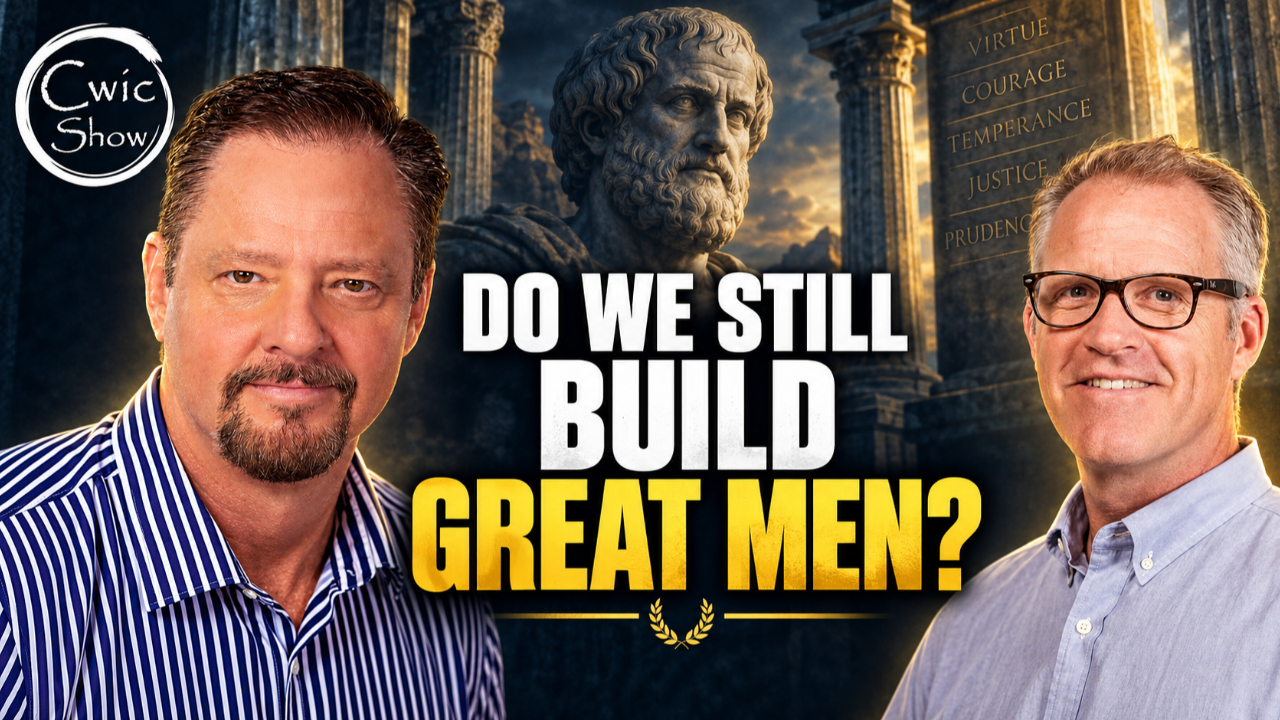
Author Boad Swanson talks about Aristotle's Nicomachean Ethics, Aristotle, and why boys and men need virtue and wisdom. Do we still build men like we used to? Why are so many young men drifting? What is happening to the Western Man? Muhammad Ali, George Washington, Ray Lewis, and a Roman Farmer Stop deflecting compliments; just say "Thank you" Aristotle Said the Goal of Life Is a Great Soul
Raw Transcript:
Do we still build men like we used to?
Why are there so many men and young men that are drifting? Have we stopped teaching men certain principles and
certain values that are going to be imperative for them to become who they need to become? Bode Swanson, author of
the book Great Sold Men, Reclaiming Aristotle's Vision for Building Character and Virtue, joins me in this
episode to talk about these topics. What is the prosperity loop and why being a good man actually works? It's worth the
effort. This episode is brought to you by Warriors of Tiana Men's Retreat. This is happening next January 21st to 24th,
2027. This was a fantastic event in August. We sold out standing ovation at the end. It is impactful. It is
meaningful and there is nothing else like it out there. It is focused on Latterday Saint themed values. The restored gospel, the words of the
prophets. This will be held in Zans's National Park with beautiful accommodations. Ask any man that was there in August and they will tell you
what this experience was and how fantastic it was. Start off 2027 on the right path. Grab onto identity and purpose like never before. This is not
self-help. This is not a therapy session. This is direct truth, inspiration, motivation. Like I said, nothing else like it out there. Go to
warriorsofank.net net to find out more and to register. Here we go with Bode Swanson.
On a subway platform in Harlem, a construction worker named Wesley Autry handed his two little girls off. Ranger
jumped onto the tracks and pressed a man he'd never met flat between the rails while five train cars passed over his back with less than an inch to spare.
Then he went to work. B, you open the book with him and then you ask the question, do we still build men like that? What is your answer?
I hope so. I hope we do. I think we do.
Uh I think there are men certainly out there like that. But I don't know that as a society we're doing it on purpose.
There are institutions u that that focus on that focus on trying to build character in men and women. Um the
church is a great example. I don't think there's anything else like it on the planet. Uh I think Boy Scouts was a great example. Uh I think the military
can be a good example. I think sports certainly is a good example. But it's not it doesn't feel like we have the same purpose in creating
those outcomes like we once did. And when I say like we once did that that it feels nostalgic that that's that's
actually at the turn of the century you know we had a values-based education more of a classical education that was kind of a
the way uh we did education in public schools in the west and then you know that toward the turn of the century
1880s through 1920 with the industrial revolution we started getting away from that so that we could create people that
were more ready for work, right? Uh learning skills and uh and I think the results show.
So previous to that, we were b we were based on values. We were trying to build character that was part of the curriculum.
It sure was. So Aristotle uh this is 300 BC. uh Aristotle had
spent a lot of time on his lectures discussing these virtues and all of these talks were kind kind of compiled
into a book that we now know as Aristotle's Niko McKean ethics and
education in the west since Greece since Aristotle was in part based
on Nikomian ethics that's Rome that's uh b the Byzantine Empire that's uh uh
through the Renaissance and England and even in colonial America. So when we talk about which I do in the book when we talk about our founding fathers they
were very conversant and uh Aristotle and Niko McKean ethics as well as the other great thinkers uh from Greece and
Rome and so it wasn't a surprise. is I mean to us it sounds so foreign like who are these geniuses that had that knew
Cicero well and Ko well and Pericles and and Catis but this came just as a result of their education that was just
fundamental to society back then that we've lost.
Okay. So that's one point that kind of launches things with this book but I want to go back in your history. You're 25 years old, standing in the rain in
Stanton Park with the Capitol behind you, and you asked out loud what you were going to do with your life. Yeah.
What happened next? And why do you think a man has to get all the way to the bottom before that question gets asked honestly?
Well, uh, I was 25 at the time. Uh, I grew up in Ohio. My parents were great.
Uh, I had a great family, but I was just kind of a rebellious kid for no reason other than it seemed kind of fun. And so
I I kind of got in patterns of developing less than ideal decisions and that carried through college and into my time in DC. When I graduated from
college, I DC seemed like a great fit for me because I just loved politics and thought that I'd be uh thought that I
was destined for greatness in DC. Little did I know, I was I was pretty humbled when I got to DC, which is another
story. But, um, it finally all kind of came to a head. I kind of hit rock bottom, uh, in the fall of of that year.
And had been brooding uh, a lot. And when I asked that question, um, you want me to tell the story?
Sure.
What happened? Yeah, let's do it. Yeah.
when when I asked that question. Um to your point, I asked it like in the
depths of my heart, like I really didn't know and I was really looking for answers and I had completely kind of
forgotten about faith and and God and I just I I just forgot. And as soon as I
asked that question, I looked up and I saw two missionaries walking right
toward me. And it they look like superheroes. They're like knights walking right toward me.
And I was just filled with like this palpable light like and I knew like that's it. Like I got to get back to my
faith. So I stopped the elders and I I asked them where church was and you know and exchanged pleasantries and whatever
and that was that was basically it until I said goodbye to the elders. And just as I said goodbye and keep in mind this
is like cold November rain. Just as I say goodbye I turn and there's a bird and a tree just feet from me that bursts
into this song. And maybe it was a normal thing, but it like
pierced my soul and I was completely changed. It was like a sunflower. Like every every fiber of my whole soul like turned to God, right? And that was it.
And seven months later, I turned 26 in the MTC and went off to Chile and and served the mission. Um, but to answer
your question, I don't know that we all have to get to the rock bottom to have these realizations. Uh,
I did for whatever reason. Um, and I think there's a lot of people who live really good lives and and don't have to
go in that direction. But there are to make the kind of change that I made where I was living a certain way and and to like I said turn toward that light.
Maybe sometimes you do have to have Elma Paul type interventions to uh to to get
through to people who are as hard-headed as a lot of us out here are.
Yeah, I had a similar experience, but I was 19 uh that did that with me, right?
Completely same type of thing. I was I was I was maybe not so active at the time, but but same type of thing. It was
that kind of an experience and and you know knuckleheads like us maybe that's what we have to go through and in order to uh to have the light pierce all the
darkness that's uh that's around us. But so but you know I think if I could just interrupt you real quick I think that's the plan.
Like that is the plan. Heavenly Father knows that we'll fall. He knows that we're flawed and there is enough grace
anticipated in the plan of salvation to consider people like you and I and make
up for that. And gosh, like what a gift that we can turn towards that light and
repent and then be as if we were here the whole time. Yeah.
So you have an an event that changes you and changes your heart. Now, preferably,
you're saying not everybody has to go through that, but preferably we're able to instill this into young men, especially what we're talking about from early childhood.
Yeah.
Right. So typically and I I remember I became fascinated with this when when when I had small kids and and I would
give them bedtime stories, usually something about something heroic, some type of morality in there. Um our kids,
my my wife had our kids reading just knocking out books left and right when they were well when they were in the
house and and so there was a lot of that going on. We did a lot of the Mother Goose, but there's there's been a real
change. Just one little barometer, I think, in our culture in transferring wisdom and character is that those
stories seem to be gone. I I I don't know many people that follow up with those classic stories that kind of teach the type of character and morality
where, you know, a lot of the Mother Goose things are changed or they're not read at all or Asop's Fables or the Brothers Grim or, you know, any of these
nursery rhymes and and there I don't know why, but we don't seem to transfer that anymore. And that that's wisdom in those little stories.
Yeah. that seems to teach kids or used to teach kids something a long time ago. Does that ring true to you?
Oh, yeah. For sure. Uh I remember, do you remember William Bennett's book of virtues? Yes.
Yeah. And that was so profound when that came out. My, you know, my parents bought that book for me and I read through those stories and they were
really meaningful to me at that at a age when I wasn't a huge reader. Um and and I and I talk about this a little bit in
the book where what's unique about Aristotle like teaching these virtues is
it's all a means to an end right most of the time now we pick up virtues through
society like through stories through idioms like you know a stitch in time saves nine or whatever like that's
that's a truth uh and and it's become a saying that that helps us kind of understand the importance of you know thrift or like
taking care of things at the front end as opposed to waiting to the back or whatever but it's not t taught as a
comprehensive whole in pursuit of a larger good right and that's what Aristotle does with Nikcomian ethics so
essentially what he says is if you if you live and master these virtues throughout your life you will grow and
your ability to be happy. And I mean happy like I think and he's talking about happiness in the way that we would talk about joy in our subculture, right?
In our church culture.
And he says that you'll grow in and your ability to flourish or I would say prosper. So that's I mean that sounds a
lot like Nephi, doesn't it? If you keep the commandments, you'll prosper in the earth. and and the promise of the gospel or or repentance and and living close to
the savior, pursuing the savior is that we'll have joy in our life. And then finally, I would add that you would be
serviceable to your community. So, it's I that I don't think we talk about anymore. we get the stories here and
there and I and I'm I'm with you in the fact that I don't I don't think we do that as as much anymore because I don't think any of us read as much as we maybe
our parents did or um and that includes probably you and I uh certainly our kids um but
if I think if if you we can present virtue as a package that if lived and pursued
there are promis blessings associated with it. That's like master teaching.
And I think more often than not, we're just telling our kids to be patient or to be courageous or to or to be ambitious but not too ambitious, right?
Or generous, but you know, within certain bounds.
Yeah. Yeah. It's again, I mean, I I I I think one of the reasons that a number of those nursery rhymes were changed is
because the consequences were kind of terrifying, right? It's like we don't want to teach the consequences of these things. That's what they were meant to do. I mean,
you've got Hansel and Gretle. They're going to be baked in an oven by some witch out in the forest. And and um some dark stories in there.
Dark stories. But, you know, they wake you up a little bit. They're like, "Okay, I need to be careful about things. I need to be wise about my choices." And and but secondarily on the
other side as you're describing the positive consequences aren't discussed of the virtues.
Yeah.
Either right. So we're not looking at those consequences or we're not looking at the why behind some of these things.
I've seen some of these schools that are in, you know, K to2 space and they'll have these different mods or or principles. you know, here's
our five principles that, you know, honor, truth, or these things, but but I don't I don't ever see anything backing them up, pointing them toward a direction.
Yes. It's like you said, it's simply be true.
Tell the truth, be honest. It's like, well, why? What does that do? What what is the what does it matter? What's the point? Yes.
And I think we're really missing that in our culture.
Yeah. Absolutely. I think we are. I I had a I guess kind of a revelation uh when I
was a younger man and I was talking to some friends and we were all kind of discussing careers and best career paths and you know this is still you know my
mid20s when it was all up in the air and I kind of had this realization that
you can be successful by being a good man by trying to be honest and to keep
your word and to not cheat people and to be focused on your family being a good father and a good husband and it sounds
kind of weird and you know I remember in the discussion it was kind of dismissed as yeah yeah yeah but anyway like is it law school or is it business school but
I've I've that left that maybe it came from the spirit I don't know but that realization like stuck with me and I
don't know that it necessarily matters to the Lord or matters in what we actually do as a profession. But I think
it does matter to him how we do it and that we are cultivating in ourselves and our children in our communities in our
society uh virtues that enable uh community at large the community at
large to prosper that enable uh people to trust us and to come to us and or to seek counsel and advice. And I don't
know that that's necessarily happened for me. I'm not saying that I'm a I'm a great man or or even a good man, but I
do think that we've lost the idea of the value in being good over uh the
pursuit of wealth or fame or uh popularity or power and and it's those
are lost highways. Those don't produce happiness. I don't think they please God. and ultimately lead us to a place
that is a little bit cold and a little and really really dangerous.
Yeah. Yeah. I agree. Now, let let's back up a little bit here and and again setting the stage for why this book is
so important. Great sold men. Um so we're in an environment now where
where a lot of men, young men especially, are just drifting. There's a difficult environment.
There is uh you you've got a culture that in many ways now discounts men and their
strengths. You've got an economy that discounts their strengths. The economy itself. It's no longer, you
know, hard labor and what you're able to produce. And you're now competing with women at the same type of a job behind a
desk usually. and and so things have very much changed in in that way. You've got feminism, you've got housing prices
are very high. And this is usually what I hear in response to
um well just about the issue of of men drifting. What I like about the book
that you've written is it doesn't focus a whole lot on that. I mean you bring up these things. You talked about the stats, the uh the high number of suicides for
men and uh bachelor's degrees and and etc, etc. I mean, it's all there and you need to be aware that you're fighting against these things to some degree.
Yeah.
But the book focuses on character. The book focuses on the person. The question I have though is how did we get here?
Because somewhere along the line, our fathers, our grandfathers, us
somehow stopped passing along that virtue, that wisdom
to the young men and and and in an environment where it's it's attacked constantly,
there's going to be a natural result from that. What what how do you see that?
You know, this is what comes to mind. Um I I I think in the in the where there
are institutions like uh like churches um that continue to
talk about these virtues uh or doctrines or principles. I think I think we do a fair job at making sure water gets to
the end of that row. Not always, but I think we do a fair job. I think the analogy that I I think about as it
relates to water getting to the end of the row is my friend group from high school. So like I said, I grew up in
Ohio, Columbus, Ohio, and I was the only uh member of my faith. Um all of my friends associated with some fa faith.
They, you know, there was a Catholic or two, there was a Presbyterian, there was a Methodist, a Baptist, whatever. um
their dads, I remember we talk about this, their dads would go to church on Sundays. My friends, the next
generation, they associated themselves as part of a denomination, but they would only go to church like Christmas or Easter or like funerals or whatever.
Now, their sons, my friends sons and daughters, they don't affiliate with any
religion. There wasn't enough given to my friends because they're only going to church twice a year or whatever it was.
21 minutesThere wasn't enough value, virtue given to them for them to realize this is meaningful. This is different. This is
the only place that I can get this light is from church. It didn't go enough to get that. So they don't So their kids
don't have any religious affiliation at all. So I just think as it's just a
attrition through time as we continue to focus less and less on these types of important things and more and more on
what society deems as important which is you know just to put it you know simply again wealth and fame and power uh we
lose focus on those things and every generation drifts further away from it.
So the book zeros in on on Aristotle and
his teachings and goes way back well beyond our fathers and grandfathers, ourselves obviously into something that
eems to have really formed the psyche to some degree of especially of men I think in the west and and so
you're trying to go way back and and and draw from this again what is the right
time ideally I mean any time can work but what is the right time in a man's life to be taught these things to go
back like this and draw from these classic truths of virtue and character I think right away I mean I think as early
as as they're able to understand you you talk about reading your kids stories and ASOP's fables and Grim's fairy tales I
mean if if kids knew the story of Cenatis.
And let me just tell the story of Catus real quick. So Catis was um before Rome was an empire, it was a republic and and
the good men and women of the empire looked back on the republic fondly because it was it was more democratic,
right? It was it wasn't led by a rogue or totalitarian kind of uh dictatorships. It was led by the Senate
and by um um counselors. Uh is that the right word? I think it's counselors. Um
but what happened is about uh I think
it's 400 500 BC um there's a general named Catis and he had had success and
had retired and he was at at home uh plowing his fields. He had four or five acres and he was just simply working his
farm, living a simple life with his wife and family. There was a crisis uh in Rome where the Rome Rome is being
invaded by a by a Gothic tribe. So they they so this the Senate sends an an
envoy to Catus and says, "Hey, you got to help us out." And there was a clause in the republic where one man could be
given absolute control, absolute authority over the whole government for
a period of time like martial law to uh to fight an enemy or to bring restore order to the republic. And they gave
Catis this power. Within 15 days, Cenatis had uh marshaled an army. He had
restored order. They defeated the invading tribe. And at that point, after 15 days, it feels like if you know
anything about history, 99% of characters throughout world history would have taken an opportunity to say,
"Okay, now we're going to change some things. Since I have all this power, give me a few more months. Let me like fix this thing here and restore this
over there and let let me take advantage of this opportunity." That's not what pretty natural sequence natural path to go down.
You just grab for more. That's not what Catis did. Catis relinquished power uh told the Romans in
the forum that he uh was going back to his farm uh and to live that simple life. And that's exactly what he did. So when George Washington
was asked after his own military career to lead the colonial troops in the re
during the revolutionary war, he certainly was aware of Catis and that
story. And when after the the Americans had won the revolution, Washington did the same thing. He was encouraged by his
troops to march on Washington or I I guess Philadelphia or Annapolis at the time uh where they were kind of
headquartered and to take control of the government to be its first king or to be a dictator in perpetuity. That's not
what he did. He relinquished power and went home to Mount Vernon. And I don't know if he would have done that if he
didn't know or if he wasn't taught the example of civic virtue through Catus through whoever read him that story or
maybe he read it himself. But it's never too soon in my mind to to draw on these
stories from history uh uh and and teach them to our kids because you never know when you're going to be called upon like
uh uh whether it's at the subway uh where you might have to jump down and
rescue somebody or uh if you're potentially leading a military someday.
I don't I hope we don't get to that point, but but our kids need to know these stories.
Well, the United States is born because of Washington's choice. I mean, it's right.
He should have been King George based on history. That's right.
Uh but uh yeah, it's an amazing sacrifice and and and an incredible virtue that he had. Now, you lay the
foundation on the book with three different things. The prosperity loop, the power of choice, and the prosperity diet.
Yeah. you go over each of those. What do you mean by the prosperity loop?
Okay, going back to uh Aristotle's premise, which is if you live these
virtues, you'll grow in your ability to flourish and you'll grow in your ability to live a happy life. Um the prosperity
loop is simply this this process where to the degree that we are learning virtue and growing in happiness, it
reinforces a desire like you're recognizing that the virtues are working for you. Like my good man kind of theory, right? you're you recognize that
the virtues are working for you and that you're living a better life and you're being blessed and you want to double down on those virtues and live them even
more fully which again it's the same as it's just the Christian ethos like 100% you gain a trust in them you gain trust in the virtues
yeah you see the results you see yourself growing you see yourself becoming uh again I what I firmly
believe and and and there's plenty of data and science to back this up Men need purpose. Men thrive on being
respected. Men thrive on being sought after. Whether it's by our wives or our children or by our community, we want to
be of service and to be helpful and to be good and to make solve problems and to make the world a better place. Um,
and to the degree again that you we are living out these virtues, we're sought
after. Like we feel like our life has meaning and it has purpose, especially if you're fortunate enough at a
relatively young age to identify a vision of where you want to go and what you want to do with your life. I mean, I that that came a little
later for me. Um, but but that's the prosperity loop. Just it just all reinforces this this process of like the
more we live the virtue the happier and more successful we become and we want to live the virtue more to bring about oh 100%.
If you nurture it and it will it will grow and become delicious to you as it as it blossoms in your heart. Um, the
diet's a little bit different. And I use David Gogggins in this story because he's such a such a profound uh example
in our modern culture of someone who really mastered this. David Gogggins was, as many of your listeners will
know, was he was kind of a kind of a he would say kind of a loser. He was overweight. He was 300 pounds. He was
doing pest control uh only. He was, you know, probably a little too old to be just doing that. and he saw an an ad on
TV for the military and for whatever reason it inspired him and in order it was SEAL training and in order for him
to uh qualify for SEAL training he would first have to lose I think it was like 100 pounds 150 pounds or whatever and
and a unhealthy period of time and his doctor said can't do it and that's when
he started saying you don't tell me what I can and can't do I tell me. And so he started he changed the way he spoke to
himself. So instead of listening to the part of his his conscious mind that was saying you're too old for that, you're
too fat for that. You're not talented enough. You're not tough enough. You you always quit. He started changing the
narrative in his own head to I could do this. I'm strong enough. I'm
talented enough. I'm whatever. And that changed everything for David Gogan. So the prosperity diet essentially is
whatever we fill our mind with seeps down into our subconscious mind and that's what controls our behavior.
Right? And what I try to instill in young men and
women whoever will listen is you have to like you have to take control and get rid of the head the the head trash. You
cannot you to the degree that it's possible. You cannot indulge yourself in what we all probably do a little bit of
which is I'm a loser. I'm the worst. I stink at that. Why am I such an idiot?
Right? Like you can't do it. You have to reverse that and tell yourself that you can. And at to the degree that we do that, we start to believe it. Our
subconscious starts they don't subconscious doesn't know the difference. Starts to believe it and our behavior starts to change.
There's one more. It was power of choice or agency. How how does that apply to our character and how did Aristotle see that?
Well, humans are of course everyone knows this, but we're unique in our ability to
choose. Uh animals operate by instinct, but we have the opportunity to be enticed by two
choices. And we have to know, we have to learn what the better choice is. And we
have to develop a habit of choosing the things that will bring us closer to God.
The things that will bring us closer to that uh that state of flourishing. Uh as
as Aristotle talked about. Um, a simple story that I that I use in my book is,
um, when I was when I got to DC, I was probably 22, I guess, and I was quickly
humbled in the assumption that I had that I was on my way, you know, I was going to be a senator and whatever. And
when I got there, boy, I was humbled. I mean, it was like kind of like, this is kind of a mean term, but it was kind of
a Hollywood for nerds. I mean, these are kids that had had gone to Harvard and UCLA and Vanderbilt, had great resumes
and were really smart, really well read, and really ambitious. And I was just a Ohio kid who played football in college.
I didn't I didn't I just I didn't know.
So, I was fortunate enough to live with a guy who was a voracious reader. Uh he was a big big influence in my life. And
you know, every night he'd disappear about 7:00 or so. And and after a few months of living with him, I discovered
that what he was doing every night, he was just reading three, four hours a night, literally every night. His his walls were just lined with biography and
history. And I when I when I spoke to this guy, his name was John Steel, just a huge influence on my life. his his
intellect just sparkled in a way that I don't think I'd ever and I'm like that's what I want. I want to be like that. And
I So I had a choice. I could I could continue to try to get by on charm and
fast talking and whatever or I could buckle down and try to make up for lost time. Uh, and so I I started to read and
I I never have reached the level of reading that John Steel uh reached, but I I love reading and I think any young
man or woman who uh wants to be successful and wants to teach their kids and wants to be uh adept at just
operating navigating life in a meaningful way, you have to read. You have to make that choice uh to read.
Yeah, I think it's vital. Um, all right.
I want to get into the virtues a little bit here. I want to start with courage.
35 minutesYeah, this is something I also go over in in my my retreat. Um, what are your thoughts on courage and why is this one that Aristotle chooses? One of the virtues.
Well, there's two kinds of courage, I think. There's the there's the courage of Desmond Doss from uh the story of
Hacksaw Ridge. Uh, actually Desmond Doss represents both kinds of courage.
There's battlefield courage where we know we're in grave danger and we go anyway, right? Uh for a meaningful
cause. Desmond Doss uh is a 7th Day Adventist during World War II. There's a
battle in on in an island in in Japan and he refuses as a result of his faith, he refuses to carry a weapon. He's a
pacifist and you can imagine the ridicule that he got from his from the other uh soldiers. uh probably
relentless, but he never wavered. And one night they were ambushed and uh just
heavy heavy casualties on the American side. And as a medic, what what Desmond Doss did was he went out into the line
of fire and grabbed an injured soldier and brought him back to the precipice of this cliff and lowered him down to
safety. And then he went back and then he went back again. and he went back throughout the night over 30 times to
save American soldiers who were in harm's way or who had been who had been injured all without a weapon. That's not
only battlefield courage, but that's moral courage to stand up for yourself and not only take the ridicule, but
believe in something bigger than yourself, in this case, God, and and his ability to deliver you. The other kind
of uh courage that I get into uh in the book is represented by Dan Lanning. Dan Lanning is uh a lot of people don't know
37 minuteshis story. Everyone Dan Lanning is the head football coach at the University of Oregon. And everyone sees these coaches and just assume that you know they're
they're multi like I don't know I think Dan Lanny's contract is probably worth 11 million dollars a year or so. I mean
just just a very successful man. But in order for him to get there, no one knows the pain and the struggle
that these guys go through. So, I'll just give you a teaser on this story.
Dan Lanning is a high school coach, high school football coach, and a gym teacher. And he's married with a couple kids. And he's been he starts to develop
this idea like, I think I could do this at a higher level. I think I could do this at a more full-time way. So he
starts going to clinics and he meets some people and all of this leads to him deciding in the middle of the night one
one day back in in St. Louis, Missouri, small town outside of St. Louis to the next day, teach his class, get in his
38 minutescar, drive to Pittsburgh, just show up at the University of Pitts uh football facility and just let him know
like, "Hey, I'm here and I'm here to coach." He had a contact that he thought would help. So he gets there and everybody's gone. They're all at a
coaching clinic at Penn State or whatever. And he's like, "No problem.
I'll stay the night." So he gets a hotel and he goes in the next day and the person that he knew walks right by him
the next morning as if he didn't even know who he was. And so he's just dejected and ultimately waits it out and meets with this coach and is hired at,
you know, I think $400 a month or something ridiculous that, you know, early coaches are are brought on at. And
this is like a quarter or less, a fraction of his teaching salary, but credit to him, credit to his wife. It
was his dream. It was his vision, like I said, we talked about earlier. And it's like, we got to do it. How can we not do this? How can I live with myself if we
don't make this small sacrifice to pursue the dream? And in the story, Dan
Lanning has to make 10 to 15 of these type of decisions before he ultimately
gets to Oregon, including food stamps, including bankruptcy, including his car being stolen and riding a bike every day
to work, including his wife getting cancer in the middle of this, and his wife encouraging him like, "You have to
continue doing this. You can't stop." So, it's a beautiful story. Dan, I I I happened to just know Dan a little bit
and he told me the story and I just said, Dan, like this story has to be told. So, I was really excited to tell his story in the book.
Well, that's great. That's great. Now, you use temperance. You use an example of Ray Lewis. Yeah.
In Temperance, let me say that.
Yeah. Let me say about um all of the characters I use in the book, including me. The way I've set up the book is I I
introduce the virtue and then I'll tell a little bit of my own story and how my own wrestle with the virtue or some of my own experience with it and then I'll
use either a contemporary or historical figure who personified the virtue. And I say in the beginning of the book, in no way do any of these characters, let
alone me, represent like this paragon of that virtue or this perfect example of that virtue. I am so flawed as is Ray
Lewis. We all know or we all suspect that Ray Lewis is uh flawed man. But as it relates to temperance and controlling
yourself or or channeling control, he's a master. So the quick story on Ray Lewis, he grew up um in a really tough
neighborhood to a single mom who you know unfortunately would had been through a lot of bad relationships and these men would you know I think with
good intentions she's hoping that she can find a man who can help her situation. She's got a lot of kids and and a lot of them were were pretty abusive.
And one in particular was was so abusive one night that Rey as a as a young boy um I forget the exact age, maybe it was
12 or 13 years old, probably a little pre- pubert preubescent or whatever, his mother is beat up so badly that she is
like bleeding through her eyes. And Ray Lewis in a rage, like can you
imagine like think of your own mother going through this in a rage he goes into his garage knowing that he has no ability to actually help that situation.
Goes into a garage, grabs a deck of cards, pulls a pulls out a card, and whatever number it was, like that's the number of push-ups that he does. And
then he pulls out another card, does that number of push-ups, and he goes through the whole deck, and he reshuffles, and he does it again. And so
what Ray Lewis decided that night was that he would never let himself be in a position again where
he couldn't help his mother or someone else in need in in that kind of
situation. And what happens so often in life, especially in in athletics, is
someone will will have that kind of a story or that kind of experience and they'll be filled with emotion and passion towards a certain thing, but
they won't channel that passion towards something productive and good. Ray Lewis ultimately had to temper
all of this energy and all of this passion and, I might add, all of this talent. uh towards something that was
actually good. And he channeled it to love. And he decided that he would work
as hard as anybody, knowing he wouldn't be outworked for the love of his mother, ultimately then the love of his teammates and the love of his of the
game. And it might sound like a trit story to to non-sports people, but if
you know Ray Lewis and what a force this man was, probably a little undersized,
but what he made up for by way of intensity and his understanding of the game and the way that he had built his
body, probably the best linebacker in the history of the game. No offense to the the Dick Buckas family.
No, he was an intense dude. I mean, just unbelievably intense guy. Yeah. Yeah. But not a perfect man.
But not a perfect man. No, not a perfect man. Uh I want to cover a couple more here. Truthfulness and Ulysus Srant. Yeah.
How does he How does he show truthfulness?
I love US Srant. Uh, President Lincoln had had really struggled in the Civil War to find a general that would
actually fight the South. He had a lot he he went through general general after general who would um bluster or feain or
pretend like they were going to fight or and they just they just wouldn't do it for whatever reason. Ultimately, when he
found Grant, Grant was a doer. Grant was a man of few words, but he was a man of
action. And Lincoln felt like he had found his general. And ultimately, as we know, uh, Grant essentially was the
turning, but that decision was really the turning point in the war because it led to um the the the Union starting to
win enough battles to to out outlast the the troops. And so ultimately what happens is Grant was not a successful
man up until that point. He'd struggled with alcohol. He was considered himself an alcoholic. He'd failed at three or four different business ventures uh
prior going into going back into the military. Um and and ultimately we know that he failed as a president and and
it was a corrupt presidency. It was an inep presidency. It was a presidency that had great promise that did not
deliver. And so so Grant is on his deathbed essentially destitute, poor,
had been had been defrauded by business partners and and just about everybody else. And the lifeline that saved Grant
and his family was Mark Twain. Mark Twain reached out to him and said and and offered that if Grant were to write
his memoirs truthfully that there would be enough uh financial success there to secure his family's future. So he did.
He was and he was totally honest and in the way that he presented himself. So he admitted to being an alcoholic. He
admitted to uh failing at multiple business ventures and and basically being you know kind of a lost soul until
the civil war started. Uh and he admitted to his presidency being corrupt. He admitted to being na so naive that he was defrauded by business
partners etc etc. But what is interesting is he he also admitted to his strengths and was clear about uh the
things that he did at a general as a general that led to their successes in in Vittsburg and and Atlanta and other uh important places throughout the war.
So what's why I think that's so interesting in our modern society and you can even throw you know kind of
church culture into this no matter what church right but um we're often quick to dismiss
or or to feain humility right we'll we'll be honest uh you know when
47 minutesthings go well for us but we'll say like oh that wasn't me that was all that was a spirit or that was in this other guy
or you know I didn't do anything and everyone knows like that that was you I mean you you were a big part of that so
Aristotle would say truthfulness is a virtue because to the
degree that you're obviously we know lying I mean that leads to no good but he focused as well on the other side
which is to the degree that we aren't honest about our strengths or the things
that we do well, we lose trust. People ultimately know that uh that we're not to be fully trusted, which I thought was
really interesting and what made uh uh Grant's book so compelling and what makes Grant's book from a strategic
perspective still studied at West Point to this day because of his truthfulness and his his unwillingness to feain humility.
Okay. So, what what is the balance there? If you're not feigning humility, what and
you're not boasting, what's in the middle? Thank you.
It's just thank you. When people Yeah. I think when people when people say, you know, Greg, your show is
amazing and I've learned so much and the the guests you've had on have been really meaningful and the things that you have said specifically on several
occasions have have changed me. And the temptation might to be because none of us are that good at taking a compliment.
The temptation might be to say, "Oh, well gosh, it's my producer." Or, "Oh, well, it's, you know, it's it was just the guests are so good." It's just
saying thank you. And to the degree, and if you if you think of someone in your life who has that skill, I love it. I
had I have a buddy and I and I learned this from a friend who who did it accidentally. I mean, I don't think he realizes even that he does this, but whenever I would give him a
49 minutescompliment when we were young men, he would just say, "Thanks, man. I really appreciate that." And it was so different from everyone else who would dismiss compliments.
Uh, but truthfulness is just saying thank you and not bragging about it, not boasting about it, uh, but just being appreciative and moving on.
So, B, you go through all 12 of these virtues, but I'm going to I'm going to go toward the end here and ask a couple of concluding questions. Your book ends
with a man on the pedestal, the version of you at 75. Yeah.
You're in your 50s now. How close are you to that pedestal? And what's the gap?
Well, there was a one of the things that led to my um
being in my state of what I called despondency when I was in in Washington
when I was 25. It led to my turn. Um
50 minutesI you know part of that rock bottom phase I uh I was asked the question uh
by someone that I really respected where do you see yourself like who do you want to be when you're 75 and it's
Thanksgiving and you're sitting around the table like who is that guy and who's he's surrounded by? I thought it was a
profound question and profound enough where I've I've kind of thought about it for the rest of my life and and if I
could tell you just a quick aside to that story. Um during that time
um I had happened to go to the uh the National Museum of Art in uh in Washington DC and there I was like
wandering through the museum like any 25year-old might you know like interested but also all over my head and
whatever until I stumbled upon a series this room with a series of four paintings by Thomas Cole and it's called
um the voyage of life. Uh I think that's the the name, but it's it it essentially
depicts four phases of a man's life. And the first phase is a little baby and he's in this boat on a river and it's
very placid and peaceful and there's abund you can tell there's abundance.
There's an there's like a guardian angel that's right on top of the boat kind of looking after him. The next painting is
a young man who is launching off the boat seemingly from like maybe a rest
bit on land and off in the distance is this opaque vision of like this castle or whatever
and this young man like 14 15 is like almost like pointing his whole body towards that like that's where I'm going right and which is I think me as a young
man thinking that I'm going to be a senator right or whatever. Um and and then the one that like blew me away was
the man at middle age. So he's in rough water and he's in this boat and the boat's beat up and his clothes are beat
up and he has a beard and in the sky you can faintly see like three demons,
right? or or like they're like clouds, but they're also like demony and and they're and they're it's written um what
these three temptations are that beset men and and he's heading right towards this really rough part. So, he's about
ready to go over this this fall or like go into this rocky rocky kind of part of the of the stream and he's in a in the
semblance of prayer on the boat. So, you have the 14, 15 year old boy who's like, I got this. I'm going to do this.
Nothing stopping me to the middle-aged man who's been through many battles and
53 minuteshas realized the only thing I can do as I get ready to go through this next battle is just to pray because that's
all I got. Meanwhile, the angel is still everpresent though very distant on the corner of the painting. And then the
final painting is is an old man again on placid water and this angel coming to receive him. And it was just so profound
to me like it g it gave like a visual to something that I didn't fully understand
then but I knew was true which was I'm heading for rough waters. And that's
just what life is. Life is hard and life there's a lot of suffering in life for all of us. But that's the design. That's
the plan. And through that suffering, as we as we learn how to turn to the Savior, learn how to be humble and learn
how to choose God and all that we do, we grow and we become protected and we become full of life and light and we
flourish and we're joyful despite the suffering, despite the pain, despite the rough waters. So, where am I on that
journey? I think I'm I'm 53. I think I have a long long way to go. And I don't say that with false humility. I really
do. I mean I I mean I'm not I'm not a you know I'm not robbing banks or or you
know punching my sister you know but but I got a long way to go and all these virtues. And I think if if any of us are
are really honest about that, I don't I don't know that that any of us would score ourselves that well, although I don't know that any of us would fail
ourselves, but the gap is just it's time of course, but it's
like focus time. And I was just reading, can I talk about scripture here? Yes.
Yeah. I was just reading John 15 this morning and where where the Savior says,
"I am the true vine and my father is the husbandman and you're the branches and
the branches only produce fruit if they stay connected.
So my own failures knowing that fruit will come as I stay
connected to the vine. So that obviously leads me to think about all right well what kind of fruit are we talking about
here? And and I live in California and I've tried to grow a few avocado trees and they've all failed. Um, but what
I've learned and I'm I'm in the pro I we just moved in this house probably six years ago where where we live now and
when we moved in there was a lime tree and I thought, "Oh, this is cool. We all have limes and whatever." And every
year, year after year, no limes. No lime. And I almost took the tree out last year. After six years, finally this
tree is producing limes. And it's producing now at a point where it's like this is annoying. Like there's so many limes that I like I give them to neighbors, give them to people at work,
whatever. And so the point is we stay connected to the vine and in time fruit
come comes. It's focus time of staying connected. And how do we stay connected?
We continue working deliberately on the virtues. I had a bishop just after uh I don't know I was probably 28 29 and I
was asking him like hey you know what should I do to kind of progress? He's like, "Pick a virtue, focus on the virtue for a week, and then choose a new
virtue and like whatever." And it's that kind of stuff. I'm not saying that that's what someone should necessarily do, though it's great. But we have to be
deliberate and purposeful and the virtues that we want to
master is a strong word, but but we have to be deliberate and we have to give it time and in time the promise is that fruit will come.
So last question bode what you've got a loss of this virtue and relaying this
virtue transmitting this virtue throughout our society through our institutions to some degree in our religions. Um
what do we do? You're you're explaining something individually. Is that all it takes is for each individual to make the change? And how do we lead this? How do
you transmit this to someone else? I mean, you've written a book, but not everybody's going to write a book to try and make this change or try to influence
others to garner these virtues and develop them and transmit them to others. What What do we do to add
virtue, especially for men in our society? That's such a great question.
58 minutesUm that's that that feels like a conversation point where a lot of good points could could be brought brought
up. Um might be something for your future retreat. Um but I'll say
you there's a couple people in the the end of the book uh that I focus on and and one of them is Muhammad Ali. And
Muhammad Ali to me is another flawed individual. Um, but he's the I I use him
and George Washington both again. I use them at the beginning of the book and the end of the book to represent best I can come up with as versions of
what Aristotle called magnanmity. That's the virtue of magnanmity, which is all of the virtues at scale, lived at scale.
Um so and incidentally great sold men great
sold comes from the Greek word megalo psychos which translates to great soul.
Um so essentially what Aristotle is saying is
the that the goal of life should be to have a great soul. Um,
so Muhammad Ali is clearly like freakishly talented, but he's he's also got a mouth and he's as
braggadocious and he's um probably not as uh I don't know uh
moral as as you know you'd like you'd like your heroes to be. and all and so he's living this life and all of this
kind of comes to a screeching halt when he refuses to fight the Vietnam War and thus ensues a three-year period of him
being banned from boxing completely and this was a really humbling period in Muhammad Ali's life catches clay to
Muhammad Ali and ultimately uh he uses that time to speak he goes uh and speaks at a lot of
the black colleges uh during that time and he writes and he reads and he thinks and he talks to people and he goes to men's groups and
he's try and he starts to build out his community a little bit towards these ideas of standing for what you believe
in, standing on principle and not uh not cowering to your enemies or to you know
the the monsters in your mind. I mean what what bigger enemy what bigger you know I love America. I'm not saying this, but what bigger monster was Ali
facing at that time than the US government? The might and force of the US government, please. And the fact that he stood up to that, amazing. Um, but
through that period of time, his soul, his spirit was refined and it was and
and tested and he came out of it a different person, he would say. and he came out of it and it was still playful
and fun and and braggadocious, but it was but it was more uh with a wink and
and Muhammad Ali spent an enormous amount of his time building up his other
boxers or friends within the boxing community and financially helping uh these guys who would fall in hard times,
lifting up his own community in Louisville, Kentucky and and black community and the uh Nation of Islam
across the country and uh didn't die poor. I mean, he was fine, but spent enormous sums of money and time and
influence on trying to build society in a way that he felt would make it better.
And that's all we can do. All we can do is dedicate our lives to small and simple things that will build
our communities. It's like it's like building a Zion. I there's there's we can't do it all ourselves and it's not
we're not asked to do it, but we have to we have to stay committed to staying in that vine and trusting that as we
continue to look out for others more than oursel that fruit will come in society and our own souls.
I think it's pretty powerful too for anybody that's going to adopt these types of virtues and live them. the ripple effect can be pretty great.
Pretty great.
And you know there there are not many people that focus on something like this and and try to better themselves
consistently and uh that that is a beacon of light for for a lot of people. Both thank you
for your time. The book is Great Sold Men Reclaiming Aristotle and Vision.
Aristotle's vision for building character and virtue. It can be found at Amazon anywhere else.
Right now, we're we're we're Amazon, man. Just sticking with Amazon.
Okay. We'll put the link in the description box so everybody can go to it. I recommend everybody uh go there. I used a quote from his book in my last
retreat. Uh so go buy the book, read the book, and ingest it. So B, thanks so much for your time.
You're awesome. Thank you.

"I Take This Every Day!"
Learn more about why I accepted Cardio Miracle as a sponsor and why I take it every day!
- Greg Matsen

Stay Connected With New Articles & All Things Cwic!

Cwic Audio Player
All of the Cwic Media podcast episodes on one page!
Recent Posts

