
My Interaction With Elder Holland - Priesthood Succession
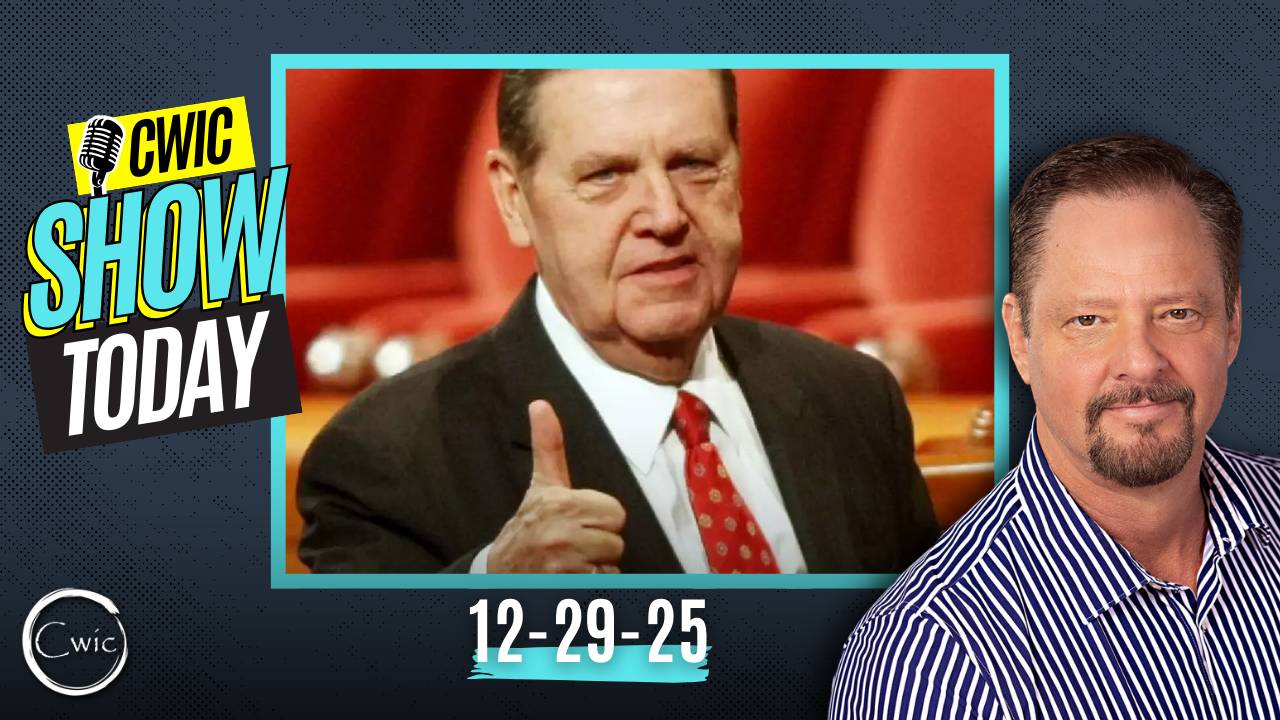
President Holland passed away on Saturday, Dec 27, 2025.
My personal interaction with Elder Holland
Elder Holland's "Musket" Speech at BYU
His "Tethered Empathy"
Raw Transcript
All right, this is Quick Show today. My
name is Greg Matson and I am your host.
Today is December 29th, still 2025 for a
couple of more days. And in this
episode, we will be talking about the
passing of President Holland, who died
on Saturday, December December 27th,
2025 at 3:15 a.m. I want to talk a
little bit about a personal exchange
that I had with him and talk about what
this means in terms of succession,
right? Looking at the other brethren,
their ages, their seniority, and where
this takes us. But most importantly,
President Holland was an incredible man.
I I don't know if anyone exemplified
sticking to the truth and standing for
principle while still loving those who
might disagree with him. He was a great
example of tethered empathy. Now, this
episode is brought to you by Go and Do
Travel and the Gospel on the Nile
cruise. This is a a fabulous fabulous
cruise where we are going to be on a
river boat for several days going down
the Nile. We visit several different
temples. We go to the pyramids. You
might ride a camel. We go to the tombs.
And I don't think there is a better
place to learn about the temple outside
of the temple than in Egypt. The ruins
are incredible and the temple is etched
in all over these temple walls from
thousands of years ago. To find out
more, go to quickdia.com, cwicdia.com,
scroll to the top to trips and events,
and go down to Gospel on the Nile. Here
we go.
[Music]
All right. So, President Holland uh
passing away a couple of days ago on
Saturday, December 27th. This is uh for
most people I think right one of one of
and yes you can say it he's one of your
favorite apostles
um just the the spirit that he always
brought the integrity that he had and
his talks were so often focused on the
life and the mission of Jesus Christ and
he spoke so eloquently about the atoning
sacrifice of Jesus Christ and that is
the the center of the restored gospel
and his nature and his love and his
sacrifice.
Um
most people as did I often looked
forward to his talks every general
conference. Now I didn't always have the
same feeling uh about President Holland.
actually uh when my wife and I were at
BYU attending BYU as students, he was
the president and and I kind of felt
that this restrictive I don't know I I
felt a little restrictive. Maybe I'm
sure I wasn't humble enough but uh I
felt a little bit restricted at BYU why
things were so uh they seemed very
regimented to me. I don't think that
that has changed. I think that BYU is a
great and wonderful place and there were
some changes that I probably had to make
in myself. I I enjoyed I actually ended
up really enjoying my time at BYU. Uh
President Holland was also a friend of
my dad and they went to BYU together. I
think that they're pretty much the the
exact pretty close to the exact same age
and I think they came in the same year.
I'm fairly certain they left on their
missions the same year and came back
about the same time and went to BYU. Um,
and so they knew each other and I had a
a short correspondence with him online
where I had written to him about some of
the problems that were going on at BYU.
And at this time he was in charge of
CES, right, as the apostle over CES and
and I had written to him and he calmed
my fears a little bit and talked about
how great the mission is for BYU. And uh
and then in typical President Holland
style, right, he signed off on
this email. I think I could say this. I
I think it's okay now to talk about
this, but he signed off on this email uh
where we had had a discussion about my
dad in the email. And my dad's name is
Jeff.
And he signed off on the email as Jeff
the Lesser.
and just just kind of a and my dad was a
tower of a figure in in many ways, but I
think you know obviously it was just hey
this is your dad. I am Jeff the lesser
to you and you know pretty typical of of
the way that he handled things and and
and
interacted with individuals and you know
I mean look what that does for me. I
mean that's that's that's uh just very
mindful of what I would be feeling w by
saying something like that. Uh, I had
talked to him about BYU and one of the
things I want to talk about is is his
strength of being able to stick up for
principle always while while loving
individuals at the same time where where
there are, you know, and I want to talk
about the musket talk just a little bit
that happened at BYU. Um, again, the
what my conversation with him was was
about BYU. I was doing a lot about what
was happening at BYU at the time. Uh
this was before his talk and I knew
exactly what he was talking about when
when he brought this talk up because I
had I had been right in the middle of
um what had been going on there. And and
when I say I was in the middle, I mean I
was I was in the knowledge in the middle
of of of what had a lot of what had been
going on there. And he talked a little
bit about that in the musket talk. And
we called it the musk musket talk
because there was such a backlash to
what he spoke about. And it was reframed
in a very negative way. And yet you have
to know that going into this,
this was a talk that was given to the
faculty administration at at BYU. And
yet he knew going into this that it was
going to be a difficult subject to to
tackle as he talked about the you know
the title of his
address was the second half of the
second century of Brigham Y Young
University and he's talking about the
mission and and he's talking about the
issues that are very present at at BYU
and some things that were people were
talking about and the what they were
teaching the students some professors
were teaching the students and
administrators
and he's trying to straighten some
things out and that's got to be a very
difficult thing to do. And so I just
want to go to a little cut here of that
that address and a couple of them
actually and and show you the way he
handles this. This is a tearful Elder
Holland at the time that knows what he's
walking into, but is going to talk about
it firmly but lovingly regardless. Take
a look at this. Surely our integrity
demands that our lives be absolutely
consistent with and characteristic of
the restored gospel of Jesus Christ.
Administration faculty. At a university,
there will always be a healthy debate
regarding a whole syllabus full of
issues.
But until we all come to the unity of
the faith and have grown to the measure
of the stature of the fullness of
Christ,
our next best achievement will be to
stay in harmony with the Lord's
anointed,
those whom he has designated to declare
church doctrine and to guide Brigham Y
Young University as its trustees.
Okay. So, he's making it pretty clear
here that
there's a lot of secular information out
there and there's a lot of debate and
you can have healthy debate about
different issues and he's going to end
up talking here about the LGBTQ issues
that are so fragile and and difficult to
talk about and um to be straightforward
with and and and yet he's going to say,
"Look, the most important thing here for
you to do as administrators and faculty
is to follow the Lord's anointed, to
follow the brethren and what they teach
and what they uphold as doctrine, which
in this case is going to lean into the
family proclamation.
And and again, I bring this up not
because it's more recent or he has so
many very important talks that he has
given, great talks. He's a great aator.
But but this is what I pull from him
most of all is this type of an example
of integrity, principle, truth and
empathy and love, right? Holding on to
these two things so firmly.
And and I think that that is the
greatest example that we could have in
our day and age where there is so much
untethered empathy in our world where
everything we react off of we seem to
react off of feeling. We seem to react
off of, okay, I feel bad for this.
Therefore, truth doesn't matter. My
principles don't matter. What matters is
the way I feel, and I'm going to react
strictly off of that. And he teaches a
very different principle here. He even
brings up uh uh the story of a young
woman who is radicalized
at Brigham Y Young University.
And and I know that that was simply a
representation of what had gone on
further at at the time because certain
professors were not following the
brethren in what they were teaching.
Let's continue with what he has to say.
Elder Dan H. Oaks then, not then, but
soon to be in the first presidency. He
would be sitting where? Only one chair,
one heartbeat away from the same
position. President Nelson now has he
quoted our colleague Elder Neil A.
Maxwell who had said and I quote
in a way Latter-day Saint scholars at
BYU and elsewhere are a little bit like
the builders of the temple in Nauvoo
the builders
who worked with a triel in one hand and
a musket in the other.
I'm going to repeat that again.
Today Latterday Saint scholars at BYU
and elsewhere are a little bit like the
builders of the temple in Nauvoo who
worked with a trowel in one hand and a
musket in the other. a trrow in one hand
and a musket in the other. Now remember
what's happening here, right? He is
quoting
President Oaks, then Elder Oaks, who
gave a similar talk
and talked about this example that was
given by previously by Elder Maxwell. So
you have Elder Maxwell giving the
example of this
and then you have Elder Oaks giving the
example the same example of this of the
musketss and now you have President
Holland repeating this quote right three
different apostles then have brought
this example up of building Zion at BYU
with a trow in one hand right building
up the build of the temple of Nauvoo
with a musket in the other protecting
Zion that's all all it meant. That's all
it was talking about. But he's talking
about the family and traditional family,
the proclamation,
and he's going to say something about
this and it's going to be thrown
completely out of context.
Let's go on a little bit further here.
Today, scholars building the temple of
learning must also pause on occasion to
defend the kingdom. I personally think
Elder Maxwell went on to say this is one
of the reasons the Lord established and
maintains this university. The dual role
of builder and defender is unique and
ongoing.
I'm grateful we have scholars today who
can handle as it were both trowel and
musket.
Then Elder Oaks said challengingly,
I'd like to hear a little more musket
fire from the temple of learning.
Okay. So what is he saying?
He's saying that
he wishes that the Temple of Learning
being BYU
would be a little bit more
focused on what is going to be his talk
here basically is on the family and on
building the temple and on building Zion
and that we need a little bit more
defense of it with the musketss.
He's asking BYU faculty and BYU
administration to get out of the spiral
of silence
and to defend the principles of the
gospel
because there are many with loud voices
that are drowning them and they're not
speaking up.
So stepping back here again, think about
what he is stepping
uh into here with his speech here at BYU
at this time. He knows this is going to
be very unpopular among a certain group
of administration and and faculty and
and yet he's going to speak this. He's
going to say it. He knows there has to
be a change. And because this is an
issue of the family proclamation,
I it's it's it's an issue of empathy.
And it's an issue of we need to love
everyone no matter what. But we have to
hold the principle in truth also. And
and that is such a great lesson for us
today. Can we can we hold on to truth
while still loving like Christ loves?
Because that's what he did. He didn't
bend on truth. He didn't say everything
is okay. He doesn't just tolerate. This
is a witness of Jesus Christ
who is saying, "No, you stand firm on
doctrine. You stand firm on truth. You
stand firm with the priesthood. And you
love others regardless, no matter what."
What else would you expect an apostle of
the Lord to say?
And yet the push back was, you know,
he's talking about musketss being fired
at those that are in the LGBTQ community
and that that's what this is all about.
No, he's talking about defending the
family. Period. And loving everyone.
And that's what I learned most from
Well, that's one of two things I learned
most from President Holland is is his
witness of Jesus Christ. the way he
spoke about our savior
and his ability to hang on to truth as
he loved and lowered himself below
others.
And there are so many examples of this
that you can find online over and over
and over again. The way that he he loved
others in in a very humble fashion.
Those are the two greatest lessons that
I have had from this man who has had an
impact on myself and probably you and so
many other people. Now, one thing that
this does is this obviously changes the
succession of
and seniority of of the 15, right? The
the first members of the first
presidency and the members of the quorum
of the 12. This is always something
that's of interest because we know where
this goes constantly. And this is a way
that um uh seems to be right from the
Lord on how we go through a process of
succession and how the priesthood moves
forward with a first presidency that
when the prophet dies, the first
presidency is dissolved. And we then end
up with 14 men that are part of the
quorum of the 12 for a short period of
time typically until a new president of
the church is called and sustained.
and confirmed, right? And uh and then
you have, of course, the those that will
then become the president of the quorum
of the 12. President Holland was next in
line to President Oaks to be the
president of the church based on his
seniority, based on when he was called
and and ordained apostle, an apostle of
the Lord.
And so with him now gone, he was the
president of the quorum of the 12
because whoever is next in line after
the president of the church becomes the
president of the quorum of the 12. If
that individual is called into the
quorum or into the first presidency,
then the next individual would be called
as the acting president. the acting
president of the quorum of the 12.
So where does the seniority lie now? And
something very interesting to see is
just the ages of these individuals. We
had four men that were old and not in
the greatest health. Uh for the last
couple of years, either old or very old
when we're talking about the the quorum
of the twel apostles and and the leaders
of the church. They're all fairly old,
right? Wise and and old. And so of
course Dalin H Oaks the president of the
church is now 93 years old
and uh obviously the the highest in
seniority. Now what's interesting here
is he was 51 years old when he was
called. He had been president also at
BYU just like Elder Holland and uh he
was only 51 years old which is you know
in our time in the last 50 years call it
that's that's pretty young at that time.
So he's been in as an apostle and as
president of the church now for 40
almost coming up on 42 years soon but he
was called in May of 1984.
Now, if we go to Elder Holland, who is
next in seniority, he was not called
until June of 1994.
So, there was a 10-year period where
there was not a passing of anyone from
the First Presidency or the core of the
12
and now at age 85, uh, Elder Holland has
has passed away. So, who is next? Well,
that would be President Iring, who was
called in 1995, a year after President
Holland. Uh, President Iring is now 92
and a half years old, so pretty close to
the age of Don H. Oaks. He's been in for
30 years, was called when he was almost
62 years old.
And he's a little frail. I mean, let's
be honest, he's a little frail. The Lord
might have other things in mind for him
to keep him around longer, but boy, he
has been a mainstay in the leadership of
the church for a very long time. And he
he his
I mean of anyone and I know you've got
very impactful presidents of the church
like like uh well like a
Russell M. Nelson. But but as far as
someone who has been in that first
presidency position for the longest
period of time outside of maybe Gordon
Bhinckley there for a while, Henry B.
Iring has been the mainstay in that
highest quorum of the first presidency,
but he's getting pretty old. And so
you've got two more men here right after
Elder Holland who has passed away and
President Nelson who has now passed away
who are at the ages of uh 92 almost 93
and 93 years old. And now with President
Holland gone where do we go to next?
Well that would be Elder Ukdorf. And
Elder Ukdorf now will become the acting
president of the quorum of the twelve
apostles because Henry B. Iring will
actually be the president of the quorum
of the 12 being next in seniority to
President Don H. Oaks. So Elder Ukdorf
will be the acting president of the
quorum of the twel apostles. Now Elder
Ukdorf, we had President Iring who was
called in n April of 1995.
Elder Ukdorf was not called until
November or excuse me October of 2004.
So there was another nine years we can
see there where there was not a passing
away of of anyone of the 15. On that
same day of the 2nd of October 2004 but
after Elder Ukdorf, Elder Bednar was
called as well. Same day on October 2nd
2004.
Uh Elder Bednar like similar to Dalon H.
jokes was only 52 years old when he was
called as a an apostle of the Lord Jesus
Christ. He is now 73 years old. Elder
Ukdorf is the same age. I mean, look how
healthy he looks. But he he is the same
age as Elder Holland at 85 years old. He
just turned 85 in November. So about
eight years eight and seven and eight
years younger than Elder Iring and Elder
Oaks. Elder Bednar is now 73 years old.
So quite a bit younger.
And then the next in line here you the
next three success apostles of
seniority. Elder Cook is the same age as
Elder Ukdorf and Elder Holland. He is 85
years old. Uh Elder Dtodd Kristofferson
is now he'll be 81 in January.
And Elder Neil A. Anderson is 74 years
old also older than David Bedar. So,
David Bednar is younger than the next
three apostles called after him.
And it's not until you get down to Oh,
excuse me. And then Ronald L Ronald uh
Rasband was is also 74. So, the next
four uh apostles are older than Elder
Bedar. So, it's not until you get down
to Gary E. Stevenson, who is a mere 70
years old. Elder Runland is 73. Elder
Gong is 72.
Elder Suarez is 67. Patrick Kieran re
recently called is 64. And our newest
apostle, Elder Causse, is 62 years old.
So, it just kind of gives you a rundown.
you we've had a large gap here where
eventually and you never know what's
going to happen but if we if if Elder or
President Oaks and President Iring are
to be the next two to pass away and who
knows we don't know that that's going to
happen you're going to end up with an
Elder Uggdorf and an Elder Bedar and
Elder Cook possibly Elder Christopherson
we move to a very newer uh group of
individuals who have not had any
experience in the first presidency
except for Elder Kristofferson who was
just recently called. Uh and he is
number four if those other two are to
pass away or President Oaks and
President Iring.
But I just want to say uh you know Elder
Holland is um a hero. Definitely a hero.
The the thoughts I had about him, the
feelings I had back when I was at BYU
were more of a a rebellious type of a
spirit. and and man, what an impact that
he has had. And
it's hard to look at honestly at these
men and even when you don't agree with
something, not think to yourself, how do
I not sustain these individuals? These
are incredible men that give their
lives, that sacrifice so much. So many
of them are are uh very successful in
their fields. what they do to to become
an apostle of Jesus Christ, to take on
the mantle, this this overwhelming
mantle of being one of the leaders of
the church and like Elder Holland, just
to be such a a an example to everyone
about how to worship, about how to love,
and how to stick to truth.
I believe that's the example of the
Savior.
It is a tethered empathy
which I believe putting those things
together, truth and empathy, right?
Justice and mercy combined together is
the pure love of Christ. Thanks for
listening.

"I Take This Every Day!"
Learn more about why I accepted Cardio Miracle as a sponsor and why I take it every day!
- Greg Matsen

Stay Connected With New Articles & All Things Cwic!

Cwic Audio Player
All of the Cwic Media podcast episodes on one page!
Recent Posts

