
Christianity’s Vulnerability to Wokeness
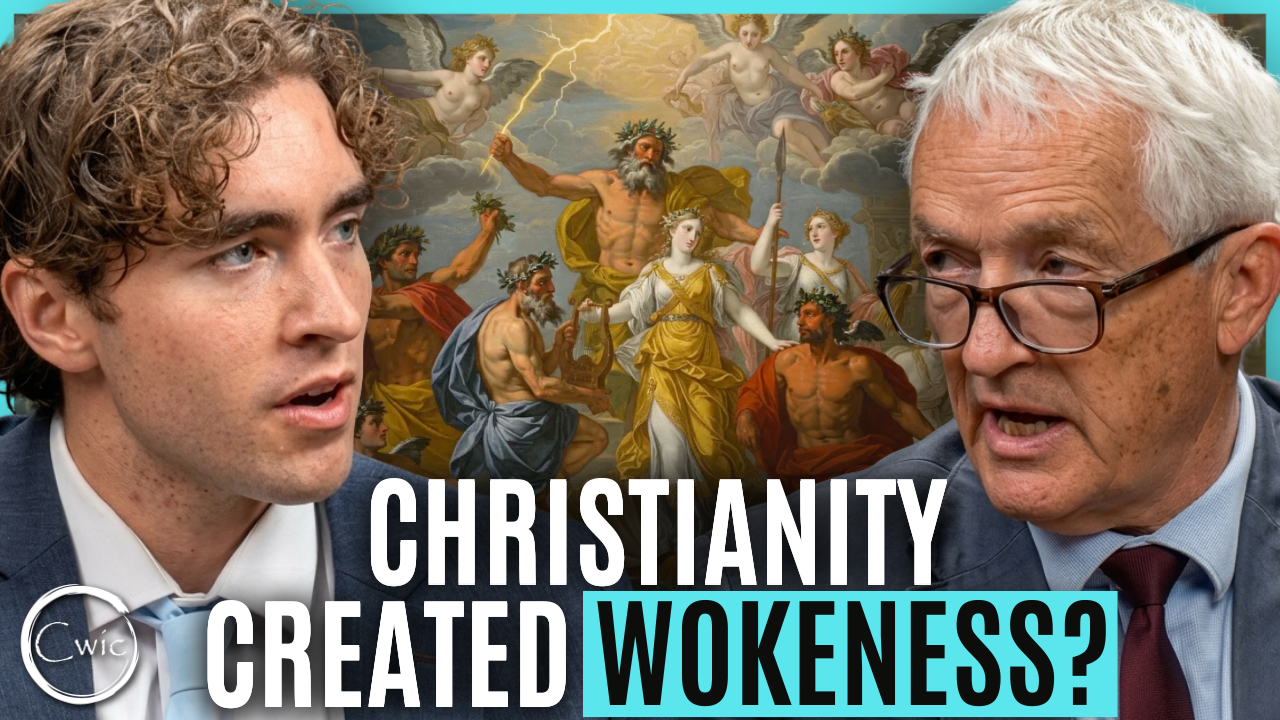
How the West Lost Its Balance Between Love and Virtue Athens, Jerusalem, and the Modern Soul The Problem With “Love Is Love” Christianity Why Christianity Needs Virtue to Resist Radical Secularism
Raw Transcript:
This episode is brought to you by Fathom the Good, which is a high school curriculum, also adult curriculum for homeschooling and personal use. It's
built on the principles of the founding of America on focusing on the good and something that doesn't really happen
anymore in public education, critical thinking. If you want your teenagers or you yourself want to learn how to think
critically and really find the good and help in your decisionmaking and learn an awful lot, then check out Fathom the Good at fathom the good.com.
Here we go with the city and the soul with Dr. Ralph Hancock. The city and the soul.
Welcome back to the series The City and the Soul. Today we have another episode exploring Professor Hancock's new book, Love and Virtue in a Secular Age. This time we delve into the third and final
part of the book. And I have to confess it's uh been probably the most confusing one for me to read the summary so far.
So I'm excited to get some more context into what it's about.
1 minuteOkay. Well, as as you know, u I I frame um the discussion at the beginning of
part three, chapter nine, I think it is, uh in terms of this very broad abstract polarity between the same and the other.
Uh here by the way is the book in case the camera didn't uh see it. I'm a [clears throat] after many years of work. It's very satisfying to see it in
print naturally. Um so I think it is in chapter nine that part three begins. I
do frame things in terms of the same and of the other. But but remember that this
is echoing the way I framed the whole project from the beginning from the preface actually. Remember in the
preface that I foregrounded the theme of uh of victimhood and showed that victimhood politics,
ideological identity politics or the woke syndrome really comes down to this,
I would say noxious uh bond between two things that seem opposite. um a very generalized
universalistic uh empty hollowedout compassion or regard for the other. So
there you have the other which has no subject matter no content
divine mantra of exodus applied to uh the human self. So we have this perverse
dialectic of the same and the other established uh from the beginning of the book other compassion for the other
human being or humanity abstractly in general and the same the uh assertion of
arbitrary will and identity the self uh uh as the ground of meaning.
And so, uh, here at the beginning of part three, which is my most theologically ambitious chapter, I come
back to this polarity and try to say what it would take uh to fix it, what it
would take to [clears throat] coordinate, you might say, the the ethical impulse
towards the same and the other. What would it take to coordinate them?
connect to connect them in a way that is not uh hollowed out and vicious and leading to woke politics. Uh and to do
that I have to go back to the deepest sources of the western tradition already addressed uh somewhat in earlier parts
of the book but here with a more um a more determined focus that is the legacy
of Athens or Greek philosophy and Jerusalem Judeo-Christianity uh the biblical inheritance. So you'd say that
this uh this concept of the same and the other would you say that's the core theme of the book like the the central kind of tension or would you say it's
just one of many? No, I I suppose yeah we can't say it's the central uh tension or the central polarity which needs to
be healed uh and informed. And so a key ar argument of my book is that uh our
western ideological uh exhaustion, impass, the bad situation we're in
really requires a solution that is in a profound way uh theological that we are
dealing it's also ideological. You can frame it in relation to uh the foundations of modern rationalism as per
Leo Strauss for example. That's not untrue. But at a deeper level, my suggestion is we're not going to get
this right. We're not going to respond to uh the woke uh madness and woke illness,
the uh unh wholesome, you might say, complicity of extreme sameness, extreme
otherness without getting Christian theology, something something right in
Christian theology. Because our ethical framework, while nourished in important ways and inflected by modern
rationalism, the enlightenment, our ethical framework is still fundamentally shaped by a Christian sensibility even
for those who aren't Christian. And even as Pier Manant uh as I quote Pier Manant saying earlier in the book, it's
sometimes um the non-Christians or even the anti-Christians who are most Christian in a bad way. That is the in
the sense of validating this uh empty polarity and complicity uh complicity the alliance between the same and the other.
So they're clearly just different ideas like theologies to kind of rectify this difference between the same and the other. You touched on it briefly u a few moments ago. You mentioned Athens and
Jerusalem which is also like a central idea in your teaching in your book. How do Athens and Jerusalem manage this same other problem differently?
Yeah. Well, that that's a question that sweeps over at least two and a half millennia of Western history. [laughter] But yeah, I do I do have practice
boiling it down. So, it really comes to this. Athens, you could say most obviously uh privileges the same. not in
the modern sense of selfish identity politics but in a profoundly important way. The um Athenian that is say the
Greek philosophical uh understanding of transcendence of what is higher of that to which we
aspire is finally based upon a prideful assertion of a human good that is experienced in
the activity of contemplation. It's a pure uh intellectualism, the highest
good. Uh what Plato calls the good, what Aristotle calls God. And there are important differences here, but they
share something important in common. And that is the highest good is conceived as intellectual
fulfillment. Well, Aristotle speaks of uh God as a a purely self-contained, self-thinking thought. You could say
that modern thought has taken that over and you know applied to the self what Aristotle applied to a rational and
impersonal god. So the Greek god, you've heard me use the formula before, the Greek god is rational impersonal
necessity. And this is based upon the same, that is to say, on the philosophers's confident assertion of
his own highest experience interpreted as pure intellect or pure contemplation. Okay, that's Athens.
uh Jerusalem configures transcendence uh differently with much more emphasis upon
the other with an emphasis upon the transcendence and unknowability of God.
So God is u I've sometimes said kicked upstairs beyond beyond the uh
intelligible rational essence of the Greeks. God transcends the philosopher's own good, the philosopher's own intellectualist good.
But at the same time, since God's transcendence must play out, you know, resonate in real
human experience in some way, then where does that land? Well, just consider u God's promises to Abraham, the Abraham,
Abrahamic covenant. plays out in the eternal significance of family
uh posterity, legacy, inheritance. So a short answer would be that the biblical alternative
to the god of the philosophers is the god of the of the fathers. It's a god that is configured in a significant way
in a familial context. And of course we should add the fathers and the mothers.
The mothers are extremely the wives and mothers Sarah, Rebecca, etc. are extremely
important in the Old Testament framework. And needless to say in Latter-day Saint theology and cosmology,
the acknowledged u presence of a mother in heaven sort of nails down that um
heavily familial aspect of what restoration latter-day saint Christians mean by transcendence. So the same Greek
philosophical intellectual contemplation. Uh the other a more transcendent god that cares about us as
human persons because he is a personal god unlike for the Greeks. And uh our p
our personhood is is much attached to our famil familial status. Mhm. And both
these approaches, they definitely differ from what you could call a modern subjectivity, but that might be unfamiliar to people. What would you
define as modern subjectivity and how do you address it in the book?
Yeah, I have a whole chapter that begins with an engagement with the problem of subjectivity. uh when when when we say subjectivity, you can I think pretty
much consider that an equivalent to selfhood or the the priority of the self in reality or interpreting reality
beginning with the self. And you you can trace this through modern thought you know Renee Deart tried to ground modern
philosophy way back in the 17th century France. Ren Renee Deart uh tried to
ground philosophy in in the ego. I think therefore I am I I can construct all of reality out of the self. Or leaping
forward to the 20th century and Jean Paul Sartra the great French existentialist tried to ground
philosophy in the pure unlimited assertion of the self the virtual selfcreation
uh of the self. So subjectivity is a great theme of modern rationalism. But here's the key. It really is derived
from Christianity. The the sacredness of the individual person
is precisely the point of departure of the bib biblical vision of reality and
of human meaning from uh the classical uh Greek vision.
So that's why the solution to the problem of the outofcontrol
self in [snorts] uh modern ideological identity politics or wokeness is a theological problem. We have to go back
and think about the meaning of personhood which is a way of saying the meaning of subjectivity. So subjectivity
aligns with the self and you can say that the subjectivity of the self the pure the grounding of reality or the
prioritizing in reality of self-awareness uh self assertion what
begins with the interiority of the self is a theme of modern thought from decart to sata but it's really a Christian
theme it's uh it's the Bible that awakens us to the infinite value of the individual person and modern
subjectivity is that Christian personhood gone off the rails or detached from its grounding in some
substantive meaning. So the whole theme of of my book is where do we locate how do we articulate that substantive meaning really there are just two two
13 minutesmain options two configurations Athens and Jerusalem or the um the proud virtue
of the Greeks and the transcendent sense of personhood of the Christian viewpoint. You also
mentioned um along the lines of modern subjectivity that uh Toqueville is a better guide like a better solute has better solution than Leo Strauss. Do you want to elaborate more on why that is?
Right. Well, so I returned to Toqueville uh one of my great load stars uh
companions and mentors uh along with Pier Manant and Aristotle and indirectly
I suppose Thomas Aquinus. I returned to Toqueville and uh position him favorably in
relation to uh a great teacher of mine indirectly through through my teacher, my personal teacher Harvey Mansfield,
but Leo Strauss uh the greatest uh scholar and teacher of political philosophy I would say in the 20th century.
But I compare uh I preferred Tokville in terms of a fundamental orientation to Strauss because Strauss tries to fix the
modern problem which he sees in a fundamental way along the lines that I've been describing. Uh but he tries to
fix it by gently or discreetly repudiating Christianity or pointing back behind Christianity to the classics to Plato and Aristotle as the solution.
And I think Tofville is more val balanced and truer to reality because he sees that the the Christian and modern
grounding or the Christian and modern attention to the meaning of subjectivity the meaning of the self to the
personality of meaning to the individuality of meaning that these things are that Christianity isn't wrong. This is a dimension of human
meaning, the personal dimension that Christianity, Judeo-Christianity brought to the light and that there's no
going there's no going back. Uh in a way Plato and Aristotle were trying to construct a a focal point
to which to attach the goodness of virtue, a ground of virtue in something rational,
impersonal and immutable. They're necessary, unchanging in a way that excluded personhood and individuality.
The Topfield's great genius is that he sees before Leo Strauss and before
Friedrich Nichze he sees that Christianity is very vulnerable to uh devolving into
modern egalitarianism into the u into the uh empty alliance between the same and the other that I've described.
Tokville understands that, but he understands as well that there's something true in personhood, in the self, in subjectivity. There's some
which is to say to use Dolville's more familiar category, there's truth in human equality. Another way that to
configure the Athens Jerusalem is that in a way Athens is grounded on human inequality with the phil the virtuous
and then the philosophers at the peak of humanity and Christianity is in a deep way grounded on human equality. We are
all persons
[snorts]
uh created by and loved by a transcendent heavenly father.
All right. And so do you feel like that um that truth that we're all children of heavenly father? Would you say that aspect of theology is what helps us
manage the problem the same or the other or what aspects of the Christian theological practices do you believe kind of ground that um sense between the two?
Well, my my whole point is in a way is that Christianity we're proving it every day today. I think that Christianity is
u because of its um fundamental insight being personhood. Christianity is
vulnerable to to put it bluntly, there's a a logical arc from Christianity uh to wokeness.
Okay? That uh that's why I mean you you have woke versions of Christianity uh and they're not uh dishonest or
completely deluded. I think they're wrong and imbalanced, but they're not dishonest. Woke Christians are not dishonest or deliluded in any uh simple
way because the Christian appreciation of equality, individuality, selfhood, subjectivity
uh is uh essential to Christianity. So my whole point is to in a way to pull
Christianity back to its anchoring points uh in more concrete figures of human
meaning. And what are those? They are Greek virtue and you might say Jewish commandment and
obedience. So that you could say that Christianity becomes wokeness and feeds
wokeness, alies itself with wokeness when it uh repudiates virtue on the one hand and commandment on the other.
There's an imbalance of the two is what creates that theological wokeness.
Right? Really the whole question is whether the Christian emphasis upon personality, subjectivity. Well, here
here's a a common term that evokes this perfectly, equal human dignity, which is of course a true thing and derived from
Christianity. But when the the Christian emphasis upon that category becomes so
one-dimensional that it repudiates any particular content in terms of virtue or
commandment which goes together with institutional church authority. Whenever when that is uh repudiated then uh
Christianity collapses upon itself and you could say becomes purely and radically modern. There is no meaning
but there is no meaning of Christian openness to the other but the self assertion of the secular self.
And so do you think that this um this [clears throat] need for um kind of like this action this this uh grounding that
Christianity places between um the same and the other do you think that supports moral agency and practical human existence? Like how do those correlate?
Well, right. But in a way, the whole point of my book is that we need to rescue moral agency and situate it at the core of Christianity. But that
involves a certain correcting our understanding of Christianity to include uh in particular the centrality of moral
agency which is a way of saying you can hear the classical resonance here because moral agency aligns very closely with the intrinsic good of virtuous
action which are key themes of Aristotle incorporated by Thomas Aquinas. So my my
practical theology is I think broadly in tune with or broadly broadly an heir of
uh Thomas Aquinas's uh Arisetilian understanding of the natural goodness of virtue under God
that virtuous action you'd say is just essential to not only just grounding Christianity like bringing it back to
its original form back to what Jesus intended but do you think how do you think people still misunderstand and that in line with modern subjectivity, how do you feel that people could best
rectify those two ideas? Cuz I know for a lot of people it can be difficult to think of um you know that equality of
human dignity, how that leads to wokeness like you said, it's a it's a pretty predictable arc. What what things do you think would most easily bring
people to this understanding of the the necessity for that return to a classical understanding of the intrins intrinsic
goodness of virtue? Well, in a way the uh the woke u awakening to be redundant
is just the alarm bell that we need because Christianity has been in a way
undermining its own substance or distancing itself from its uh moral I would say even cultural traditional
content if I may for generations even for for centuries but it's because of this woke moment And because of the the
Christian uh version of or embrace of wokeness that we have an opportunity which I try
to seize upon in my book an opportunity to say wait a minute that's crazy actually that can't be the ethical meaning of Christianity.
Uh so in a way I'm counseling I'm saying back up. We've got over our skis here a
bit as Christians imagining that Christian love and Christian grace can
do without classical virtue especially and and [clears throat] divine commandment and institutional authority.
uh we've tried uh you might say extreme modern or post-modern Christianity has
taken the concept of love radically uh abstractly as to deny its content in human purpose.
So really the whole question comes down to what does it mean to love? How can one
love someone without uh conceptualizing the good of that person? And how the can
can the good of the person be divorced from let's say moral competence which is
23 minutesvirtue or what the ancients called uh the right order of the soul.
Yeah, this discussion kind of reminds me of Thomas Aquinus's natural law. how that um the natural law is knowable to man and that like our virtuous action
and like taking our virtuous action doing what God wants us to do is kind of what constitutes that natural law is that knowable kind of tangible feeling
that we have. How do you feel like that can also help people re uh reconcile that um difference between the same and the other and that need for virtue
right for for Aquinus and for the tradition that I'm trying to evoke and exploit here uh natural law is not some
like abstract uh and unintelligible command written in the sky. uh natural
law is grounded in a proper understanding of human purpose and what a human being is. I mean it's natural.
So it's the natural law is just a set of guidelines uh for human action grounded
in an understanding of human nature and the human good. Everything hangs really on the word natural. And uh the whole
problem with wokeness and with Christianity that is vulnerable to wokeness is that it has repudiated human
nature in the name of love or compassion or grace or transcendence or
relationships. I could you know extend the list in the name of love and grace
divorced from nature but Thomas Aquinas's whole
magnificent system of theology and I by no means intend to endorse every letter of it but the whole magnificent system
uh is based upon uh a kind of motto that he states early in the Suma theologia.
which is grace does not destroy nature, it perfects nature. If we can just understand that, that's the whole key.
So when Christ said love one another, he doesn't mean ignore that human beings have a certain nature and that to be uh
competent and healthy human beings requires a certain moral formation and appreciation of the intrinsic goods of
character which Aristotle articulated more adequately than anyone else. Grace
and love do not destroy nature according to Thomas Aquinus. They they perfect it. They build upon it.
And somewhere in this uh part three I venture the claim that
uh for grace to we'll have to pause and consider this a moment because it's a very compressed way of making the point
of my whole book. If uh grace, transcendence, the divine perfects nature uh what we are as natural beings
and what we know from our natural experience and from rational investigation.
For if grace perfects nature, then grace must perfect the perfection of nature.
That is to say, there must we must have a sense of a natural perfection, fulfillment, culmination, excellence,
virtue. Virtue means excellence. We must um begin with and respect the impulse
towards the good of excellence or virtue that is already in our nature. Whereas
the modern and the extreme woke Christian sensibility
leads people to in the name of grace, love,
therefore humility to deny the perfection of virtue, the natural perfection of virtue. So Thomas
Aquinus incorporating Aristotle within a Christian framework argues that we have
to before we can be holy, we need to be virtuous and and virtue is not canceled by holiness.
That's the whole point. Can't can't you see in our in our modern world woke and
extreme Christian in a way that converge? Can't you see that there's a tendency to uh uh debunk
and to minimize the intrinsic goodness of virtue?
Oh, there absolutely. I mean, obviously my time on this earth has not been as long as, you know, other people's, but yeah, let's not do the percentages,
[laughter]
but no, it's very plain to see. I mean, you'll see uh videos of uh Christian pastors um you know, they have they're
dawning the uh trans flag as part of their robe or it's essentially is an entire rejection of God's um hand in
creation, the creation of our bodies and our souls. Uh the fact that gender is an immutable characteristic that's as eternal as our bodies and our souls are.
And you just kind of see that like there's so much virtue that is lost there because one of the key virtues is I guess it's obedience to God's laws and
we're commanded to I guess believe in him. That's one thing but also to respect our bodies as temples and that means the temples are created with a
purpose and that and transgenderism at its core that is a fundamental rejection of that virtue that God gives us. And so
it's not that people are you know doing this intentionally in a way to spite God but it is something that their confusion is then you know compiled it's added on
by uh people who are Christian but they don't they don't see the goodness the intrinsic goodness of the virtues that
Christ taught about. So in the name of the virtue of acceptance or just radical love that's been kind of subverted, they
just go along you. That's what acceptance means. Exactly.
The assertion of the the same, the self's sameness, right?
Yeah. As the same gets elevated above the other sometimes, but in other instances, the other is much elevated over the same.
Well, they're reciprocal. They're going on at the same time. I I empty myself.
I've evacuate myself thinking I'm being like Christ by sacrificing not only my
interests but even my convictions regarding virtue and the good. I sacrifice them to the other. But then
what's left for the other? Nothing but the assertion of of sameness of u I am who I am. Uh let let me be me. That's all that's left.
And what's so interesting to me is I feel like Jesus Christ and his mortal ministry provided the perfect example of how to balance those two ideas. And it
30 minutesalways brings me back to the story of the woman who was caught in adultery.
I'm sure that she was probably enjoying her time committing adultery. Most people don't do it uh for lack of enjoyment. But Christ didn't say, "Well, that's okay. I know you like doing this.
Um so you go on and you do what you want, but I'm not going to let them hurt you." He first off, he protected her, which was great. He showed mercy and
compassion, but he didn't tell her go and continue doing what you want to do, continue acting in a way that makes you happy. He says go and sin no more. He
encourages her to take virtuous action uh to betterment of the self in a pathway that leads them back to God and a closer relationship with him. Those
two ideas can totally be rectified and reconciled, but uh it seems a lot of people don't care to, right? And what I'm saying is this
betterment of the self, it involves u holiness and sacrifice
and um acknowledgment of a transcendence uh far beyond our natures. But it also involves an affirmation of what is good
about our natures. Like uh adultery is just wrong and you don't need an an utterly transcendent God uh uh to see
that. Or uh addiction is bad for you. uh uh or uh the kind of uh unbridled uh
self-p preoccupation that leads to cases like
the young woman at Yale a few years ago that you've heard me cite early in the book. The young woman who got in the
face of her professor to say, "No, this is not about intellectual an intellectual tradition or excellence.
This is about making a home for me, making me feel comfortable just as I am.
So, look, there's there's no doubt a moment in our Christian service and
fellowship and uh activity as parents and teachers. There's a moment to say, "Yes, Heavenly Father loves you as you
are, but we we can't stop there. He wants you to be better." So the whole point of my book is to say that part of
being better is something we must understand according to our natural characteristics
and and central to that nature is that the intrinsic goodness of virtue is a
thing and the the order of the soul is a thing and like not an arbitrary uh expression of Greek culture or
something like that essentially that just that the intrinsic goodness to virtue really matters like practically, philosophically, every
aspect of our lives influenced by the intrinsic goodness of virtue.
Yeah, it it uh although we may only notice it rarely and and articulate it
even more rarely that virtue or meaningful moral agency are central to the meaning of life. there. I you know I
guess my whole point of this book is to say that there's nothing more central and the the abstract uh idea of love
which renounces all specific you might say hierarchical ordering content is uh
is empty and dead and uh all too vulnerable to this perverse alliance with uh extreme secularism.
And so we are running lower on time.
We're getting towards the end of the the the episode, but in your own words, if you had to just condense down into a
main point of how we as Christians and like Christians broadly, how we can continue, how we can keep that like
importance of uh I guess what would you say is the main point in this last chapter, this last part? Um well really I'm doing
and this is not the place to go into the tall weeds theologically but the whole point is to establish a theological
basis for that uh that practical judgment that I've just announced. You can't do without virtue. So how do we fit virtue within a Christian theology?
Christians cannot be simply arisetilians with their uh pride and confidence and uh ultimate belief in a kind of fundamental human inequality.
But we have to understand how the idea of virtue can be incorporated within a Christian
idea of transcendence. And so in the last chapter of this part, that's where I go into the tall weeds theologically
with authors like Eric Pasharua, unspellable name, but uh uh Polish extraction, wrote in German, I think he
wrote the book on the central topic for the the theology of Thomas
Aquinus, the analogy of being. How do we relate man to God? And uh my whole point
using authors such as Pashawara and also uh more recent commentators on Thomas
Aquinas, my whole point uh is that our uh the idea of love and grace and transcendence must not lead to the
renunciation of virtue. And the good news is that Pier Manant in his analysis
or presentation of of the grammar of human action, the natural grammar of of human action, Pier Manant has already
shown that the good of virtue is both in and beyond virtue. It's in it's
intrinsic. That that's the same in a way. We can appreciate and affirm, have
confidence in, pride in, if you wish, the goodness of our characters and a virtuous action. But it's also beyond it
also points to some uh divine source that we cannot completely uh comprehend, a source of love and grace. So
theological theologically the culminating point of this part is to show that there's a way of uh
coordinating the natural good of virtue with uh supernatural uh transcendence. There's a way of anchoring virtue in divine love.
Wow. So just transcendence the transcendence of love cannot negate virtue and that the virtue that intrinsic goodness must stick around
if we if we allow love's transcendence in the sense of love's um priority over our natural
moral goods. If we allow love's transcendence completely to undercut the natural goodness of virtue, then
Christianity becomes utterly vulnerable to the appeal of radical secularism in the form of woke ideology.
37 minutesOkay? And so to avoid that arc, just continuing to take virtuous action and to understand its importance.
Right? I'm trying to build confidence in virtue within a Christian framework. And I think this is important not only for
Christians but really for modern liberal democratic peoples to get their moral
footing and to not set at odds love and virtue.
Awesome. Well, thank you so much for listening. We again check out the book Love and Virtue in a secular age for more information about it. And there
will be a part four on the conclusion of the book coming soon. Yeah, there'll be more like practical takeaways when we deal with a conclusion. Thank you, Lance.
The city and the soul

"I Take This Every Day!"
Learn more about why I accepted Cardio Miracle as a sponsor and why I take it every day!
- Greg Matsen

Stay Connected With New Articles & All Things Cwic!

Cwic Audio Player
All of the Cwic Media podcast episodes on one page!
Recent Posts

