
The Civil War Inside Conservatism - Kai Schwemmer and His BYU Professor
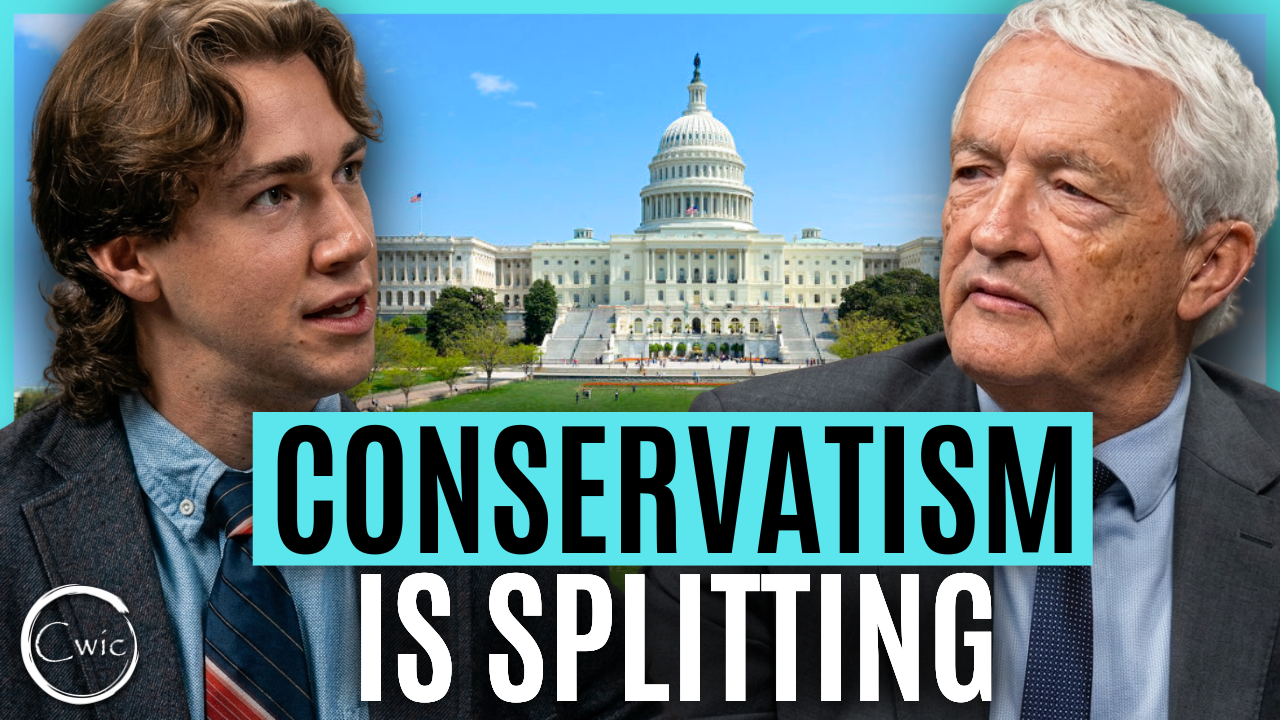
A Deep Dive Into the Crisis on the Right between BYU professor Ralph Hancock and political commentator Kai Schwemmer. From Trump to Tocqueville: The Realignment Explained Nationalism vs. Globalism The Hidden Philosophical War Shaping America Moral Agency vs. “Free Agency” Why some conservatives want to burn it all down
Raw Transcript:
Welcome back to the series The City and the Soul with Professor Ralph Hancock and political commentator Kai Schwmer.
Ralph is Kai's professor at Brigham Young University. So, this should be really interesting. There are a series of videos that we are doing between the
two of them, an interaction between student and teacher. This episode is brought to you by Fathom the Good.
Fathom the Good is a homeschooling curriculum for high schoolers and adults. It distinguishes between good philosophy primarily based on the
American founding and the philosophies that underpin that American founding.
Contrasted with today's post-modern confusion, when guided by the good of the soul, children and adults learn to
think in clear, constructive ways according to true morality and common sense. And this is the greatest asset of this curriculum. You will learn to think
critically and have the good as the objective. Go to fathomthegood.com
1 minuteto learn more and get a free sample course. Here's Kai and Ralph,
the city and the soul.
Hello, I'm Ralph Hancock. I'm a professor of political philosophy and author. And today I have with me my young friend uh Kai Schwmer who is a student and a political commentator.
Perhaps you've seen him out there on the media. Today we propose a uh discussion of the question uh I sometimes call it
maybe I'm trying unsuccessfully to be cool what's up with conservatism or would that be what up or anyway whatever the latest version might be. What what's
going on with uh conservatism? And um and we'll come around to the question just how and why this matters for
Latter-day Saints because as you already know from my introductory video on the city and the soul. Uh these political
issues and discussions and the mostly implicit categories that come with us do affect us in every aspect of our lives
including our religious uh understandings. So we'll we'll want to come around to that topic uh before we conclude. Uh but I'm going to turn to
Kai and let him offer some introductory thoughts or formulations of the question about uh conservatism today.
Yeah, absolutely. This is um a a conflict and a question that, you know,
I myself have been embroiled in as young conservatives also have, you know, this huge divide compared to, you know, the
older generations. But I think a lot of this, especially now, traces itself back to to 2016 where the issues that a Republican candidate or a conservative
candidate would campaign on are very significant or very significantly different uh maybe than some of the the prior generations. And the critique that
my generation has been coming up with is certainly that there are concerns that were not being properly expressed u by conservative candidates, things like the
offshoring of jobs or um an idea of national identity. And uh now I I I think we are in in the struggle for the soul of conservatism.
Okay. Right. So what how would you see what are the main players or do you have any uh not that you have need to have a
final typology but what are the the camps out there? How would what what what what comes into view first in terms of uh divisions within conservatism?
Yeah. For me, the the big ones that I notice are um what we would deem kind of the America first right, which is more um economically nationalist. Um it's it's more focused on national identity.
Um it's, you know, like I said, more restrictionist and uh much harsher on immigration. These are your immigration hawks. These are people who are really
concerned about cultural issues, I think, maybe as the thing that distinguishes them. Um and they you know are you know totally juxtaposed to this
neoonservative group a neoconservative which has become almost like a porative um now day to a lot of people which are more war hawkish more interventionist um
and maybe more free market right well yeah you frame things so u the
first approach to dividing things would be between a camp you call neoonservative and a camp uh is is nationalist most
maybe uh the best term to start with are preoccupied with immigration and the the question of globalism versus uh nationalism and protectionism I suppose.
Yeah. Yeah. Certainly.
And those are um those are certainly uh this constellation of issues uh has
arisen uh with a lot of help from uh Donald Trump. So, we're going to go ahead and mention the uh 500 lb gorilla
or is it a 2,000lb elephant? uh in the room uh in order uh not to talk about him.
He's his influence is inescapable in this question. But we're going to take more interest in the sort of underlying
uh roing of questions of principle. Uh the question of the
political philosophical principles that might that ought to to uh inform uh
conservatism. uh even beyond uh the career of Donald Trump uh
acknowledging the massive impact that he has had in sort of uh formenting a realignment
uh on the right side of the political spectrum. So today we we we want to try to get gain some clarity on just what
possibilities are there in this realignment and what would be good and particularly how that relates to uh Latter-day Saints and our I our ideas,
our beliefs and our our interests uh as a church and as a people uh as well.
Mhm. And if if you don't mind me jumping in, that's actually where we see another big part of like the dividing lines being drawn up is that the more
nationalist, right, but you know, not exclusively them. You also have maybe a separate group of what we would call uh Christian nationalists, they find the um
kind of Christian component, the religious component to be um an incredibly important part of what actually makes somebody a conservative.
Um and if we're we're breaking down the word um in in its you know descriptive sense what are we conserving is I think
the question a lot of people ask right what what is there to conserve and at the limit uh I've framed this
question of one uh as one of conservatism which I hope isn't overly optimistic because there is a serious
question what is there to conserve that that's really the in a way the the limiting depth of the argument is on the
right. There are plenty of voices and this tends to be somewhat generational.
7 minutesMany of the younger voices uh tend to be uh disillusioned if not fed up with the
legacy any recognizable legacy of conservatism itself and don't really seem to be talking about what can be conserved but rather
about what can be uh shaken up left behind or what can uh how can we
radically rethink things. So, it's fair to say that a certain radicalism uh on
the right is uh which is to the right of any conceivable conservatism is a is a significant force to be contented with.
Yeah.
And it's um my instincts and sensibilities are not uh friendly to the
uh right-wing anti-conservatism, the right that concludes there's really nothing to conserve. let's
start over again. Uh and those are maybe your accelerationists.
8 minutesYeah, that's a word that I'm just uh learning myself. But exactly those who and really obviously the the American the status of the American founding
is uh is central to this question because if there is an American conservatism
then central to what is to be conserved is some understanding of
the founders principles of American republicanism as understood by the founders and in the early republic and
probably I add and in Abraham Lincoln's thought. So in a way that's a very
significant dividing line. Is all that uh worth conserving or is that exhausted and uh do we need to throw it out? Mhm.
Now, I would say that the the this more radical this view on the radical right,
and you've already begun to to describe the contours of some uh differences on that, right? Well, there there's a
there's a there's the uh Christian version and the pagan version to uh put it very simply. There are the uh
Christian integralists. Some of them adopt this very term. Uh but what they have in
common is simply the view that uh the American founding
is not part of the solution but part of the problem. Mhm.
And one of the more uh uh intelligent and I would say formerly uh conservative uh
scholarly philosophical voices in this camp would be um uh Patrick Denin of the
University of Notre Dame who wrote uh a book notably before he wrote regime
change he wrote uh why liberalism failed. I believe I've got the title right and
every everything the main thing you need to know is in the title liberalism failed u and the founding is part of
that failure so that a solution broadly Christian nationalist I'm sure Patrick
Denine would not admit to uh wanting to impose anything as direct
as a I don't know papist theocracy, but there certainly is a a longing for an age of
uh moral and even metaphysical harmony
that uh evokes an esteem for the high middle ages. So
it's it's a Roman Catholic a broadly Roman Catholic uh point of view that
sees the founding as so implicated in let's call it secular and atbottom
atheistic liberalism apart from the particular religious beliefs of the founders and framers.
These people view the the founding as so uh implicated in an essentially
atheistic view of the human individual as uh best understood in a state of
nature without religion, morality or sociability. for example,
these people see uh people like Patrick Denine uh see the American founding as so much
implicated uh via Thomas Hobbes and John Lockach in that extreme state of nature
individualism uh that uh the
contemporary extremism of uh uh liberal secularism
12 minutesis understood to be ultimately derived from the American founding. So that that's that's really the question is uh
is the American founding uh redeemable? Uh can we uh read it in a
way that uh allows us to see it not as part of the problem but as a very fundamental part of the solution? Mhm.
And uh you know me well enough to know that I think it's it's vital that we uh
learn how to uh draw upon the best understanding of the founding which is one that is more continuous with the classical Christian tradition.
Yeah. And and that's I I think you you outlined very well what maybe the major question is in some of these factions of the right wing. Um because I think
everybody looks at the founding and they take away, you know, what it is that they want to take away from it. You know, a a liberal is going to find the
more liberal side of of Thomas Jefferson. You know, the conservatives,
maybe we're going to look at um John Adams a little more. We'll look at some of the other um early founding fathers.
Um and we'll align and attempt to prescribe, you know, our ideology of today onto the founders. And I think it is very important to look at, you know,
what was the environment that they um were crafting these these founding documents in. What were their kind of maybe implicit or explicit
understandings of certain issues? And I think if you take a look at it from, you know, 10,000 ft in the air, there are certain things where um we kind of ask this question of how did we end up here?
I I I think it is not ridiculous to claim that certainly while while looking over um the some some early amendments,
the drafters of those amendments or those who thought them up had probably hardly considered the idea of um the
Constitution guaranteeing a right either to access to abortion or um federal oversight of gay marriage. I think that those were ideas that were very foreign
14 minutesto the to the founders. And so you're right to to ask that question or or rather to frame it because that is the question being asked to many if the
conclusion of the founding is what we have today. And if we have issues to the extent that we have issues with what we have today is that the fault of the
founding is there some way of redeeming that you know original experiment um or is it a natural conclusion? Um and I
tend to air that that it is actually and and maybe this is the Latter-day Saint part that we'll get into. I tend to believe that that there is something very redeemable in the founding. Um but we have to to fight for it.
Yes. Well, I I think Latter-day Saints in view of our heritage, scriptural and
prophetic, uh there are so much there uh that is uh in praise of the founding
despite all the uh difficulties that Latter-day Saints had with the yes
with mainstream America, with the United States and the national government throughout our history. Still uh there
is a a a deep uh commitment. It's really in our Latter Day Saint DNA to be loyal
to the Constitution and to see it as a uh a a document informed by respect for
the laws of nature and nature's God. Uh that such as we read in the Declaration
of Independence. So I I think a task lies before us today to be more explicit
about that than uh has been necessary in in previous decades. Um so in a way we
we do have an interpretive uh task and a really a philosophical task uh before us
a challenge uh that has not been the same challenge that other generations have had to face. We have to uh retrieve
uh the wisdom of the founding if such there is and I believe there is uh in a way that speaks to our age and
addresses the question of our age and we shouldn't be uh uh shocked or disillusioned by the fact that u
other voices have drawn other threads from the founding and that um there are more than
There's more than one way to understand the founding. Political reasoning always has to do with sort of updating given
contemporary circumstances our understanding of of what's at stake in a philosophical or or political document.
Mhm. Certainly. And you know, maybe going even further on this question of uh of conservatism, how do you think
this all springs from, you know, our our our friend, the the founding father of conservatism, Edund Burke, you know,
where where do you think he plays into all of this? And and you know, judging by his conservative philosophy, can uh can we any of us call ourselves conservatives?
17 minutesWell, that that's a very pertinent question. And I I think uh yeah thinking a little bit about uh Edmund Burke uh the author notably of reflections on the
revolution in France his most famous work really the the founding work of modern conservatism modern conservatism
is founded as a response to in a reaction against the radical
radical rationalism let's put it that way uh of the French Revolution and our moment I think it could be described
as a Burkian moment if we know how to uh draw upon Edund Burke because uh let me put it this way uh to introduce a a new term into our discussion. Edmund Burke,
you could say, is the first is the founder of modern conservatism, but he's also the first and greatest fusionist. M
okay. So we've we've talked you you've talked about splinters within
18 minutesum conservatism today conveniently main more nationalist and
how shall I say human rights globalist would be one way to describe this uh fiser
but uh the conservative intellectual movement the modern one that uh William
F. Buckley and National Review were largely at the center of uh fashioned uh
this idea of conser of fusionism to hold together different factions especially those that you still named are uh in
some way at work uh today the uh sort of more libertarian free market and then I
guess at least incipiently uh globalist sort of uh uh element of conservatism.
with the social and religious conservative element.
Well, I would say everything depends upon still holding together. I'm not going to
say uh the libertarian side of conservatism because philosophically,
you know me well enough to know not to be shocked by this guy. I think philosophically libertarianism is a dead
end and a a misguided uh philosophical construction. But I mean the more uh pro-f freedom and free market, let's say
the the part of conservatism that uh is uh uh that praises individual liberty.
So in that very broad classical sense called it the liberal side of conservatism. Oh, what I'm saying is Edmund Burke was a liberal conservative
or was he a conservative liberal? There there's that could be an interesting,
you know, which is the modifier and which is should be the noun.
But Edmund Burke already was a fusionist.
uh he was uh he reacted against the French Revolution because he saw some of
his uh esteemed countrymen in Britain
uh waxing enthusiastic about the French radical rationalism, their belief that a
pure philosophically rational doctrine of uh human nature and the rights of man could supply the whole content to a political body.
Mhm. And so he saw his own uh people saying,
"Oh yeah, they're on our side. We also believe in u individual liberty and natural rights." And that's when Burke
said, "No, wait a minute. Our British understanding of liberty is not this radical French uh purely philosophical
and secular understanding." Well, I I won't try to I'm tempted, you can see, but I won't try to reconstruct all of uh Burke's
argument, but it should give us some heart to notice that Edmund Burke is really the first uh fusionist. He was a friend of liberty.
And the the the clearest evidence of this is that though he was an enemy of the secular rationalism of the French
Revolution, he was a friend of American liberty. He was a main voice uh in uh
the British Parliament in favor of recognizing the need to grant Americans their freedom. So he was uh a
conservative uh on very profound grounds in his reaction against the French Revolution, but he was a liberal in in
embracing the American founding. So, I I say that should give us hope because um
I'm not a fusionist if fusionism means what you're calling neoconservative. And by the way,
you youth paint neoonservatism with rather broad brush strokes. So, you you tend to reduce we use it as a catchall.
I I was there uh I was your age when it was kind of new. So it is a kind of catchall for things about the establishment conservatism that failed and that that we need to leave behind.
And I'm I'm sympathetic to that impulse.
Uh at the same time, it's a mistake to be reactionary. It's a mistake to define yourself against this uh it always risks
becoming a straw man against this uh bogey of uh neoconservatism. and like all the boomer conservatives were
complicit in that. That's uh that's just too uh simple. Nevertheless, I take your point
that within mainstream fusionism that really defined the Reagan
revolution, the the uh defined the the core of the Reagan coalition. Um there
23 minuteswas a a uh an alliance between the
libertarian free market global globalist side and the social and religious conservatives
and uh I would say in practice
the libertarian globalists tended to win and the social religious conser
conservatives kept giving up ground. how much we can can um excuse them because
of the electoral situation and how much responsible it would be an interesting question a little bit beyond my ken
probably but uh the important point is that uh the liberty element did become
overdominant and eventually this is where the question of nationalism comes in uh eventually the the the globalist
24 minutesbelief in pure universal uh principles uh especially principles of economic
well-being uh tended to uh eclipse the attachment to uh cultural, historical, religious,
national elements that cannot be accounted for by uh let's say pure instrumental reason, rationalism in the modern uh uh secular sense.
Certainly. Okay, that was rather uh uh a long development on the question of fusionism. But if we go back to Edund
Burke, I I think we can we we see the hope of retuning our fusionism. I wouldn't insist on retaining the word,
but you you see what I'm saying. We we can we can see the advantage of holding together willville what Tokville calls
in his introduction to democracy in America u published 1835 what Tolkville calls uh the marvelous
combination of the spirit of religion and the spirit of freedom. These have to be held together.
fusionism was true has always been true. It's just that the the
understanding of fusionism and the balance within fusionism I think uh
proved uh vulnerable to
liberal rational globalist uh takeover in the long run.
Yeah. maybe more than a kind of nice fusion where you have these elements that work well together in this symbiotic u kind of this
mutually beneficial relationship. It maybe created more of, you know, kind of a a tug and pull and you had a conflict
which presented itself almost to some as a zero- sum game electorally that some something had to be sacrificed on one side or the other in order to either
secure an electoral victory or purchase kind of social capital. And I'll say it's never going to be as convincing to
people to make a conservative argument in an economic sphere than it is to make a more libertarian or or certainly a
more open and free argument uh on social issues as taken or derived from the way we're operating economically. And so
what I see is, you know, of course you you can put that in a different phrase in the example, right? Asking somebody,
hey, just save your money, you know, use it conservatively. you don't need to make all the money in the world. It's going to be a lot less convincing than than saying, "Hey, let's open up the markets and let's make a lot more money.
Let's let's grow um and and let's start acquiring more wealth." The issue is that philosophy. I think it it, you
know, cho it gets into this this choke a little bit or um and that's that's my my Spanish verbiage coming through, but it gets into this conflict with
27 minutesconservative cultural principles which um to some extent especially in in the sense that they relate with with Christian principles are going to
naturally resist change and rapid growth and expansion. You know, one of the laws of the gospel is not you know more and
more and more. Um, of course we have an interesting perspective which is that we're open to more revelation coming in,
but the majority of the Christian world is not. There's actually maybe this almost inherent sense of uh um of being kind of scared off from any kind of
change. whereas uh free market liberalism and certainly the more globalist and international understanding of um the conservative
movement in in that era um I I think it it kind of produced that natural conclusion of of expanding and would inevitably take over some part of of culture and society.
Well, yeah. What you're pointing to is that a fact that really has to be reckoned with, and that is that uh modern secular rationalism,
individualism, including freedom uh oriented towards um economic
expansion and continued growth is an extremely powerful force.
And probably uh no point in blaming them now. They were operating in their own circumstances. But I mean the the
founders of modern conservatism in the 50s and 60s and on toward the uh you
know the the reanite coalescence of the conservative movement uh probably tended to underestimate the the
tiger they were writing in terms of the force of modern rationalism,
individualism uh consu consumerism and notably uh they didn't pay enough
attention to we shouldn't congratulate ourselves. We have to pay attention to it now. The the the issue is upon us. But they didn't pay enough attention to well William F.
Buckley. These were patriots,
but they didn't see how the very principle of uh nationhood,
we the people as a particular people was uh threatened by uh the energy and
the massive uh material interest and also the the psychic uh the psychic
interest in the liberation of the individual. Mhm.
How how big a force that would be that would you know tend to uh wag the dog of
moral conservatism. What should have been the dog of moral conservatism?
Yeah. No, I I think uh that is at at least in my generation this is what we see a lot is um again maybe not
prescribing any ill will towards earlier generations of conservatism but realizing that um you know this is the nature of change. This is maybe exactly
what Burke warned about. It's not necessarily that change um at all is a terrible thing, but it must be carefully considered. It must be plotted out and
it must be slow. It must be gradual because conservatism is what has produced the reality we're currently in.
You know, if it were not for some traditions that really worked out, right?
We wouldn't be here in this room. We wouldn't exist. A nation certainly wouldn't exist. Um but these kind of more rampant or um these changes being made in quicker and quicker succession,
they begin to threaten maybe some of the fundamentals that allow us even to be here.
So the word nationalism is on the table and that's in many years of my generation certainly and everyone on the
left side of the political spectrum today nationalism is in itself a dirty word. Of course, we think we we go
immediately to Nazism and fascism. And so many of our discussions are so shaped by a configuration of the uh sort of
political ideological spectrum in which absolute evil is Nazism and anything that's can be made to
31 minutesappear to have anything in common with that is bad. Uh then yes, so you have Hitler and then maybe Richard Nixon. uh and uh
then we measure everything on that basis is your goalpost. Yeah.
Yeah. But of course uh just because nationalism can go wrong doesn't mean that we don't need countries you know
and this is again this is a uh we are dealing now with this question given the expansion of of u the power of the
global economy and of interests within our country uh that are sort of firmly attached to
uh globalization and therefore naturally ly um sympathetic to universalistic
language that denies the significance of borders and cultures. For all those reasons, um
any expression of patriotism is now accused of uh uh nationalism or even
fascism and starts to sound Hitler adjacent. I mean I think many uh liberals I think finally
their ideological framework makes them crazy but they sincerely think that anything anything that cannot be accounted for in terms of a
universalistic universalistic language of human rights is nationalistic and therefore at least quasi fascist. Mhm.
And this is really an amazing uh recent uh development that the
mainstream mainstream folks on the left not to exclude our own friends and co-religionists
are are completely at a loss to explain why b why it's okay to have borders and why it's okay to have a constitution
that says uh we the people I mean meaning like this people in this territory that we're making this
33 minutesconstitution for why this should have any privilege over the concerns of other people. So some people now think that
constitutional rights means universal human rights and well the Supreme Court has never been this simplistic and stupid but they have led the way.
I'm talking about in the last decade I'm talking about in the last century.
Yeah. The Supreme Court has led the way uh you referred to this earlier in uh conceiving of rights universalistically
without any cultural or religious bound such that uh yeah so we have uh um a
first amendment and fourth amendment and a 14th amendment that talk about uh individual rights therefore uh abortion therefore gay marriage uh etc.
uh and the reaction against that is understandable but as I argued near the beginning we
have to keep it under control too that doesn't mean that uh that any nationalism is good
um uh it means that we need to recover an understanding of our country that is
friendly to individual liberty and we need to recover this balance of fusionism, but a classical fusionism
that goes much deeper than the fusionism theorized in the 50s and 60s, for example, but a let's say a classical fu
fusionism that draws upon well, I'll mention three great sources. These would be my favorites that draws upon Edmund
Burke and the American founders and upon Alexi detoville.
there. There we have a true fusionism, I would suggest.
Yeah, I I like those those underpinnings. I think um that's a good way that we can arrive to a conclusion
and maybe a trajectory for a right-wing or conservative movement that um can retain its its national identity, that
can retain uh some identifiable characteristic that is good and that at
least expects of us something more. um rather than you know sacrificing it all either at the altar of the GDP or
sacrificing at all liberty that that being uh in an attempt to secure some kind of religious protection which in
the end creates maybe a faux faith that isn't deep or that isn't sincere right on the just as an example of
the contours of this kind of uh true classical fusionism I would say on the religious liberty question. Uh I won't
try to even begin to parse all the specific constitutional issues. We're going to solve it, right?
Yeah. But I would say the one thing to keep in mind is if you do not have a country in which on the whole people think religion and I don't mind saying
by that I mean in a broad sense uh broadly conceived our Judeo-Christian tradition. If you don't believe religion
is a good thing, you won't have religious freedom. You can have all the parchment principles that you want, but you won't have religious freedom.
Now, let's we should maybe to conclude uh say a word to our Latterday Saint audience in particular uh about u
fusionism in relation to core theological principles that we
hold. And my proposition would be that Latter-day Saints are uniquely situated
to uh lead the way in this uh broadly fusionist sensibility. And again by
fusion I mean we believe in individual liberty and we believe in permanent uh truths at the same time
and these must be held together. I think the Latter-day Saint idea of um moral agency
which is not just one principle among others in our gospel. It's like what our humanity is about for eternity.
Uh and this really the way we understand moral agency really uh mediates between
the uh two of the notions you began to articulate earlier.
change, innovation on the one hand and permanent eternal principles on the other. We believe that it is an eternal
principle that we act to discern and create the good and that we actually
contribute to the production even the ro the procreation of what is good.
uh within the framework of shared uh eternal principles. So the latter-day
saint understanding of moral agency is I think a very fertile conceptual
territory in which to conceive of a of a deeper fusion one that we need now. uh
because the the philosophical foundations of of Frank Meyer's fusion,
Frank Meyer was part of uh William F.Buckley's team going way back to the 50s, but that with with all the goodwill and good political sense in the world,
there was not enough understanding of just what it takes to hold together uh liberty and virtue to put it flatly.
Yes. And I think um that specifically and I'm I'm I'm glad that now there's been an increased emphasis on the
specific use of language to be clear moral agency rather than free agency right which is not the principle in the
scriptures to make clear that you know our ability to to choose this freedom that we have is um always accompanied by
responsibility and it is always um characterized by the fact that there is yes a good and a bad, that there is an
evil, that there is an eternal good, and that agency cannot exist, you know,
absent the existence of the two. And so this understanding of of uh moral agency in a context where there are, you know,
bad options that we can certainly not only avoid, but that we don't not we we don't have to entertain the perpetuation
of in our society or we could at least control. We could put limits on it. Um,
I think that is that is hugely important and uh we'll do a great deal to to protect that moral agency for others.
Well, if I may offer my final word, sort of u playing off of what you just said,
Kai, the um idea of moral agency as as distinct from
free agency, of course, freedom inherent in the idea of moral agency, but the emphasis, the accent
40 minutesuh that uh interprets moral agency really kind of in a liberal,
libertarian, individualistic framework hearkening back to something like a state of nature in which the the
individual the purpose of freedom is whatever the individual says. that that is a a strong
tendency in our culture and and Latter-day Saints are vulnerable to interpreting our own theological
principles uh in terms of this uh what I would call a left li liberal moral c culture. I've spoken of this earlier u
in relation to uh Latter-day Saint enthusiasm for for Jonathan Roush and his very uh secular individualistic I
would say amoral liberalism. But this is just a great illustration of the fact that uh that latter-day saints can
benefit from understanding uh political philosophy and debates the underlying philosophical debates surrounding the
definition of conservatism and liberalism today because these concepts pervade our moral and religious
understandings uh whether we know it, whether we like it or not. And
so that that's the case as a political philosopher. That's a case I make for the contribution of political philosophy to our theological understanding and to
our religious lives. And uh we will have much more to say about this as we talk further about the city and the soul. Thank you.
Thank you. Kai, the city and the soul.
Sync to video time

"I Take This Every Day!"
Learn more about why I accepted Cardio Miracle as a sponsor and why I take it every day!
- Greg Matsen

Stay Connected With New Articles & All Things Cwic!

Cwic Audio Player
All of the Cwic Media podcast episodes on one page!
Recent Posts

