
Peacemaking Debate - Patrick Mason and Ralph Hancock with Greg Matsen
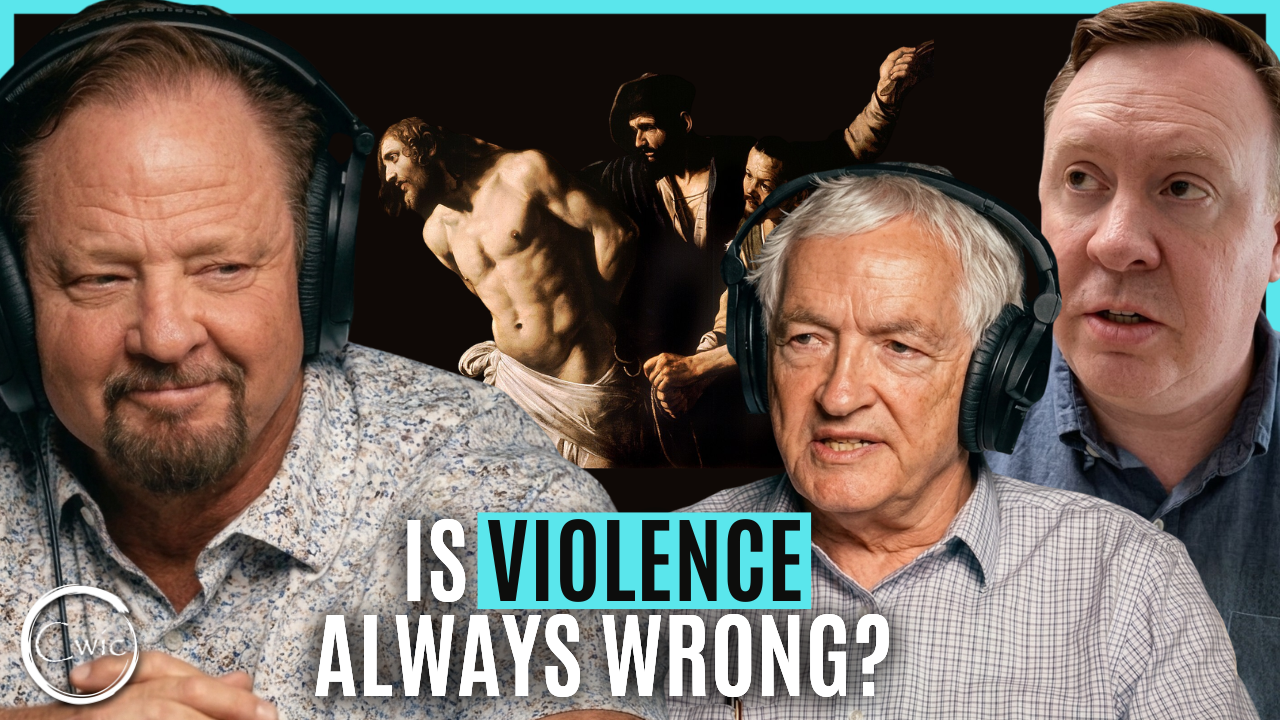
Ralph Hancock and Patrick Mason Take Opposite Sides Can Nonviolence Work in the Real World? Can Nonviolence Really Work in the Real World? Are the Anti-Nephi-Lehies a good example of peace? What was Mormon trying to say about peace? Is Captain Moroni a Peacemaker?
Raw Transcript:
This is a fantastic discussion, debate, whatever you want to call it, on a very important topic with top scholars. We've got Patrick Mason on one side of this.
We got Ralph Hancock on the other. I interject here as well. And it's all about peacemaking. You know, this has
been a topic that has come up mostly because of President Nelson talking about being peacemakers. But then the question becomes again where we're in
living in this post-modern world. It's like what does peace mean? What does peacemaker mean? Because words get
weaponized. They get changed in their connotations and full meaning even. Uh it's it's really important to understand
this and and so there's a book that was written by Patrick Mason called Proclaim Peace. And then Ralph Hancock and I did
a did a discussion on a review of that book to some degree. And then Ralph did
a three-part series u of a review on Proclaim Peace on on Patrick's book on our Substack alive and intelligent. And
Ralph really is the one who has taken this idea of peace and and put it into what I believe is is a point points of
articulation and common sense.
And that's kind of what this discussion ends up being, right? It's like and Patrick was very gracious to be able to come in and and do this discussion. uh
he knew that he was coming in with two people that disagreed with him quite a bit on a number of these issues. Uh but he did it anyway and he's always done that. I've had him on the show before.
So, I really do appreciate that. And it allows us to be able to put this into context to some degree and and to
understand what this means because we do come at it at from very different points
of view. If we don't understand what peace is and we don't understand how to get there, then we're going to have a
very a real misconception about building Zion. This episode is brought to you by the Alaska Frontier Cruise by Go and Do
Travel. It is this September 5th through 12th. I will be there. My wife is going to be there. Steve and Elaine Dalton
will be there doing presentations and we're just going to have a chance to really enjoy the beauty of Alaska together. Go to quickdia.com up to the
top to trips and events and scroll down to Alaska Frontier. This will be fantastic. Here we go with Patrick Mason and Ralph Hancock.
[music]
[music]
So, Patrick, can you start off by just saying what how would you define peace
and how would you how would you uh uh fit that into the sermon on the mount
with with Matthew 59? Yeah, it's it's a terrific question. Actually, on on my podcast, uh, Proclaim Peace, we always start with that very question. We ask
each of our guests, how do you define peace? And it's actually uh it's pretty phenomenal to to hear the diversity of
responses there. I um I increasingly have probably over over the over the course of years, I've thought about
different definitions of peace, but increasingly what I've settled on recently is that peace is fundamentally about right relationships.
Uh it's uh about right relationships uh with myself uh with with my true self,
who I really am as a child of God. It's right relationships with God. Uh and so that's what peace with God or kind of
spiritual peace would look like. Uh and it's right relationships with the the people around me, especially when we think about kind of interpersonal
relationships. Now, that doesn't mean there's an absence of conflict. I think right relationships can hold uh healthy
conflict. Um and we can work through that in constructive ways. Um but it's it's a it's a way that that I'm not
fundamentally alienated from myself, from others, from God. And and that I'm working. So so it means it's dynamic.
It's organic. Relationships are always, you know, they're not a static thing. Um but but fundamentally that's that's increasingly how I'm how I'm thinking about peace these days.
So, if I were to follow up on that, uh, going from your book, Proclaim Peace, uh, you say that to proclaim peace is to
renounce all forms of violence. Would you still hold to that?
Yeah, I think so because I I think violence is a kind of extreme form of being out of right relationship with
each other. uh when uh and with you know and and violence is is one of those words that on the one hand it it seems
like we all know what it means uh uh until you really start thinking about it. One of the one of the things I often ask my students in class when I'm
teaching this I say is it is it violent to plunge a knife into somebody's chest?
And people say, "Well, obviously, of course, it is." And I say, "What if I'm a heart surgeon doing heart surgery, right?" Then no, it's actually that's a
means of healing. And and so so the so so the act itself uh may not actually tell you everything
you need to know. There's a lot you need to know about intention, you know, is is there a harm being done? And so so I do
think that um that that that peace and violence probably operate you know
fundamentally on on opposite ends of of the spectrum. But we always have to sort of interrogate what what do we mean by that? What is not only the act being
done but the intention behind it? Uh and is is there real harm harm being done?
I so I've had a heart I've had a open heart surgery. It was still violent. It was very violent, very very a lot of lot
of uh uh it it it obviously it affected me for quite some time. But anyway, uh
yeah, the intent was different, but I think the process was still pretty violent. I mean, they they saw it through and pulled it open, right? It did. So, so the process, I think, is
still violent. So, I think that really what we're looking at, Ralph, also here, is is really defining this idea of peace. Um,
how would you agree with Patrick on on what he's defining here? Uh, and based on what you've read from Patrick or spoken to Patrick about and and how
might you differ? Well, I think uh Patrick gets us gets us right off on the
right footing by defining peace in a way that includes um
uh our relationships with others but is also inseparable from u uh I can't remember his words exactly a self uh
relationship. Um uh I immediately translate this into my uh classical
vocabulary. Not that Plato and Aristotle got everything right, but really the problem of the city, the community in
relation to the soul, the order of the city, in relation to the order of the soul uh remains fundamental and those
two are always mutually implicated. So um the u
social political meanings of peace and the uh soulful or the interior meaning of peace have to be uh coordinated. And
this is probably where I start to uh peel off a little bit already uh from
Patrick's u understanding. I mean as soon as I say soul rather than self I'm
implying a certain normative understanding of the order of the soul uh you know famously in Plato's republic
8 minutesfor example there's a an account of the soul in a a tripart order of uh reason
and spiritedness or emotion passion and then desires not to cling to that particular picture
in particular. But the point is that u uh peace is ground must be grounded in
right order. This is something that I know Patrick and I agree on. But then the question is is uh uh defining
that order. And um I suppose that as as as soon as um
we say order, we're I'm at least I am um implicating a a a normative
uh structure, a um a right relation, a a way of being
9 minutesthat is uh intrinsically attuned uh to what is test and therefore not a matter
of like infinite individual uh decision or taste. So in a word um I
see my understanding of peace as a virtue and I think Patrick's definition uh the way he started opens us up to the
possibility of seeing peace as a virtue but I emphasize like the normative character of that virtue and I would say
that some of what I would call virtue or right rule or the rule of right reason to use the classical language um Patrick
might regard ard as violence because it's imposing upon the the rights or the equal dignity or the identity or self-
definitionfinition of the individual self. Patrick, what do you think?
I I actually think we we probably dovetail in a lot of ways here. We actually uh recently got a grant up here at Utah State University uh called the
character of peace. It's from the educating character initiative at Wake Forest University. And and what we're trying to do here is to think about not
not peace buildingilding not just as at a as a set of technical skills or academic concepts or theories but actually grounded that that that our
students and and our as as faculty that our effectiveness as peaceuilders will be only enhanced if we pay really close
attention to uh the character traits the the virtues uh that uh that lend themselves uh to to peace. So, I'm
actually very sympathetic to to a a character approach to peace. I do I do think um uh on on on Ralph's last point
uh I am uh uh I I I think that we gain peace by
peaceful means. and that uh that um uh in in in the book, David and I spend a
lot of time uh with section 121, which I think is really one of the great uh revelations that's given to the prophet
Joseph Smith. Uh and and really this idea that that power or influence can and only be maintained through
persuasion, through longsuffering, through gentleness and meekness. So there are a lots of ways to to get people to change their minds. There are a lot of ways to get people to change
their behaviors. But the only way that that can be maintained in the long run uh is through persuasion. And I think
that's the way God works with us. I think that's the way Jesus works. Jesus doesn't impose his teachings uh through force. He invites, he persuades, he
teaches, he reasons. Uh he converts. Um but it's uh but but I think that the the
the kingdom of God is never brought about by force uh but al always by by invitation and and persuasion.
So So here's where I would also deviate from what you're saying because I and you also use the Book of Mormon quite a
bit as a as an example of this. And I I will say something and it's and even with my own listeners this is probably provocative but I would say for example
that the anti-NI lehis are a very poor example of peace and peacemaking and I
know that's used a lot as an example for uh because of the nonviolence uh it's used a lot as an example for peacemaking
uh it's it's persuasion like you're saying to to a certain degree the problem is is with the Book of Mormon which is supposed to be teaching us about about the last days. It is the
outlier. It is the absolute outlier in the entire narrative of prophets and kings. You know, you go all the way from
Nephi who uh led battles. You've got King Benjamin who led battles and then comes back and gives us the great speech on service. Even before King Benjamin
and you get the words of Mormon stuck right there in the middle of the small and the large plates, he gives this outline that if you look closely, I think that that whole chapter is about
peace. that that that insert by him and he's he's first talking about defending the Nephites against the Lammonites and
battle and King Benjamin and what he had to do and there. So, he had to provide an environment through violent means. He had to provide
an environment where peace could take hold. And then you have the prophets and the false prophets and the final
persuasion of the people to change their hearts and their minds. And then he he implies in this toward toward the last
few verses of of words of Mormon that now we can we can proclaim peace. Now we can move toward peace. And I think that
goes along with uh is it gutlin that you got?
So he's got a triangle. I forget what that's called.
Yeah, exactly. Yeah. It's called like the violence triangle. Direct, structural, cultural. Yeah.
But but one of the statements he actually makes in that which seems a little contradictory to some of the other other things he says is you have to have an environment
where peace can flourish where where you've created that and and so I think that that's what Mormon is
doing and explaining there you have to have this environment. And of course going all the way to the end with Mormon even with his words and he's talking
about putting down your arms. still fighting and Moroni is still fighting. Who knows why they're even fighting because what
are they fighting for at this point? Are they fighting for their I I don't know.
Maybe they're trying to protect their families. I at this point it's but they are they're out in battle and uh as as
civilization devolves into, you know, near nothingness on the Nephite side, uh they're they're still taking up arms.
And so my point on this is the Anti-Nephi Lehis are an outlier because of who they were.
That they were a murderous, hateful people who received the spirit and the
15 minutesword of God. And because of that spirit, they they they introspection here, the guilt, it was so overwhelming to them
that they could not stand the thought of ever picking up a weapon. And I empathize with that. I understand that, but that is not typically the the
environment that we find throughout the rest of the Book of Mormon. Does that make sense?
Ralph, did you want to jump? It looked like you were making some notes. I have lots of thoughts on that, but did you want to jump in on not on that particular point, but I do
have some notes. Yeah, I I think that's that's a really smart reading of the Book of Mormon. And I I I think you're I actually have wrote an
essay a few years ago on those very passages you're talking about in the words of Mormon and the beginning of Mosiah around King Benjamin. You probably wouldn't like it, uh, Greg, but
but but but [laughter] I'm taking up the same question. So, and and and your question, I think, is really smart
because it gets at the heart of of so much of what these debates are around, which are fundamentally about like how
16 minutesdo we read scripture, right? And and what are the lessons that that that we're taking from scripture? I I fully
agree that the anti-nephi lehis are exception. They they are exceptional.
They are not the norm uh in the text. Uh I read them as exceptional in the sense
that the gospel is always calling us to be exceptional to live a higher and holier way. They do not describe the way
that most of us operate. They do not describe the way that politics operates that the kingdoms of this world operate.
I think the the other the other place the other moment that's truly exceptional in the Book of Mormon is when Jesus comes and teaches and then in
that you know uh that period at the beginning of fourth Nephi right where all of the people have converted now it's it's complicated in the Book of
Mormon because what just as you said like what is the environment whether what are the grounds by which happen well now all all of the all of the
17 minuteswicked all the people who are fighting they've all been wiped out right and through violence through and and And David and I take up this question of like divine violence.
And I think the Book of Mormon puts a really fine point on this question of whether God is ever violent, right? And and what does God do? And then and it
creates the conditions, you know, in in which these people are able to live in this Zionlike uh societ, not Zion like
Zion society uh for for generations before it breaks down again. My my my
reading on this though is simply that the the Book of Mormon is so brilliant.
The reason why it is an inspired revealed text for our day is because it reveals the world as it is and then asks
us the question of whether that's the world that we want to live in. So I read the Book of Mormon as brilliantly outlining
um the the logic of conflict, the logic of violence, uh that there are even some some times where it where uh it seems to
be justified uh you know in defending our families, defending our faith, all these kinds of things. And at the same time that I I
think we too often read the Book of Mormon and sometimes some some of these debates we do a kind of eitheror thing.
I think the Book of Mormon is inviting us into a a more paradoxical kind of both andness where it says this is the
way things are. There is a time uh in which people followers of Jesus may be justified uh in in taking arms and there
is a higher holier way that the the Anti-Nephi Lehis exemplify that Jesus of course exemplifies and and so you get a
choice in the Book of Mormon which path do you want to pursue? And if you follow that path all the way to its logical ends, on the one hand, the way of Jesus
leads to the community at the beginning of fourth Nephi. The logic of violence if followed all the way to its end with
no interruptions leads to what we get at the end of the Book of Ether and the end at the end of the Book of Mormon, right?
Two civilizational uh cataclysms. And so the Book of Mormon, I think, is so textured and nuanced and critics of it who want to just make it this like
two-dimensional thing. It's the Book of Mormon is so textured and nuanced in the way that it deals with this on a very real way while also calling us to the
way of Jesus, which I think is different than the way of this world.
Yeah. Sorry, Ralph. I want to respond to this still. So if So then a higher and holier way, if that's the anti- Nephi
Lehis um What would happen starting off, let's say, with Nephi
going to King Benjamin, going to Captain Moroni, etc., if they would have laid down their arms and let the Lammonites
do what they wanted to do? Because as far as I can tell, especially looking through the later chapters of Alma, uh, wi-i with with Captain Moroni and
Amalachiah, you have a, um, there's basically everything they're fighting for is under fall under five areas. It
it's God, it's religion, their own religion. because I believe that the dissenters and the Lamemonites are antichrist. I think that's the main
issue. Uh third, it's their families, it's their land, and it's their liberty.
So, is is that are those five things worth fighting for, or or is it better to just act a higher and holier way as
you're saying, with the anti-phis, and let them take all five of those things? Well, it's it's a terrific question.
Yes, all of those things are worth fighting for. And uh one of the things I would say about the Anti-Nephi Lehis is they do defend their families. They do
defend their faith. They do defend their God. Um and they it is not a passive thing that
they do. It's an incredibly brave thing that they go out that they they do not just they they don't run away and hide.
They don't cower. They go out in an act of tremendous courage and bravery to meet their attackers
uh and to do so in an act of prayer. And what do they do? Uh it's I mean this this this this is the this is the the sort of counter logic of nonviolence.
This is what the civil rights movement did right in especially in the early years right that that that we will not respond to violence with violence. But
it's it's actually a fundamental belief that that the person across from you, they are not really your enemy. They are
a child of God and that there is some kind of moral core in them that you can still reach and that you refuse to to
use lethal violence against them. Now, that that is a that is a dangerous wager and and a thousand of the Anti-Nephi
Lehis, right, lose lose their lives. But but consider the toll of all of the violent battles. You know, all of the battles that that that the Captain
Muroni and the others waged, the death tolls are much much higher. So there's always a cost. There's always a risk.
Nonviolence, it's not a magic wand. It's it's it's and but but I but I do want to I do just want to say that the Anti-Nephi Lehis, they do defend their faith. They do defend their families.
And I I agree with I agree with that. But again, they've got a safety net. They've got a complete safety net around them where they've got the Nephites to help
them to to protect them. Uh and and what do the Anti-Nephi Lehis do once their
boys are grown? They send the boys off to war, right? So, so because they didn't have the same hatred and murderous attitudes
in their lives that that their parents did. So, I I I think that's I don't I again I think it's an outlier. I I don't
know that I would call it I think it was the appropriate thing to do in that situation for them, but I don't think it
is the usual example of what needs to be done. That's just my opinion.
I think I largely agree with you that the in the sense that that's not how most of us live our lives, right?
23 minutesWell, and the other thing is is you know, you think they're called the children of Ammon, right? Is that what they call the people of Ammon? The people of Ammon. And that all started
from violence. And again, I'm not advocating violence here, but I'm just following what Mormon and Elma have have placed in here. And you know, Elma is
excited and motivated about the opportunity that he has at the waters of Cibus. And what does he do? He takes a sling.
He kills six individuals with a sling, cuts off numerous arms, and then takes his sword and kills the leader. And that
opportunity is actually what provides the entrance of the gospel into the
lives of the people of King Lemoni that become the anti-nephi Lehis at that point and the children of Ammon. So I I
you know I I it seems to me sometimes that again it's how you read scripture and I'm not saying I'm right and you're wrong. I'm
just saying there seems to be more to the story there of how this is framed and and works. I can tell Ralph wants to
jump in here. [laughter] I want to and don't want to because I want to jump in at six different places, but and I sense they all lead to the
same uh fundamental questions. I mean, we really have jumped right into the deep end where the uh the the deepest
and most consequential conceptual problems uh reside. And uh I don't have anything to add to this excellent uh
scriptural discussion. I'll just say it has raised the question of the uh let's call it the the preconditions of persuasion.
Uh I think that's uh one way of putting the point that uh Greg was insisting upon because uh Patrick you uh long for
you work towards a society in which uh uh everything is uh persuasion as uh
evoked in Doctrine Covenants 121 for example and nothing is is violent uh
uh and you admit that uh the the action the method of the anti- Nephi Lehis is
uh uh exceptional and hard to recommend as a like as the a practical
uh as practical advice in our normal situations. But really the deep question is what is the relationship between
let's say the exception and the rule or how do we relate uh the beautiful principle of a of a society an utterly
nonviolent society based upon persuasion only to uh the the reality of the practical existence in which we live
which always presupposes preconditions that we didn't choose that do not exist because uh that we because we were
persuaded by them. Uh we um just think about how we raise our children. I mean according to their age, we hope to use
more and more uh persuasion and reasoning, but we're providing a context which is one uh coercion. It seems like
a nasty word but one of one of necessity, one of parameters that uh exist. Uh and I use the example of
children but uh in a certain way our whole existence depends upon preconditions that we did not choose and
that are not a result of uh persuasion and our uh relatively peaceful uh
political communities are just uh one example of that. I mean in some way they all at some level they all depend upon uh force and decision.
You I was happy to hear you mention uh uh the civil rights movement and the role of nonviolent uh persuasion there.
But you could look at the other side of that and see what what was the aim and what was the outcome of the uh civil
27 minutesrights revolution. It it was laws with coercive force behind them and that it didn't matter whether you were persuaded
or not that the the law was different u uh you know after
1954 or after 1964 than before. And if you owned a a hotel
or if you were engaged in interstate commerce in any way, then uh your private choices were different from what
they used to be. So there's always a a coercive non-optional uh substrate uh
that underlies our the the context uh of our persuasion. Another way of putting this would be to come back to I was very
happy to hear you focus on the character aspect of persuasion. But how do you develop the characters
28 minutesthat are open to persuasion and to uh the rule of reason or the organization of societies and
communities uh by uh by peaceful means. uh character does not
evolve uh spontaneously from a sheer a completely
an an absolutely freely chosen process of persuasion.
Yeah, I guess I can leave it at that for that.
I I I think that's right. I mean that's that's why we um we we have all of these uh structures and institutions around
none none of us operate, you know, fully independently or or freely. We we we're born into relationship literally from from the moment we're we're conceived,
right? We're we're in relationship and then and then we're when we come into this world hopefully we're we're in a family context and uh I think there this
this is the goal of of uh I think many of the institutions that we hold dear uh is character formation. That is the the
point of the family. This is the point of the church. That is not not the only point, right? that this this is one of the the primary functions of the family
of of the church of education hopefully uh you know that that the state of course is is interesting here and that
you know uh what am I going to tell you about this Ralph rather I mean you're you know you're a political theorist right but but but you know all these
questions around government uh is is it to to what degree does does law uh shape
us versus reflect us uh you know to to to what degree is is the law a school
master to use Paul's wording. Uh but but the law and and government is always about morality and so this is what the
government is always it's always in the business of morality and every law is moral in a certain way. Uh and so so it's so I'm not sure that it's this
isn't like an on andoff switch in terms of coercion versus freedom. Uh it's it's more like a dimmer, right? and and uh
there's more or less I just read a novel about North Korea and oh my goodness I mean it's like my my heart just goes out I mean the level of coercion and
violence you know all from from the state so thank god literally right I mean you know why did I why was I born
in America I don't know but I am and I'm and I'm grateful for it I I are we perfectly free here no in no as as soon
as we come into soci society as soon as we come into community We're none of us are perfectly free. Uh there's zones of greater or lesser freedom. Uh but all of
this I hope is cultivating the conditions in which we can grow in character. Uh so so that we can live in
right relationship with one another. I I hope that's our goal for all of these institutions that we're a part of.
Well, I'm I'm glad we agree on the necessary preconditions of uh freedom
and persuasion and peace uh which are not grounded in like a purely spontaneous absolutely non uh coercive
uh framework. But I it did seem to me Patrick that in your book your definition of peace
uh as nonviolence uh very is very much on a slippery slope to say the least uh uh towards uh a kind
of what I call a liberationist view that is imp impatient with any with any given structures with any norms with any
normativity you know that uh that structures ers the very framework of our
peacemaking uh of our civility. uh you you tap into the
uh language of uh structural violence, the the critique of structural violence, which is very much
32 minutespart of the and I don't mean to be throwing around epithets here, but just to clarify the ideological context in
which we're talking, very much part of a a woke activist u
neoarxist or implicitly Marxist vocabulary in All uh normativity, anything that
uh impedes anything that uh limits and gives structure to individual self- definitionf to the individual's own idea
of his or her um identity or the the the
destiny of a person's an individual's uh individual dignity. anything that is uh
structuring and not absolutely chosen seems to count as violence under the name of uh structural violence. So I I
think there's something there is a utopian cast in your argumentation um or that is to say a difficulty of
accommodating your project of peacemaking with the real moral and political conditions of peace
under which we live. There's a utopian cast that actually uh as is true of
neo-Marxist ideology in general, a utopian cast that actually contains the potential of
great violence. uh because in order to create a in in search of a condition of absolute nonviolence, we would have
to destroy all the norms and structures that uh cannot be uh that are not
completely transparent or uh completely definable by free persuasion at present.
No, it it's a terrific question. I I I actually really appreciate um this this critique and this line of
of questioning and and as as I read your review of the book um I I I could see I
could see where it's coming from. Uh and I I I think it's an honest and fair uh set of questions. So, let me let me say I think two things in response to it and
and then we we go from there. Um, one is that, um, you know, when David and I sat
down to write the book, you know, books all have their own histories. This this was like a decadel long project for us um, in terms of the conceptualization,
the research, the writing, the rewriting, the drafting, you know, all those kinds of things. And um when we
first set out to write the book, uh the the the kind of first version of it is
what what can we take we we both like a number of different books which are from religious traditions and like what does
that religious tradition have to say to the broader world of of peaceuilding. So there's a number of books like what is Catholicism or Judaism or Islam, right?
what are the principles from these different religions and and what what can they teach us about peace and peace building? And so we were thinking like, okay, so this is like the Latter-day
Saint entry on that on that library shelf, right? Um because we think that actually the restoration has a lot to teach uh about peace and peace building
and we wanted the rest of the world and and our fellow uh peaceuilders in in the academy and elsewhere to to appreciate some of the distinctive things that the
restoration was bringing. Um and and we we kind of wrote that book. Uh and so that meant that that we were also using
language and vocabulary that the peaceuilding world oftentimes uses. Um and and then when we workshopped it with
a number of peers, including you know uh a lot of non-Latterday saint peers, they said this is all great, but they said
like it it it feels like you still need to have a conversation internally. you you still need to work work out some of these things internally uh before then
you're you're kind of ready to to come out and make that contribution to to the broader world and so then we pivoted um and made it uh more of an internal thing
but I think there were vestigages of us still wanting to kind of speak and to to to the broader peaceuilding uh community
and some of that vocabulary is still there and so it it it was a book that I think was trying to do a couple of things uh at once and and maybe when you try to serve two masters. I don't know.
Jesus said something about that. Um so so that was part of it. But but I I will say um so so so there are times in the
book that that I think the vocabulary very much comes uh organically from the restoration tradition and and would be very recognizable to Latter-day Saints.
But there's other parts of the vocabulary that are definitely coming from the more broader academic peacebuilding world. now and a lot of that there's no doubt that much of that
vocabulary and much of the framings much of the assumptions that have come into that have come broadly speaking from
from the left right um and as I've thought about this and and and it's one of the things I appreciated about your
critique is like raising this and what what does this mean for us when we're using vocab vocabulary or citing scholars or you know who go in different
directions like some people have said like that that parenting is structural and cultural violence. That's just nonsense, right? I mean, it's it's just like we want nothing to do with with
with those those kinds of arguments. Um, but but some of the people we cite or some of the people we may occasionally be in conversation with may say things
like this. And the analogy that that I've sort of come up with to think about this and and you can tell me whether or not it's useful is that I think about
the the the pioneers, the the Latter Day Saint pioneers as they were heading west on the Pioneer Trail. So, so what's known as the Mormon Pioneer Trail
actually for hundreds of miles lines up with the Oregon Trail and the California Trail, you know, while they're walking there along the Plat River. And there
were times actually historically where Mormon pioneers and California and and Oregon immigrants would be walking side by side literally along the same trail
and even sharing, you know, sharing food, sharing resources and so forth.
Their destinations were different. their reasons for walking along the trail were different. Uh there would be a time that
they would split off and not go to the same place, but at least for a while along the trail, uh their their their
projects, their their orientations, their destinations, their journey were similar enough that they could walk alongside one another on the trail. And
I think David and I feel that way in in many ways about many of the the kind of secular uh or or leftist peaceuilding uh
community, much of which we've read and and are in conversation with that some of those concepts and theories we find to to be approximately useful. Uh we we
find that that we are fellow travelers for a while. Now our our commitments as Christians, as members of the Church of
Jesus Christ of Latter Day Saints, we're headed to a certain place. we're oriented, we hope, uh, you know, to use this this journey towards Salt Lake
City, right, towards the the the the building of of of Zion. Uh, whereas others might be heading to California or Oregon or or other kinds of places. But
at least for a while, we we don't feel bad about being fellow travelers uh, for at least part of that, even using some of the vocabulary, sharing some of the
same resources, even if our reasons for going in our ultimate destination might be different. Maybe that's the same for you, Ralph. I wonder as as you think
about that, you know, you write a lot about some of these classical writers, you know, I mean, you've talked about, you know, Socrates, Plato, Aristotle, or Augustine or others, you know, when when
when you're working on Augustine or Calvin, you wrote a book on Calvin. That doesn't mean that you accept all of their theological propositions. you personally disagree with them but but
you find them useful to think alongside uh because they bring up a lot and and help you probably see some things uh because they are sort of great thinkers
in in the tradition even if you have rather different theological commitments uh in some ways I I don't know if that that that analogy is all
40 minutesthat's that's very helpful and Greg if you don't mind I'll I'll respond to this and I'm sure you you have something to say too as usual Patrick you are uh uh
disarmingly open and ready to review and rethink things that you've said before. So, uh I am the last person in the world who
would want to make you an offender for a word uh or for a chapter. So, thank you for your uh openness to to this
discussion and I I think you're exactly right that we all have conversations. Uh we must have conversations even if we
weren't academics. it would be useful to have conversations with these uh very intelligent uh and uh uh demanding
conversations that exist. In my case, it I've I've spent at least uh 40 years working out my relationship with a
broadly classical view and with the recovery of the ancients by uh by Leo Strauss. I'm I've been a kind of
41 minutesrevisionist Straussian trying to find my Christian and Latterday Saint uh uh
place in a certain intellectual universe for 40 years. So I I'm completely open to that uh to the paths of uh of
development. So yeah, let us not then get stuck on the aspects of your argument that seem to me to resonate so
clearly with u a woke sort of neo-Marxist uh mindset. Uh if if you as
soon as you confess willingness to rethink th those things critically, then I I'm very uh happy to accept that. I
just would say I I I'm still not sure uh just as it took me 40 years, you know,
to to uh and am I am I at the end of the road or not, but to it took me 40 years
to sort of uh disentangle my uh let's my Straussian or classical attachments from my my Christian base.
Uh I I think that you still risk being more implicated in some of that vocabulary. You're you're still uh you
know following the California trail
[laughter]
more more than you uh think you are.
That sounds arrogant of me perhaps to say that. But I do think the slope is slipperier than you imagined from some of these concepts. And to see that we'd
have to come down to um uh some of the fundamental I call it I use a fancy word like ontology or our ultimate
understanding of being that is only briefly evoked at the beginning but I think already there we see the problem
that there's a kind of uh distinctly ultimately modern um
individualist premise that implies a liberationist outcome. Let's say that puts the task of persuasion that
preformats the task of persuasion uh in a world in which um let's say free individual development is somewhat
detached from any commonly shared moral universe. Uh I think in that sense your ontology is uh from the outset uh
compromised by uh some of your conversation partners.
Yeah. And I I think this is where um we we probably uh didn't articulate ourselves well enough. Um uh because I
I'm guessing I'm probably closer to your view than than you might think or what you picked up on in the in the book. We do imagine and and here we're following
uh the book of Abraham, King Flet discourse, a world of of of or a cosmos full of intelligences.
Um uh and uh and then there and then God, you know, who knows exactly what this looks like. All we have is sort of
sketches and and and imaginings and and and just the barest sketch of what this actually looked like, right? But but a
sense that that there's some amount of freedom that that we experience as intelligences. And I know Joseph Smith used, you know, they use different words
at different times, but but we'd say kind of intelligences, but but that we are oriented towards God. Uh that that
our father appears, Elohim appears, and we are oriented towards him um because of his goodness, his infinite goodness,
his perfections, his wisdom, all of those kinds of things. And we want that.
And we come in relationship to to the to this. And he comes into relationship with us. This is my reading of Abraham and King Flet and so forth. And and so
we we enter into this relationship and it's it's purely oriented around moral goods, right? That that we want to
become like he is and he creates a plan whereby we can become like him. And that is all about not sort of like the um like the the the liberation of the self.
45 minutesIt's it's actually um in in some ways those who reject God's plans are are are are pursuing a kind of liberatory a
fully like oh I don't want to be in relationship I don't want to follow this plan I want to find my own freedom my own salvation but in the come
relationship to say like God is going to provide a plan whereby we can become good.
Yeah, you said you said all that very well and without being nasty about it so much better than in the book [laughter] and I
I I keep saying you referring to you Patrick and you keep saying we acknowledging your co-author so I should I I know you and I had read you before
your book so I'm I I think of I'm engaging you but uh a tip of the hat to David Pulsifer for his contri
contribution I guess his patience with all that argument but uh uh yeah I ask you, I invite you and our listeners to
review what I've written about your ontology or let's just say your your deep theology because I think it
precisely is tilted all the way towards individual freedom without that emphasis that you just gave about uh a a substantive idea of of God's character.
See, we're back to the city and the soul question. We all recognize the importance of relationships. But are relationships constructed from a base of
pure unformed equal dignity as a freedom from any
preconditioned uh idea of the good or is our freedom from the outset within some
uh some order that has a a moral dimension? So yeah, I see now we've we're really into the deep end now, but
that seems to me the fundamental theological question that is raised by your approach, Patrick.
So I want to I've I've commented on a lot of commentary on on some of the things in LDS scholarship and and things
that I would view as as we're talking about interpretations. It's an odd interpretation to me on certain things.
And I hope you can help me understand a few things based on some things you've written, but also other things that I've
heard at times in relationship to
[clears throat]
to to what we might call in your book you you bring up structural violence, right? So there's violence beyond actual physical violence. There's a structural
violence which to me is kind of like the the systemic racism would be uh structural violence or other things
within um society that would be motivation for let's say social justice
to create a better and I'll use the term equity which is not my favorite word in the world but you so you've got
what how first of all let me ask you this what how would you define structural al violence. What is that?
Yeah. I I I think you you you just sort of gestured in that direction. So So these are not the the the acts of direct
violence that we think about, you know, hitting, bombing, shooting, stabbing, etc. That that's we we all kind of know what that that looks like. Structural
violence are things built into systems uh that that we are all a part of whether it be uh governmental systems,
legal systems, political systems that all the different kinds of systems that we could be a part of, educational
systems, right? that um that not only um that that not only create uh diverse
pathways uh for people of of unequal opportunities but actually uh provide
harm uh and do harm on not just individuals but oftentimes entire groups of people. So so so the classic example
of this with within American history would be like the Jim Crow South, right?
uh not everybody was getting lynched although there was lots of direct violence in the Jim Crow South but there were things built into the structures
the systems of society from education to politics to the courtroom to everything in which blacks and whites were not
treated equally and there was active harm being done on African-Americans as individuals and as a community. So
that's that's what structural violence looks like.
Okay. Was there structural violence between the Nephites and the Lamemonites? Uh, I think
it's that that's a good question. They they lived separately.
Um, they they had they had completely different uh uh you know uh nations or kingdoms uh what whatever we might want
to to call them. And so they they actually had relatively little interaction based on the record we have other than warfare. uh a few a few
examples of some trade and some things like that in in a few things but for the most part the the relationship was separation met by uh occasional and
sometimes frequent bouts of of direct violence. Uh I I this is where the other Gung's other category of cultural violence comes in. cultural violence are
the the kinds of stories or narratives uh uh that that that we tell to to justify or they that uh that give the
possibility for director or structural violence. So the reason why in the Jim Crow South, the reason why uh that's all
seen as uh not only acceptable but good to to segregate the races, to discriminate is because of the stories
that were told, the narratives that were told about the the racial inferiority of of people with with dark skin. I do think that we do see in in the Book of
Mormon, I think we see both Nephites and Lamemonites involved in cultural violence in terms of the kinds of stories that they tell about each other.
Certainly the the Lammonite ones about the Nephites are are fairly obvious, but there's a lot of Nephite stories about the Lammonites, too. It's the reason why
when the sons of Mosiah say, "We're going to go preach to these people, all their friends say, what are you crazy?" Like those people are terrible, right?
They'll never listen to you. They're going to kill you. They have reasons to say that that, right? Not all the stories we tell are are totally groundless. But but the Nephites had
told a story about Lammonites which justified uh and rationalized a certain set of interactions. Again, not completely baseless, but the sons of
Mosiah see through that and they say, "No, fundamentally, these are our brothers and sisters. They're not fundamentally other. We actually think
that we can go talk to them." So, so I do think all those things are present in the Book of Mormon.
Do Do you think the Lamemonites were victims of the Nephites?
Uh, sometimes and both both ways. It it it depends. There are lots of different different Can you give an example of how the Lamonites are victims of the Nephites?
Uh there were times um uh so I think
the well but just just what I said the vict victim can can be a loaded word
right um the Nephites did not always clearly see
the Lamemonites for who they were uh as human beings with dignity but there were there were numerous missions.
Yeah.
It wasn't just the sense of Mosiah. I mean, you can go to the beginning of the Book of Mormon. They they tried. They wanted decades or hundreds of years, right? And Yes. Yeah.
because they tried. They failed. They tried. They fail.
Um and so, so I victims, boy, that's tough. But, but I do think sometimes the Nephites told not fully accurate stories
about the This is why Jacob is so interesting, right? where he comes along and he says, "You you you're telling these stories about the Lammonites.
They're all completely terrible, but I'll tell you what, they treat their wives and children better than you do." Right? There there's a kind of rehumanizing the prophets do to remind
us that the other people are actually children of God. They're they're not animals. They're not brutes. They're not savages. Um and so so this is uh I think
the Nephites had been telling the story about the Lamemonites again predicated on violence, on warfare between them.
And it took prophets to come back and say, "No, we you you cannot see those those people as fundamentally and wholly other."
Yeah. [snorts] I I think uh I think our views largely over overlap here. Uh Patrick, mine and yours at least. I mean
that uh the the Nephite story about the Lammonites is I'm glad you said it's not baseless, but it's a little one-dimensional. This is the way all all
uh all social stories work, right? Uh but I would sharpen my question by asking by pressing in this direction. Is are layman and lemule victims of Nephi?
Again, I wouldn't use the word victim, but I would say that I mean Nephi is clearly victimized by their violence,
right? Multiple occasions they literally tried to kill.
They tried to kill him. Uh I I don't know how many times has it been here. More than once.
Three. Um but but that's just off the top of my head that there might be more.
Um, but does Nephi have a full and accurate picture of who they are and all of their motivations?
Well, no. I I think probably not. Um, so why why are you why are you so eager to
show the uh Nephi's uh I don't know, is it pride, narrow-mindedness? Are you uh do you not say or suggest that his uh
uh kingship uh was self-errigated uh and that his role was not, you know,
uh divinely accorded but usurped? Doesn't your argument tend in that direction?
Certainly not usurped. Um uh uh I don't I mean does the text claim that his kingship is divinely bestowed on him or
55 minutesthat just the people choose him to be their king?
I think it's just the people in in his kingship. Sure. I you might say his uh his leadership. Okay. Uh in the family.
Yeah. There there's no doubt that his leadership is is is divinely I mean that that that's the sticking point, right?
The the younger brother is going to be the leader. uh and uh and it becomes a kind of self-fulfilling prophecy given the way that then layman and lame behave
and then they separate themselves. So then of course Leh Nephi becomes the political leader as well as the the spiritual leader. What we're trying to
do and and um in in that chapter on Nephi. I'm not trying to throw Nephi under the bus. Nephi is not a bad guy.
Nephi is a prophet who has whose words and teachings have brought me close to Christ. Right. I I I love Nephi. I also
don't think I I I I I don't think I have to say that Nephi was perfect or he never never made any mistakes. Um I
think there there are moments in his pattern of conflict with his brothers, especially as a young man. This is the other complicated thing. Of course, he's
writing of this decades later. He knows how the story has turned out, right? I think he's heartbroken about the way the story has turned out.
Uh second Nephi 5, I mean, right? I mean, he he his his psalm is just he's racked with sorrow. He wishes things had
turned out differently. Um, and I think he tells the story the same way that Joseph Smith includes Revelations where God calls him to repentance. I think
Nephi has enough wisdom and perspective decades later that he can tell the story of his younger self where we as readers
can see, wow, is was that the best way for Nephi to handle that situation? Right? Was it
always the best way for him to like get in his brother's face and call them to repentance and and say how evil they were? Was was that the best pattern?
Now, maybe it was in the moment, right?
Maybe he felt inspired. But also, I think it I think we can ask questions about whether Nephi always approached that conflict with his brothers
perfectly. That is not to put them on a moral equivalency. He wasn't trying to kill them. They were trying to kill him.
It's simply to say like just like Moroni invites us in Mormon 9. He says, "I've laid out all these imperfections my father and I have so that you can be
more wiser, more wiser, so that you can be wiser than we have been." I I I I think Nephi uh maybe sets up the story
so that we can ask ourselves and whether we can also be wiser in our own conflicts.
Sure. Well, I'm open to that and I'm I'm open to some nuancing in the praise of uh Nephi's wisdom uh and righteousness.
uh uh you you follow it to some degree uh Grant Hardy's excellent uh suggestions in opening up such a
discussion around Nephi. I I do however think there's a tendency uh which again is in step with your um
secular uh I've called them woke broadly woke discussion partners a tendency to
depict all all authority as uh oppression. Uh uh so we're back to
the question of uh of uh cultural structural and cultural violence. I guess these aren't exactly the same
thing for you, but they're aspects of the they're aspects of the same problem.
Uh so I one way of uh distilling uh the concern I have about your
argument is to say that I think that you you just cast the net uh uh too widely
in uh describing um uh norms and structures as violent or you seem to
give the impression that um there's very little left of u of cultural norm. armed
and let's say mediated uh political legal authority which would not count as violence. Anything that has any germ of
coercion or it cannot be shown to be a transparent product of uh free
absolutely free persuasion counts as violence structural structural or cultural. So I I would so I would
distill that concern into this question that you know brings the the whole problem right to to our present day. Is
uh what is called heteronormativity a form of
uh structural or cultural violence that's not part of the book but let's talk about it. [laughter] Yeah. No, I
think I think that's an implication of book that this is the uh this is the path that you seem to this is the
California trail that I that you seem to be on with varying degrees of awareness. Yeah. According to me. Yeah.
Yeah. So, uh so, so the the the short answer to your question is no. Not necessarily. Uh we can all point I I
think we would all uh re reject uh the um the very real let's just talk
about direct violence that's been done against some of our LGBTQ brothers and sisters over over the years, right? Uh and we would all say that uh that is
absolutely not uh what what any child of God deserves uh nor what what we're called to do as Christians. Uh, so I
think we can all call that out. And so then the the question is then so so the
the definition of of cultural violence is the the kind of cultural narratives and stories we tell that justify um or
give rise to uh direct violence. And and this is where we just have to be really nuanced and textured. I do not believe
that somebody's saying that or or believing that we are created in the
image of God, male and female, and that uh God's intention for humans uh is to
pair sexually, male and female. uh I don't believe that that theological or moral orientation must uh give rise to
the kind of direct violence against LGBTQ individuals that we would all reject.
So so some some people are going to want to say that that kind of moral or theological orientation necessarily leads to to to violence and oppression
of of LGBTQ individuals. I don't think that's necessarily the case. Um and and I think uh it's entirely possible and I
think actually President Oaks has has has been our example of this of somebody who can absolutely hold uh to a kind of
moral and theological position that's that's committed um uh to marriage between a man and a woman and uh certain
norms about uh gender and sexuality and also be part of a pluralist political
community in which we recognize that not everybody feels or has those same kind of moral and theological commitments.
And so therefore, in a pluralist political community as we have in the United States, we create opportunities to to pursue their own ends and and goods. And and that's simply what it means to to live in diverse community.
But I don't believe that heteronormativity if if if if we mean s sort of holding to a set of now if if if if you're saying that's the only way to
be human that's the only legitimate way to be human then I think that's a problem. Uh but but it's well I'd say it's a it's the best way.
Is that a problem? If I say it's the best way, I think if you have a theological commitment to say the like God intended for humans uh this this way, I I think
that that has to make uh make room for and make sense of the great diversity of actual experience of our of our sisters
and brothers around the world, right? Um but I but I don't think it's necessarily violent to to to hold to those kinds of
theological commitments and then also think about how do you implement those and live those out in pluralist society.
Yeah. Well, I think the dovetailing of um these deep commitments and a pluralist society
uh that rightly defines the nature of our challenge. I think uh it's not that easy or it's not that simple because the
law is never going to be neutral. I mean, we're we're we're talking about these things in the immediate wake. It seems immediate to me from my old man's
time perspective, but in in the immediate wake of uh a Supreme Court decision that uh really
uh liquidated um a you know perennial human understanding
of marriage. We're now living under a regime, a legal regime with a force of
law behind it that uh has uh redefined marriage in a decisive way. Uh so you
could say we've lost that battle uh that that war is over. My view is we should say not that the cultural war was never significant because we're pluralistic.
We should say we lost it and it may be a disaster, but now we're working within a a different situation. So if there's
something true about heteronormativity, it doesn't mean about I'm using that fancy more or less postmodern word, but
you you you defined well what we mean by it. If we're working with a uh if we
think a basic uh like man, woman, child understanding of marriage and really of the meaning of life is true, uh that
matters for our society and our society is worse off uh if it doesn't uh honor
uh and prioritize that. But but those um the
the postmodern Marxists who invey against structural violence would tend to say and I thought I saw you slipping
in this direction in your book though not now uh would tend to say that any uh not that heteronormativity or that the
ideal of the man child thing could lead to violence but it is in itself
inherently violence because It's it's normative. It's using the power of tradition, culture, always backed up at
some level by law, in order to steer human nature in a certain direction that is conceived to be good.
Yeah. And I I I think yeah, that all of that would be taking uh aspects of the book and running further with them than than we did or intended to in in the
book. We're certainly not arguing against norms. We're not arguing against institutions. We're not arguing against morality uh any of those things. So I
understand the critique and I understand the concern right against some of these fellow travelers on on the trail uh who who have taken some of those vocabularies and framings in other ways.
But but that's that's going well beyond what what David and I are trying to do or or what we thought we were doing in in the book itself. Well, I I accept
that and I welcome it and and I'm at least you can see the dots that I was connecting that seemed that that uh raised those concerns for me.
Patrick, I want to get back here to the Book of Mormon.
Um so, the reason I had brought up the the idea of what what is violence, what is the structural violence is because to me what it starts to do is it starts to
create a social uh hierarchy based on victimhood. And so what I see is a lot of critical theory
that and I know that there are a number of critical theorists that that really grabbed on to the peace movement and and and and
uh uh just war and and then just peace just peacemaking movements and kind of kind of synthesized them in in many ways because they are very similar.
7 minutesstructural violence is a is a very similar way to explain uh you know social justice and the inequities and
etc that are out there. But so my concern is that victimhood in in in how we define peace and is peace more along
the lines of of the social peace is it an inner peace and a spiritual peace and which one should be prioritized in these
cases. So, for example, I have here um a few of the quotes that came from the book, and this is what I'm just trying to understand. It does seem to me that
often times uh you and Pulsifer are are putting in that the layman knights are primarily the victim. That that's what it seems
like, right? Because you've got comments like, you know, with Captain Moroni, he had ethnic cleansing. Um there was a strategy of his for displacement and
settler colonialism. And this goes back to that vocabulary that you were talking about and and and and I I just to me I
8 minutesjust my concern is that it's not just what you're saying in this and I realize that this is several years ago, but it's
I hear this all the time from from other Mormon studies or at least LDS scholars
that that speak in this manner about the Nephite and the Lammonite conflict that seems to turn everything on its head.
And it's not that turning something on his head in his of itself is wrong, but but the interpretation
starts to create things like some people saying that, you know, Nephi was AAB, if you remember, I don't know if you ever saw that post that was put out there,
but you know, all all cops are bastards, right? And all, you know, etc. and and and then I have, you know, you've got an ASU professor that I know you know that
that came to BYU and spoke in front of a couple of hundred students. [snorts] And this, I think, encapsulates this idea of
this interpretation is is he said, "Whenever you read the word iniquity in the Book of Mormon, I want you to
think of the word inequity." And so this says again, it says, "I'm moving it out from you internally."
and I'm putting it out there and the problem therefore is out there.
It's not internally. The problem is out there and in the social structure.
Right? He went on to say going beyond the laymanites that the Gadiat and robbers were the victims that they had been marginalized
and that they all they were doing is reacting from being marginalized.
[snorts] And it's not that there isn't might not be a seat of truth in there somewhere. Who knows, right? But but to categorize it that way is simply to me
saying where are we going to put you on the victimhood ladder and wherever the higher you are up there on that victimhood ladder you have the moral
authority regardless of what you're doing regardless of what the means are and and and I would I want to sum this
10 minutesup this way. You know, when in all four of the gospels, the portrayal of the the the
trial with Pilate is portrayed as a day of atonement scenario where Pilate is the high
priest, the two goats are before him, one is going to be sacrificed and one is going to be the scapegoat. They all they
all portray it this way and from from the Jews and you know the the the elite Jews that are there trying to say crucify him. It's a smaller segment but it's uh and and bring the blood on us.
This is all of Day of Atonement imagery that they're talking about. And and there's a choice set before them. And
one of them is, well, you've got this guy who is going to liberate you from sin.
And the other is a liberationist in in in a social structure.
And and know what is the real enemy here? Is it your own sin or or or is it the Romans
that is laid before them? And of course the elite Jews there, they are they they they choose to set uh Barabus free,
right? And and so that's that's that's how I look at this. And and I and I I my concern is that like within Mormon
studies that there is more of a of of a a values hierarchy where where social
structure is put at the top [snorts] and and liberation from the oppressor is the most important thing
and liberation from sin within ourselves in the purpose of the atonement is put second. Does that make any sense to you?
No, it's that that makes a lot of sense.
that thanks thanks for the question and I uh and I think um yeah we could all
find examples where uh uh to to to illustrate exactly what you've said my own my own view I won't speak for the
entire field or other people or anything I'll just speak speak for myself and my own reading of scripture and of the
gospel is that and and and I think this is if if I could go back and um rewrite
the book. Um, one of the things, uh, that I think we didn't do well enough or
clearly enough is that, you know, of often times when when when you write a book, uh, and and you put it out in a community and within a context, it's
it's like you assume there's there's a certain conversation happening and and some you can do a couple sometimes it's
like, oh, the conversation is wrong and we need to correct it. Sometimes it's like, "No, the conversation is fine, but there's there's other parts of the conversation that we're not having that
that we should also be having." and and David and I I mean we're both lifelong fully active me me me me me me me me me me me me me me me me me me me me me me
me me me me me me me me me me me me me me me me me me members of the church and we and we had seen and been raised and nurtured and cultivated by the exceptional way in which our Latter-day
Saint community had paid a lot of attention to kind of inner peace to to the peace that we find with God to kind of interpersonal relationships and what
we said we didn't want to like overturn or correct any of that but simply to say we also think the restoration scripture has a lot to say about some of these
other issues as Well, they're more structural, more social, the the problem of violence, the some of these things that that that don't come up as as
often, you know, in gospel doctrine class. And we actually think the restoration has things to say about that, too. I think we didn't make that clearly enough. So, it looked like we're like swinging this pendulum all the way
over here, even rejecting like all of this body, 200-year body of teaching.
And that's not what we wanted to do. And I wish uh I I I wish we had clarified that a little bit more because to and this gets to to the heart of your
question. I think that part of the um the the the converting transformative
power of Jesus's teaching is that is that he tells everyone to say you have
to start by looking inside. You have to look at the heart. Uh I think Jesus cares about all of those other social
things. He cares about poverty. He cares about political injustice. He cares about the relationships of men and women. We can find examples of all of
this in his teachings and in his interactions with people. But with in all of these things, he says you must start by looking within. You have to
look at your own heart and the way that you're approaching these things. This is what the sermon on the mount is all about. So, so I think yes, fundamentally
u and and um and I think this this is carried through in the restoration as well. This is why I think it is a restoration of the fullness of
Christianity is that as Joseph Smith offers all these revelations to us as they come through him that I see sort of
two grand impulses in Joseph Smith's revelations. One is towards ex exaltation of individuals and families
and the other is toward building Zion, actually doing something about the world that we live in now and actually creating communities now uh that at
least anticipate uh if not preage and and act as precursors to the the full revelation of the kingdom of God after
the millennium. And I think both of these impulses are happening all the time in the teachings of Jesus and then then in restored Christianity. We want
to say either or there there are strains of modern Christianity that want to totally set aside any kind of social
conversation and just say we're only here to save your soul. Let the world go to hell. Right? Uh Dwight Moody famously said, "The world's is a wrecked vessel,
a sinking vessel." You know, God's God gave me a lifeboat and said, "Moody, get as safe as many as you can. Just throw people in the lifeboat. Who cares about the sinking vessel?" I don't think
that's the message of Jesus or the message of restoration Christianity. I think the message is both end. Yes, we're going to exalt as many people and
families as we possibly can. We're going to devote enormous resources to that and we care about the world because God cares about the world that we live in.
So I think we put these things so so the answer to the to you is yes. Jesus primarily locates sin in our heart, in
our orientations, in in in what that's done to ourselves, but that radiates outwards into our relationships and into the social structures that we create.
And Jesus wants that radiating goodness to go out and and to do something transformatively about the world that we live in.
So would you agree with that professor saying that you should look at the word iniquity as iniquity?
No, not not all the time. Sometimes there are lots of forms of inequity that are iniquitous, but not but but there's a lot of iniquity that that just resides
right here uh inside of my head and in my heart.
Okay. So I think that what you just said before I think that you be and I would all agree that there's you know you've got to look inside. There are structural
issues. There are things that you know I mean John the Baptist's charge was actually to overthrow the kingdom of the Jews, right? Um, so I think we all agree with that.
Why is there such a disparity on maybe what we locate as the problems?
I I think this is to to me this is part of um the the the world is too much with us.
uh you know as the poet said and we have allowed so much of our political framings and polarization all these
things to to to then filter in uh how we read the the the the scriptures, how we talk about the gospel. I am of course
guilty of this. I I think we all are. We all come at this. None of us are like purely objective or free from bias or we're all influenced by by the world
that we live in. Um and so I I think there are people who um for whatever point in in their moral and intellectual
formation identify more with the left and then those are going to be the aspects of the scriptures and the gospel that they see and the language they're going to use. There are other going to
be people who are going to be you know more formed and convicted by aspects of what have become part of the political and cultural right in this country and they're going to bring those things and
those understandings uh to to to the gospel uh in in a healthy sense. we can all talk about that and and we can help
each other see things that the other people don't see. Uh I think in unhealthy ways um we have replicated
um the the the political pol cultural polarization that we find ourselves in.
We've we've simply replicated that with within the church. I think the church is and should be the great bastion to speak
prophetically against that kind of polarization and to offer a different kind of community of oneness in Christ.
Um but those are that's an ongoing project and that's it's hard for me to resist that. It's it's hard for many of us to resist the many tugs and pulls
that we feel and the lenses that we're giving given from the world that we bring into Sunday school or into our personal scripture study.
Uh that's well said Patrick and so I'll just uh add a footnote on points upon which we very important points upon
which we agree which uh which gratifies me and does not uh surprise me concerning discussions with a reasonable and spiritually attuned person like you.
We agree that the gospel the the solution to the problem of the gospel in relation to politics to public uh social
and moral issues is not one of being apolitical. We can there's no way of simply saying well let's set all that
aside because that doesn't matter and uh we can [clears throat] live the gospel and focus on uh our personal
righteousness uh without regard to our broader society. We both understand how that's not true. just beginning with the fact
20 minutesthat we love our brethren and uh we want what's good for non-Latter-day saints as for our as we do for our uh religious
community. Uh but also uh because as you said the world is so much with us
whether we know it or not. So really to separate ourselves from the world
cannot be done by fiat. First we first we have to understand it. And here's me making my pitch for the value of
political philosophy, which is this process of sorting out the uh our deepest uh understandings of the good,
our understandings of the of the soul, including its eternal dimensions, sorting that out in relation to
uh the the normativity, if you will, of our city, of our community. And that's an ongoing process. And so I I like the
way you address the problem of polarization. It's not a matter of saying let's set all that that aside and not be polarized. It's a matter of a
reasonable discussion in which say left and right to use the usual trope uh uh
that can see parts of the truth and we need to talk about them and discuss the proper uh priority and the the proper
grounding for our stance as latter-day saints in relation to the broader world.
So uh allow me to say that I I can see that we are engaged in that same process
and uh thanks for your uh openness, your willingness to revisit uh uh positions and continue the discussion.
Yeah, I I would just say okay. So I I think that there's I'm glad for the discussion. I think that this is important because I think we get back
all the way down to the nitty-gritty of this is looking at definition. What do we define? How do we define peace? What is that? What does that mean? If we hear
a talk and then a a summarization of talks from, you know, originally President Nelson and now President Oaks on peacemaking, what does that mean?
What is peace? Is it just simply a no violence? Is it simply avoiding conflict? Um, is it aligning everybody up to be more in the character of God?
How how does Zion built? Is it is it people that are of different hearts and different minds? Is it somehow we're all the same heart and mind but we come from
it from different avenues? I think that that's that's a very important thing to understand. Then of course violence, you know, well well then what does violence mean? Is it beyond physical violence? Is
there more than that? And and what does that mean if I'm now labeling other things uh uh society as as as
violence? How do I interpret that? And is that make it worse? I I don't know.
It sounds like a violent word to me. But but anyway, what I I I would just say the same thing. I really appreciate your openness and and willingness to uh to
speak. You've always been that way and and uh I think this was a very good discussion and and I hope we can do it again.
Yeah, me too. And and and really thanks to the to the two of you. I I can't say how much I appreciate um even you know
first of all the conversation that you had on the on the podcast um that that you had I don't know a few months ago or whenever that was and then and that
which led me to reach out to the both of you and have a conversation with Ralph who invited me into his classroom which was an act of of great generosity and
and then and then and then Ralph's review. I mean this this is what we should be doing in the academy. It's what we should be doing in the church.
It's what we should be doing in our neighborhoods. Like sit down and like talk with each other, right? And and and
like this is this is where I will invoke the anti-phi lehis like lay down your arms for a minute, right? Uh and and can
you see the other person? I mean, like I'm I'm talking here with with with two men of incredible faith and goodwill, right? And we're all trying to like
figure this stuff out together. These are enormously complex topics. If we had it all figured out, right, then that that would have been done already,
right? Um [music] and and so so I I enjoy the wrestle. I enjoy the conversation uh especially in a in a spirit of brotherhood and and seeking
and curiosity and [music] hopefully all of us in in in the pursuit of love. So thanks to both of you.
Awesome. Thanks Patrick. [music] Thanks Ralph. Appreciate it.

"I Take This Every Day!"
Learn more about why I accepted Cardio Miracle as a sponsor and why I take it every day!
- Greg Matsen

Stay Connected With New Articles & All Things Cwic!

Cwic Audio Player
All of the Cwic Media podcast episodes on one page!
Recent Posts

