
Is The Church Losing Just Members, Or Losing To A Worldview? feat. Jacob Hansen
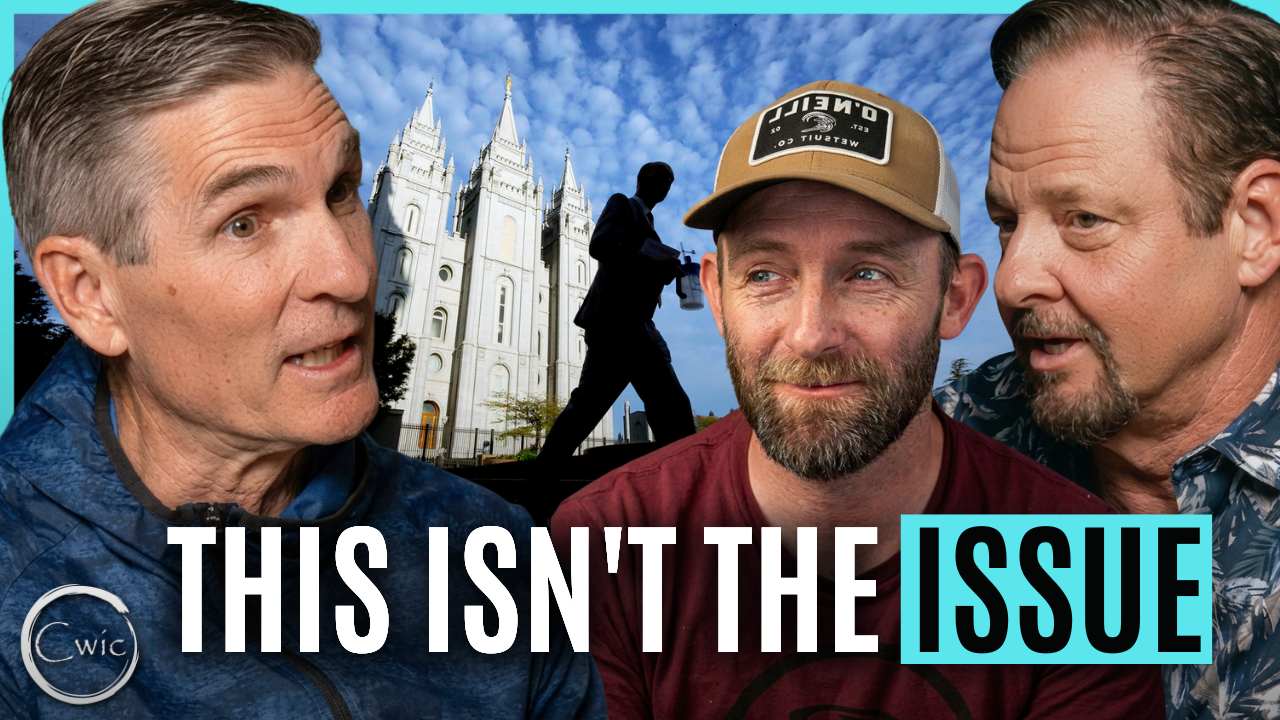
We're asking the wrong question; It's not "Why do people leave the church," it's, "Where do they go?" How modern culture is quietly reshaping faith, testimony, and discipleship. Jacob Hansen on Expressive Individualism, pride, and the modern self Why “More Inclusion” Won’t Solve Faith Loss Faith Deconstruction Is Not Just an LDS Problem
Raw Transcript:
a blunt conversation with my friend Jacob Hansen on Jeff Strong's book Torn.
This is the book that talks about why Latter-day Saints leave the faith. There are four basic reasons why Jeff gives
for individuals that want to leave the church. But just like myself in the interview that I gave with with Jeff
earlier uh maybe a few weeks ago, Jacob is kind of in that same camp now. He brings in some additional ideas on this
that are very interesting. He has personal experience with his siblings that have left the church. He says, "Look, the wrong question is being
asked. It's it's not why they left the church, but where did they go?" In other words, what is the reasoning behind
this? So, like myself, he has this understanding that there are things underneath underlying issues that
have people change their worldview, that have them change their belief.
And in his videos, in Jacob's videos that he's done on this before, he talks about how people just stop believing. And that is the main thing to look at.
Of course, the question is why? And Jacob gives a reason of secularization.
And I and I think that that is right, but it's it's something that goes much broader into the rest of Christianity.
We have a crisis of faith in Christianity in the United States and the Latter-day Saints are simply simply
participating in this exact same thing. So, Jacob goes in and articulates this very well. I think you're going to enjoy the
interview. This is brought to you by the Warriors of Tank. This is a men's retreat that I am hosting in Rush Valley, Utah, August 13th to 15th.
Fantastic presentations. We've got Chadish, one of the top 10 inspirational speakers in the world according to the Wall Street Journal. We've got Gail
Pulley who has been on the Peterson Academy. He's one of the teachers on Peterson Academy and he's been on the Jordan Peterson podcast talking about
abundance. We're going to have fantastic activities, four-wheelers at night playing capture the flag. There's fishing, ski shooting, and many other
things. We're going to be focusing on a gospel centered masculinity, something we don't hear a lot about. Go to quickdia.com, cwicdmedia.com.
Go to the top to warriors to find out more and to register. I would love to spend a few days with you there going over this message. Here's Jacob.
So, Jacob Jeff Strong and his book Torn,
he's kind of been making the podcast circuit in the last few weeks. Uh, best-selling book under the Latter-day Saint category.
Lot of people lauding the book. Uh, he's finally getting some push back on the other side in the last couple of weeks, including yourself and myself on certain things.
What are your thoughts about the book torn and what what would you change in terms of why are people leaving the
church? What what is your thought about the data that he collected?
Yeah. So, it's actually funny. I talked to Jeff um I actually spoke to Jeff before I bought his book. I had seen some of the interviews that he did and I
ended up getting a copy of it. Um and I immediately my initial reaction was like I think this is missing the mark. Um,
and as I got into it, I think it does, too. Now, I want to be fair, though. Um, because I do think that Jeff is hitting
real problems that do exist. No doubt about that. Um, but I don't think, you know, there's the old 8020 rule, right?
Um, where generally things are broken up and 80% of a problem is one factor, the big factor, the driving factor, and then 20% of it is something else.
And I think that Jeff is hitting on the 20% well.
So the problems he's addressing, they are real, but I don't think they actually get to the the kind of the heart of the issue.
Okay. So, so let me give you a description of how I see it and then you tell me if I'm right, if I'm wrong and and I I I'm pretty sure based on seeing
your two videos last week that we're very close to uh our approach to this topic. But I see this as, you know, if
if the if a testimony of faith is a plant.
And uh I I see Jeff and his um and I've had many conversations with
with Jeff as well. I but but I see his approach as being as far as a solution to what he's got. He's he's kind of
like, well, we need to give the plant more sunshine. We need to give the plant more water.
5 minutesAnd to me, I look at it and I say, "Well, here's the problem. You can you can give more sunshine and you give more water, but the soil that that plant is
sitting in is toxic, right? It's already toxic. You can pour all the sunshine on you want. I I don't know that that's going to make any difference because there is a a virus.
there is a uh as you call it a secular sec secularization of of our culture that is
deconstructing the faith of a number of people. So I think if you you talk about people stop believing that it's it's
simple to the point that you know people stop believing and then you give your why is because the culture more broadly has become so secularized. Is that right?
Yeah. I I think that culture is the issue, but the problem is is that he points primarily to the culture of the church. Now, that isn't to say the
culture of the church doesn't have issues. We all know about those. But people aren't fundamentally embedded in the culture of the church. They're
embedded in the culture of the broader society that we live in. That's the real culture. Like if you want to talk about culture, that's where people form their
worldviews. And the reality is is that people have a different lens that they're bringing to it. Um I actually recently was talking with um Don Bradley
actually. We were having a conversation and he and we were talking about this idea of paradigms and you know Stephen CVY has this idea of once your paradigm changes it sort of changes everything.
It changes the way you see everything.
That's why two people that are in the church can have very different experiences. It's because of the lens that they're bringing to it. Now the question is what lens are you wearing
and where did you get it from? That's the thing that has radically changed in our broader society here. Here's the thing that I think is missing from the analysis.
How much should we expect what is going on in the broader society to affect us as Latter-day Saints? Right? So, if
every Christian church saw a drop of 70% in their membership, and obviously I'm using like extreme numbers here to
make the point. If everyone if every Christian group saw a 70% drop, how much should we expect to see? And if
we see a 50% drop in our membership, first of all, we're doing better than everyone else. But then you go, and by the way, I'm not using real numbers
here, just so everyone's clear. I'm just saying if we see a drop that's lower than everybody else, well, that's good
in a certain sense, but we got to recognize what what are what are the chances that it's just happens to be that that we're losing members at the
same time as everyone else and it's not connected.
Like, of course, it's connected. Like, zero chance.
Yeah. Zero chance. The vast majority of the data can be explained not by what's going on within the Church of Jesus
Christ of Latter-day Saints, but what's going on within the broader Christian world. Like that needs to be the first
thing we look at. All Christianity is going down. We're going down with it.
What the heck is going on is how does it relate to us? And so culture, he's right to look to culture. And he's not even
wrong in pointing out certain aspects of our culture that can be problematic. Um, we have Pharisees in our midst that are
weirdos who tell people that they're not keeping the Sabbath if they don't, you know, wear their church clothes all Sunday. You know what I mean? Like that that kind of stuff exists.
It's sort of like talking about the fact that we need a new paint job on our bathtub when our house is on fire along
with every other house in the neighborhood. It's like, you know, so yeah, it's not that you don't have a you
don't have a fire retardant enough house. It's that whatever is causing the fire is externally causing it for everybody.
Correct. and and I felt like that just wasn't part of the analysis. It was just like, hey, this is what these people
aid. Let's respond directly to it. Now, here's the other thing with the data.
Some people have really disputed the data and all that. I actually don't in this sense. I think there are things you can dispute about how representative
this is. But I think for the groups that he sampled, I think if I'm talking like those the the the four categories of why people
leave like that's what I would have expected people to say essentially the ones that had left. Lifestyle is a very small percent because most people are going to report that. But I also think
it isn't the main factor. Then I see church history and social issues make up
um about 80% of the data. And then there's the people that have bad experiences. So you kind of have your inactives. That's the 20%. These are the
people who still believe. They still believe, but they don't go because of lifestyle choices or because they disagree with church lead. We've always had those. Like that's like your typical
inactives. The thing is is now we have a ton of people who no longer believe at all. They've become secular. They don't believe in Jesus Christ.
10 minutesAnd when you do that, when you have secular people, you go, "What the heck's going on?" It's like, "Duh. The answer
is right there in all the data with every other church. Everyone else is secularizing and we're secularizing too. And when we secularize, what does it look like? It
looks like all of a sudden church history looks really like you can't square it because you have a different lens that you're viewing it through. You no longer see miracles as as legitimate.
You no longer like if pe if the problem was the church, what we would see is that the problem would be hitting our church.
Yes.
But that's not what's happening. And and not only that, it's hitting us even less than it's hitting other churches, but it's the same force.
It's the same course. And it's it's and that's both ways, by the way. Right. I mean, we had this unbelievable year for baptisms last year. Yeah. Well, so did
the Orthodox. So did the Catholics and many of the other more uh high demand or uh ritualistic
traditional churches. There's the same thing. I mean, we we that's not a phenomena for the Latter-day Saints, unfortunately. I wish it was, but but
it's not both the positives and the negatives are going right along with the rest of Christianity. What is concerning
really I think of all of these things and these stats that uh that that have been provided recently from the church
and from both Jeff's book is the child of record baptisms because when you look that that is the
number that is the number because that tells you that you have a generational church right that tells you that you
have families that people are having children which you know they're not and then secondly it tells you how many
people are falling away and and if you still have say and I think it's higher than 40% just says 40% if you have 40% of pe active members of the church that
have pulled away in the last 25 years and you have a low fertility rate in the church
that number is going to be very very difficult to bring back up and it has steadily dropped over the last couple of
decades it's It's that to me is the number that's bigger than anything else.
Yeah. And all over the west that's the number. Like that's the thing is it's like all of these things that we're seeing when we're looking at large
population sets in Western society what you find is that we do what they do. We just do them a lot of times to a lesser
degree than the others do. And and the thing is is that like when you look historically at the church and its
growth and things like that, look at the culture of the time. The most important thing we can acknowledge in the church
is the water we're swimming in. The the culture that's so much bigger than the church. And we need to figure out how to tailor our message so people know how to
interact with that modern culture. And so that's where we fail. It's because,
you know, you can um you can inoculate people as as kids are growing up with how to engage like this is the world
you're going into. This is what they believe and this is why it's wrong. Um with my seminary students, that was
always my emphasis. I'm I'm dealing with kids that are, you know, 16 to 18 years old and I'm telling them, you guys are about to go out on your own. Here's what
you're going to find. And I would talk about not just, oh, these people are having sex and doing drugs. No, no, no.
It's talking about the worldview, the mentality of the me, the self being the most important thing. It's about like, well, what are you giving your life to?
And helping them to realize you're going to give your life to something. And so, anyway, I'm kind of getting into the solution, but but you're absolutely
right. These broader trends that we're seeing in society are affecting the church. But they can also be harnessed
for good. Like in the 1800s, why did we baptize boatloads of people in England?
Well, because there you had a very religious culture. They accepted Jesus Christ. But there was a lot of religious sort of dissatisfaction
and disssatisfied Protestants and Catholics are like that that still are believers and looking for something
better. Like those people get baptized and they stay faithful.
But and that's why I'm It's weird. It's like I actually root for like all the Christian denominations like hardcore.
I'm like, you guys are so important cuz you guys are part of the team. Like, you guys, there's no way with just us as
Latter- Day Saints that we're going to create a culture where the gospel can thrive, the restored gospel. They get
people kind of up a level. They in this broad movement of just Christianity
generally as they move forward and and bring people in, it's sort of like we then take the people that they bring in
and we take them to a higher level. Like that to me is what we have. But the problem is in some ways and it's kind of weird and sad. It's like Christianity is
failing in the west. And because Christianity is failing, it's making it extremely difficult for us to make progress in the west as well.
Yeah. Because it's the same paradigm and as you're saying and it's the same it's the same idea and this is happening on the right now as well is everything that
is you deconstruct everything you deconstruct uh uh any hierarchal structure is being you know authority is
all uh trans is is is uh attacked. We have the internet which has given us
massive transparency into organizations and institutions which has lowered our trust level to all of them because we
can see the bad. You know, normally you couldn't see all of that and maybe it didn't even matter as much if it was limited. But you can see certain
16 minutesproblems, you can fixate on them and now you're like, well, this organization's bad or this institution's bad and you can see everything negative about it.
And so we we've fallen into this critiquing society and deconstruction society and religion is a big part of that. I mean I think so many people look
at the church and when they start changing that lens it's a critical theory lens to me mostly and that
applies to the right too is it it moves to the church is oppressive
right when you move away and you move into some some of these secular lenses the church becomes oppressive and you
have 15 mostly white men that are leading the church and uh you know you
start getting into that mentality of of I'm a victim and they're they're the oppressors and I think that's a big part of it as well. I think that's a big part of the secularization that's happening.
Here's my question though and you're bringing up the 1800s. I mean, one of the things that was so incredible, I mean, imagine
being a missionary in the in the mid early mid 1800s and you are giving the restored gospel
out to these people with a Book of Mormon in your hand, talking about these miraculous events that have happened in the first vision and all of this
revelation coming through and you're you're so focused in on the distinction,
not just the savior in terms of hey this because you're talking to people that already believe in the savior. Exactly.
You it it's the distinction of us and the rest of Christianity and you're leaning you're leaning hard into it.
Right. I think we've lost that to some degree where where where you've got a separation between the light the city of
light up on the hill and down with the valley. And I think we've slid down that hill and we're closer to the valley now and we're not making that distinction enough. Does that make sense?
I think that's true to a certain extent, but one of the challenges that you have now is like, okay, let's go in and talk all about the restoration to someone who
like doesn't even believe in Jesus, isn't seeking Jesus, right? Like I do think that that's the thing, but it's sort of like one level at a time. The
problem is I don't care how good your seed is, if your soil's bad, it's not going to grow. And our and we have we don't have a seed problem. We have a soil problem and it's the soil that our missionaries are going out and working.
Just look at again Europe is the is the is like the the the canary in the coal mine. What happened in Europe? We
literally like in England and Scandinavia, we used to baptize people by the boatload. That's why I'm a blondhaired blue-eyed dude is because of
that. those people in that era, there was a soil in Europe that was fertile because there was because Christianity
was there. Now, how do we how do we deal with this? Like what is the we're not going to change the culture. So, how do you deal with it?
See, that's the thing. I think that we have to weather the storm to a certain extent. Um, I think if we help our
people to retain them, which is we're talking about people leaving, like that's really the question. Why are they leaving? And I think we need to inoculate them against secularism. And
and what I mean by secularism, we've been talking about it this whole time.
And people need to understand sec by secularism, I don't mean atheism, okay? It's not so much what I'm talking about. Many secular people are not atheists.
And I go over this in my video. There's a secularization that happens where what it does is you don't it isn't that you don't believe in God, it's that God no longer is at the top of the hierarchy.
Okay? And if it is a god, it's a god of your own making. So, there are many people that are spiritual. But here's the thing, go ask them. You ask somebody
if they're spiritual, like ask them, "Does your God make any moral demands of you? Does your God keep you accountable?
What is your God's plan for humanity?" And it's just like you'll find that they don't actually believe in God as something outside of themselves as creator of the universe who who governs
all things and has moral demands and a plan and all that kind of stuff has nothing to do with the God of the Bible with with Jesus any of it. It's just a
personal therapeutic deism. It makes them feel good.
Those kind of people I like to ask them, why do you believe in God? Where where is there any evidence that your God exists at all?
Are you just too chicken to say you're an atheist? And what you'll find is they're usually like I don't know anything. It's just like I just feel good about it. It's like yeah,
I know it's just a therapeutic thing for you. But religion is when people actually take this seriously and they're
not just using it as sort of a a comfort blanket for themselves. And so with people that are um spiritual these days,
what so if if God isn't at the top, then what is? Well, usually it's humanity.
21 minutesAnd the human that usually matters the most to them is themsel and their own self-exression. And so what happens is you get humanism. Humanism is the
secular worldview that is currently the all the rage in the west. And that's why people even say, "Oh, these are such good humans." Like they use that
language, right? And I want to be a good human.
And humanity is sort of the center of everything. And what matters is is that we create belonging and inclusion and
that humans feel good and don't feel bad and get to express themselves. And it's like that's not Christianity, just so
you know. Even if you throw a Jesus label on it. And so the real question is is like Christ is like pick up your cross, follow me, and be reborn.
Like you're supposed to go into water and die. You die in the water. you come
out and now you're me. You've taken my identity upon you. It's not what we have
in the modern world. And I think we need to communicate why that's such a better way to view the world because,
and this is what I think is happening is most of the problems in our society that we have right now are a result of that
sort of secularization because people lose hope. They like eventually if you're the center of the universe, you end up realizing you're kind of crappy
and you realize you're going to die and you realize you're going to get old and you realize that the world isn't fair and you end up realizing, oh, we live in
a fallen world and I can't fix it. We can't fix it. This is a big mess. How the heck do we get out of this?
And that's where Christianity begins to speak. And I think that in this environment, who we need to be looking for are the people who have realized that sec we need to help people realize
secularism is a dead-end road and then show them what the path out of it is.
So I I'm just going to be blunt on this. I I I don't see that message very often,
right? I don't see a message that says, "Hey, here's the requirements.
Here's here's what you need to do. here are, you know, as critics would say of the church, well, it's a high demand religion. It seems like we've become
much less of a high demand religion than we used to be.
And and and we're not focusing on this this vision of what we have, you know, it it's more
about, well, let's just include everybody and affirm everything and that way we don't have to deal with things being uncomfortable or we don't have to
deal with things that are difficult. And I'm not saying that completely. I'm just saying we're just kind of that barometer is just kind of moving that needle is
moving toward that direction in in our culture in in the church's culture as well, right? Because it's hard to say,
well, you talk about inoculation. It's hard to say that we cannot be or we are not affected by the culture that's
around us. I mean, it's seeping in quite a bit, I think, 100%.
And and so, how do you inoculate them? because we don't get honestly we we don't get in the church a whole lot of let's look at
what the problems of the culture are and a a I will call it I'm not singling out anybody but I'm just saying like a
prophetic warning that says look out for this and and look out for that and look out for this oh and this is what this is
let's look at the fruits of this of what it is exactly and let's look at the fruits of the gospel and compare them and then which would you choose?
I I don't I don't see a lot of that.
Yeah. I would say the thing we're missing right now in the culture of the church is vision.
Because here's the thing we talk about, oh, you know, high demand religion. And here here's the thing that just sounds horrible when you just kind of say it like that, right? It's like, oh, I want
to have a church that creates more of a burden on my life. Like, no, that's not what you do. We don't have burdens for
the sake of burden. What we do is we have a vision of something huge that we're building and then people will voluntarily sacrifice for it. You see what the pioneers had was a vision.
They they saw something that they were that they were a part of that was worth the sacrifice. They're willing to die for.
They were willing to die for. You're you're absolutely right. Like when people were like, "Oh, the church just isn't working for that." Like, "Are you kidding me? Imagine going to a pioneer and being like, "Yeah, you just buried
your kid. Is this working for you?" It's like, no, you're not the point. Zion is the point.
Doing something with your life that's so meaningful, you'll give everything to it. Telling people that they need to go and consecrate everything to Jesus Christ is like, are you kidding me?
That's nuts. That's a cult.
But what if you were explained and shown the vision in such a way that you got it and you said, I will gladly give everything to this.
26 minutesOne of the problems is I don't think we talk enough about the fall. Okay, I always my seminary students I talk about this. You have the three pillars of eternity are creation. We exist. Okay,
we're here. Two, the fall. All of this is actually kind of messed up. The world is not fair and there is no solution to
this. And if you want to just live for yourself, your life is going to suck and you're going to find that it's actually pretty miserable.
And the only question is, is there an atonement? That's the third pillar. Is there some hope? Is there a way out of this? Is there actually something that
takes the suffering of the world and the problems and all of it and it makes it worth it? And there is.
And sort of my my sort of passion for this is a and what I hope we can do just
as a church in general is reignite this idea that unites us as as part of
something bigger um with this vision of Zion of a new kind of society that we're
27 minutesgoing to form and and I think when you and show that that
is so much better being a part of that than the alternatives on offer.
And um I think when you do that, the rest of it falls into place because what
people are doing is they're they're they're taking on a new vision of life. They're taking on a new paradigm. They're taking on a new lens.
And to some degree, it's like, well, of course they are. They never were shown why the lens they're taking is stupid or
why the other lens that they should have is so great. It's just sort of like, oh well, you know, go to church. You'll be blessed. It'll be so good for you. It's like, oh well, actually, it's kind of
annoying and I'd rather have my Saturday off and 10% more of my income and a lot less obligations and shame and guilt.
There's no vision there. Like, these people not realize why we have commandments, why sin exists, and what's the alternative? Where are you going? So
28 minutesI think as we hammer that harder, I think as we at every level of the church understand and promulgate that and stop
being humanists thinking that our message to everyone needs to be, hey, come on down. We're a really great social club. You'll feel good the whole
time you're here. It's just like smile and sunshine and rainbows. Like no,
that like that's not what we are. And if we pretend to be a humanist organization, we will fail. We're not a
humanist organization and there'll be a total tension entirely among it. So the
way to reach people is to again Jordan in my video I talked about this Jordan Peterson, right? Jordan
Peterson is somebody that everyone needs to study just on like a sociological level. The
guy somehow got a bunch of like 20some dudes, 20some year old dudes by
the tens of thousands like fascinated and reading the Bible and going into it and why
what is your take on it, Greg. What do you think? You you've been familiar with it. Why do you think Jordan Peterson had an effect on people?
Because he said that the emperor doesn't have any clothes on. That's that's what happened. He said the emperor has no
clothes and everybody else was saying the emperor is clothed and how great the clothes are. And he's like no. And he went against everything that was being
said and he was right. And I think that what he did is he was here's an important part of what you've just now
been doing also is that he could articulate why.
And if you asked most members of the church, it comes down to Moroni 10:4, you know, or or it's because it is true,
because it's right, because I've felt it. Okay, great. I accept that. That's your experience, and that's great. Why
do you believe that you should dedicate yourself to the Lord? Why do you think that you should dedicate yourself to the church and be active? Why does it
matter? What are the purposes? What is the contrast to this? What are the consequences of not doing it? And I think we do honestly we don't do a very
good job of that. We cannot art he could articulate things about meaning about purpose about
identity uh and and even what he did from a psychological approach on the Bible. You know, I don't agree with everything he said, but man, he could
articulate meaning behind those verses that he was reading. And and I think that we we not
many people can articulate why and why it's so important. And I I I think that that's that's how he had such a great
effect. I think I think you're right. And I would say that I I put it this way. He critiqued secularism.
He critiqued those making the critique.
He started going, "Hey, like you said, the emperor doesn't have any clothes." He's like, "You do realize we're kind of headed in the wrong direction, guys. Has anybody noticed that the world is kind
of ridiculous right now? Has anyone noticed that like we can't figure out what bathroom to go into? Like people at some point are going to go um this is
the thing about secularism. It does it's great weakness is that it leads to insanity. And what you can do is you can
be the one. This is what the prophets of old this is what the the the the message of the gospel needs to critique the
world. It needs to actually offer a criticism. And the criticism of the world needs to first understand what the world is doing and what it is and why it's going in the wrong direction.
And then you call people out of it. You know, we're we're going to the mountains of Ephraim to to dwell. Oh Babylon, O
Babylon, we bid thee farewell. Like we have to be calling people out of something because we have to show them that what is out there actually
isn't as good as, you know, it ultimately is a dead end road. And so it's really interesting like
if we need to combat secularism and the reason I turn and say look at Jordan Peterson, he showed people how you do
it. And what he did was he essentially just went in there and he as you said pointed out that where does this lead?
Like life is suffering. He he talked essentially about the fall the fallen nature of the world. And he was just like, and we got to take that seriously.
Like, it's way darker than you think.
Like, Jordan Peterson is not fuzzy and warm at all.
But that's the whole thing. The gospel only makes sense to be saved if you think you need to be saved.
Like CS Lewis said, the the the go the gospel is the good news, but it doesn't start with the good news. It starts with the bad news. And I think too much of
our faith focuses on sort of, hey guys, it's so great out here. And it's sort of like actually let's be honest like it kind of sucks. Like it's a lot of work.
But the thing is is it's I I was with someone the other day. They were talking about like in fact it was one of the members of my state
presidency. I was talking about um in fact I just got released from seminary.
I was a seminary teacher for three years and just the other day I got called and released and we were talking about the experience and I was like you know it's like so many things. It like it was a
ton of work. kicked my butt in a lot of ways, but like I wouldn't have had it any other way.
And that's the thing about all great things in life, your family, your, you know, the big things you do in life, they kind of suck.
But you go through the thing because you have a vision of something bigger that makes this all worth it. And that's where growth happens. That's where
meaning is found. That's like, and so that's really more what the church
is. And I think when we try and just sell it as this like, hey, come be part of a community where you'll belong, it's
like that I want people to belong. But I also want to be very honest with people.
Okay? If you're not genuinely seeking the Jesus of the New Testament, you will never feel like you belong in this
church because that's literally what we're doing. It'd be like me being part of the I use this analogy. Imagine I
join the a club. It's the Abraham Lincoln was the greatest president of all time club. Okay. And then at some
point I go I realize I don't think he's actually the best president. Can you imagine me going into that club and then being like, you know what, guys? I just
don't feel like I belong here. And you're kind of it's messed up that you guys don't create more belonging for people that you know don't think that Abraham Lincoln is the greatest
president of all time. It's like no, I'm sorry. you will not ever feel like you belong in this church unless you're deeply seeking the Jesus of the New
Testament because that's what we're doing. And so, yes, I want people to feel like they belong. I want people to
feel that. But you're we have to be realistic that the only way you're going to do that is if you're at least if that is your genuine goal, right? And we
should be kind and and we're going to see things different and and some people they might be a little misguided and and and we should be kind and all that 100%.
But we have to be we have to recognize what this is about.
The the problem we're seeing in society isn't that society has lost faith in the restoration. The problem is is that
society has lost faith in Jesus Christ and the message of Christianity itself.
Yeah. It's it's being morphed. So So let's look at this for a second. So there there are a couple sides to this.
One one is okay. Well, how are we inoculating people um in terms of teaching and and
awareness? I I think you have to have an awareness of the world that you live in and the times that you live in. In the 1800s, it was this is Catholicism. This is this
36 minutesis Protestantism. And maybe, you know, you look at the words of Joseph Smith and Brigham Y. Young, they were very open to everybody to all religions, but there was a very distinct difference.
and they made sure people knew and and so there was an awareness of what what the differences were, right? And so one
way is I think number one, you need to be aware you talking to your seminary students. I don't know how often that happens. Maybe it does. I I don't know.
But it's I think there has to be an awareness of the world you live in now.
Number one. And number two, I think about well, inoculation also comes from a deeper understanding of the gospel.
And I don't expect people to be a BYU scholar. I, you know, a religion scholar or anything like that. That doesn't really matter that much in terms of, I think, having a a strong core testimony.
But understanding the plan of salvation, understanding the fall, and why it is the good news, period. Why is it the
good news? I think is really important to to see. We I I I think we we kind of look at like anything that has a consequence.
It's the world wants to say don't worry about the consequence.
You don't need to nothing. You know, you pick up one end of the stack, you pick up the other. We don't hear that kind of thing very often anymore. And and I would Oh, go ahead. And and I and I
think that in other in order to have people deeply rooted going back to the plant you right into the soil I I I
get the sense that for example people don't understand maybe some of the principle you know they don't understand what faith is what
what is faith oh I believe in this I don't care I other people believe in something else what is your faith what is that and why is that important and
how do you develop it and how do you build it and repentance What is that?
Why do you really do that? What is what is the the purpose behind a a repentance
apart from feeling guilty and then God approving me? What what is the articulation behind all of those things
that helps me have that world view and an understanding of of the principles of the gospel? Does that make sense at all? I
Yeah. No, I actually think it makes a ton of sense. And it's and and this is one of my biggest things that I have an issue with. It's that Latter- Day Saints are naive. Yeah. Yes.
So many of them are so naive. They don't they don't know anything about the world outside of their little Mormon bubble that they live in. They don't understand
worldview. Now granted, most people don't. I don't want to I don't want to like necessarily pick on us, but it's sort of like we're called to be something bigger than that. I think
there's sort of a desire to like, oh no, hide from any other things that people think. No, no, no, no, no. you need to approach those proactively because
eventually they're going to be thrust on your children and others. And the problem is a lot of the adults now in the church don't know this. It's sort of like we need the people who understand
the the the soil that we actually live in as Latter-day Saints to articulate the nature of the soil that we're in. I
I I talk it's I would call it worldview awareness. That's the way I would put it. What are the worldviews that are
most prominent today? Remember back you were talking about 1800s. Were people aware of the worldviews around them in the 1800s? 100%.
You don't think Parley Pratt was aware of what Protestants thought and Catholics and don't you think that they and they were very sort of viferously
sort of comparing and contrasting the restored gospel to those worldviews of their time? So why don't we do that? One
of the things that's interesting is this. And I found tons of people talk about talk to me and about the channel and why they appreciate it and what I'm
doing. I I've told people I've I've thought a lot about what I'm doing on my channel and I I've called it worldview apologetics.
I talk about I contrast the Latter Day Saint worldview with other worldviews and most people are just blown away by it because they've never even understood
that there are these other worldviews that need to be taken into consideration. Now they might be a little bit familiar with you know Protestants and that because you know we
have a history that is dealt with that sort of worldview but when I go in and talk about sort of how the gospel contrasts with let's say a more secular
worldview a lot of people are just like wow that was really interesting that was you know
that's new I've never seen that before and I'm and I hope that I'm creating some awareness
of because when it's sort of like a diamond shines brightest against a black background. I think we have a diamond. I think we do a great job of talking about
the diamond that we have, but unless you contrast it to the alternatives, it's like
you don't people don't realize that they they they think there might be another more shiny diamond out there. And I think the more that we show that that
other the other the other worldviews are deadend roads in our se in our culture and and that's what I mean like I'm I'm what's funny is with Latter- Day Saints
I tend not to want to I I do obviously engage in debates and things with other theistic traditions but I'm actually very like I want those groups to be
successful. On the other hand, secularism, I want it to die.
Like I I do not want that. That is the like that's the lowest like I would want someone to be a a Latter-day Saint
before they're a Catholic, but I'd rather have you be a Catholic than just a secular person.
And so it's sort of like and our and if the fastest growing religion today is
the nuns, the no religious affiliation, well, that's where the majority of our critique needs to be. That's what we
need to be inoculating people against as to why that worldview when contrasted with a Latter-day Saint worldview
is the choice is clear. And when you give people that now when they go out into the culture, they're prepared and
they're ready. But what we do is we just have this warm and fuzzy, hey, the gospel isn't working for you. And then they go out into the world and they're
like, there's a lot more like fun things at work for me, you know, if I if I have extra days off
from church and I have, you know, and I can have a beer with my buddies and I can uh, you know, don't have to believe
this weird stuff and get made fun of by the enlightened friends that I have. You know what I mean?
You po you pose this. You say the question of you know, basically of Jeff's book,
which is why why did they leave the church? He's got four different reasons for it, but why did they leave? You say that's the wrong question. And and you
said the right question is where did they go after they left? What what do you mean by that? And why is that important?
Yeah. Um I really don't I don't care what people don't believe. I want to know what they do believe now. And the reality is everybody believes in something. Everyone has a worldview.
And the only question is who has the worldview that is the the you know the one that best accounts for reality itself.
That's that's the way I would I would look at it. Um and so when people leave we're also we're asking why did they leave the church?
They didn't leave the church you guys.
They left Christianity. They left they left they left religion. They left the whole category just like everybody else.
So, we're asking the wrong question. And I think when you ask where did they go and then you explore where they went, you can ask the question and and I I
want to pose this to people. It's like if they if they found somewhere better, like tell me about it. I'll go join them because what I have right now is pretty awesome. So,
okay, where did they go? And when you start to look at it and ask that question, even if you have doubts,
see, we all have doubts. But I go, I have a lot more doubts about atheism
44 minutesand secular humanism than I do about Christianity. Like way more.
Because when I actually explored those, I have in a lot of detail, I find that oh my gosh. And it isn't just that they don't work well. They don't work well.
They they destroy families and societies and everything else, but it's their um it's also that they don't really account for the world.
Hold on a second. I'm getting a little here. Hey, what's up? Can you scan this QR code?
No, not right now. Go. All right.
Sorry about that. It's all right.
So, you've got a bit of a transitional a few questions here that someone might go through in terms of their spirituality.
First of all, there's a shift that goes to well, is the church true? Okay, so your self-reflection and that's an important question I think that
everybody should have. I think you need that question, right? Then it goes to is this working for me
and or or it goes from uh God being at the center to the authentic self as Charles Taylor would say, expressive
individualism basically becomes the center of everything, right? Is is that simply I what? Give me the nuance behind
God versus pride for example. Is that all this is?
I I would put it this way. There's something at the top. I tell my seminary students this. The question is is what's at the top? And your every world view is
built around value systems or as you would say and I would say value hierarchies.
Okay. That's just the way that you're going to operate in the world as a human being. So what's at the top?
Is it you? Is it your family? Here a lot of people like well my family. I love my kids. I' I'd die for them. Okay, cool.
What happens when they all die in a car accident? What happens when your wife leaves you and betrays you?
Try and put anything up there. Money, fame, whatever. Put it up there. This is like, and here's the thing. This is the wisdom of the ages. Like, you don't even have to be a Latter- Day Saint to
recognize this. This is the the cool thing. You realize that this is not a new conversation at all.
The great wisdom of the great western tradition with the greatest minds that have ever lived have all realized that
we need something transcendent at the top.
Maybe it's the platonic good of Plato or something like that. It's just like you have to organize your life and your psychology around something bigger than
you in order to properly orient yourself in your world. Now, how much of this is the restored gospel in a in a certain sense? None of it. This is well it's the
essence of it really. But I'm saying is this isn't Mormon specific.
This is basic Christianity, basic theism, a basic belief in in something higher and reason.
Absolutely. This is built off reason. That wisdom is built off of, you know, if you if you're going to say it's not Christianity or even religion, it's it's the wisdom is coming from reason and experience.
Agreed. and the way to actually live the good life. You have to place yourself your faith in something bigger than just this life, something that's
transcendent. And that is when you begin to change the paradigm because now and again you want
to ask is it true? Well, you can go down the questions of okay but you know is there really a transcendent creator? Am I just making up stuff to make myself feel good? And I think there are very
good arguments as to why a belief in something transcendent is reasonable.
You are not crazy for believing that this world isn't random chance. You are not crazy for believing that you're not a meat computer.
You're a human being. You know that you're an agent. And when you start to realize that there's this sort of transcendent realm that exists all around you and that you're a part of it,
what fundamentally what you are is something transcendent. You know that deep in your soul. I often say the very bottom level of the the conversation against secularism is just what are you?
you know in your soul that you're an agent and there has to be something that accounts for that. And so you end up in this again the paradigm begins to shift.
You begin to see the world not as just a bunch of atoms bumping into each other randomly in space. You begin to look at this as there's something going on here, right? And God needs to be at the top.
And you become a seeker. You're seeking this transcendent thing that you can put your faith in. Now, do you see why when
Jesus Christ walks out of that tomb, everyone starts to go, "Oh my gosh,
hosana." There is good news.
Like the proclamation of Christianity, it's interesting. I I I recently I heard someone say this, but I've I've echoed it since.
Christianity isn't built on like, "Hey, here's a great life philosophy." It's built on he lives.
He's risen.
Oh my gosh. This transcendent thing that we all were looking for, we found it.
And that changes everything because now there's a whole again. You want to talk about a paradigm change? Now it's like, okay, we found it. What did he say?
What did he want us to do?
And now all of a sudden I have a worldview that is rooted in hope, in transcendence, in a plan.
And I can build my life around that. And even if I have doubts, I can go back down the ladder and say, "Well, what's the alternative? I'm a meat computer." And even if I'm not sure, which I'm not.
It's always everyone has doubts.
Everyone has their moments. You can place your faith in it. You can say, "Look, nobody knows the answer, but this is a pretty I can't I can't find one
better than this, so here I go." And once I I think conveying people that they don't have like that the nuns isn't
50 minutesan option. It isn't even a thing. It's just people who have incoherent worldviews and that place their faith on sort of
whatever is popular in the modern in the in the current culture. the humanist.
Remember the person who's just going with the flow of what's popular at any given time. I always say to that person like like John Delin, I'd be like,
"John, here's the thing. The reason you have the worldview that you have is because you were born in this era that
you were born in. And it's the it's the fashionable thing amongst the people that you associate with to think that
way." And if you were born in 1935 in Germany, you'd have a very different worldview. But the question is, is there something transcendent that transcends
all the whims of time that is actually right and wrong? Is there, as our primary hymn says, is there a right way to live and be happy?
And once you say that that is, now you've entered the world of religion.
And so again, the conversations that we have in the church in many respects are outdated. They're talking we're we're
we're regurgitating stuff from our past that we've always talked about that relates to a culture that doesn't exist anymore.
That's exactly right. That that that's exactly right. So, one thing I do like about Jeff's book is just the fact that
it brings up something that is happening so much everywhere and that you know that that is family members that are leaving the church. Yes.
Right. So there there it is articulated, right? And whether you agree with the reasoning behind why they're leaving just having I think there's still a lot
in our culture where it's like I I don't want to talk about this to anybody else, right? I' i've got a son, I've got a daughter, a parent even, you know,
something. It's like I I don't want to say anything. I don't have many people I can really talk to about this. And just reading about it and and seeing that
other people are going through this also, I think is actually a little bit of a a sav, if you will, for people that don't have people to talk to about it.
And so I think that's a very good thing.
I I it's there are very few people that are, let's say,
let's see, 40. you know, let let's just say 45 and older that don't have family members that have fallen away from the church.
It's it's it's it's what it is right now, right? That's just the way it is, especially from the millennial generation.
I'm the only one of my left.
I'm the only one of my eight siblings who's still active in the church. I've That's where I was going. So, I've had a front row seat to all of this, everybody. I've been This is not coming
from a place of like, oh, I haven't seen this.
Yeah. So, so what would you say to someone who's got a family member and they are so distraught because the family member has left the church and
they can't get over it. It is a it is a hole in their heart. What What would you say to that person?
What's funny is I actually went through that myself in a in in a way and it took me a while to figure out. I remember I asked myself like it was so painful. Um,
and it was like I ended up getting to the point where I was like, you know, you you ever had where like something that's painful, you're almost sick of
having the pain. Like you're almost like mad about being mad. Like just like this, I'm just tired of it. I just I don't want to feel this anymore. Um, and I began to examine why do I feel this
way? And you know, there are some people like, oh well, it's because you have this delusional belief that they're going to end up in hell and burn forever. It's like, what are you talking about? No, I don't think that. So what
is it? And what I realized is that there's a level of relationship that I felt like um was that that wasn't going to be the same.
It when someone has a fundamentally when they see the world totally different than you, there's a potential for relationship
that isn't there anymore. And I say potential because just because two people share the same worldview doesn't mean that they're going to get along.
Doesn't mean they're going to have a relationship. But there's also like a limit to where you can go with someone who just doesn't share like your deepest
your deepest sort of way of looking at the world because you're never going to be fully in sync. Uh in John 17, you
know, the Savior kind of lays out what what I think is sort of the whole point of this whole thing, which is to be one with one another and one with God in the way that he's one with the father.
Christ doesn't want us just to have like good buddy buddy relationships. He wants us to be one. And I think without having that common sort of view of what is
ultimate, if we're not both pointing our worship at the same object, that there's going to be dissonance. Now, that was
sobering in one respect, but it also there was another side that I realized, well, if this is all about relationships, maybe what I should do is
maximize the relationship that I have and that will help to ease the pain. And that's exactly
what has happened. I actually have very good relationships with my siblings who've left the church. And that may surprise people.
Um because at the end of the day, like I I actually now there's some siblings that we kind of mutually have agreed to, you know, where we talk about these
things and banter back and forth, but like just the other day me and my brothers, we kind of got into a little bit more than we normally do. They could tell I was a little annoyed. They were a
little annoyed with me and I was annoyed with them. And eventually my brother's like, "Hey, sorry if this got a little too like personal and heated." And I
that was big of him and I I responded back. I was like, "Yeah, I've been in kind of a mood today like I'm sorry like and and we're talking about like deep religious things, but there's sort of a
recognition between us that like we're going to talk about these things, but our relationship comes first." Now, there's other siblings of mine that we can't do that. We don't have that level
and so we just don't talk about the stuff, which is fine. But at the end of the day, maximize the relationship. you can still
find the things you have in common as much as you can and try and focus on those. And I'm not going to say that's always going to be easy. When people really go off the rails and they really
far fall far uh fall far far away, you may have a very minimal relationship
that's even possible, but what else are you going to do? Um and I don't look at it as that's I'm trying to convert them.
The Lord does that. But if I love them and I have and I maximize the relationship without compromising my
values, um, the pain gets less. And maybe we can't have a celestial level of relationship now,
but I'd heck of a lot I' I'd much rather have a really solid T-restral relationship than a bottom tier t-stral
relationship. You know what I mean? So don't don't let this sort of stuff tear up your relationships. I don't think anyone wins in that whatsoever.
So on these four issues that that are in the survey that Jeff puts out there, he puts out the the these four because he
just thinks that by default these are the top four reasons people leave. And of course, again, they're very church specific. And the first one is church
history. It's by far the largest. It's 42% that it's because church history.
It's because of, you know, church history issues. and and you can say well there's some underlying issues there like the internet and and and social media etc.
uh social issues and doctrine 33% negative church experience 18% and lifestyle 6% then he had an other space
for anything else that you wanted to add in there but this focus on church history I I think is very interesting again when you go across Christianity
and you see the same thing happening the same numbers happening and you say well wait a minute they don't have our church history and you got 42% that are saying
it's church history so I'm not discounting somebody saying that well I I saw the church history and I just didn't believe anymore. That's fine.
What I question about the questioning on this and the surveys and the theme of the book is what led you to that?
What led you to critiquing the the church history and starting to doubt?
And it's not just the information. I I've gone through all of that information myself and I don't have the same conclusion. I've gone through
doubts and difficulties in pulling information in, but I've obviously at this point processed it very differently than than other people do. And I was out
to dinner a couple of weeks ago. In fact, this was I think this was the night that I had
interviewed Jeff right in the studio. So, I'm out at dinner with uh um Kurt Frankham and his wife and my
wife and and uh Jeff Mcola and his wife and we're talking about the interview that I had done and and I went over
these four different thing, you know, options that uh Jeff had brought up that are in the survey and and Jeff says to
me, he says, "Oh, yeah, so 42% was like the number one issue specific to your own religion." Yeah, you could replace
that with anything in any other part of Christianity that's the number one issue for them and you're going to get the exact same numbers. And I thought,
yeah, I think you're right. He says, "No, absolutely. This is the same thing." So, for example, I mean, it's not like Catholics don't have to worry about a history.
You know, that that there's some issues they're going to have to deal with if they're deconstructing their faith in the history of their church. They've got to take a look at that. And Protestants
have some of those same same issues. And and so again, I mean, just taking a step
back and looking at this, I I know it helps people relate more to those that have left the church. And and I think
that that is good as long as you're not giving up your own worldview and compromising your own standards. And as
you're talking about with your siblings, you know, building on on on a relationship and somehow working through the pain that you might be feeling. But
1 hourthere back to the beginning of our discussion there. There are fundamental issues underneath these things that are
not just our church is messing up, right? We're doing the wrong things and all we need to do is be more inclusive
for everybody and more affirming and and shine more sunlight on everything and and it's going to be okay. And and
that's what I and I pushed back with this on Jeff when I did that. I said the same thing. I didn't say that that you could replace this with the number one
issue in every denomination, but but I I I said, you know, the numbers are the same everywhere, Jeff. Why why are why are they the same? What what does that have to do with our church history?
Yeah. So, no, I I I think and and our church history again, I actually what's really funny is I think that is going to change
big time in the future. Um, I think that that there the church has been hit with two waves over the last 20 years so far
as I can tell. The first wave was sort of the church history. Now, to a certain extent, that's true. And anytime you access more information and you dump a
whole bunch of information from our church's history, it's like, yeah, there's things in it that are like hard
to deal with. But at the same time, like the, you know, how many people know all about all this stuff and are still faithful?
Like one of the questions is is how people like you and me and like all of us in kind of our community that we have here online like we all know about this
stuff but it hasn't pushed us out. Like there's you have two groups of people looking at the exact same data. What makes the difference? And that's where
I'm saying the lens the lens they're looking at it through.
You and me are looking at this from the perspective of Christianity. We believe in Christianity. We believe that Jesus Christ rose from the dead. We believe in
miraculous occurrences. We believe in spiritual witness. We have a certain kind of an epistemology that can account
2 minutesfor this. But if you don't have that, if you don't have the right lens, then you will it'll it'll knock you out. And so I
think what is happening over time um in the church is that that actually was sort of the 2000 to 2015 wave. And then
from 2015 to 2026, the wave has been the social issues. And so, and that's that's different.
That's sort of the the people who are um it isn't that they just, oh, I don't believe in this. It's that their critique of the church is more like it's
bad, it's corrupt, it's not with the times, it's bigoted and backwards and yada yada yada. So,
I I think again, so how do we deal with this? First of all, we got to recognize the kind of culture we're in. What is the soil like? So that way we can
inoculate our people against it and also recognize the weaknesses that exist within the current culture that we exist in. What is secularism's weakness? The secularist weakness is nihilism.
And the quicker we help people realize you're going nowhere.
The quicker they and and there are a lot of people that realize that and that and that by the way our secular culture is headed in the wrong direction. You know how many people think that the world is
heading in the wrong direction right now? are why don't we capitalize on that?
Our message should be like, "Hey everybody, have you noticed that we all like that that our entire western culture is headed in the wrong direction?
How about we talk about this whole different way of doing things, whole different worldview that can pull you
out of this stupid mess and instead you have Faith Matters asking lesbian preachers and failing Catholic church or failing Protestant churches to come by
and tell us about how to create more belonging. It's like a joke. It's like, are you serious? Like, is this a bad joke?
Yeah. And again, it's it's like I said, it's it's You know, and I know people over there
love them, but but it's a therapeutic approach, right?
It to feel belonged is about it's a therapeutic approach in instead of what do I need to do and
what can I sacrifice and how do I provide purpose and meaning and growth in in my life.
If you were to ask them to describe the vision of Zion, they would talk about how good it is for you.
That's what they would talk about. when the real vision of Zion is about how sacrificing yourself to a cause greater
than yourself is like how we build a a new thing for all of us and it's going to require a lot and it's going to
require sacrifice right and and so the again giving people the vision I think
is the key because once you see the vision you're you're willing to do anything but we have to give people that we have to have a coherent vision and we we can't be just this
the end is that you feel good. Not that there isn't things about it that feel good, that are great, that are very therapeutic, but that's not the end in and of itself. And so,
I just I don't know. I I would say that um we when we try and play the humanist
game, you're just going to lose because humanism fails in and of itself. And that isn't what we are. And people who
take on sort of a humanistic lens, again, they're just they're never going to feel like they belong in a Christian church. On the other hand though, I want
to be careful that we don't go too far in one direction. This is one thing that I will give Jeff credit in his book for is because in this environment there's
also reactionary movements. There's the Nick Fuentes kind of Christian. There are the people that are like, "Bring back the Inquisition." Like, whoa. Like,
yeah, the culture is going in the right in the wrong direction, but that doesn't mean that we were going in the right direction when we were burning heretics and, you know, being mean to gay people
at church. Like, no, we've made enormous strides and progress in the church compared to
the past. I'm not hailing the past as like it was all sunshine and roses. We had a lot of problems back then, but they were different problems. Maybe in the past we were too pheriseical and I think we were.
I remember growing up feeling like I you I grew up in the early 90s, mid 90s feeling like that kind of like it was kind of like man I feel like people were too strict at church.
And it isn't just because I've grown up now I'm an old frumpy man. It's more like no they legitimately were like creating and and I I told Jeff this and
he kind of agreed with me to be honest is that him and I grew up in a different generation. See, in the generation he grew up in, the church was too strict.
It was too rigid. It was too inflexible.
It was Now, granted, I think that it also was growing like crazy. So, that does say something. But I think we could keep that. But I think it wasn't the
strictness that was its strength. It was its it was its confidence. It was its vision. It was its unity.
And that was the strength of the church.
The weakness of the church back then was that it could be overly like rigid. But in our culture today, rigidity is not
the problem. We've actually I think we're in a very good place. I think we we treat people very well. We we we we do have more belonging now, which is good. Like that's good. Let's do that. I don't want to take away from that.
But let's not make that like let's not forget what is actually our strength and and and let's not abandon our strength
so that we can as papa Osler said you know we we don't want to make the people that are round pegs feel like they don't
you know fit in this square hole like are we going to expect other people to change you know belonging is about accepting people as they are it's it's
not about having people change like I I couldn't believe when he said that I was like this is like like we I mean he
literally said he said are we really expecting other people to change
when we should be accepting them as they are? I'm like, do you know what? Like the gospel of Jesus Christ is about like rebirth, being born again, changing, repentance.
Like literally change, repentance is our like the basis of our religion. Again, the fact that you have people who literally like bishops who don't
understand basic Christianity shows me that we have a we have a rot in our church of people who don't
understand Christianity. And when you don't understand Christianity, then of course the restored gospel is going to be like you're not going to feel like you belong.
Yeah. Well, and again, that's kind of this I mean, I'm as concerned about inside the church as I in fact, I'm more concerned about inside the church as I
am outside of the church and the culture that's that's, you know, it's it's being pulled in that direction of secularism.
and and uh it's it's you know there's a bit of a compromise there in in in absorbing that exterior culture. Anyway,
Jacob, really appreciate your time on this. Uh we're going to put you've got a two-part series that you had put in this. I'm going to put those links in the description box. You have something
else to say before we go. There's one last thing I wanted to say on this uh because I think it's important. Th this sort of
humanistic secular humanistic sort of movement within the church. We also got to recognize that there is an element of truth to it. Okay?
We are supposed to treat people with kindness. We are supposed to try and make people feel like they belong. We have to be careful because I know your
audience and my audience, we're not the type that are in that camp so much. So, I want to be careful that we don't swing in the other direction to where we
become reactionary and think that like making people feel like they belong and being kind to people like no like we're
we're doing that. So I I just my my my my sort of thing that I would say is we need to do both. We need to be kind and
loving within the context of the vision of Zion and what we're building and instilling that vision in others. So
yeah, appreciate that. Good stuff. All right, Jacob, thanks so much. Hey, thank you.

"I Take This Every Day!"
Learn more about why I accepted Cardio Miracle as a sponsor and why I take it every day!
- Greg Matsen

Stay Connected With New Articles & All Things Cwic!

Cwic Audio Player
All of the Cwic Media podcast episodes on one page!
Recent Posts

