
How Christianity Was Hijacked By Equity and Equality
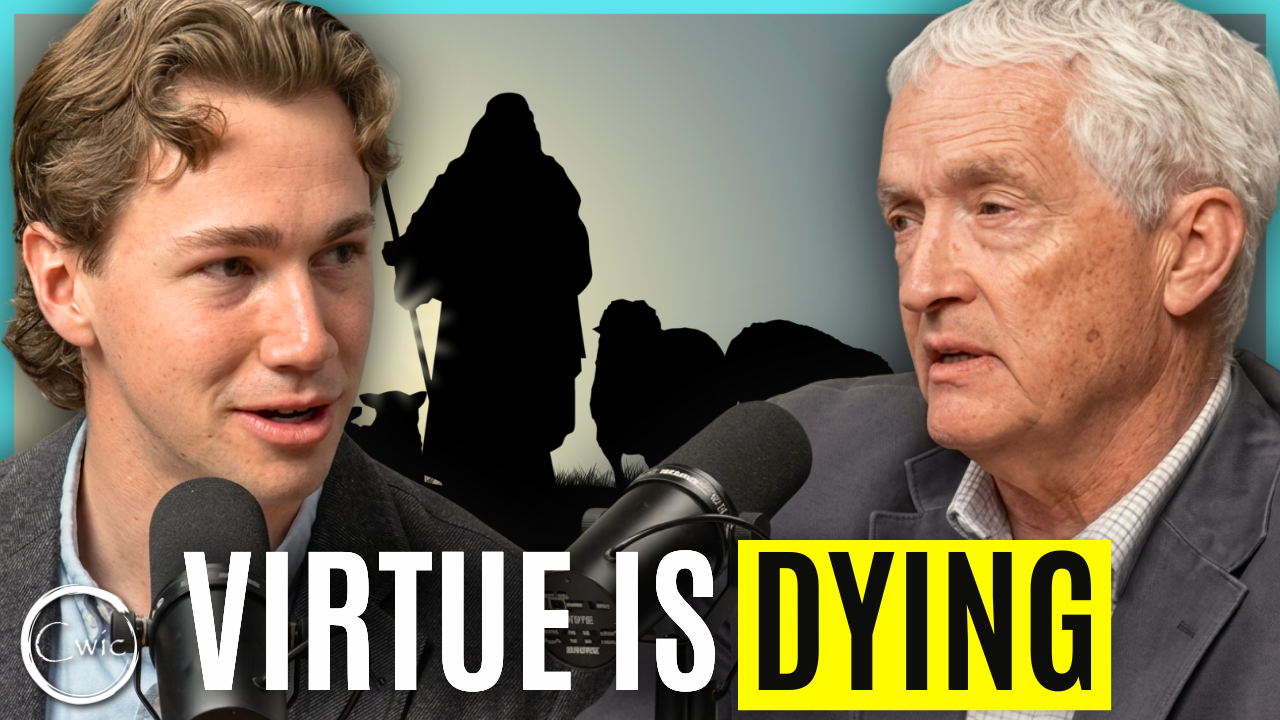
Dr. Ralph Hancock and Kai Schwemmer discuss: Why Modern Christianity Can’t Defend Anything “Love Without Virtue Becomes Destructive” Is Equality Replacing Good and Evil? Was Nietzsche Right About Modern Christianity?
Raw Transcript:
In this next episode of City in the Soul, Kai Schwmer again interviews Dr.
Ralph Hancock of Brigham Young University uh asking the question, has Christianity been hijacked by equality
or equity? And is equity replacing good and evil? What is the dangerous side of Christian compassion? And was Nietze
right about modern Christianity? This episode is brought to you by Fathom the Good, the high school homeschooling curriculum that is focused on the
question of the good as we come up to the 250th anniversary of the founding of America. Are we still holding true to those principles? Are we still
questioning the good? Go to fathomthegood.com and get a sample course. It is fantastic. focuses in on critical
thinking and provides an incredible education on political philosophy, on history, the founding of America, and the question of the good.
Fathomthegood.com, the city and the soul. Welcome back to the city and the soul.
My name is Kai Schwmer and I'm seated here with Professor Ralph Hancock, professor of political philosophy and
author of Love and Virtue in a secular age, Christianity, modernity, and the human good. Thanks so much for meeting again.
Thank you guys. Good to be here with you.
Yeah, absolutely. Well, let's let's pick off a little or pick up a little bit from where the last discussion that we had, the first one of uh your book left
off. So tell me a little bit about, you know, the part one and the introduction of of your text. What what is it that that the readers are are going to get into as they as they start?
Right. Well, you remember last time we touched on some main themes from the preface and the introduction.
And really the problem that I tried to set up there was uh it really boils down to how the idea of equality has become
extreme and how it has become untethered from any idea of virtue. the common good, obedience to commandments.
And uh interestingly, this uh this process of uh sort of the bottomless
leveling of equality, if I may call it that, is driven at once by, you know, a late version of modern secular rationalism.
But this rationalism has co-opted or converged perversely with a certain
interpretation of Christianity. And it's an interpretation uh uh for which uh or to which Latter-day Saints are not invulnerable.
It affects our understanding as well as it does other Christians. And this is simply an understanding of um the
equality of all God's sons and daughters, which of course we embrace as all Christians do.
But the tendency is for this understanding of equality to take on a uh a leveling meaning that tends to subvert all
uh all virtue and tends to um undercut any capacity we have to to stand up for
something. And I I illustrated this as you'll recall by a couple of examples.
I'll just recall one of them. Uh and that was the the Yale student, the young woman who uh confronting a professor
cried cried out in anguish really that she was not there to meet academic expectations or to partake of some
elevated intellectual tradition. She was there to find a home to be uh to be ratified to be endorsed just as she was.
And the job of the professor uh was to do that. Well, I I take this to be very emblematic of where we are because our
idea of the soul has been stripped down to this uh this equal self or this self longing for
ever more equality and ever more horizontal social recognition that uh of course this idea of the self
cannot be can never find satisfaction and meaning.
It keeps trying to level more. It keep keeps trying to seek a a bottom that that is not available. Yeah.
And it turns negative. It turns negative. It the um the advocates of
pure equality including and Christian advocates are drawn into this vortex
only really knows what it's against. And what is it against? uh not only tradition, virtue, family, anything that
uh cannot be cannot fit perfectly into the mold of an abstract equality.
So so that's the problem. I I mean to address this convergence of uh uh secular
equality and global universality which carries with it this sort of uh woke demand for ratification of identity.
Mh. And this is uh the convergence of that with a a Christian idea of love
that is increasingly divorced from uh virtue commandments and any uh specific
context. So that's that's the problem I'm trying to address. How to uh hence the the title love and virtue. How to um
hold love together with virtue. uh Christian love with uh frankly with
classical virtue in the sense that the aris arisatilian tradition mh
is the one in which the idea of virtue or as we say moral agency is best uh
best articulated and best uh represented. So that's the problem and uh then I try to move towards u that
that's an original statement a preliminary statement of the problem that I develop in part one and then later in part two I start trying to outline the solution.
Yeah. Well and and that's that's no small order to to tackle such an issue.
Um but as the readers begin to to read you know the the first chapter here of your book they're going to encounter a name French I believe at least it sounds
so. And am I getting the pronunciation correct? Pierre Manant.
Man, you don't need to say the T probably Pierre man. All right.
You want to do it in real French, you have to get the nasal sound which you can test. Manol. So, okay. But we won't insist upon. Man is fine. Yeah.
Man. All right. So, so tell us a little bit about who who is Pierre Manol? Why do you rely on him or refer to him um consistently throughout? Uh it seems
there's a couple Frenchmen who who you make reference to.
Right. Well, uh, I am, uh, I am grounded in a lot of, uh, French philosophy, including Alexi Detoville, who's also a
main source for Pierre Manant. Uh, I just think there's a lot there that, uh, is very discerning about the human
condition. And yeah, I love I love the French language, too. So, that's part of the attraction. But, Pier Manon is a u a contemporary French political
philosopher. Some regard him as the as the greatest living political philosopher. I certainly would not
desent uh from that. But um he's also uh
a personal friend just uh just a little older than me who retired a few years ago from the can I say it in French from
the aotial the the school for advanced studies in social sciences that where he taught a
long time and he was he was a student and research assistant of uh Pierre of
excuse me of Raymond Aon spelled a R O N uh he also learned a lot from uh Leo Strauss from whom I've learned a lot the
great uh uh German immigrate to America uh political philosopher Leo Strauss. Uh
so I won't review Pierre Manant's uh works. He's been a a student of uh a
critical student of modern rationalism and like Toqueville a friend of liberalism but with a uh caution about
the undertoe of uh of equality. One of his recent books uh was natural law and human rights
which I translated and helped to introduce by the way. Uh and u I draw a
lot from that book. I engage that book a lot. I probably the non-academic reader might sometimes wish I would just spit
out what it is I have to say and not engage in this fairly intricate conversation uh with a
colleague. Uh but it's actually important to get precisely clear on the ideas uh and to justify them. And a
central idea of manance that I found quite uh striking and original when I
first picked up on it in natural law and human rights. A central idea is uh the idea the idea that the the problem with
modern uh liberalism and its influence on modern Christianity
uh is what he calls the hypertrophy of theory. hypertrophy. You can work out the Greek therapy. The overgrowth
for for me that's, you know, you you you lift weights, you build muscle. That's the only context really where Yeah. I used to have that problem with my muscles, too.
But well, what is that hypertrophy of of theory then? Take us a little bit into that.
Well, it's uh the core idea is simple, but the the ramifications really are very farreaching.
Uh the idea is that um our our theories, our ideas
uh uh whether in the form of modern rationalism uh particularly or even in
the case of Christian theology and and here's a point I think where Latter-day Saints will find some resonance. Um
the the problem is that our uh our explanations of um of what is good, of
virtue, of the good, of human meaning uh flower into theories which we then
um are passionate to make systematic and airtight
and you could say uh closed and dogmatic.
But eventually the very uh ideas and terms that we
we in the in the western tradition in general that we have u developed
conjured up in order to explain the human good and to illuminate uh uh the structure of our practical existence.
The theories become hypertrophic. they sort of outweigh the the experience and uh provide a kind of crust over it that
prevents us from accessing uh the uh experience itself. So, and I should explain that Pier Manant is very much
rooted in the Catholic Aristotilian tradition which of course includes
Thomas Aquinus but he's not uh he chooses not to be a systematic tomeistic
theologian. So I call him a a Christian Aristotilian.
uh he's he's a practicing Roman Catholic but who believes that Aristotle uh is still the best source in many
respects for understanding our moral and political existence and then he he wishes to
uh sort of recover that er that aristoilian understanding of nature including virtue in particular but
within a Christian framework. So that's that's where he's coming from.
Okay. Well, yeah. Then take us take us in a little bit into these these ideas that that you were discussing. Of course, you know, I think what you're
describing is this overintellectualization perhaps that people get into where, you know, you you begin to lose the forest a little bit for the trees. But your your book also
touches on on things that are, you know, very very available, right? Like these ideas are ones that we hear a lot. Love, virtue, ideas discussed very frequently.
So, you know, take us in a little bit into into two characters, of course, kind of famous in in both religion and and political philosophy. These
characters of of Makaveli and and of Martin Luther.
Well, this is a very uh striking feature of Man's uh argument which I uh relate
uh in some detail because I think it gets to the heart of the problem of love and virtue in a uh unique way. And
again, I I'm engaging in these uh a kind of academic textual sparring, but I I
thank you for recognizing that my my concern and objective uh I think is extremely timely and urgently so like
our our increasing incapacity to defend virtue or to stand up for anything, family, God, country, etc.
uh these our capacity to stand up for good things is increasingly undermined
by this uh by the sort of flattening universalism of love uh which increasingly has no content.
Yeah. The thing improperly understood cannot be adequately defended adequately defended. Yeah.
Right. So, so my proposition is that the problem with modern secular rationalism is at the deepest level
a Christian problem. And I think we can I think this is palpable among the most thoughtful Latter-day Saints. A
difficulty we increasingly have uh to defend anything virtuous, lovely, of good report, and praiseworthy uh against a misinterpretation of love.
Mhm.
But to to come to uh your question about uh Mchaveli and Luther uh both uh 16th
century founders of the modern age you might say but in very different ways.
Mchaveli the founder of u secular power politics you might say and we know that
Luther initiated the Protestant Reformation. Well, what do these two have in common? Um, what they have in
common is something that well that corresponds to the category of the hypertrophy of theory.
each in each in his own way. Makaveveli and Luther are have this uh like compulsive need to
uh see through the goodness of virtue uh or in Luther's case
uh the goodness of a Christian love of God and hope and salvation to see
through that uh to something certain indubitable. Um, so in Mavel's case,
this leads to uh the idea of the effectual truth. Forget virtue and the claim of some uh intrinsic goodness that
is lofty and hard to articulate and let's bring it down to um a truth that we can control. That seems the opposite
of Luther. But here's the key. Both are uh against the intrinsic goodness of virtue. or to put it in intellectual
historical terms, both are against Aristotle and against Thomas Aquinas, the Christian uh baptizer of Aristotle, if you will.
In Luther's case, we know this in the uh form of his insistence on uh salvation by faith alone. And and
Latter-day Saints really rarely recognize how how radical Luther is on this point. We like to think of him as a forerunner
of the reformation and you arguably in some historical indirect sense obviously the reformation
prepared the way it was involved in the settlement of America and in religious freedom. Yeah. All that's true but in theological terms uh Luther uh and
Calvin who followed him in many respects were the furthest possible from a latter-day saint appreciation of moral
agency or an aristoilian appreciation of the intrinsic good of virtue. Luther
absolutely insisted that human beings were by nature incapable of any good. So
that um our um obedience, our sacraments did nothing to make us righteous. They
just covered us with uh Christ's righteousness and in no way intrinsically
transformed us or put us on a road to actual moral improvement. So this is what what Pierman objects to and this is
why both fall into the category of the uh hypertrophy of theory because because in different ways each wants to see
through to reduce to put aside uh the
the difficult to express goodness of virtue itself.
Yeah. Well, what you mentioned is interesting. It's something I've contemplated a lot. We touched on this, of course, in um in the the first
episode that we did, and this is perhaps the tendency of Latter- Day Saints in particular to oversimplify
um or to to maybe place too much of a binary on these these items of philosophy versus religion or um you know, some of these historical
characters like you mentioned um with Luther to kind of put them in this box of like led to the Reformation so good.
And with the Catholic Church, it was, you know, maybe more traditionally um great and abominable church, so always bad. And and I think there is absolutely
room for an expanded um or perhaps more nuanced perspective among Latter-day Saints that recognizes uh the way in
which and this is why I think philosophy being the perfect variable to tie everything together. The way that there are some of these ideas that exist um
very differently among different theologians even of the same faith. you know, the way that Thomas Aquinas and uh and Augustine deal with the idea of virtues is very different, right?
So to box them all up together, it um perhaps leads to less productive discussion.
Well, and especially the box we use to box them together. Mhm.
Is I would say essentially, you know, in a broad sense a progressive box. It must be this. If God was leading to the
restoration of the gospel, it must have been by progressive steps of improvement. Therefore, uh, Luther is is
better than things that preceded him and everything is going in a progressive direction, which is a dangerous mindset to slip into. You can see see the danger
already. Then we assume that anything that labels itself progressive or that rejects the past is good.
Yeah, certainly. And and and I think it this this way manner of thinking, it exposes us to great risk. And you'll have these conversations sometimes where
the conclusion is presupposed, right? In that in that idea of progression, it's like, well, how can you be against progress? It's the good thing is it's in
the name is is I think what the conversation is reduced to.
And so so much of our vocabulary is uh sort of imprinted by this uh forward and backward, the right side of history.
Yes, I would say the beginning of wisdom for Latter-day Saints or wise people today, anybody who wants to be wiser, is just
to recognize that vocabulary and to opt out of it. Mhm.
I mean, Le Leo Strauss um uh in a beautiful essay called Progress or Return, uh Leo Strauss points out that
the um the opposition between good and bad or good and evil is in is increasingly replaced by the opposition between uh progress and reaction.
Uh Al Alexander Soljan said the same thing. Maybe maybe Strauss got it from Soulja Nitson. But uh that
that's a disaster morally and religiously to replace the basic category of good and evil
with categories of progress and anti-progress or reaction being on the wrong side of history.
Certainly. All right. Well, let's let's dive in a little bit now to to another phrase um that that that appears throughout which is the religion of
humanity. What would you define? What is this religion of humanity? Well, the religion of humanity perfectly names
the conversion that uh the convergence I should say that operates at a deep level for so many of us uh between
goals of progressive humanitarianism or secular progressivism uh and goals of
Christianity. uh we increasingly interpret the essence of Christianity in
a progressive globalist uh uh humanitarian frame. Um we so immediately in thinking
about uh uh loving our neighbor or doing good to our neighbor, we switch into a
mindset of uh global humanitarianism driven by compassion. Um now would be
foolish to speak out uh broadly against compassion but I think the interpretation of love as
I will say materialist compassion has become uh a major problem. Our idea of
love has been leveled uh in a way that we can see like two main consequences or
aspects of this leveling of compassion or you could say of this severing of the second great commandment love thy
neighbor from the first great commandment loving God.
uh on the one hand our interpretation of what it means to act upon our love is increasingly leveled and materialized.
It means uh helping people in their physical comfort and security
which of course is always a good thing and part of compassion but that that's easily extended to ratifying people's
identity or um agreeing uh at the outset with any suffering
person on the diagnosis of his or her uh suffering. uh ratifying a person's own
idea of their self-expression and and what it requires. Mhm.
But this goes along with the second element of this leveling is the specifically globalizing element which
uh tends to um tends to uh minimize or demote uh love
of family, community, country. This is a very strong point of pier man. All real moral action presupposes
a uh shared community uh with a shared understanding of good
in which that action is uh which that action operates and is coherent and shares precisely in some common
understanding of the good God God family country but now our universalism and of course
that Christ's truth is universal the truth is inherently universal And uh the mission of the gospel extends
to all humanity and all human beings are in a deep spiritual sense our neighbors.
But uh meaningful moral action still begins at home and meaningful moral action very strong
point of Pier Manant who wasn't afraid to contradict uh uh his pope Francis on this question. meaningful action uh
includes uh uh love of country an action on behalf of the well-being of a uh of a
people and this is what is increasingly denied by the uh universalist u I would
say pseudo ethic of compassion. It's a pseudo ethic because it has no content or substance. And for the most part with
um admirable exceptions, but for the most part, it's uh it's grandiose, but it's also cheap. I mean, it costs you
nothing or maybe costs you a check now and then if you choose to to donate to some international organization, it
costs you little uh to uh be in favor of um some uh abstract global project of
compassion to to put on an Instagram update or on your story to to announce your support of some cause.
Right? This is where virt virtue signaling separates itself from actual virtue which is uh concrete and starts
at home and starts with the neighbor that's right in front of you and uh and
is inseparable from a concern for virtue for the order of the soul for one's spiritual condition for one's relation
to God and for the neighbor's relation to God.
Now I find this I idea very compelling that love has been cheapened. I think and and this is why it's so important to actually get to what do these things
mean? What does it mean to love? What is love? What is virtue? What role does it play in our lives? Because I think, you know, so often love is just giving
people what they want. Um, and I think often times it's actually out of uh rather than self-sacrifice, rather than
selflessness, it's actually out of um perhaps a pride that one one has in himself attempting to spare himself the
discomfort of saying something that somebody else might find disagreeable even if it is out of their best interest.
27 minutesRight. Well, this yeah, the the pose of uh selflessness, I should say, as humanitarian compassion
uh reveals precisely the the emptiness, you know, that I set up in our uh preface and introduction. Uh that is um
the self is so uh open and its compassion is so contentless
that selflessness coincides with the endorsement of selfishness.
all virtue or all vertical orientation towards God has been eliminated. Uh and
that means that the the the content of our selfless universalist humanitarian compassion is uh thin and unstable
uh at best. And uh so we're we're left with a world view which is at once uh
selfish and selfless or um devoted to uh
uh boundless uh self-expression and the ratification of identities on the one
hand and to some abstract regard uh for the other. So this these are the this is the pinser movement that is the
convergence that is uh undermining our confidence in virtue. So we'll never get to the bottom of the
meaning of love. It's a a mis a mysterious spiritual and beautiful force
that will never completely explain. But I think it has to be held together with a more concrete and confident uh idea of
virtue. The alternative is something like um I mean the worldview that results was uh too well expressed uh by
John Lennon way back in the 70s with his uh hymn to secular humanitarianism which is you know the song imagine. Is that still a well-known song? Yeah.
Unfortunately. Imagine there's there's no heaven, no hell below us, above us only sky. Imagine all the people
living for today and are sharing all the wealth. Uh it's if you find that uh beautiful, your soul has been flattened.
If you find it beautiful that there should be nothing to live for but everybody doing their own thing and being comfortable in getting what they
want, then I think niche's critique of Christianity obtains Nichzche argued Friedrich Nichze
German philosopher who died at the end of the 19th century but he argued he's a
great critic of western civilization in general um
including uh Christianity uh and Judaism but he can help us because he wasn't
30 minuteswrong about certain consequences of a uh thinned about
leveled uh if you will democratized and universalized Christianity.
The result would be what he called the uh the last men who hop on the surface of the earth and who earth and who who
blink and are who wink and are satisfied with their uh secular
comforts. A little a little pleasure by day, a little pleasure by night. maybe some uh drugs or narcotics to help with
the comfort. That's that's the culmination of the western vision. If
virtue is sacrificed to universal equality and there I think niche was right.
Yeah. It's the classic eat, drink, and be merry. That's it. You know, absolutely. Well, hey, let's refer now back to to somebody we've we've already
mentioned a couple of times um who's also very present of course in in in this line of thinking and this is Leo Strauss um this German immigrant right
um who had of course a very revolutionary idea in hermeneutics um but in in this book what is his main
role you know what what is he playing and what is his contribution well uh Leo Strauss is a main foil of
mine in coming to terms with the problem of love and virtue really coming to terms with the problem of Christianity in relation to ancients and moderns.
Uh so Strauss's great theme, one of his great themes certainly was the distinction or the the conflict between
the ancients and moderns. Mchaveli's attack on Aristotle and the classical idea of virtue has already been um
referenced but uh I cut my teeth on Leo Strauss if you accused me of being a Straussian. Uh I couldn't object. I've
learned a lot from him. Uh you know my teacher Harvey Mansfield um uh
is definitely a Straussian of his own original kind. So I learned a lot from Strauss. Uh but um one thing I learned
was a critique of Christianity that has to be answered. Now Strauss's critique is subtle because he wants to be friends
with uh uh Christians. Uh he wants to he he wants to endorse um Christian
morality in so far as it hearkens back to uh to tradition. But at bottom he's
very discreet about this but as I show at bottom he regards Christianity as implicated in the devolution of equality.
He he agrees with Nietze about that. He doesn't agree with Nietze about uh
uh that that truth itself is a a myth or a power play. Strauss wants to return to
truth as understood uh by the classical political philosophers by Plato and Aristotle. So this is where I have to
peel off from Strauss uh in a certain way um uh by arguing well Strauss Strauss's
answer to the question of what is the ultimate substance of the good and therefore the true good inherent in our
aspiration to virtue and his idea is the life of pure philosophy itself the the self-sufficient life of contemplation
and the the attunement of the mind to uh what I like to call in my classes the idea of divinity as a rational
impersonal necessity. So Strauss is a hardcore classicist in the sense of um of
allegiance to an idea of the pure self-sufficiency of reason not in the modern sense but in this classical sense
against modern rationalism modern technological rationalism but also against
Christianity because he thinks that one leads to the other. He he he thinks like Nietze that Christianity is implicated
in the utilitarian socialist leveling egalitarian universalist uh
character of the west. So but uh but we're Christians. We have to know how to answer Leo Stras and that's what what I
try to do uh in this chapter. And really the answer uh the argument has to be a
little a little um intricate to come to terms with a thinker as profound as
Strauss. But the answer at bottom is Christian love and classical virtue have to be have to be held uh together.
But still, Strauss, even though I have to peel off from his view ultimately, he plays a positive role in my argument
because he really sees more clearly than anyone else the vulnerability of
Christianity to this uh flattened secularized idea of love. Mhm.
So in answering Leo Strauss, I'm going to the heart of the matter and trying to show how it is today that we that we can
um uphold virtue within a Christian perspective of love.
Certainly. And I think again we go back to why it is important to dialogue um us Latter-day Saints and Christians in general with philosophy is because there
are serious questions that cause introspection that I think otherwise we might have grown too comfortable to ask ourselves. And this is the question of
morality. You know I I me personally I I feel Nietze's um call for introspection of Christians um regarding our morality.
I I think this is very important. It is to say are we living a you know this this virtuous life the way that we see it out of you know strength out of you
know the fact that it is difficult and then despite of despite the difficulty or in spite of the difficulty we will you know put in the effort and do it or are we doing it because it is easier for
us and because nature would say are we doing it because of our resentment of the noble those who are virtuous are we doing it out of a democratic resentment
of excellence and really that's the whole problem in a way that Christianity has proven vulnerable to the temptation
of resentment which is another way of saying egalitarianism uh leveling hostility to excellence or virtue
certainly and uh and I obviously you know we we don't mean to speculate theologically but we know at least that
even from a premortal existence there there is some inequality of souls um there are noble and great ones and so I I think that this question of of
aspiring to greater. I think it comes naturally to us.
Well, right. Right. I mean in a way the question of love of virtue is the is also is a form a deep form I would say
of the question of equality and inequality and there are there are truths in in both and both those truths are present in the gospel
including uh in the restoration and so to come back to Pierre Manant's focus or his most distinctive insight uh
I mean he makes it clear that that virtuous action or Latter- Day Saints would say moral agency is
inseparable from from taking the initiative from standing out standing up for something and therefore it's
inherently unequal. There's a moment of inequality in the initiative of agency itself. I
mean agency is the opposite of waiting to find out what somebody else would do or what they
would like. Uh it means uh it's connected with standing up for something which must be something uh concrete
and definite. And despite our humble recognition that we can be wrong or that we're not fully in possession of the
truth, moral, spiritual, political, whatever, we still must uh act with confidence under God. That's what my book is about.
Absolutely. Well, all right. So we we've touched then today a little bit on many issues, religion of humanity, Pier Man,
we've touched as well on Leo Strauss and um some of the overarching uh themes in in your book, but but where are we going
from here? What can we expect on the next episode?
Good. Well, remember all these scholarly uh adventures which I enjoy. I'm in that business. But
really they're they all are directed to the purpose of getting clear on love and virtue and holding them together. Uh love and virtue in a secular age, right?
Christianity, modernity and uh the human good. How can we uh sustain the good of
virtue within a Christian framework of love uh and humility and awareness that um we
depend ultimately upon uh Christ for our salvation. We we don't unlike Leo
Strauss's claim of philosophical of the possibility at least of philosophical self-sufficiency. We know that in the
last analysis we depend upon a power uh above ourselves. So in any case here in part one I've kind of uh set up the
problem articulated the problem with the help of Pier Manant and Leo Strauss especially. Then um in in part two I
move more to digging into the solution becoming a little bit more specific and concrete uh in the solution. And here again I
build upon the work of uh Pier Manant. I build upon what I call his uh Christian aristoilianism
uh because I think that's something that Christians today need to learn from. And I don't exclude uh Latter-day Saints
from this uh recommendation. We need to learn uh to the appreciate
the natural goodness of virtue uh as a starting point for our
understanding of an all-encompassing love and how that how to how that works
out uh practically I deal with especially in in this uh second part uh
where uh Pier Pier Manant develops uh this uh Christian aristoilianism as a
response to the hypertrophy, the overgrowth of theory which is at once a
modern rationalist thing and uh a Christian theological problem.
Certainly, I'm I'm glad we're spending time addressing these these core questions. It's like, you know, Joseph Smith said, if you go wrong at the start, it's it's very difficult to to
ever go right. So, you got to go right from the beginning. Well, Professor Hancock, thank you so much. Thank you all for uh watching this episode. Of
course, be sure to tune in for the next one where we address some of those important questions and of course more on love and virtue in a secular age.
This is the book once again, love and virtue in a secular age, Christianity, modernity, and the human good. Thank you. Thank you. Thank you, Kai.
The city and the soul.

"I Take This Every Day!"
Learn more about why I accepted Cardio Miracle as a sponsor and why I take it every day!
- Greg Matsen

Stay Connected With New Articles & All Things Cwic!

Cwic Audio Player
All of the Cwic Media podcast episodes on one page!

