
Evidence The Book Of Moses Was The Genesis Of The Brass Plates
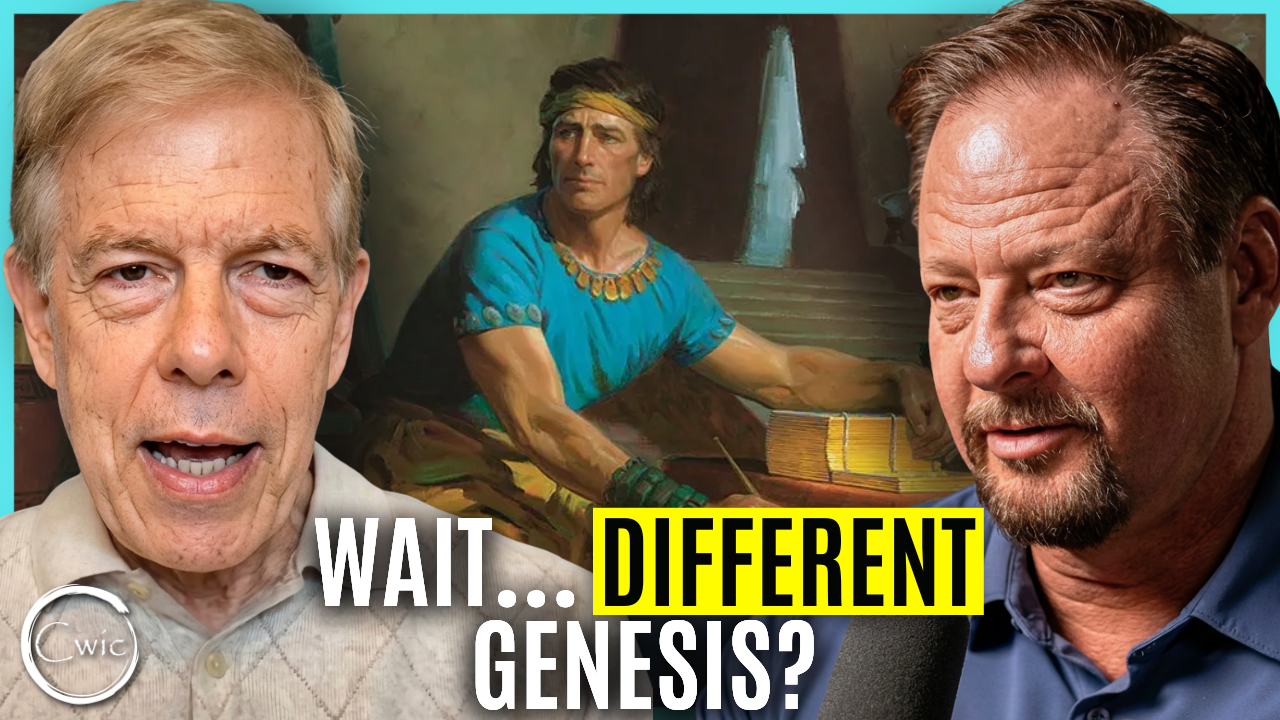
- The Book of Mormon Used a Different Genesis?
- Jeff Lindsay reveals evidence that the Brass Plates contained a lost “Book of Moses” tradition hidden from the Old Testament.
- Why does the Book of Mormon know more about Adam & Eve than Genesis?
- Jeff Lindsay breaks down textual parallels of The Book of Moses and The Book of Mormon.
Raw Transcript:
Did the Book of Mormon use a different Genesis? Scholar Jeff Lindseay reveals evidence in this episode that the Book
of Mormon is using possibly a different Genesis than what we have in the Old Testament. We might think of it this
way. Did Lehi have a different Old Testament? The shocking parallels between the Book of Moses and the Book of Mormon may change how you think about
scripture from here on out. Why does the Book of Mormon know more about Adam and Eve than Genesis? Is the Book of Moses
actually not just a translation triggered from a reading of the Old Testament, but rather a much older
version found in the brass plates and used by the Nephites as their own scripture. It certainly seems like Nephi
and others are quoting scripture that we don't have anywhere else. The Book of Moses and the Book of Mormon seem to preserve doctrine that we don't have in
the Bible we use today. Now, this episode is brought to you by the Alaska Frontier Cruise coming September 5th through the 12th. We'll be stopping in
Sitka, Juno, Icy Straight Point, Ketchacon, Victoria, and of course coming out of Seattle. Come along and
experience the beauty of Alaska with myself, my wife, and Steve and Elaine Dalton. To find out more or to register,
go to quickdia.com cwycia.com to the top to trips and events and scroll down to Alaska Frontier. Would
love to experience that with you. Here we go with Jeff.
All right, welcome to Quick Show. My name is Greg Matson and I am your host.
In this episode, we bring back Jeff Lindseay to talk about the Book of Moses, the Book of Mormon, and is the
Book of Mormon referring to a brass plates version of Genesis. We're going to look at the parallels and things and all the work that Jeff has done on this. Jeff, welcome to the show.
Thank you. It's great to be back. Thanks for being interested in this topic. No, I love these discussions we have.
It's fascinating and and I think important. Um, let's start off with this. Is the Book of Mormon using a
different version of Genesis than we have in the Old Testament?
The evidence suggests, yes. Um, of course, people when getting the brass
plates was such an important step for the Nephites, for Lehi and his family.
And when that came after that came, Lehi is now studying this day and night. He's he's discovering things. He's talking about new things. And when he talks
about Satan, uh, he he's speaking as if he's just learning something new about the role and operations of Satan. And
then Nephi writes, and we hear a lot of things from Nephi. What is amazing is that there are numerous illusions. No
one no one has a higher density of illusions to what we would call the brass plates version of Genesis. What
null Reynolds has suggested is the brass plates version of Genesis. something related to our Book of Mo Mormon, our Book of Moses. No one has a higher
density of illusions than Lehi, followed closely by Nephi and then Jacob. his family were the most aware of the brass
plates and the illusions they make to what we something like what's on our in our book of Moses today really adds to
the evidence that null Reynolds first introduced that something like our book of Moses was on the brass plates and he calls it the brass plates version of
Genesis. It's not it's only a few chapters of Genesis, but it is amazing how much how many illusions there are to
material in the book of Moses that is not readily explained by what's already on in in the in the Bible. And it's a to
me it's a remarkable story, especially when you consider the distribution of these parallels and the backstories and so forth. There's something going on
that I feel like really needs more attention. So it seems that you know, so you've got this family that goes back to
get the brass plates and like anything new to them. I mean, I don't know what kind of fornowledge they had of these
things, what what they did they had of other scrolls that they may have looked at, but but anything new coming to you, you're going to learn about it. You're
going to talk about it. You're going to interpret it. You're going to apply it.
And that seems to be to some degree kind of what's happening with with Lehi and Nephi. That make sense?
Right. Right. And interestingly, it's not just it's not just Nephi and Lehi and Jacob. It's even Layman and Lemu.
And this is one of the really cool parts of of of the story. So, can I kind of tell this part of the story for a second? Yeah, please.
One of the first things null. Reynolds.
Well, so no Reynolds began this pursuit back uh with a publication in 1990 uh called the brass plates version of Genesis. We've it's been republished on
at interpreter to make it easier to find. A great article. He did computer searching and his idea was how much did Joseph Smith's language influence the
translation of the Book of Moses? How much did he bring in from the Book of Mormon? He he had the very natural assumption that the Book of Moses is
going to reflect Book of Mormon language and themes and Joseph's own vocabulary of course because Book of Mo Mormon was translated first. Then about a year
later he starts doing the New Testament transl or the Old Testament the new translation of the Bible the inspired translation. Um, and when he starts
doing that, he creates right away mo this Book of Moses material which is um
is over a year later. So he had the natural assumption that this came later.
So there's probably some Book of Mormon lingo that's been brought in there. When you read the two, you can see there is some overlap of concepts. He wanted to
kind of map out how much you could see from a computer search of terms not found in the New in the Old Testament or New Testament, but unique connections
6 minutesbetween Book of Moses and Book of Mormon and what that tells us about Joseph's use of language, his quotations in the Book of Mormon. And to his surprise, uh,
when he looked at these 33 parallels that he found, um, some weak, some strong, some really compelling, he saw
significant evidence that the Book of Moses was not just borrowing language from the Book of Mormon, but it was the
other way around because the Book of Moses in many cases seems to serve like the backstory. The details of of for
example secret combinations are Book of Mormon's second biggest theme along with works of darkness and other forms of
corruption after Jesus Christ and his mission. Book of Mormon is all over secret combinations from beginning to end and they make many illusions to the
stories relinets and so forth as if readers should know
about these. doesn't they don't go into all the details and say here's what Cain did here's a rehash of the story but the book of Moses provides the story
provides the background that helps us understand those terms comes to Satan and his operations which
book of Moses is gives some really detailed information in Moses chapter 4 and u this is this is worth pondering
this is one of the first few parallels that null Reynolds discovered that Moses 4 verse4 has very strong influence on
the book of on the Book of Mormon because Book of Mormon makes illusion in a makes brief references to what's in
these in these verses in Moses familiar to the audience and doesn't doesn't rehash the whole thing. But here's Moses 4:4 as we're we're
explaining what happened in the Garden of Eden and why Satan was out there stirring up trouble and had been a rebel from the beginning. And um verse 4,
after Satan's cast out of heaven, he became Satan. This is Moses 4:4. He became Satan. Yeah. Even the devil. So notice the all these descriptors that
are used. The devil, the father of all lies, to deceive and to blind men to lead them captive at his will, even as many as would not hearken unto my voice.
So those that don't don't hearken unto God, they're being led captive. He's deceiving. He's blinding them. And he's the father of all lies.
Book of Mormon has references to those concepts many, many times, sometimes in very short telegraphic form. But it's
not just the prophets using that. One of the most interesting stories that null Reynolds detected is in First Nephi 16
when Layman and Lemu are rebelling against Nephi and they're refusing to work and they're making justification for what they were doing and they were
saying we why should we keep following this this this Nephi who is trying to deceive us and lead us away captive to
his will. He's making a reference to the works of Satan. He's quoting several of the terms in Moses 4:4 to describe
Nephi. Doesn't come out and say he's satanic, but makes illusions to indicate he's satanic. And well, if somebody is
satanic, then maybe we really should stone him and kill him and so forth.
Nephi with some degree of irony and irony is one of the great powers of the Book of Mormon with irony simply repeats
what his brethren are saying and lets the reader understand they're saying I was satanic.
That subtlety uh indicates Layman and Lemu were hearing a lot of things about the book of Moses. Nephi Lehi was undoubtedly preaching to them. So they
got that lingo. They're not getting it from from the from their Old Testament at the time. Very little is said about Satan and his operations, but Book of
Moses has a lot and a lot of that is incorporated in the Book of Mormon. And that is one of multiple indicators of this one-way direction where something
from the Book of Moses, something like our Book of Moses, hypothesized to be on the brass plates, influenced the language and writing of Book of Mormon
authors and even some Book of Mormon rebels.
Yeah. So, so encapsulating that just summarizing that you you're even though the Book of Moses is written what about
a year later, right? So, we've got a sequence here of of Book of Mormon first, then Book of Moses. In the Book of Mormon,
the parallels that are given or many of the parallels that are given are referring back to a backdrop of
knowledge or even direct reference to something prior, a doctrine that they have prior, a an understanding that they
have prior and therefore they are drawing from something. And then when you add the parallels in between the language in the
Book of Mormon, the ideas in the Book of Mormon, and then with the Book of Moses, and you see that they are very similar.
I think in your last publication you hadund was 146. Yeah. Up to um now officially it's 174.
Oh wow.
And there's still there's like four or five more. I've got to figure out how best to present these. But I um yeah it's it's it's really
which is an immense amount. I mean that that is that is that that is not just oh here's this one thing that they might have been thinking of that might have been there. It is
there is a a body of work here that they have in front of them or a knowledge of that they are they are certainly
referencing and using the similar ideas or even similar language.
Right. one one one example, one of the most recent ones. It's one I there's a few of these I just kick myself. How did I miss this for so long? And it's just
because it's hard to drop all the assumptions and sometimes the words are not really unusual. They don't stand out. But uh my wife mentioned this one
thing that's always bothered her or not bothered her, she's always wondered about it. In second Nephi 2, Lehi says that if Adam and Eve had not fallen,
they would have had no children. Um whether that's the case or not has been a a big topic among Bible scholars and they generally conclude, yeah, they
probably could have. There's no reason to think they could not have. But then here's Lehi who just states it matter of factly. He's not saying, "I had a revelation last night. The angel told me
this new tidbit. You never heard of it before." He states it as if it's well-known then just very blunt fact. And they could have had no children.
Where did that come from? And it comes from I propose it comes from Eve in the book of Moses. Who would know better? Uh
I don't know the physiology. I don't know all about it. But she as a mother knew and says, "Had we not fallen, we could have had no seed.
We would not have had children." If that were on the brass plates, Lehi is referring to something that he hopes his
audience would know that they could have had no children. And there are a lot of little things like that. also the fact that children are whole from the
foundation of the world that this idea of the salvation of young children.
There it is in the book of Moses or in the and and it's given some emphasis and what's interesting is some of the same
context is provided in the in the Book of Mormon. I mean some of these parallels aren't just oh would you get a word that matches we get a context and
we get a story and we see Book of Moses provides the details in the right context to help you understand that. I
mean there's one little example there Nephi when he's talking about what they found when they come into bountiful how wonderful it is and he talks about all the fruit that the Lord has prepared for
them. This concept of the Lord preparing fruit that's a characteristic of the garden of Eden in book of Moses that the
Lord had prepared these things for them in the garden of Eden. Um and Lehi uses the same language that's not that differs from the from our Old Testament
version of Genesis. um that that to those who know the the backstory, who know about the book of Moses can
realize, oh, he's making an illusion to the Garden of Eden, that this was like a Edenlike place they had found. It's not a huge doctrinal issue, but it's a nice
little rhetorical touch, and reading the Book of Moses helps us better appreciate what was being done by the authors of
the Book of Mormon in many times, many cases. It's just it's just a such a a a new paradigm, right, to think, okay, well well, maybe I should be putting
these together. You know, maybe I'm looking at these things and I should automatically be looking at the Book of Moses as I read the Book of Mormon and
understanding the backdrop of where these prophets are coming from. A lot of what you talk about is well, you do say that the in a number of the sermons and
and the doctrinal meat that you find in the Book of Mormon, Second Nephi 2 as an example, right, is
seems to be heavy laden with these parallels.
So that makes all the sense in the world. I've got the brass plates. I'm using them to prepare a sermon to talk
about what I need to talk about. And and that's where we find a lot of the parallels, right? And this is this to me it's a really important issue. If if the book
of Moses were really a naturalistic production of Joseph, it just inspired fiction or maybe it gets a bit of
revelation and dresses it up as as Old Testament style language. And here's what Moses might have said or thought.
Uh we would expect it to be infused with his language. We would expect it to that that language to be just kind of uniformly dispersed throughout throughout the text as he's dictating.
And we would expect the connections between the Book of Mormon and the Book of Moses to also be really kind of random and scattered. And what we see
instead is consistently a a distribution and usage and patterns of use that are
very consistent with the hypothesis that the people in the Book of Mormon most familiar with the brass plates were the
ones most likely to provide parallels to the Book of Moses which is really astonishing. Would would you mind if I
showed a couple of of graphs on this issue of the distribution?
So, we're we're currently at 174 different parallels and there are
different ways of looking at the distribution in the Book of Mormon. um those that you can see here some columns. The ones that have um the the
the hashed marks instead of solid, they are the um number of parallels per
chapter is or average number of parallels per chapter in different books of the Book of Mormon. And then the solid charts were slightly different
calculation. And we're looking at how many parallels are there per thousand words because sometimes chapters are longer, shorter, books are longer,
shorter. But there's not much distinction between whether whether we count it by chapter or per thousand words. What we see is first Nephi has a
pretty high level around if we we'll just talk about average per chapter is a little over three. Uh second Nephi goes even higher. There's like four different
four unique uh at least on average four unique parallels per chapter in across
second Nephi. And that's that's a pretty high high level. Um Jacob is is a little lower here, but still nice healthy high
level. Jerham, which is only one chapter, so it could be an outlier, has a surprisingly large number, four
parallels in his one chapter. Um, it's not surprising when we learn that Jacob uh was really into some of the
rhetorical tools of the Jews uh and and obviously a student of scriptures because as was recently shown um in an
article and on the u in the interpreter Jerham is one of maybe one of the best examples of an extended kayasmus in the
in the Book of Mormon. And uh that's that's a really interesting story. uh Enus who is not a strong student of the
18 minutesscriptures uh by his own admission at least at the beginning has one a much smaller number but then as we go on and
look at um Amni that's very low words of Mormon it's low Messiah there's not much uh in fact there's some big we'll see in
a moment there's some big gaps in Mosiah where there's very very few Alma is higher gets really high mostly because it talks a lot about secret combinations
it gets into some real details of how they work how they're formed what's going on with their covenants and conspiracies and so forth that are making references to the story of Cain.
Uh Cain and the quest for gain and much that's in the book of Moses. And then the other chapters aren't super high.
Ether gets gets a big boop big boost. Secret combinations.
Yeah, Ether 8 especially. Lots of secret combinations are discussed there. Uh so that's that's really interesting. But there's a not a not a simple flat
distribution. But Nephi Nephi is really high on this. But if we look at the next slide and we get oh by the way brass
plates in general were most known to the small plates writers and the average across small plates. Now this average
includes the total number of words. So ENS has very little influence on this but in the small plates we see an
average of 2.86 parallels per thousand words. And that's almost twice what we have across the large plates on average.
And again, since this is an average based on total number of words, Elma has an out outsized impact on the on the
large plates. But we see the small plates writers much higher than the large plate writers. Large plates writers. Can I ask you in Second Nephi,
going back here again, in Second Nephi, which is what 32 33 chapters, uh you
you've got you've got, you know, Second Nephi 2 as an example. Um strong
doctrinal chapter. Then you have uh um you've got a lot of Isaiah in there obviously. And then and then you move
into the kind of these doctrine of Christ chapters toward the end, right? Uh, were there many in those chapters at all when you're talking
actually focused on a doctrine of Christ? Were those I don't know. I'm not trying to think of there that many.
Let's let's Yeah, let me Yeah, let's let's come to that. I just want to mention one thing. I I mentioned Jarham being a kasmus. I should have mentioned that Steven Ehhat Ehhat was the writer
who did that. It's really an article worth studying. It's monumental work.
Um, very good evidence that is probably the best extend one of the best extended kayaz kasmuses that you can ever find. A
really remarkable uh if we look at okay and this one one other measure here just to show how how in how intense these parallels are this
is the fraction of verses um that involve parallels that's a figure in my papers I call R1 but uh in the small
plates there's an average of over 16% of the verses in any given chapter involve a parallel one or more some of them have
two or three but involve one or more parallels So that's about one in six of the verses across the whole text of the small
plates involve one or more parallels with the book of Moses. Um still a high number for the large plates but it's
almost half that 0089 is the average for the small plates for or for the large plates on the right versus the small
plates on the left. again um at a very large rough scale indicating that the people that were probably more familiar
with the brass plates cite them about twice as much a very high level but you the question you got to about is about distribution per individual chapters and
let's take a look at that this slide shows the number of parallels by chapter across first Nephi to the end of second
Nephi and this is for the 174 parallels we're looking at you'll see at the beginning of first Nephi where he's getting into the history we did this, we
22 minuteswent here and so forth. Um, really a fairly low level. And then it gets higher when he starts getting doctrinal.
But the real spike here that is uh just about the highest u that that I've seen is in second Nephi 2. Second Nephi 1 is
also high. This is Lehi's farewell speech. Lehi is summing up the things that are really important to him. And as he's doing this over and over, he's
making illusions to things that are in the book of of Moses, including Christ as our redeemer. Uh oh, and and I should
say Nephi uses one of Book of Moses terms frequently. I do not yet count this as an as a as an independent
parallel, but it's a very important one to note, and maybe I should, and I'm debating that, but the lamb of God.
Yes, the lamb of God. The Christ is the lamb who will be lifted up and slain. The redeemer of the world is in Moses uh 7
and it's a very important term the lamb of God. It is also in a couple verses in the New Testament. John behold the lamb and John John uses the lamb of God um
very succinctly but it's it was definitely there. But what gave me hope to reconsider this is almost the same reason why null Reynolds included
eternal life as one of the parallels in his original 33. because the word eternal life actually is in the New Testament. Not a lot, but it's there.
And but it's not in the Old Testament.
And so he's not noting noting how frequently the Book of Mormon uses eternal life and how frequently the Book
of Moses uses eternal life, how it's not used in the Old Testament at all. The fact that it's there a time or two in the New Testament, he thought, well, I
think we should still count it as as a parallel. In general, the goal in these parallels is to avoid things that are easily explained by language that's
already there in the New Testament. But in this case, uh he felt it was significant that it's not in the Old Testament and yet it's being used in Old
Testament times. And so he brought it in. Doesn't do that for everything. But lamb of God is one that we might wish to do. Consider that as a unique parallel
in spite of its occurrence in the New Testament because and I I will also say I do have several parallels that do involve lamb of God plus something else
that are combined in the Book of Moses and also in the Book of Mormon. So it's a stronger case to be unique. But one of the really interesting articles that was
recently published in the interpreter comes from a a Jewish scholar who's not Latter-day Saint Mayer Barilan. And we talked about words of God the Seir before.
Yeah. I remember this.
He wrote a whole article for us on the song of the lamb and the lamb of God that are mentioned in the book of God
the Seir. And he points out how people wondered could the lamb of God have been a pre-Christian concept. It is known to occur in the
testament of the 12 patriarchs. And people have dismissed that and say ah it's probably just a Jewish interpolation. They got added later after the Christian era. But the words
of Gad the Sierra have not had any possibility for Christian influence into that manuscript. And there it is, the lamb of God and the song of the lamb
plays a an important role. And it strengthens the case that there was something before the New Testament in Jewish lore about the lamb of God being
a future redeeming mess messianic figure.
So I think we need to reconsider that and look at lamb of God on its own. is one of these potential parallels even though it can partly be explained by the New Testament.
Yeah. It also that gad the seer is as we've discussed before and you've
brought up is also possibly a Manassite work.
Yes. and and therefore we'd have the same scribal tradition perhaps using this term of lamb, the lamb of god, you
know, that may not have been used as much with the Judahites, you know, side of things, but but may have been more focused on through a Josephite line.
One of the other things that's really interesting in gadier is it actually introduces a concept of free agency as
does the Book of Moses. Book of Moses talks about how God gave agency to man.
uh Book of Mormon doesn't use the word agency but Lehi uses the word act that God gave us the the freedom to act or be acted upon. We can choose and this is
agency. He discusses agency in terms of the related word goes back to the Indo-Uropean stem ag related to act or
Latin agur for agent. Um there are connections between act and agency. So Book of Mormon uses the word act in the
sense of agency and shows that God gave man agency as does the Book of Moses.
Interestingly that if that's a Manassite tradition as you suggested book of God the seir has it also he says that God
gave man agency so that those who want to do good the way will be open for them and those who want to do evil they'll get their wish also they'll find ways to
be evil. It's the concept of agency and uses that word go that God gave man agency. Uh that's an interesting connection.
There's a few other connections like that with Gadier that again need further research and exploration. Yeah. Yeah. That's fun. That's fun.
Could I mention I was gonna say here that I was you maybe you're coming to this now, but that that second Nephi nine also as I'm
looking here, this is Jacob going through a very meaty gospel principle centered sermon.
Yes. He's teaching about the plan of salvation. Plan and he uses plan in multiple ways. Both Nephi and and Jacob both talk about plan of happiness, plan
of redemption, plan of salvation. But plan of salvation is one of those uh characteristics interesting terms in the
book of Moses. It's not found. The word plan does not occur in the King James Bible at all.
Certainly salvation does. And so I think null Reynolds viewed that. Maybe I'm a little iffy here calling plan of salvation a unique parallel and put it
kind of in a weaker category in his original paper. But I don't I feel that was a little too timid. It is the plan is plan is not used in the King James
28 minutesBible. plan is used frequently in the Book of Mormon and it seems to be alluding to referring to often in the same context as plan of salvation in the
Book of Moses. And Jacob is all about the plan. He's about Christ. He's about the redeemer. And there are some such beautiful passages in the book of Moses
that they're so beautiful and so profound. You think this could only have been written by someone who really knew and loved Christ. Therefore, it's a late interpolation of Joseph Smith and blah
blah blah. But no, it's ancient. And these parallels help us appreciate that the Book of Moses is an ancient text
that influenced the ancient writers of the Book of Mormon. And it's so exciting to to then read Christ declaring how he
is the rock uh the rock of heaven uh the way the gate brought as eternity. Anyone that climbs by him will never fall and
see connections to some of those concepts throughout the Book of Mormon.
But plan of salvation, the salvation of children, the mercy of God, justice, redemption. These are very big book of Moses themes and and there's some unique
language there that Jacob reflects. So he's very high in Jacob 9. Lehi is extremely high in Jacob 2. And the same
thing applies that those that distribution uh when you look at the next uh if you look at the the next we one more chart maybe a couple more just very quick mention.
Sure. Sure. Um, if we look at uh getting into that was first Nephi, second Nephi, as
we go from Jacob into Messiah, again, we see Jacob similar to how Jacob was high when he when he's quoted when he's speaking in the book of of when Nephi
quotes him in the book of book of second Nephi. Uh, Jacob's chapters, Second Nephi 10, Second Nephi 9 are high and he
is still a very high author when he's writing his own book later. But then after Jacob, we get into Messiah. And
Messiah gets very strong, very strong signal when King Benjamin is speaking.
The first few chapters of the Book of Mormon, King Benjamin is talking about Christ, redemption, salvation, key themes in the Book of Moses with unique
30 minuteslanguage echoing Book of Moses. And then after book of after King Benjamin's speech, things drop off. And then we
come into the record of Zenith, who was not a scriptor. He was not a man of God familiar with the scriptures. Zero zero
zero zero. He and and and Lihi they're getting nothing until Abenadai starts speaking.
Abenadi who is quoting from the brass plates stands up and starts making illusions to the brass plates. Very high signal here.
And then after that we get back into the history. 0000 gets very very low until dramatic things
happen with uh the son of Alma the younger speaking and teaching and doing missionary work and we get high again.
Um high meaning spiritually high level love level parallels. Uh and when we get into Alma similar thing look at the end
the war chapters just a few random words scattered here and there. Maybe those are coincidences. Maybe there were still illusions. But um when there's
31 minutesmissionary work going on, my one of my favorite sections of parallels is Alma 12 and 13. This is Amal Alma and Amu and
they are putting their lives on the line in the city of Ammoniah to teach very core principles and they invoke things
in a very clever way. In fact, I there's one it's sort of an extended you could count it as many parallels, but I just
count it as one. Um the the way the way Alma is describing and speaking to Zram and he is making illusions to Satan.
It's back to the Moses 4 area. Moses actually Moses 4 3-6. All those verses play an important role here. One of the
things, for example, he's talking about how he's seeking to destroy, you know, the works of God. And Book of Moses tells us, Satan's out to destroy the
works of God. And one of the interesting things the book of Moses tells us is although he's super evil, has all these devilish plans, lead people away and
blind them, he gets defeated by God because God because Satan doesn't know the mind of God. That's Moses 4:6. the
astonishment of Zazram when he's encountering Alma and and the Amu and hearing their their preaching, he realizes, oh my goodness, he begins to
fear and tremble because he realizes they know his mind. They can read his mind. Yeah.
Like Satan who does not have p excuse me power to read the mind of God or know the mind of God. Um God knows the mind
of Satan and God knows the mind of evil people. And this when it and when when it tells us he feared and trembled because he could see that they knew his mind. Um they knew it was on his mind.
Uh it's indicating the victory. In fact, Al the this encounter between Alman Amu versus the evil people, the Ammoniah can
be viewed as an epic battle between good and evil where all the strength, all the power is in the hands of the secret
combination that's brewing. They're going to destroy these people, throw them in jail. They're coming to kill them. You know, they're they're burning the believers to show they have power
over God. You claim you have power. Why don't you stretch forth your hand and save their lives if you have any power?
So, it's a quest to show who has the power. And Zezram realizes these are the guys with
the power. They know my heart. God knows my heart. They're his servants. I'm my the evil is being defeated in me. And
and he sees the evil he has brought and just he's burning with this fever. an illusion to the burning of the innocent
that he he helped cause. And his salvation, his his conversion is a powerful story. And it gets more
powerful and more touching when you read it in light of the book of Moses and his description of how Satan works and how God works against Satan and the final
conquest where the two prophets step out of the fallen prison and everybody fears and runs and scatters for their lives as
a as a preamble to the destruction that is coming to them very shortly thereafter. There's so many book of Moses themes that are brought in that
34 minutesadd to our understanding that add explanatory power to things that are happening. It's not just random parallels that try to make something of
it. We can understand the Book of Mormon better by reading it with the Book of Moses in mind and seeing how the authors
whether what they're speaking, teaching or or writing it and maybe also how the translators of the translator or translators of these two texts uh
influence the shaping of the words. When we understand that there is intent behind those speaking or those writing or possibly even sometimes those
translating to make sure we can see connections, uh there's something meant for us to help understand and appreciate
the Book of Moses. Book of Mormon better. And the Book of Moses, I think, is is a key. So, we learned some of that by looking at those parallels. Uh just glance through the last couple. Uh
similar things happen. um Helaleimman and Nephi when they start talking about secret combinations and a lot of the key Book of Moses themes it gets really you
know spikes up and then finally as we get into the final chapters uh Mormon Ether Moroni it's really quite sparse
and to me this is really interesting Mormon and Moroni um Mormon finds the small plates while he's preparing his
abridgement and states that he's going to make that a theme and try to bring that out but he's not super familiar here with a lot of the content. He's not
quoting Book of Moses nearly as heavily as we would expect. So when we see those quotes in in abundance in Mosiah, Alma,
other chapters where Mormon is edited, he's undoubtedly bringing them in from the original text, not adding them because that's his lingo and his way of
talking. He and his son Moroni, in spite of sometimes even explicitly quoting a lot from uh the small place people, they
don't bring in a lot of the book of Moses material. It's really those those original small plates people Nephi and
Lehi and his family Benadai Alma um they they were students of those brass plates
36 minutesquoted them a lot explicitly write about them and talk about them and they are s not surprisingly when you understand the backstory here they're they are very
adept at quoting book of Moses material so to me distribution amplifies the story it shows intent it shows a it
gives explanatory power helps us understand why we have a lot of these coming from Nephi and Lehi and their family and not much at all from Zenith
and other writers. You would expect it all to be kind of random if Joseph Smith was just making this up and he's just doing his own putting his own language here and there,
right? But it's dispersed in certain certain textual areas here. I was thinking about Alma if you went back one more slide.
Uh and in 12 and 13 there you talked about uh Amu and and Elma kind of tag
teaming with and the those people at the Ammoniah heights.
And it's interesting there because Amu is covering the lower law, right? He in chapter 11 he's going through the
temporal side of things, the physical resurrection that everybody is saved in that sense. And then as he tag teams and
hands it over to Elma in 12, which is where it spikes, uh, Elma is covering the higher law, so
to speak. He's talking about the spiritual side of death. And when they talk about the two deaths, he's talking about a spiritual death. And so he's
referring to things that would be very focused in gen a Genesis context like the creation, the Adam and Eve account,
judgment, uh, and the plan are all there with Elma. So that makes a lot of sense that it spikes
as he's referring back to to a portion of Genesis, right? And is Alma 13 where he's talking
about the order of God. And this is a word in the Book of Moses and all over the Book of Mormon, but especially Alma 13, this idea of the priesthood. This
order, the order that is like Christ without beginning of days and end of years, this priesthood order. uh as he
describes it, he invokes quite a few themes from the Book of Moses and several of them involve the word order,
which is a a a unique aspect between the Book of Mormon and the Book of Moses.
And so he yeah, he's preaching, he's getting into very high law, high uh issues involving great revelation and
premortal existence and the ministering of the priesthood. And in doing all of that, he brings in lots of book of mo
book of mo Moses themes that just make a lot of sense and helps us better understand where he's coming from and what some of his material is that's guiding his thinking.
Yeah, that chapter 13 obviously focusing a lot on MelkiseDC also. And so if you're looking at the Old Testament, there's not going to be a whole lot of that. They're living the law of Moses.
They're in an ironic temple. They're in an ironic order primarily.
A good point. And so you've got a you've got a something there that may not have made it into the last editions of the
Old Testament, so to speak. So anyway, that's that's a fascinating reference.
Now, going through this, and I don't know if you've got anything on this here to show, but if I were to go through the Joseph Smith translation of the Old
Testament, and I looked at certain focuses, which for example, MelkiseDC, you've got a whole chunk in there with with MelkiseDC
and and and Abraham, uh, the Abrahamic covenant and all these things that are again a higher law that are don't seem
to be as apparent in the Old Testament, right? Unless you're really reading between the lines and
is if I were I don't know if you've done this, but I think I read something about this that if you were to align the Joseph Smith translation
with those references in the Book of Mormon that correlate to the Book of Moses, am I going to find a cohesive
parallel there of where those parallels are found in the Book of Mormon? This is this is really a great question.
Um, one of the one of the open questions.
So, as I as I began doing this work and submitted it for peer review, a very good I I love the peerreview process. It gives you new insights or new sometimes
new objections you never might have might have thought of before. Sure. I realized because of the peer review, I realized, you know, I really do need to spend some time looking at the rest of
the Joseph Smith translation. Um, and so I I I I bought a very nice work that has a Jill Smith, the complete Jill Smith
translation, just showing what's new or what's taken out. So, it's very easy to go and find out what Joseph Smith added or or took away. And what really
surprised me, I was expecting to see I I didn't don't quite know what I was expecting to see, but I was interested to find out what what was there. And to
my surprise, it looks like there was a unique outpouring of revelatory material like a restoration of revel of revealed
material in the book of Moses translation project that took place over several months, se several stages. I mean, it began with this just this wild outpouring of of the visions of Moses.
No text from the Genesis referred to. There's nothing like it anywhere.
And it is it just is so beautiful that that that's part of what first got me interested in what Null was doing because
um just a quick backstory on this. I I I this strength of Moses issue. I was working with an a critic of the Book of
Mormon who was making some fuss about First Nephi 4:2 as being too much like Exodus. And as I was dealing with that, I wondered, hey, in 1 Nephi 4:2, when
Nephi says, "Let us be strong like unto Moses to his brothers." He's saying it as if it's something they already know about that Moses was depicted as strong.
But I searched for all references to strength and strong in the Old Testament. And the Lord was strong, Pharaoh was strong, this guy was strong, that guy was strong. Never Moses.
And I thought, well, there's got to be some something there. Then I ran into N Reynold's articles. The first thing I did was go and start reading Moses. And
right away, Moses 125, the Lord tells promises Moses, I will make you stronger than many waters. You'll be stronger than many waters and you'll lead your
people across the Red Sea. It's the very context that Nephi is referring to because he goes on and talks about how Moses led the people across the many waters. That's where he was strong. Oh,
that was really exciting. And we a lot of cool experiences like that will happen as we we go from Moses 1, book of
Moses 1 to Moses 8 corresponding roughly to Genesis 1 to Genesis . And then after that, it's really hard to find
significant parallels in the Joseph Smith translation. It's almost like here was the revelatory download of ancient material and now use your own you know
you you know use the spirit be not that anything's not inspired but but go through and find things that are clearly you know mistakes or incomplete with a
couple of exceptions. Second uh first Genesis 50 brings in the material from from second Nephi 3 about the fruit of
your loins Joseph and the fruit of the loins concept that's there. Um it is not exactly word for word second Nephi 3 but
it's been reworked a little but there's large passages that are just look pretty clearly lifted and we even have a statement from one of the scribes that
that was we used the Book of Mormon to bring that in something I forget the details on that one but Genesis 50 and there's another passage where material
from the Book of Mormon a large chunk of material from the Book of Mormon has been imported and you can tell that that was just pretty much imported and after
that there's a lot of beautiful changes lot meaningful uh new insights provided but it doesn't have the connection to
the book of Moses that those first six chapters of Genesis have yielded in the book of mo in our book of Moses.
So going through this process uh comparing the parallels finding the
parallels we don't really have a a tight
understanding of the revelatory and translation process with either the Book of Mormon or really the Book of Moses. I
mean our best assumption on the Book of Moses, he's reading the book of the book the Bible. He's getting revelation. We don't know exactly even what maybe what
that looks like, but does this shed light on that at all about a translation process for the Book of Mormon or even the JST?
Yeah. And and and on this I just want to put out a flag that what I what I will say now will be controversial. I don't know this for sure. And people are free
there's there's plenty of space to em embrace different theories that people have for how the Book of Mormon is translated.
So what is your opinion? Well, to me, a lot of the parallels, you know, Nephi, the one that's got Mil Reynolds started
where computer matches, words and phrases, specific words and phrases, not general concepts, but specific words and
45 minutesphrases that were unique and formed this unique parallel. And I've seen that the majority of them have have that feel
that there's a there's a linguistic flag that makes it makes it visible. There are some that are more conceptual where the words are different but the meaning
is the same. One of one of the one of the I could call it the weakest parallel is the meridian of time in the book of
Moses which is an unknown English phrase that's never used um except you go back to old early modern English. It is used
a couple of times in very old early modern English but it's not from Joseph Smith's era. No one is using that phrase.
And Book of Mormon doesn't use that phrase either. It uses but it uses a phrase that conceptually might be a
match which is the the the fullness of time. Meridian is the one of the key
meanings of meridian is the is at noon when the sun is at its fullest. It's the peak. It's the brightest. It's it is the zenith. And similar word could have been
used or or read and conveyed in Book of Mormon language or in the translation of the Book of Mormon as the fullness of
time when the Messiah would come versus the fullness of light, the fullness of the sun at noonday kind of thing.
So I see a I I I do I I recently wrote an article for Meridian magazine pointing out how that term meridian
could be interesting. I acknowledge this might be parallels, but it's worth considering. had some fun with that and actually there's a lot to think about in
that area. So, but most of the parallels have a a a connection um some some very specific words that would make it if it
were just Joseph Smith always expressing things in his own language. Um many of those concepts can be expressed in many different ways. Secret combinations
could be, you know, dark gatherings, um lawless organized crime. There's many different ways that could be depicted.
And yet we have specific words match and dozens and dozens and dozens of specific words match. Sometimes there's a string
of phrases that line up and match. And to me it seems like there had to be
translator intent to cooperate with this and make that intertextuality similar. The Book of Mormon is very
intertextual with the Bible. But if you read maybe the translation NS NSAB 95 or the Christian Today Bible or whatever
with different language, a lot of those parallels are hard to see when the lang when the word is rewritten in other in more modern English or a different
style. It looks like to me the Book of Moses was designed to be with recognized linguistic links to the Book of Mormon to make these things easy to detect.
It's maybe disappointing that it took a couple centuries before anyone started noticing that, but there are some very clear linguistic
clues that seem to call out to notice this and pay attention.
So, uh, yeah, then that's always been something that I've thought about, you know, where we've we've now very recently opened up the idea of, well,
let's study other other versions of the Bible. I think that's good. I've always done that. I've been a fan of a couple of these versions and and used them
sometimes to try and get a different perspective or interpretation idea on certain verses or or group of verses,
but but the is the Book of Mormon and and that it is in a Jacobian
is mirrored to the KJV and even the books the chapters of Isaiah
that are in there. I if if is written around Isaiah, especially Isaiah 52:7-10
to understand certain things that we're not finding yet or we we haven't because few of us really understand Isaiah even, right?
Flag where that specific type of language is going to be necess Yeah. or to pick it up.
Yeah. Yeah. I I I think for a large degree, yes. And to me, as a it makes
sense as a linguistic choice, let's just let let's just follow the KGB when it's
enough for my doctrinal purposes, you know, whether it's the Red Sea or the Reed Sea or other details. Let's just don't worry about don't get hung up on
those details. that's um as long as it's good enough.
What What is the biggest thing that you've gotten out of this entire process, this study?
Um to me, it it is it is such a strange thing.
Honestly, it's so puzzling to me, but it seems to be a
at least for me, it is it is compelling evidence that the book
ancient that there are ancient roots in to it.
Say, I know that every single verse and every single word of course has ancient roots, but there are all these strange
things that we don't see these When we see other writings of Joseph Smith such as the book of Abraham
find well he's talking about priesthood here in that verse is kind of related we don't get a lot of nice linguistic matches we don't get a lot of very clear
theme we just don't have anything close to what we see with the Book of Moses parallels now
control Book of Abraham Book of Mormon why don't we have all these same things themes language anguage, words, flags
being brought in. It's a whole there's something really special about that book of Moses that makes
power helps us appreciate where some of the concepts came from. helps us appreciate hidden meaning in things that people were trying to convey in what
they indicates that's only possible if something like the book of Moses
Book of Mormon writers and even some other rebels and that incorporated that infect their language their teachings their doctrines and what
they what they did the code words they might have used and if the Book of Moses is
was an influence of the Book of Mormon The Book of Mormon all the more is ancient and these are not the works of
Joseph Smith. His own writings what he did with the Book of Abraham does not have these same characteristics.
Abraham has inspired scripture also but it was probably not on the brass plates.
Uh the influencing Nephi and Lehi and Lemon Lean Layman and Lem the way we have in the book of Mormon.
very interesting issue here for test case to go out and say as a as a way to
try to you know convert someone or or or over to say it's so complicated you have to first explain all these details
parallels and others going to roll their minds and say well of course Joseph women just brought him into the book of Moses it's hard to get past that but
when you study it as a student of the scriptures as a Latter-day Saint seeking to better appreciate theript scriptures to me.
Remarkable phenomenon that has surprised me time after time enhanced my appreciation and testimony of both of those works.
Yeah, I appreciate that. I I uh I is written for our day
and it from some version of Genesis somewhere. We
can almost say well there there's a lot because again in the meteor doctrinal areas that they're issues they are pulling it looks like
from the brass plates and what inspired them in some way maybe even inspired visions
that they had in the Book of Mormon that are talking about you know that are prophesying about our
day are are coming from something ancient than what they had and then I think about okay well the Book of Mormon
is very Christc centered I mean it's everywhere right and we've seen the stats and all the time mentioned and how many times he's
mentioned and things like that but of course you have Christ is mentioned as well right when Adam is is sacrificing for
example starting off there and what does this represent is the only you know is
there. Again, I what I'm looking at here, what I'm thinking about here is that Josephite tradition.
54 minutesThe Book of Moses appears to be a Josephite tradition, right? It's written down that DNA down that line, the same one as the Book of
Mormon. And if that's the case, you look at the Old Testament, the Judahite line, and the version that we end up with,
which is really 900 ADish, more or less, is the earliest ma maseretic text that we have, but it's it's it doesn't mention Christ,
right? It's not in there. And you can barely find a few references even to Messiah in in in the Old Testament. Yeah. Yeah.
And and yet in the Book of Mormon, it's everywhere. and and it's mentioned in the Book of Moses. And you think about all the times in the Book of Mormon
where the prophets writing in the Book of Mormon are talking about how all of the prophets have always prophesied
about Christ. You're like, they have, you know, where is that? Where was that?
I haven't seen that. You know, but we've got it in the book of Moses. Yes. which which which we're guessing I
guess it's an assumption I suppose but we're guessing that if that is what is it beredith what is the Hebrew word for
the beginning but it's uh we're guessing that that is the first book if that's the first book in the Old
Testament that was always there and it's already speaking of Christ I I I just I just kind of I I see is
pulling things together a lot more anciently about a gospel of Jesus Christ. Yes.
That has existed from the time of Adam until now.
Yes. Yes. Um and this is some some modern theologians and and NT Wright is a really good example are realizing just
how essential the Old Testament themes are in the message of Christ and early Christianity that that you know what Christ is bringing in the new Sabbath.
So he talks about the esquetology of the temple. He talks and he and the all the temple themes are part of the of this the gospel that Christ is bringing. And
you can't understand Christianity. You can't understand the message of Paul. He says if you don't understand how important these sacred themes were in
the Old Testament and I think that's all the more likely when you realize there was even more
was even more anciently than we have now that allowed so many Christians to recognize, oh this is the Messiah. This
is the lamb of God. They didn't have to say, "Here's why we're calling it lamb of God." This is a new coin, new term we're coining for for y'all. No, it's behold the lamb of God.
Yeah. Yeah. You already know what we're talking about. His This is the lamb of God. Yeah. That's very That's fascinating. Jeeoff, I really appreciate
the time. Is there anything else you wanted to get in before we finish here?
Um, no. I just really really appreciate the the interest. I hope this this is a topic I still feel like we're early in understanding what this all means.
Um and also the connection to language.
Oh, part of what part of part of my u one of the things that makes me also worried about people being uncomfortable with some of this is when I write about
it, I do make the point that uh the the the the very controversial theory about early modern English um influencing the
Book of Mormon because it's not all just pure Jacobian language. There's a lot of things predating Jacobian that Stanford Carmarmac and Royal Scousin had
concluded means there was a thread of early modern English influence. What's so interesting is that in same influence
not not the same an early modern English influence of a slightly different nature is strongly present in the book of Moses
per some of the more recent work of Stanford Carmarmac. And that helps me realize that this translator
cooperation, I mean, the English could have been dialed into all sorts of dialects, other things. I don't know why, we don't know why this all
happened, but there is this evidence, pervasive evidence of grammar, verbiage, words, syntax that reflect things that
were not part of Joseph's dialect, not part of early Yankee English, part of an not even explained by the King James
Bible. the use of, you know, did as for past tense, for example, or which versus that and numerous other things show this
very strong early modern English signal that's also in the book of Moses. It suggests that there was somehow on the same frequency when the translation was
done. And I don't know how this all happened. I'm curious to find out, but there's there's a lot of reasons to believe that this is not just something
Joseph made up, but a really inspired text in many ways that was divinely translated. No, that's fabulous. Well,
Jeeoff, thanks for all your work, all your study. This is a fascinating subject, and I hope we can get you back as you as you learn more.
I hope I'll keep learning more. There's so much to learn about the Book of Mormon. Just in the infancy of everything, I feel like, but it's exciting. It's this the best time best
time to be a Latter-day Saint. There's so many blessings, so much Book of Mormon is truer than ever because of what we're learning gradually. That's
59 minutesgreat. Thanks, Jeeoff. Really appreciate it. Thank you. Heat. Heat.

"I Take This Every Day!"
Learn more about why I accepted Cardio Miracle as a sponsor and why I take it every day!
- Greg Matsen

Stay Connected With New Articles & All Things Cwic!

Cwic Audio Player
All of the Cwic Media podcast episodes on one page!
Recent Posts

